-
-
-
-
-
-
-
-
-
-
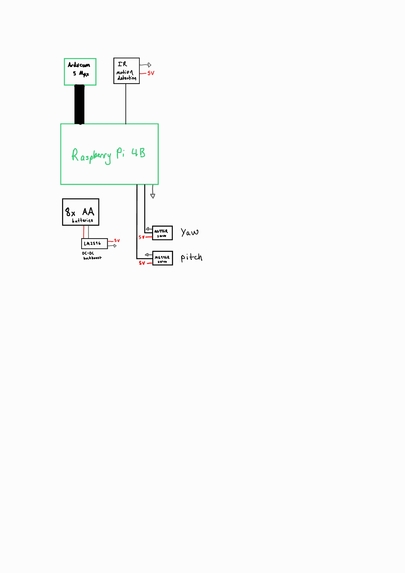
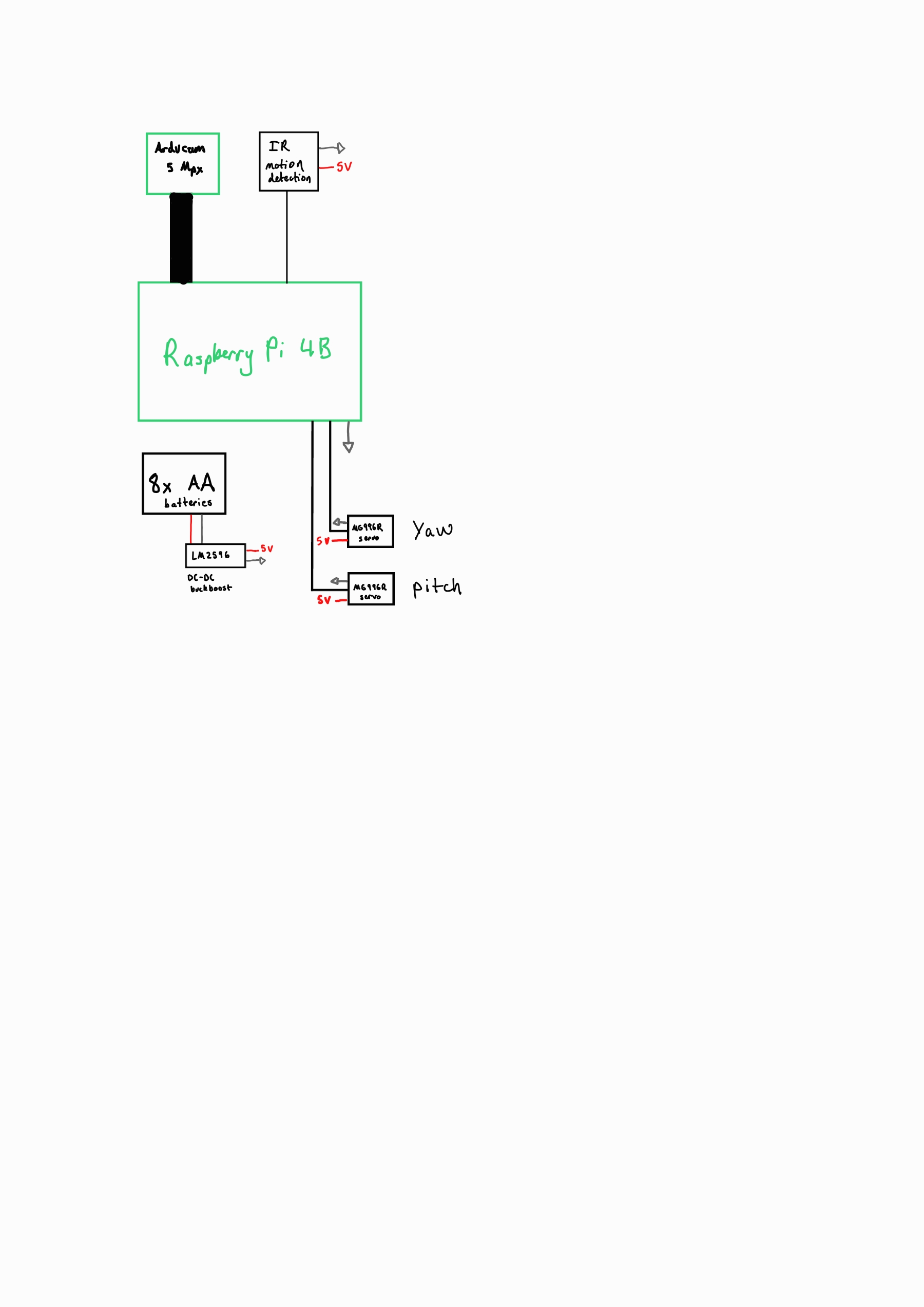
Wiring diagram
Inspiration
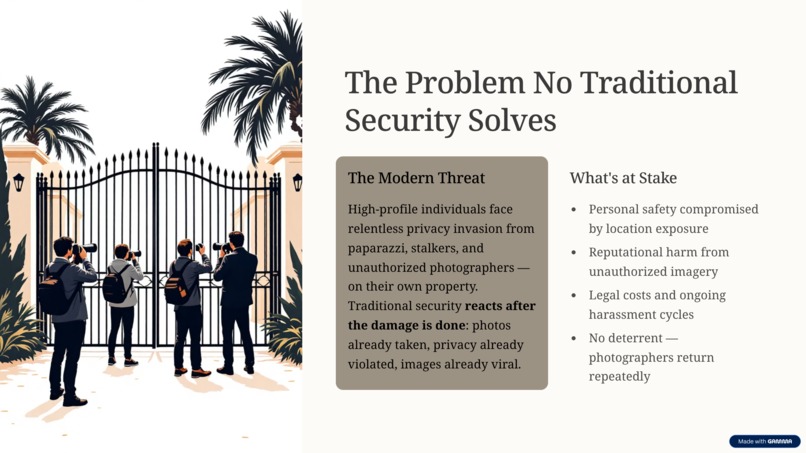
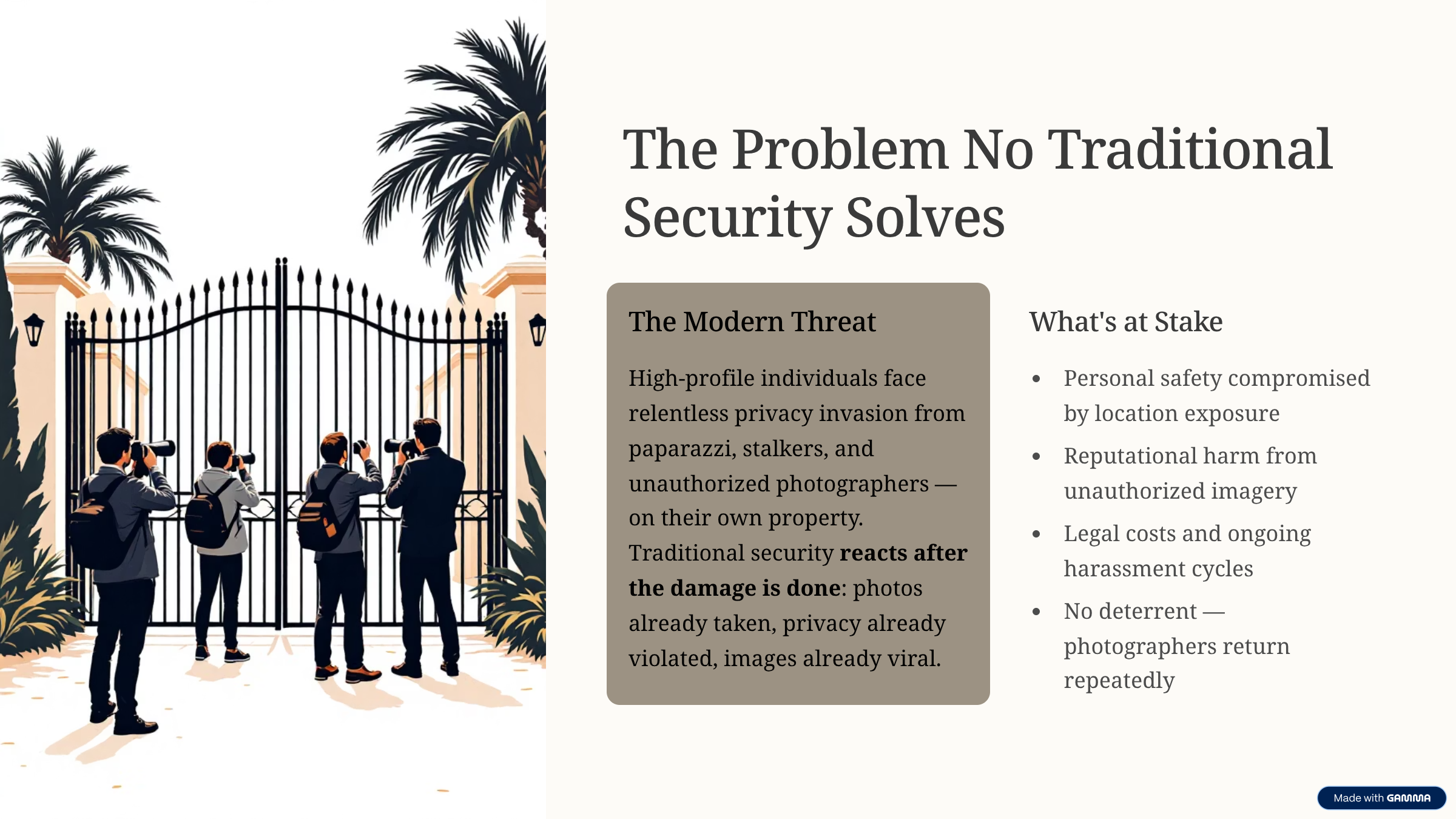
High-profile individuals face constant privacy invasion. Paparazzi, stalkers, and unauthorized photographers threaten their safety and peace. Traditional security reacts after the damage is done — photos already taken, privacy already violated.
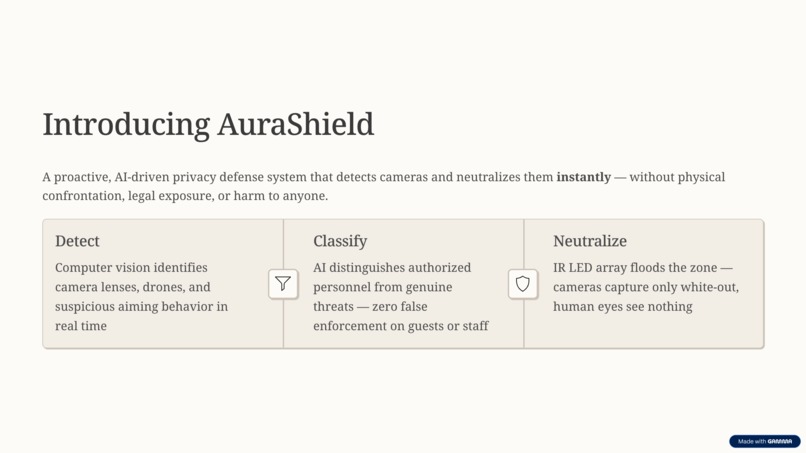
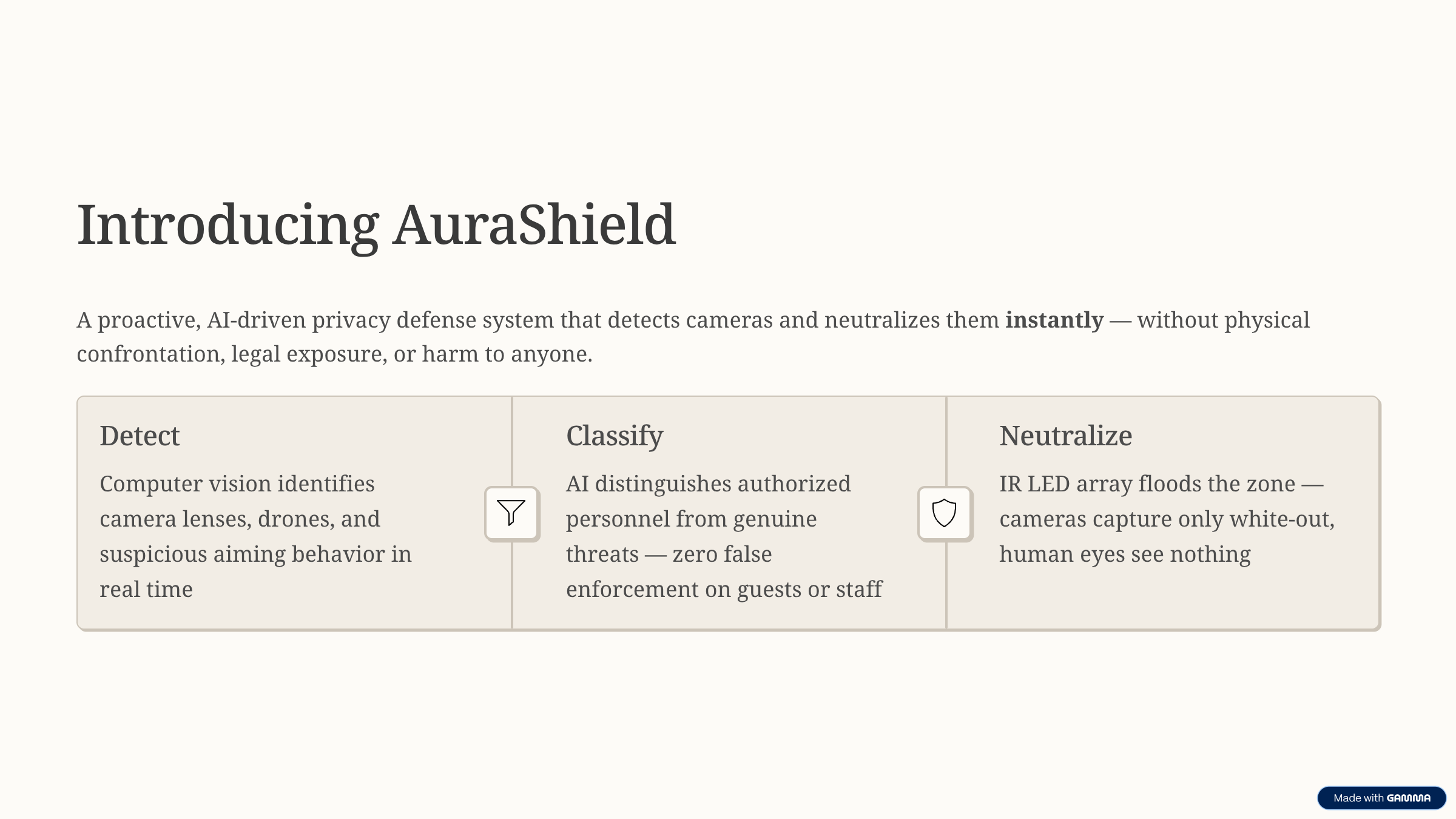
We built AuraShield: an AI-powered privacy defense system that detects cameras and neutralizes them instantly — without harming anyone.
What it does
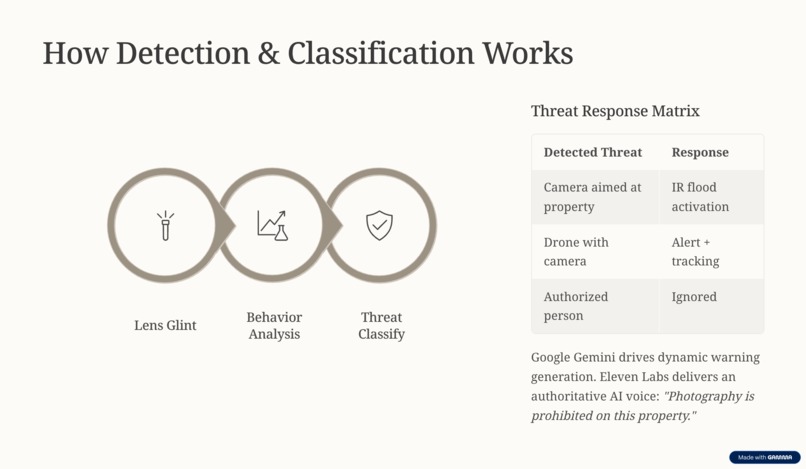
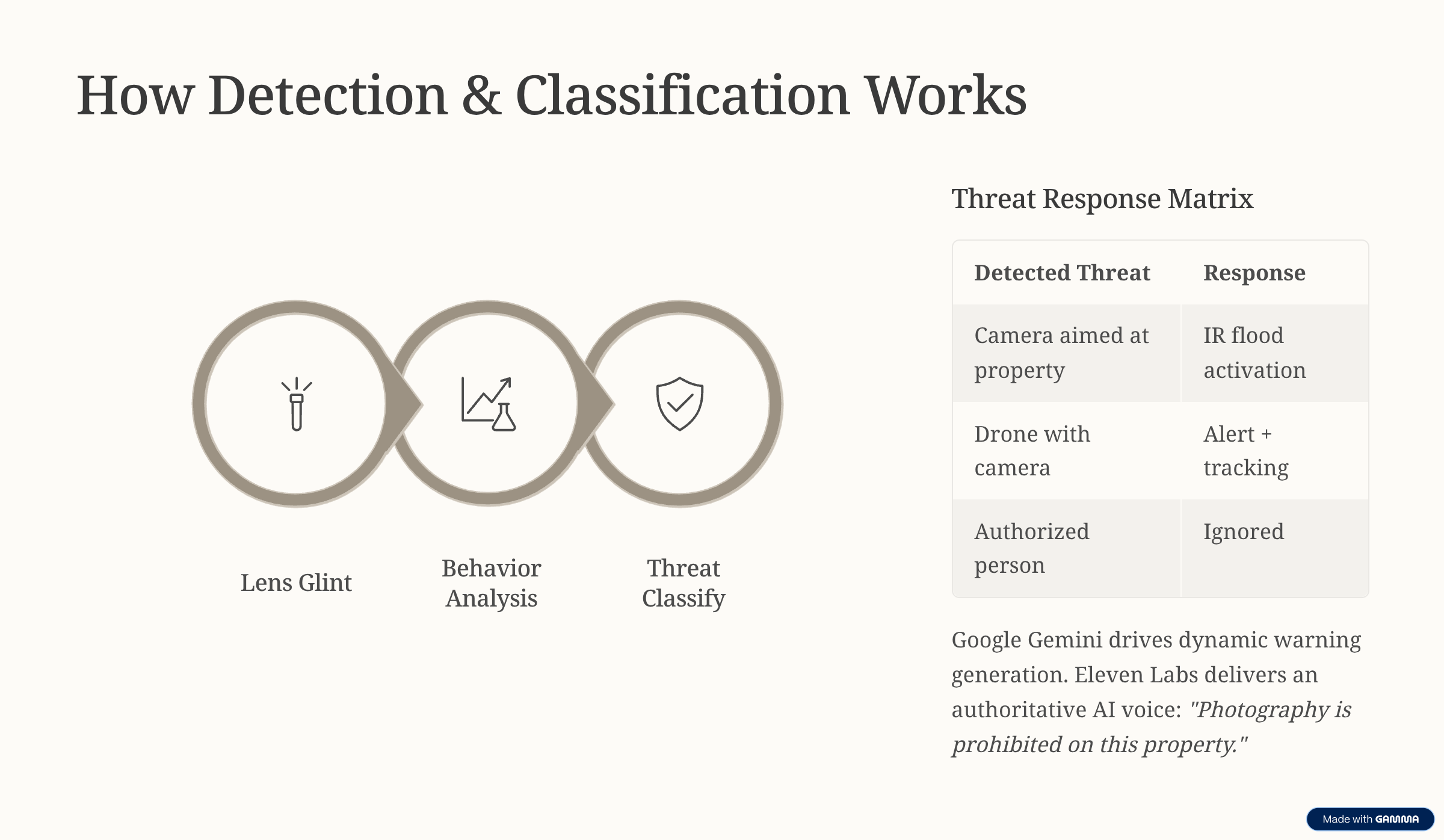
1️⃣ Detection Viam camera + computer vision identifies:
- Camera lenses (phones, DSLRs, drones)
- Suspicious positioning/aiming behavior
- Known threat patterns
2️⃣ Classification
| Detected | Response |
|---|---|
| Camera aimed at property | IR flood activation |
| Drone with camera | Alert + tracking |
| Authorized person | Ignored |
3️⃣ Neutralization
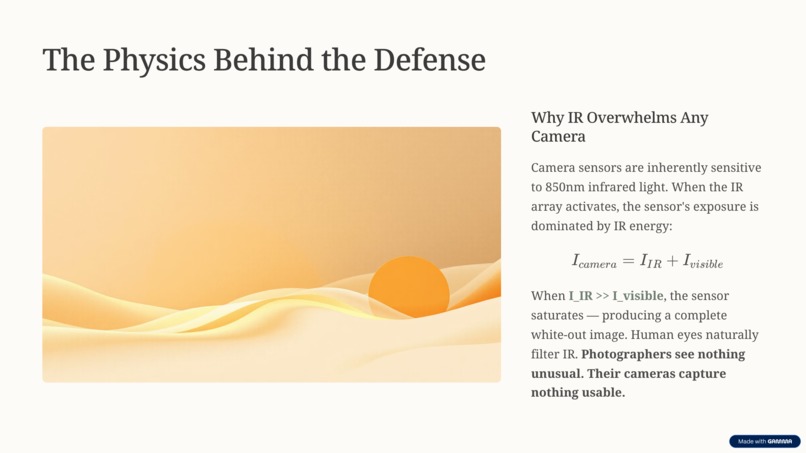
- IR LED array floods the area with infrared light
- Cameras capture only white-out — photos ruined
- Human eyes see nothing — completely safe
- AI voice warns: "Photography is prohibited on this property"
How we built it
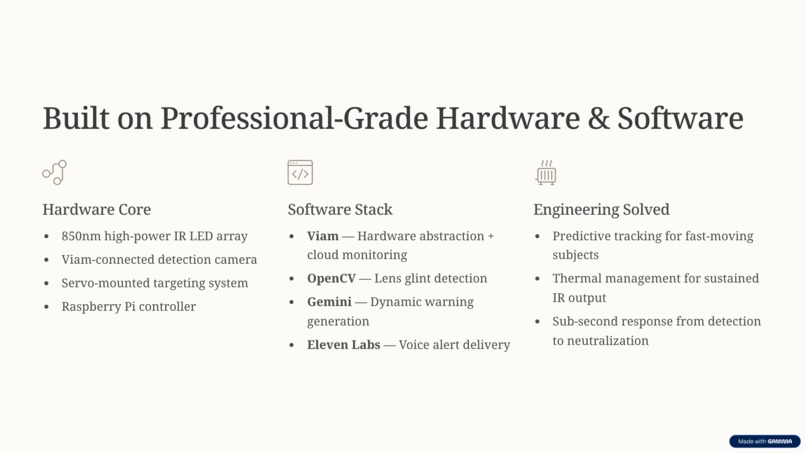
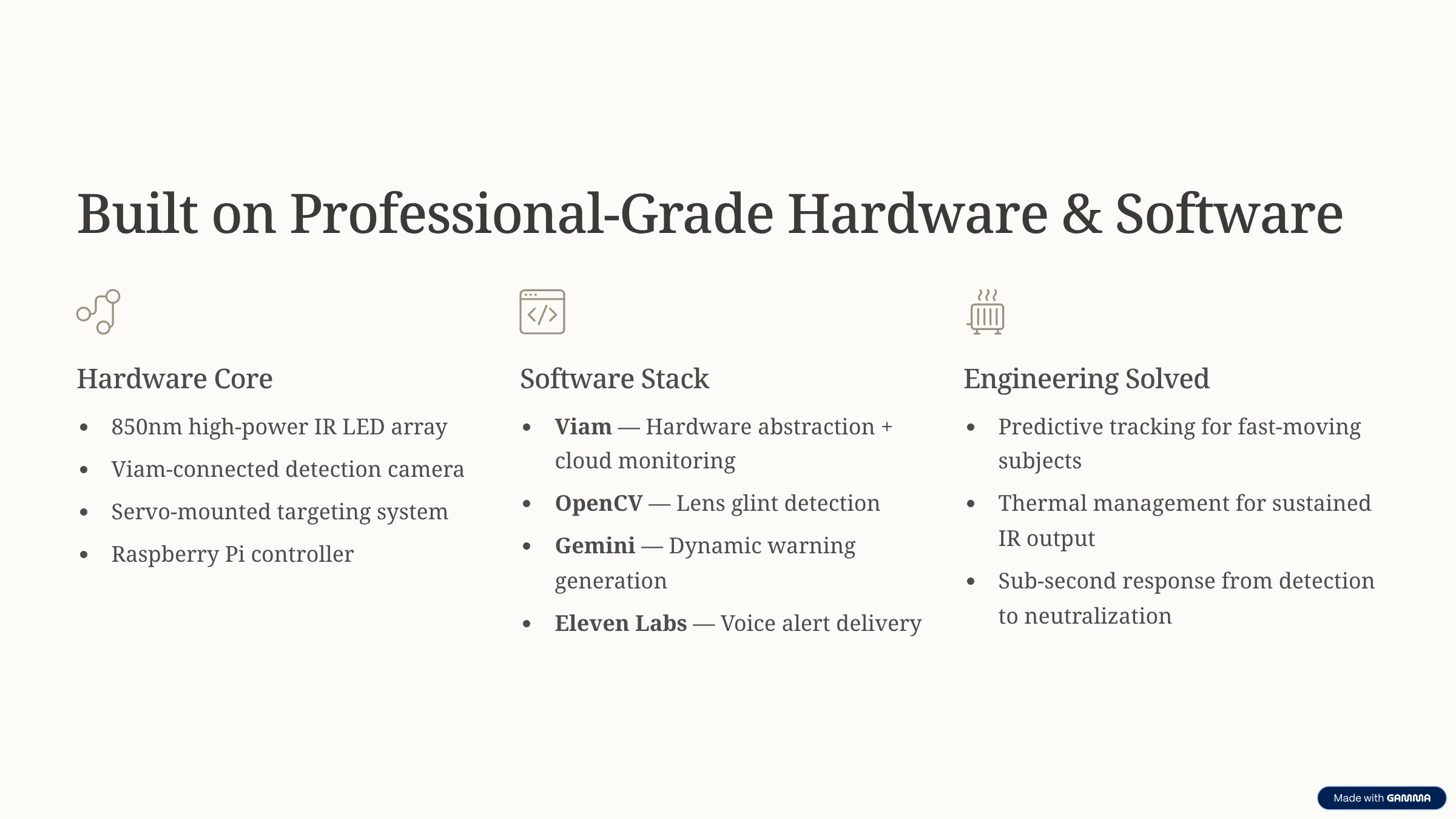
Hardware:
- High-power IR LED array (850nm wavelength)
- Viam-connected camera for lens detection
- Servo-mounted targeting system
- Raspberry Pi controller
Software:
- Viam — Hardware abstraction + cloud monitoring
- OpenCV — Camera lens detection (reflective glint detection)
- Google Gemini — Dynamic warning generation
- Eleven Labs — Authoritative voice alerts
- Python — Control logic
The Math Behind AuraShield
1. Sensor Saturation (The Neutralization)
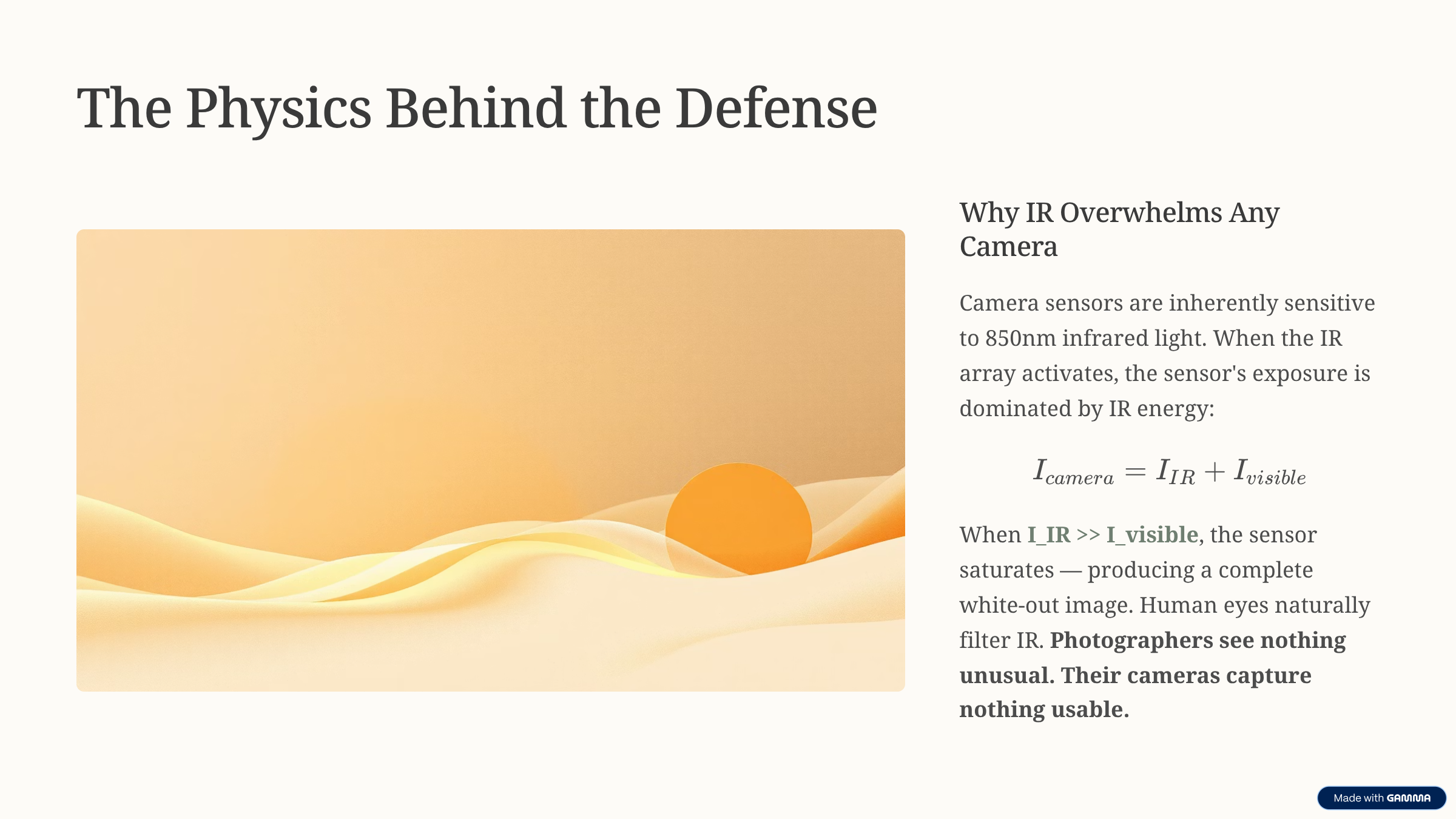
Digital camera sensors (CMOS/CCD) respond to both visible and near-infrared light. The recorded signal $S$ at each pixel is:
$$S = \int R(\lambda) [I_{visible}(\lambda) + I_{IR}(\lambda)] d\lambda$$
Where:
- $R(\lambda)$ = Sensor spectral sensitivity
- $I_{visible}$ = Visible light intensity
- $I_{IR}$ = Infrared light intensity
When AuraShield activates, we ensure $I_{IR} \gg I_{visible}$. This forces the signal to reach its maximum bit-depth:
$$S \geq S_{max}$$
2. Human Safety (The Stealth)
Human vision is limited to $400\text{ nm} \le \lambda \le 700\text{ nm}$. Because we use 850nm IR, human retinal sensitivity is effectively zero:
$$R_{human}(850\text{ nm}) \approx 0$$
The perceived brightness $S_{human}$ remains unchanged, ensuring the system is invisible:
$$S_{human} \approx \int R_{human}(\lambda) I_{visible}(\lambda) d\lambda$$
3. Lens Detection (The "Glint" Effect)
Camera lenses are multi-element curved glass systems that produce a characteristic specular reflection modeled by:
$$I_{glint} \propto I_{emit} \cdot \rho \cdot \cos(\theta)$$
Where:
- $\rho$ = Lens reflectivity coefficient
- $\theta$ = Angle relative to the camera axis
4. Tracking Math (The Lock-On)
To maintain a lock on moving paparazzi, we use a discrete-time kinematic model to predict the camera's position:
$$x_{t+1} = x_t + v_t \Delta t + \frac{1}{2} a_t (\Delta t)^2$$
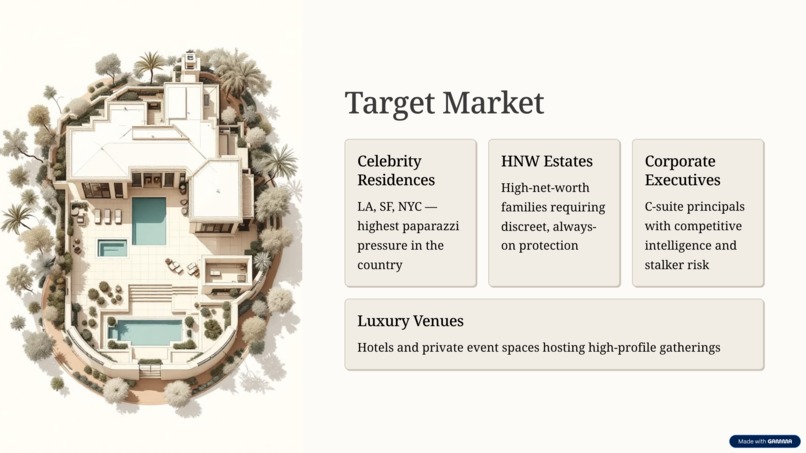
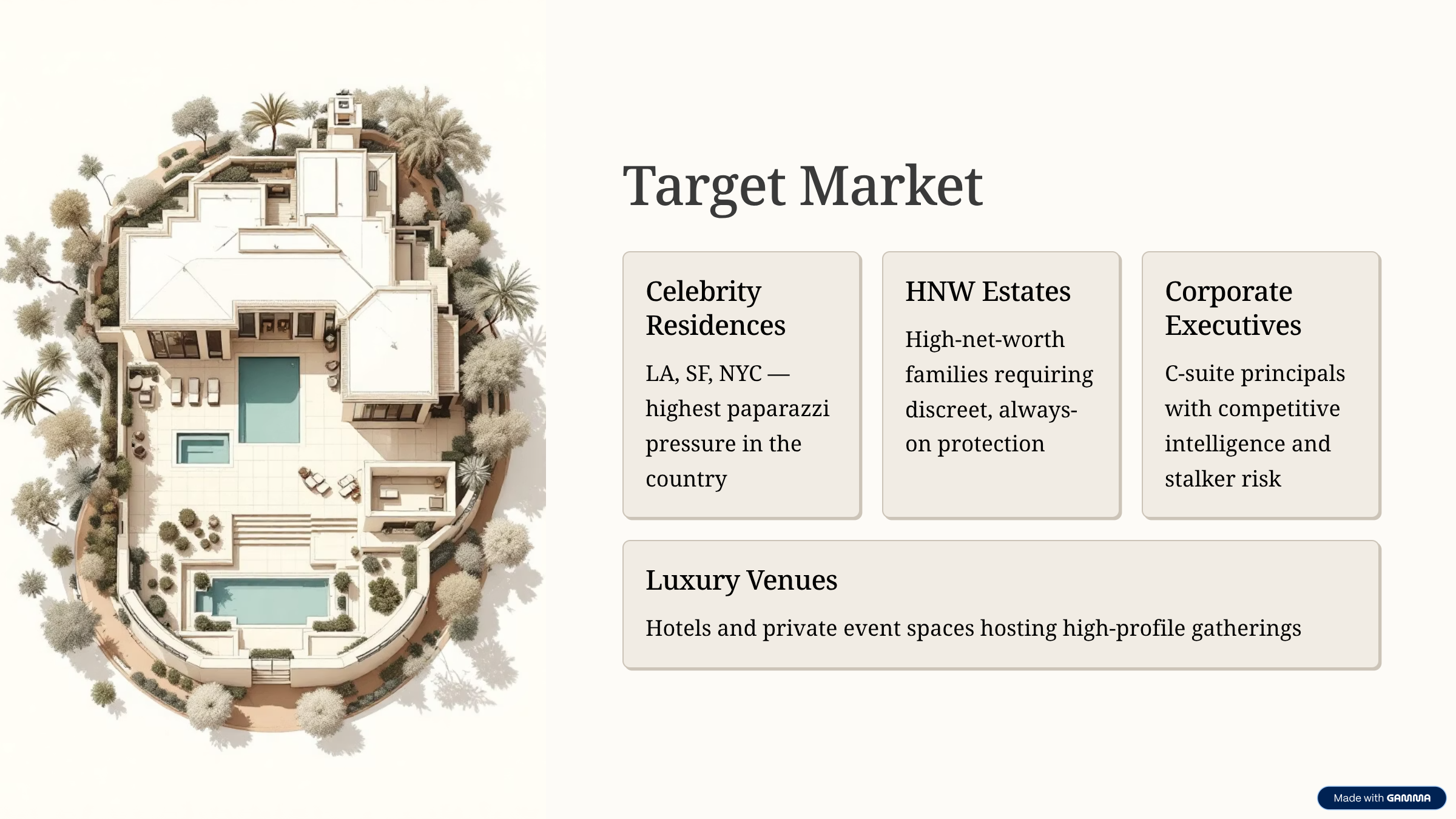
Target Market
- Celebrity homes (LA, SF, NYC)
- High-net-worth residences
- Corporate executives
- Luxury hotels & venues
- Private events
Challenges we ran into
- 📸 Lens Detection — Camera lenses create distinctive "glint" reflections. We trained detection on this optical signature.
- 🎯 Tracking — Paparazzi move fast. Predictive tracking keeps IR aimed correctly.
- ⚡ Power — High-power IR LEDs need proper thermal management.
What we learned
- IR optics and camera sensor vulnerabilities
- Computer vision for reflective object detection
- Privacy technology legal landscape
- High-end security market requirements
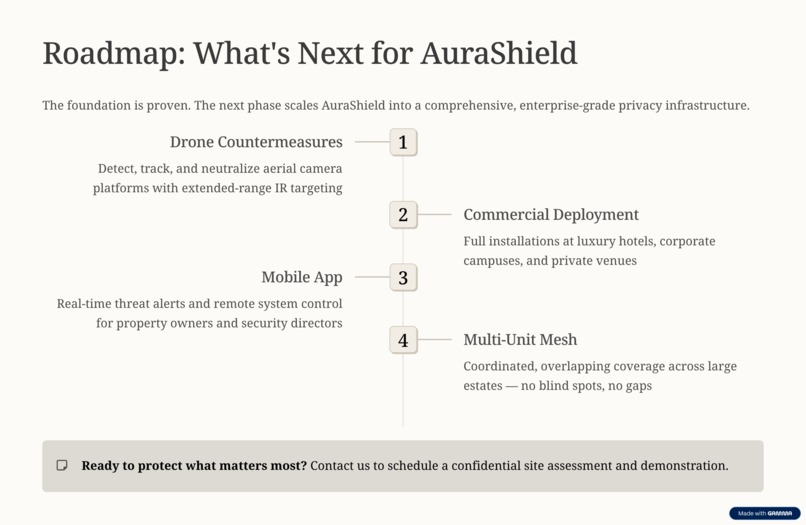
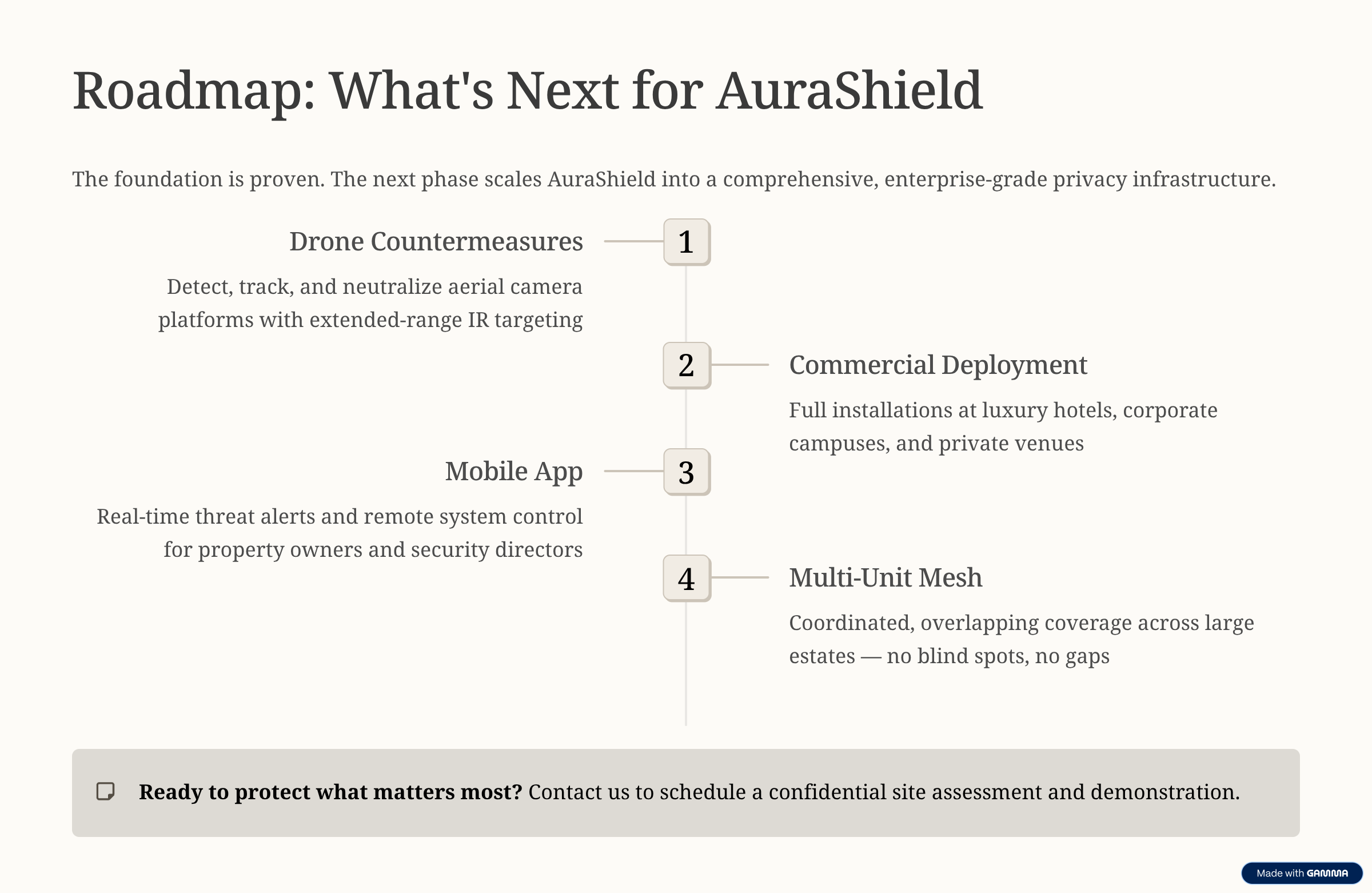
What's next for AuraShield
- 🚁 Drone countermeasures — Detect and track aerial cameras
- 🏢 Commercial deployment — Hotels, venues, corporate campuses
- 📱 Mobile app — Real-time alerts for property owners
- 🌐 Multi-unit mesh — Coordinated coverage for large estates


Log in or sign up for Devpost to join the conversation.