-
-
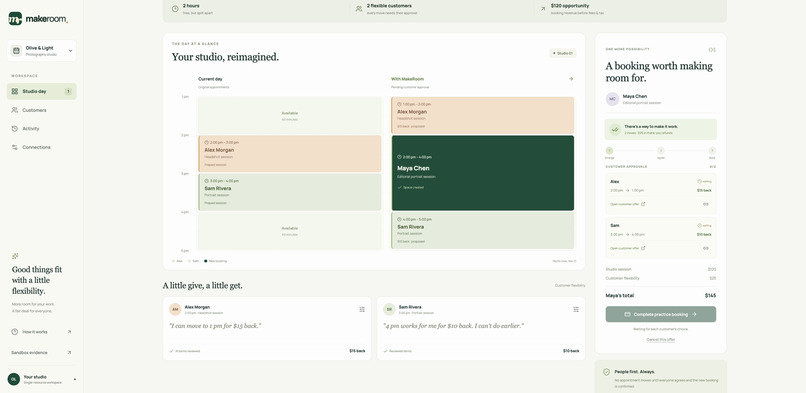
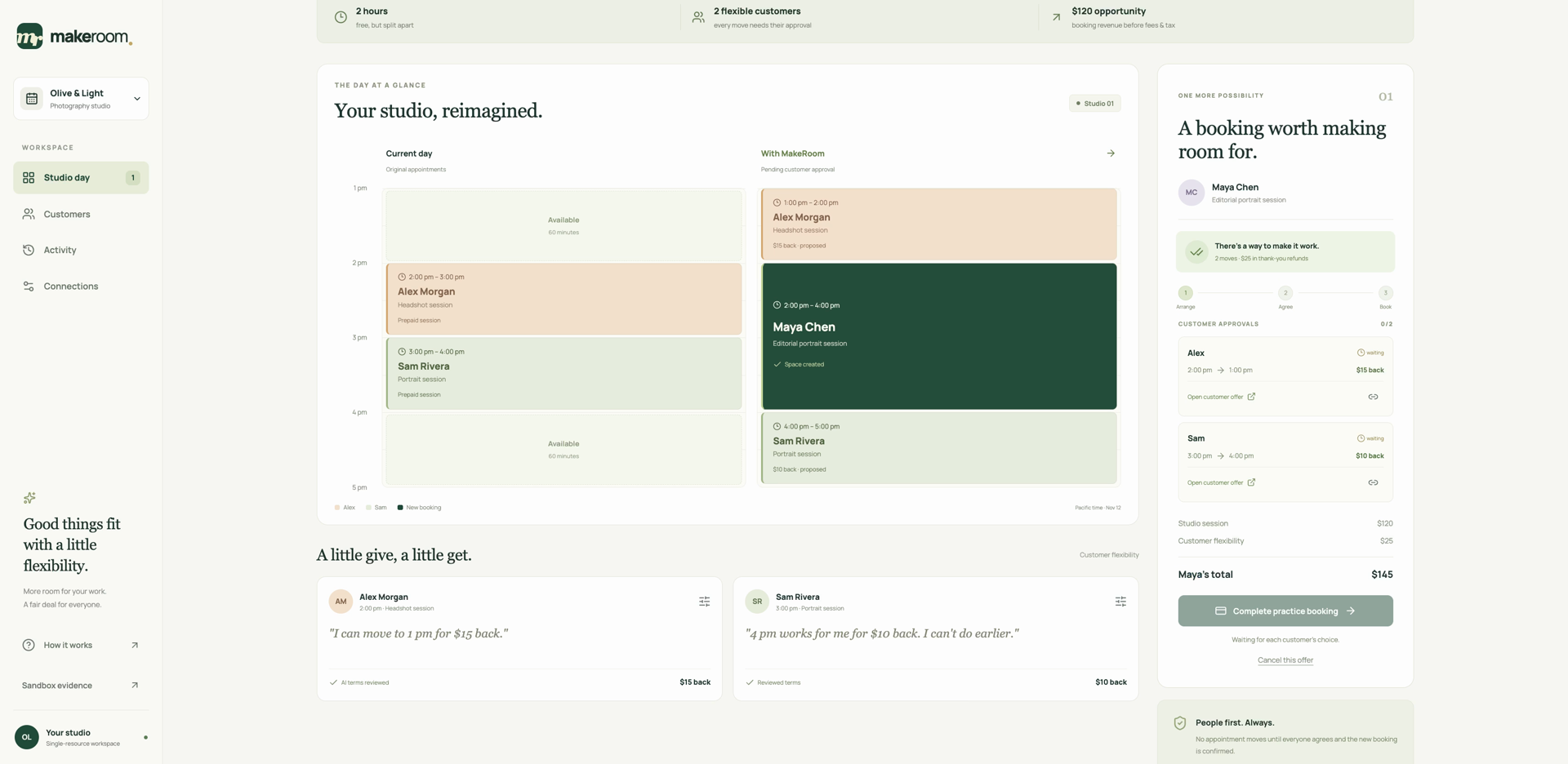
Two voluntary moves create a two-hour booking. The original appointments wait for customer approval.
-
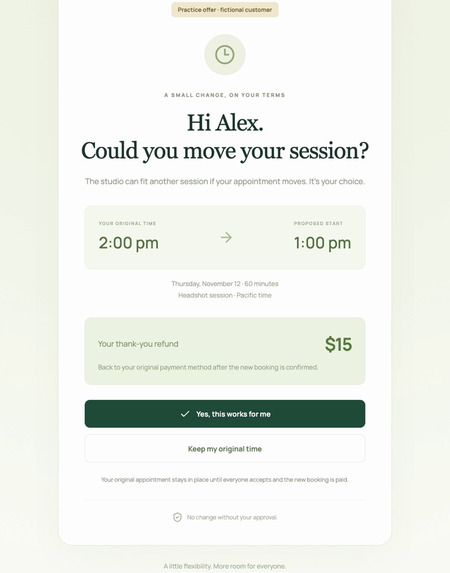
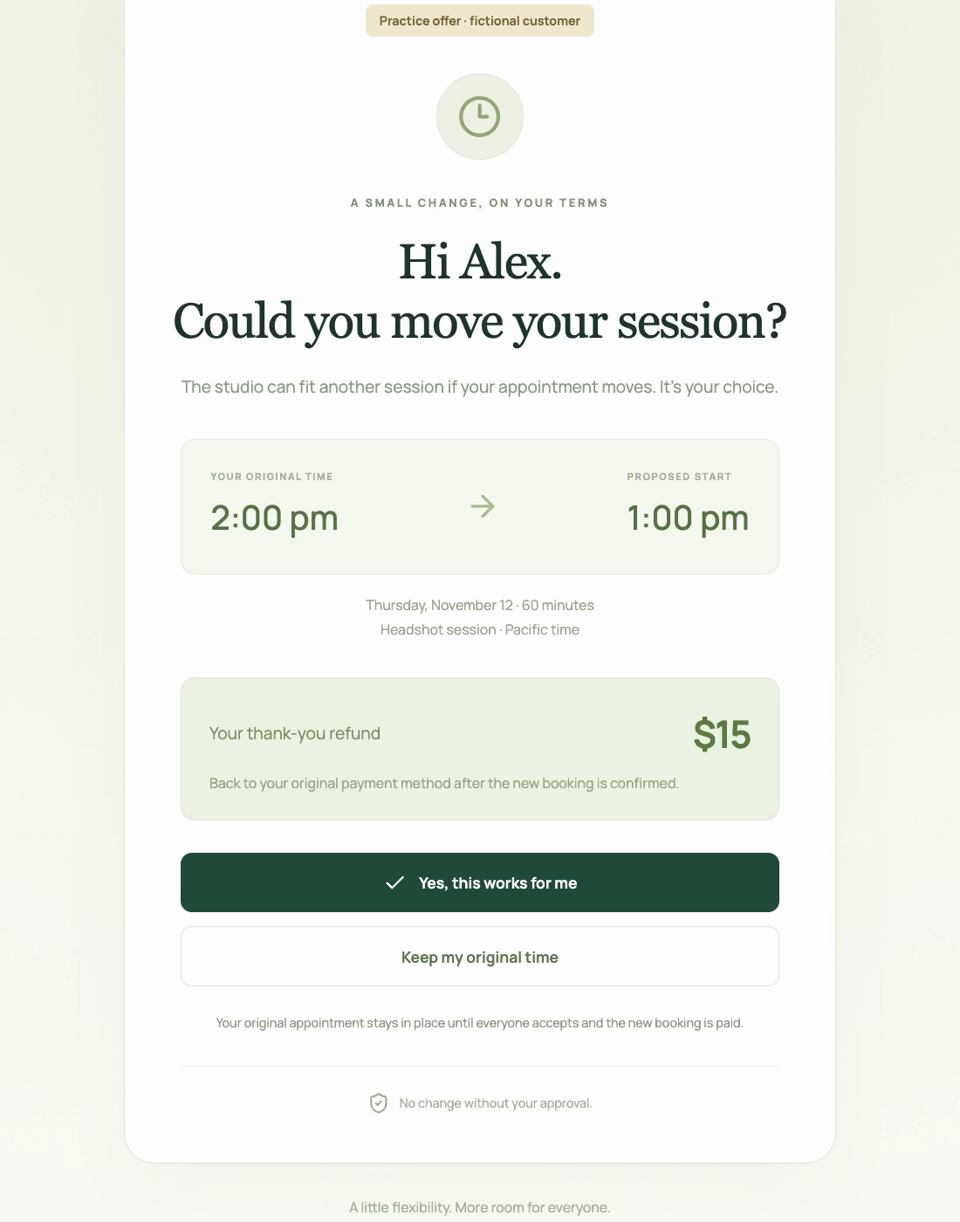
Alex sees the exact new time and $15 refund, with a choice to accept or keep the current booking.
-
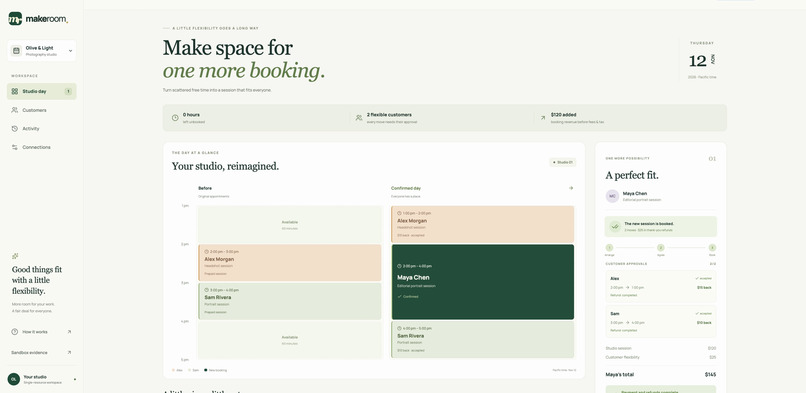
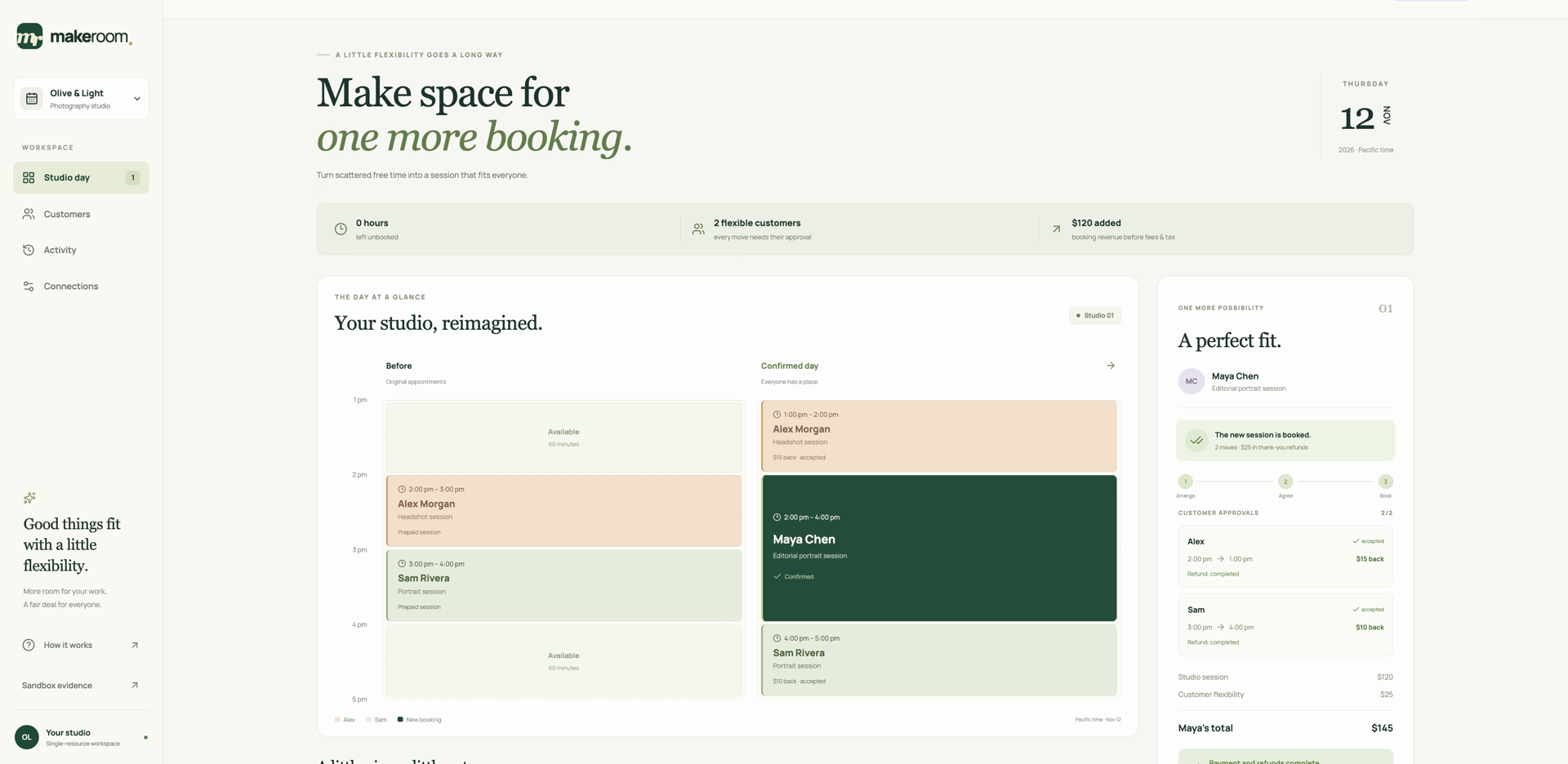
Completed PayPal sandbox run: one new booking and refunds to the two original payments. No live money.
-
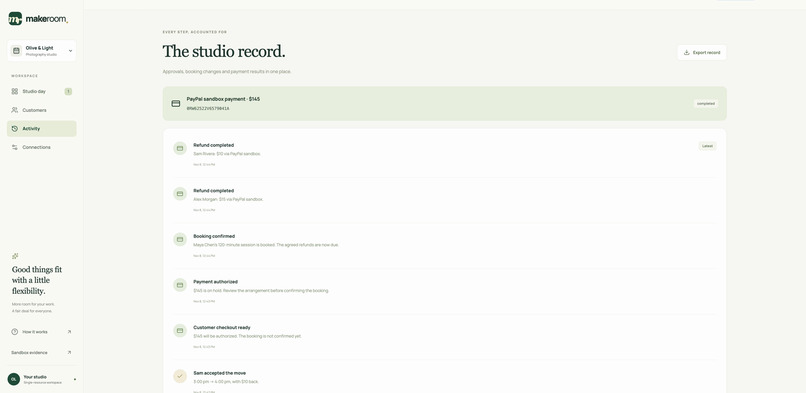
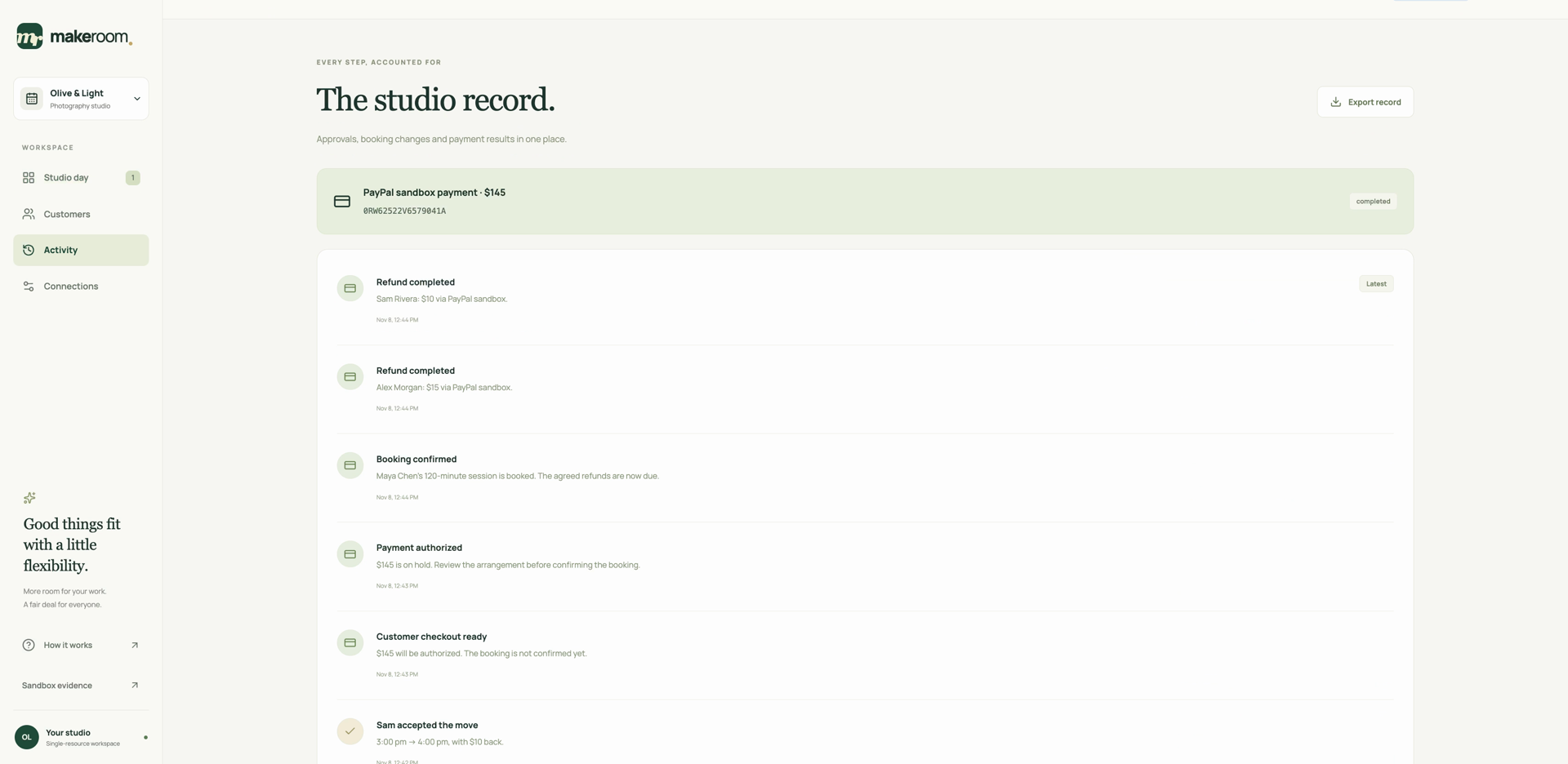
The studio record retains the completed capture and both partial refunds from the PayPal sandbox run.
-
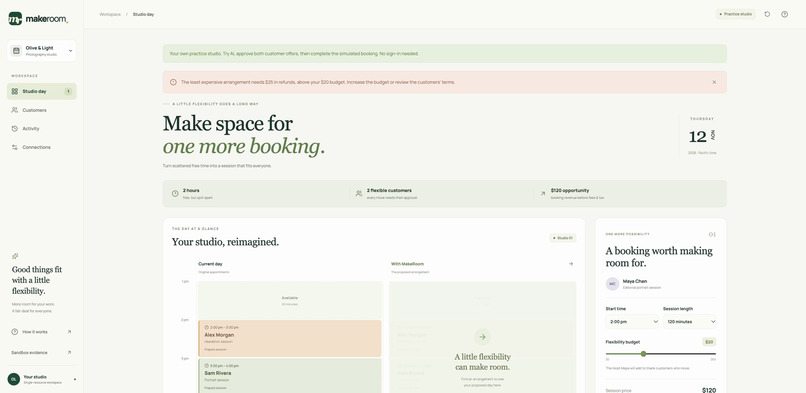
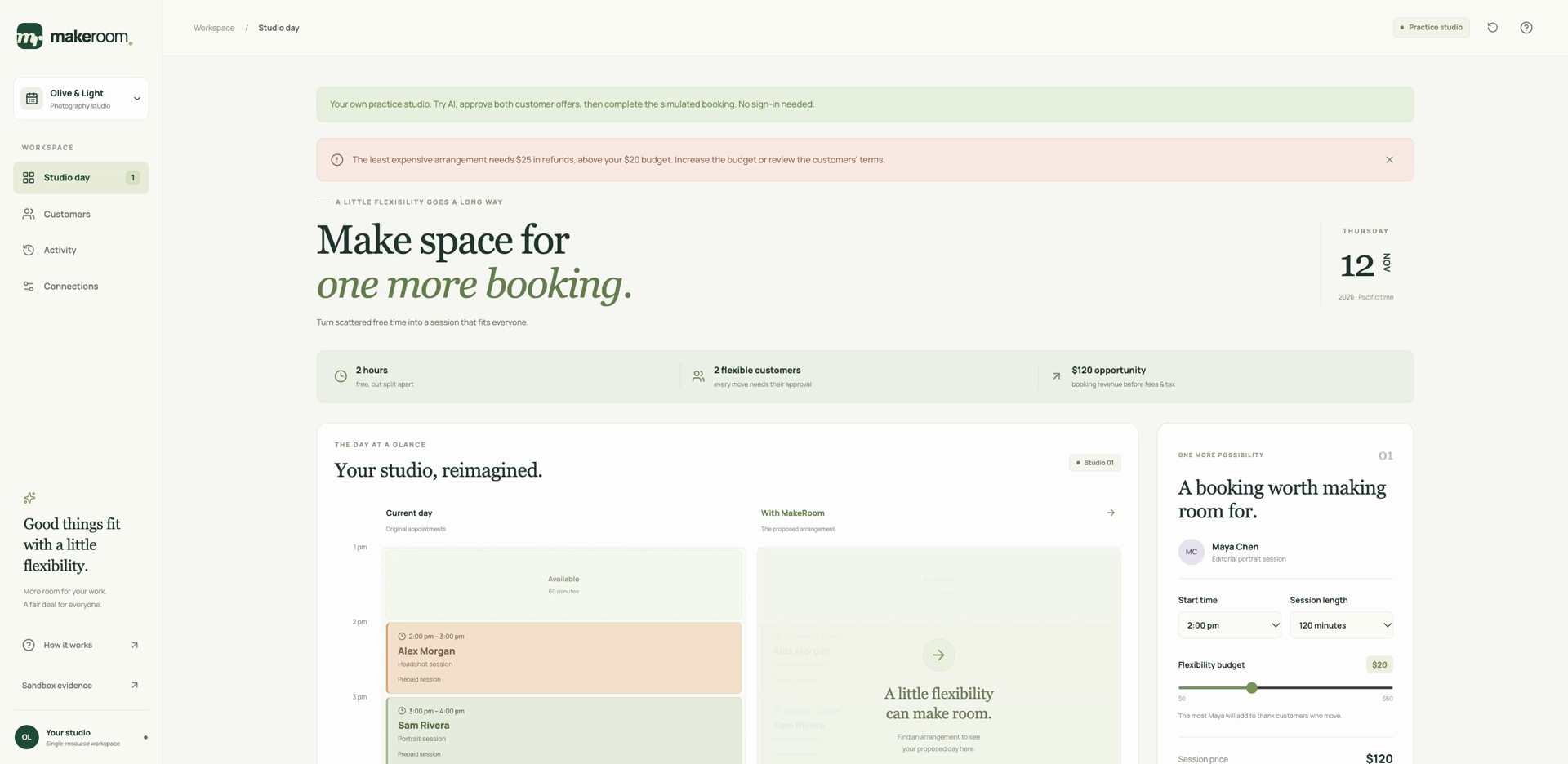
A $20 budget cannot cover the agreed $25 in refunds. The app refuses the plan and keeps the appointments.
-
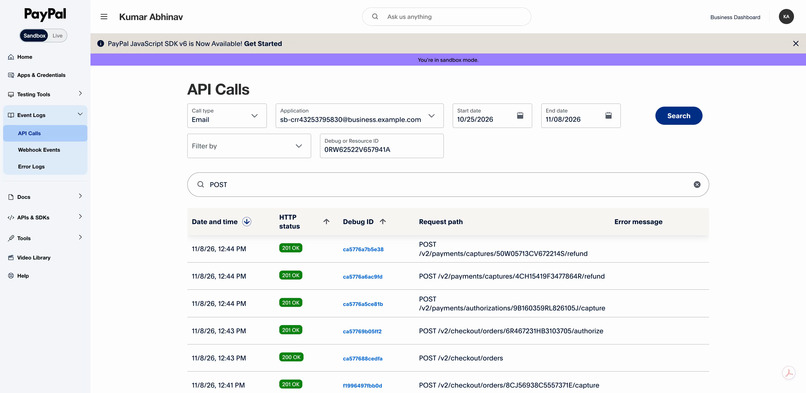
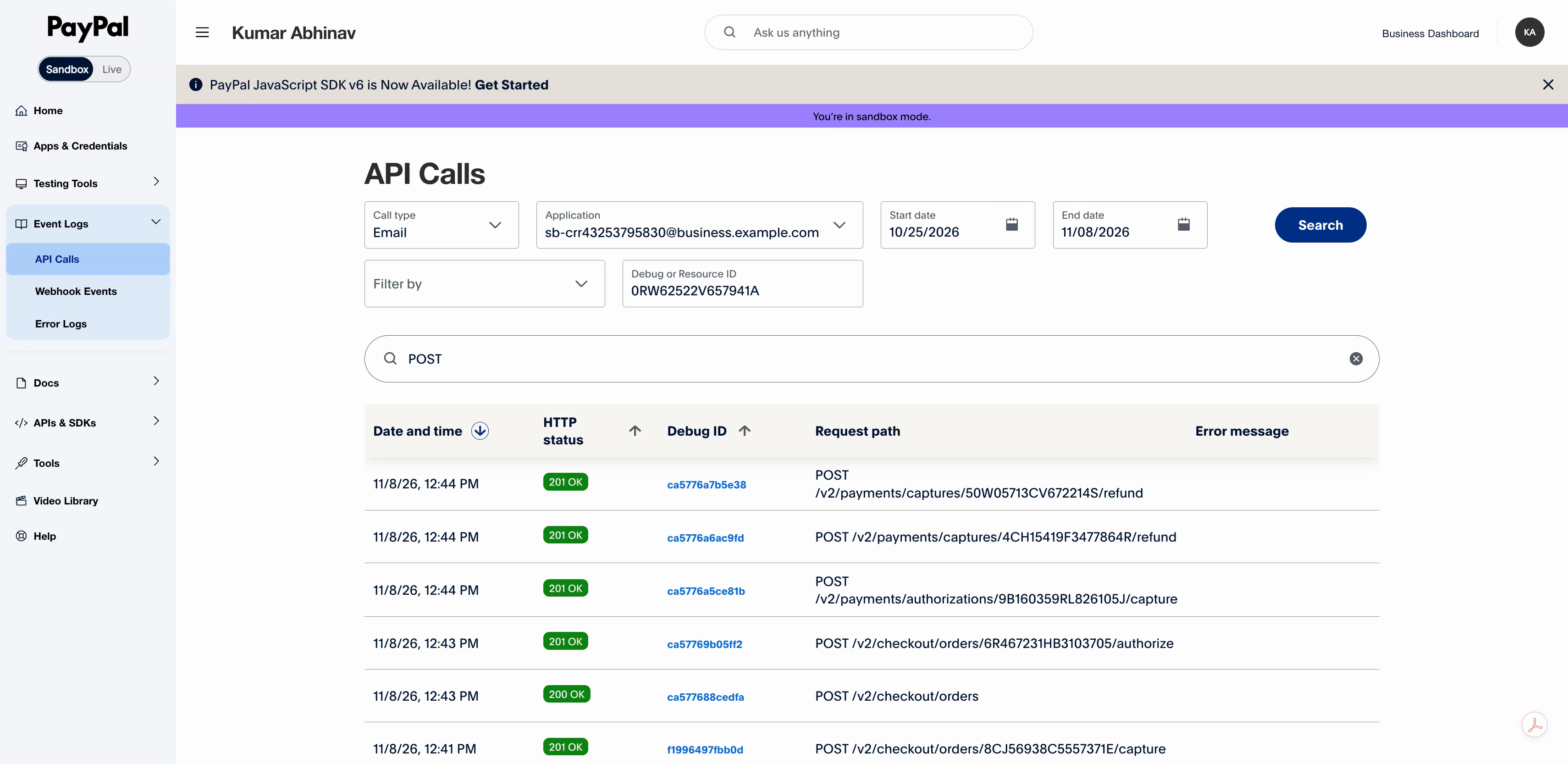
PayPal's own sandbox dashboard: the original authorization, capture and both refund calls succeeded. IDs match the saved records.
-
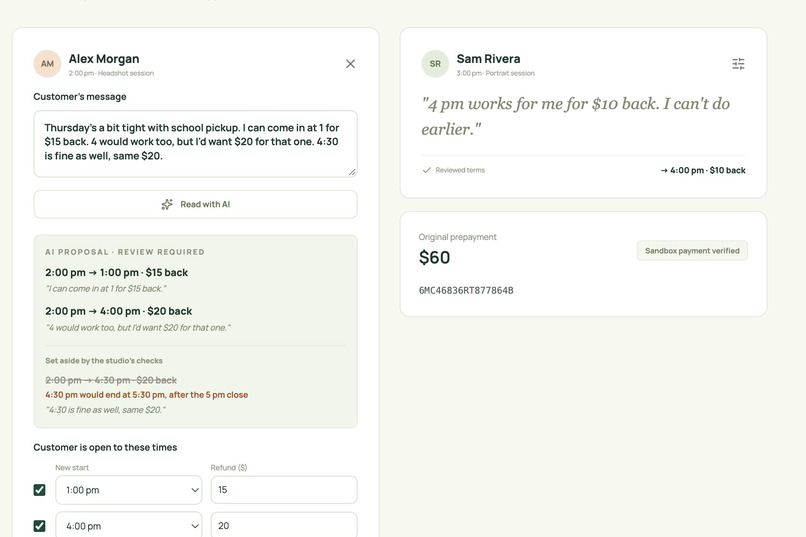
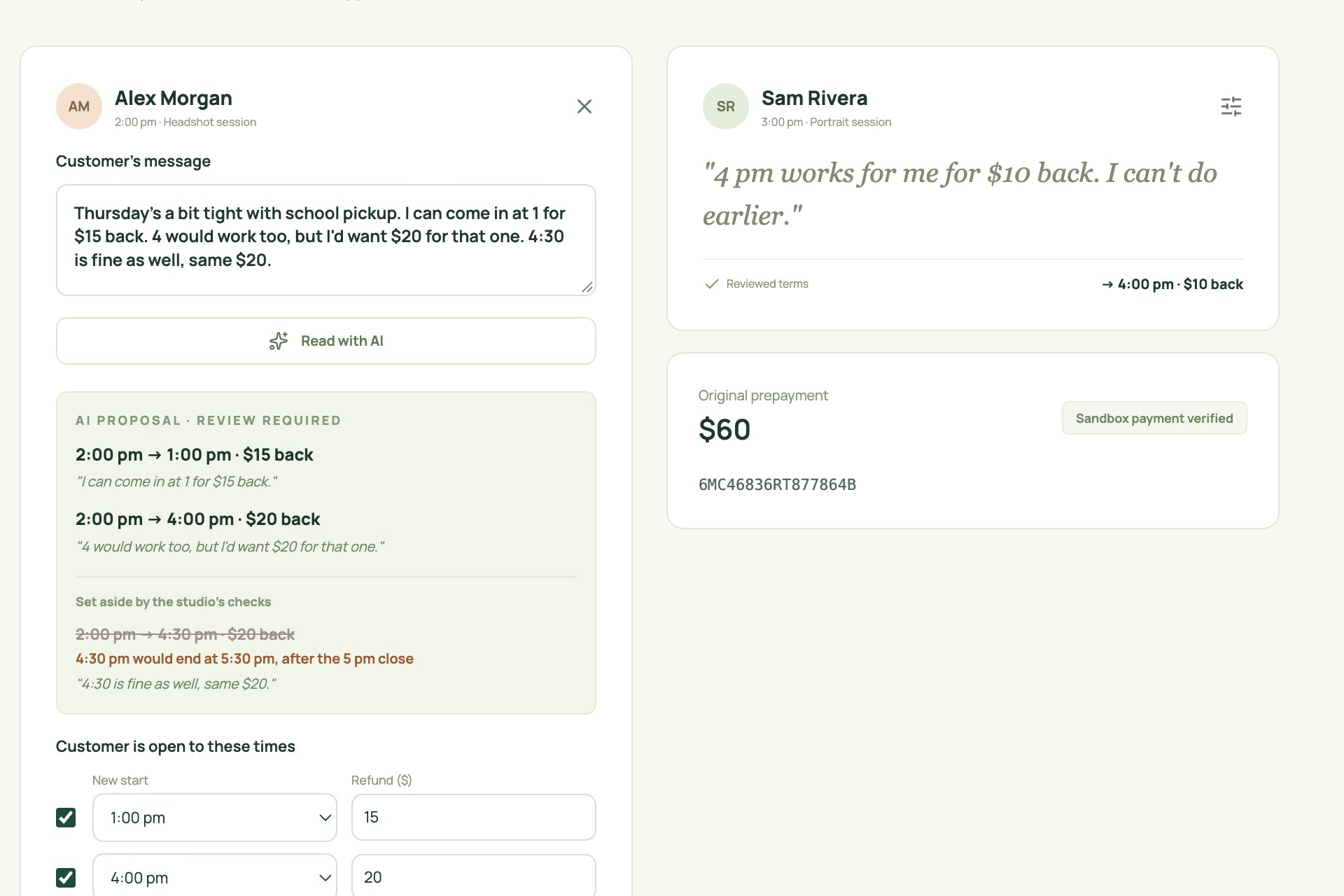
Gemini reads Alex's messy reply: each option sits beside his own words; 4:30 pm is set aside as it would end after the 5 pm close.
-
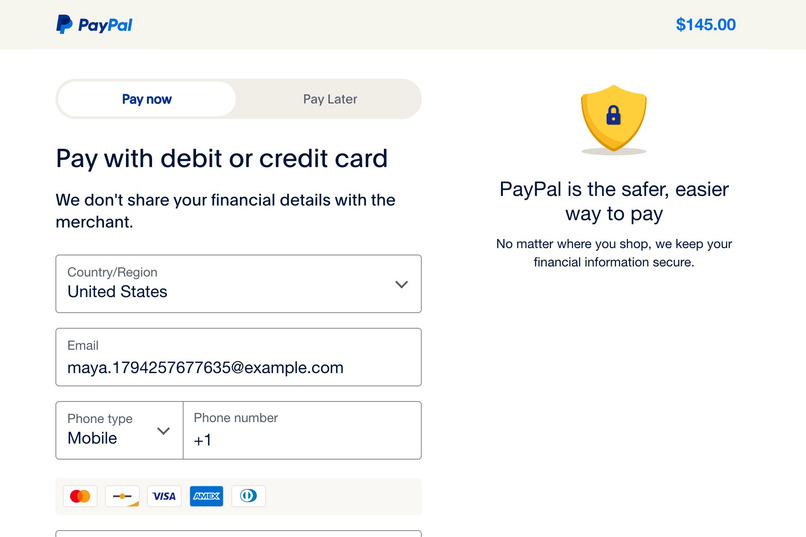
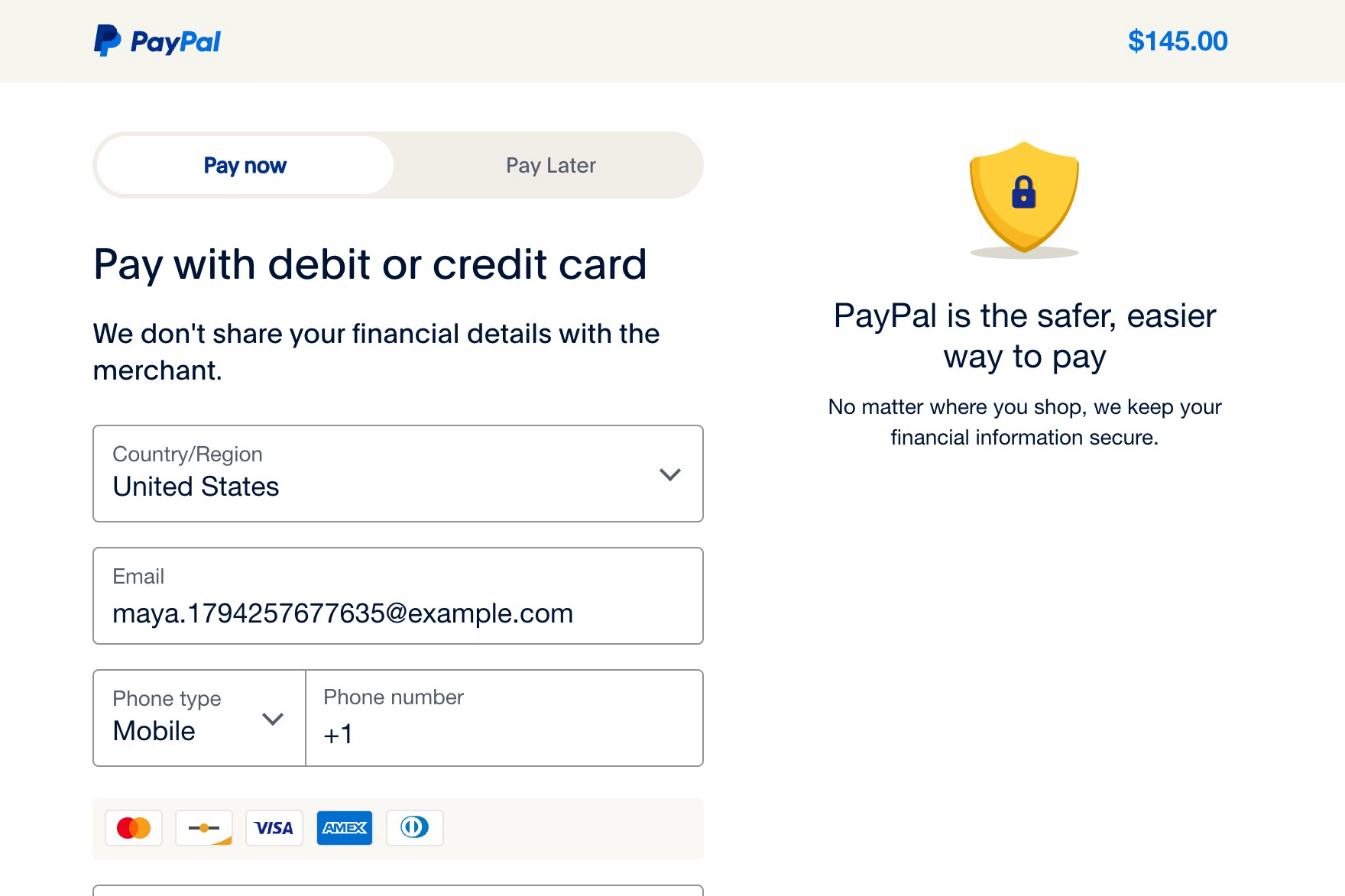
PayPal's own sandbox checkout: Maya approves $145 as a guest with a sandbox test card. No live money moves.
-
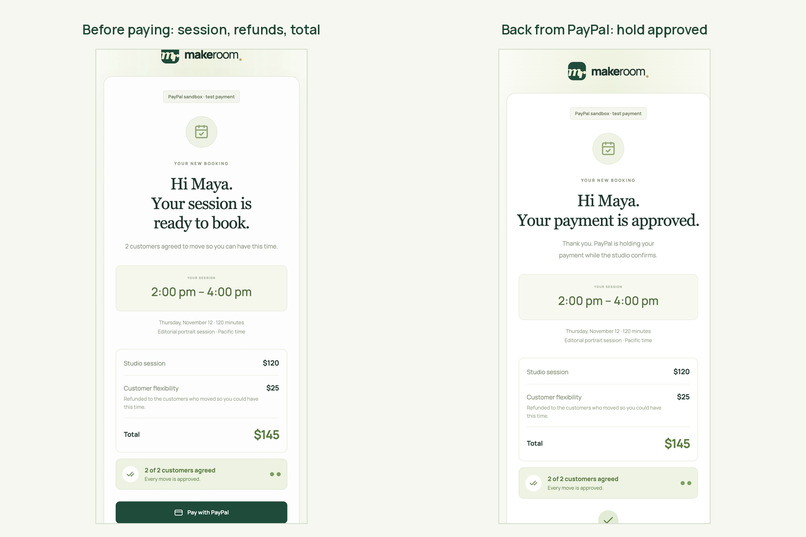
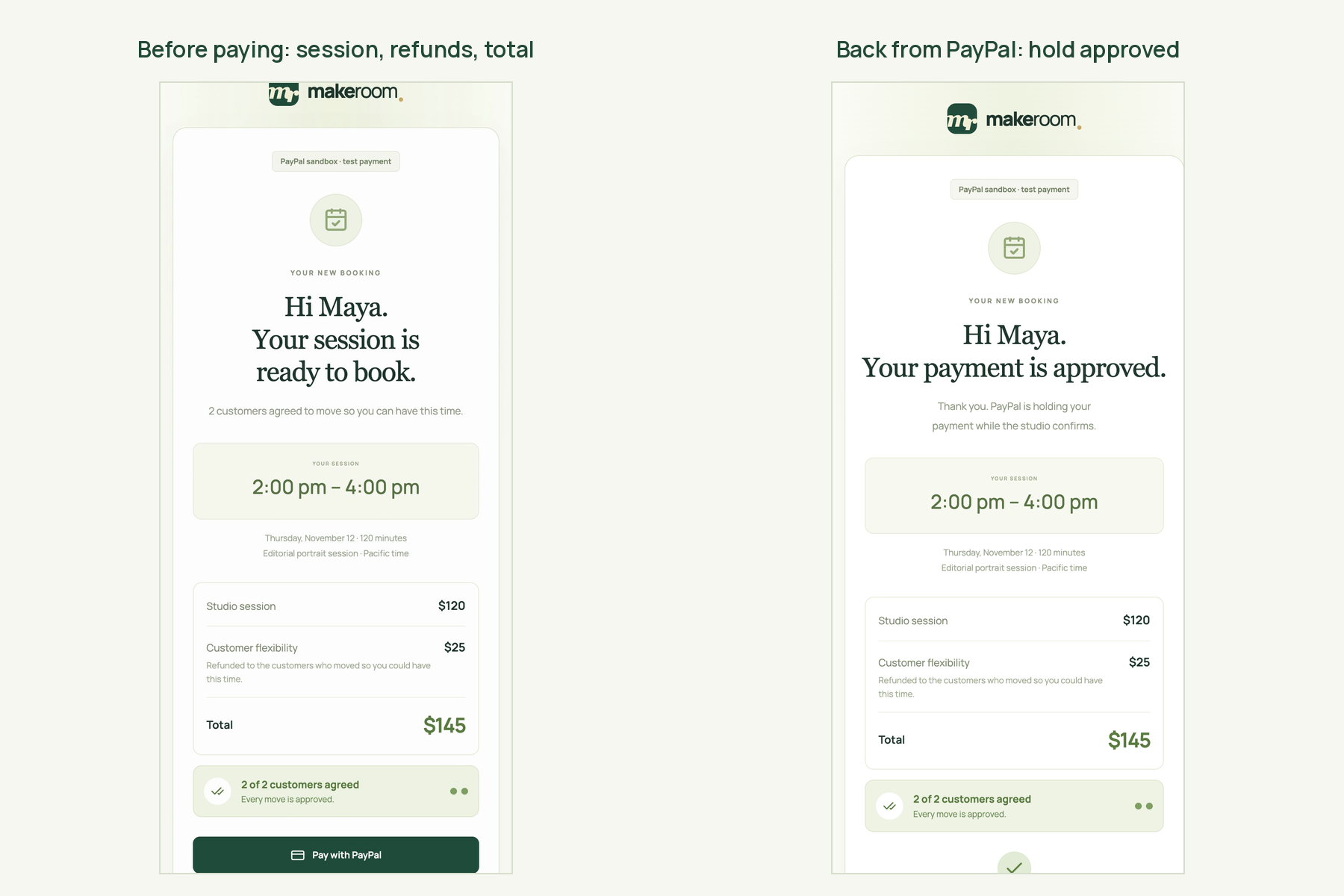
Maya's own checkout page in the PayPal sandbox run: her session, the $25 for the customers who moved, and her approved $145 hold.
For judges: try the live demo on Render at makeroom-qtyt.onrender.com (free plan, so the first visit can take about a minute to wake). It uses simulated payments so anyone can try it without an account. After **Find an arrangement, open both customer offers, then **Open Maya's checkout* to pay as the new customer. The PayPal sandbox checkout, capture and refunds are in the video from 1:07 to 1:38, and the PayPal IDs for all three sandbox runs are on the evidence page.*
What I built
MakeRoom is a scheduling and payments tool for small studios that rent one room by the hour. When a new customer wants a block of time that existing bookings have split in two, MakeRoom works out which customers would need to move and prepares an offer for each: a new time and a partial refund. The owner sends each customer their own link, and each one accepts or declines. The new customer gets a checkout link of their own. If everyone agrees, they pay there through PayPal, the studio confirms, the calendar updates and each refund goes back to the original PayPal payment.
The problem
A one-room studio sells time in blocks: a photo studio, a podcast booth, a rehearsal room. A day can have two free hours that nobody can buy, because they aren't next to each other.
Today the owner can turn the customer away, or text the regulars one by one, agree a discount with each and refund each person by hand. The first loses the booking. The second can take an evening of messages, and the customer who moved has nothing in writing.
MakeRoom is for owners who run the room themselves and take payment up front. The new customer pays for the flexibility, so the studio keeps its full $120 session price (before PayPal fees).
Why it matters
Appointment businesses already lose real money to time they can't fill. The booking platform Fresha surveyed more than 200 UK beauty and wellness businesses and 500 of their clients in December 2025. Hair and beauty businesses lost almost 7% of their revenue a month to cancellations on average, and 62% of clients give less than 24 hours' notice when they cancel (Fresha, February 2026). A late cancellation usually leaves one loose hour in the middle of a day, which is exactly the kind of gap MakeRoom tries to join into a longer booking. The survey covers salons rather than studios and comes from a software company, so I read it as a sign of the problem's shape, not as a measure of MakeRoom's market.
Why not a waitlist or a reschedule link?
A waitlist only helps when someone cancels. A reschedule link lets one customer move on their own, but it doesn't pay them, and it can't line up two moves at once to open a two-hour block. MakeRoom works out which moves would free the block, prepares offers only for the people involved, and settles the agreed amounts as refunds on the payments they already made.
How it works
The demo is a photography studio on Thursday, November 12. The room is free from 1 to 2 pm and from 4 to 5 pm. Maya needs 2 to 4 pm. Alex and Sam have those hours booked.
- Read what customers offered. Alex's reply is messy: "I can come in at 1 for $15 back. 4 would work too, but I'd want $20 for that one. 4:30 is fine as well, same $20." MakeRoom turns it into separate options, each shown next to his exact words: 1:00 pm for $15 and 4:00 pm for $20. 4:30 pm is set aside with the reason "4:30 pm would end at 5:30 pm, after the 5 pm close." The owner reviews and saves the terms.
- Find an arrangement. MakeRoom checks every allowed combination. Alex at 4 would clash with Sam, so Alex moves to 1 and Sam to 4, the cheapest plan that fits Maya's $25 budget. If nothing fits, it says why.
- Ask each customer. The owner sends Alex and Sam each their own offer link with the exact new time and refund. Either can say no. Offers expire after 30 minutes, and an old link stops working if the terms change.
- Take payment and refund. When both accept, Maya opens her own checkout link. It shows her 2–4 pm session, the $120 session price, the $25 that goes back to the customers who moved and her $145 total, but not their names. She approves $145 on PayPal's checkout page and returns to her page. The studio confirms, MakeRoom captures the payment, moves both bookings, and refunds $15 to Alex and $10 to Sam on their original payments.
How I built it
PayPal. Orders v2 collects Alex's and Sam's original prepayments and creates Maya's order with an authorization, so nothing is charged until the studio confirms. Payments v2 captures the authorization and sends two partial refunds to the original captures. Every order, capture, refund and void request carries its own PayPal-Request-Id, saved before the call. If PayPal times out, MakeRoom treats the result as unknown. "Check payment & refunds" reads the payment back from PayPal, then authorizes an order the buyer already approved, records a capture that did go through, or returns the hold to the studio so the capture can be retried with the same request ID. "Cancel" voids the hold only after PayPal shows nothing was captured. Retries reuse the saved request ID, so PayPal treats them as the same request, and the tests check that no capture or refund is sent twice. Each customer's refund is handled on its own, so one refused refund doesn't block the other. Maya's checkout link has its own secret token. It stops working when the studio replaces the plan, and it won't start a second PayPal order if the studio has already started one.
AI in one step. Gemini 2.5 Flash is asked to list every time and refund a customer's reply offers, each with a quotation, and to ask a question instead of guessing when an amount is missing. Code then checks each option against opening hours, the 15-minute start grid and the refund limit, sets aside the ones that break a rule with a plain reason, and confirms each quotation really appears in the message. The owner reviews and saves every result; Gemini never approves a move and never touches a payment.
Hosting. React and TypeScript for the screens and a Worker API with D1 for bookings, customer responses and payment records. The public demo runs on Render as a single web service: Render builds the repo and runs the same Worker in Wrangler's local runtime with its own database, with sign-in turned off so identity headers from a browser are never trusted. A copy of the frontend is also on GitHub Pages.
Challenges I ran into
Keeping the booking and the money consistent when PayPal doesn't answer. An early version could leave a payment stuck after a timeout, with a hold that could be neither captured nor cancelled from the app. I rewrote the recovery so every uncertain step is resolved by reading PayPal's record or by repeating the same keyed request, and covered each case with tests.
What I checked
- Three PayPal sandbox runs. On November 8 and twice on November 9 the app completed two $60 prepayments, a $145 authorization and capture, and the $15 and $10 partial refunds. In the third run Maya paid from her own checkout page. All three runs were read back from PayPal as completed; the evidence note lists the IDs. The fictional customers used a sandbox buyer account in the first run and a published sandbox test card after that.
- 128 automated tests, including 73 payment tests that run each payment step against a scripted fake of PayPal's API inside the test process, with no network: the recorded happy path, the same calls when Maya pays from her own link, timeouts, declines, pending results, lost redirects, voids and refunds. The type check, lint and production build pass.
- Ten test messages to Gemini, including the messy one and a counter-offer, returned the expected options, set-aside times and clarifications in each of three runs. That is a small smoke test, not an accuracy study.
What's next
No studio has used MakeRoom yet. Next I want to show it to studio owners, add calendar import so it can run on a real schedule, and then add live payments with webhook-based recovery.
Built With
- cloudflare-d1
- cloudflare-workers
- drizzle-orm
- gemini
- openai-codex
- paypal
- react
- render
- typescript
- vinext
- zod
