-
-
Pitch Page 4
-
Pitch Page 8
-
Pitch Page 7
-
Logo
-
Pitch Page 3
-
Pitch Page 6
-
Pitch Page 5
-
Pitch Page 9
-
Pitch Page 1
-

Pitch Page 2

Inspiration
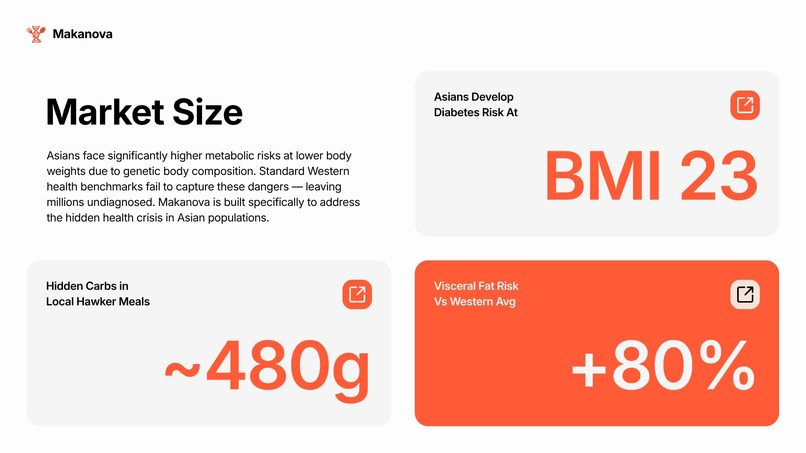
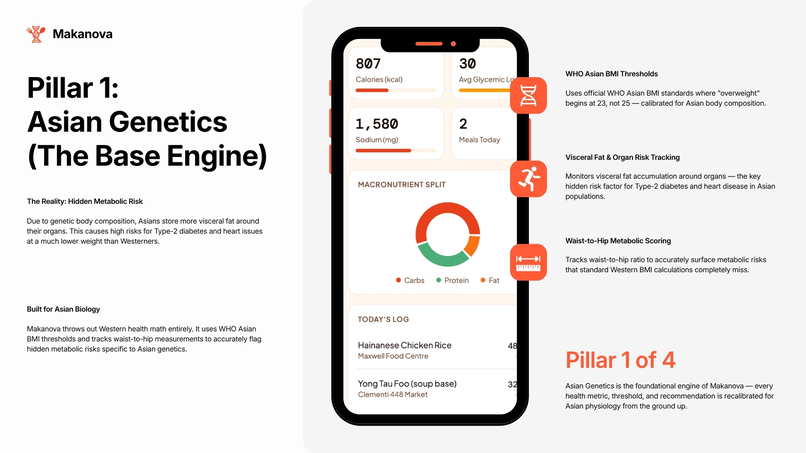
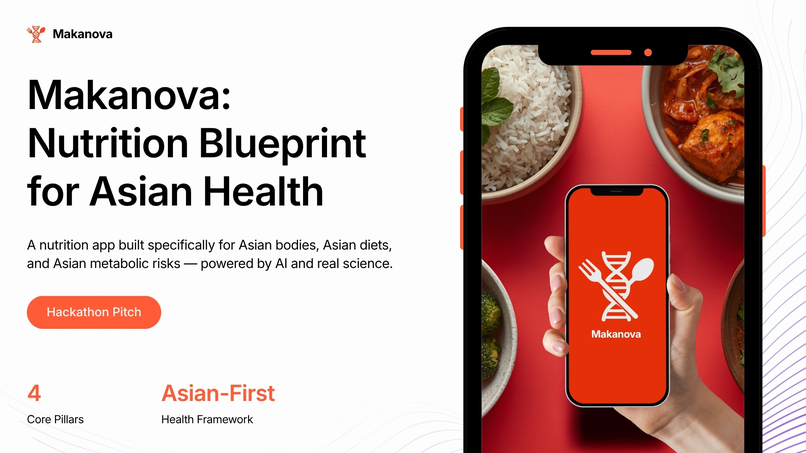
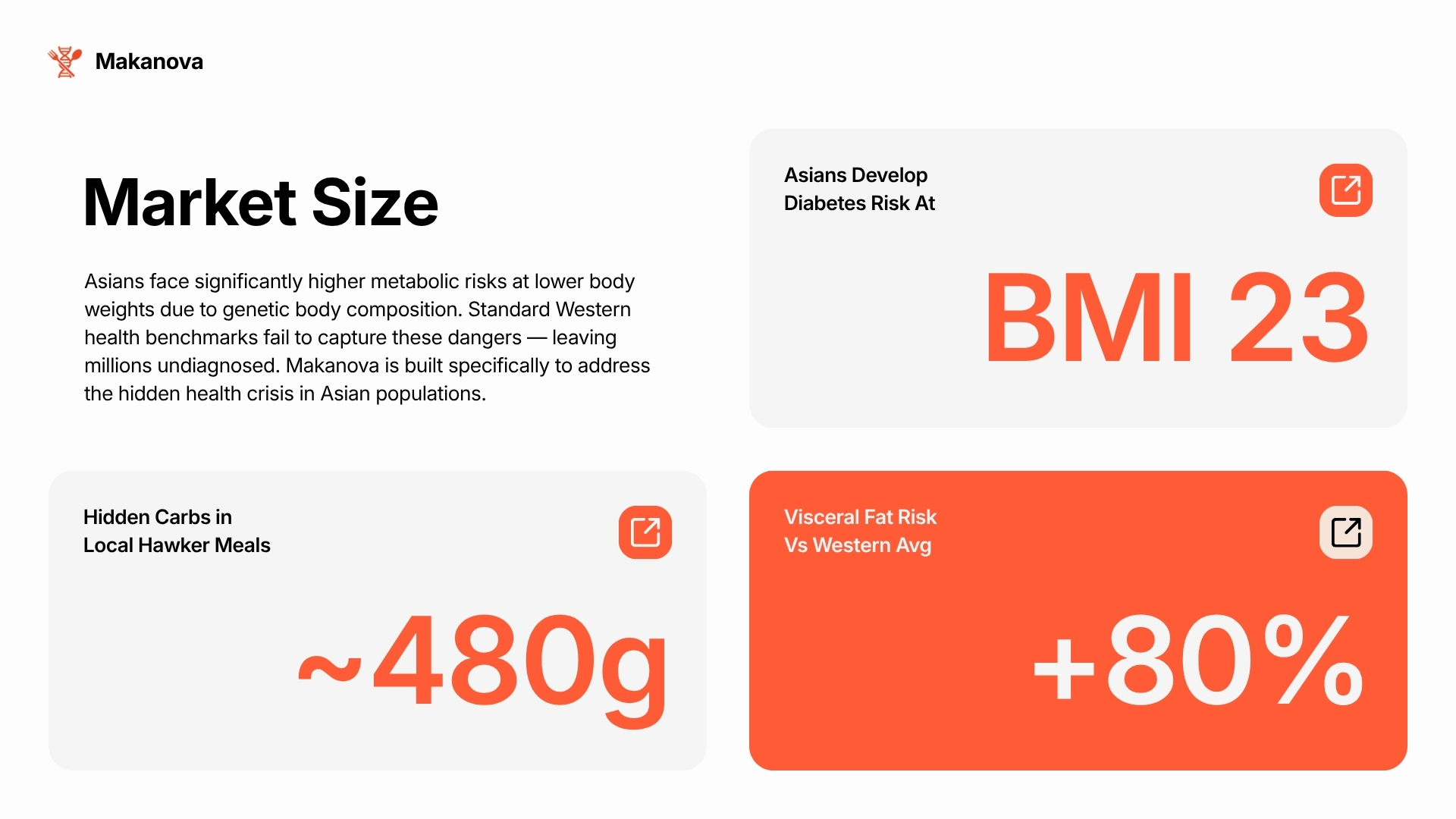
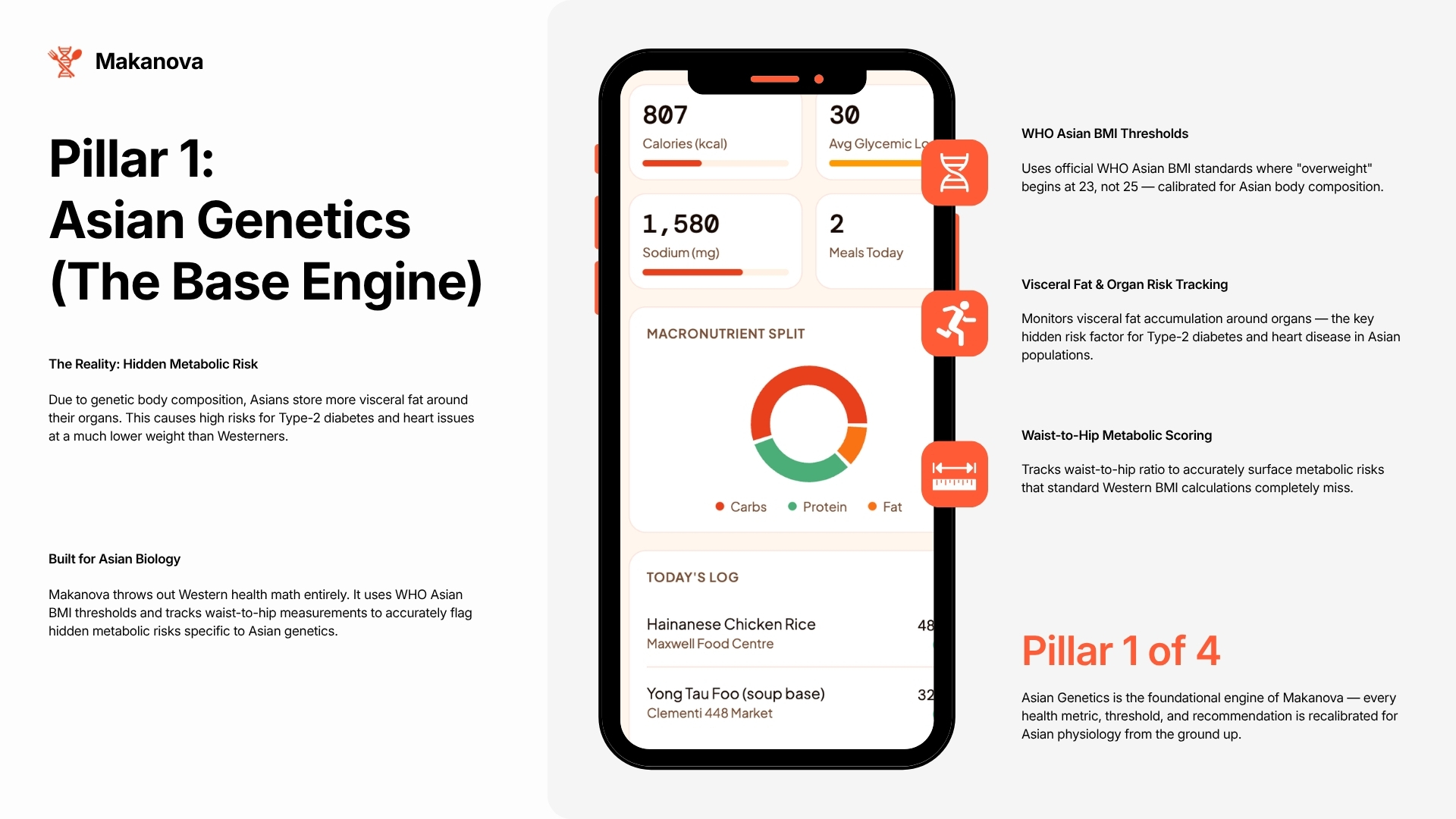
Standard health tracking apps rely on Western health science defaults that completely fail Asian communities. Due to genetic differences, Asians accumulate dangerous visceral fat around vital organs and develop severe metabolic conditions (like Type-2 diabetes) at a much lower weight than Westerners. Furthermore, existing applications fail to recognize local dishes like Laksa, Nasi Lemak, or Cai Fan, and ignore the extreme relative humidity of tropical climates or the intense late-night desk demands of Asian academic and work cultures. We built Makanova to give Asian bodies an accurate, tailored health system.
What it does
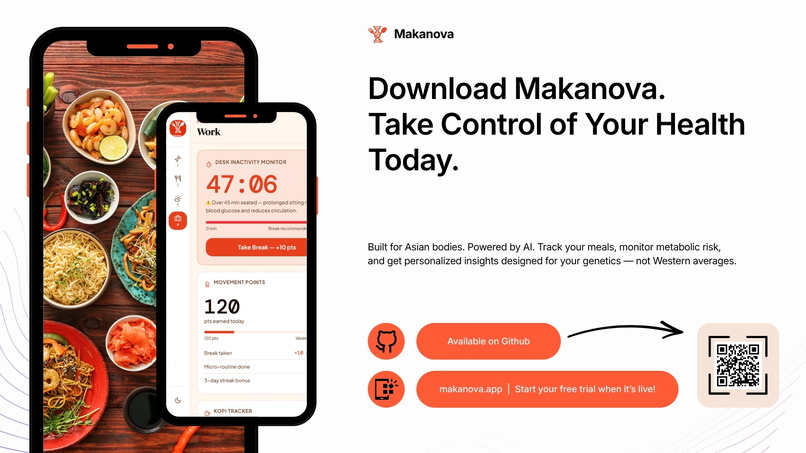
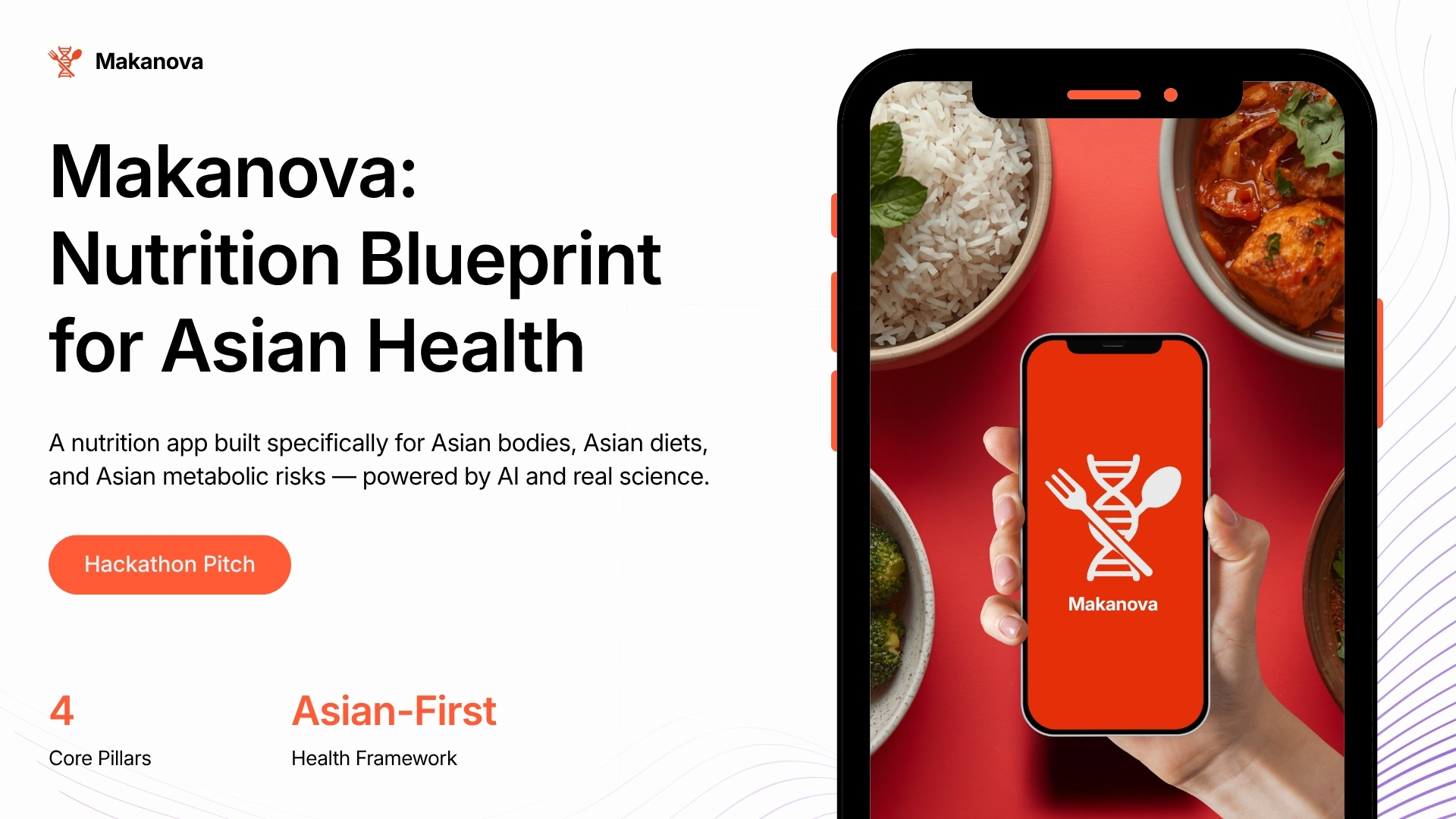
Makanova is an AI-powered health assistant anchored on a 4-Pillar Blueprint:
- 🧬 Pillar 1: Asian Genetics: Discards Western health math to employ recalibrated WHO Asian BMI thresholds (where "overweight" begins at 23 rather than 25) to catch hidden metabolic risks early.
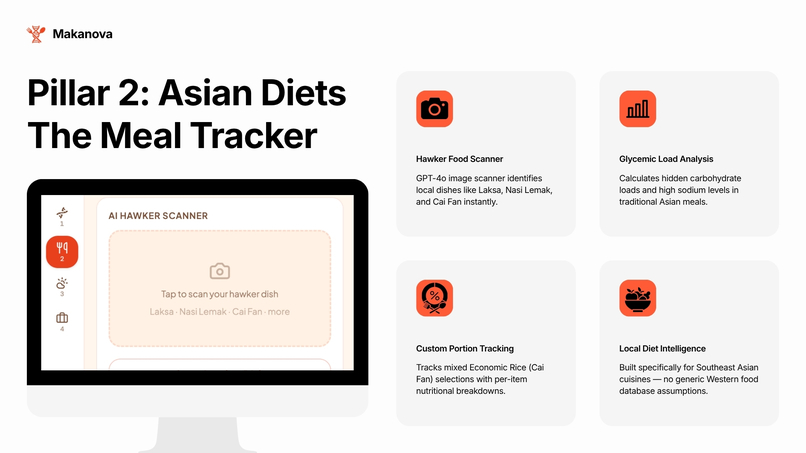
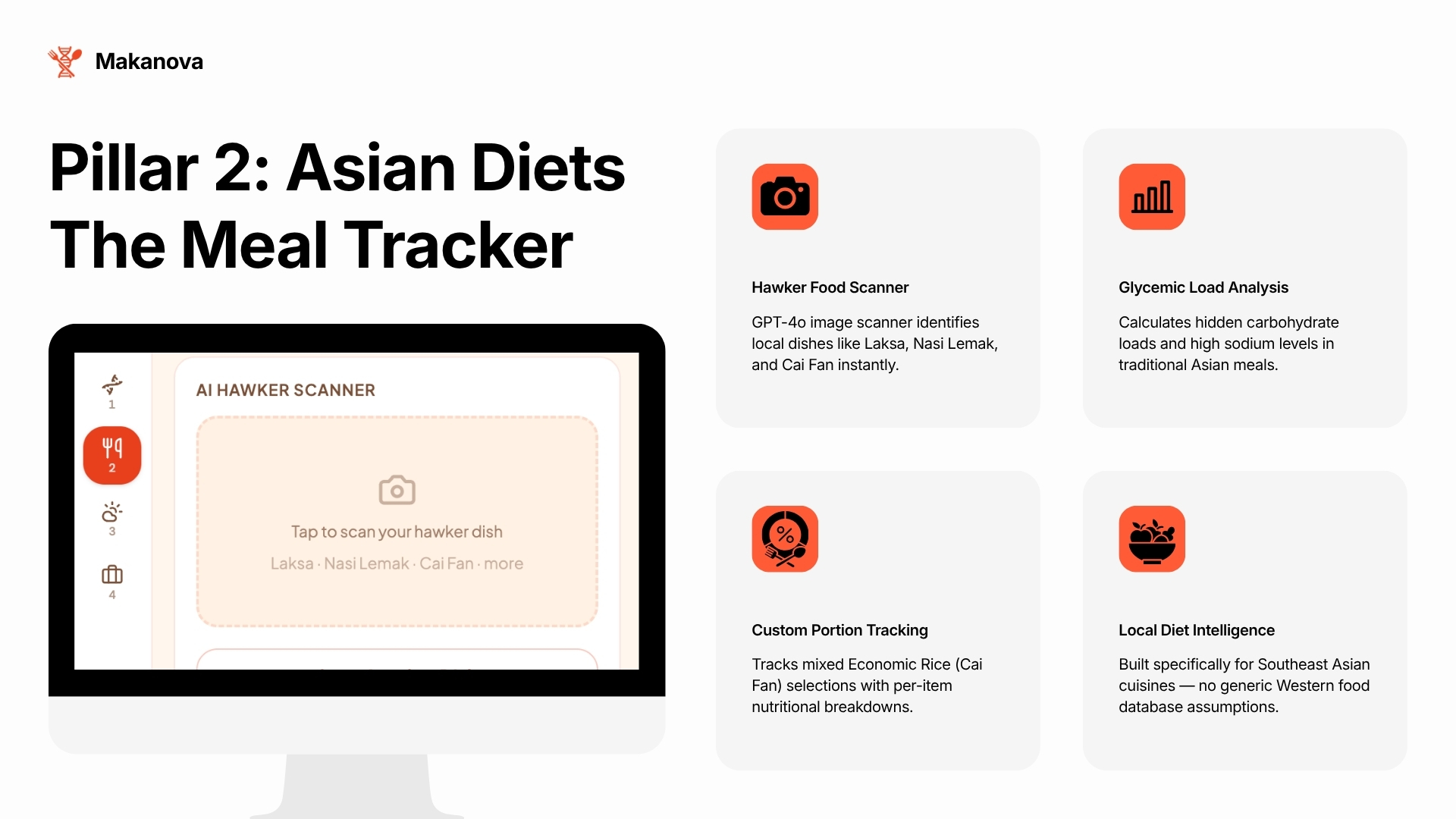
- 🍜 Pillar 2: Asian Diets: Features an OpenAI
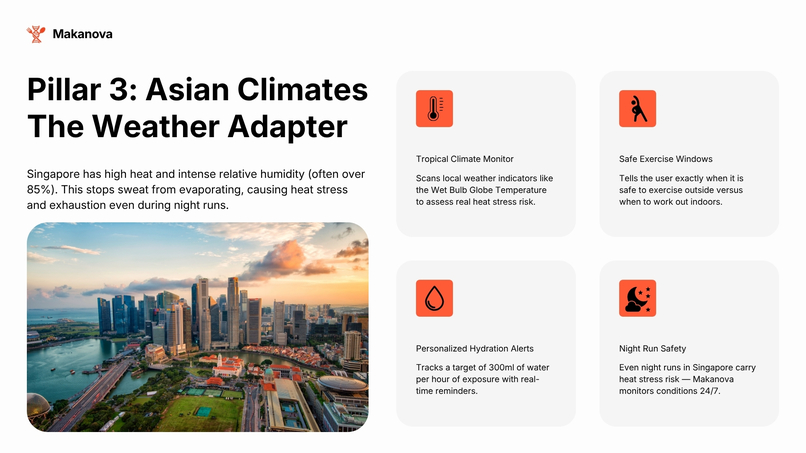
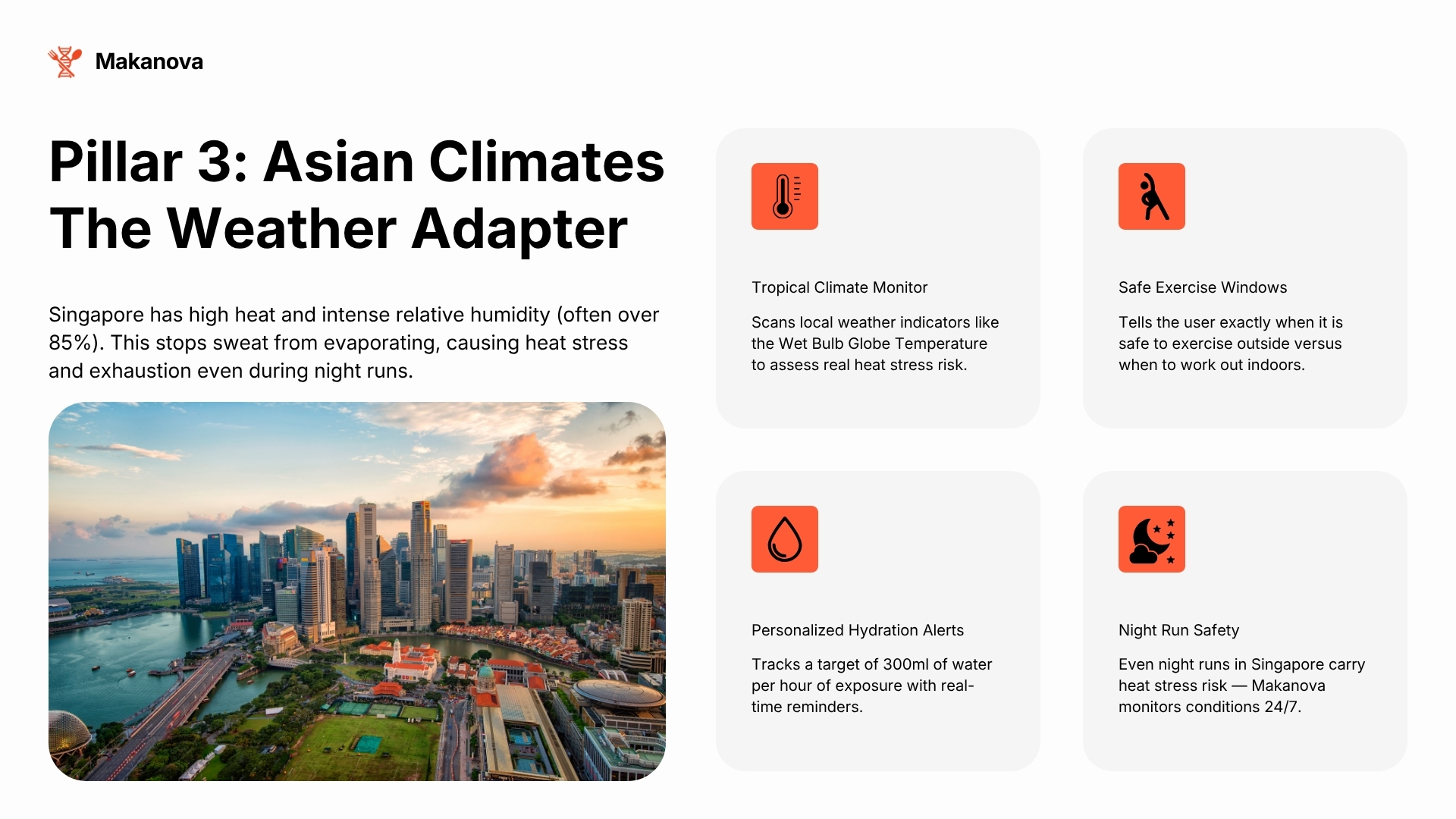
gpt-4oscanner that breaks down multi-ingredient local hawker items for hidden glycemic loads and sodium counts, offering localized "Smart Hawker Swaps." - ☀️ Pillar 3: Asian Climates: Tracks real-time tropical environmental metrics like Relative Humidity and Wet Bulb Globe Temperature to advise safe outdoor workout windows.
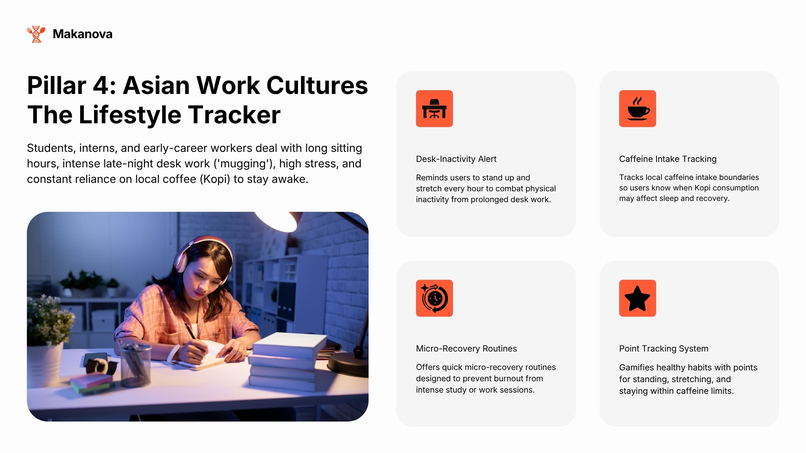
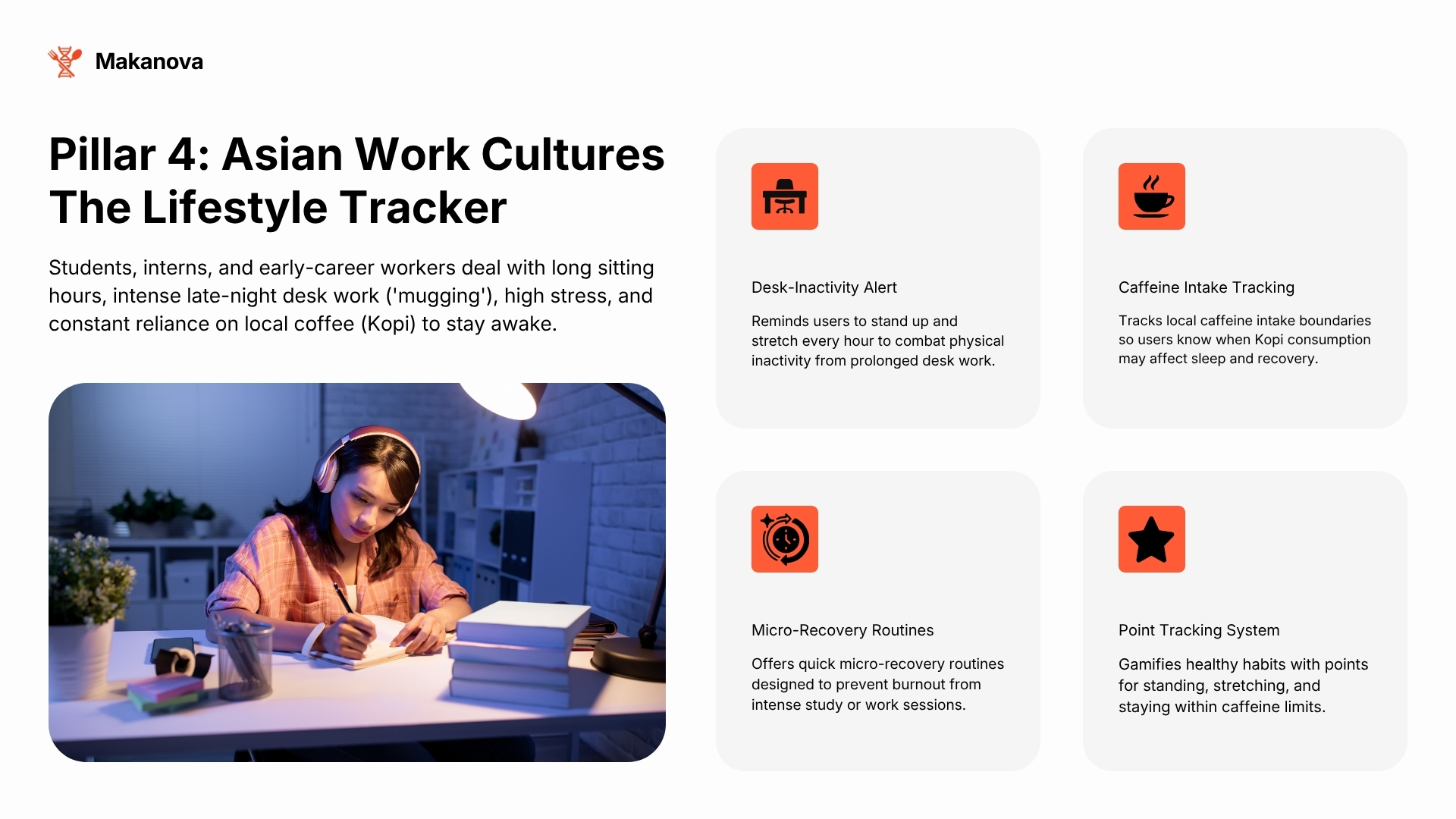
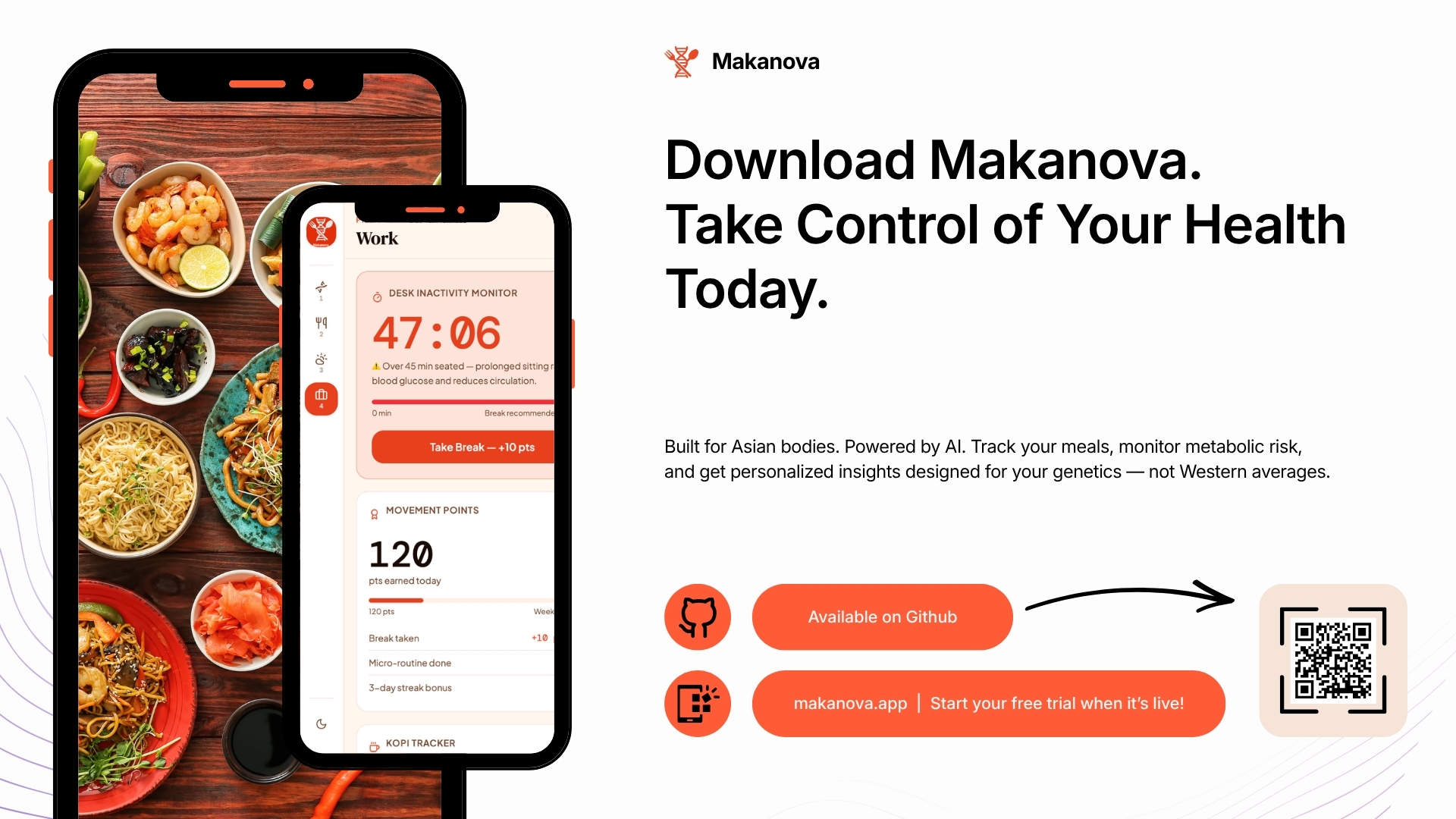
- 💼 Pillar 4: Asian Work Cultures: Gamifies desk routines with inactivity check-ins, micro-recovery stretching rewards, and local caffeine boundary limits (Kopi trackers) to avoid chronic student and builder burnout.
How we built it
We engineered a full-stack web application using:
- Frontend & Routing: Modern Next.js App Router styled with Tailwind CSS for a premium dark-themed interface mirroring our Figma mockup principles.
- AI Engine: OpenAI API (
gpt-4o) integrated via an internal Next.js API server route (/api/scan-food) to parse and assess complex Southeast Asian food plates. - Code Management: Managed using VS Code and organized through GitHub.
Challenges we ran into
- Hawker Food Composition Complexities: Traditional multi-ingredient hawker foods have immense variability (e.g., varying proportions in a customized plate of Cai Fan). Overcoming this required engineering structured prompts to force OpenAI to deliver realistic glycemic and local substitution estimates.
- Time-Constraint Triaging: Building a comprehensive 4-pillar system within a single sprint meant we had to rigorously prioritize establishing a fully operational code interface for Pillars 1 and 2 while cleanly modeling Pillars 3 and 4 for our visual pitch presentation.
Accomplishments that we're proud of
- Successfully mapping and implementing an Asian-First health framework that actively updates metrics based on precise live Singapore Time zone execution.
- Developing a functional OpenAI image recognition layer that successfully moves past basic cookie-cutter LLM wrappers to provide actionable, context-aware nutritional health swaps.
What we learned
We learned that building impactful software isn't about copying global tech benchmarks; it's about localized accuracy. Diving deep into the WHO body composition data opened our eyes to how desperately underserved Asian genetics are in mainstream health tech, and taught us how to lean heavily on AI to build localized datasets on the fly.
What's next for Makanova
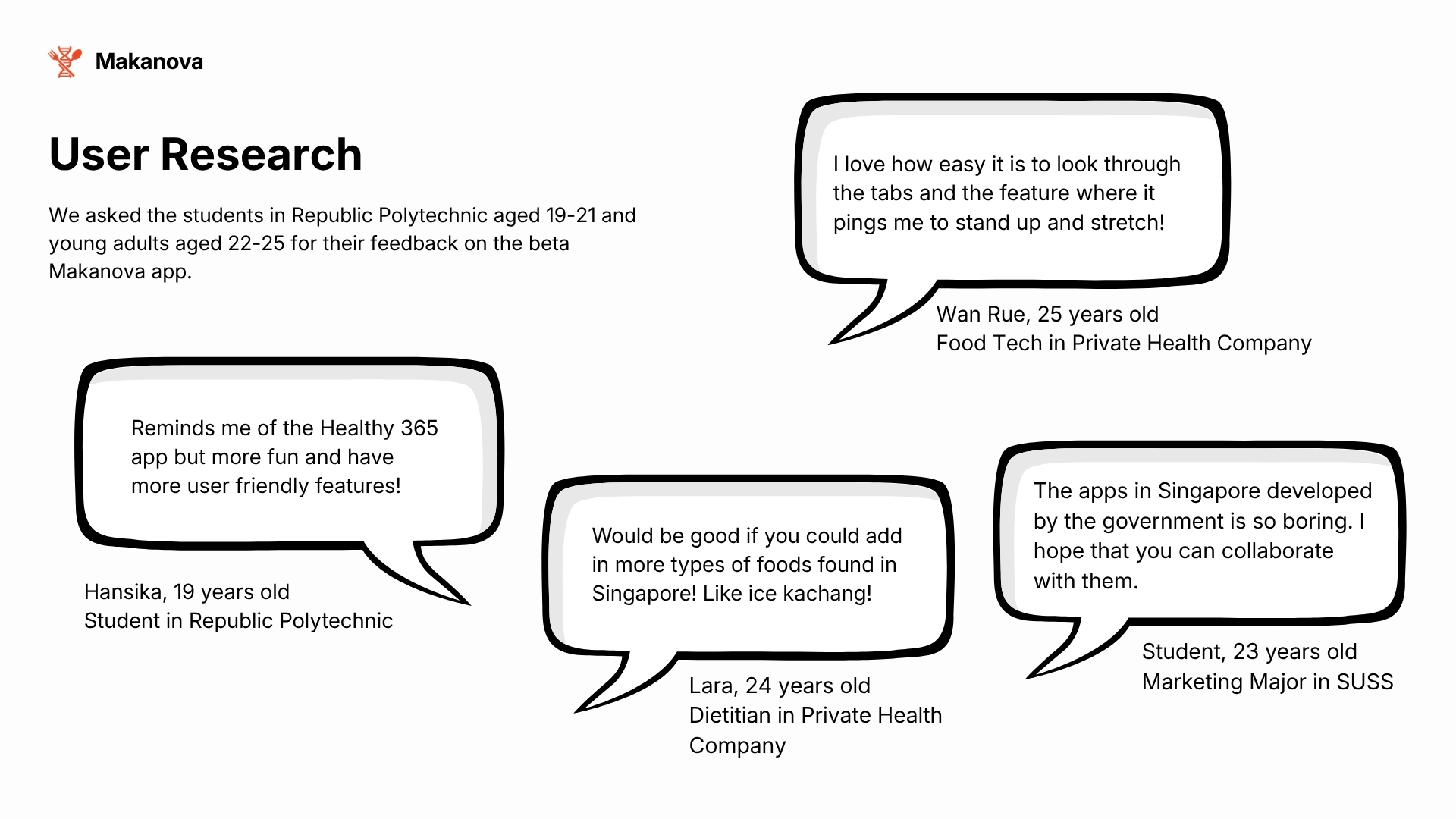
- On-Chain/Live API Environmental Data Integration: Hooking up the Climate Adapter straight into Singapore's NEA weather services for fully live, automated local data tracking.
- Fine-tuned Nutrition Models: Feeding our OpenAI pipeline a broader verified database of localized Southeast Asian hawker components to maximize specific macro-nutrient assessment precision.


Log in or sign up for Devpost to join the conversation.