About the project
What inspired this
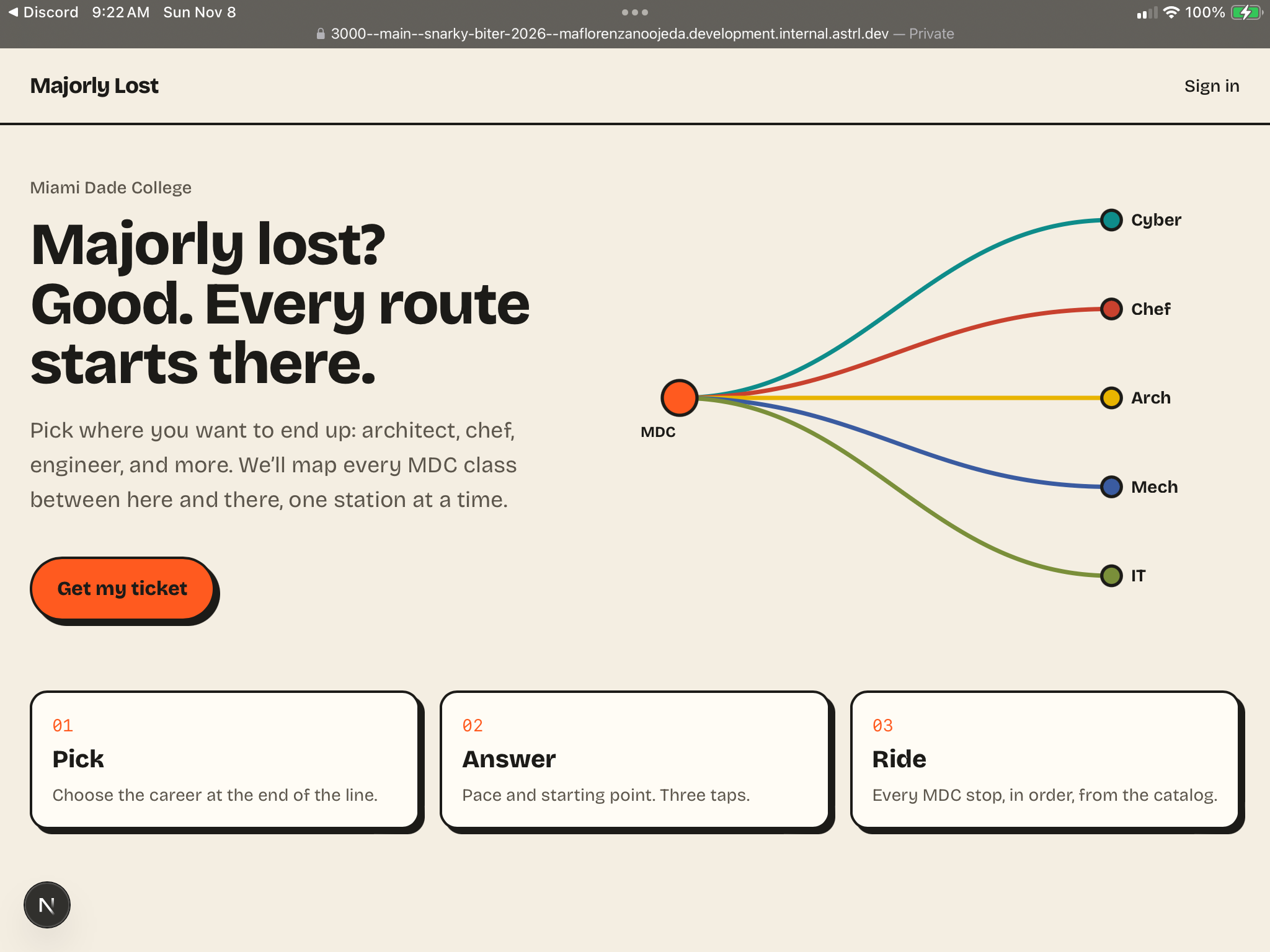
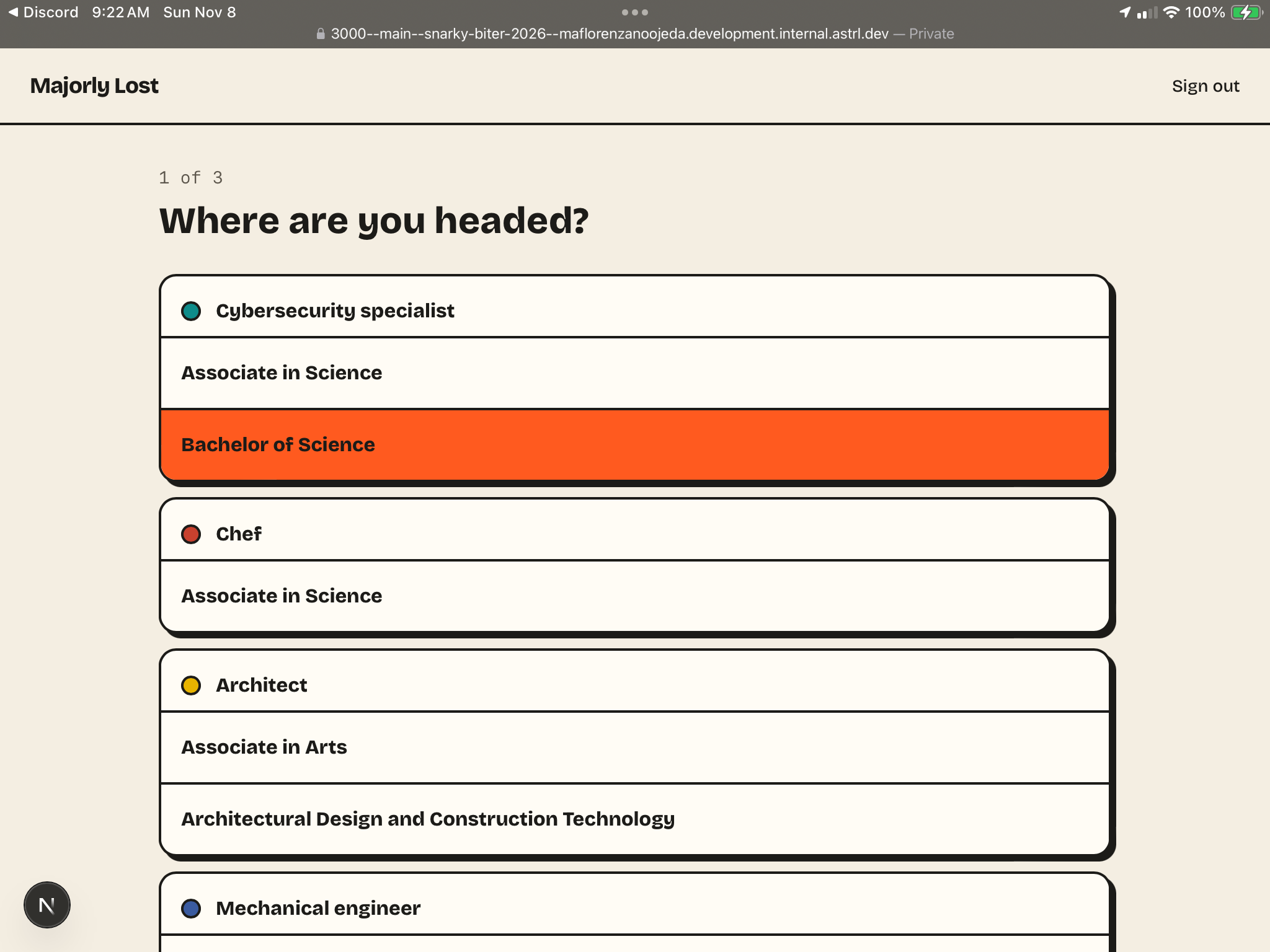
A student at Miami Dade College can name the job at the end and still not know the next class. The official path is a Course Sequence Guide, usually a PDF, not a route you can ride. I wanted the catalog to answer a smaller question: if I am going to be an architect, a chef, an engineer, a cybersecurity specialist, or someone in IT, which stops are actually between here and there?
The brief I kept was the line on the front page. Majorly lost? Good. Every route starts there.
How it is built
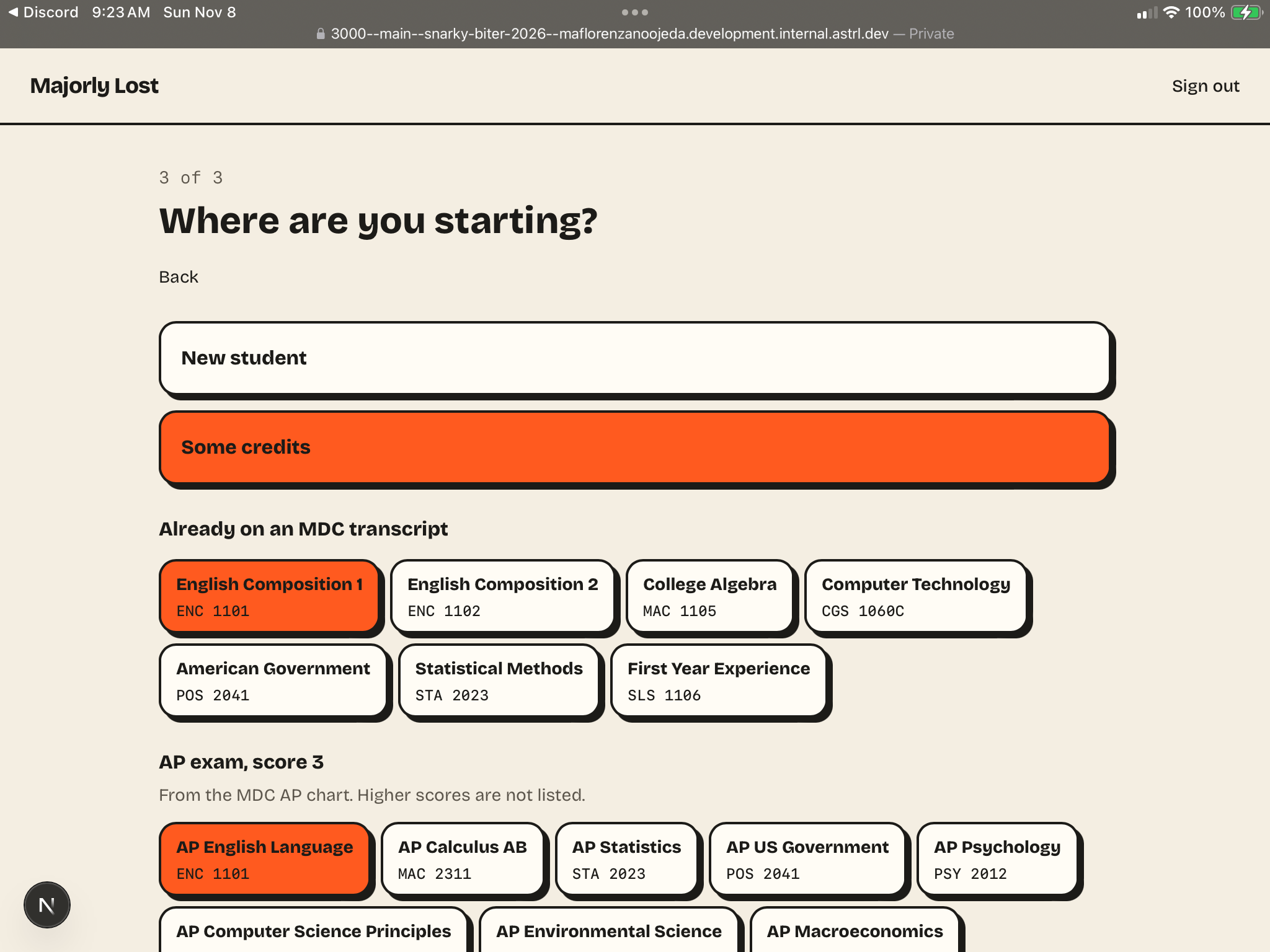
Majorly Lost is a Next.js app. Sign-in is Auth0. After that, the planner is three taps: the career, the pace, and whether the student is new or already holding credits.
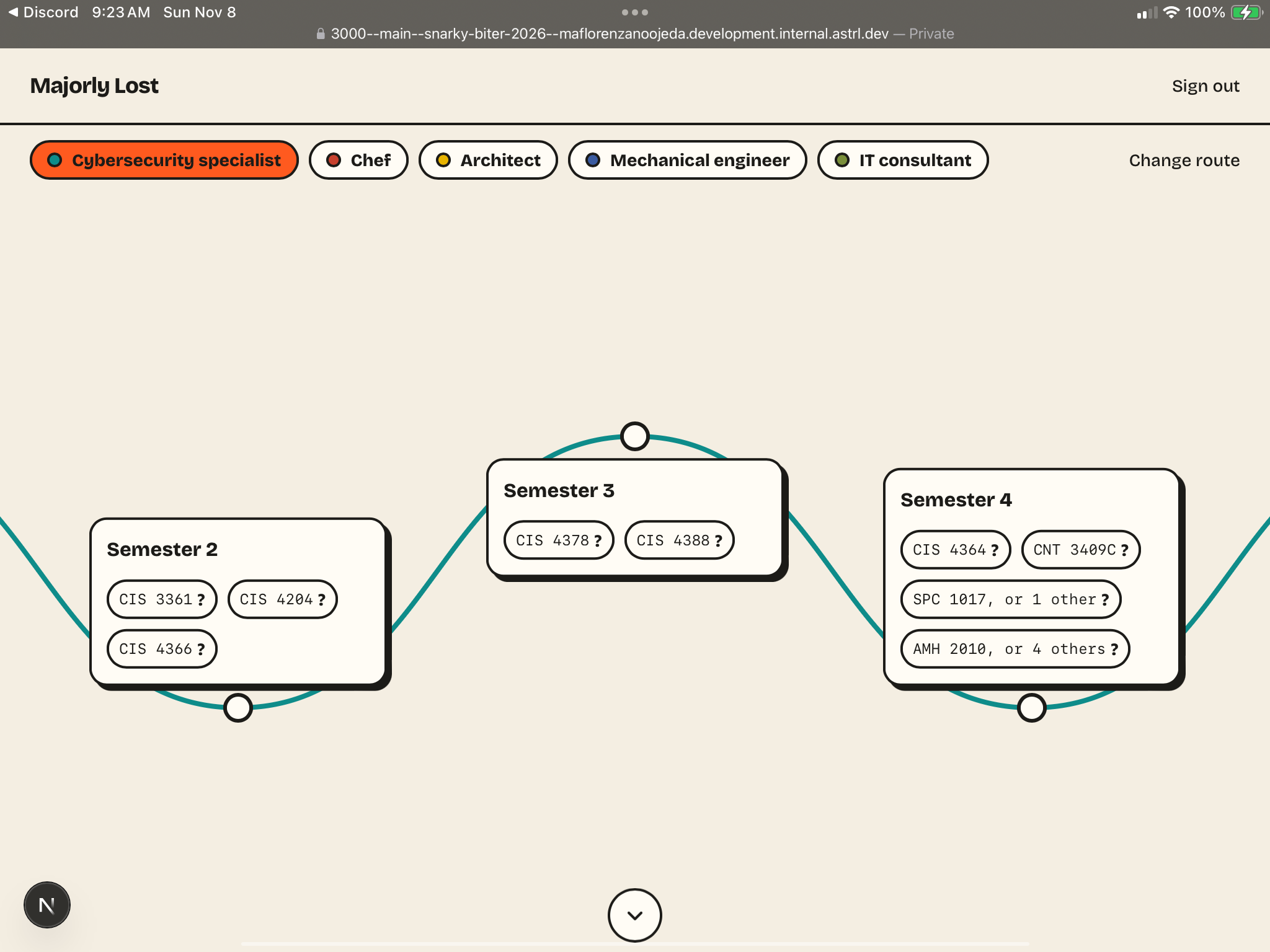
The server does not ask a model for the class list. It loads that program's Course Sequence Guide from the CurriQunet catalog, then from the program PDF, then from a saved extract. A parser turns that text into stations. Each station is a term. A group inside it is one course, a pair that must both be taken, or a choice of one. The Associate in Science in Cybersecurity is 60 units, five terms at full-time.
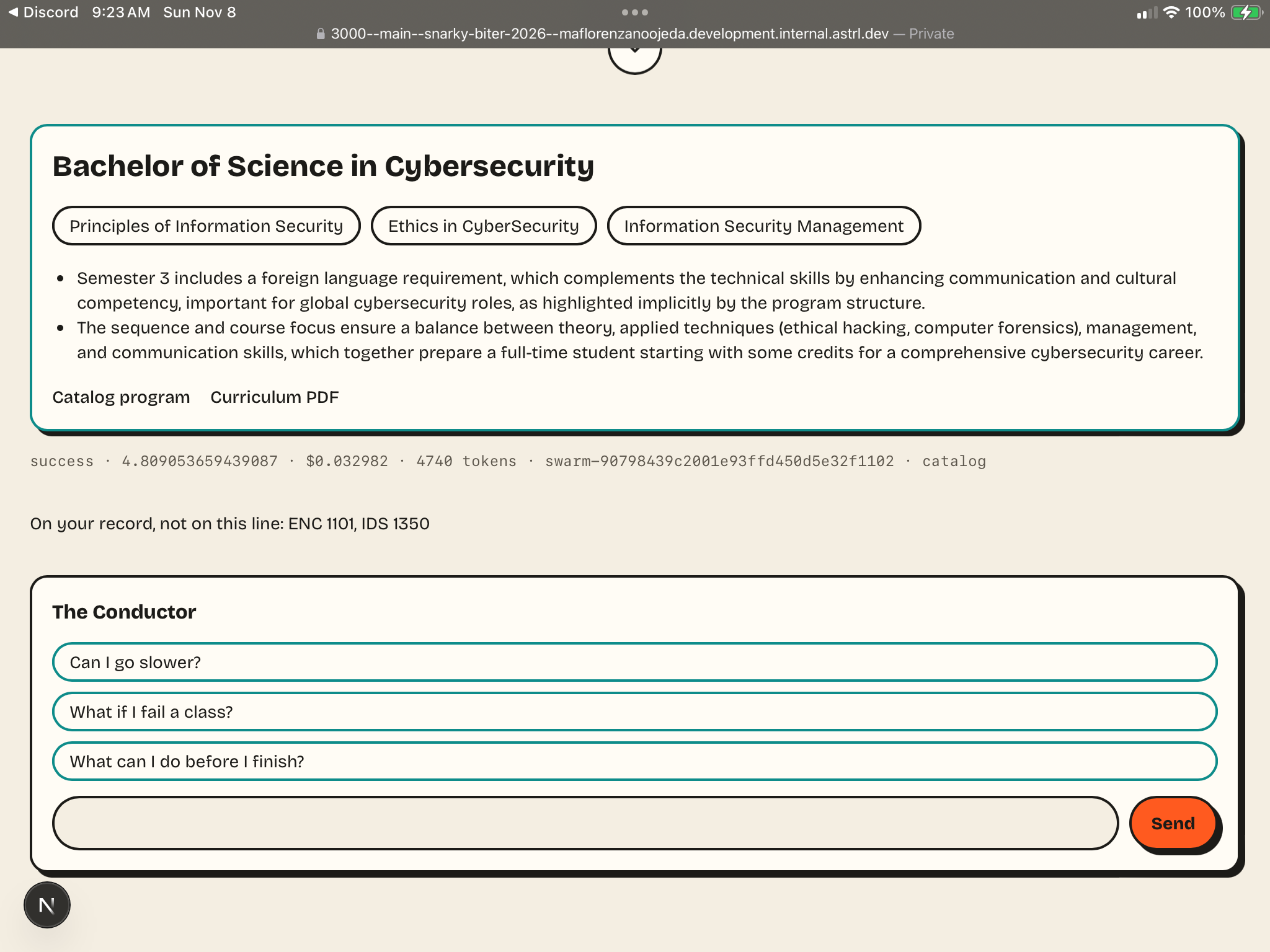
One Swarms SequentialWorkflow of three agents then writes only the words around those stations: why this ride, the certificates named in the sequence, and three resume bullets. Gemini is the Conductor, a chat on the same ticket. The ticket stays in localStorage on this device.
What I learned
The model is allowed to write the words. It is not allowed to choose the stops.
A prompt is not a guard. The check that matters runs after the reply. A Conductor answer is kept only when every course code in it already appears in the sequence text.
A code is three letters, a space, and four digits. If the reply names anything outside that set, the student hears one sentence instead: the Conductor can only talk about courses in this program's sequence.
Challenges
Miami Dade College has no course API. "Live" means the server reads the catalog page when the student generates a route, and falls through when that page is missing or does not contain the program's sentinel course. The Architectural Design and Construction Technology page is empty, so that fork starts from its PDF extract.
The agents sometimes copy their own instructions into the ticket. Those lines are stripped before the certificates and resume bullets render. If the swarm call fails, the stations still draw. The fare stub shows the error instead of a cost.
Credits the student already has, including AP exams at score 3, mark a station done before the ride starts. Switch to another career and a class that sits on both routes stays labeled both.
Built With
- auth0
- gemini
- react
- swarm
- typescript
