Inspiration
Growing up and studying in Central Africa, I witnessed how access to clean water often depends on small private tap owners who manually sell water by the jerrycan. In many communities, customers must wait for the vendor to be physically present before they can fetch water. Payments are handled in cash, records are rarely kept, and both customers and tap owners experience inefficiencies and losses. I was inspired to ask: What if ordinary water taps could become smart, accessible, and transparent ? MajiQuick was born from the desire to combine IoT hardware, USSD technology, and web systems to create a practical, locally adapted solution.
What it does
MajiQuick is a smart water dispensing system that allows users to:
Purchase water using USSD on any phone; Receive a unique digital code; Enter the code to unlock a tap and collect a fixed quantity of water; The system records transactions digitally, helping tap owners track usage and reduce losses.
How we built it
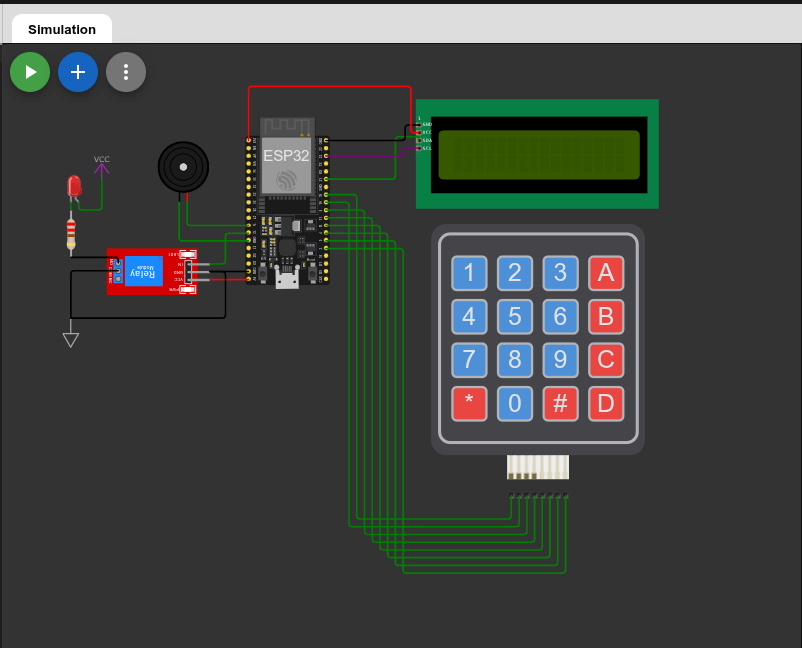
At this stage, MajiQuick has been developed as a fully functional system simulation.
The prototype includes:
- Simulated IoT hardware logic (microcontroller behavior)
- Backend transaction validation system
- USSD workflow simulation
- Database logging of water purchases
- Web-based interface for monitoring transactions
The simulation demonstrates how the hardware, USSD system, and cloud backend interact in real-time before physical deployment. This approach allows for system validation, logic testing, and optimization before investing in full hardware production.
The simulation integrates:
- Embedded system logic modeling
- Node.js backend server
- Cloud database (Firestore)
- USSD flow simulation
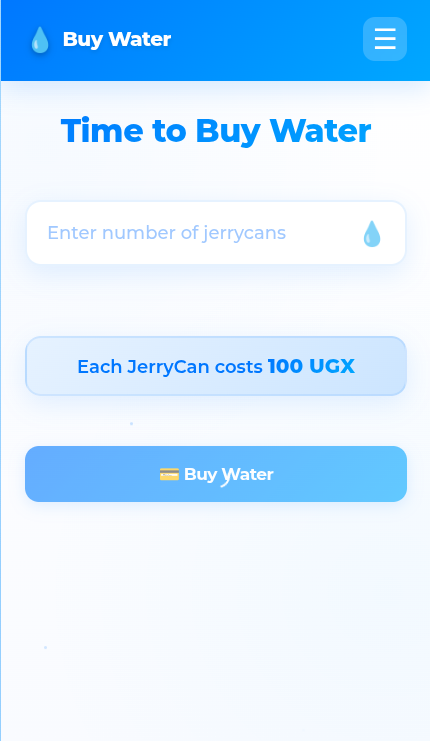
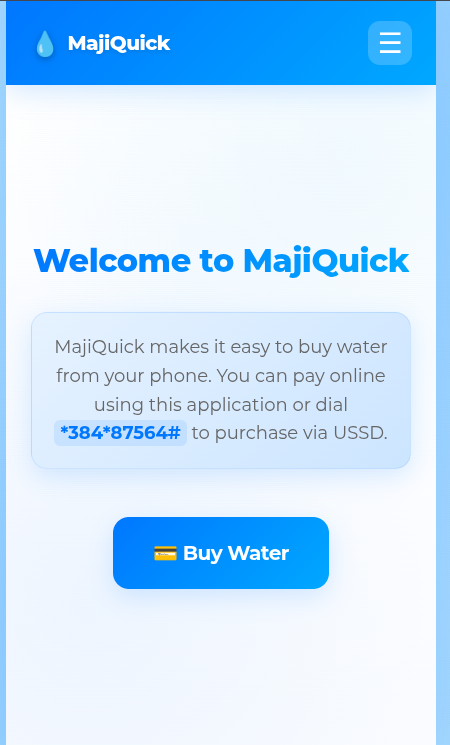
- Progressive Web App (PWA) interface
The architecture replicates real-world deployment conditions while allowing controlled testing and debugging.
Challenges we ran into
- Designing reliable transaction validation logic
- Simulating low-connectivity conditions
- Ensuring secure code-based dispensing
- Keeping the system affordable and scalable
- Limited access to advanced hardware components locally Through iteration and testing, the system logic has been refined and prepared for physical pilot development. ## Accomplishments that we're proud of
- Successfully designing and validating a complete end-to-end system architecture connecting USSD logic, backend processing, and IoT device behavior through simulation.
- Creating a cloud-based monitoring system that records and tracks transactions in real time.
- Building a solution that works for both basic phones (via USSD logic) and smartphones (via PWA).
- Transforming a real community problem into a technically structured and scalable digital solution. ## What we learned
- Innovation must be adapted to real-world constraints such as low connectivity, unstable power, and limited smartphone access.
- System security and transaction validation are critical when linking payments to physical device control.
- Simulation is a powerful tool for testing logic and reducing hardware risks before physical deployment.
- Community-centered design is essential; technology must remain simple and affordable for small water operators.
- Building hardware-software integrated systems requires patience, iteration, and strong architectural planning. ## What's next for MajiQuick
- Transition from simulation to physical hardware prototype development.
- Integrate real GSM/USSD services with live telecom providers.
- Deploy pilot units at selected water taps for field testing and data collection.
- Refine the business model based on real user feedback.
- Form partnerships with local water operators, municipalities, and development organizations.
- Prepare for early commercialization and regional scaling across East Africa.
Built With
- africa's-talking
- firebase
- node.js
- react-js
- render
- vercel
- wokwi-simulator


Log in or sign up for Devpost to join the conversation.