Inspiration
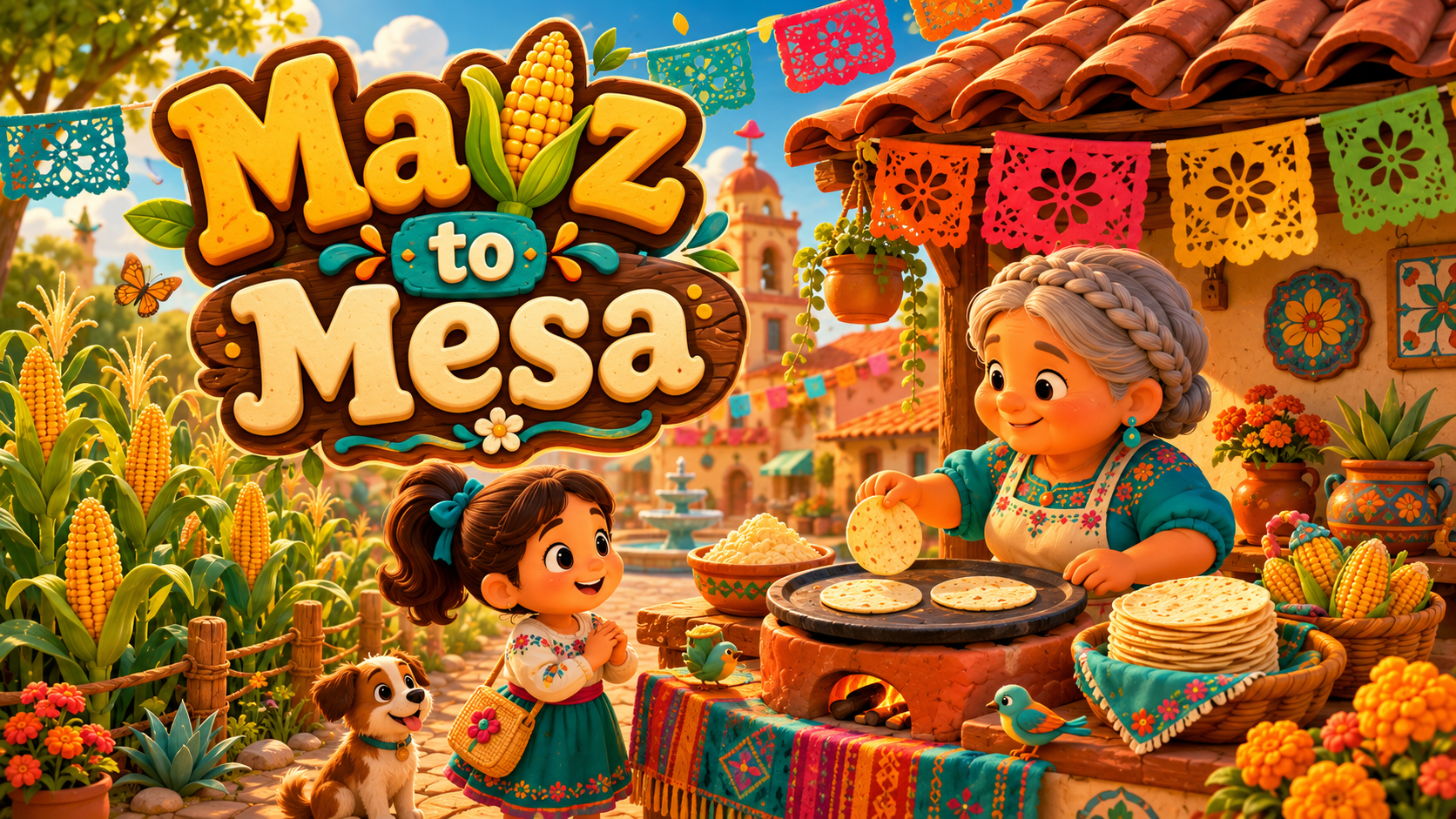
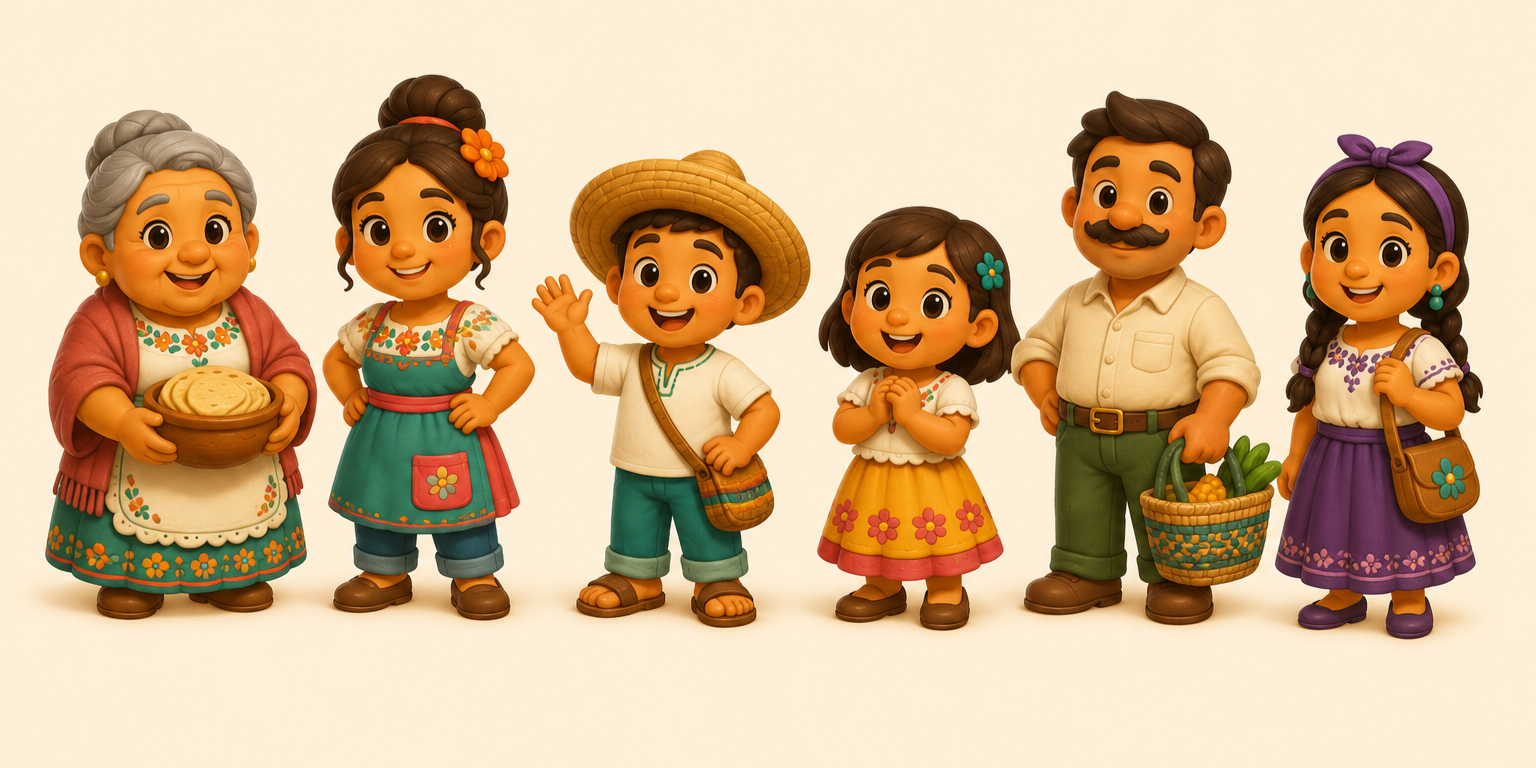
I'm a Latina creator, and this game comes straight from my heart. Some of my warmest memories are in my abuela's kitchen, the smell of fresh tortillas on the comal, the soft pat-pat of masa between her hands, and her patient voice teaching me, "asi, mija, like this." Maiz isn't just food in our culture; it's family, history, and love you can hold in your hands.
I made Maiz to Mesa for the kids who grew up like me, Latina and Latino kids who love maiz and remember an abuela teaching them something precious. I want them to open a game, see their own world shining back at them, and feel proud. If even one little girl plays this and thinks "that's MY culture, and I could make games too," then it was all worth it.
What it does
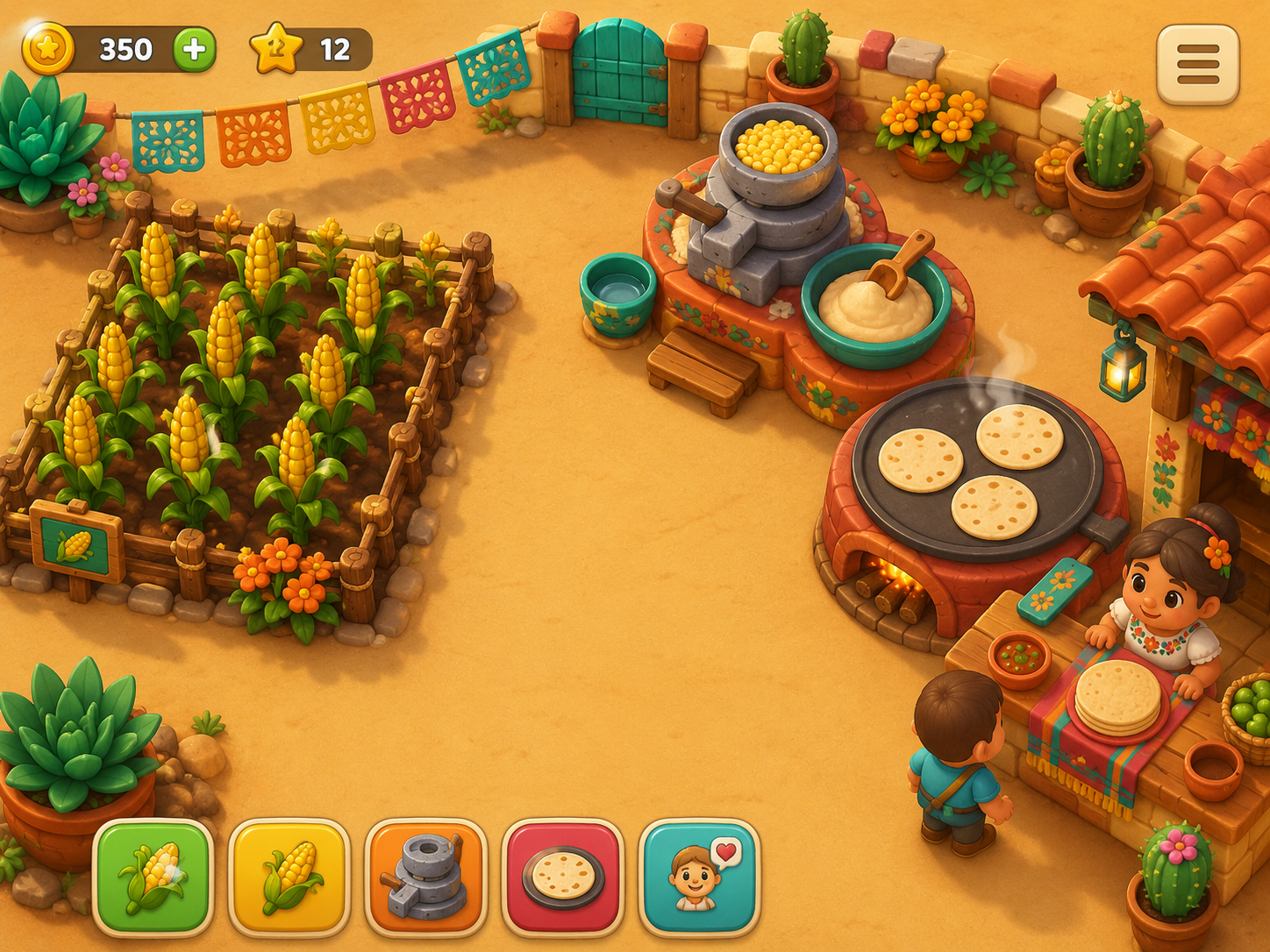
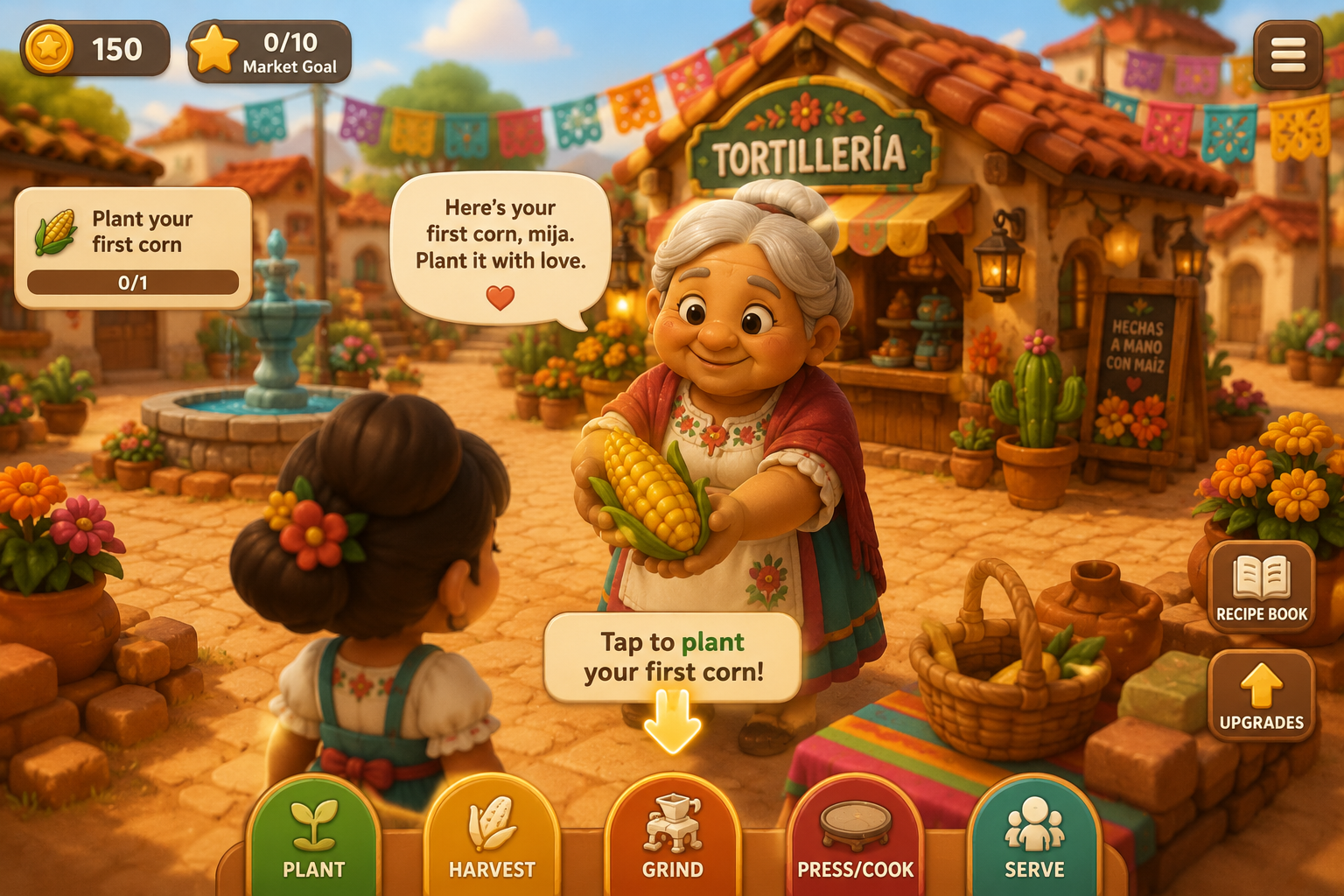
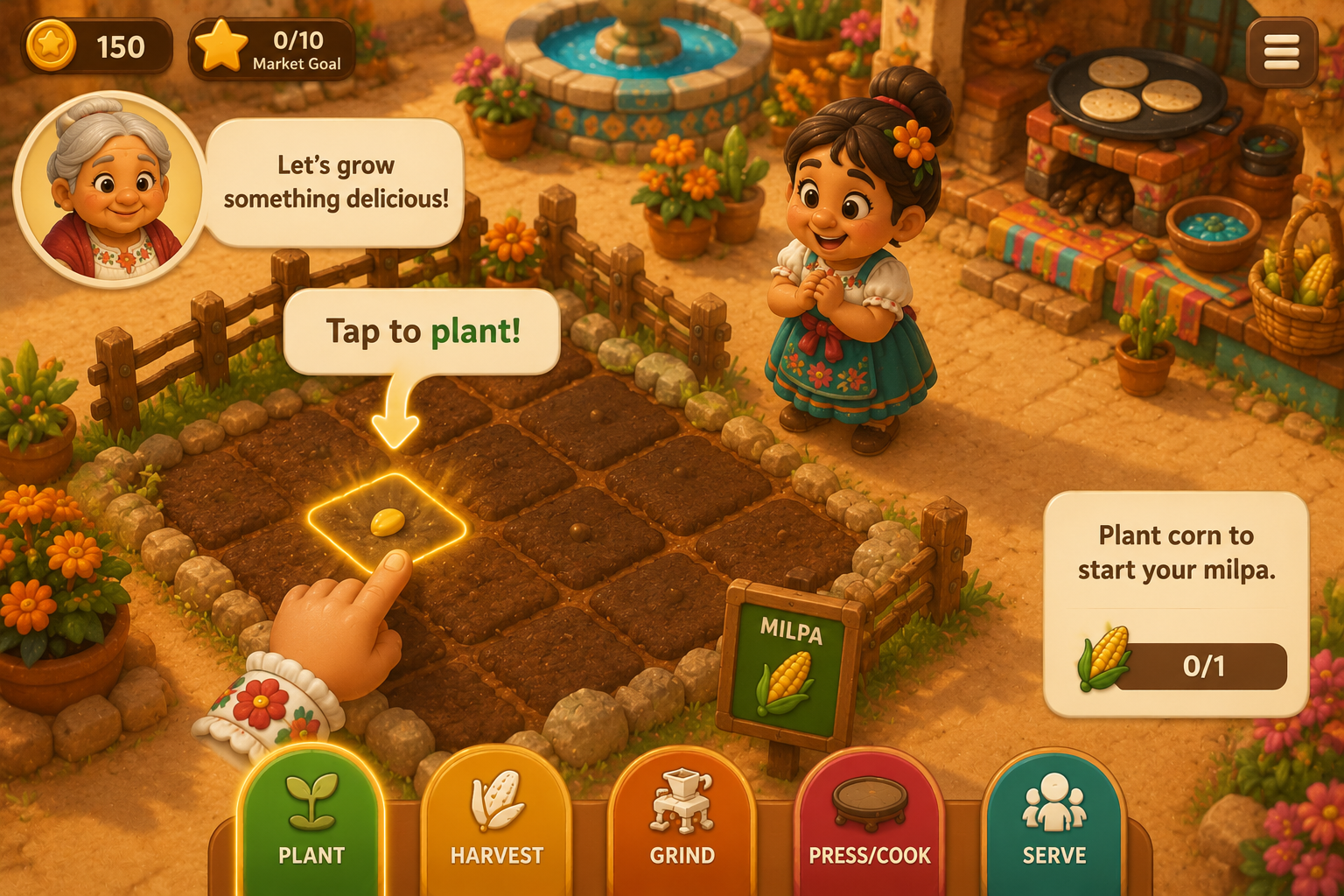
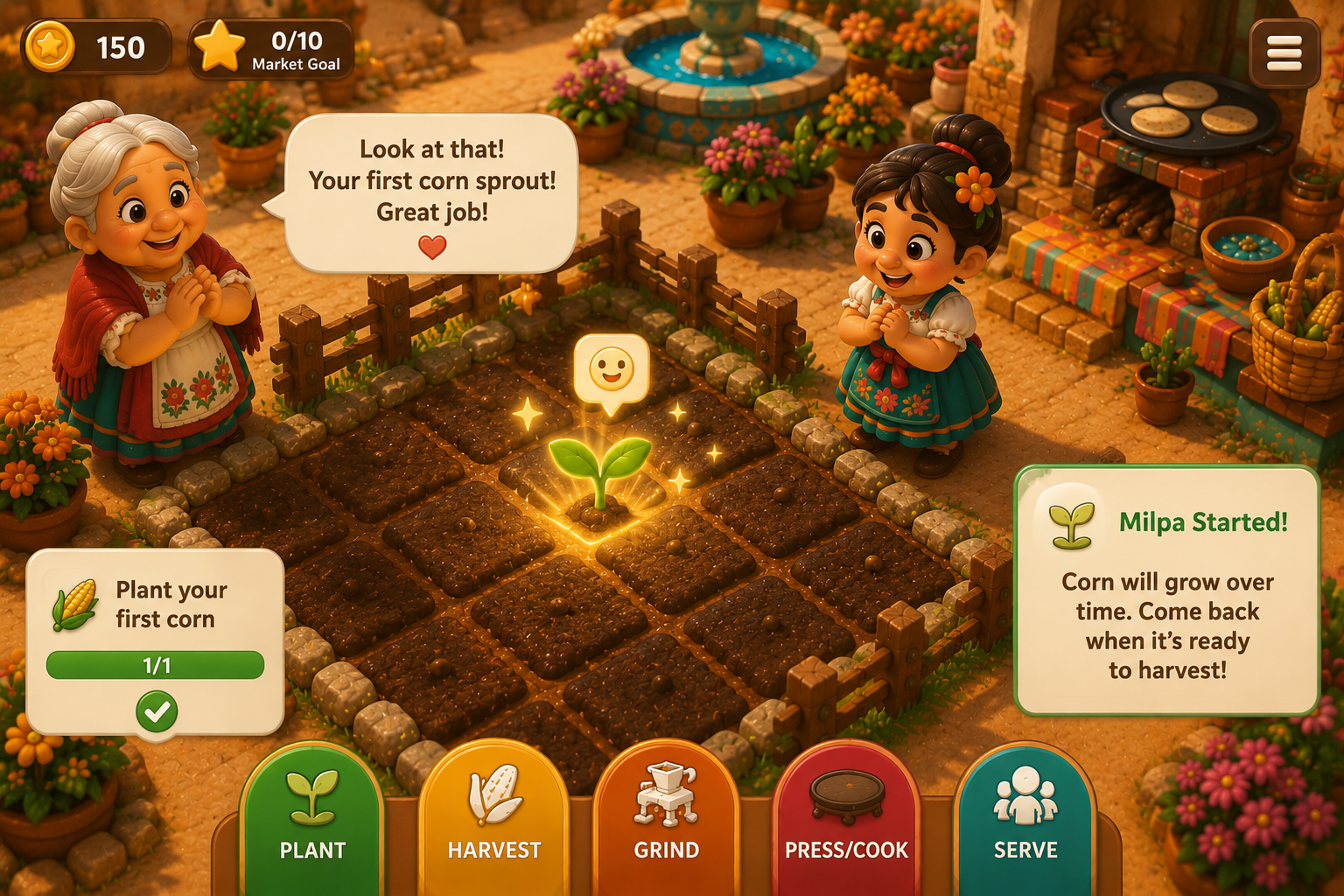
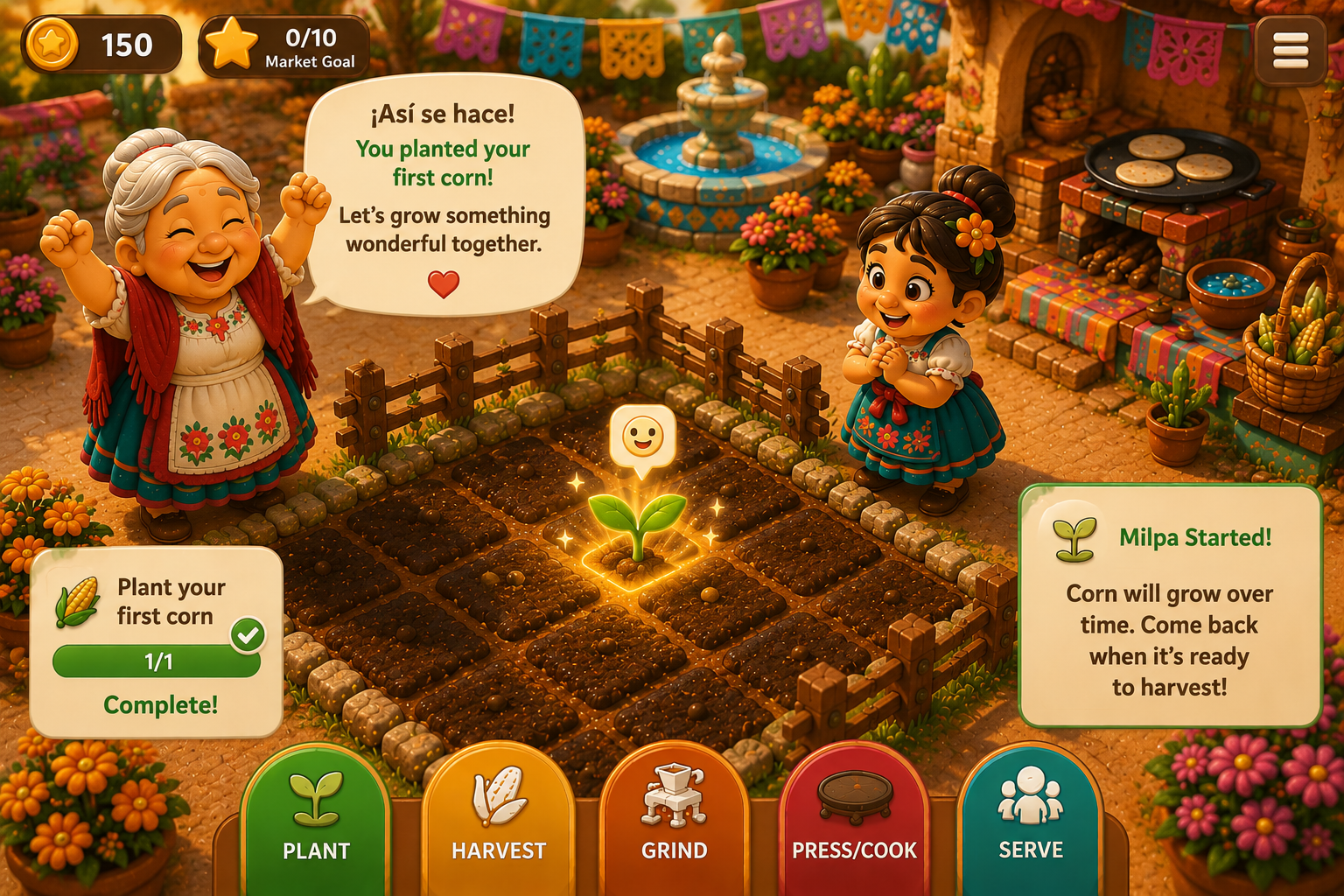
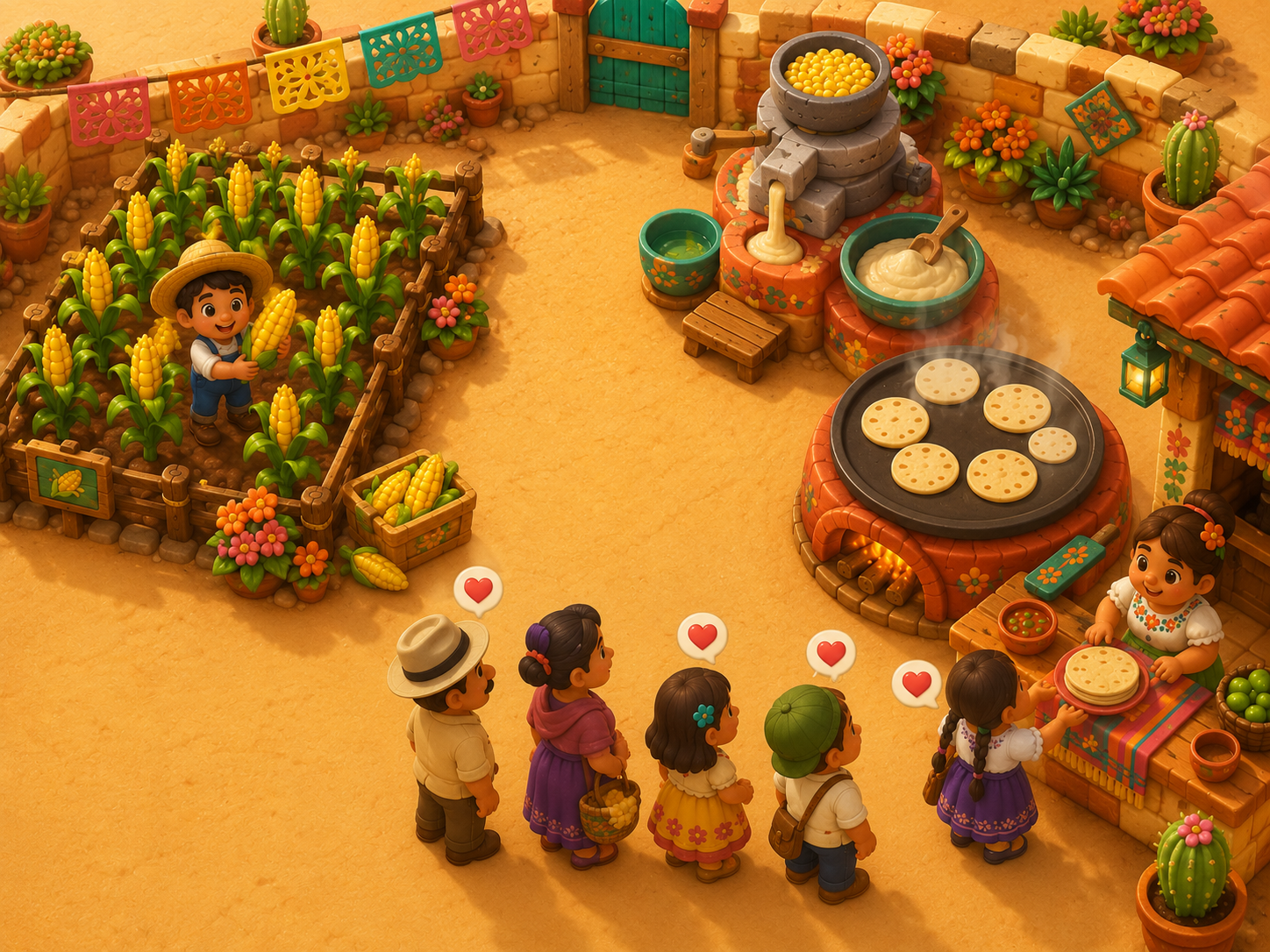
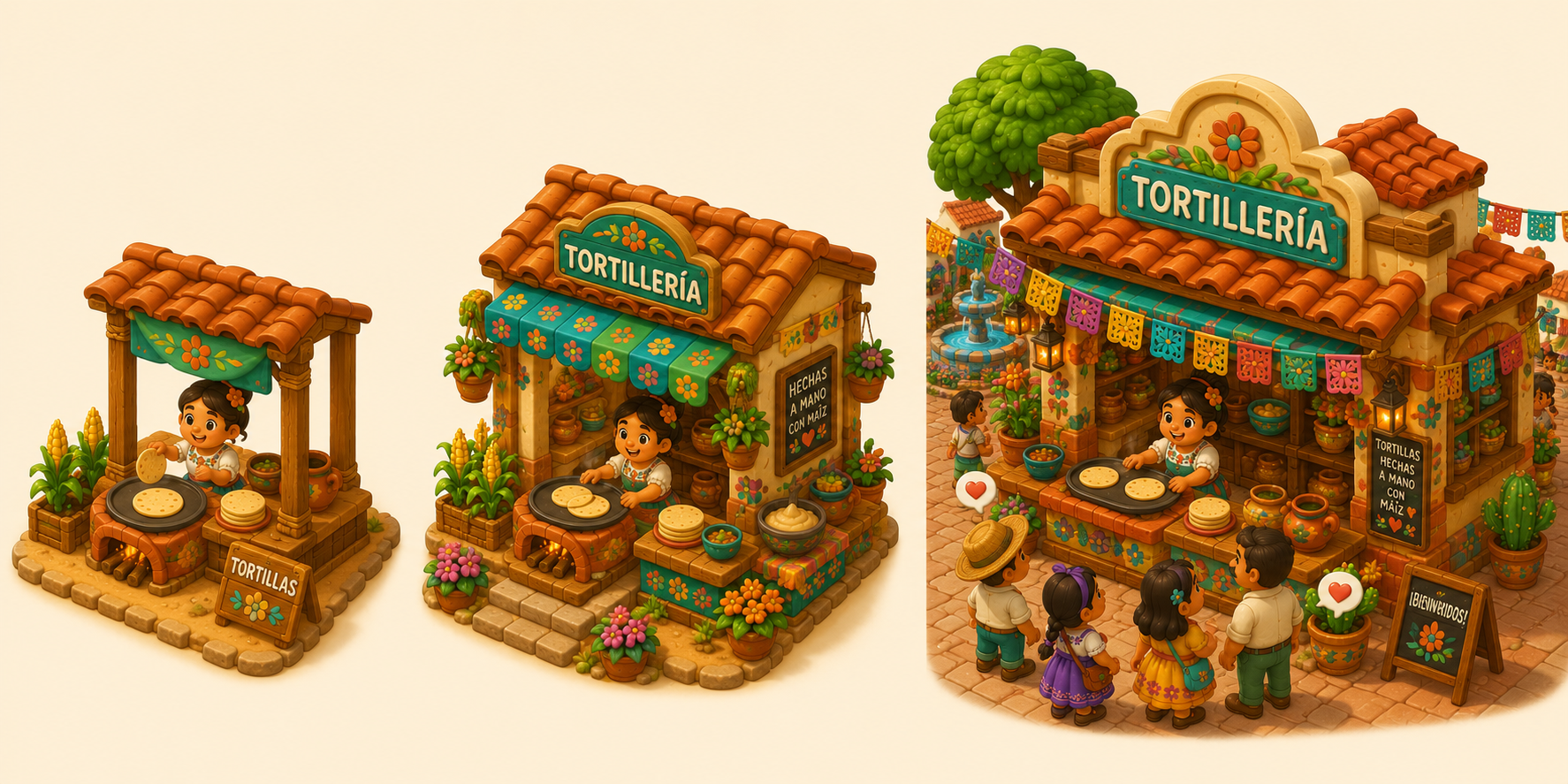
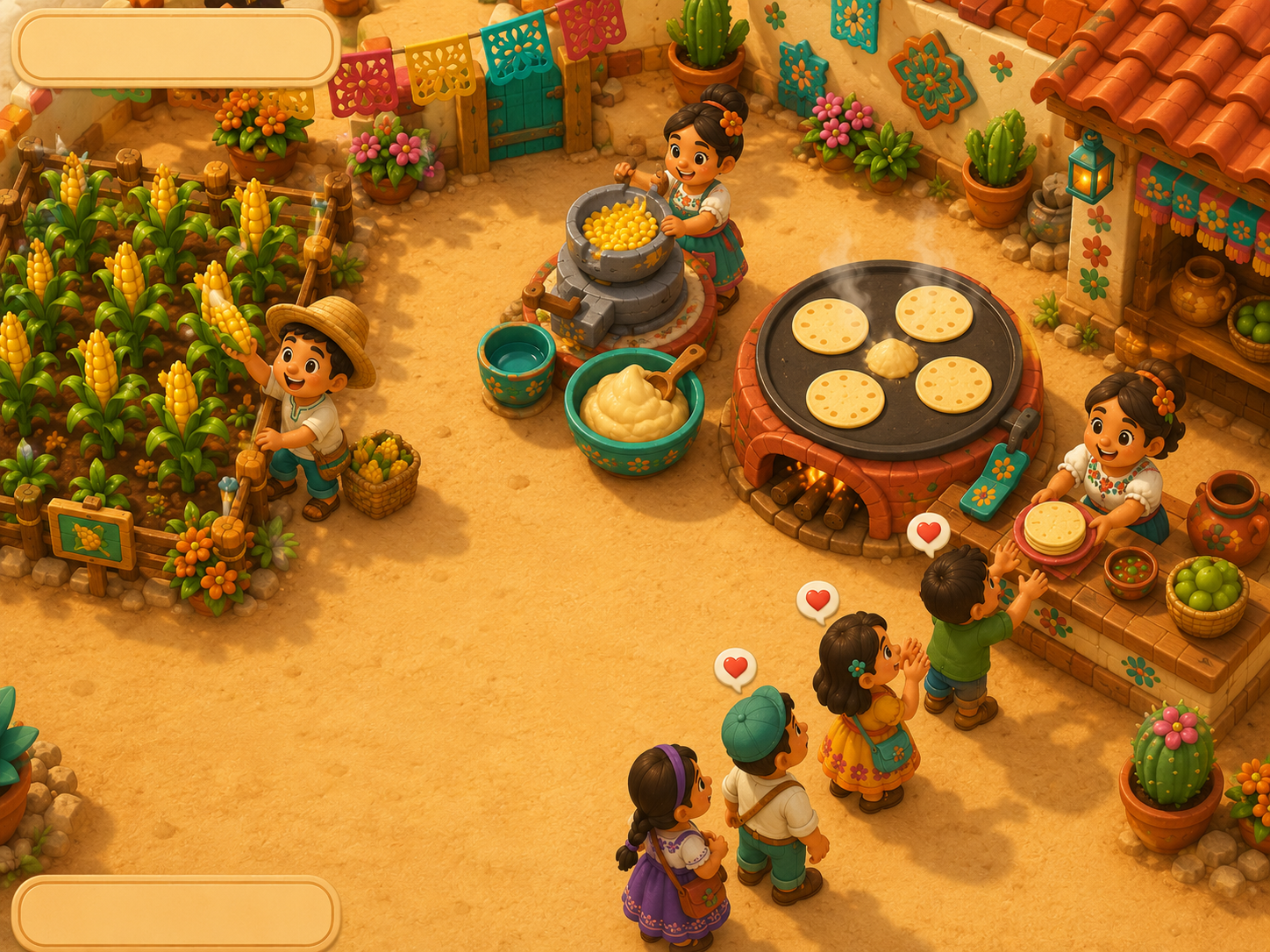
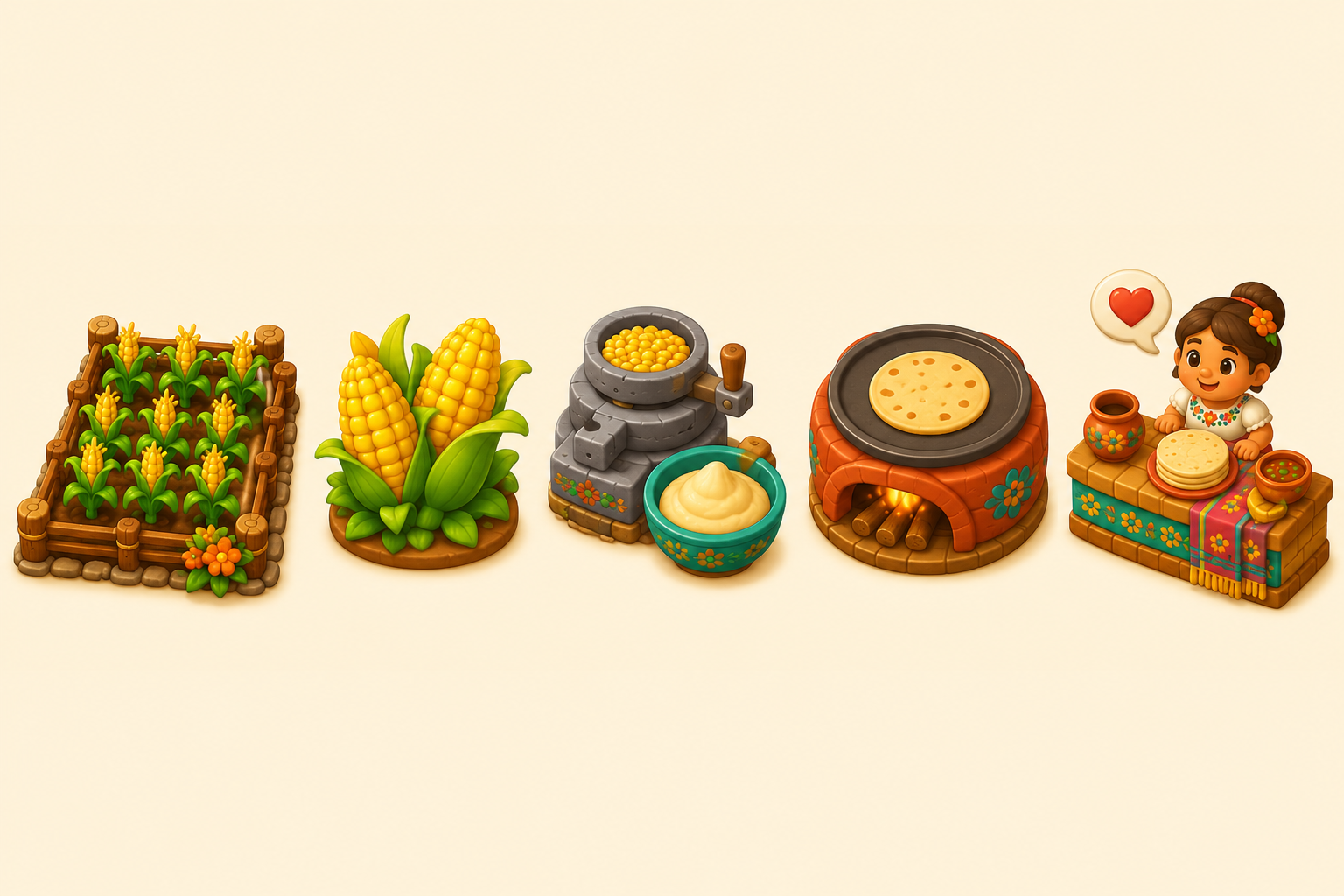
Maiz to Mesa is a cozy farm-to-table simulation game. You grow your own corn in a little milpa, grind it into soft masa, press and cook fresh tortillas on a warm comal, and serve them to happy customers, then reinvest your coins to grow from a tiny stand into a bustling, colorful tortilleria. A kind abuela guides you along the way, just like in real life.
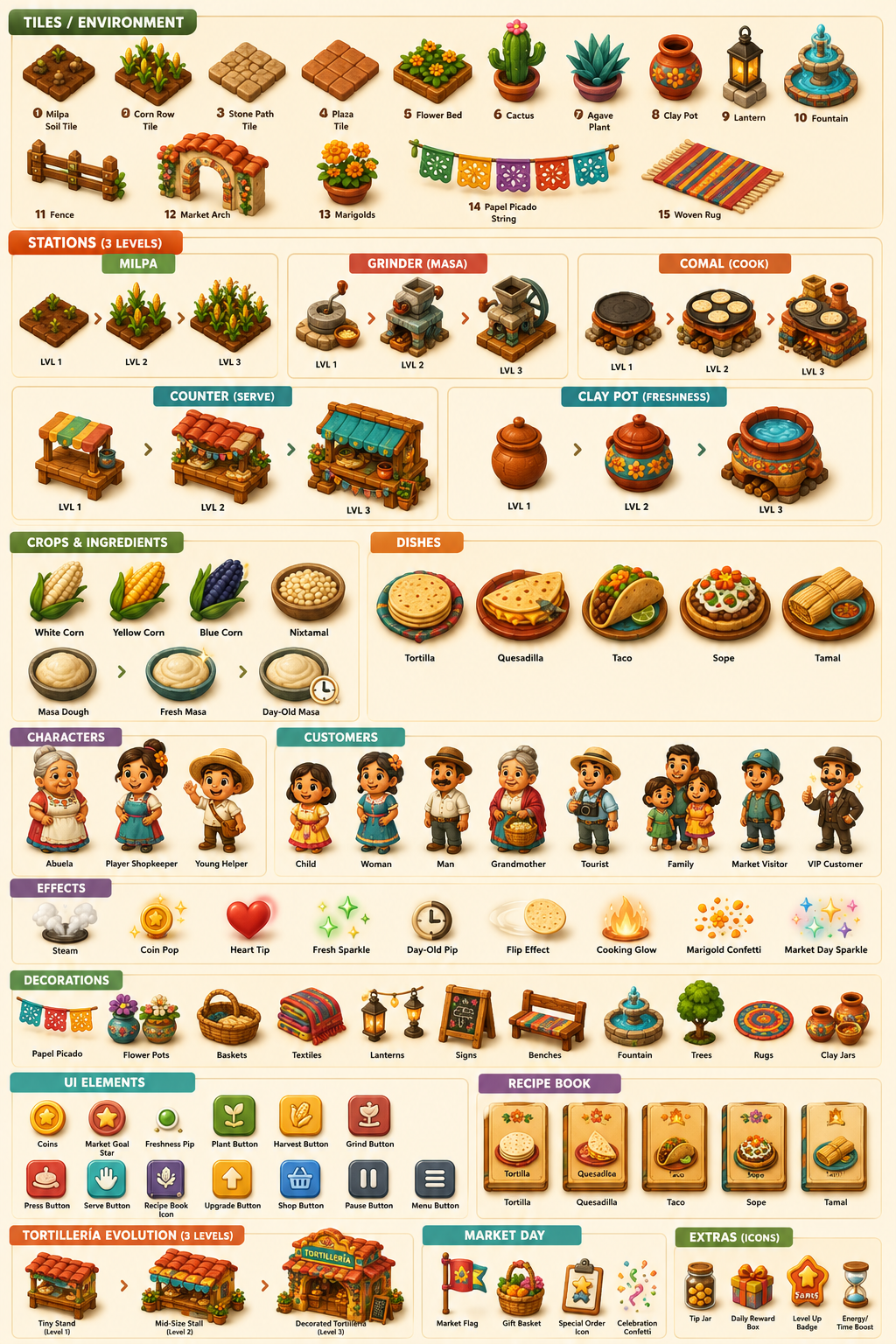
This entry is a complete pre-production design package: a Game Design Document, a Player Journey Map, a Visual Concept Package, and a Production Plan. Four pieces that tell one warm, coherent story about a game that's ready to be built.
How I built it
I started with feeling, then turned it into design. First I locked one cozy, easy-to-learn loop: grow, grind, press, serve. So a child could pick it up in seconds. Then I built the look: sunny terracotta and corn-gold, papel picado banners, marigolds, and an abuela you'd want to hug. I mapped the player's first fifteen minutes beat by beat, paying close attention to how each moment feels, and I wrote a production plan grounded in what a real mobile build actually needs, starting with the smallest version that proves it's fun.
Challenges I ran into
The most important challenge was honoring my culture with respect and love. Warm and authentic, never a stereotype. I also worked hard to keep the game cozy and simple while still giving players a real choice to think about (fresh tortillas make customers happiest, but you can't make everything at once). And tying it all together, making sure the words, the art, and the plan all tell the same story, took real care.
Accomplishments that I am proud of
I'm proud that this game looks and feels like home. I'm proud of the abuela character, who carries the heart of the whole thing. I'm proud that the design turns a beloved tradition into a fun, satisfying loop without ever flattening it. And most of all, I'm proud to put something on the table that Latina kids can see themselves in.
What I learned
I learned that the strongest ideas come from the things you love most. Putting my own story and culture into my work made the design clearer, not smaller. I learned how powerful it is to map a player's emotions and not just their actions. And I learned that good design is about choosing carefully, knowing what to keep simple, and what to leave for later.
What's next for Maiz to Mesa
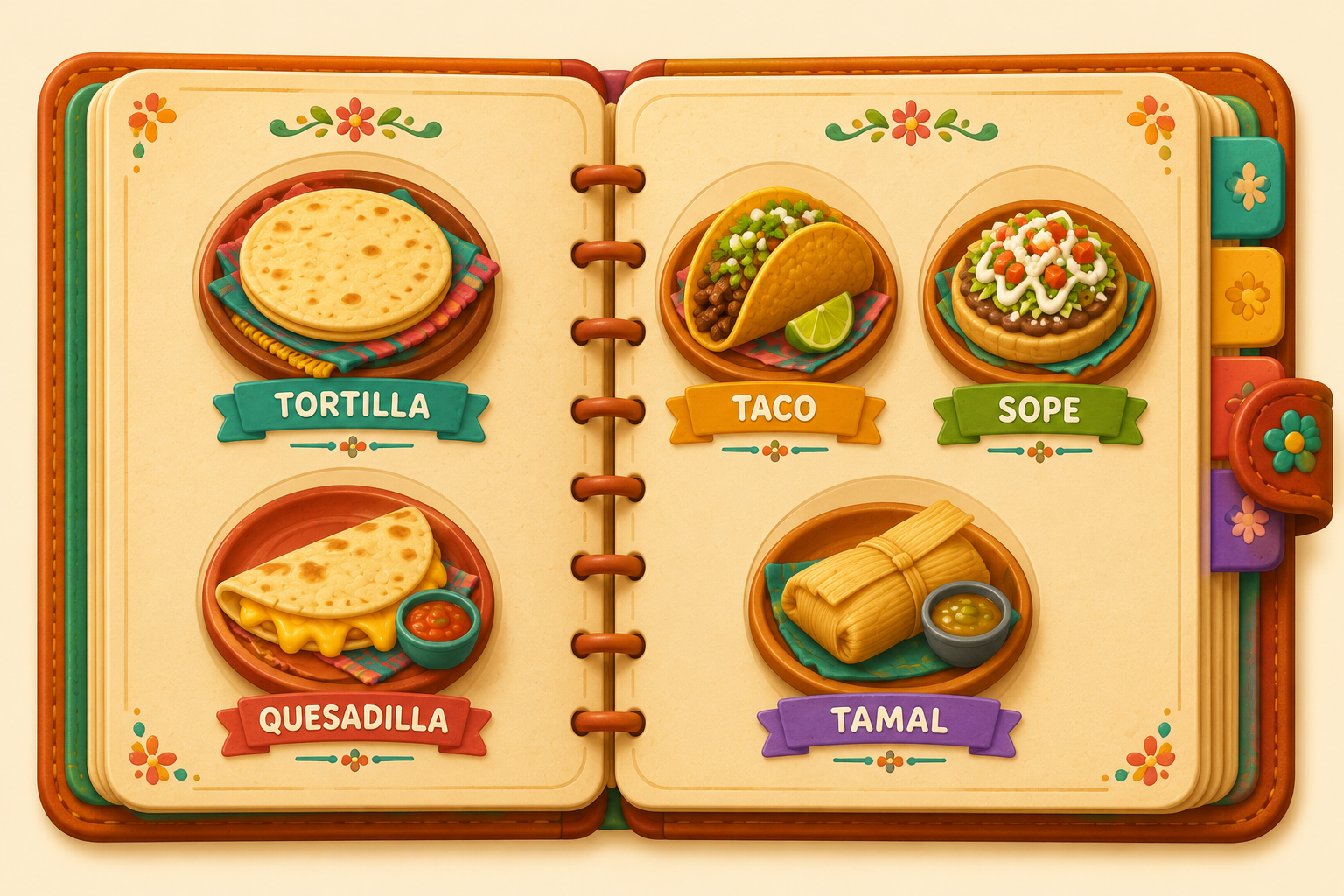
Next, I want to bring the core loop to life in Meta Horizon Worlds and put it in kids' hands to make sure it's genuinely fun. From there: more recipes from across our cultures (quesadillas, tacos, sopes, tamales), colorful corn varieties, festival events, and visiting a friend's tortilleria. One day I'd love the abuela to truly talk and teach. And beyond the game, I hope it inspires young Latina creators to know that our stories belong in games too. Con cariño, from my abuela's kitchen to yours.
Built With
- claude


Log in or sign up for Devpost to join the conversation.