-
-
-
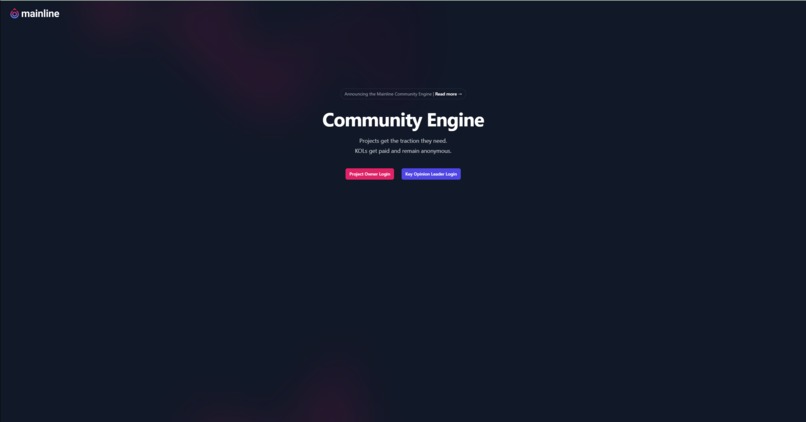
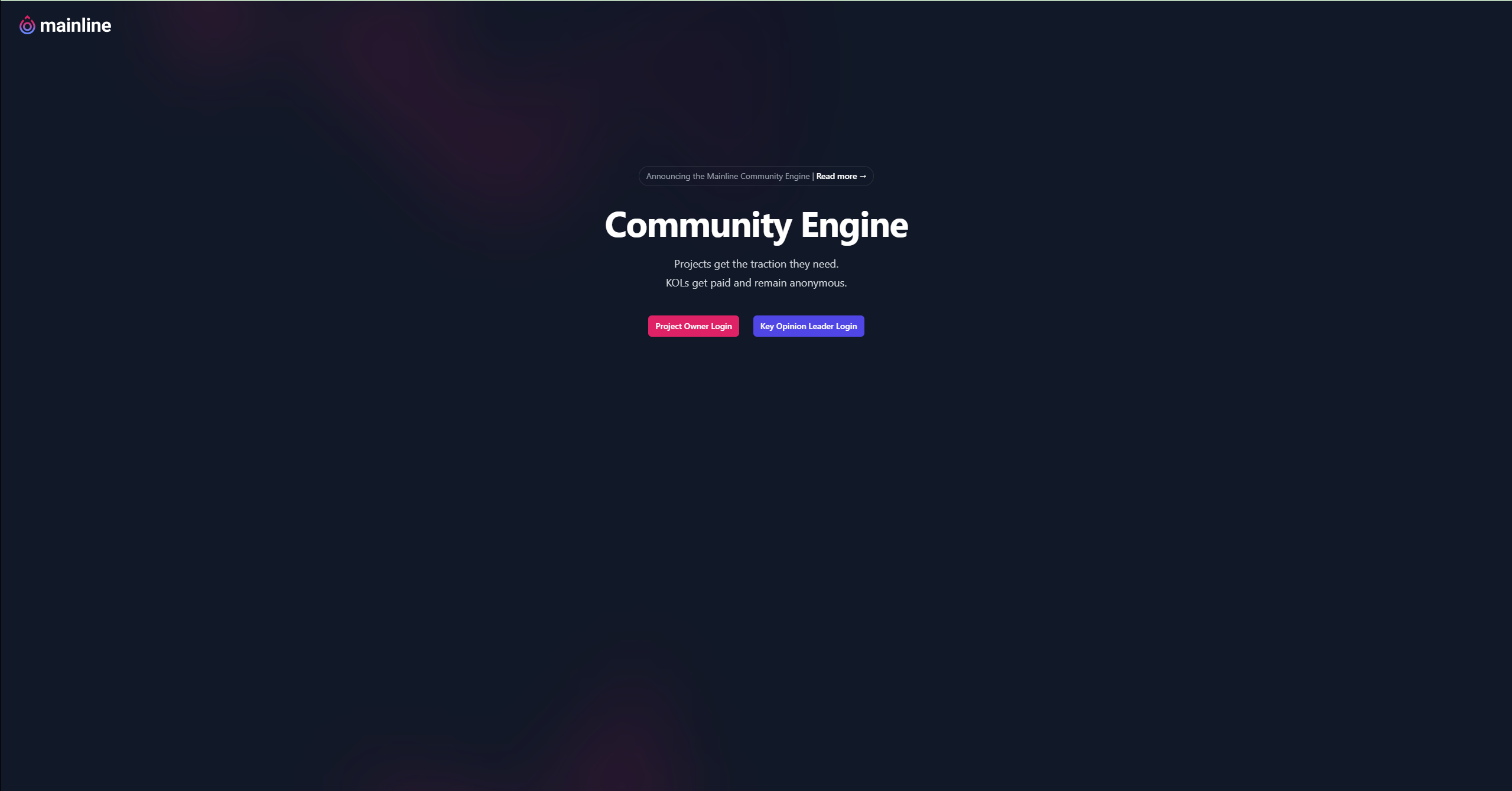
Login Screen
-
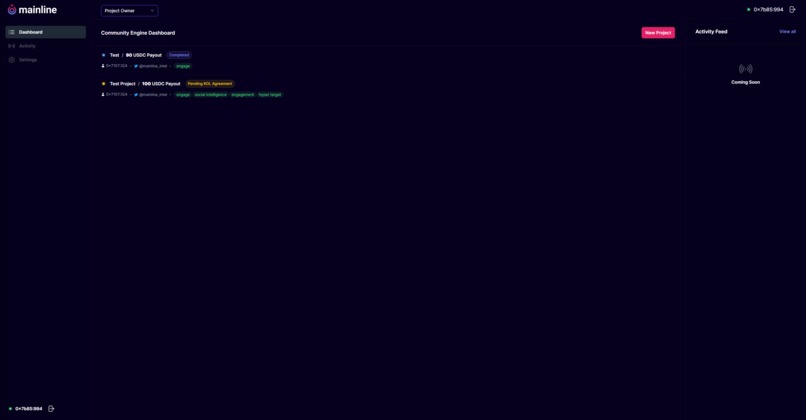
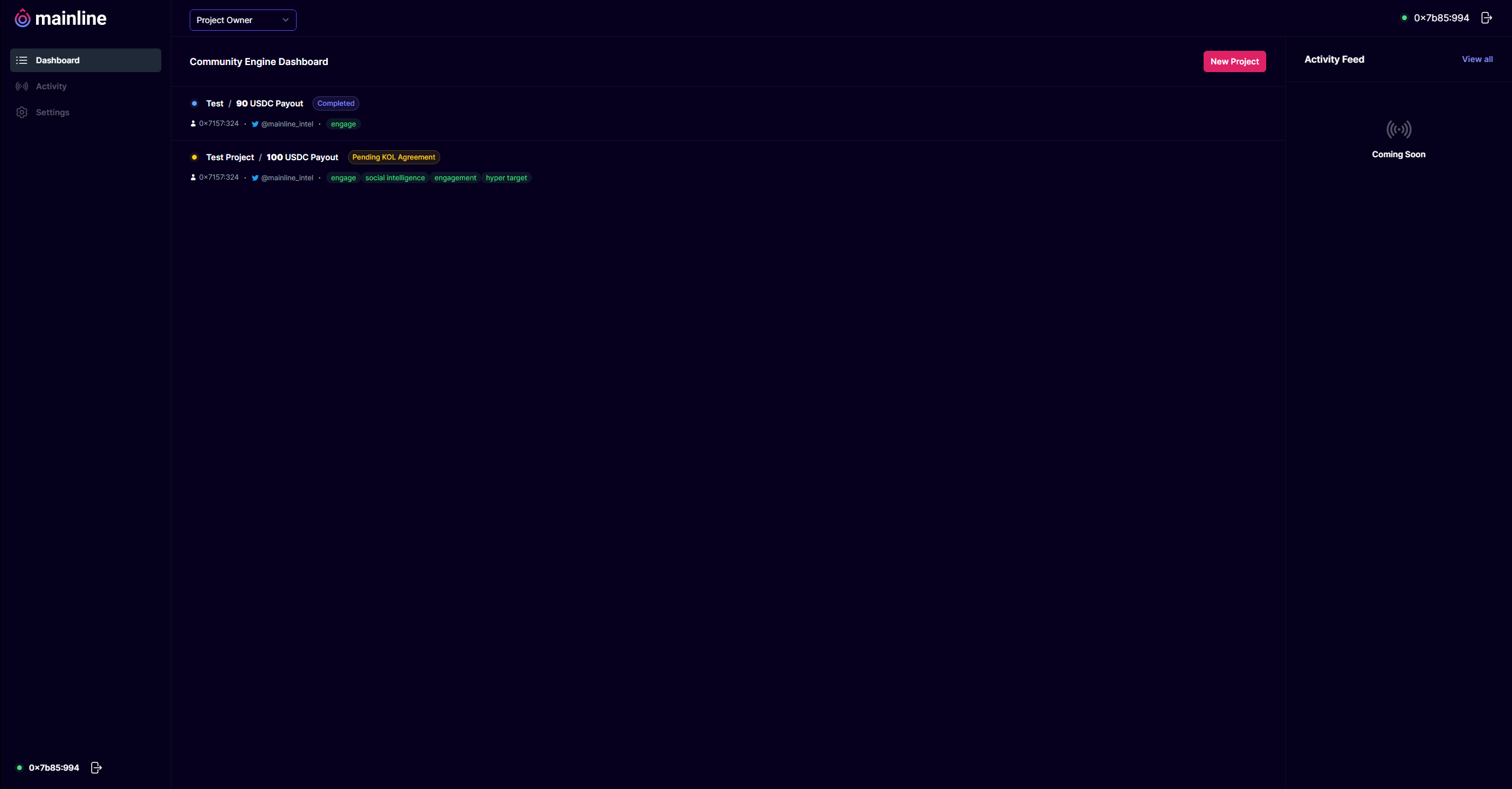
Project Owner Dashboard
-
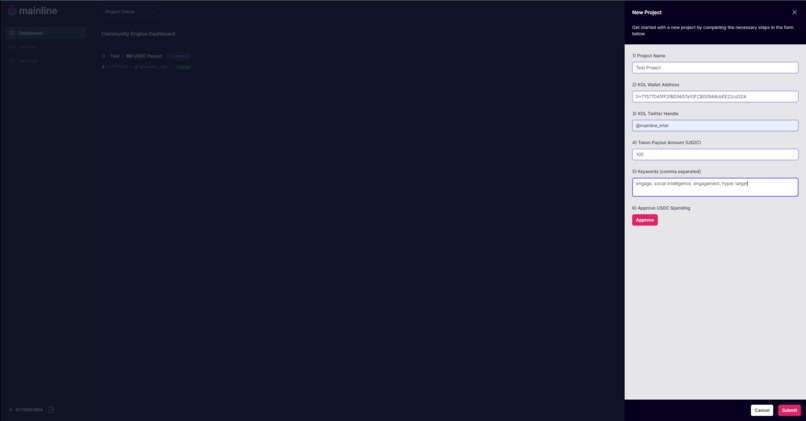
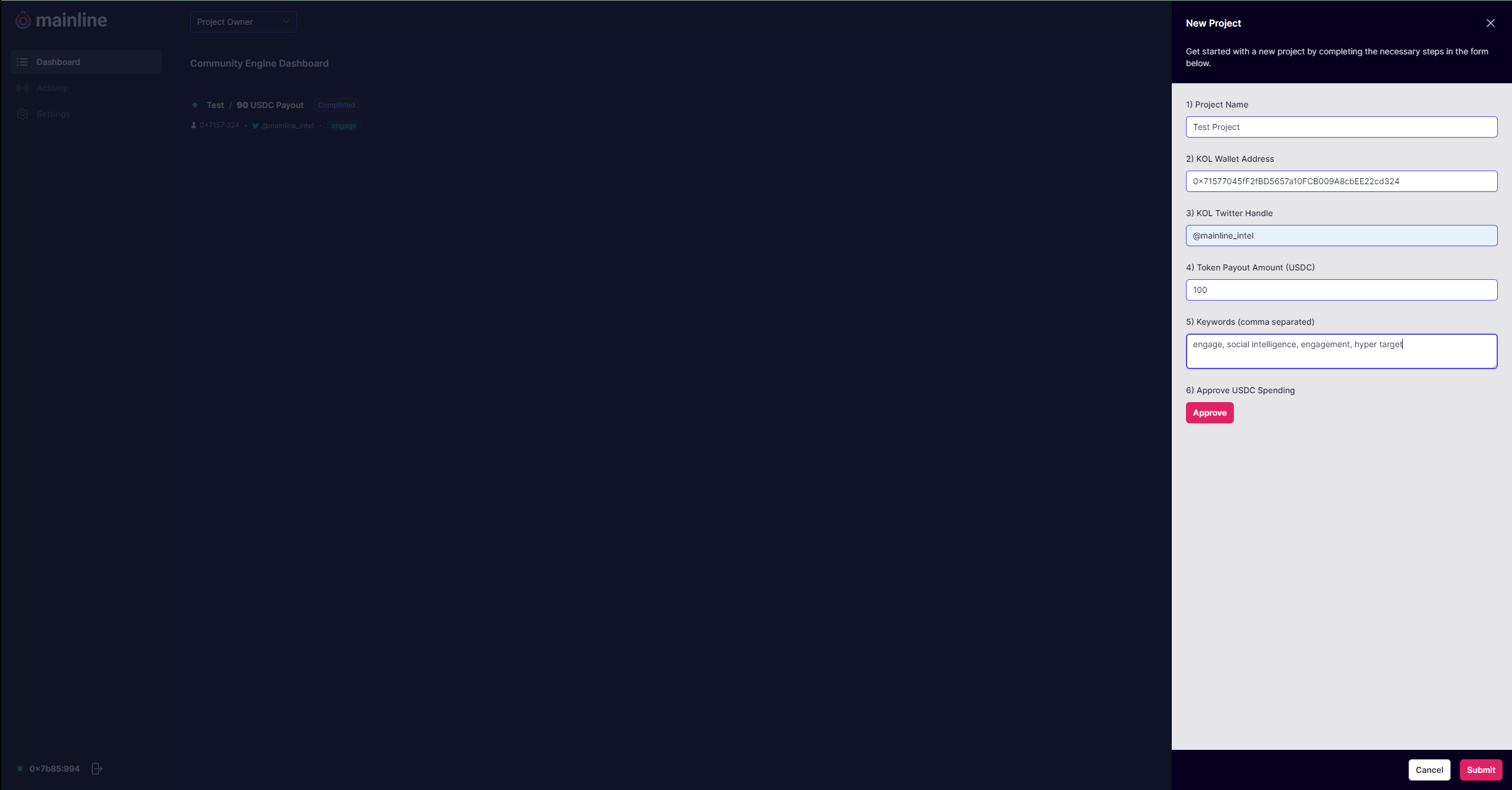
Project Owner Agreement Set Up
-
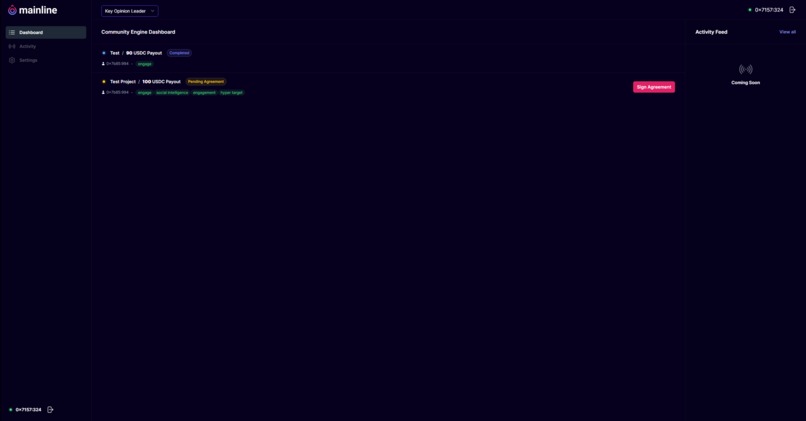
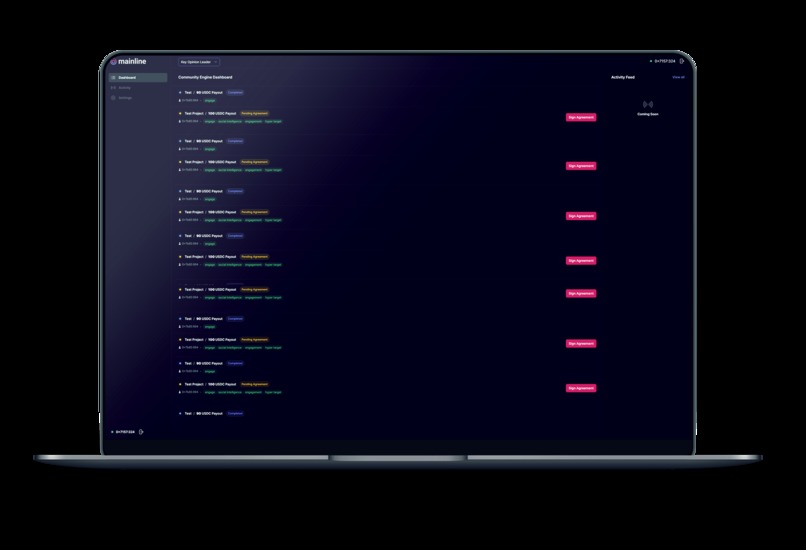
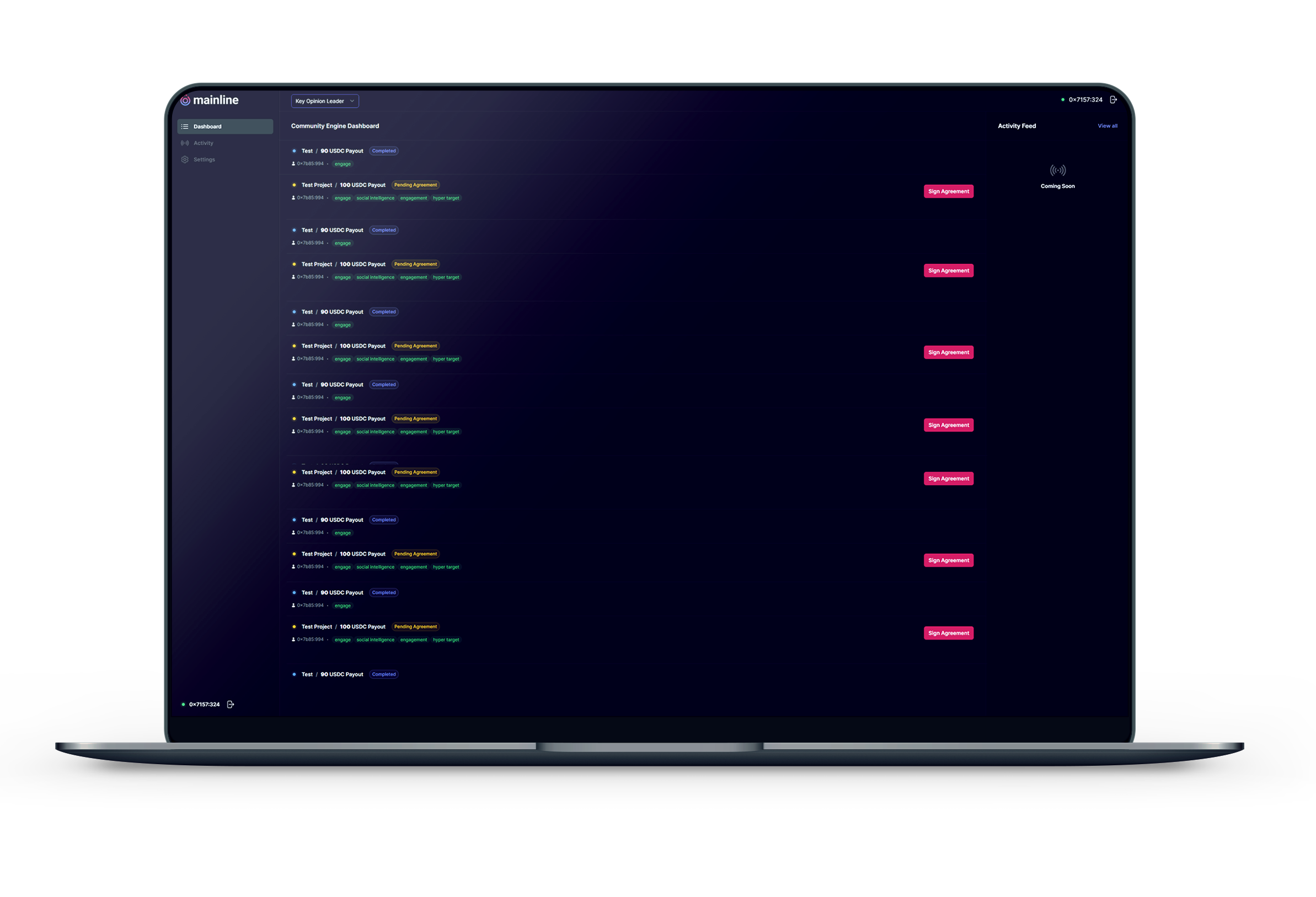
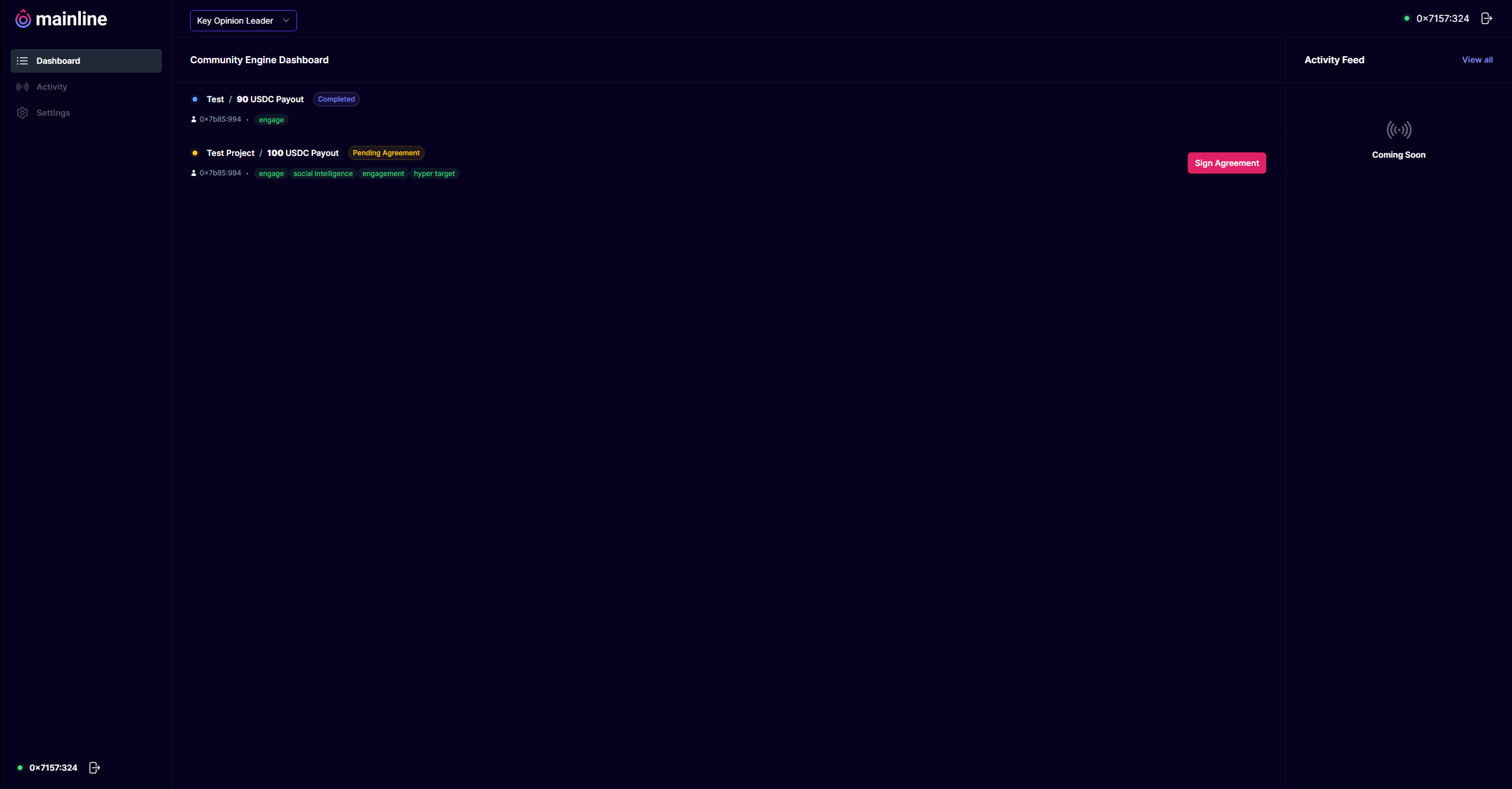
KOL Dashboard
Inspiration
In the web3 space, KOL/Influencer marketing has often been viewed with skepticism, a perception not entirely undeserved given its historical misuse. Yet, it's important to remember that not all KOLs contribute to this negativity. Many are advocatess for progression, advancing the field through valuable educational content and thought-provoking discussions. In light of this, we initiated an ambassador program to bridge the gap between high-quality KOLs and equally distinguished projects with functional products.
Our advanced proprietary algorithms and scoring metrics ensure that we connect with only the finest KOLs. But formalizing such a connection often requires signing a physical agreement, a process that can deter many KOLs who value their privacy. This conundrum ignited the spark for Community Engine – a tool designed to protect the interests of both parties. This innovative dApp facilitates the agreement on KPIs and compensation, ensuring a trustless yet efficient transaction. Community Engine reflects our dedication to transform the realm of KOL/Project engagement, fostering trust, and efficiency while respecting privacy and autonomy.
What it does
This is a Proof of Concept for Mainline Community Engine. It is a decentralized application (dApp) that modernizes the way projects engage with Key Opinion Leaders (KOLs). Built on the Ethereum blockchain and empowered by Chainlink oracle technology, it offers a transparent, secure, and efficient method for establishing and fulfilling partnerships.
Unlike traditional trust-based agreements, Community Engine enables binding, trustless contracts that track KOL performance through Mainline social intelligence data. Upon fulfilling their Key Performance Indicators (KPIs), the smart contract autonomously releases, vests, or unlocks tokens as rewards, streamlining the reward distribution process while preserving the anonymity of all parties involved.
This transformative technology positions Community Engine as the future of web3 project and KOL engagement, offering a fresh, accountable, and efficient system for nurturing these vital partnerships.
How it is built
Backend: Chainlink Functions, Solidity, Mainline Intelligence API
Frontend: Typescript, React, Nextjs, Tailwind/CSS, Wagmi
This use case showcases how Chainlink Functions can be used to facilitate a agreement between a project owner and a KOL, with Chainlink Functions being used to obtain the KOL's tweets. The Community Engine smart contract represents an on-chain agreement and payment contract between a project owner and the KOL. Chainlink Functions is used to verify the KOL's tweets for the project based on the agreement signed, using Mainline's API. The KOL is paid in USDC. If the KOL fails to meet the agreement requirements, the USDC is then returned to the project owner.
The project owner and the KOL have an agreed payment amount. This payout is part of the smart contract's code and represents a trust-minimized, verifiable, on-chain record of the agreement. For example, the KOL will receive 100 USDC once they tweet using the agreed upon keywords.
If the KOL tweets out using the agreed upon keywords, the Chainlink Functions code will also send out a status showing that the KOL sent out those tweets back to the smart contract so it can be recorded immutably on the blockchain. The returned value is passed through Chainlink's Off-Chain Reporting consensus mechanism - which the nodes in the Decentralized Oracle Network (DON). Once that status is recorded, the KOL is then paid out in USDC or the USDC is returned back to the project owner, and the project is completed.
Challenges we ran into
Understanding the Chainlink Functions ecosystem and how all the pieces fit together.
Accomplishments that we're proud of
We are proud that we have built a dApp that is completely novel and solves a real problem in the space. We hope to make influencer marketing not have such a terrible reputation by linking educational leaders with projects that are trying to make difference in web3.
What we learned
- Learning to integrate with Chainlink Functions.
- Learning to integrate wagmi with our custom smart contract functions.
What's next for Community Engine
The current mechanism of Community Engine requires project owners to manually verify the completion of KOL tasks, initiating a request to the Chainlink Function. Our future vision, however, is to automate this process using Chainlink Automation, thereby fostering a truly autonomous relationship between the project owners and KOLs.
An integral part of this evolution will be the incorporation of a specialized dashboard. This tool will not only track the specific metrics of each KOL but also gauge the quality of tweet engagements, ensuring that the fulfillment of KPIs is legitimate, free from the influence of bots or coordinated account activity. We also envision an automated vesting system where compensation becomes claimable as vesting unlocks occur.
Lastly, our roadmap includes the ability to define highly specific KPIs, ensuring absolute transparency and fairness in all interactions. Also, integrating more specific terms of the agreement and vesting with unlocks being automated. These planned enhancements underline our commitment to continuously refine Community Engine, making it a benchmark in trustless KOL/Project engagement.
Built With
- chainlink
- nextjs
- react
- solidity
- tailwind
- typescript
- vercel
- wagmi


Log in or sign up for Devpost to join the conversation.