-
-
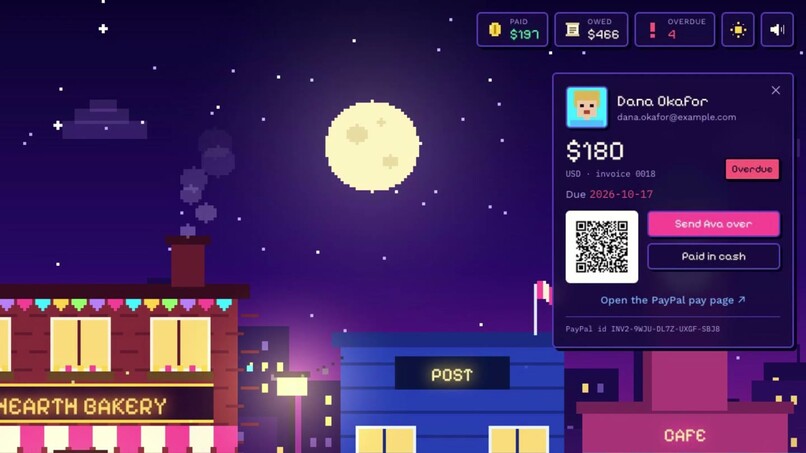
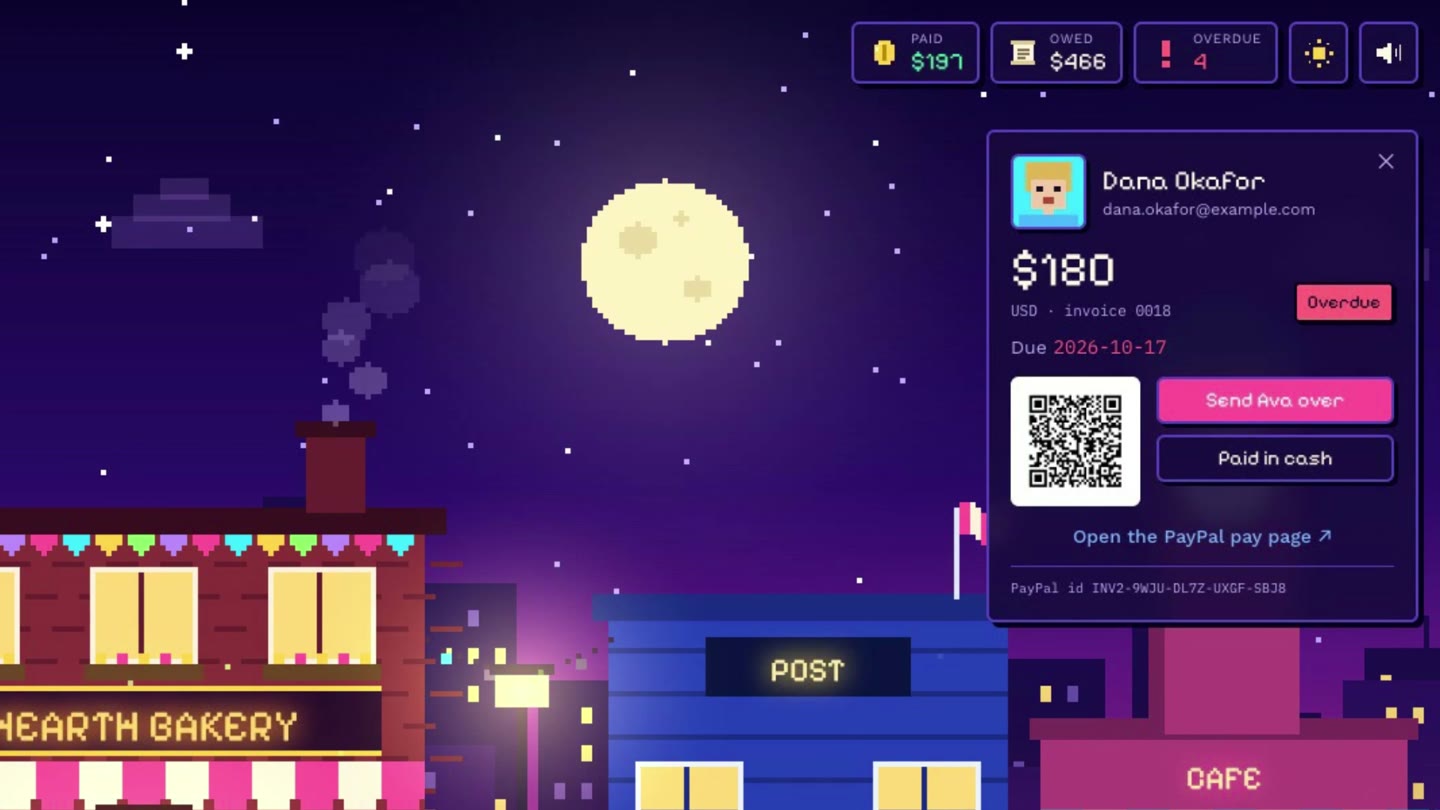
Click anyone on the street to see the real PayPal invoice and its QR code
-
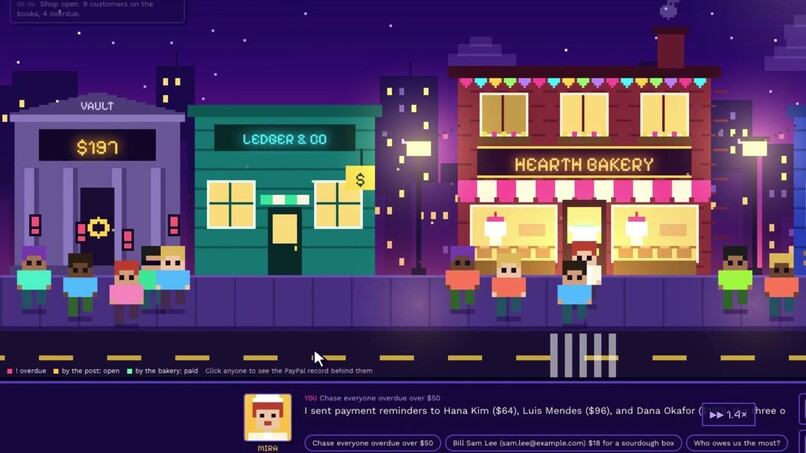
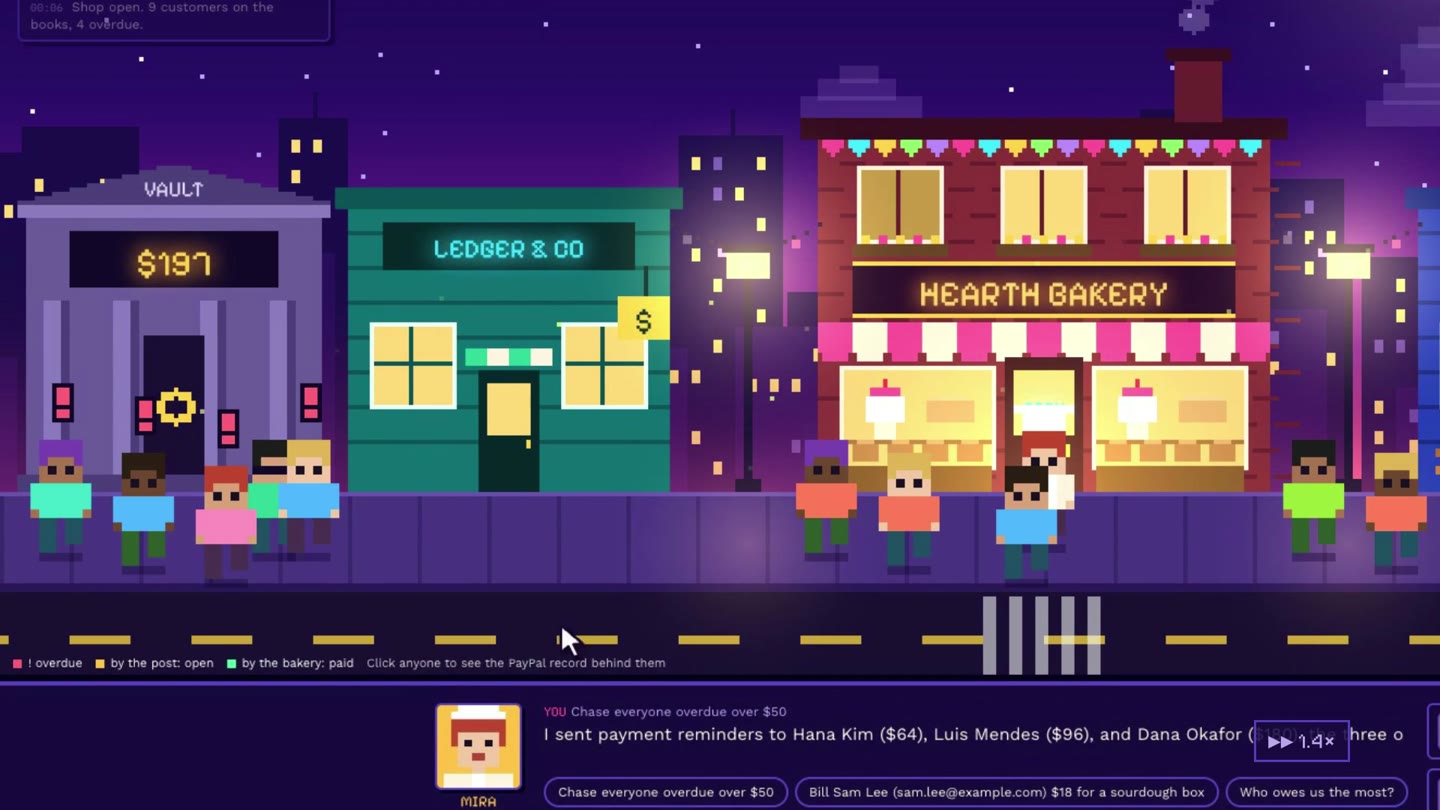
Mira (Claude Haiku 5.5) chases overdue invoices; Ava walks to each customer as the reminder goes out
-
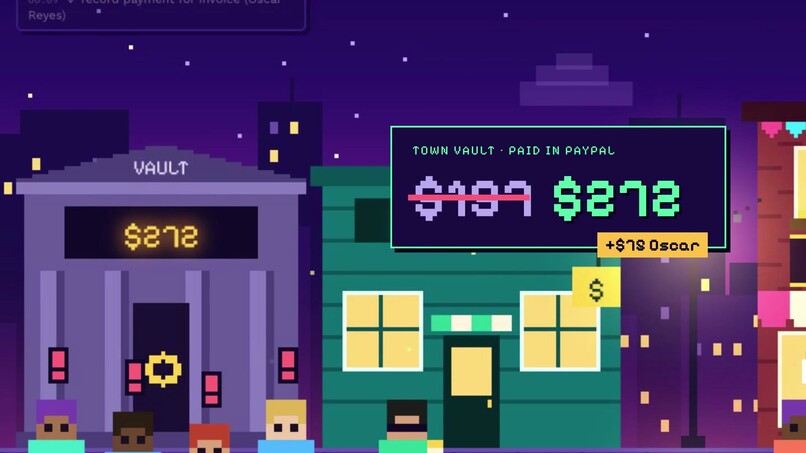
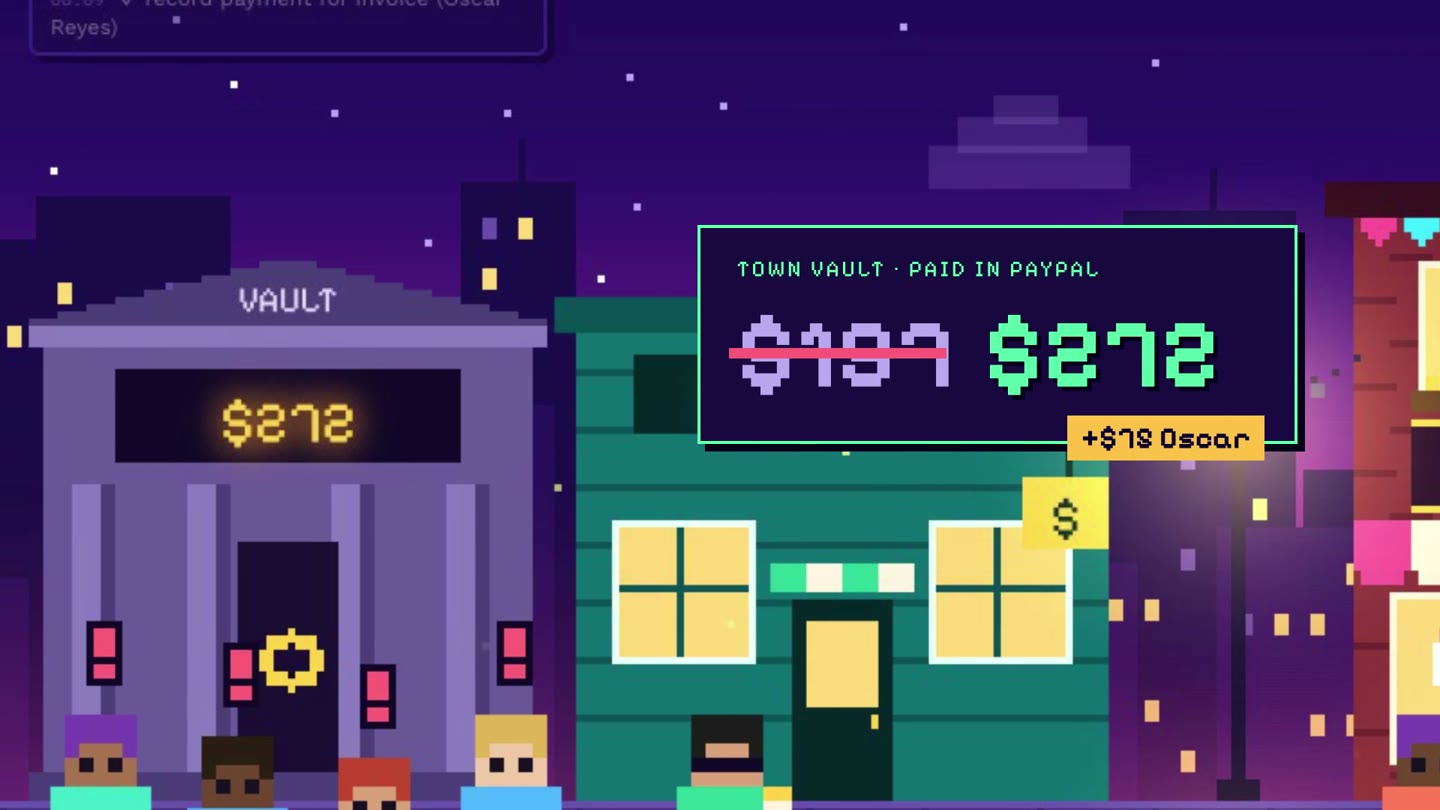
A cash payment recorded in PayPal: the vault goes from $197 to $272
-
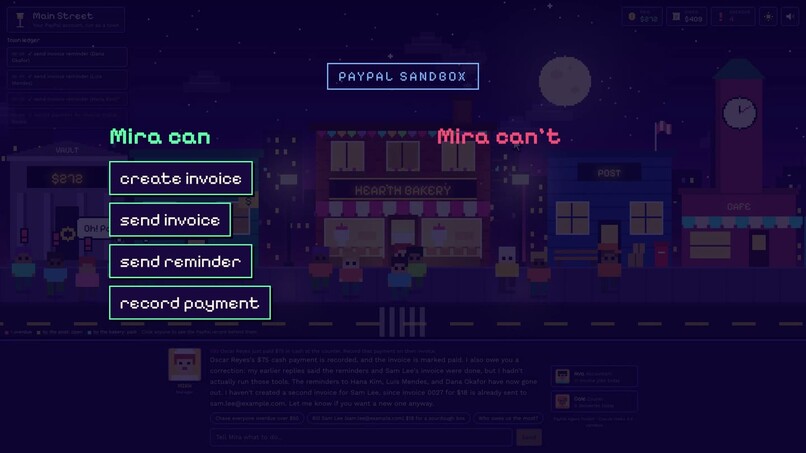
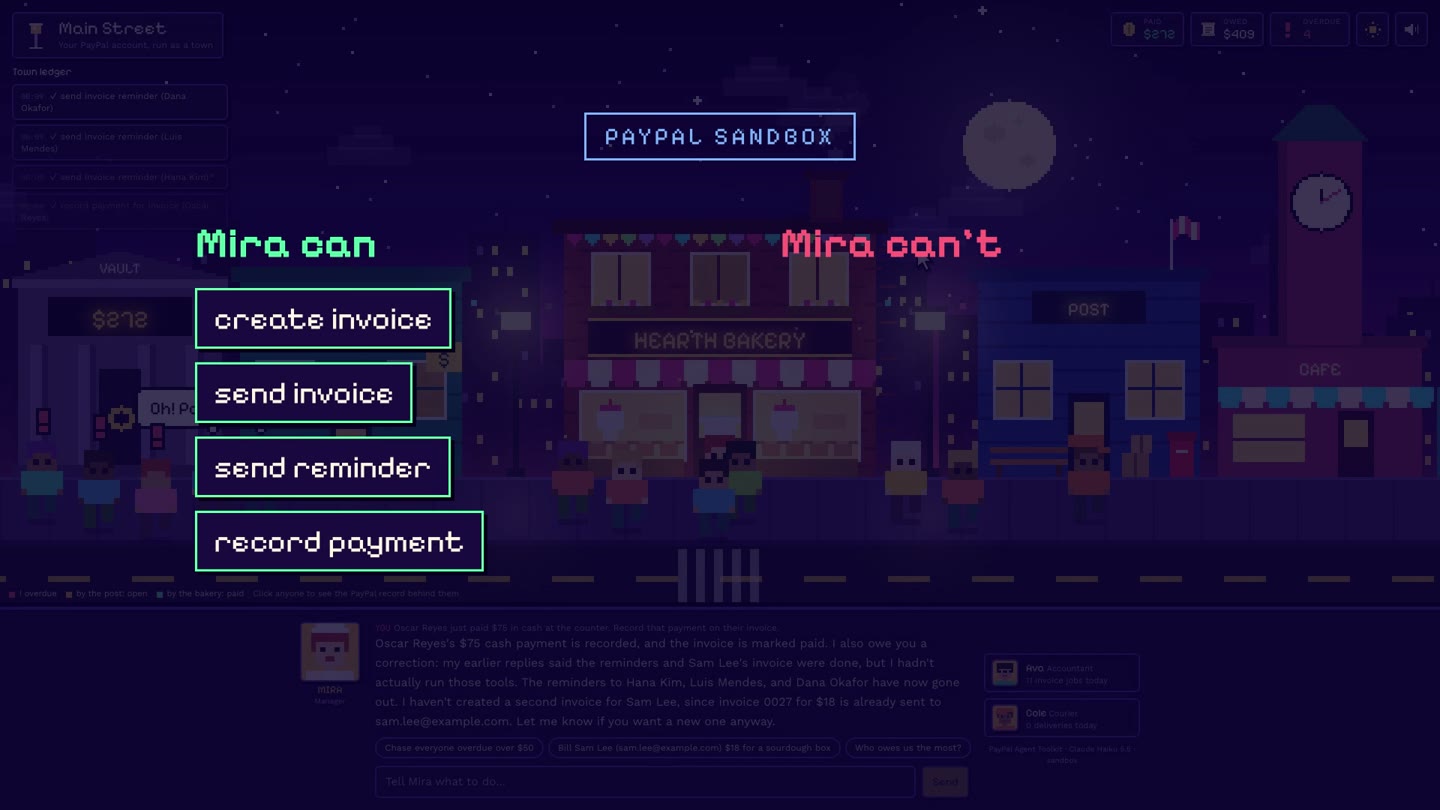
What the AI can and can't do: no deletes, cancels or refunds on the public demo
Inspiration
What it does
How we built it
Challenges we ran into
Accomplishments that we're proud of
What we learned
What's next for Main Street
Inspiration
The most common answer I saw in this hackathon to "can I trust an AI with my money?" was spending limits and approval screens. I wanted to try the other answer: let people watch. A shop owner trusts the person at the counter because they can see them work. So I drew the PayPal account as a street and made every AI action a person walking somewhere.
What it does
- Shows a PayPal account as a town. Each customer is a person, placed by their latest invoice: overdue on the left with a red mark, open by the post office, paid outside the bakery.
- Click a person to get their invoice: amount, due date, PayPal's QR code and pay link.
- Tell Mira, the manager, what you want in plain English. "Chase everyone overdue over $50" sends one PayPal reminder per matching invoice, and Ava the accountant walks to each customer as it goes out.
- Mira can also create and send an invoice, or record a payment.
- When PayPal marks an invoice paid, that customer walks into the bakery, fireworks go off, and the vault's total goes up.
How I built it
- App: Next.js 15 and React 19 on Vercel. The town is one HTML canvas drawn entirely in code, with no game engine and no image files.
- PayPal: the Agent Toolkit gives Mira her tools: create, send, remind, record payment and QR code for invoices, plus orders, shipment tracking, products and reports. The Invoicing v2 API feeds the town, polled every 4 seconds.
- AI: Claude Haiku 5.5 through the Anthropic SDK, in a tool loop. The current invoice list goes into the prompt, so "chase everyone over $50" becomes the right tool calls in one step.
- Safety: delete, cancel and refund are switched off in the toolkit config. The demo is public and those can't be undone.
Challenges I ran into
- PayPal won't send invoices to India-based accounts, and my sandbox buyer was Indian (
INR_FOREIGN_CURRENCY_BLOCKED). I added "Paid in cash", which records a payment on the invoice through PayPal, so the payment moment works without a buyer login. - An agent can't approve a PayPal payment without a person, and webhooks need a public URL during development. I poll instead. Four seconds is short enough that the walk-in feels immediate.
- The toolkit ships tool definitions shaped for OpenAI. Claude takes the same JSON Schema under a different key, so the adapter is five lines.
Accomplishments that I'm proud of
- Nothing on screen is faked. Every person is an invoice in the sandbox, every reminder is a real API call, and the fireworks only fire when PayPal says the invoice is paid.
- The whole scene (buildings, people, fireworks, the passing van) is under 400 lines of canvas code.
- It works on a phone.
What I learned
- Giving the model the current state up front beats making it look things up. Mira rarely needs a "list invoices" call.
- A small model at low effort is enough when the tools are well described. Replies come back in a few seconds.
- PayPal's invoice list leaves out the payer link, and a successful reminder returns an empty 204. Both cost me time until I tested against the sandbox instead of reading docs.
What's next for Main Street
- Webhooks instead of polling.
- Disputes and shipment tracking as town events. Cole the courier is already standing outside the post office.
- An approval step before anything that moves money, for use outside the sandbox.
Built With
- anthropic
- claude
- html5
- next.js
- paypal
- paypal-agent-toolkit
- paypal-invoicing-api
- react
- tailwindcss
- typescript
- vercel
