Inspiration
Creating an effective email campaign usually requires several separate steps: defining the audience, choosing a tone, writing the subject line and preview text, preparing the content, finding a suitable visual, and arranging everything into a professional layout. For small businesses and lean marketing teams, this process can take hours and often requires specialist knowledge.
We wanted to turn that fragmented workflow into a guided conversation. MailMarketing AI Campaign Copilot helps users move from a simple campaign idea to a structured, editable, and send-ready email campaign in minutes.
What it does
MailMarketing AI Campaign Copilot is an AI-assisted campaign creation experience built into a self-hosted email marketing platform.
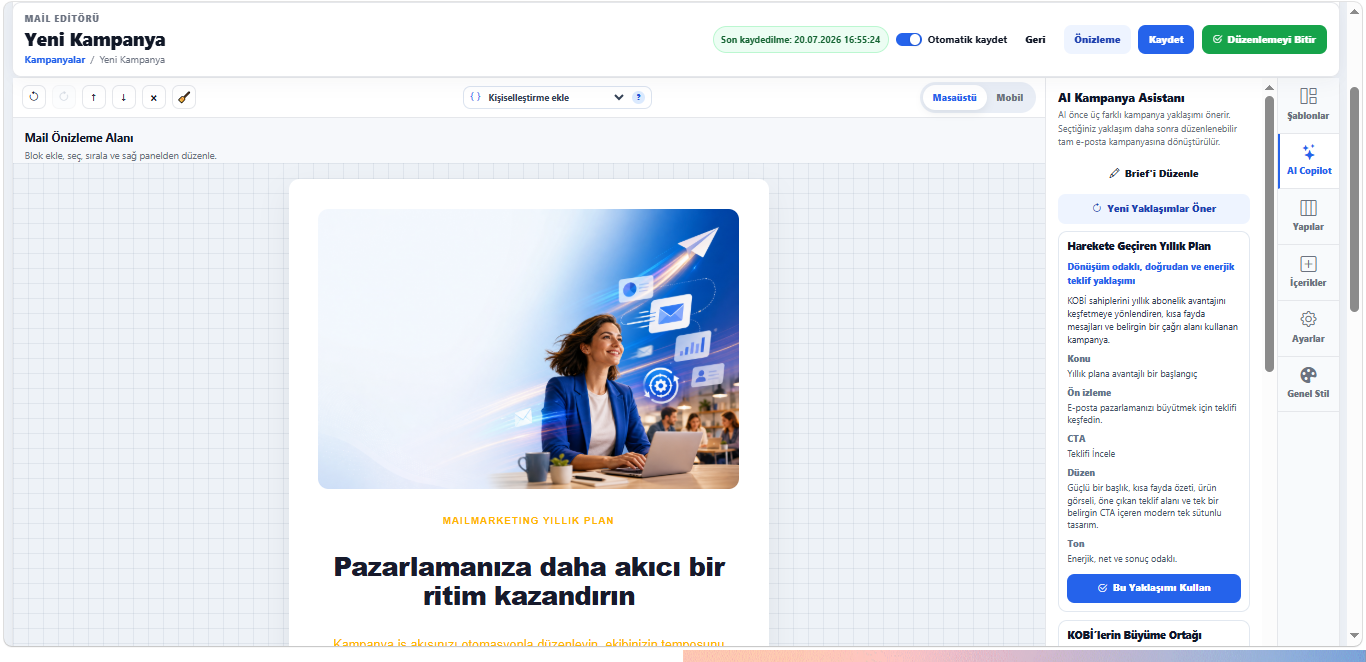
A user provides a short brief describing the business, campaign goal, target audience, offer, tone, and call to action. The Copilot then helps generate:
- Campaign positioning and content direction
- Subject line and preview text suggestions
- Structured email copy
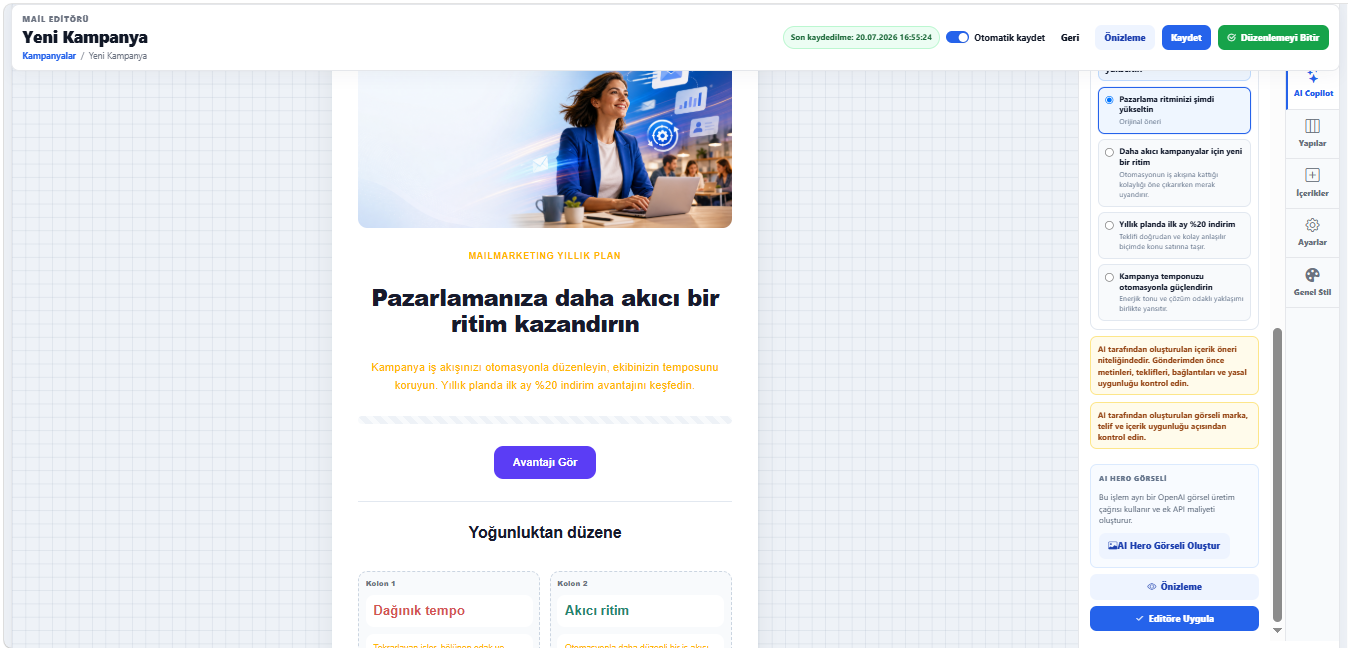
- A complete block-based email layout
- Calls to action tailored to the campaign goal
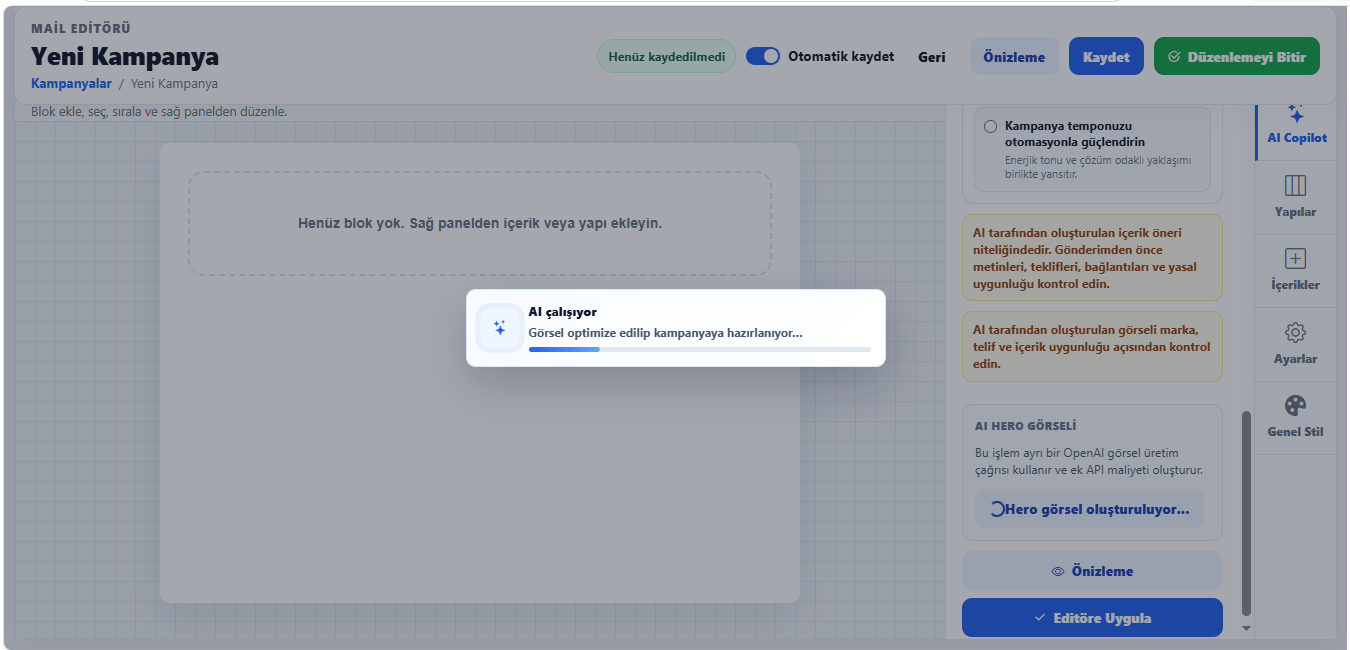
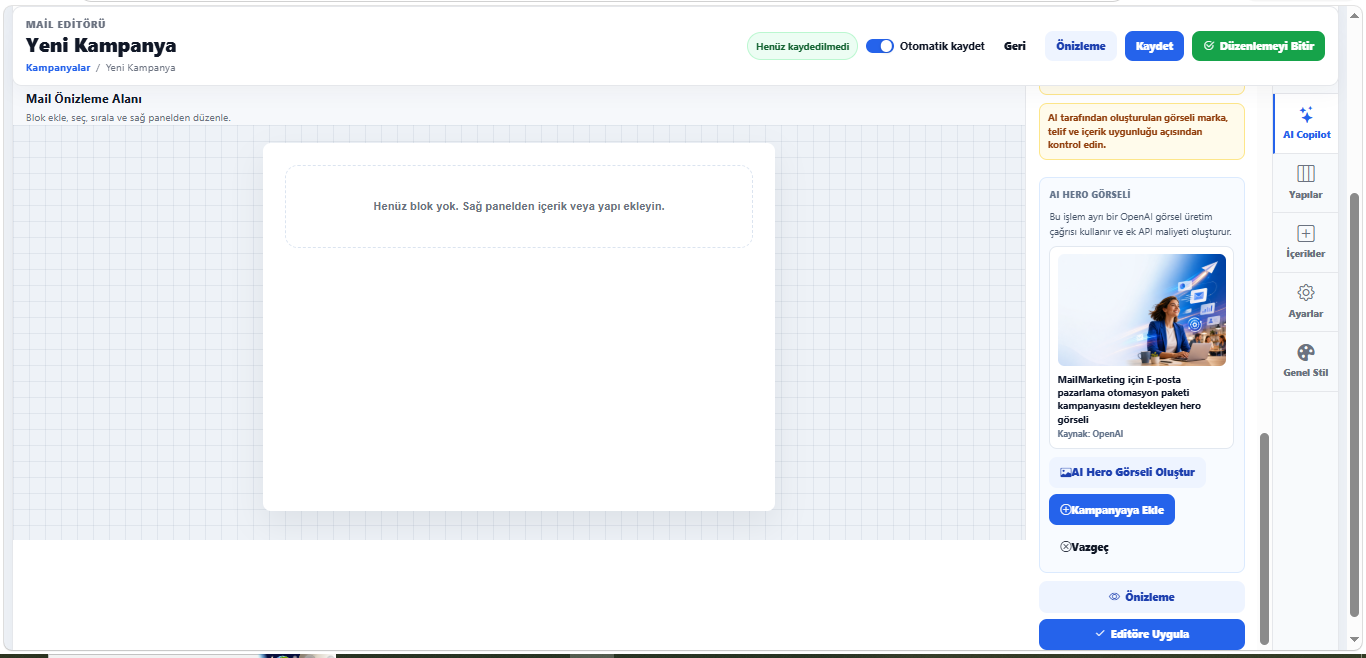
- A campaign hero image
- Editable content that can be reviewed before sending
The generated campaign is transferred directly into the existing visual campaign editor. Users remain in control: every heading, paragraph, image, button, link, color, and layout block can be edited before the campaign is approved or sent.
MailMarketing also provides subscriber management, lists and groups, campaign scheduling, delivery queues, provider management, retry handling, suppression controls, email tracking, reporting, role-based access, localization, and self-hosted deployment.
How we built it
MailMarketing is built with ASP.NET Core 8 using Clean Architecture. The solution is separated into Domain, Application, Infrastructure, Web, and Worker projects.
During OpenAI Build Week, we used Codex with GPT-5.6 to design and implement the new AI Campaign Copilot workflow. Codex helped us reason across the existing architecture, create the AI orchestration flow, connect generated campaign content to the block-based editor, implement hero image handling, improve validation and error handling, and add automated tests.
The Copilot produces structured campaign data instead of returning only unformatted text. This allows AI-generated content to be converted into editable campaign blocks such as headings, text, images, buttons, dividers, spacers, social links, and columns.
The wider platform uses:
- ASP.NET Core 8
- Entity Framework Core 8
- MySQL
- Background worker services
- Queue-based email delivery
- Multiple email provider integrations
- Role-based authorization
- A JSON-based visual campaign editor
- OpenAI-powered campaign generation
- Codex with GPT-5.6 for Build Week development
Challenges we ran into
The main challenge was integrating AI generation into an established production-style application without breaking its existing architecture or campaign editor.
Free-form AI responses were not enough. The generated result needed to follow a predictable structure, map correctly to supported editor blocks, remain safe to edit, and degrade gracefully when some content was missing. We also had to handle image generation and storage, validation, loading states, failure messages, and the transition from an AI conversation to a normal editable campaign.
Another important challenge was preserving human control. The Copilot should accelerate marketing work, but it should not silently send content or make irreversible decisions for the user.
Accomplishments that we're proud of
We are proud that the Copilot is not a disconnected AI text box or a static demonstration. It is integrated into a working email marketing system.
A short business brief can become a structured campaign that opens directly inside the visual editor. The user can refine the AI output, preview the email, choose recipients, schedule delivery, and manage the campaign through the same platform.
We are also proud that we added the feature while preserving the existing Clean Architecture structure and supporting a self-hosted deployment model for businesses that want greater control over their marketing data.
What we learned
We learned that the most useful AI experiences do more than generate text. They need to understand the surrounding workflow and return output that the product can immediately use.
Codex with GPT-5.6 was especially helpful when working across multiple layers of an existing codebase. It allowed us to move from product ideas to implementation while continuously reviewing architectural boundaries, edge cases, tests, and user experience.
We also learned that structured generation and human review are essential for reliable AI-assisted business workflows.
What's next for MailMarketing AI Campaign Copilot
Next, we plan to expand the Copilot with:
- Campaign variants for A/B testing
- Audience-aware content recommendations
- Brand voice profiles
- Multilingual campaign generation
- AI-assisted subject line scoring
- Campaign performance insights
- Suggestions based on previous campaign results
- Additional image and layout controls
- SMS and messaging campaign support
Our long-term goal is to create a practical AI marketing workspace where small and medium-sized businesses can plan, create, review, deliver, and improve campaigns from a single self-hosted platform.
Built With
- .net
- 8
- api
- architecture
- asp.net
- background
- bootstrap
- c#
- clean
- codex
- core
- css3
- entity-framework
- framework
- gpt-5.6
- html5
- javascript
- mysql
- openai
- rest
- services

Log in or sign up for Devpost to join the conversation.