-
-
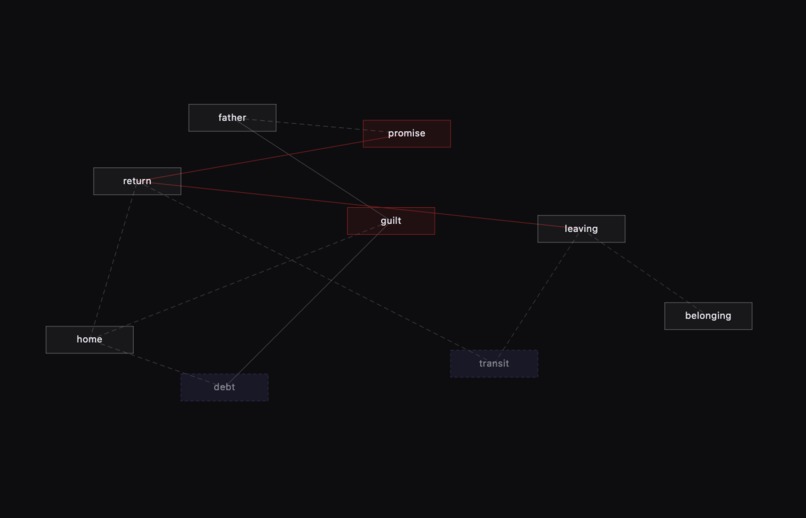
Example of thought map generated after a conversation
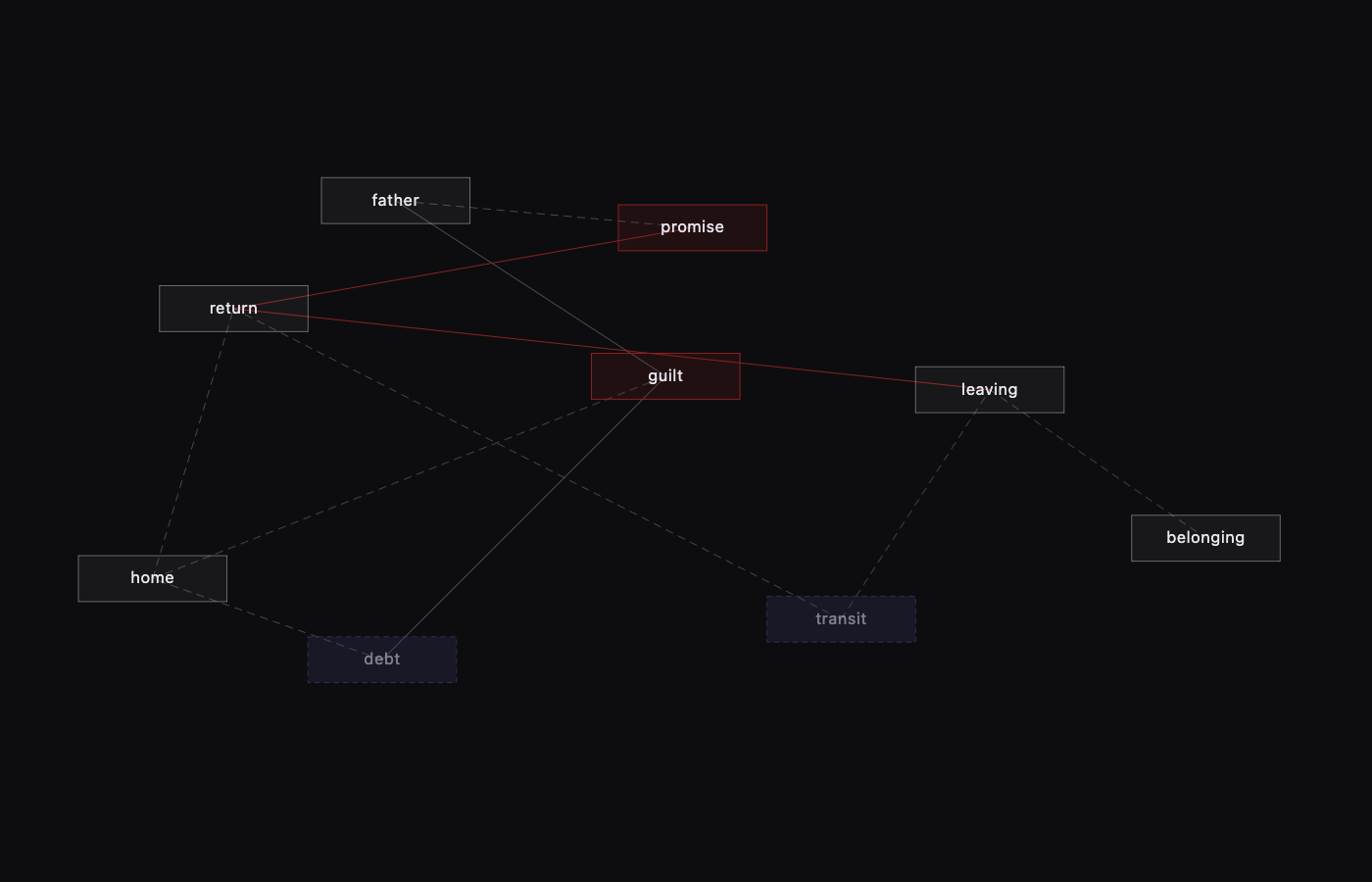
Inspiration Every AI tool assumes you have a question and it has the answer. We started from the opposite: the most interesting problems aren't solved by better answers, they're solved by better questions. Maieutic is named after the Socratic method — the idea that the most important things you know, you haven't said yet. What it does You bring something unresolved — a creative project, a decision, an idea you can't name — and instead of generating content, Maieutic builds a live map of your thinking in real time. The AI asks targeted questions, then places what emerges as nodes and connections on an interactive canvas, surfacing tensions, gaps, and relationships you didn't see. When you're done, a synthesis panel reads the full map and tells you what emerged, what's still open, and what you avoided. How we built it Built in a single hackathon sprint using Next.js, TypeScript, ReactFlow, and the Claude API. Three distinct Claude pipelines handle intake (reading existing material to find absences), intervention (writing into the graph rather than a chat box), and synthesis (reading the full topology to produce a structured session summary). A fully scripted demo mode runs the entire experience without an API key. Challenges we ran into The hardest technical problem was making ReactFlow behave as a primary interaction surface rather than a visualization layer — every assumption in the library is built for dashboards, not a canvas that writes itself in real time. The harder design challenge was resisting the urge to make the AI more helpful in the conventional sense: Maieutic is built on productive friction, and holding that line against every UX instinct took discipline. Accomplishments that we're proud of The synthesis layer reads a graph topology — not a transcript — and produces something genuinely useful, which is a non-trivial architecture problem. The demo session tells a coherent story about a screenwriter discovering something real about his stuck script, which is an actual use case rather than a feature demonstration. What we learned Building from a clear philosophical premise — the Socratic method, the difference between tools that replace thought and tools that deepen it — produced better product decisions than any user research would have. Demo mode turned out to be the most honest form of product specification: scripting the ideal user trajectory beat by beat forced us to articulate exactly what the tool is actually for. What's next for Maieutic MCP integration with Notion, Obsidian, and Google Drive so the intake layer can read existing work silently and open sessions already pointing toward what's missing. Multi-session memory so the terrain accumulates across weeks rather than resetting — and a community layer for shared export templates so the tool speaks the language of each domain it serves.
Built With
- anthropic-mcp-protocol
- claude-api-(claude-sonnet-4-6)
- next.js
- reactflow
- tailwind-css
- typescript


Log in or sign up for Devpost to join the conversation.