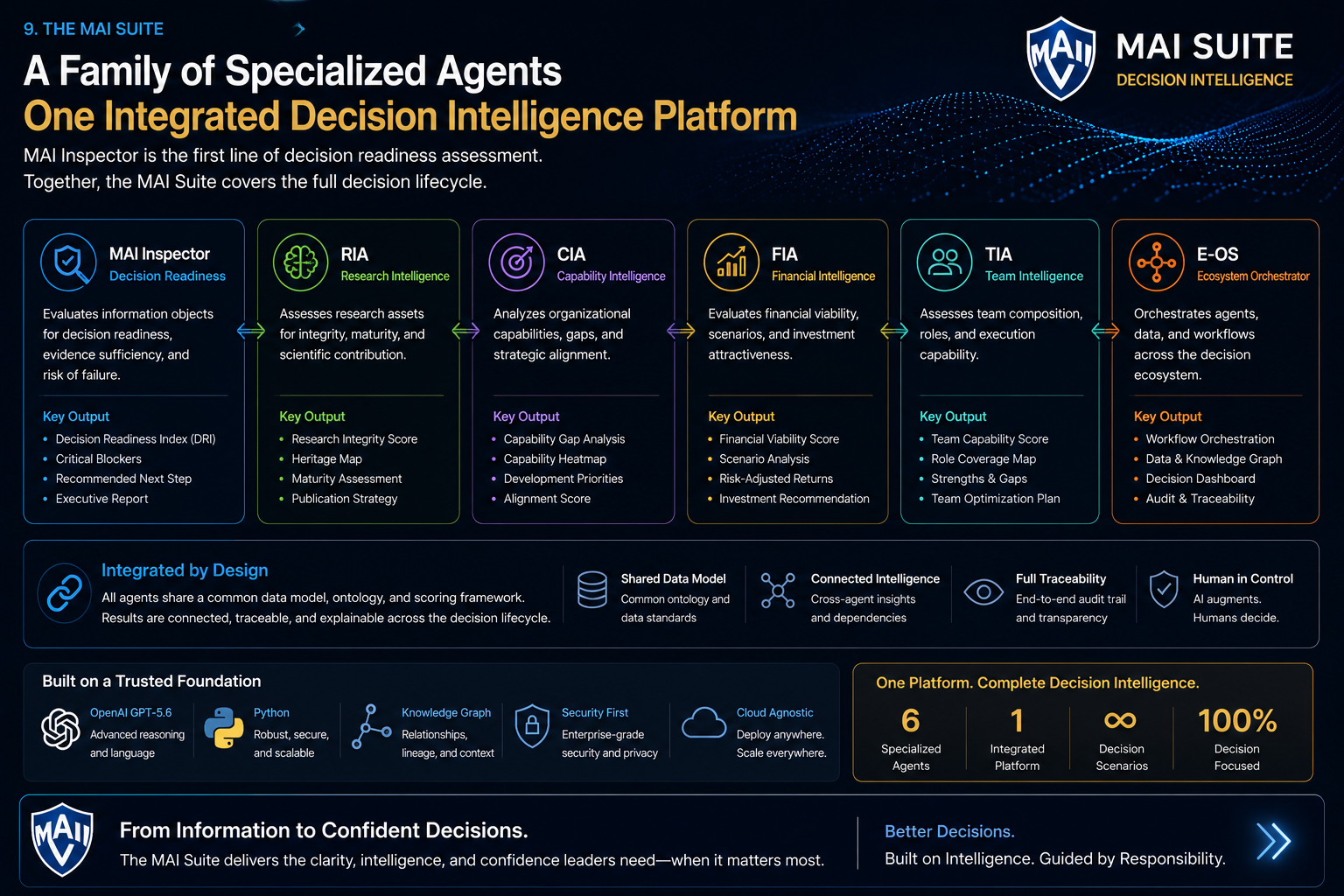
Inspiration
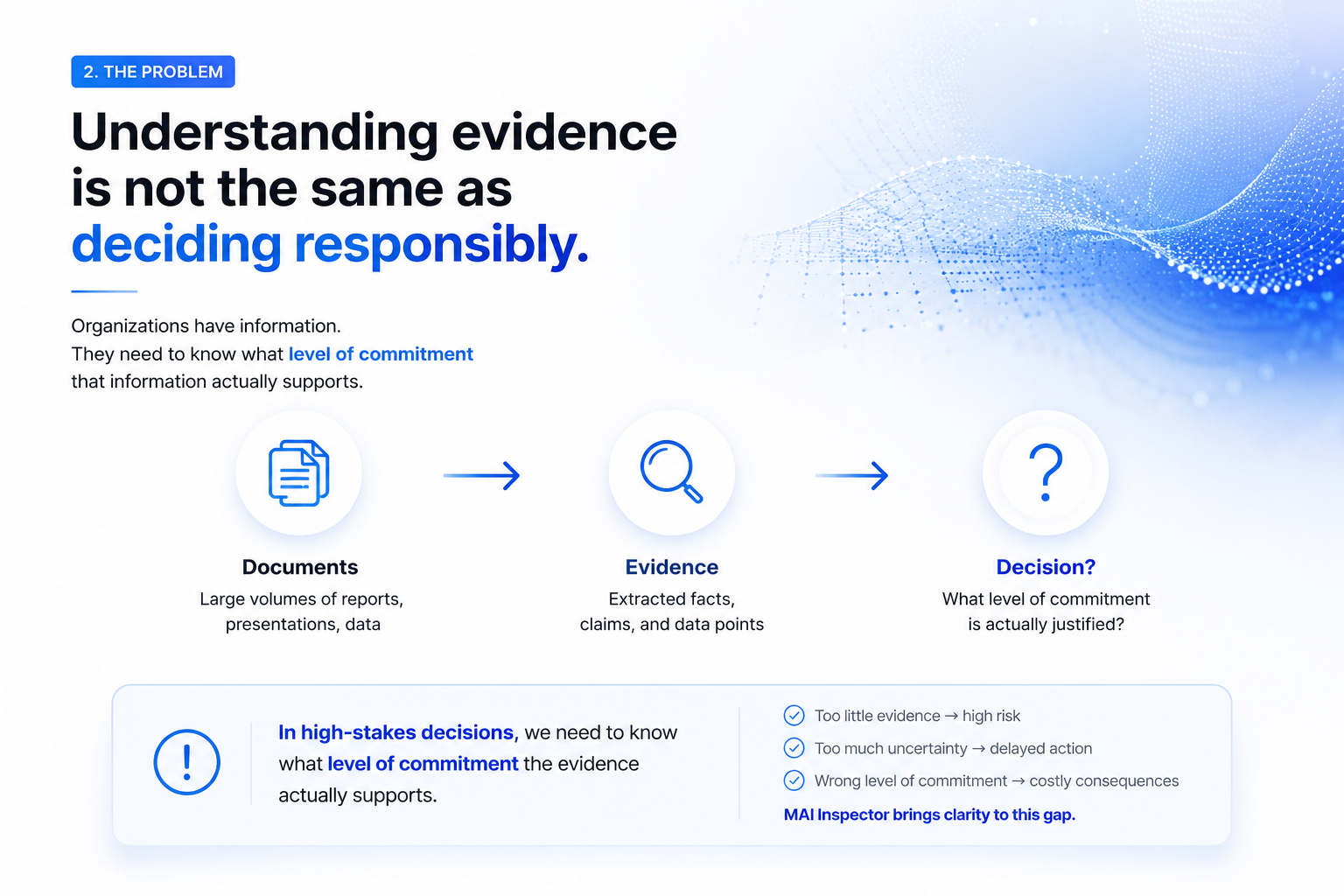
Organizations make high-stakes decisions using presentations, technical reports, financial models, due diligence packages, and expert assessments.
AI can summarize and explain these materials remarkably well. But understanding documents is not the same as knowing whether the available evidence responsibly supports a proposed decision.
That gap inspired MAI Inspector:
AI understands information.
People still do not know whether they have enough evidence to act.
MAI Inspector fills that gap.
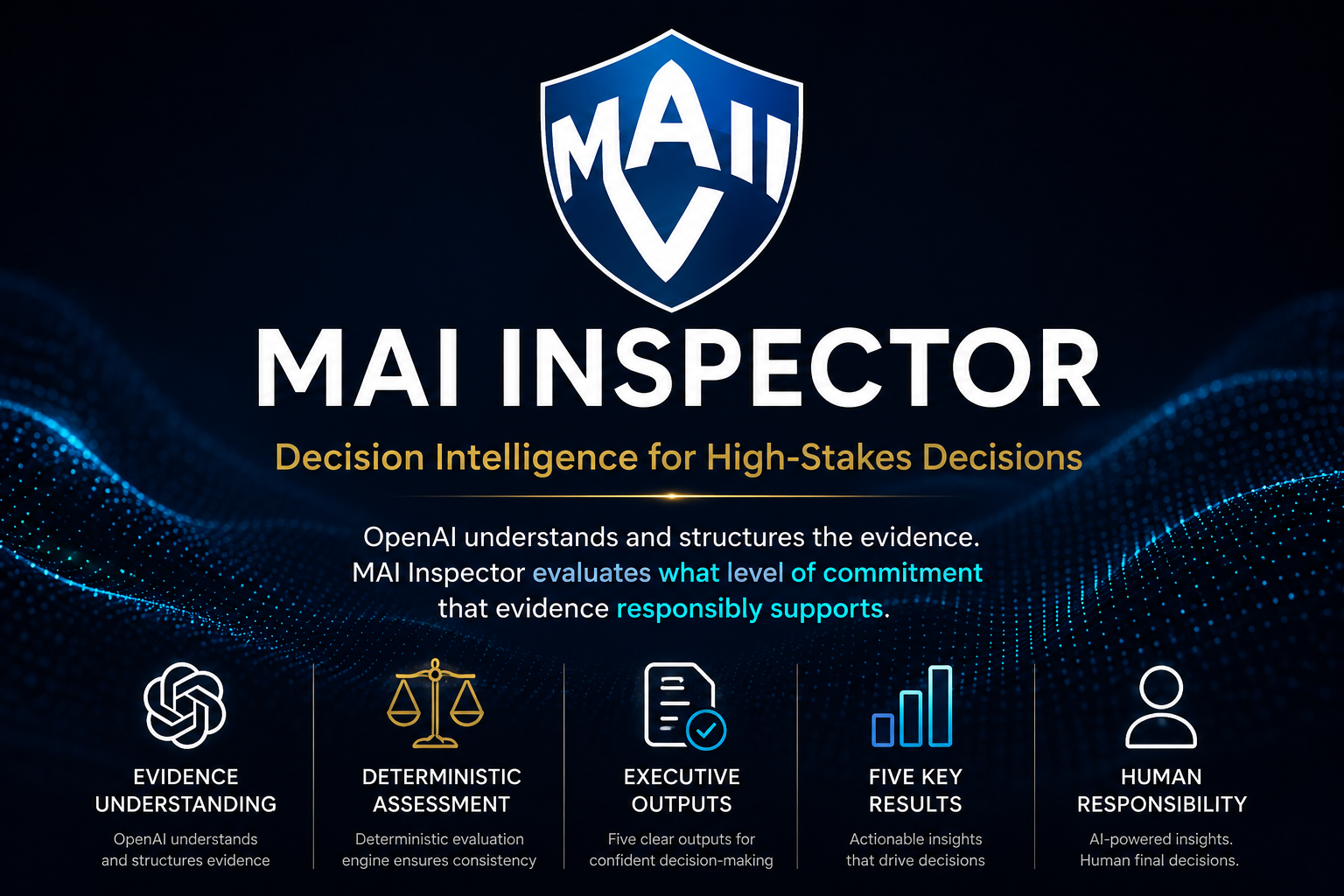
MAI Inspector moves from Document Intelligence to Decision Intelligence.
What it does
MAI Inspector begins with a proposed decision and evaluates what level of commitment the available evidence can responsibly support.
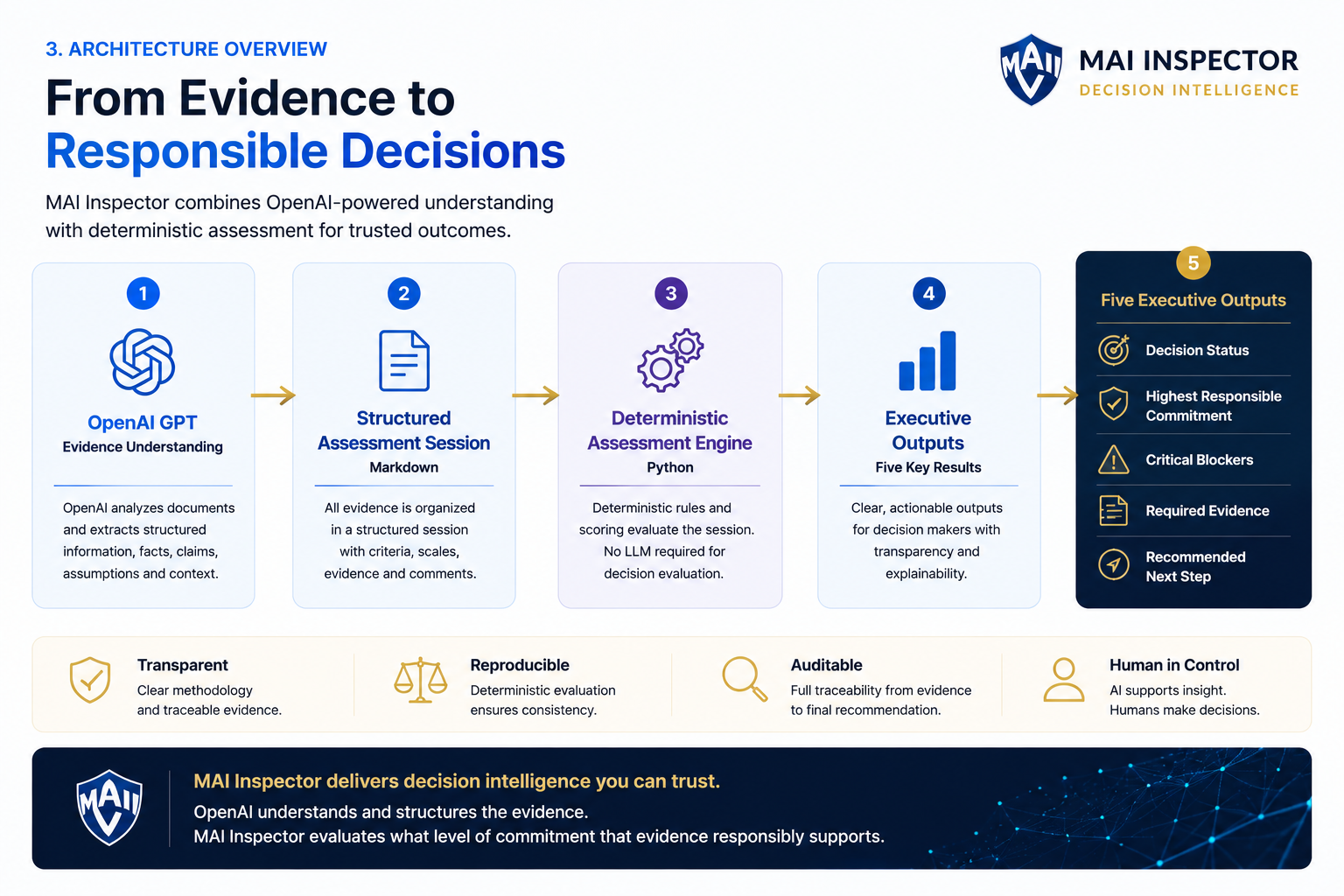
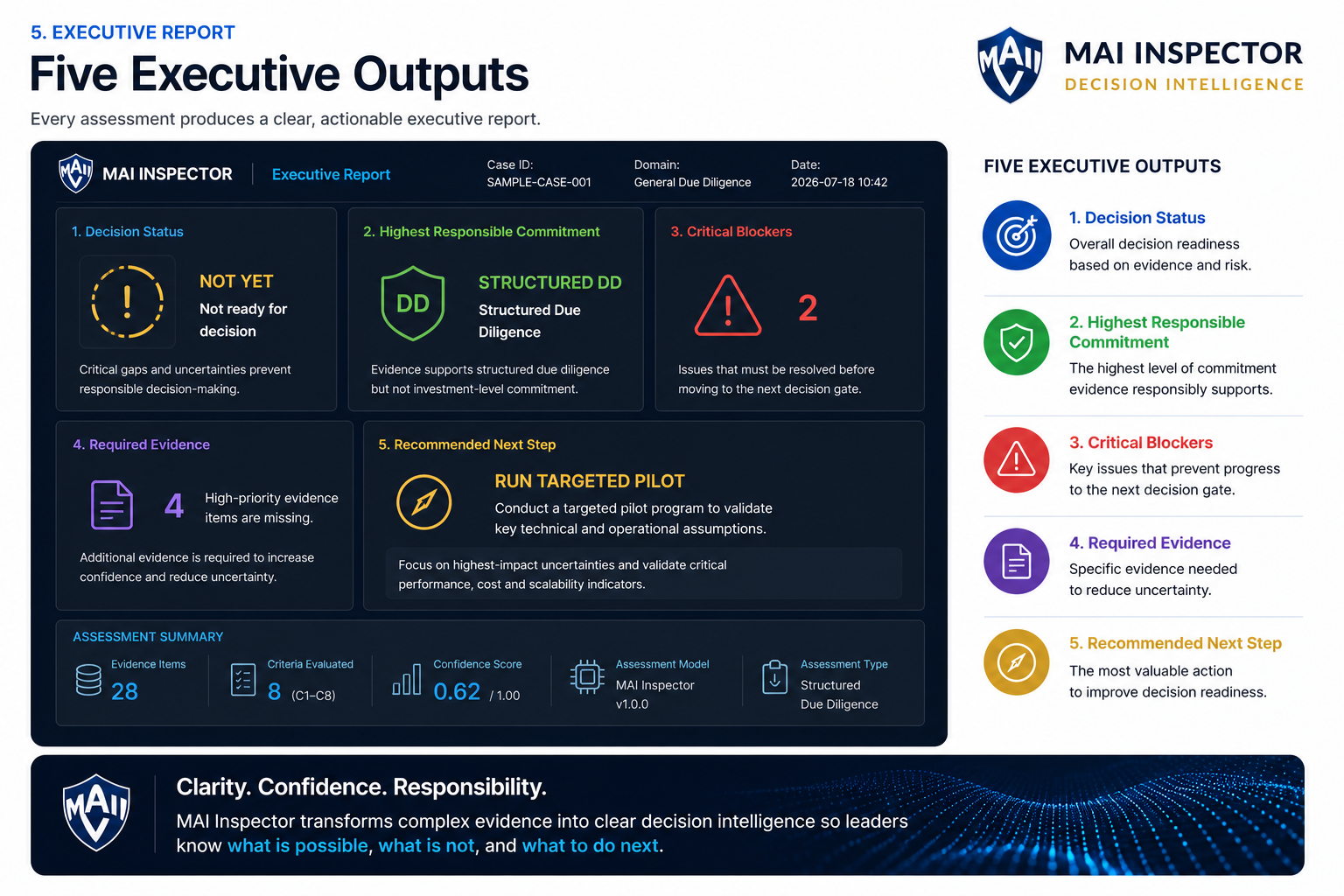
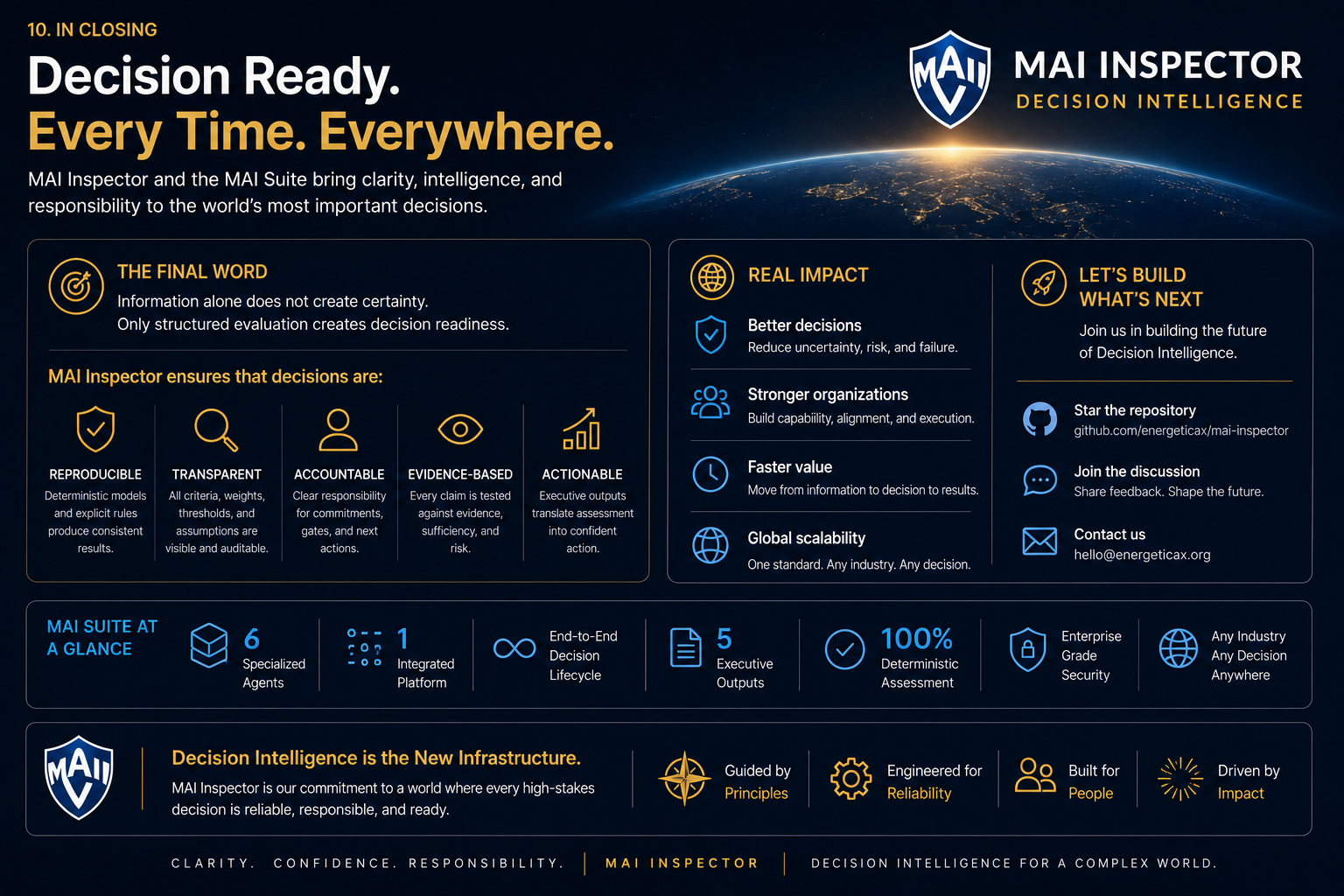
It produces five standardized executive outputs:
- Decision Status
- Highest Responsible Commitment
- Critical Blockers
- Required Evidence
- Recommended Next Step
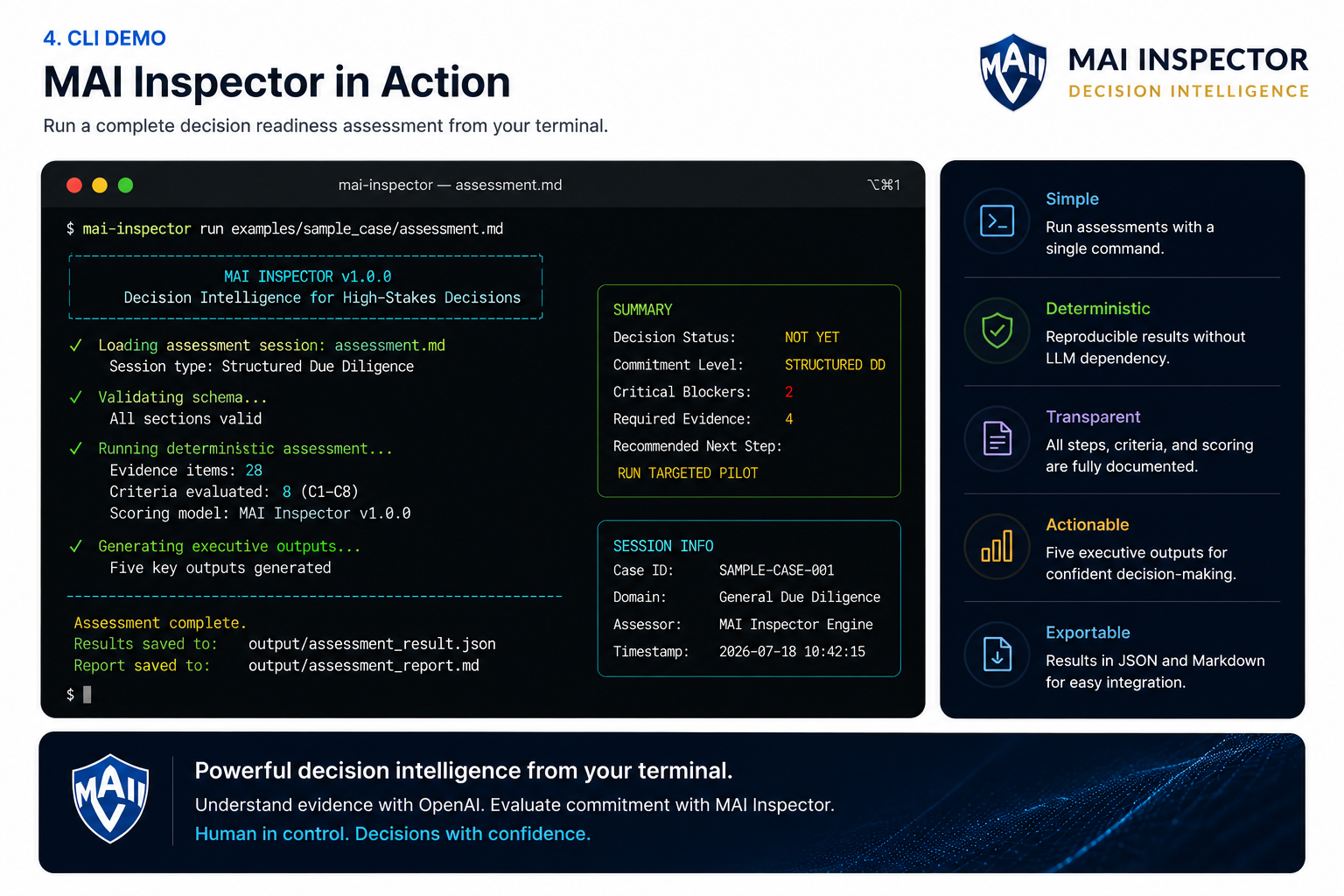
In the public investment-assessment example, the proposed investment commitment is not yet supported. However, the evidence does support a responsible next step:
- Decision Status: Not Yet
- Highest Responsible Commitment: Structured Due Diligence
The system does not reject the opportunity. It establishes the responsible boundary for progressing it.
How we built it
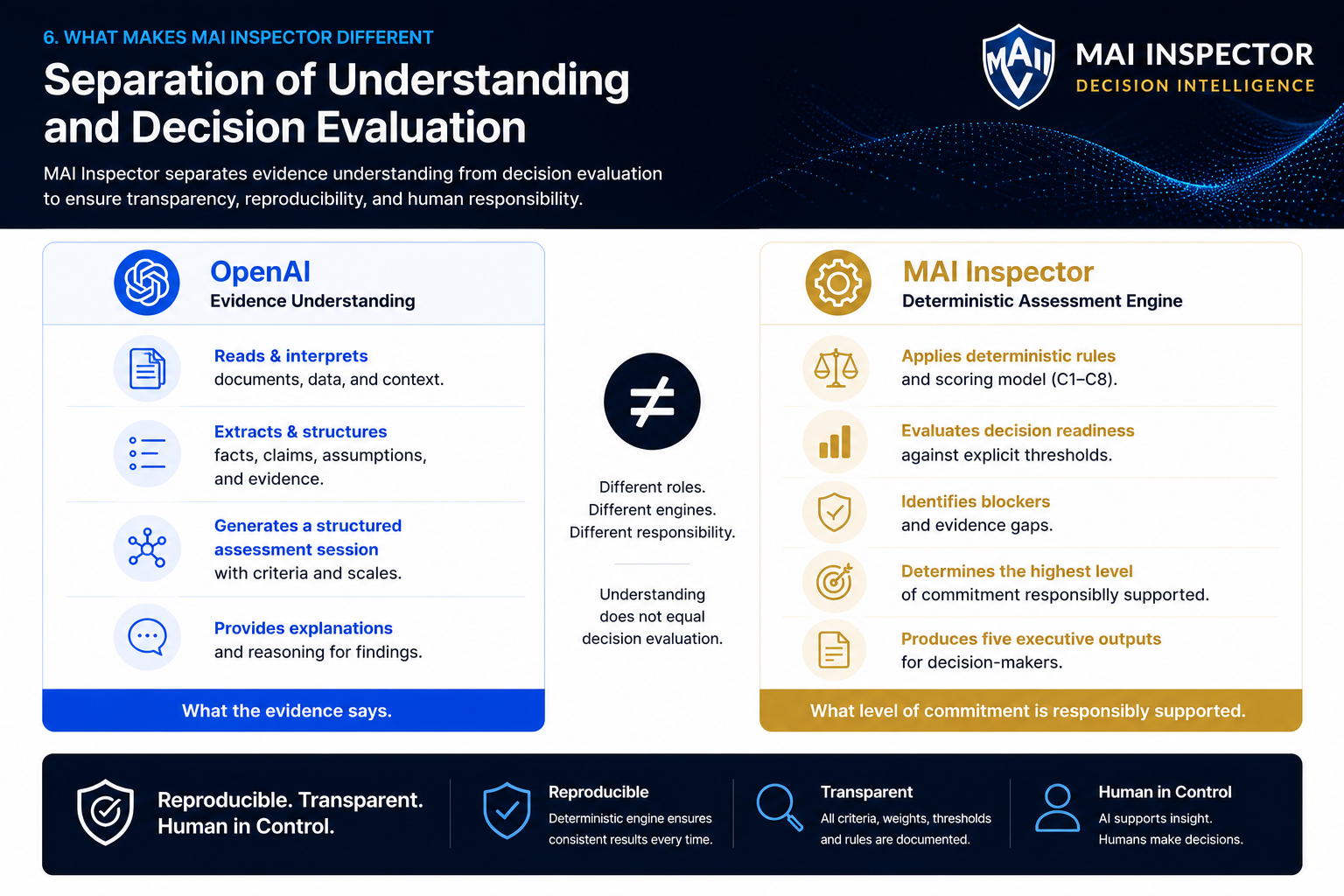
MAI Inspector uses a deliberately separated architecture.
An optional OpenAI-assisted drafting layer can interpret evidence, identify material claims, detect contradictions, and prepare a Structured Assessment Session.
That structured session is then evaluated by the deterministic MAI engine. The engine applies validated scoring rules, thresholds, category constraints, blocking conditions, and commitment-boundary logic without requiring another model call.
This separation is central to the design:
OpenAI understands and structures the evidence.
MAI evaluates what level of commitment that evidence responsibly supports.
The public implementation includes:
- a Python CLI;
- optional OpenAI-assisted session drafting;
- deterministic local assessment;
- structured JSON inputs and outputs;
- provenance and artifact-linkage controls;
- a reproducible public sample;
- privacy and explicit-send guardrails;
- engineering documentation;
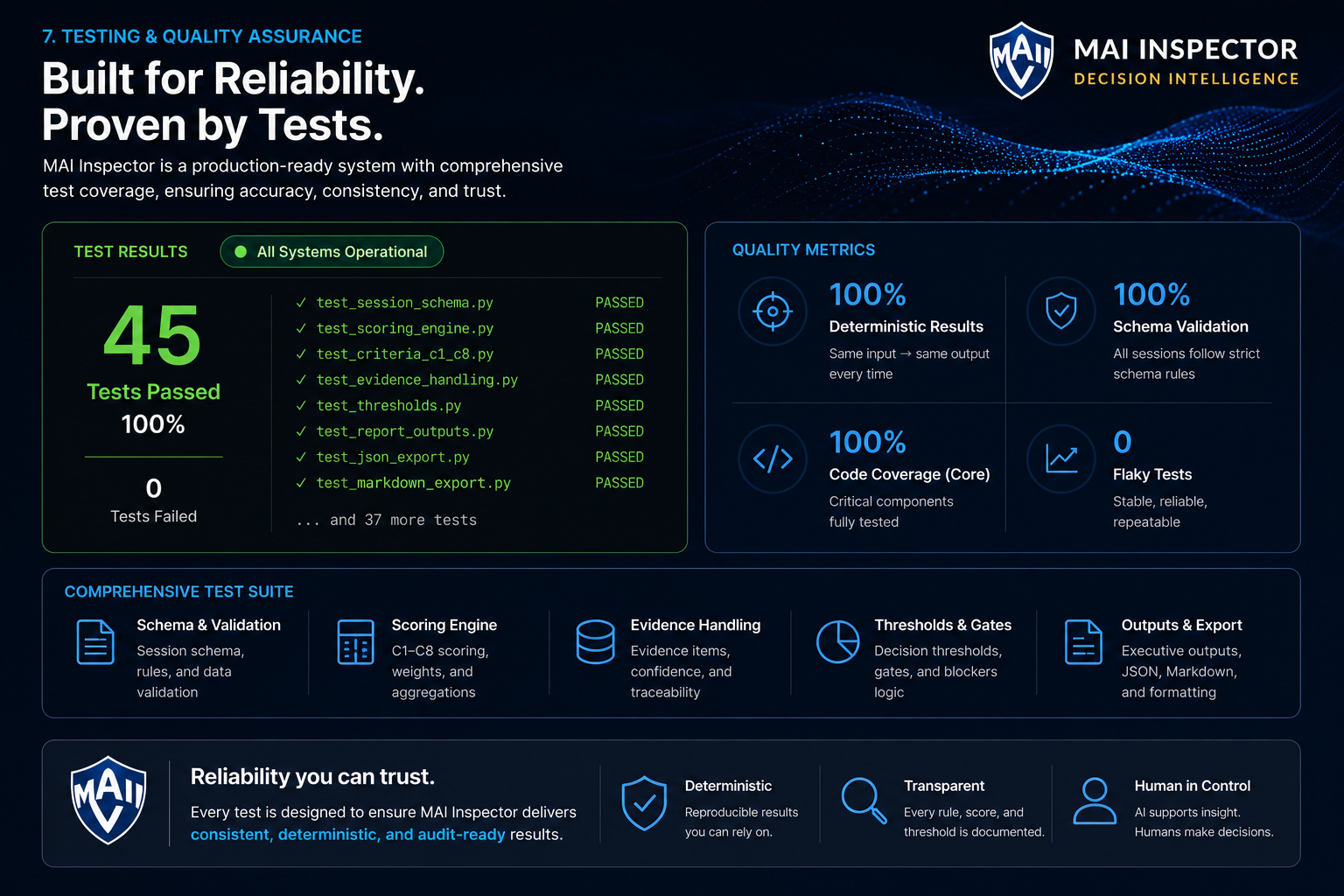
- 45 passing automated tests.
How we used Codex and GPT-5.6
Codex with GPT-5.6 was used throughout the public-product workflow: implementation, CLI hardening, test development, debugging, repository restructuring, documentation consistency, privacy review, and release verification.
Codex helped transform an internal research prototype into a focused public product repository. It accelerated repetitive engineering work while preserving explicit human decisions about product scope, architecture, terminology, security boundaries, and release claims.
GPT-5.6 also supports the optional semantic drafting layer, where unstructured evidence can be interpreted and transformed into a Structured Assessment Session. The final decision assessment remains deterministic and independently reproducible from the validated session.
Challenges
The main challenge was not adding more AI capability. It was defining a trustworthy boundary between semantic interpretation and reproducible assessment.
We had to ensure that:
- model-generated content was never treated as the authoritative decision;
- deterministic execution could run locally without an API key or network access;
- public claims matched the implemented code;
- the sample, demo, tests, README, and submission materials produced one consistent story;
- provenance was not confused with information security;
- reproducibility meant the same substantive result, without falsely promising byte-identical files when timestamps or paths may differ.
Accomplishments
We are proud that MAI Inspector is more than a concept or presentation.
The public release provides a runnable CLI, deterministic engine, public sample, machine-readable outputs, provenance controls, five executive outputs, 45 passing tests, and a complete engineering evidence package covering architecture, testing, security boundaries, deterministic assessment, and reproducibility.
A clean-clone reproduction of the tagged release confirmed the tests and public sample independently.
What we learned
The most important lesson was that responsible AI architecture depends on separating different kinds of authority.
A language model can be highly effective at understanding and structuring evidence. But a high-stakes assessment also needs explicit rules, reproducibility, traceability, and a clear human decision boundary.
The goal is not to automate executive authority. The goal is to help people understand what their evidence responsibly allows them to do next.
What's next
The next stage is validation across additional public decision cases and domains while preserving the same architectural principle: semantic assistance may be probabilistic, but the final evidence-to-commitment assessment must remain explicit, inspectable, and reproducible.
No organization should commit beyond what its available evidence can responsibly support.


Log in or sign up for Devpost to join the conversation.