Mai — AI-Native Fashion Commerce for Small Retailers
Inspiration
Independent fashion retailers compete against enormous marketplaces with larger catalogs, bigger marketing budgets, and sophisticated recommendation systems. Their real advantage is personal service—but that advantage is difficult to deliver online and expensive to scale.
At the same time, shoppers face an overwhelming number of choices. Conventional recommendation engines optimize clicks and popularity, but rarely understand why someone is shopping, how they want to present themselves, what they already own, or whether a suggested product is genuinely available.
We created Mai to make online fashion shopping feel like working with a personal stylist while giving smaller merchants an AI-operated sales channel.
What Mai does
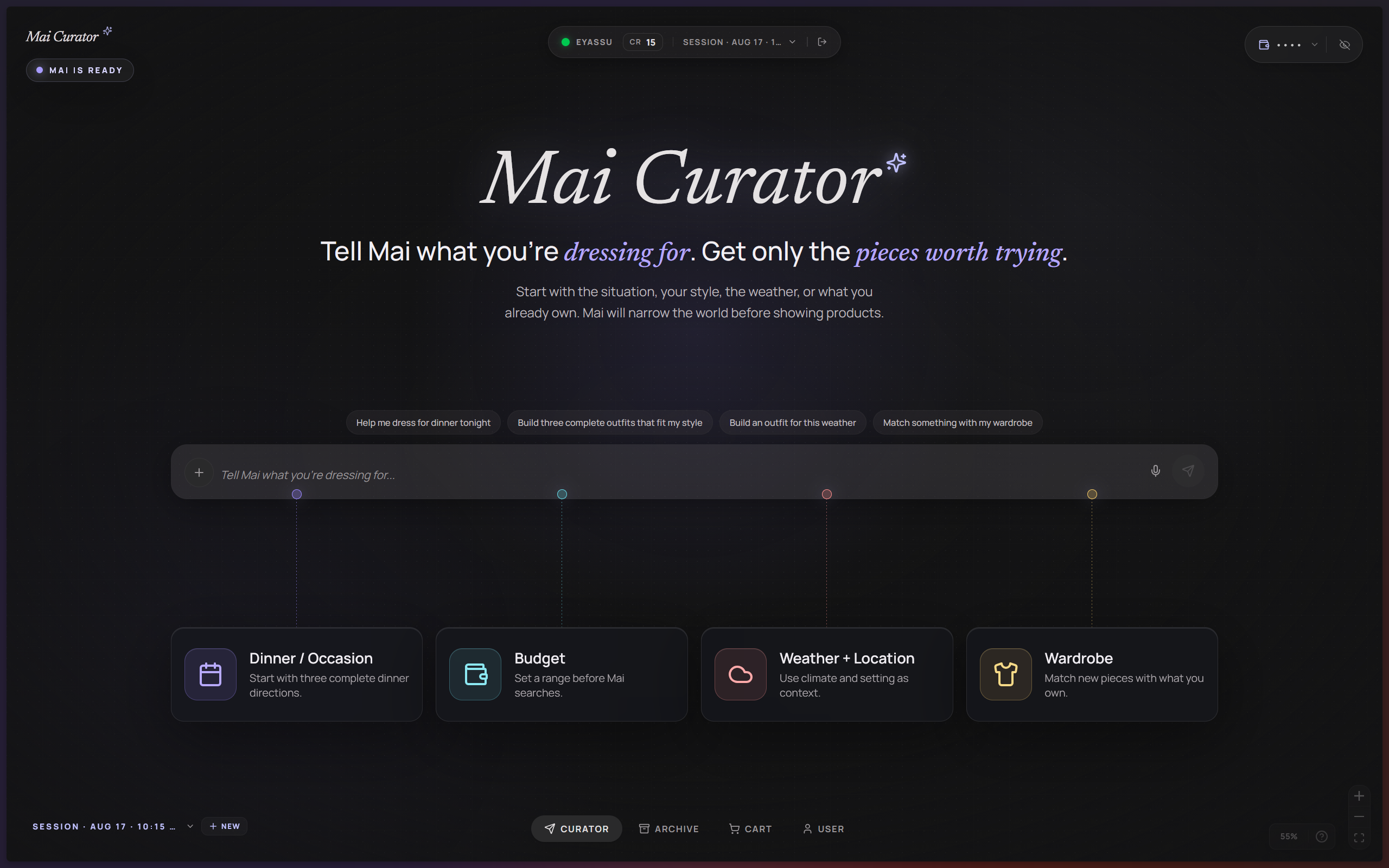
Mai is a conversational fashion curator connected to a real commerce backend.
A shopper can describe a goal in natural language, such as:
“I need a minimal outfit for a creative business dinner under $200.”
Mai retrieves the shopper’s saved fashion profile and wardrobe context, clarifies missing preferences, enriches the request, and communicates with a separate merchant agent.
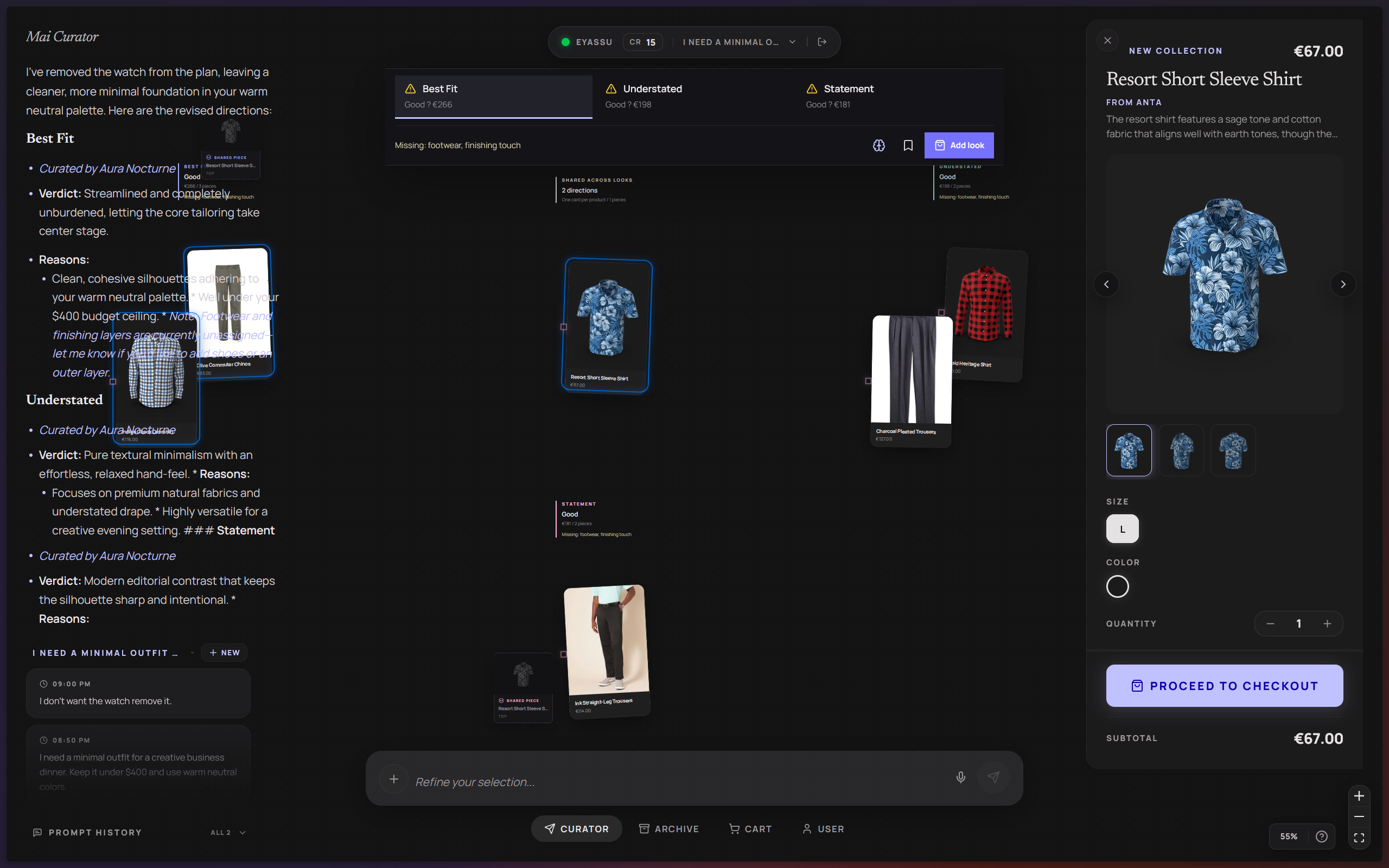
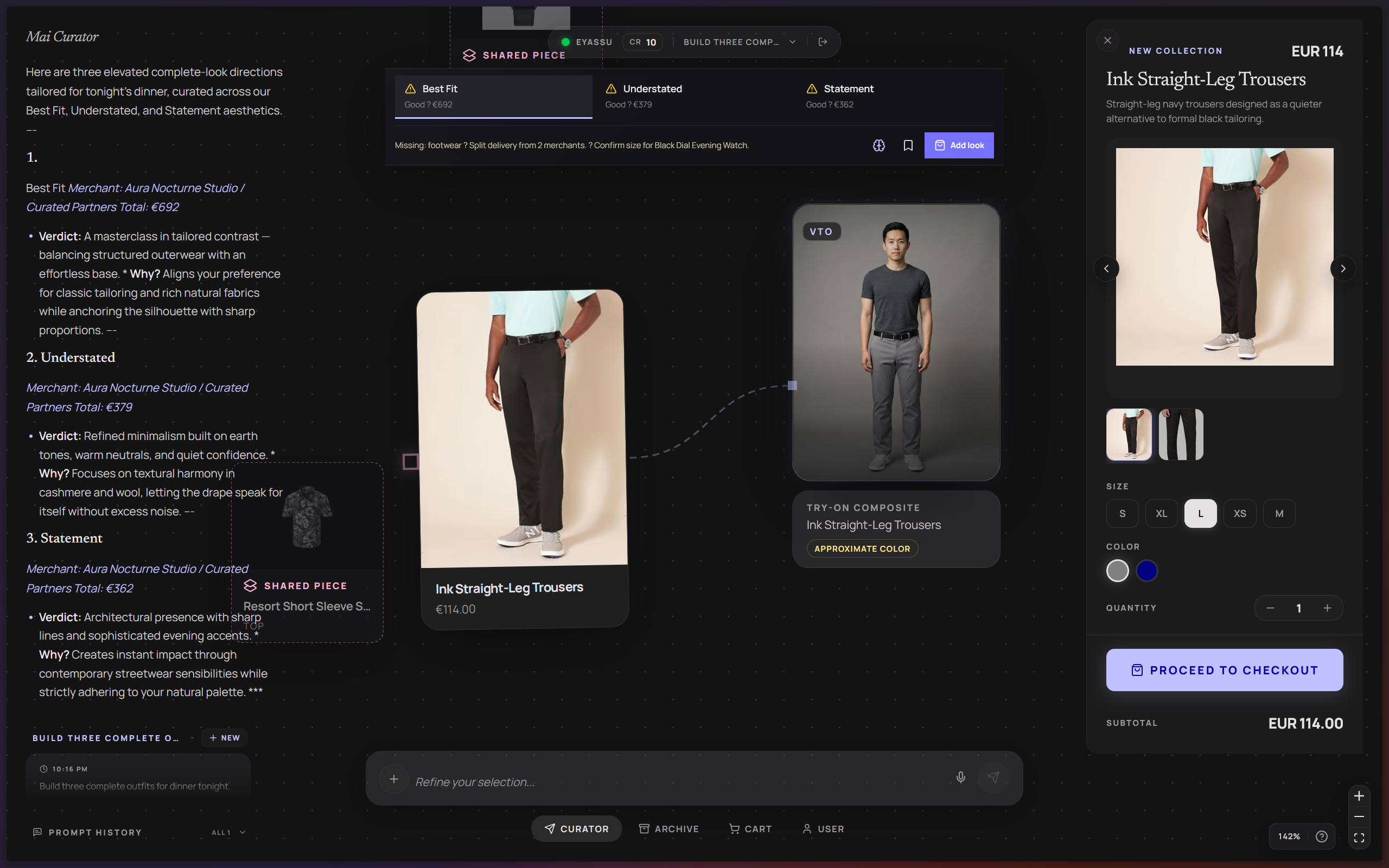
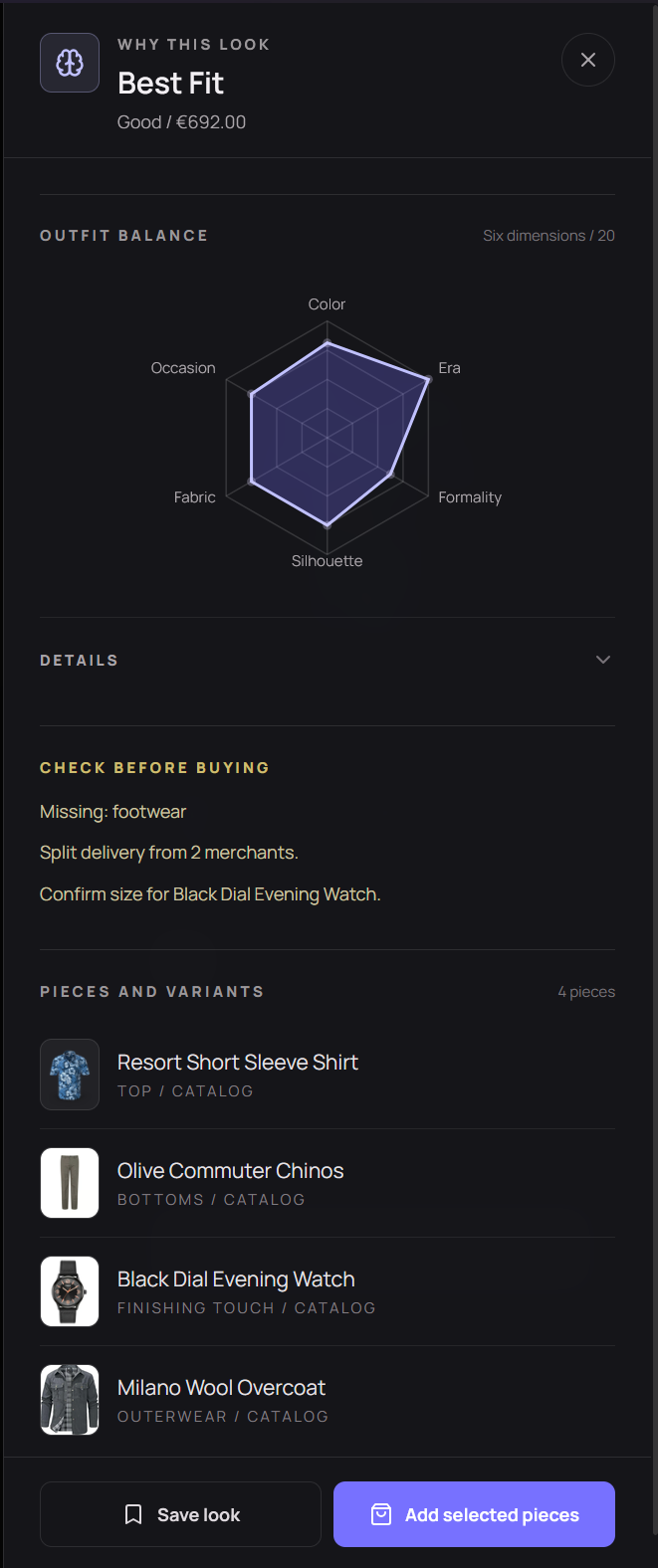
The merchant agent searches live catalog data and returns real products, variants, prices, and availability. Mai evaluates those products against the shopper’s profile, explains its reasoning, and presents the strongest options through an interactive visual canvas.
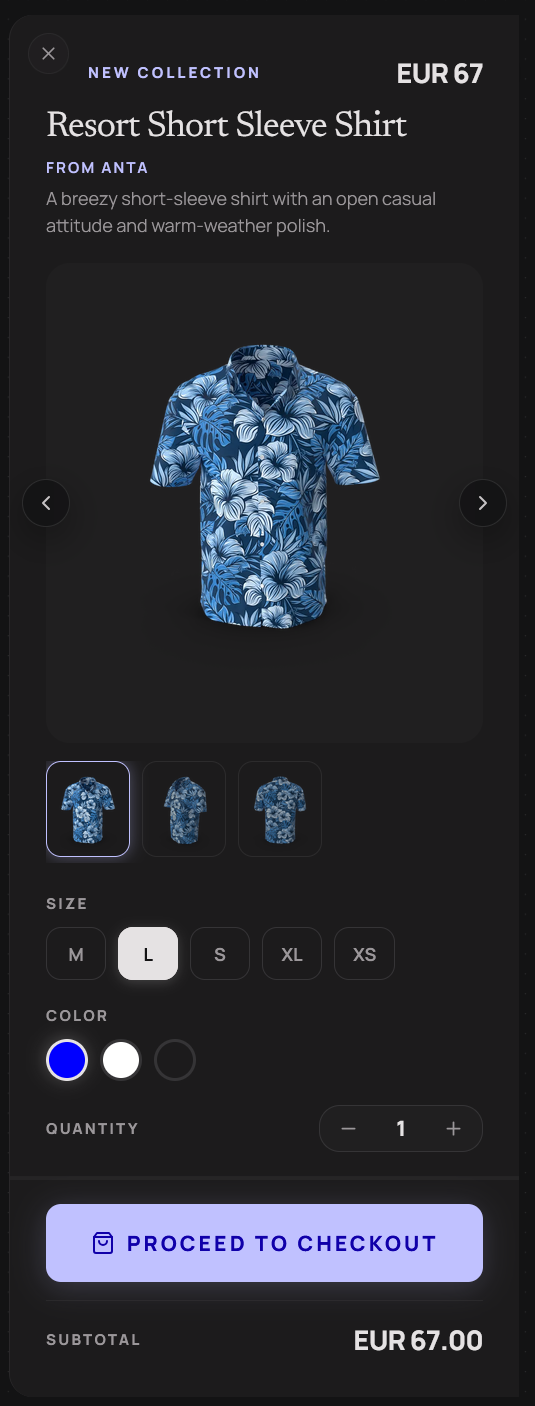
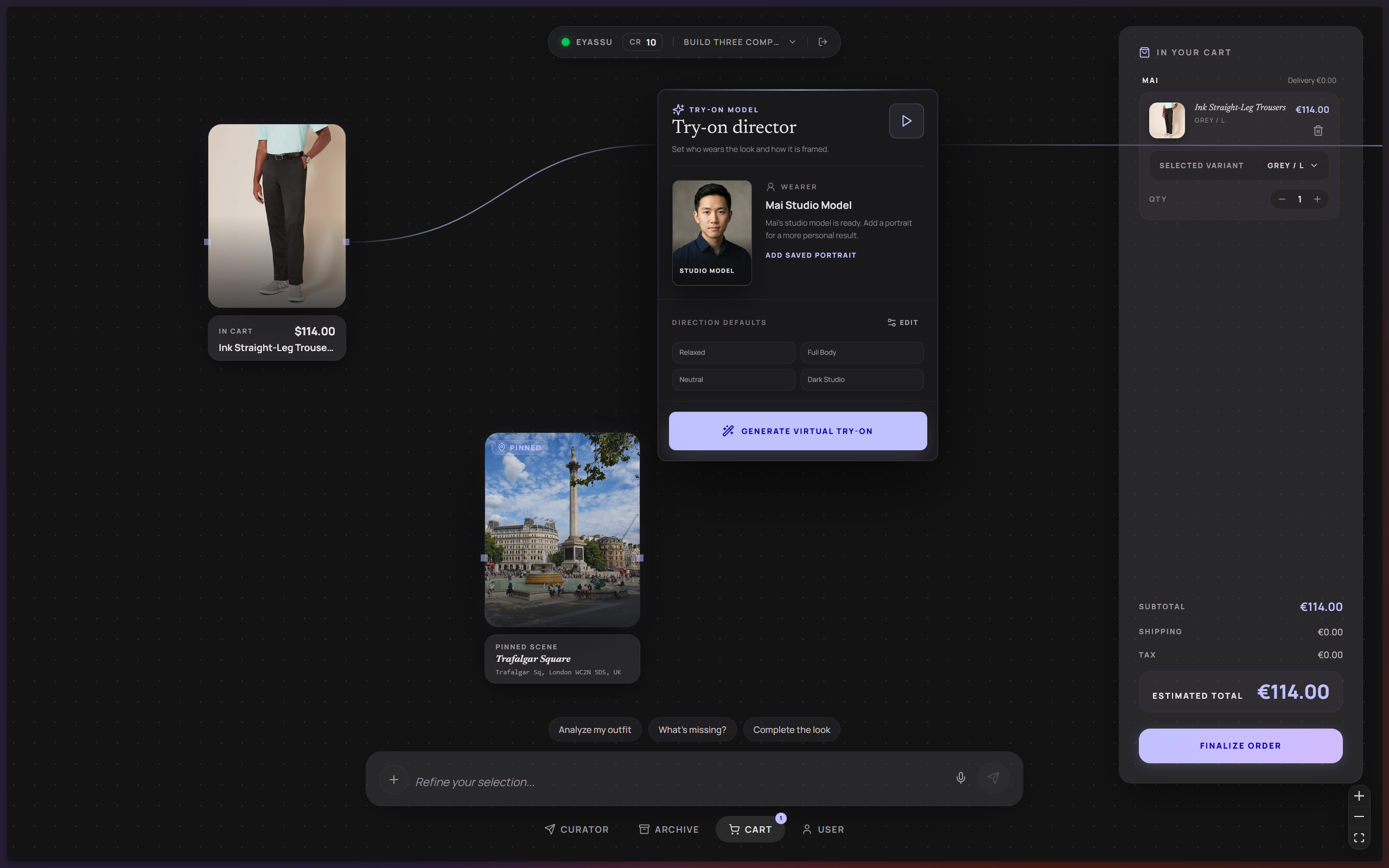
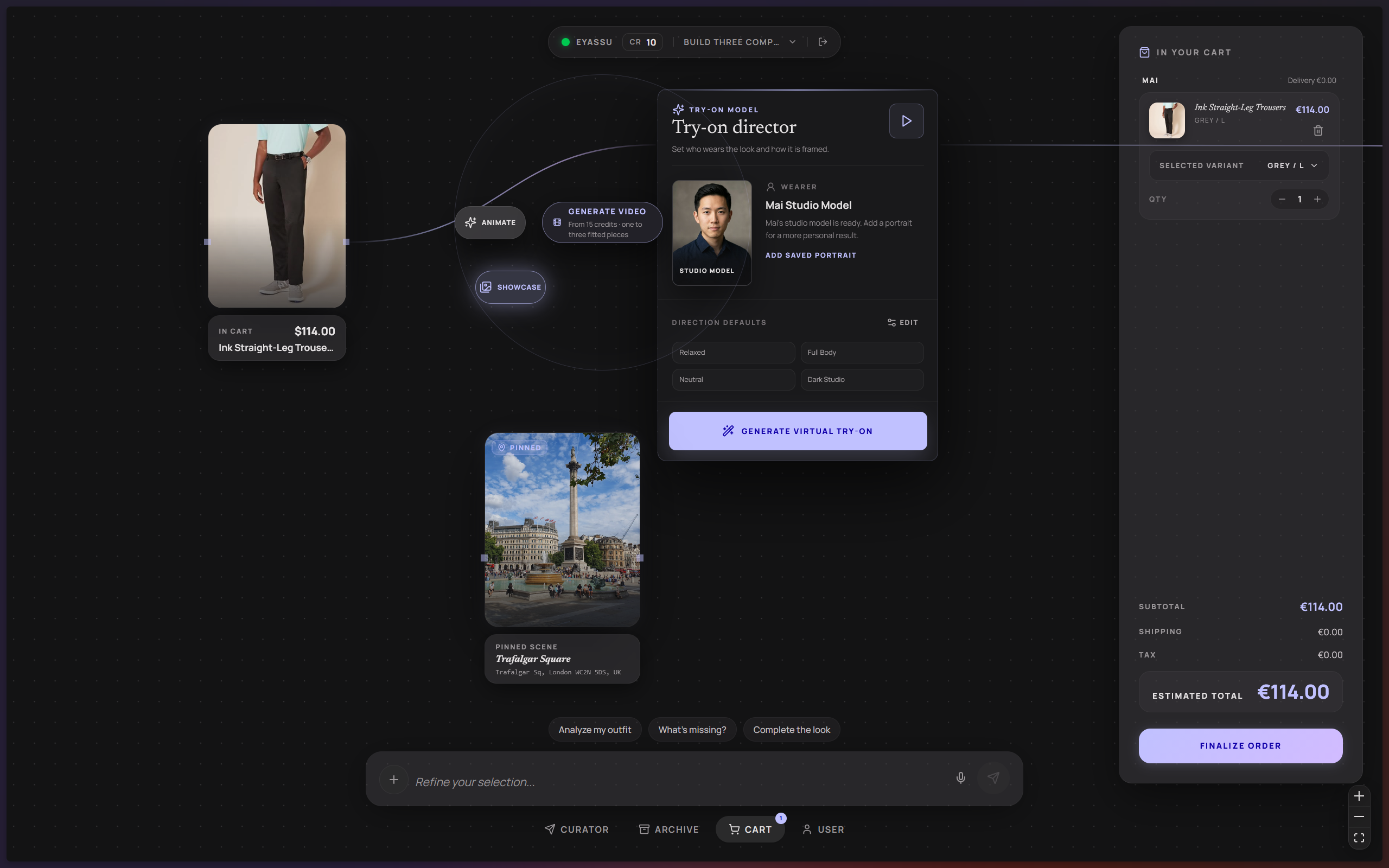
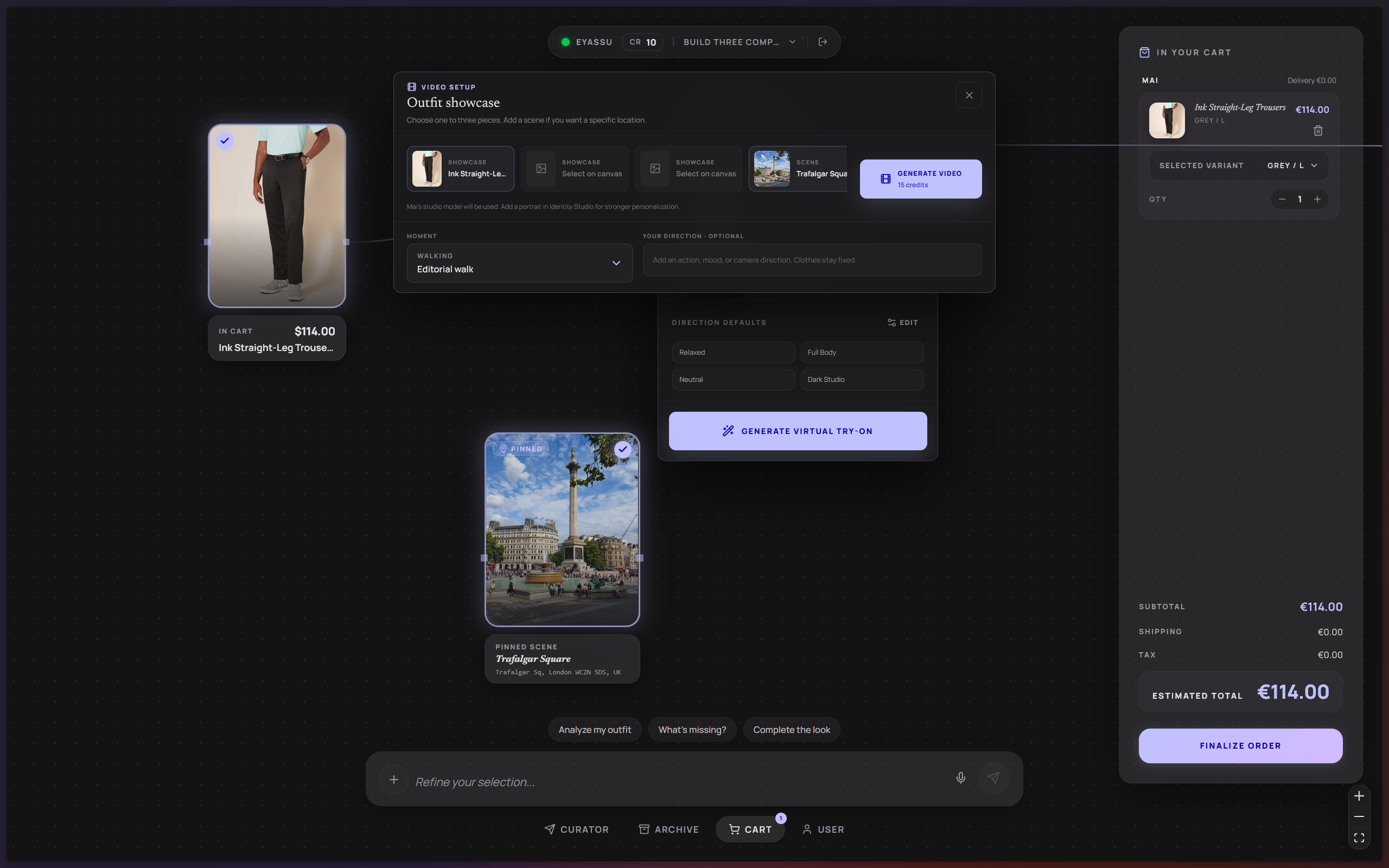
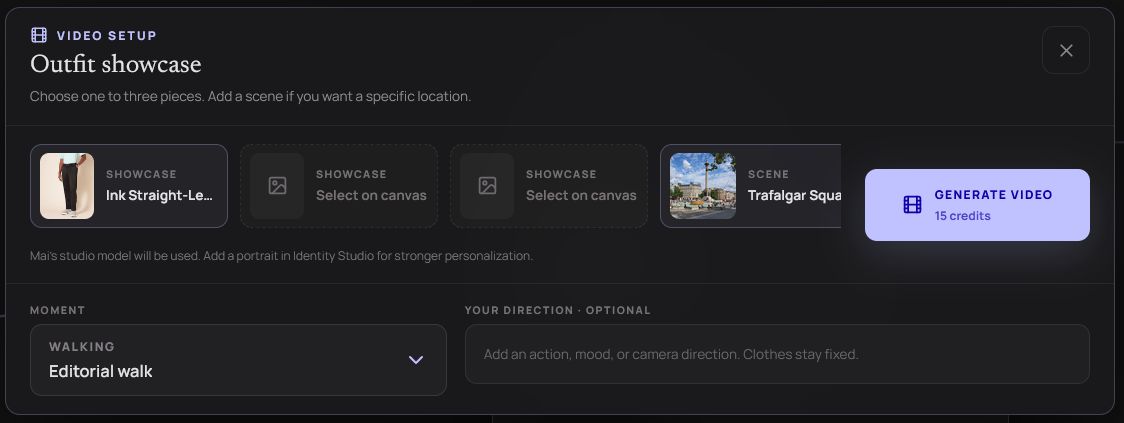
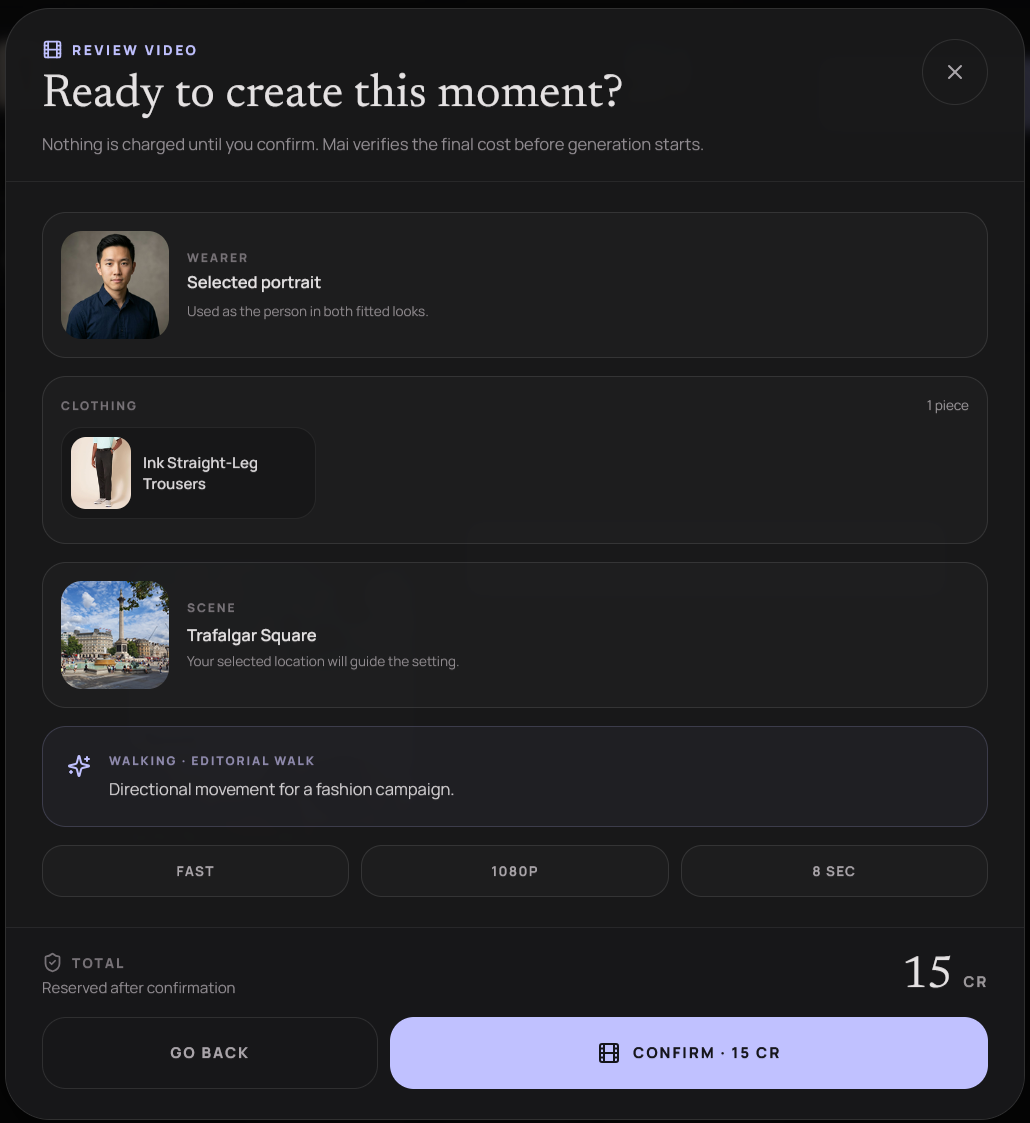
The shopper can inspect product specifications, understand why an item was selected, create outfit combinations, visualize products, add exact variants to checkout, and continue toward an order without losing the conversational context that produced the recommendation.
How AI operates the business
Mai is not a chatbot placed on top of a static storefront. AI agents execute core operational decisions.
The shopper-side agent:
- Builds and maintains a persistent fashion profile
- Interprets vague shopping requests
- Uses wardrobe and purchase context
- Enriches catalog queries
- Scores products against style and occasion constraints
- Refines results when the first selection is weak
- Composes outfits from exact catalog variants
- Guides the shopper through cart and checkout decisions
A separate merchant agent owns commerce operations:
- Product and variant search
- Inventory-aware catalog access
- Cart creation and modification
- Shipping and checkout state
- Order completion through the commerce backend
The agents communicate through A2A JSON-RPC and Universal Commerce Protocol structures. This separation prevents the personal stylist from inventing inventory or directly controlling merchant data.
Mai uses Gemini 3.5 Flash-Lite through Google’s Agent Development Kit. The frontend streams agent activity and renders recommendations as interactive product surfaces rather than reducing the experience to text.
What humans do versus what AI does
The AI performs high-frequency work: understanding intent, retrieving context, querying inventory, comparing products, explaining recommendations, maintaining session state, and coordinating commerce services.
Humans remain responsible for consequential decisions.
The shopper controls their profile, budget, preferred products, cart, and payment authorization. Merchants control inventory, pricing, fulfillment, returns, and the products they make available. Mai advises and coordinates; it does not silently purchase products or change merchant records.
This division gives users the convenience of automation without removing consent or merchant control.
How we built it
The system combines:
- Gemini 3.5 Flash-Lite
- Google Agent Development Kit
- A2A agent communication
- Universal Commerce Protocol
- A Next.js and React storefront
- Medusa commerce services
- Persistent customer profiles and session memory
- Streaming agent and tool events
- AP2, Human-approved cart and payment workflows
- Secure wallet and authorization boundaries
One of the largest engineering challenges was maintaining trustworthy state across the browser, shopper agent, merchant agent, and commerce backend. We also had to ensure that AI-generated recommendations always resolved to real products and exact variants instead of hallucinated inventory.
Economic opportunity
Mai is designed to help smaller fashion businesses provide the kind of personal guidance normally associated with premium retailers.
The platform can help boutiques convert more of their existing traffic without operating a large recommendation-engineering team. As adoption grows, it can also support work for independent stylists, catalog curators, fashion photographers, fulfillment partners, and merchant onboarding specialists.
Our planned business model combines a merchant subscription with usage-based AI services and an optional fee on agent-assisted transactions.
Traction and revenue
By the submission deadline, Mai had generated $0 in earned revenue.
We do not count test transactions, founder-funded activity, or unpaid demonstrations as revenue. We have a promising post-hackathon commercial lead, but it is not a signed contract, guaranteed sale, or earned revenue, and we report it only as part of our future sales pipeline.
The product and its end-to-end agentic commerce workflow are complete. Our immediate next step is converting the current lead into a pilot, measuring recommendation-to-cart and cart-to-order conversion, and using those results to refine merchant pricing.
What we learned
We learned that an AI-native business needs more than a capable model. It requires reliable tools, persistent state, strict ownership boundaries, observable decisions, real inventory, and explicit human authorization.
The most useful agent is the one that can make good decisions, explain them, and safely turn those decisions into real business actions.
Built With
- cloudflare
- docker
- gcp
- gemini
- google-adk
- medusa
- nextjs
- openai
- python
- resend
- typescript
- usdc
- zoho

Log in or sign up for Devpost to join the conversation.