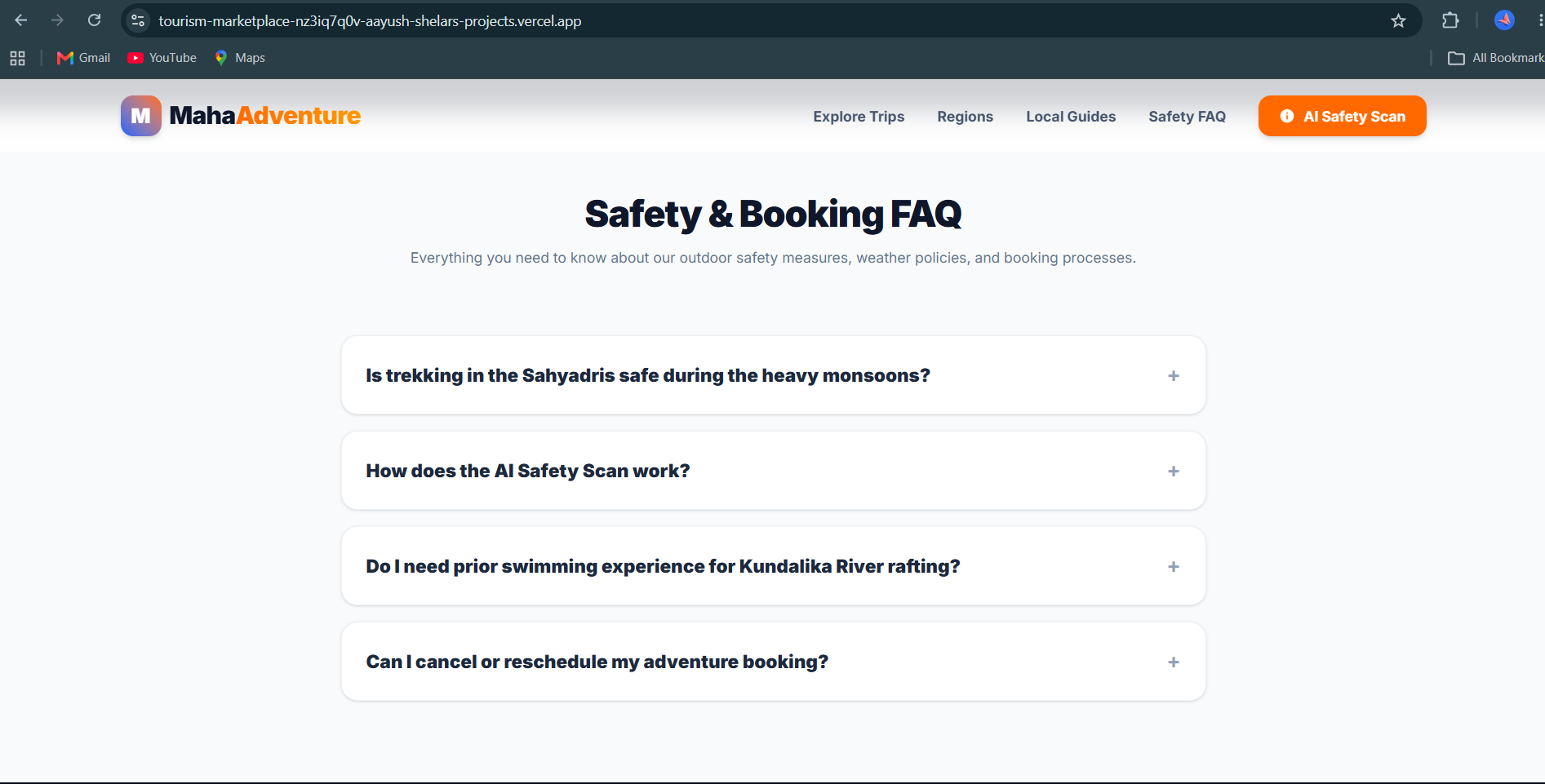
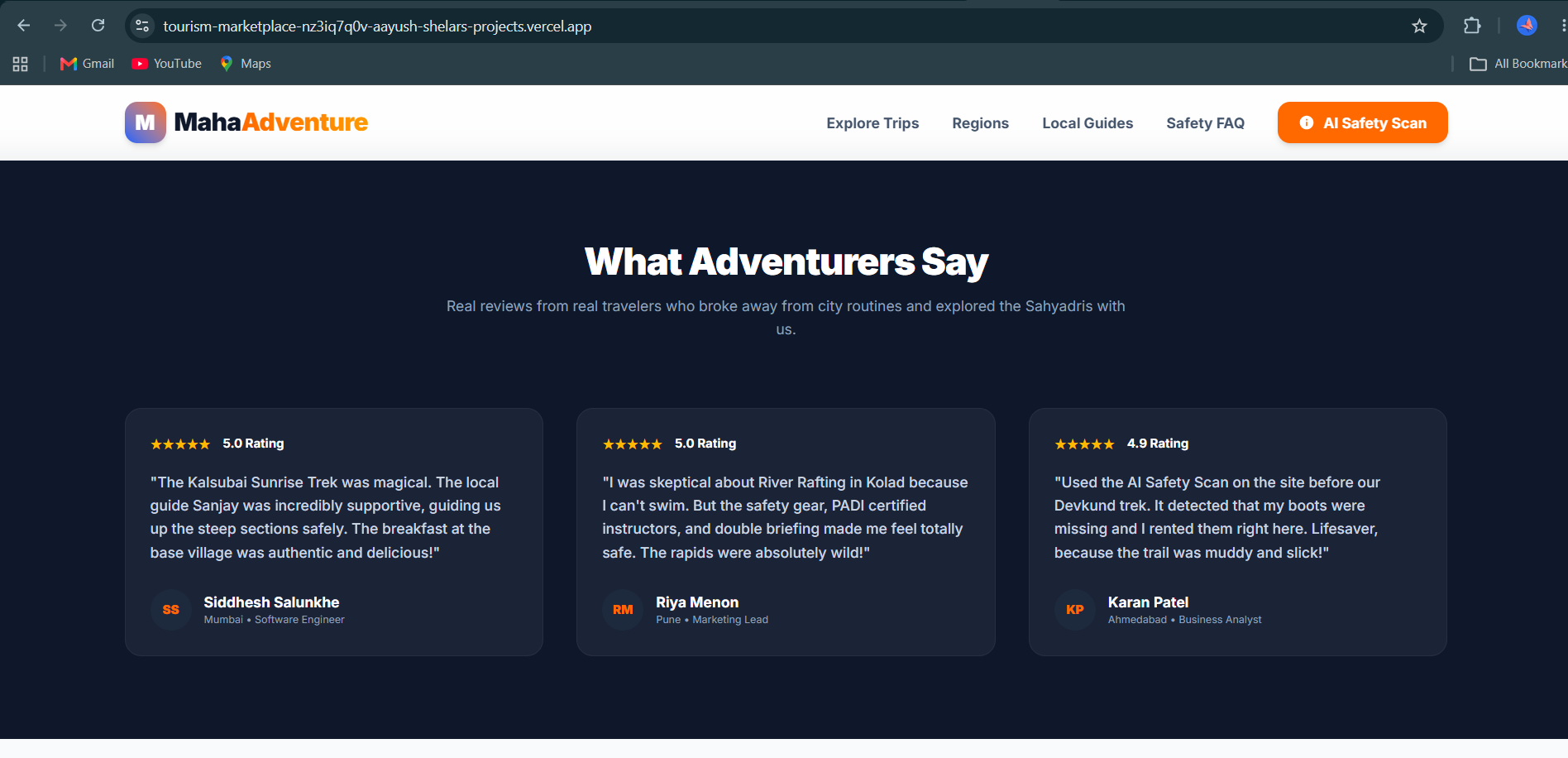
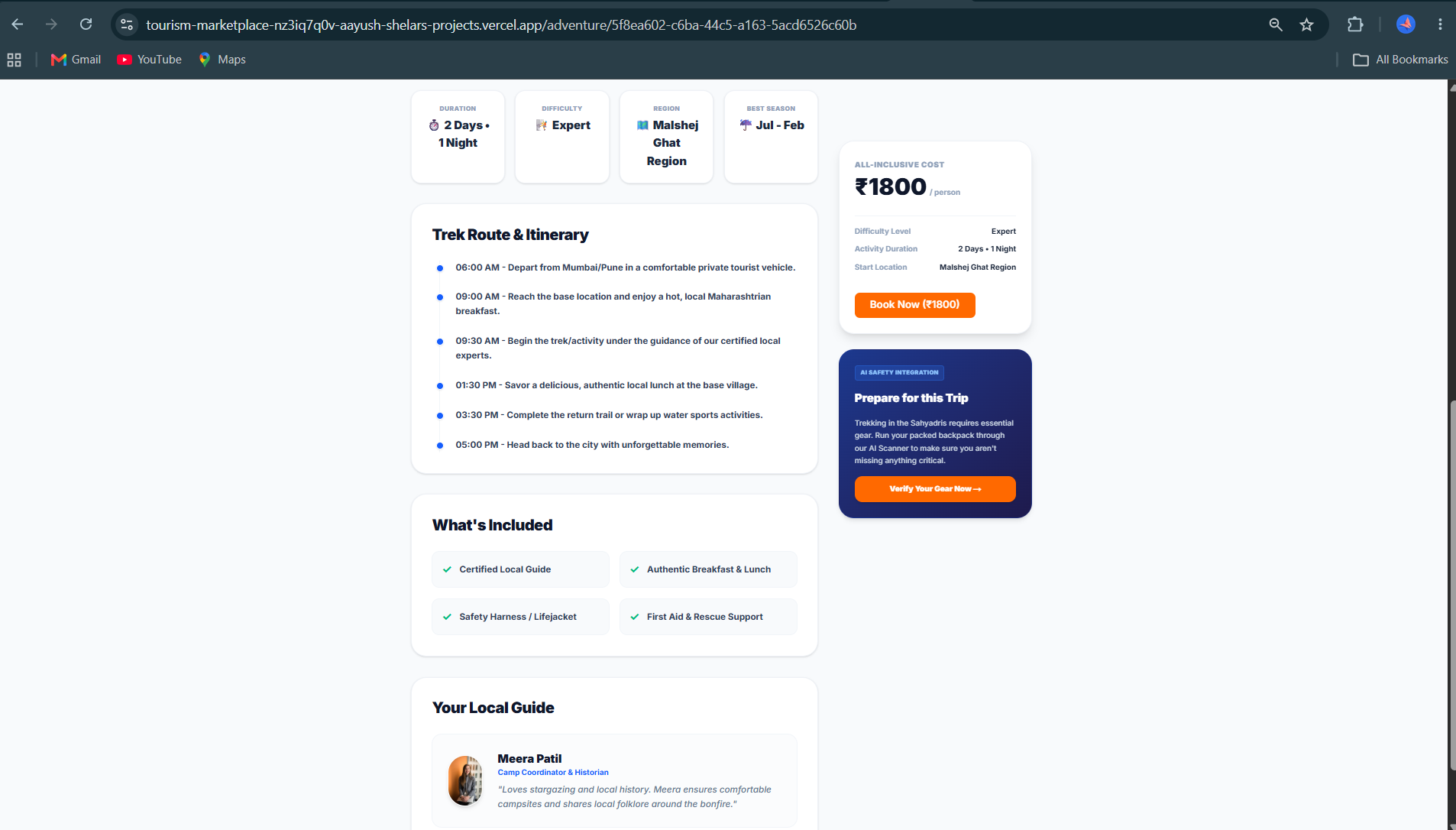
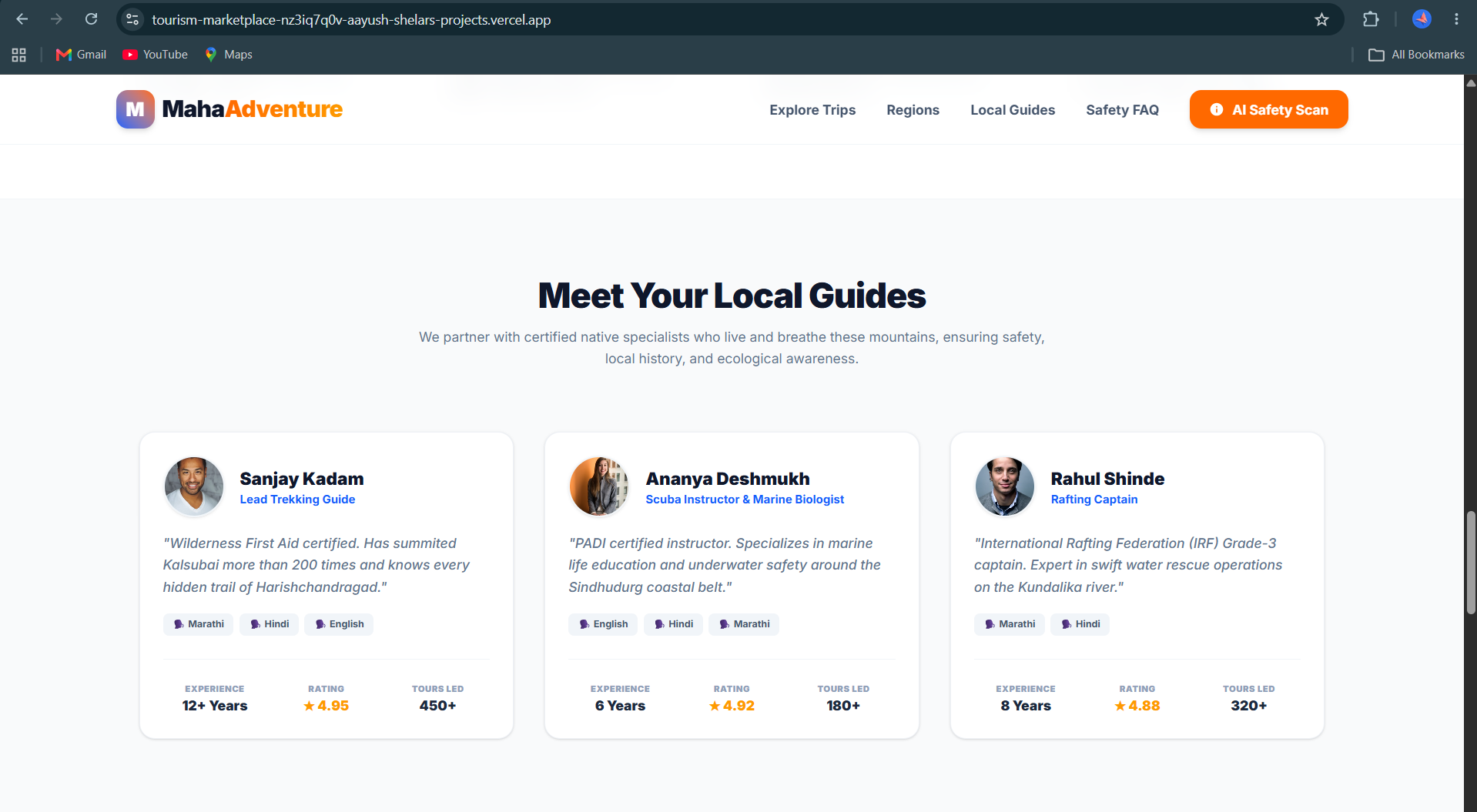
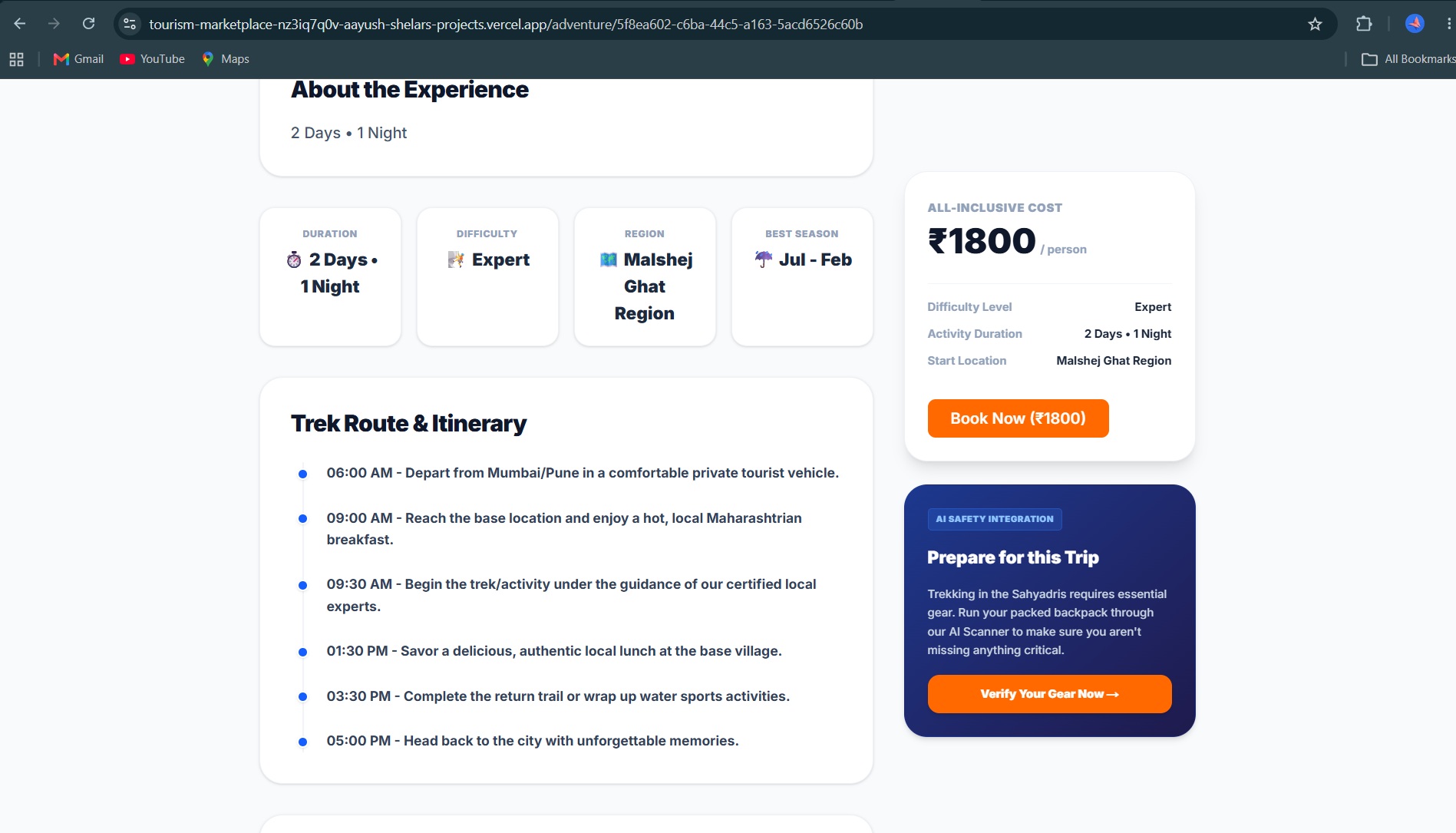
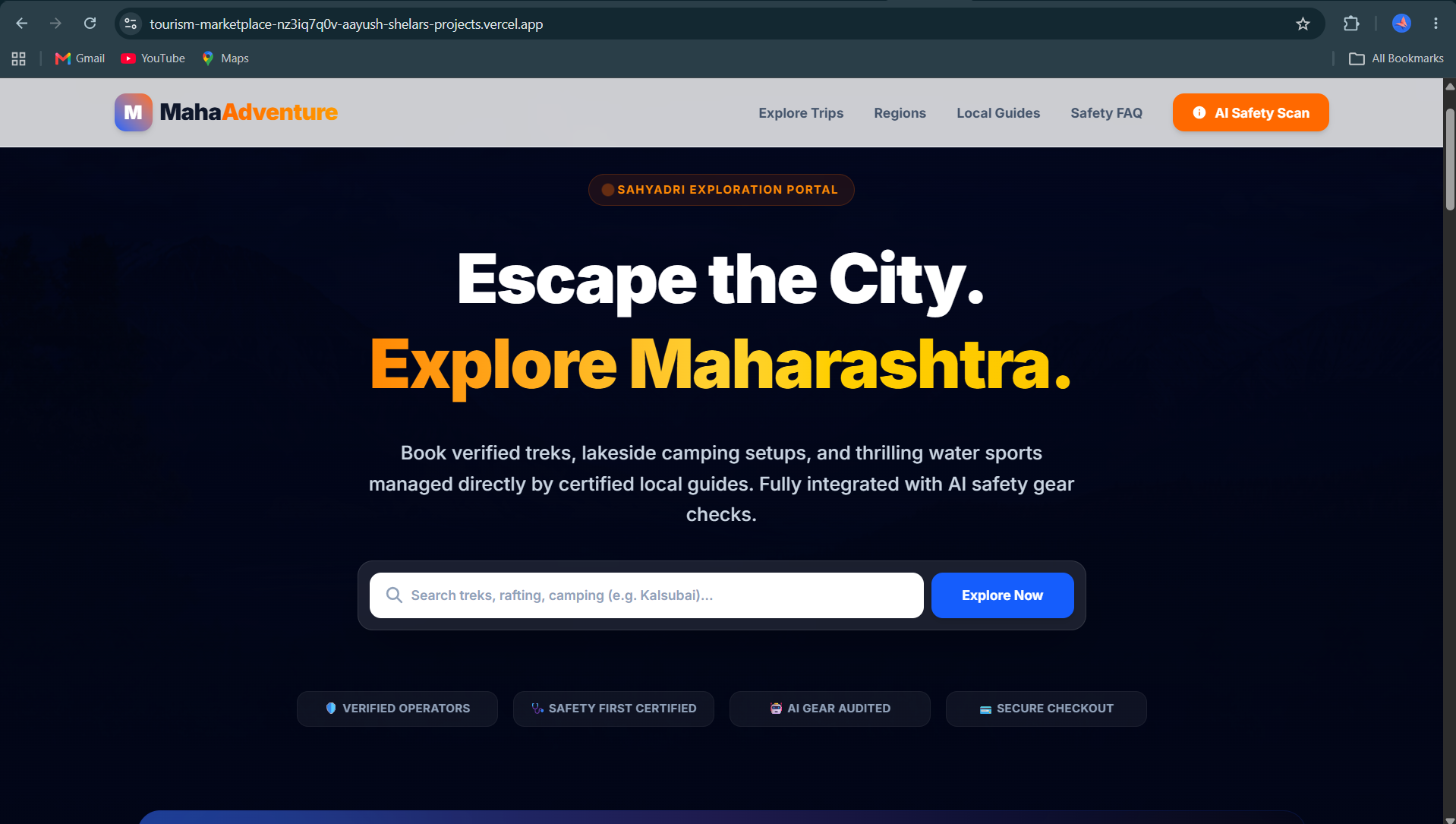
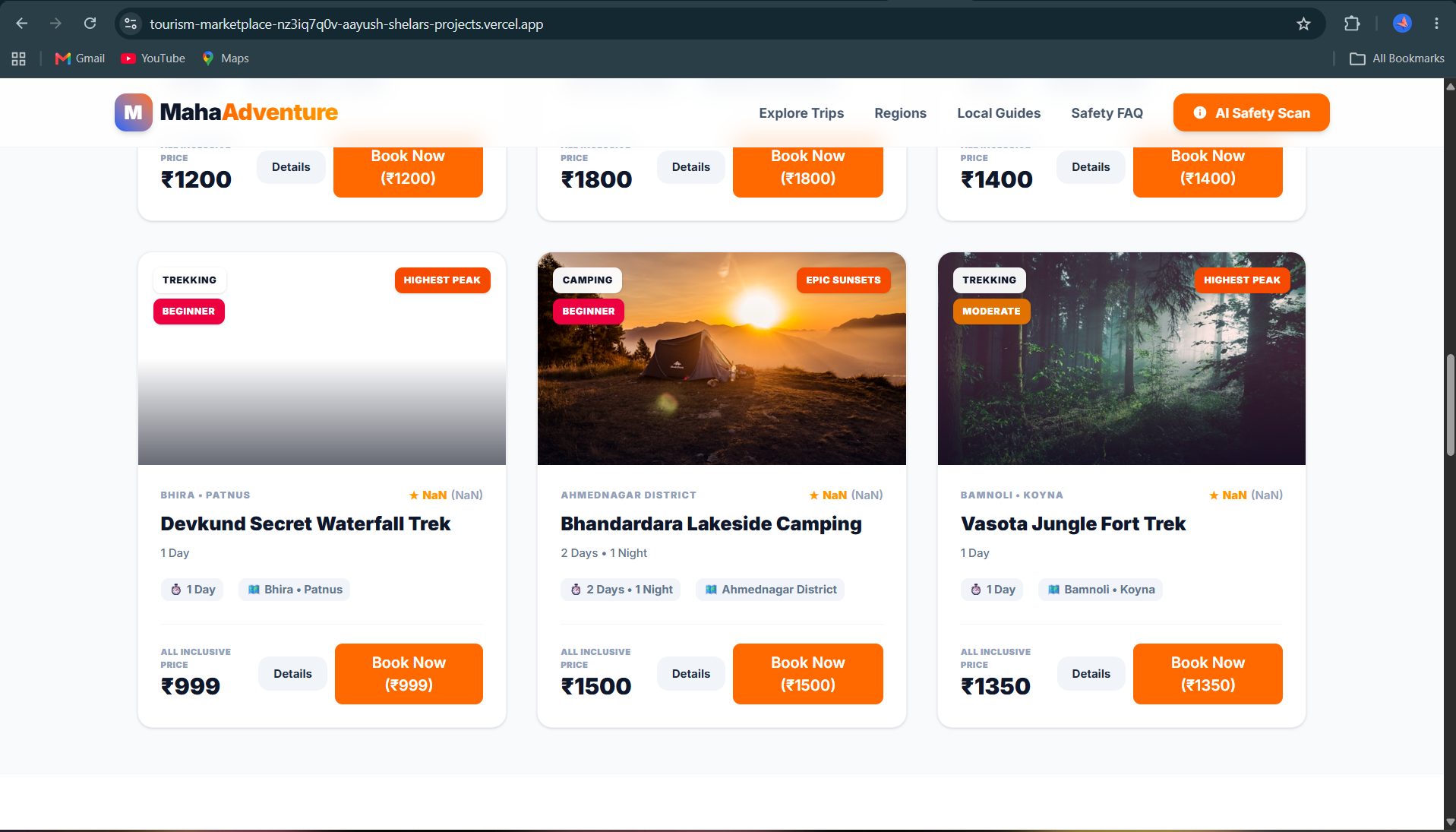
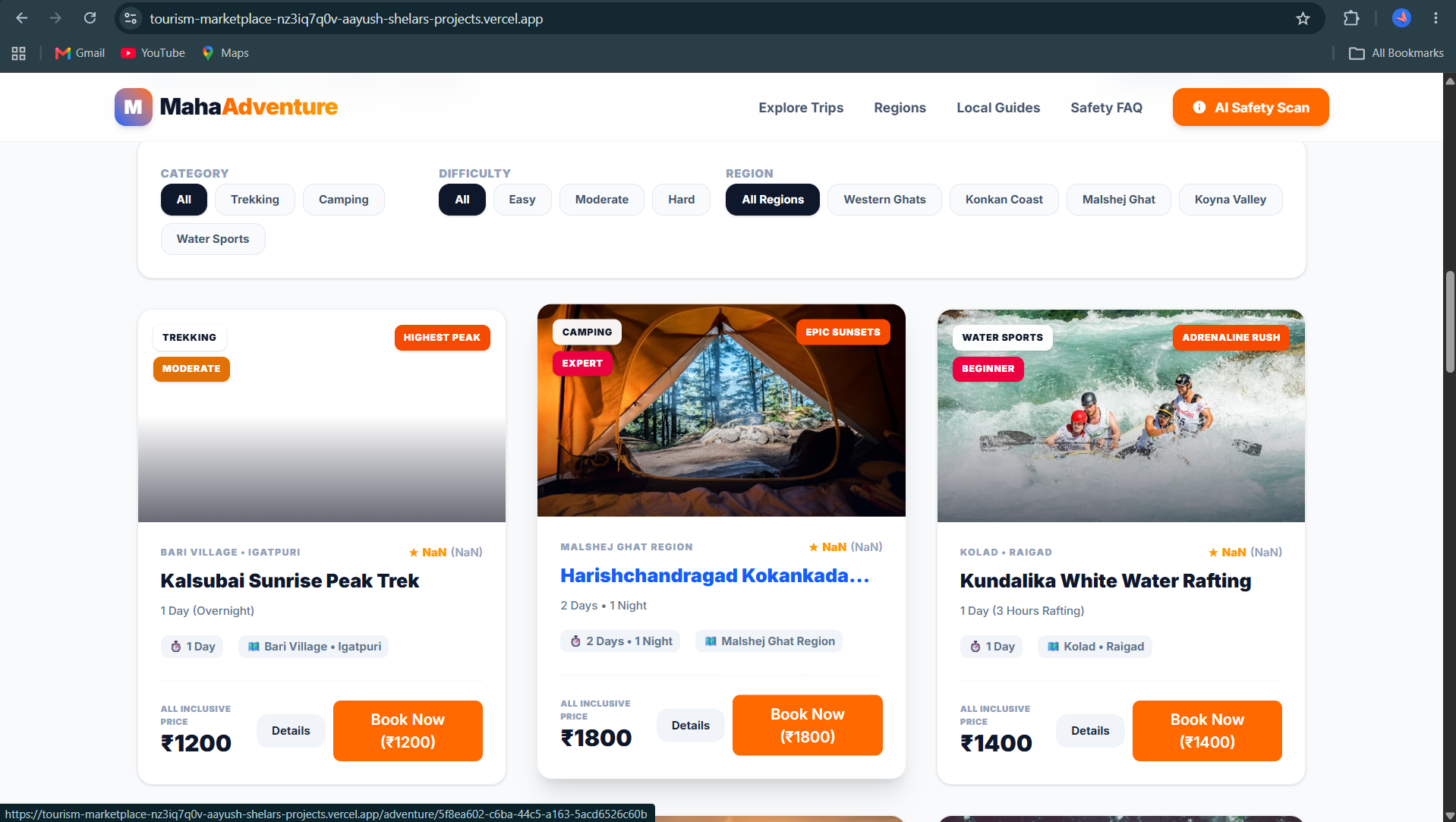
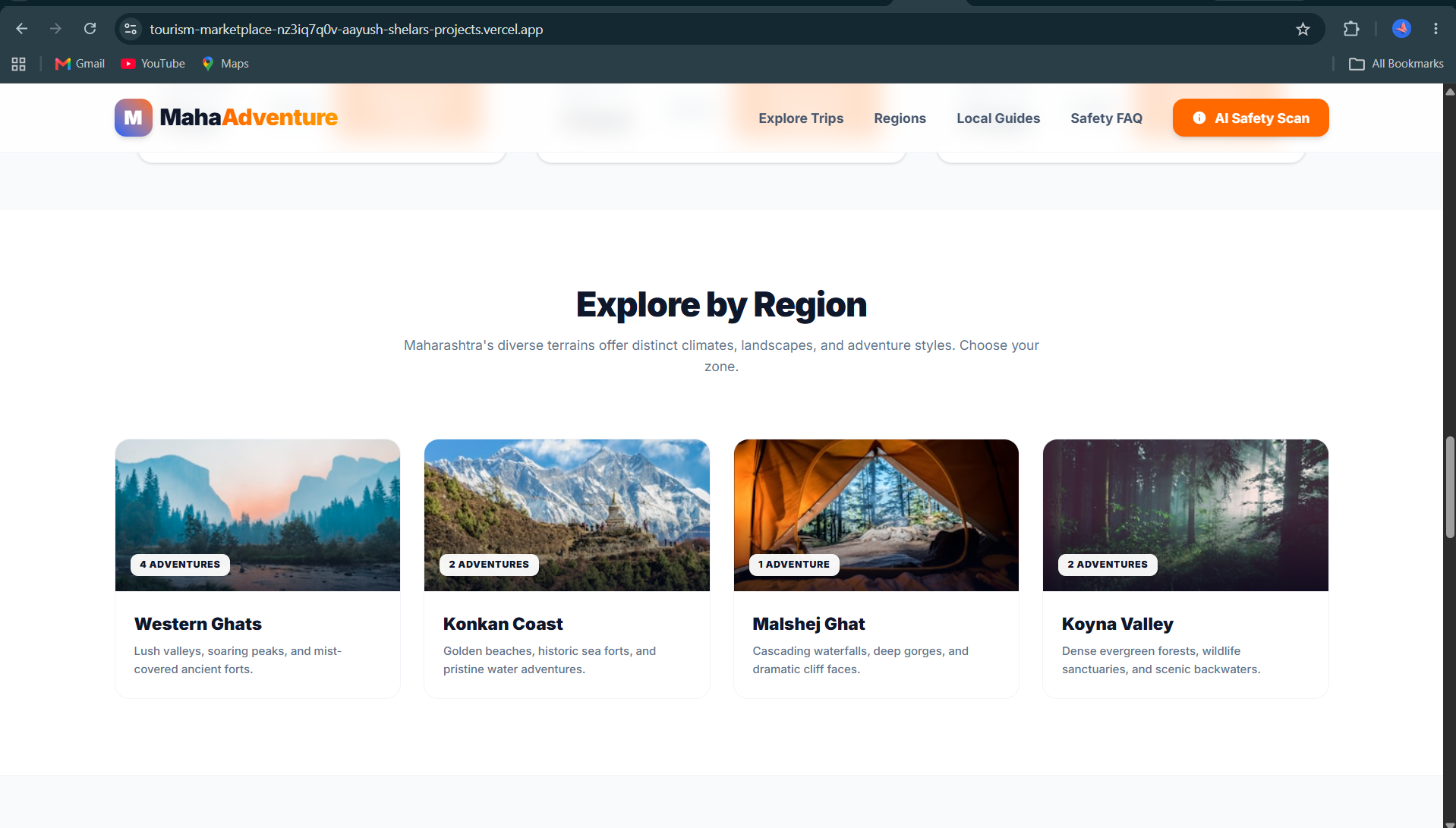
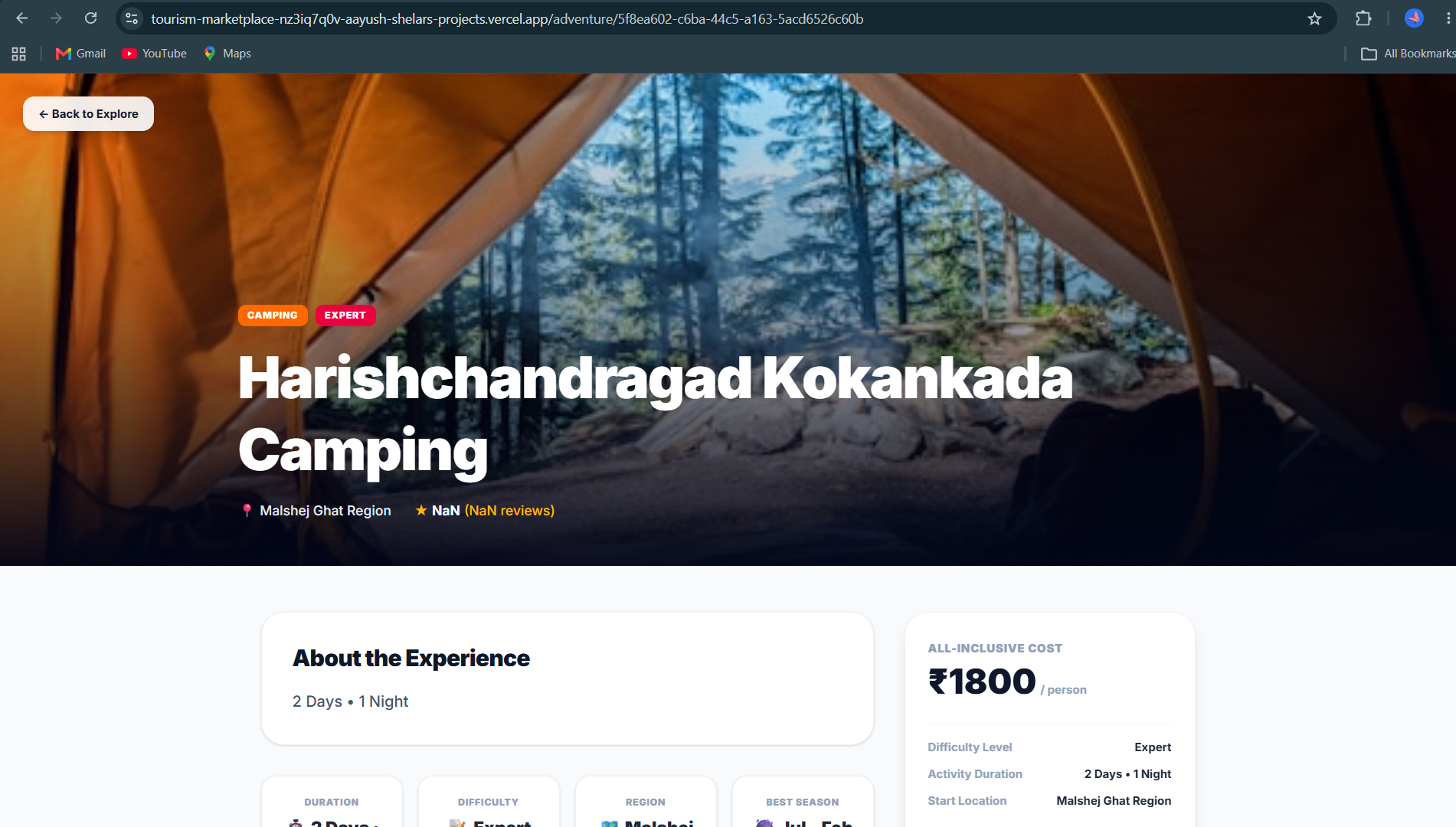
The MahaAdventure Story The Inspiration The inspiration for MahaAdventure came from a personal realization: while Maharashtra is home to some of the most breathtaking treks and landscapes in the Western Ghats, there is a significant gap in safety preparation and local economic support. Too often, adventurers head out into the wilderness underprepared, while local guides and vendors struggle to reach a wider audience. I wanted to bridge this gap by creating an ecosystem that ensures safety through technology while empowering local tourism. How I Built the Project The project is a full-stack, AI-integrated marketplace designed for scalability and offline resilience. The architecture includes:
- Frontend: Built with Next.js and styled with Tailwind CSS, providing a responsive and modern user experience.
- Backend: A FastAPI microservice handles all computer vision processing.
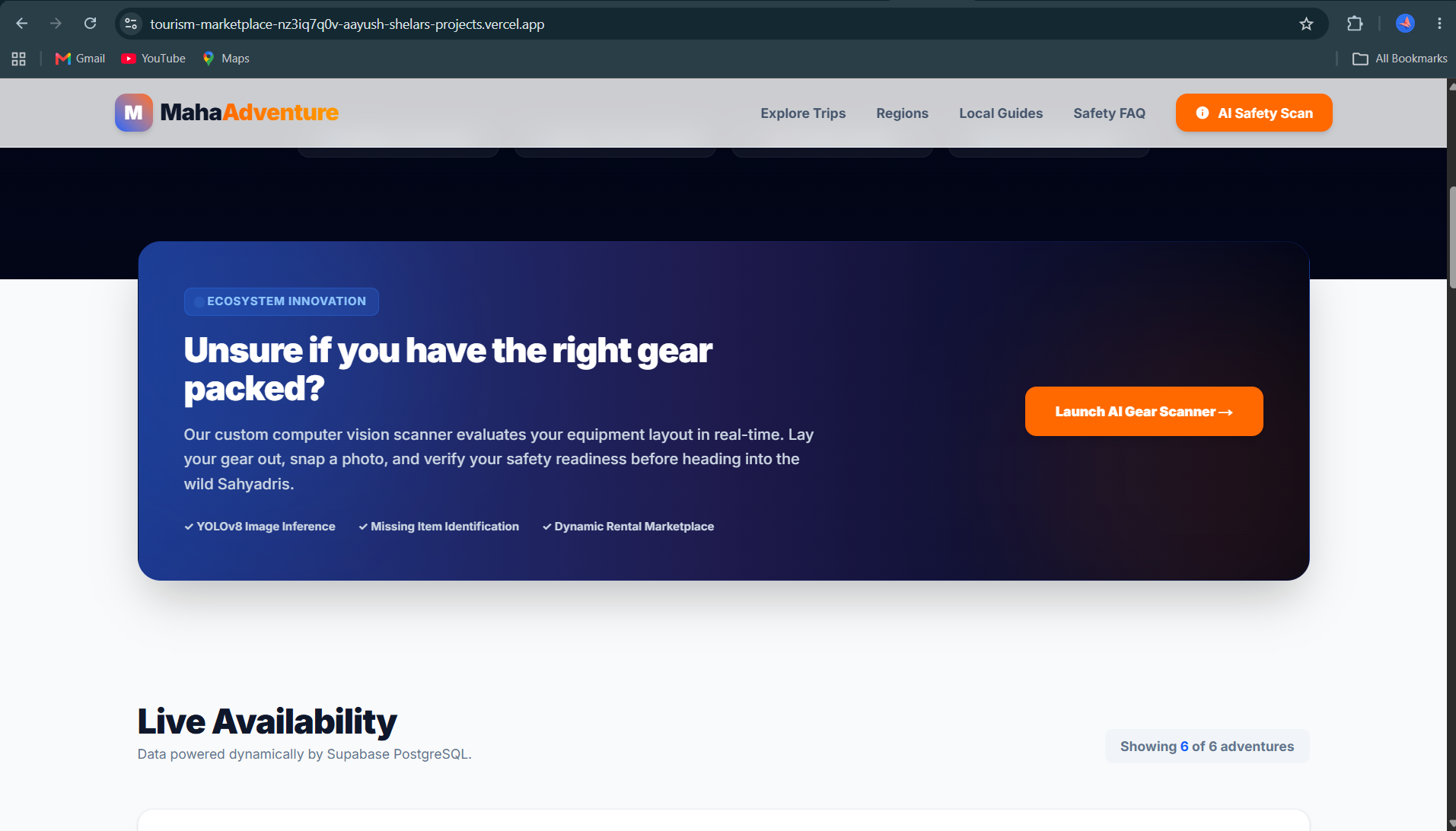
- AI Engine: I utilized YOLOv8 (You Only Look Once) to perform real-time object detection on user-uploaded gear photos. The model maps detected items against a required gear list to identify missing essentials.
- Database: Supabase (PostgreSQL) serves as the backbone, managing users, adventure listings, and bookings, with RLS enabled for security.
- Payments: The platform integrates Razorpay for seamless, secure transaction simulations, allowing users to rent missing gear on the spot.
What I Learned
Throughout this development process, I gained deep insights into:
- AI Deployment: Moving a model from a local Jupyter notebook to a production environment (using Render) requires careful management of hardware resources and model confidence thresholds specifically learning to balance $Accuracy \propto Confidence : Threshold$ to minimize false negatives.
- Full-Stack Synchronization: Coordinating real-time API requests between a frontend (Vercel) and a backend (Render) while handling cloud "cold starts" taught me about the realities of serverless architecture.
- Database Relational Mapping: Designing schemas that link
users,listings, andbookingssolidified my understanding of relational data integrity.
Challenges Faced
The journey was not without its obstacles:
The "Cold Start" Problem*: On the free tier of cloud hosting, the AI backend would occasionally time out if not "warmed up." I overcame this by optimizing the model's load sequence. **Model Sensitivity*: Initially, the YOLOv8 model was too strict, failing to detect gear at certain angles. I resolved this by adjusting the confidence threshold:
Confidence_{threshold} = 0.15
This allowed the system to be more forgiving while maintaining high accuracy for essential items.
- Environment Configuration: Migrating from local development to the cloud highlighted the importance of managing
Environment Variables(likeSUPABASE_URL) separately from the codebase to ensure security. This project represents a synthesis of my passion for autonomous systems and a genuine desire to improve the safety of outdoor exploration in my home state.
Built With
- fastapi
- github
- next.js
- numpy
- opencv
- postgresql
- python
- razorpay
- render
- supabase
- tailwind
- vercel
- yolov8

Log in or sign up for Devpost to join the conversation.