-
-
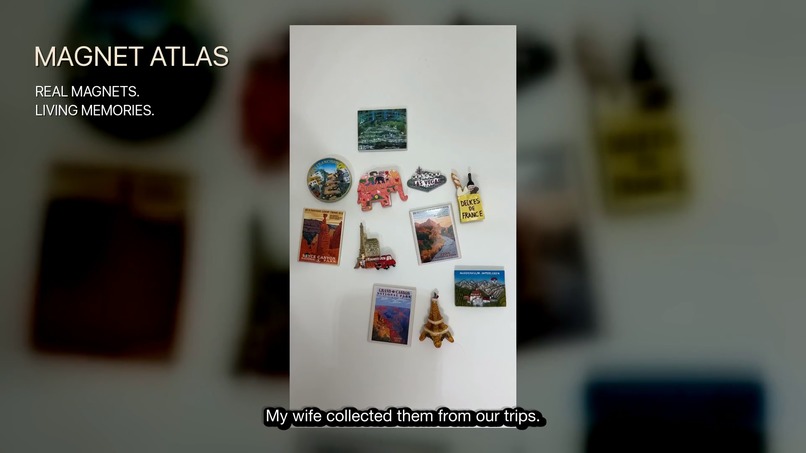
Real travel magnets become the anchor for a private, living atlas—not another visited-place checklist.
-
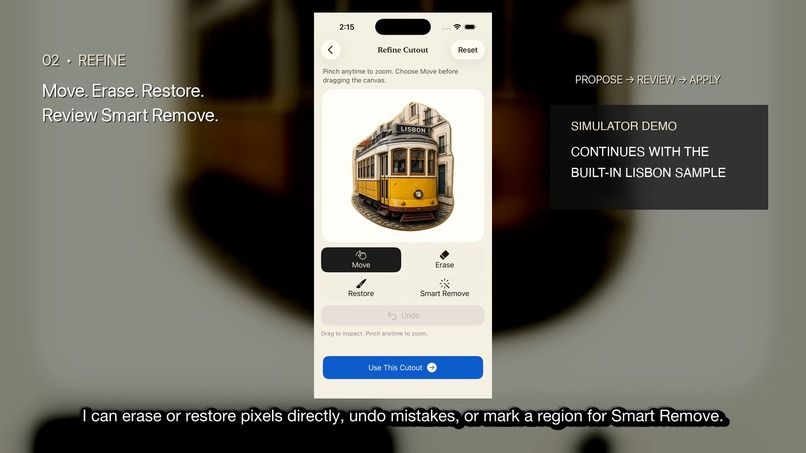
On-device cutout correction keeps the user in control, with reviewable Smart Remove and deterministic edits.
-
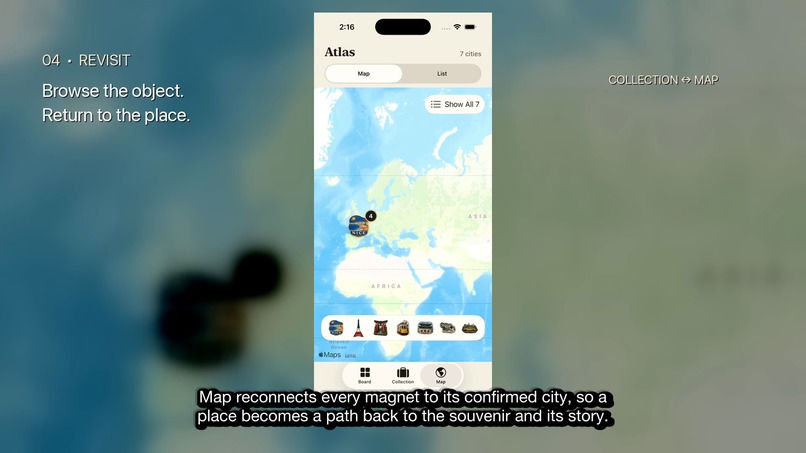
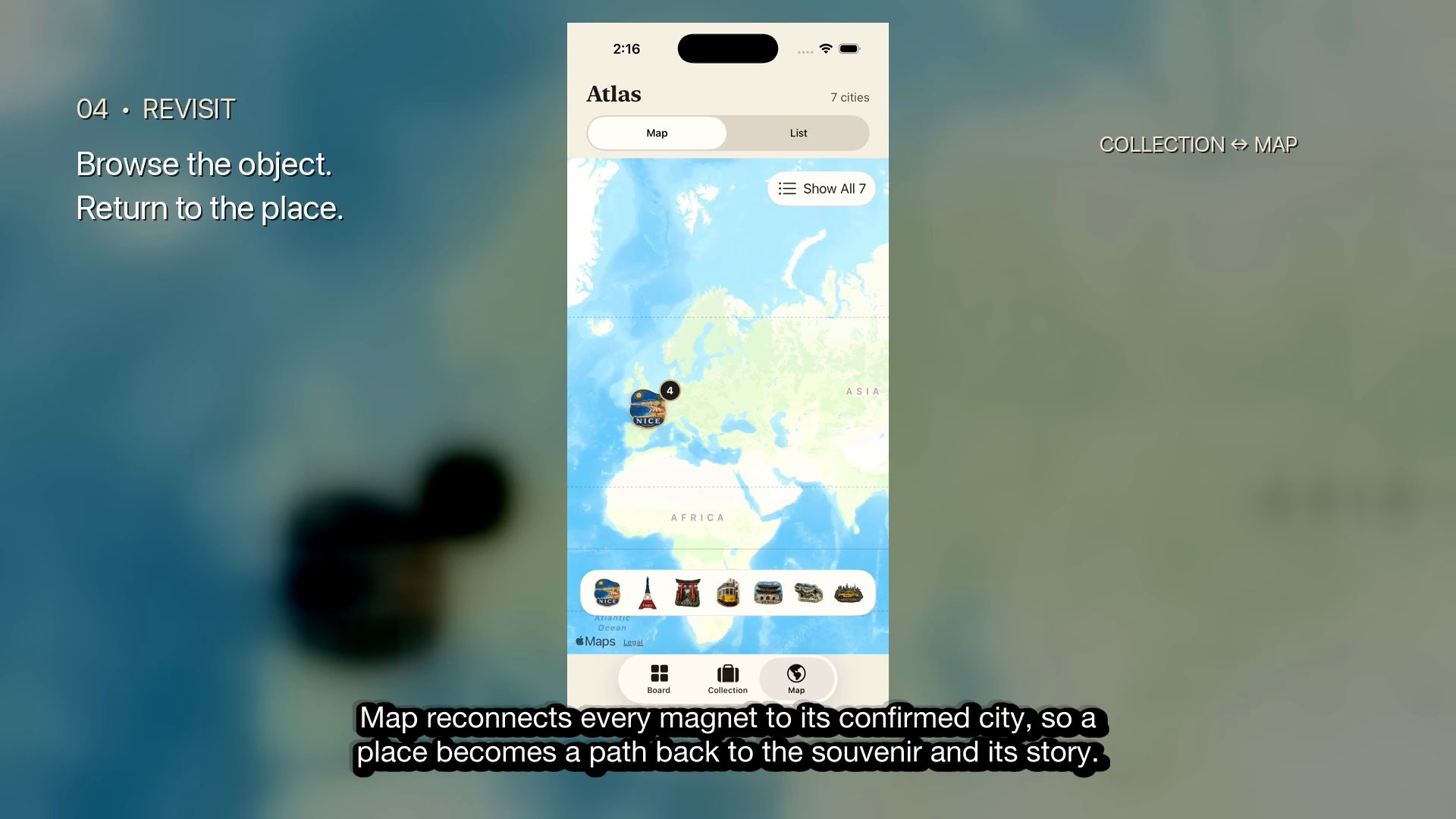
Collection and Map reconnect each physical souvenir to its confirmed city and story.
-
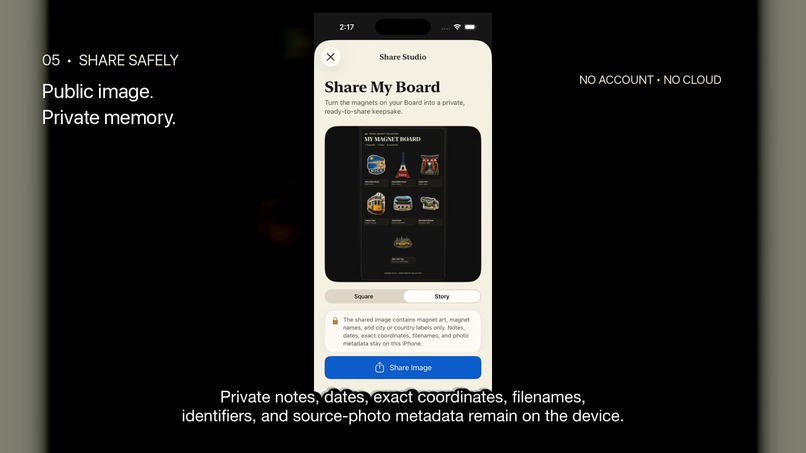
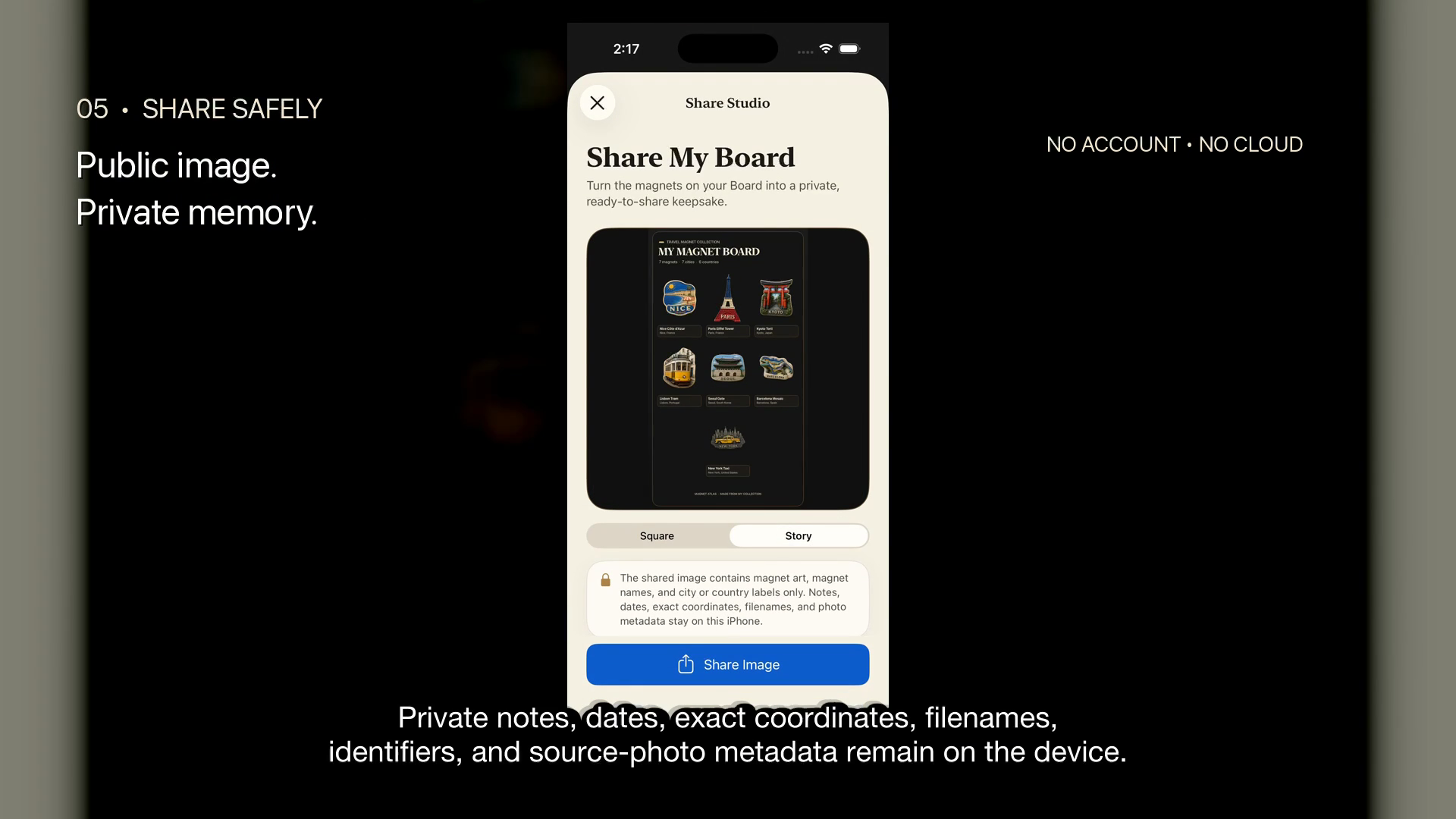
Share Studio exports the collection while private notes, dates, coordinates, and metadata stay on the iPhone.
-
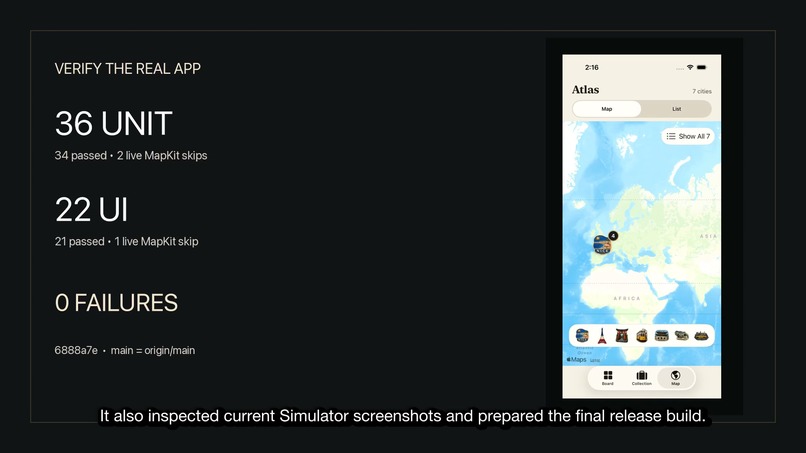
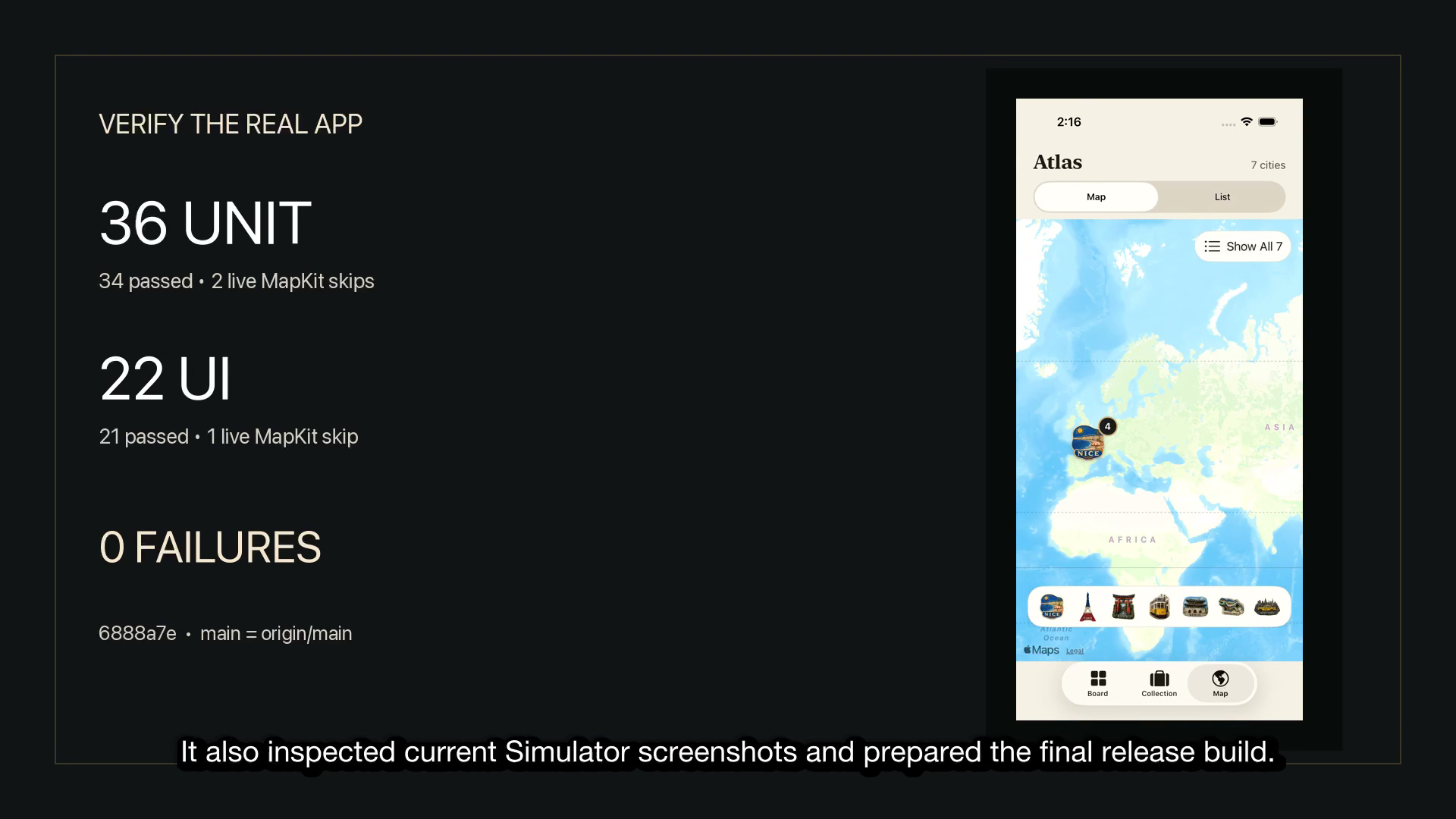
Codex and GPT-5.6 carried the build from product framing through implementation, 58-test verification, and release.
Inspiration
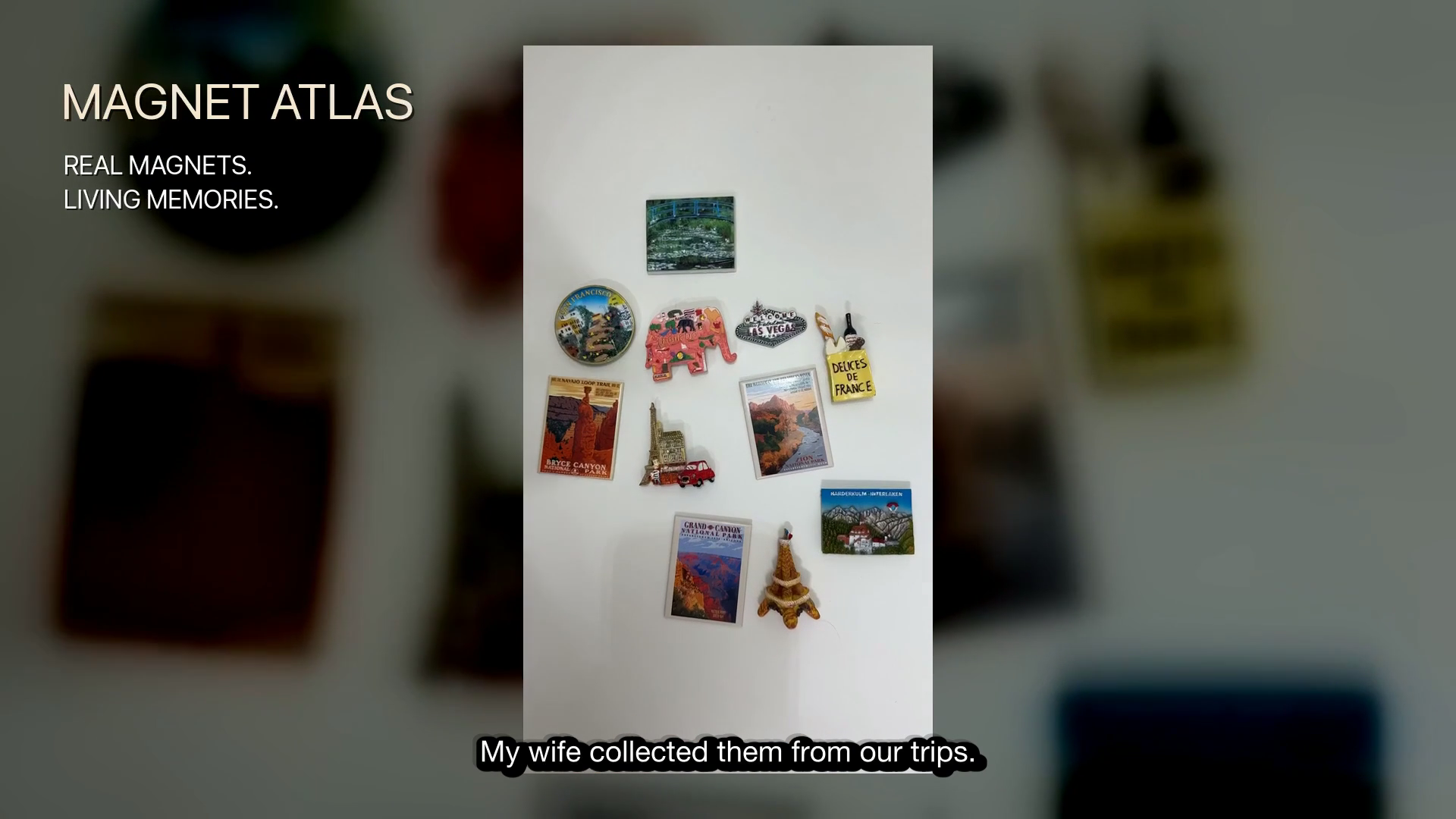
Travel magnets are small physical memories, but once they fill a refrigerator they become difficult to browse, reorganize, back up, or share. Existing travel trackers usually begin with a visited-place checklist. We wanted to begin with the real object someone chose and brought home, preserving its artwork and the personal memory attached to it.
What it does
Magnet Atlas creates a private digital twin of each physical souvenir:
- Capture a magnet with Camera or Photos.
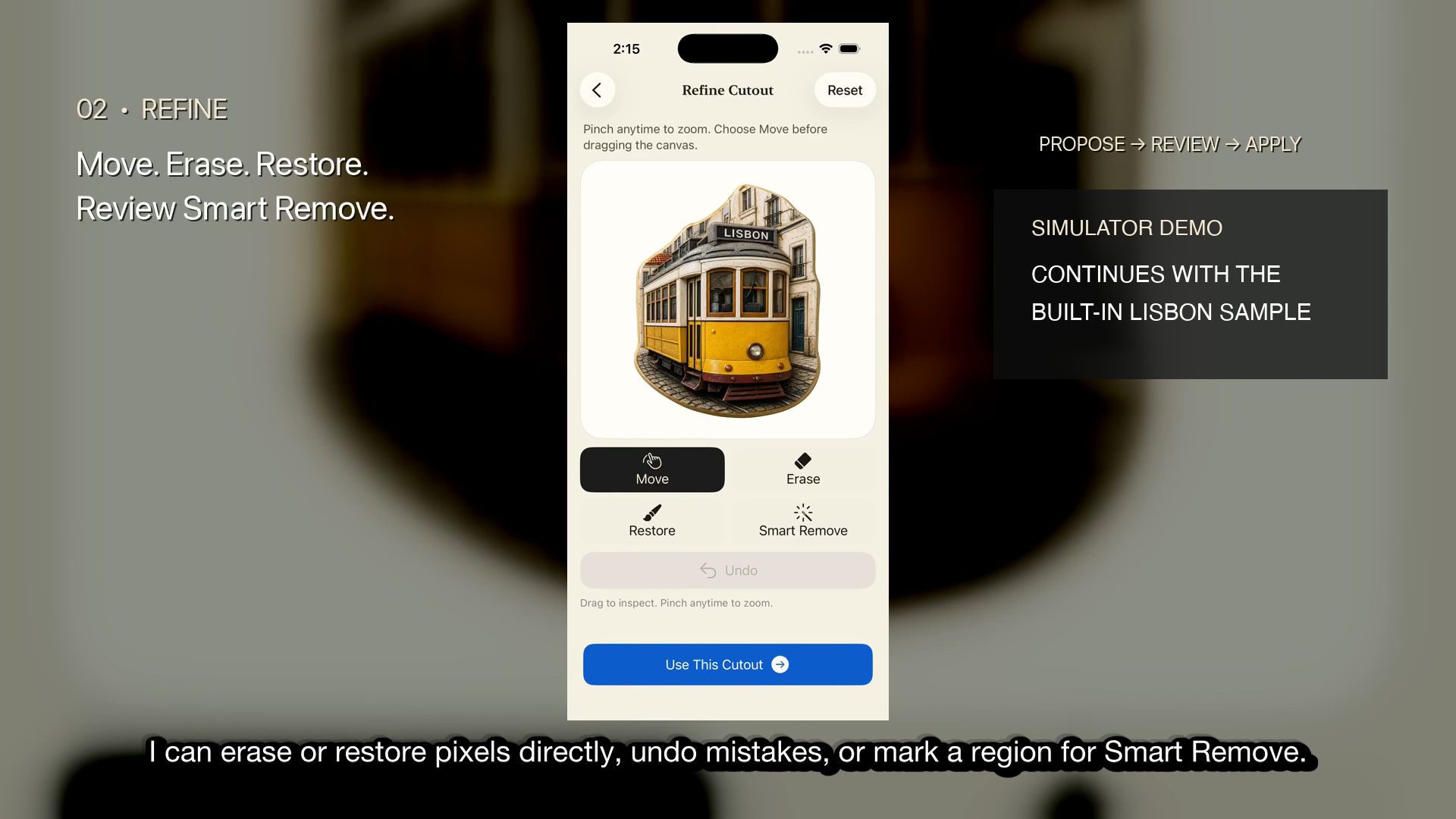
- Extract the foreground fully on device and refine it with Move, Erase, Restore, Undo, Reset, and proposal-first Smart Remove.
- Confirm an exact city, country, and map location, then add a private memory.
- Place and rearrange the cutout on the Magnetic Workshop board.
- Browse and search the collection, including private notes.
- Recall magnets by city through Map annotations and an equivalent list.
- Create square or story share images that deliberately omit notes, dates, exact coordinates, filenames, identifiers, and source-photo metadata.
- Restore deleted magnets or create checksum-validated manual backups without an account or backend.
How we built it
Magnet Atlas is an iOS 26 UIKit application built end to end with Codex and GPT-5.6 during OpenAI Build Week. The user supplied the product intent and final decisions. A primary Codex session carried the project from product definition through evidence gathering, design debate, UIKit architecture, parallel implementation, integration, regression repair, simulator testing, visual QA, and release preparation.
The app combines:
- Vision foreground extraction and deterministic editable alpha masks
- UIKit coordinators and a feature-oriented modular monolith
- Core Data with app-owned canonical media files
- MapKit city resolution with explicit user selection
- Deterministic 2.5D magnet rendering across Board, Collection, Detail, Map, Capture, and Share
- Offscreen
UIGraphicsImageRenderershare output instead of screen capture - Checksum-validated
.magnetatlasarchives - XCTest unit and UI coverage for persistence, correction, ambiguous cities, recovery, backup, Dynamic Type, and the primary journey
Codex accelerated the work by maintaining one product contract across independent feature slices, generating and integrating UIKit code, driving Xcode builds and Simulator tests, inspecting current-run screenshots, and tracing failures to their owning layer. GPT-5.6 was especially useful for keeping the physical-object metaphor, local-first privacy model, and technical verification aligned while the product grew.
Key decisions
- We chose a faithful 2.5D cutout instead of fragile multi-photo 3D reconstruction.
- We kept Smart Remove on device and proposal-first, so the accepted mask never changes before confirmation.
- We separated cutout correction from city and memory registration to avoid gesture and form complexity competing on one screen.
- We selected the tactile Magnetic Workshop visual system and reused one magnet rendering model across the entire product.
- We kept storage local and made backup an explicit, user-owned file operation.
- We designed public sharing as a deterministic privacy-limited render, not a screenshot of private app state.
Challenges
The hardest work was not any single API. It was preserving one recognizable magnet across very different surfaces while keeping editing deterministic and recoverable. Mask corrections needed to survive navigation, rendering races, cancellation, undo, restart, and later registration. City search needed to handle Korean input, ambiguous same-name cities, stale callbacks, and manual fallbacks without inventing coordinates. Accessibility also required non-drag placement alternatives and dedicated large Dynamic Type journeys.
Accomplishments that we are proud of
- A complete consumer product journey rather than a technical demo
- Reviewable on-device Smart Remove with retry, cancel, confirm, undo, and reset
- One physical object projected coherently across Board, Collection, Map, and privacy-safe sharing
- Fully local storage with recovery and checksum-validated backup
- Deterministic sample data and automated UI journeys that judges can reproduce without external accounts
- An auditable Codex session connecting the original idea to the working product and its verification evidence
What we learned
AI-assisted product development works best when the agent is given durable product boundaries and observable verification bars, not just a list of screens. The most valuable contribution from Codex and GPT-5.6 was maintaining those decisions across design, implementation, integration, testing, and release evidence. We also learned that a privacy promise must be visible in the product: the share screen names what leaves the device and what stays private.
What's next
- Validate segmentation quality and timing on a wider range of glossy and translucent physical magnets.
- Add optional user-controlled device-to-device transfer while preserving the local-first model.
- Expand board customization without weakening the physical-magnet metaphor.
- Explore opt-in, on-device collection insights while keeping private memories off external services.

Log in or sign up for Devpost to join the conversation.