-
-
5
-
4
-
1
-
3
-
2
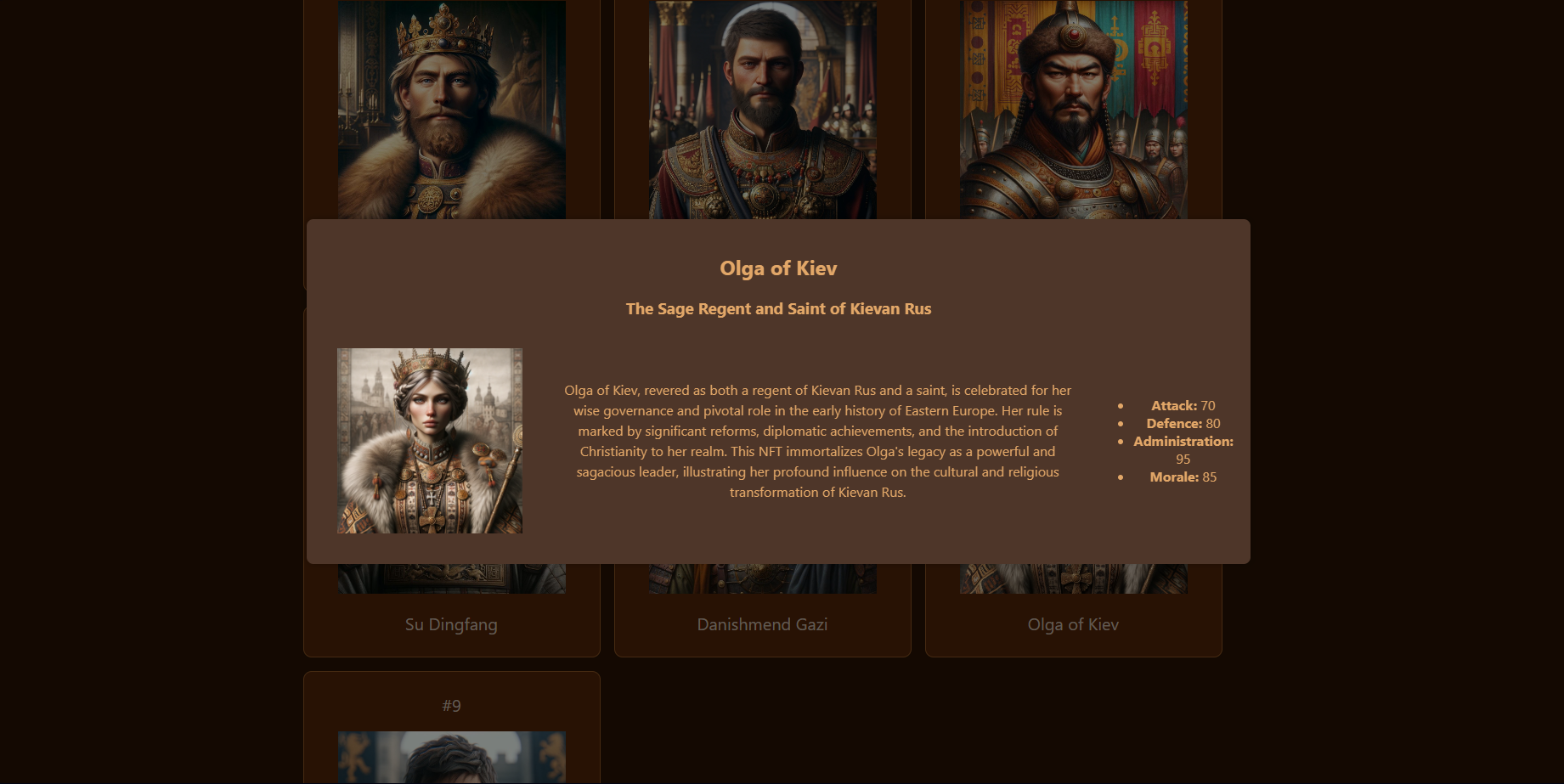
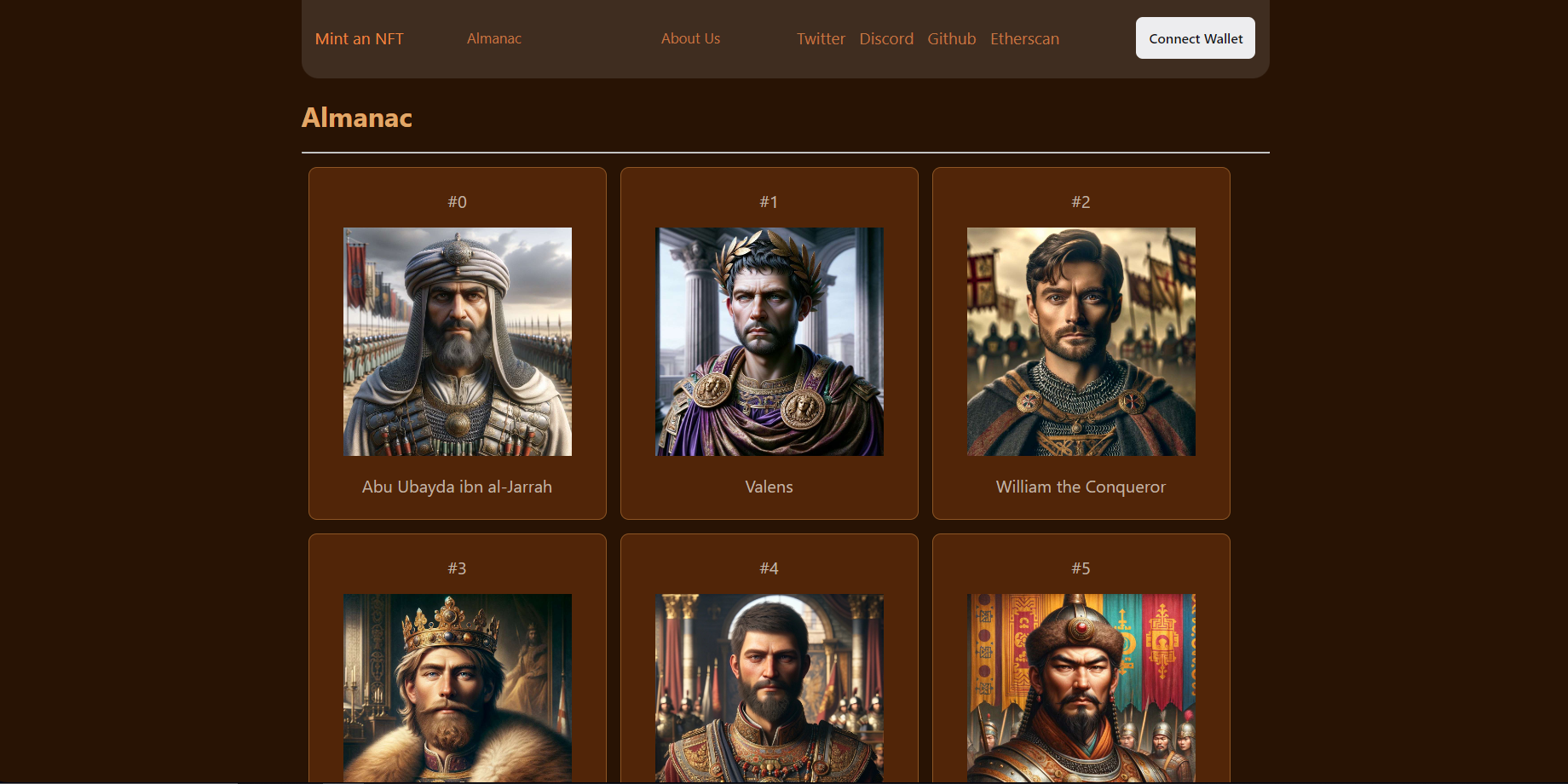
Inspiration
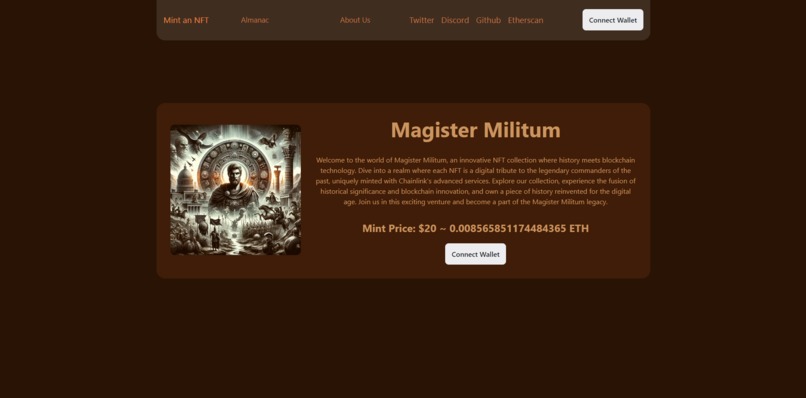
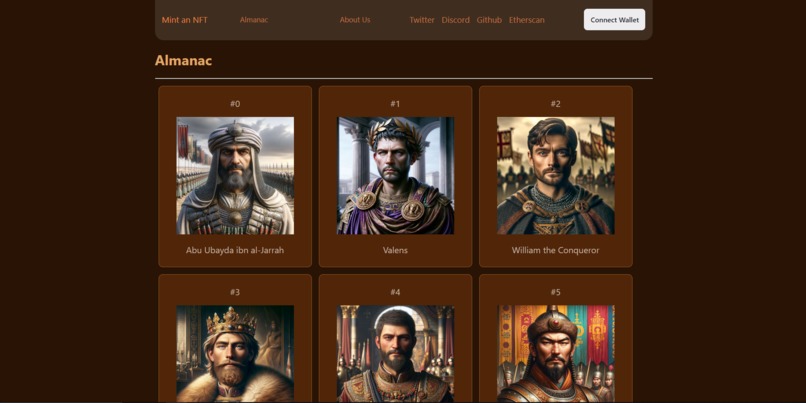
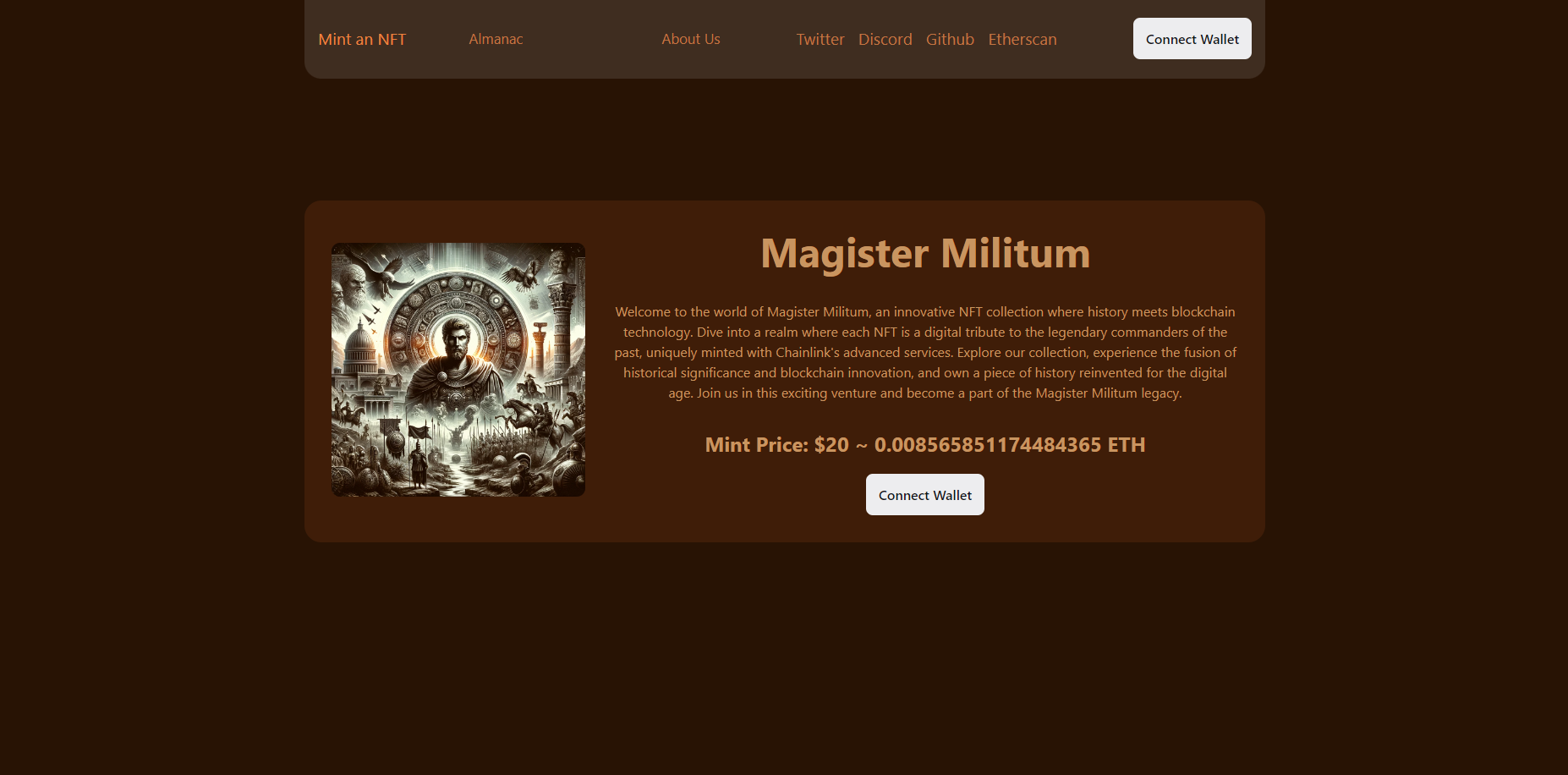
Magister Militum comes from a profound admiration of history's grand tacticians and leaders, whose strategies and decisions shaped civilizations. This enthusiasm for history's richness led us to create an NFT collection that not only commemorates these iconic figures but also embodies the innovative spirit of today's digital era.
What it does
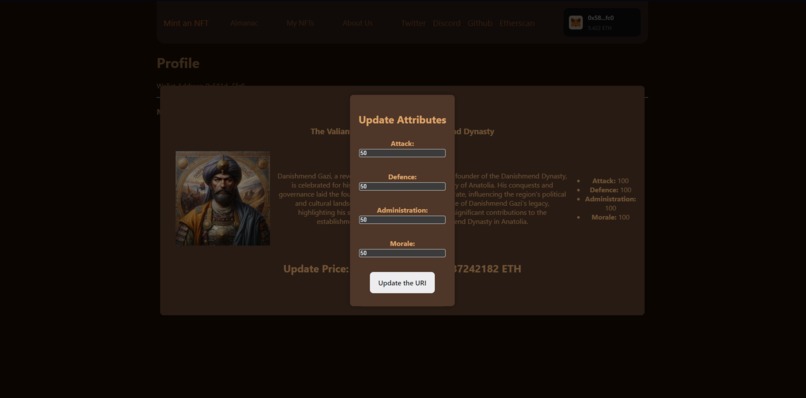
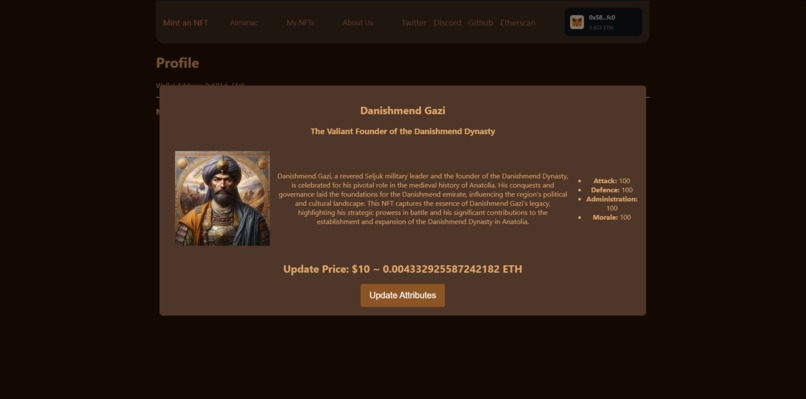
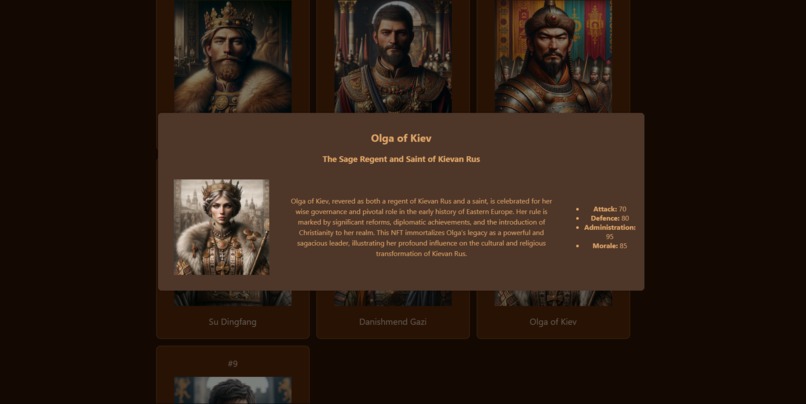
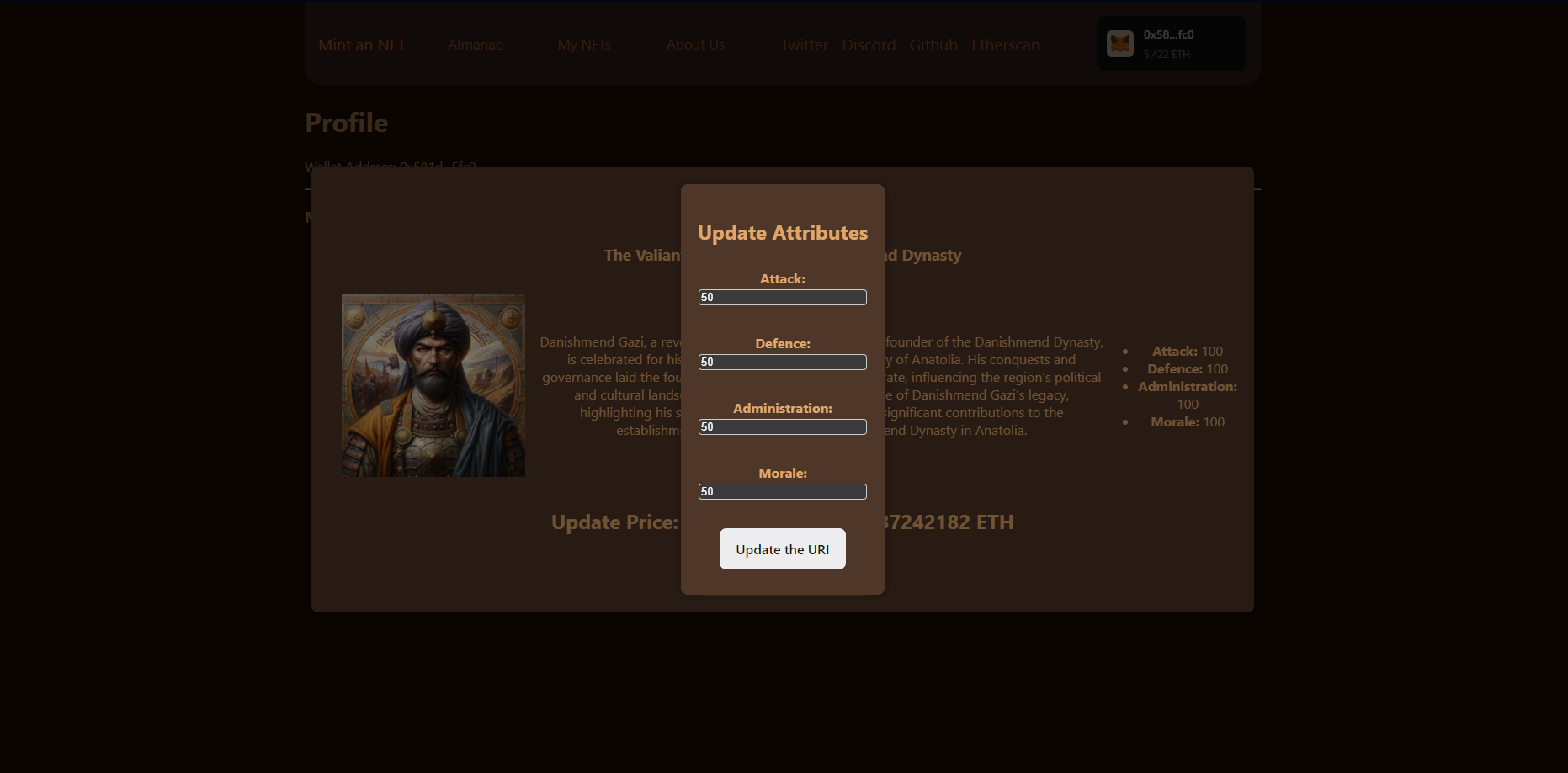
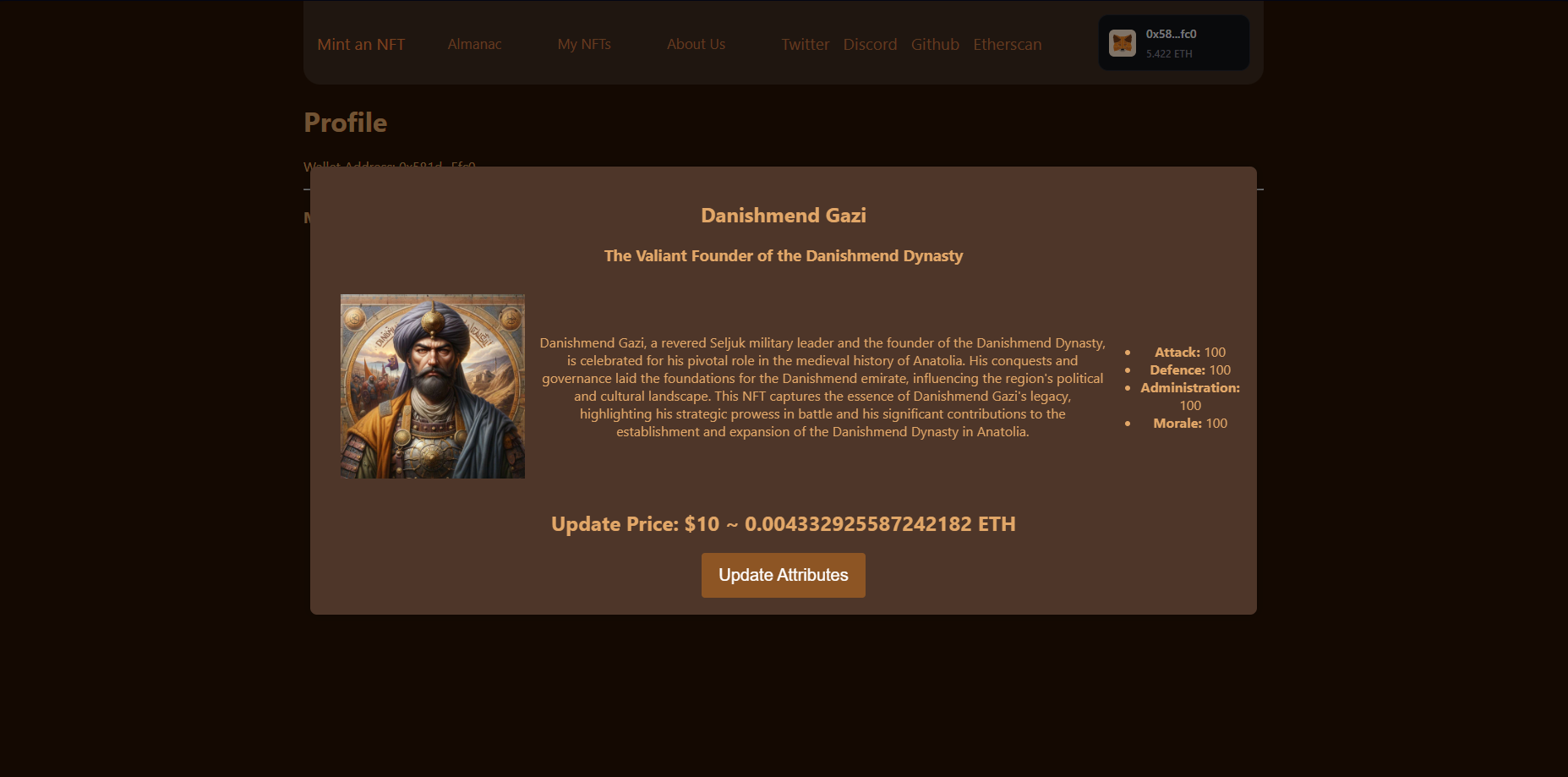
In Magister Militum, Chainlink VRF is at the heart of our NFT minting process, randomly assigning each NFT a unique historical commander. This unpredictability enriches our collection with a wide array of commanders, adding rarity and excitement to every NFT. Alongside, Chainlink Data Feeds set mint prices in USD for market consistency, while Automation manages operational costs by utilizing mint revenues to pay for Chainlink services. Chainlink Functions are deployed to verify the stats of each NFT, ensuring their authenticity and reliability.
How we built it
We built our smart contracts using Solidity and Hardhat. This allowed us to integrate Chainlink services effectively, utilizing their VRF, Data Feeds, Automation, and Functions to bring capabilities to our NFTs.
For the front-end, we chose Next.js for its efficiency and scalability. The use of Thirdweb libraries played a crucial role in simplifying interactions with our smart contracts.
Challenges we ran into
We faced notable challenges with Chainlink Functions in our first implementation, grappling with its complexities. Deploying the contract to the website also proved difficult, requiring intricate integration. Additionally, crafting the commanders' visuals for our NFTs was a challenging yet insightful task, as we balanced historical accuracy with artistic quality. These hurdles were key learning moments in our project's journey.
Accomplishments that we're proud of
We're incredibly proud of successfully integrating four Chainlink services into our project, using each in a way that is cohesive and perfectly aligned with our objectives. Additionally, we take great pride in our NFT collection, which plays a role in preserving the legacy of historical commanders, ensuring their stories and significance are not forgotten in the digital age.
How does it work

What we learned
During this project, we really saw how people got the hang of Chainlink's services when we explained them. This showed us how user-friendly these tools are. It even made us better at using them ourselves. We think our project could be a good example for new developers. It shows you can really use Chainlink services in a real project. It's like showing how blockchain can be for everyone, not just experts, which is pretty cool and inspiring for those just starting out.
What's next for Magister Militum
We aim to utilize CCIP for a unique cross-chain functionality, where the minting of our NFTs will be carried out on the Avalanche (AVAX) blockchain, with transaction finality being ensured on the Ethereum network. In the future, we also envision the development of a specialized marketplace to our collection, further enhancing the experience and value for our future community. Additionally, given our extensive use and understanding of Chainlink's four key products, our project has the potential to serve as educational content for the Chainlink ecosystem, providing insights and guidance to others exploring similar blockchain innovations.
Built With
- ai
- chainlink
- etherscan
- hardhat
- nextjs
- nftup
- remix
- solidity
- thirdweb


Log in or sign up for Devpost to join the conversation.