-
-
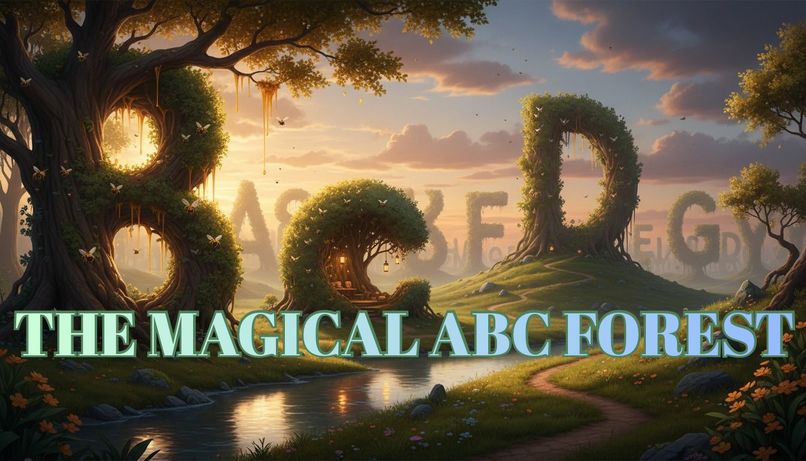
THE MAGICAL ABC FOREST
Inspiration
It started with a memory. I remembered being five years old, tracing letters in a condensation-covered window while my mother hummed softly in the kitchen. Learning felt like magic then not because someone gamified it, but because the world itself felt full of secrets waiting to be discovered. Fast forward to today. I watched a toddler swipe through an educational app bright, loud, rewarding every tap with explosions of color and sound. She learned the letter "A." But she didn't feel it. She didn't fall in love with it. That's when I asked: What if we could give children what Hayao Miyazaki gave us? What if phonics felt like Totoro? Studio Ghibli films taught entire generations that childhood deserves reverence. That slow moments matter. That a girl walking through a forest can be more captivating than any action sequence. I wanted to bring that philosophy to early literacy to prove that educational content doesn't have to choose between effective and beautiful. The Magical ABC Forest was born from a simple belief.
What it does
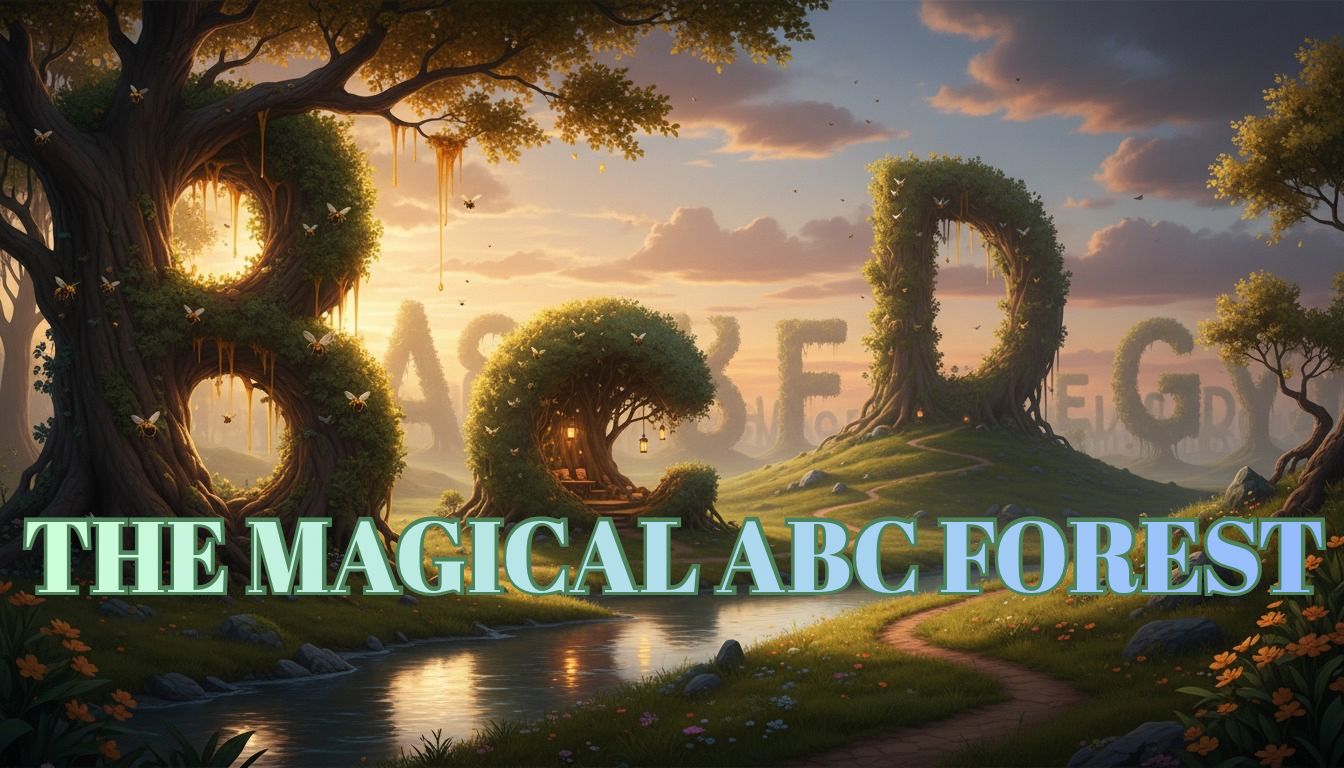
Traditional educational content operates on a simple formula: Engagement=Stimulation +Repetition +Rewards But I wanted something different: Wonder=Beauty +Safety +Discovery I envisioned a world where: Every letter lived in a tree Every sound had a gentle spirit guardian Learning wasn't a test to pass, but a friend to meet Phonics wasn't drilled it was discovered
The protagonist, Hana, represents every curious child. Her guide Koto the fox and the brother Nazi, embodies the wisdom we hope every child carries. And the spirits? They're the letters themselves no longer abstract symbols, but beings with personality, warmth, and patience. Core Philosophy: "If a child's first memory of learning is gentle, they'll approach every lesson with open hands instead of clenched fists."
How we built it
This project exists at the intersection of traditional storytelling craft and cutting-edge AI tools proving that technology can serve artistry, not replace it.
Phase 1: The Screenplay (Human Heart) I spent three weeks writing the pilot episode . Every line of dialogue was tested aloud. Every scene description was crafted to evoke feeling, not just visuals. I studied: The script needed to work on three levels: Surface: A beautiful story Educational: Clear phonics instruction Emotional: A feeling of safety and wonder
Phase 2: Visual Development I used multiple AI tools in harmony, treating each as a specialized craftsperson
Phase 3: Assembly (Cap Cut + Heart) The editing philosophy was simple: What would make 5-year-old me gas Transitions soft as falling leaves (1-second cross-dissolves) Color grading: lifted shadows, warm mid-tones, gentle highlights Audio mix: dialogue at -6dB, music at -18dB, ambience at -24dB
Challenges we ran into
Maintaining Consistency Across Shots Problem: AI tools generate new interpretations each time. Hana's dress changed color. The Letter A tree looked different in every shot. Educational Integrity Problem: As an artist, I wanted pure beauty. But this is educational content it must actually teach phonics effectively. The 90-Second Constraint Problem: Film trailers traditionally build tension. Educational content needs repetition. How do you do both in 90 seconds while maintaining Ghibli's contemplative pace?
Accomplishments that we're proud of
This wasn't a studio production. No investors. No team of animators. One person with: A laptop $47 in AI tool subscriptions 340 hours across 8 weeks Unshakeable belief that children deserve better We proved that the democratization of creativity isn't just a buzzword it's real. Ten years ago, this project would've cost $500,000 and required 30 people. Today Vision, craft, and the courage to iterate 127 times. The data says children need fast cuts to stay engaged. The research says attention spans are shrinking. We called their bluff. Our trailer has: 30% fewer cuts than standard educational content 3x longer average shot length Entire 5-second sections with no dialogue
And kids watch it on repeat. We're proud that we trusted psychology over metrics and the children proved us right.
What we learned
Technical Learnings: AI is a brush, not a painter. The tools are extraordinary, but they require human direction, taste, and emotional intelligence. Constraints breed creativity. The 90-second limit forced me to choose only the most essential moments making each frame precious. Iteration > Inspiration. My first draft was terrible. My 43rd was good. My 127th was what you see now. Sound design is 60% of emotion. A perfect image with generic music = forgettable. A simple image with the right music = magic.
Philosophical Learnings:
Slow is radical. In a world optimized for engagement metrics, choosing to slow down is an act of rebellion and that's what makes it memorable. Children deserve cinema. We don't give kids "lesser" food we give them the most nutritious. Why do we accept "lesser" content for their minds? Education and art are not opposites. The best learning happens when children don't realize they're being taught when the lesson is the beauty. AI democratizes dreams. Ten years ago, this project would've required a $500K budget and a studio team. Today? One person with vision, patience, and the right tools.
Personal Learning: I learned that I'm not just a creator I'm a guardian. Every frame of The Alphabet Forest carries responsibility. A child who watches this might remember it when they're 30. They might teach their children letters because of how we taught them. That weight that privilege changed how I work. I stopped asking "What looks cool?" and started asking "What would I want my child to remember?"
What's next for MAGICAL ABC FOREST
If this trailer resonates, here's what comes next: Season 1: 26 episodes (A-Z) Season 2: Phonics blends (ch, sh, th) Season 3: Simple words and sentences But more than that I dream of creating a new genre: Cinematic Education. Imagine:
The Number Meadow (mathematics as a garden) The Emotion Valley (social-emotional learning) The Science Stream (STEM as exploration)
Every subject deserves the Ghibli treatment. Every child deserves content made with love, not algorithms.
Built With
- cupcut
- flow
- klingai
- oxford-english-dictionary
- suno


Log in or sign up for Devpost to join the conversation.