-
-
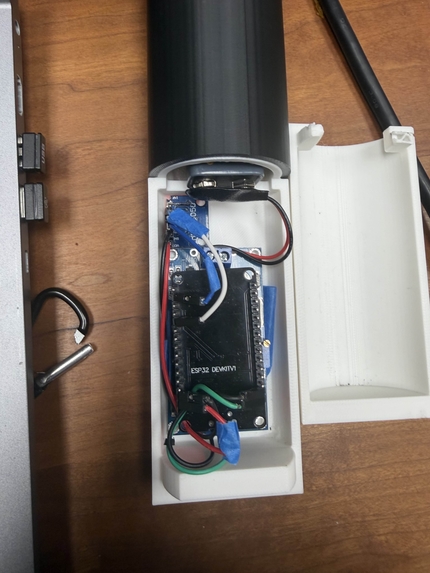
Wand Hardware
-
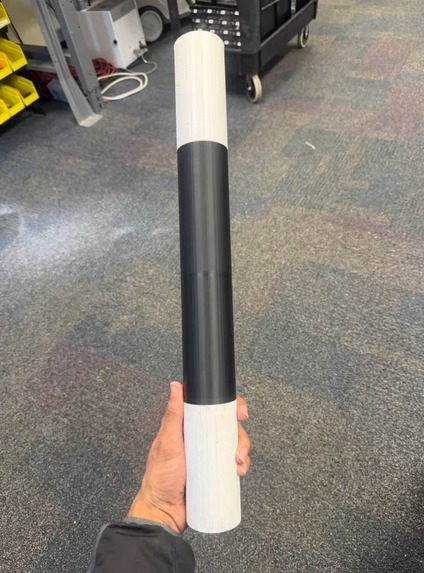
Full Wand
Inspiration
When we first saw the hackathon theme was “magic,” our minds immediately went to one thing: Harry Potter. We’ve all grown up watching the films, reading the books, and imagining what it would be like to attend Hogwarts: learning spells, practicing wand movements, and mastering magic through precise gestures. Iconic moments like Dumbledore’s spellcasting, Harry learning advanced charms, and the excitement of the Triwizard Tournament inspired us as kids. We wanted to bring that sense of wonder into reality. The question became: Could we actually make spellcasting real? Not just as a video game or VR experience, but something physical. Something where you hold an actual wand in your hand, move it through the air with specific gestures, and see spells activate in real time. We wanted the tactile satisfaction of casting “Stupefy!” with a flick of your wrist, the challenge of mastering precise movements, and the excitement of watching your actions translate directly into magic on screen. When we saw the hackathon had a “Best Hardware Award,” everything clicked into place. We could design and print a custom wand that functions as an interactive piece of hardware embedded with motion sensors. We could use machine learning to recognize gesture patterns, turning physical movements into digital spells. We could build a system where users experiment with spellcasting mechanics, timing, and strategy using a single wand. Rather than recreating a movie scene, we focused on capturing the experience of being a wizard—learning, practicing, and casting spells through motion. The vision was clear: bring the magic of wand-based spellcasting from fiction into people’s hands and make it something anyone could try at our hackathon demo.
What it does
Spellbound is a gesture-based magic experience that brings spellcasting into the physical world using a sensor-equipped wand and an LCD screen for visual feedback. The wand detects motion and orientation, allowing specific gestures to trigger different spells that are generated and animated in real time on the display. Each spell produces clear visual responses on the LCD, giving immediate confirmation that a spell was successfully cast and showing its effect through colors, symbols, or animations. The system functions as an interactive spellcasting simulator rather than a competitive game, focusing on exploration, experimentation, and mastery of gestures. The spell framework is expandable, making it easy to add new gestures, spell types, and visual effects through software updates. By pairing intuitive physical motion with on-screen magic visualization, Spellbound creates an engaging and accessible way to experience spellcasting using minimal hardware.
How we built it
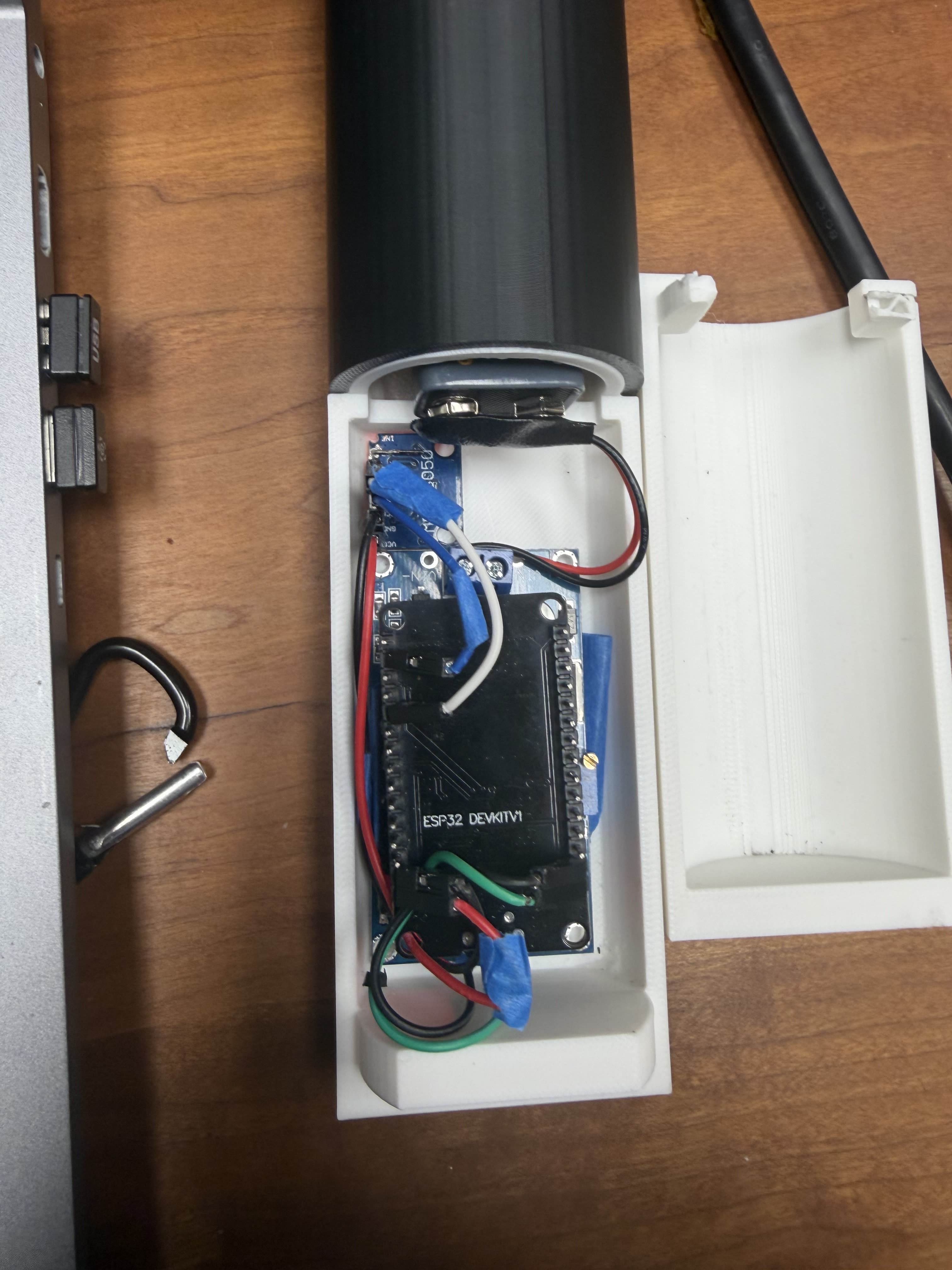
Spellbound consists of custom 3D-printed wand controllers with embedded electronics. The wands were designed in Fusion 360 and Autodesk Inventor with internal compartments to securely hold all components, then printed on a Bambu Lab H2D 3D printer. The primary wand uses an ESP32 microcontroller powered by a 3.7V lithium battery with a buck converter for voltage regulation, while another prototype houses a Raspberry Pi Zero microcontroller with a PiSugar S integrated battery module. The wand contains an MPU-6050 motion sensor that continuously tracks acceleration and rotation along the x, y, and z axes. As the user performs gestures, the onboard system classifies the motion patterns using gesture recognition models trained in Edge Impulse. Recognized actions are published as MQTT messages to a Mosquitto broker over WiFi. A central server subscribes to these messages, validates the spell actions, and broadcasts the updated state back to the wand and a web interface that displays real-time spellcasting feedback.
Challenges We Ran Into
Our path to working wands wasn’t smooth. We encountered multiple 3D printing failures: wands that were too thick, components that didn’t fit, clogged nozzles, and warped prints. We discovered we only had one PiSugar battery module and had to engineer a custom power solution with a buck converter for additional prototypes. GPIO pin conflicts between the PiSugar and the IMU sensor forced us to remap I2C buses to alternative pins. School enterprise WiFi restrictions blocked device communication, leading us to create our own local network using a laptop hotspot. Our first gesture recognition model achieved only about 30% accuracy, requiring significant iteration through activation detection and confidence thresholds to improve reliability. We also had to simplify our initial, overly complex spell system into a clean and intuitive design that was easier to train and more enjoyable to use. We initially hoped to have two working wands, however we were unable to fully work out the Raspberry Pi Zero module in the given timeframe.
Accomplishments We’re Proud Of
We’re incredibly proud that we made real spellcasting possible. Starting from a fantasy-inspired idea, we designed and built fully functional gesture-controlled wands with custom 3D-printed housings, embedded electronics, and real-time motion sensing. We overcame significant hardware and networking challenges, demonstrating adaptability and problem-solving under pressure. We achieved over 80% gesture recognition accuracy using machine learning models we trained ourselves in Edge Impulse, creating a responsive system where physical wand movements instantly trigger digital spells. We successfully implemented wireless MQTT communication between embedded devices and a central server, synchronizing spell effects in real time. Most importantly, we built something that people genuinely enjoyed using—watching someone pick up a wand, cast their first spell, and immediately understand the system made all the effort worthwhile. We didn’t just build a demo—we built magic.
What We Learned
This project taught us that building physical interactive systems is far more complex than software alone. We learned the importance of careful 3D printing design, power management, and hardware debugging. Gesture recognition showed us the balance required between accuracy and responsiveness, and that layered solutions outperform single approaches. We also learned that simpler designs often lead to better user experiences. By prioritizing clarity and reliability over excessive features, we created a system that feels intuitive, magical, and fun.
What’s next?
While Spellbound brings wand-based spellcasting to life, there’s much more potential to explore. Future iterations could include more spells, additional gestures, and a deeper magic system. Immersive feedback such as haptics, LEDs, and spatial audio could make spellcasting feel even more realistic. We also envision integrating AR visualization, where spells appear in the real world through a phone camera, or connecting the wand to smart home devices so spells can control lights or appliances. The foundation we’ve built proves that real-world spellcasting is possible. Now, the focus is on polish, expansion, and turning this hackathon project into a fully realized magical experience.
Built With
- arduino
- autodesk
- autodesk-fusion-360
- bambu-lab-h2d
- edge-impulse
- mosquitto
- mpu-6050-6-axis-accelerometer-and-gyroscope
- networkmanager
- pisugar-s
- python
- raspberry-pi-zero
- ubuntu
- visual-studio-code


Log in or sign up for Devpost to join the conversation.