
Inspiration
Being able to create the equivalent of an orchestral conductor with respect to the electronic music applications.
What it does
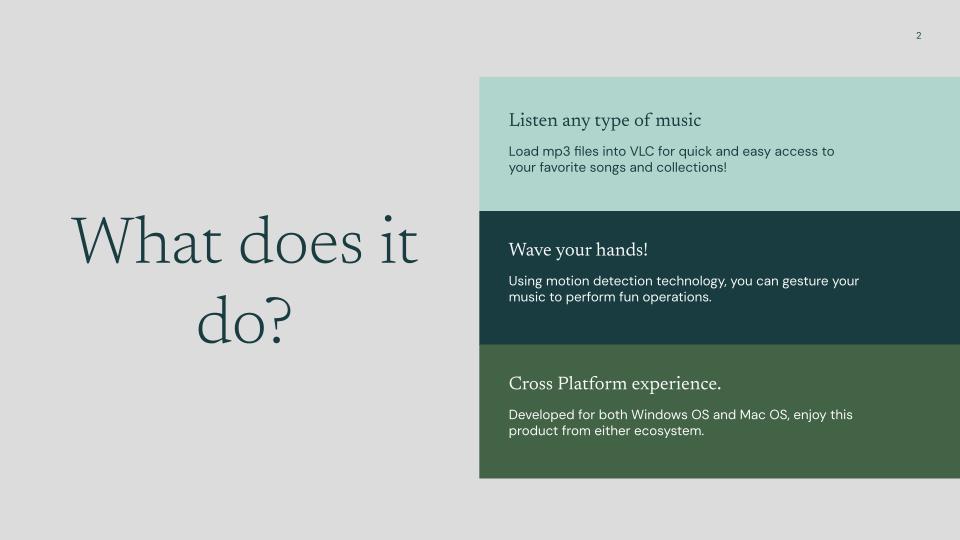
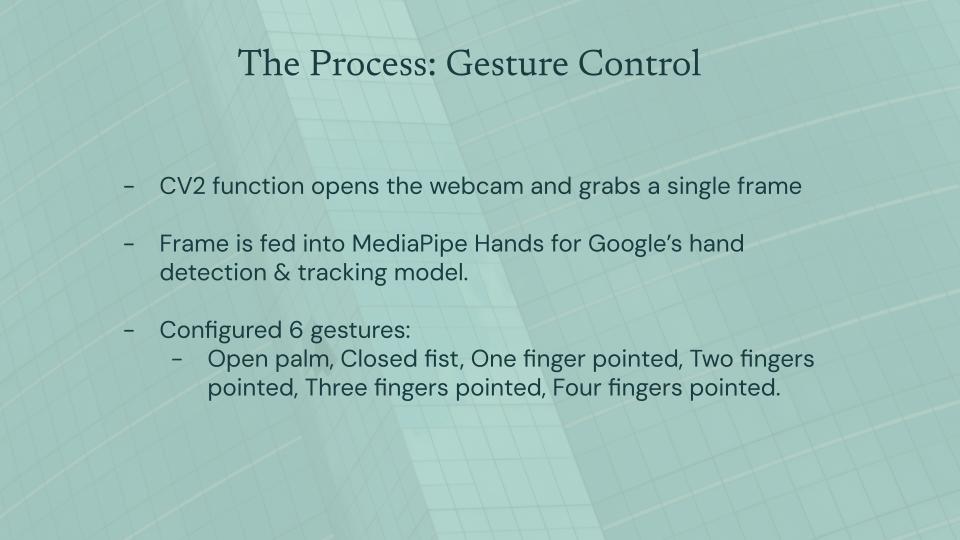
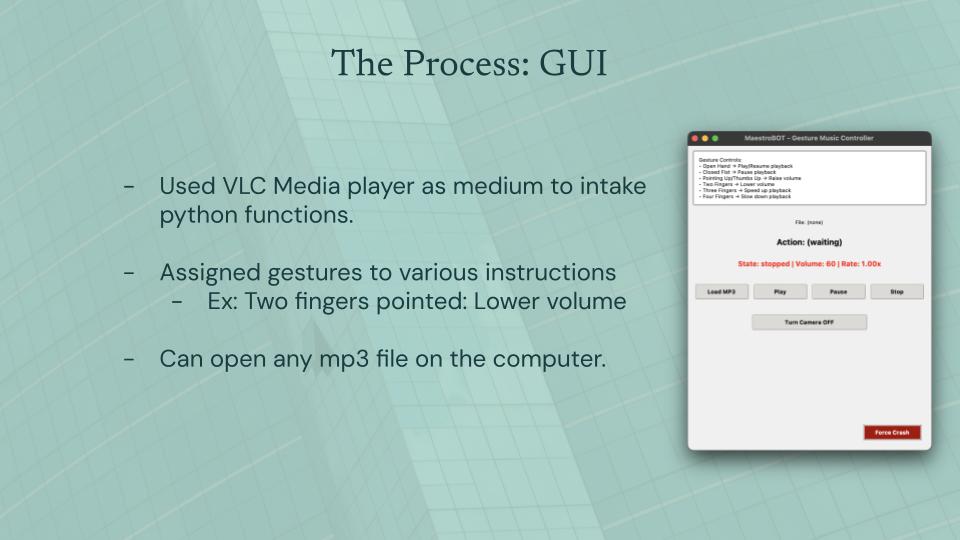
We have 6 gestures encoding 6 instructions to the vlc-player.
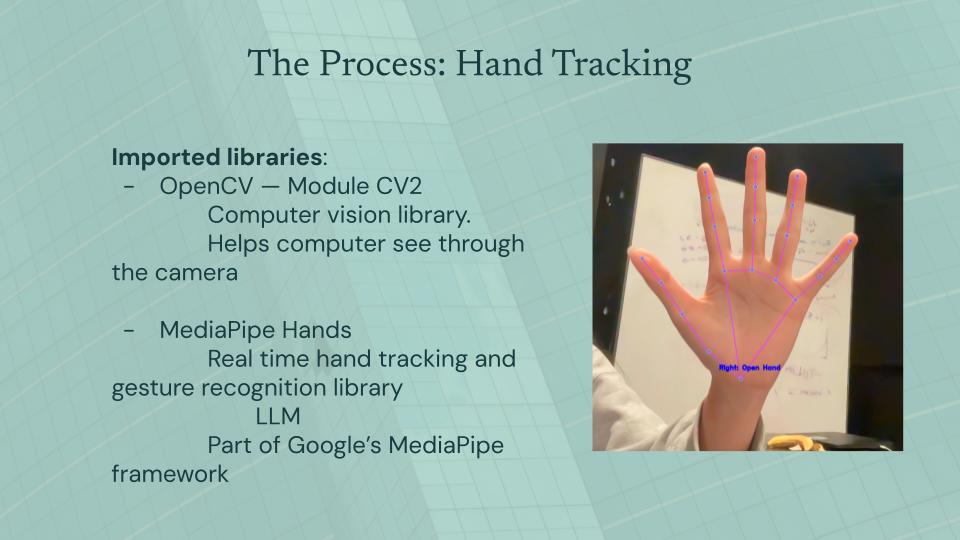
hand-tracking.py— captures webcam video, recognizes hand gestures, and prints gesture info.music_controller.py— launcheshand-tracking.py, parses its printed gestures, and controls an MP3 using python-vlc; it also provides a small Tkinter GUI.Open Hand: start playback (or unpause if paused)
Closed Fist: pause playback
One Finger pointed: raise volume
Two Fingers: lower volume
Three Fingers: Increase playback speed
Four Fingers: Decrease playback speed
The gestures will also each change the stereo image from left to right.
How we built it
REQUIRED INSTALLATION:
py -m pip install opencv-python mediapipe
py -m pip install python-vlc
Also required: cv2, vlc
Challenges we ran into
Ensuring compatibility across different OSes, allowing a wide variety of possible gestural musical modifications
Accomplishments that we're proud of
Getting a bare MVP version of gesture controlled audio parameters.
What we learned
How audio processing can be performed in Python, as well as using machine learning for gestural detection to this end.
What's next for MaestroBOT
The ability to modulate more audio parameters with more gestures could be supported, as well as better cross-OS compatibility.
Built With
- mediapipe
- open-cv
- python
- vlc

Log in or sign up for Devpost to join the conversation.