-
-
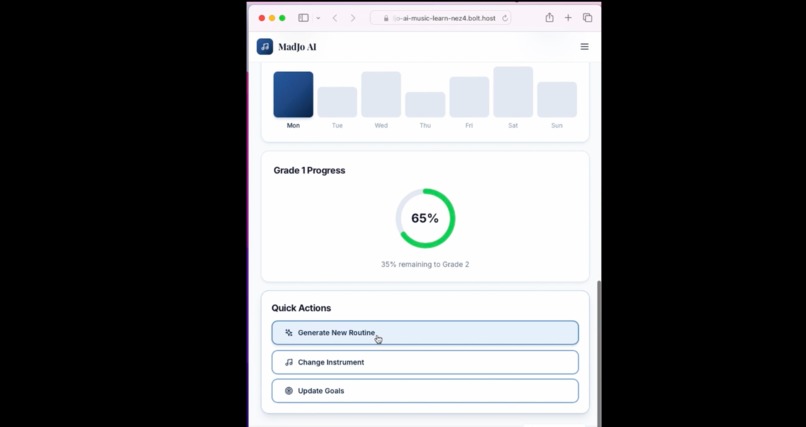
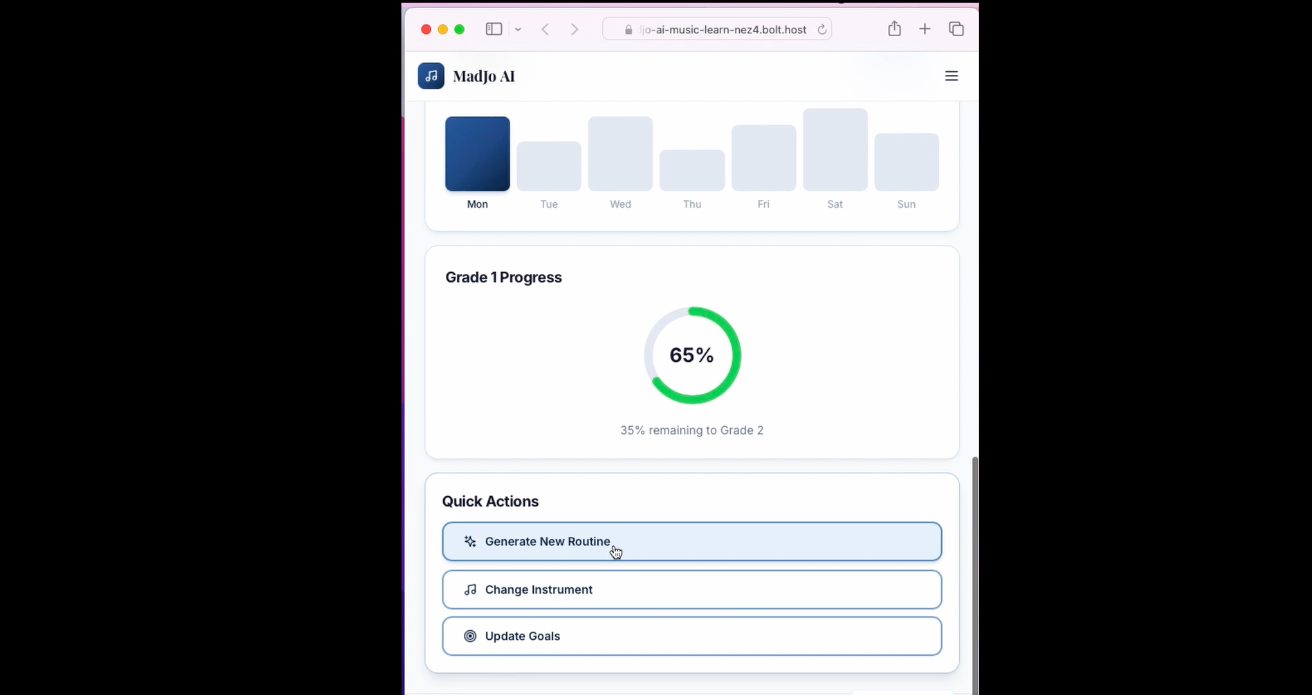
Generate New / Change Instrument/ Update Goals
-
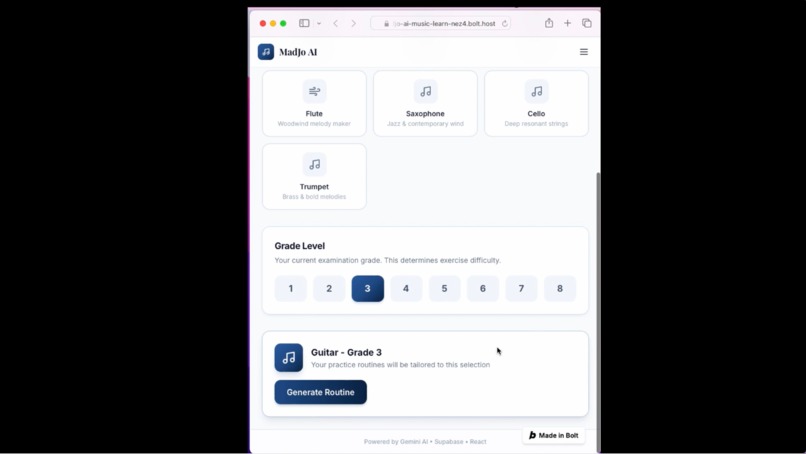
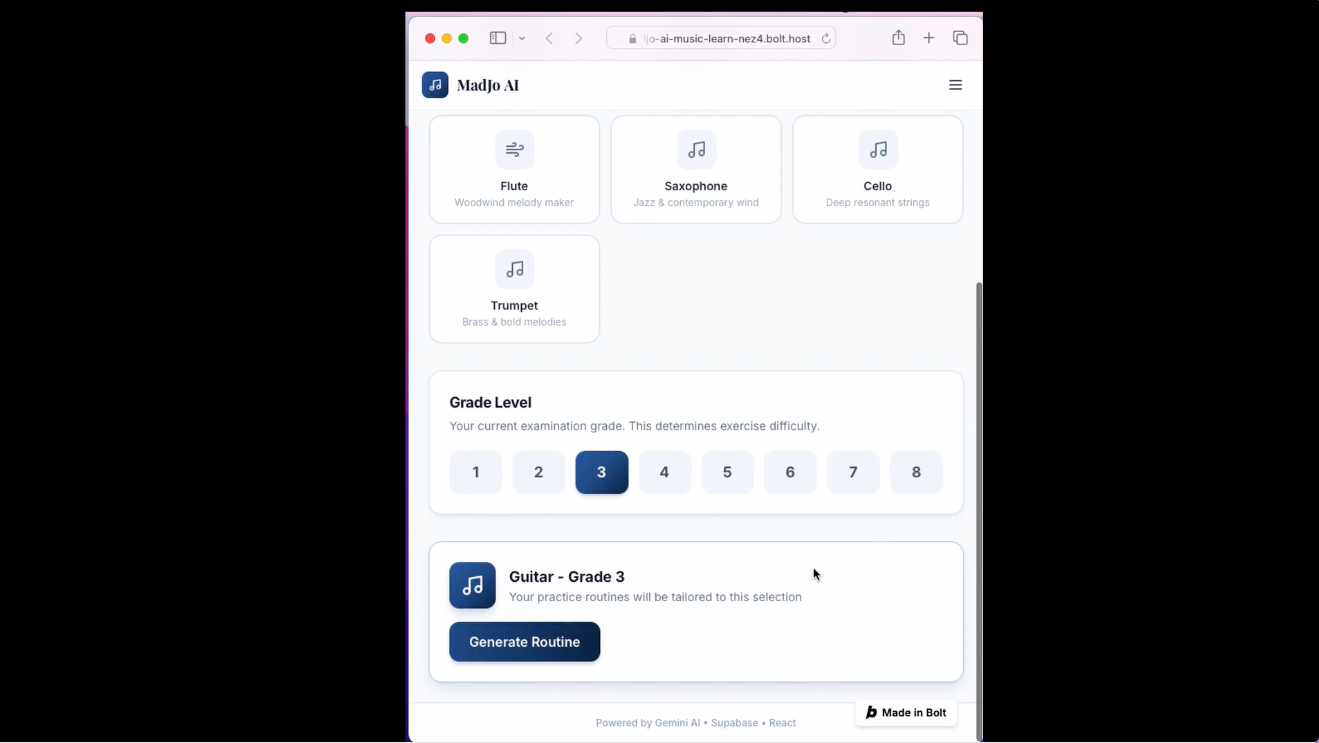
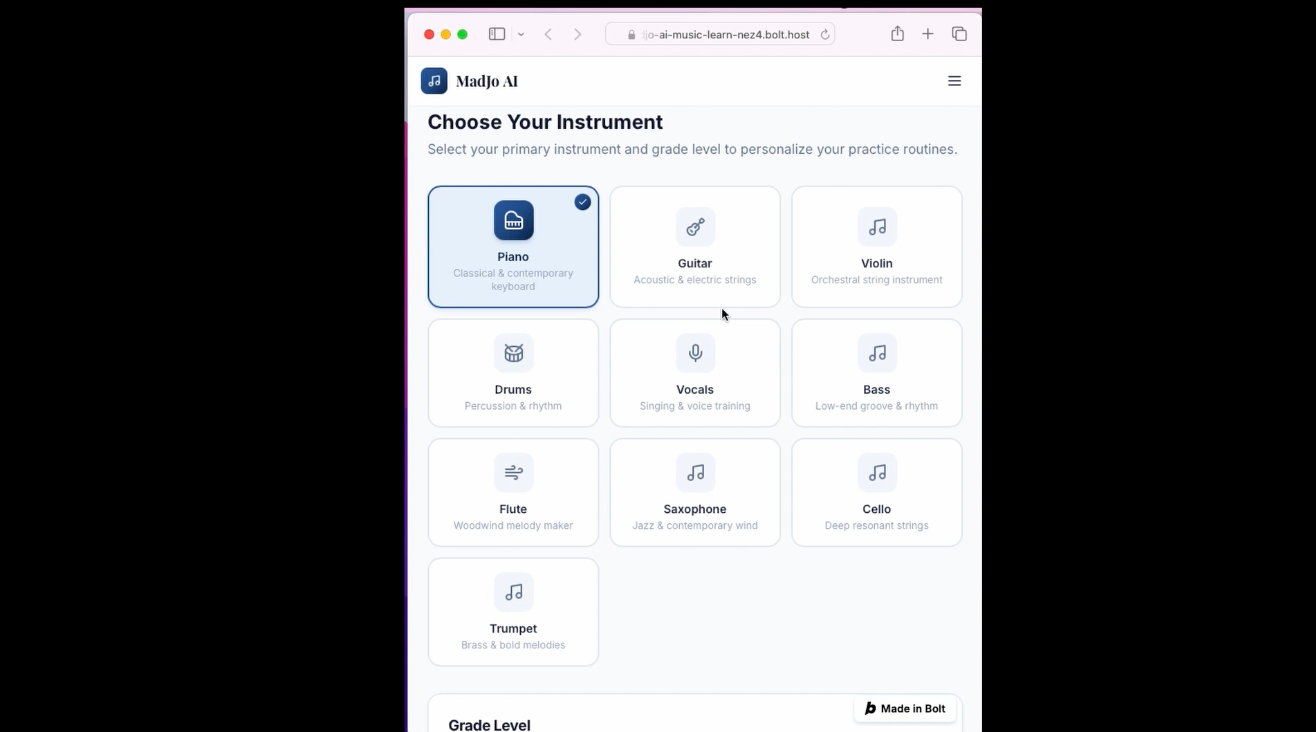
Choose your Instrument - Grade
-
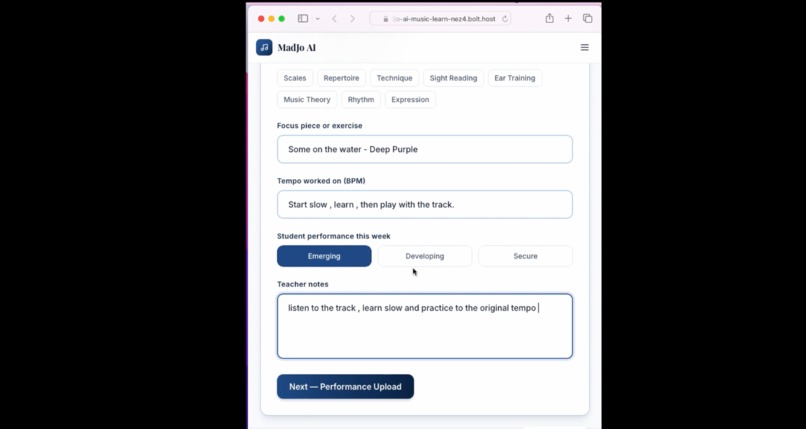
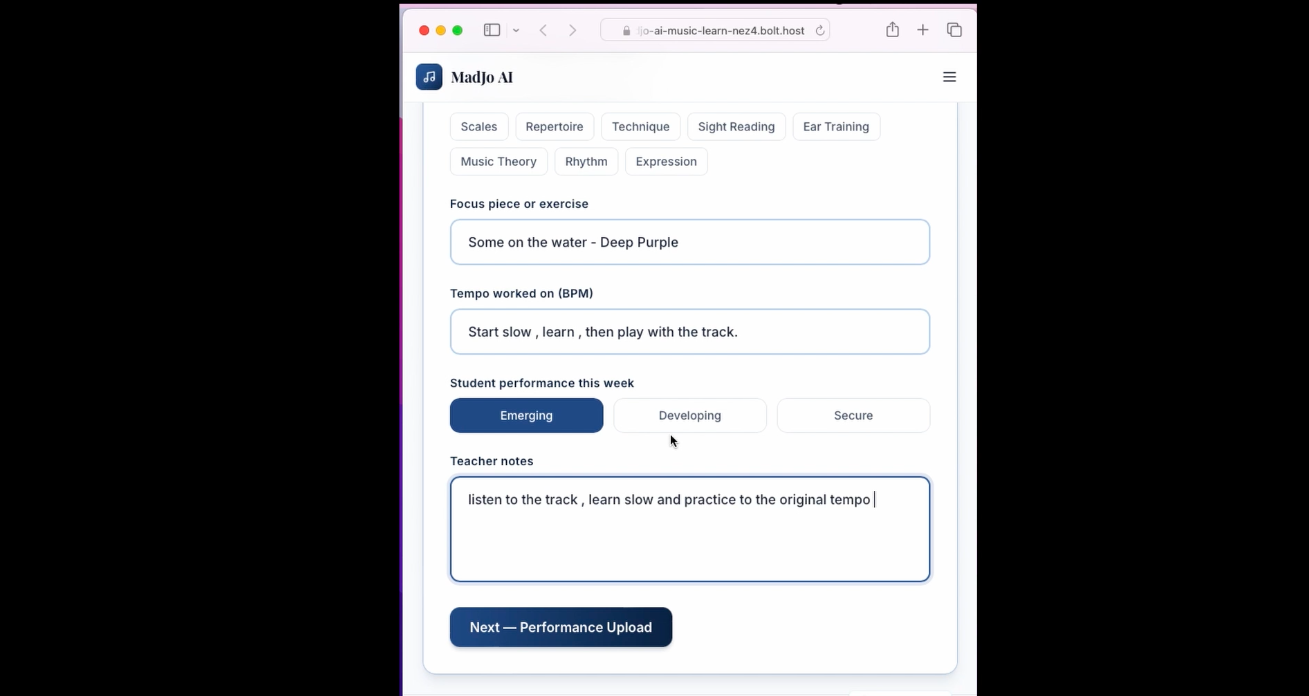
Teachers Tab - Page 2
-
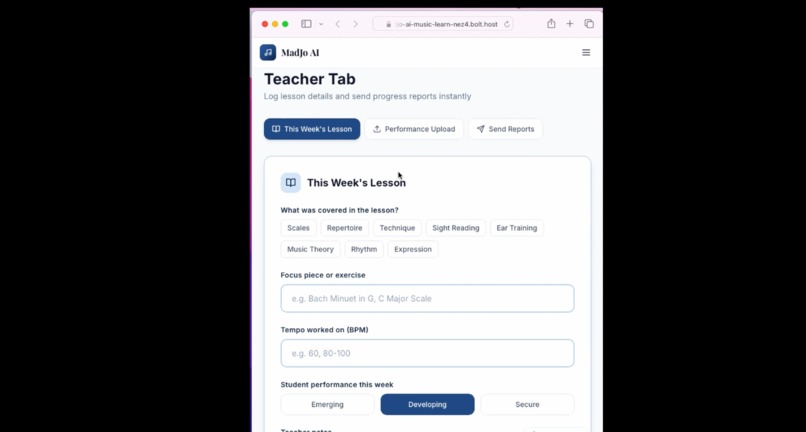
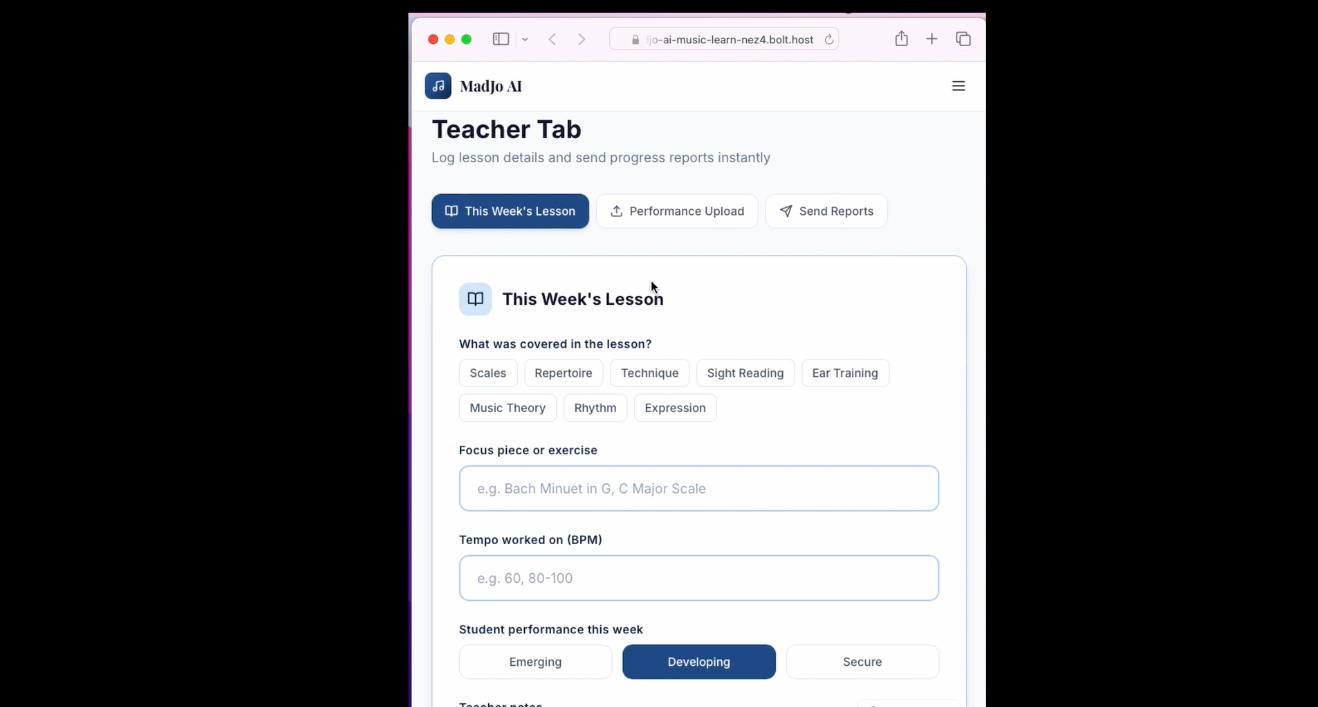
Teachers Tab
-
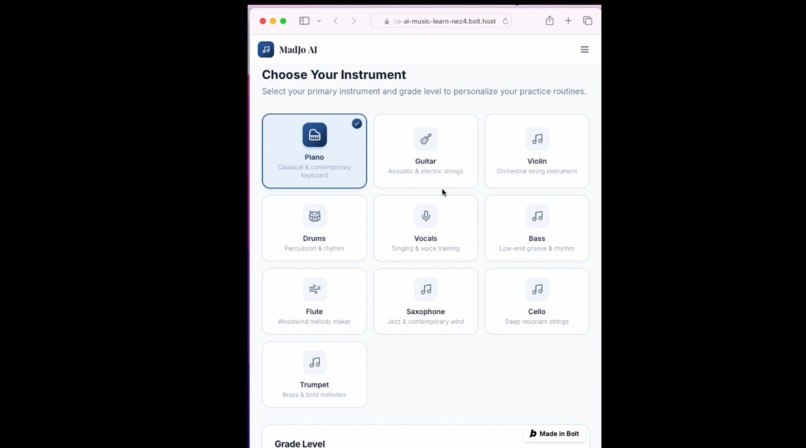
Choose your Instrument
-
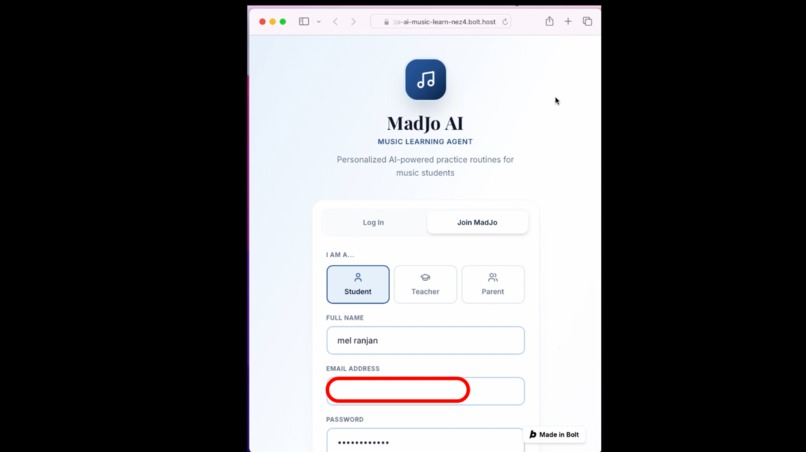
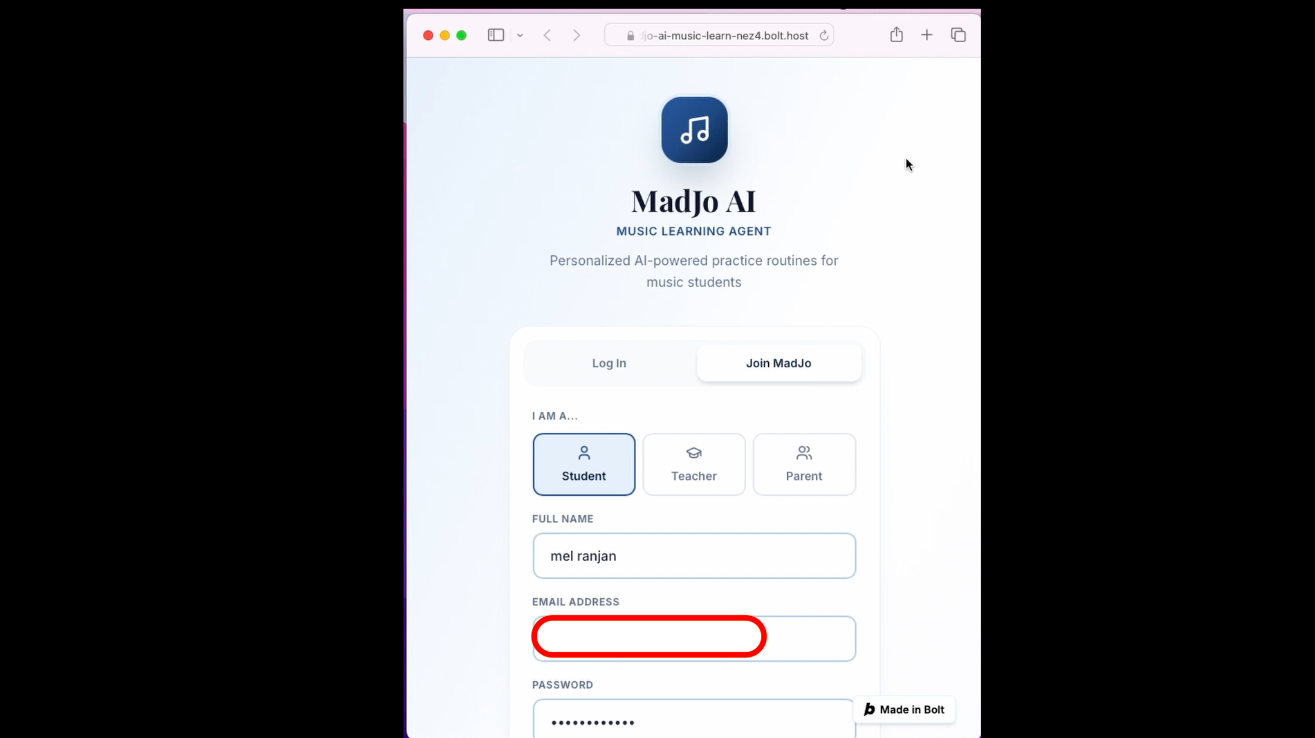
MadJo Ai Login
-
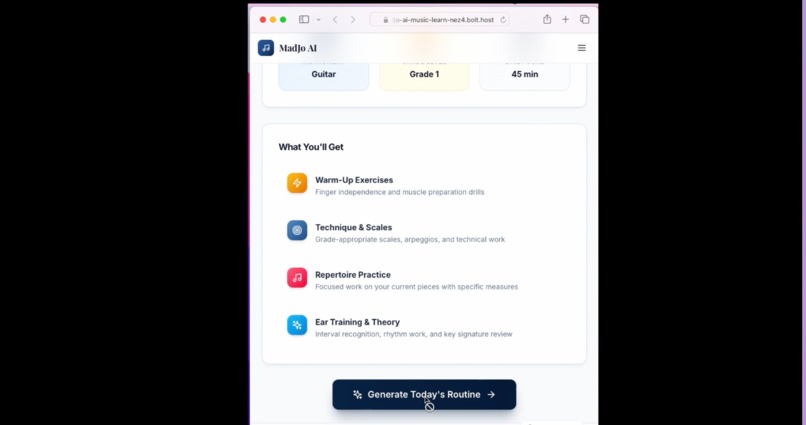
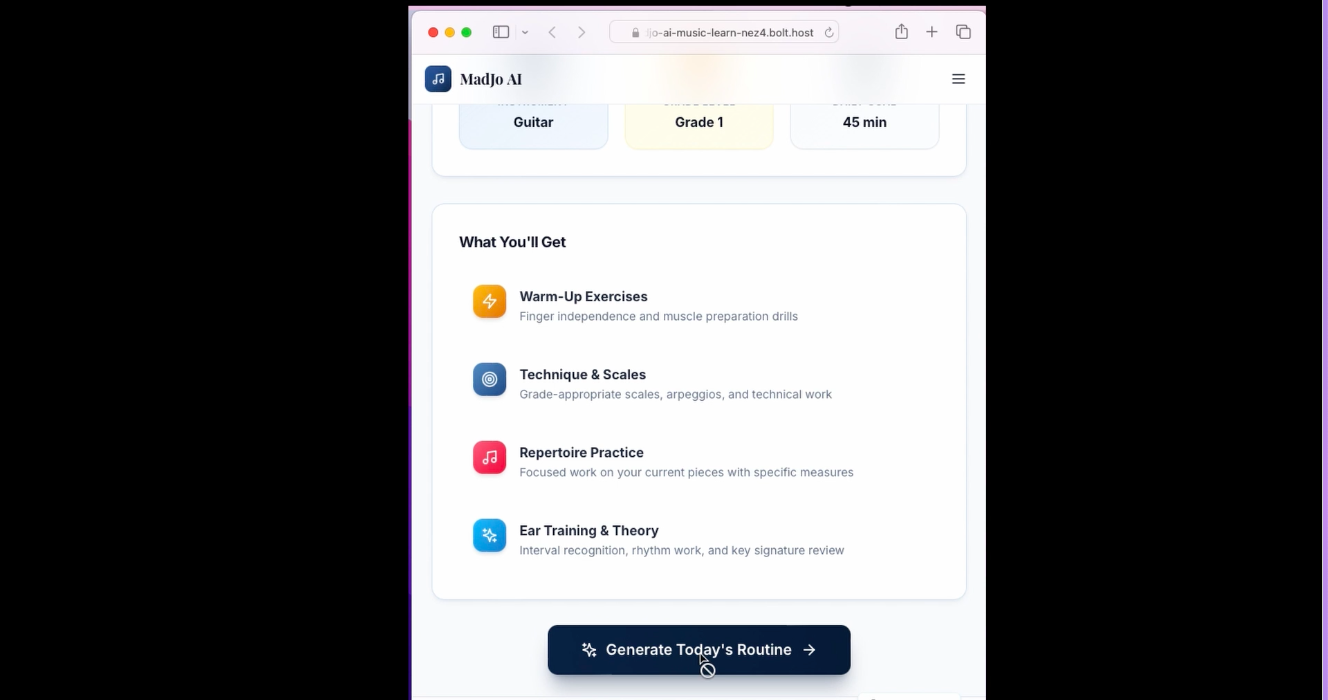
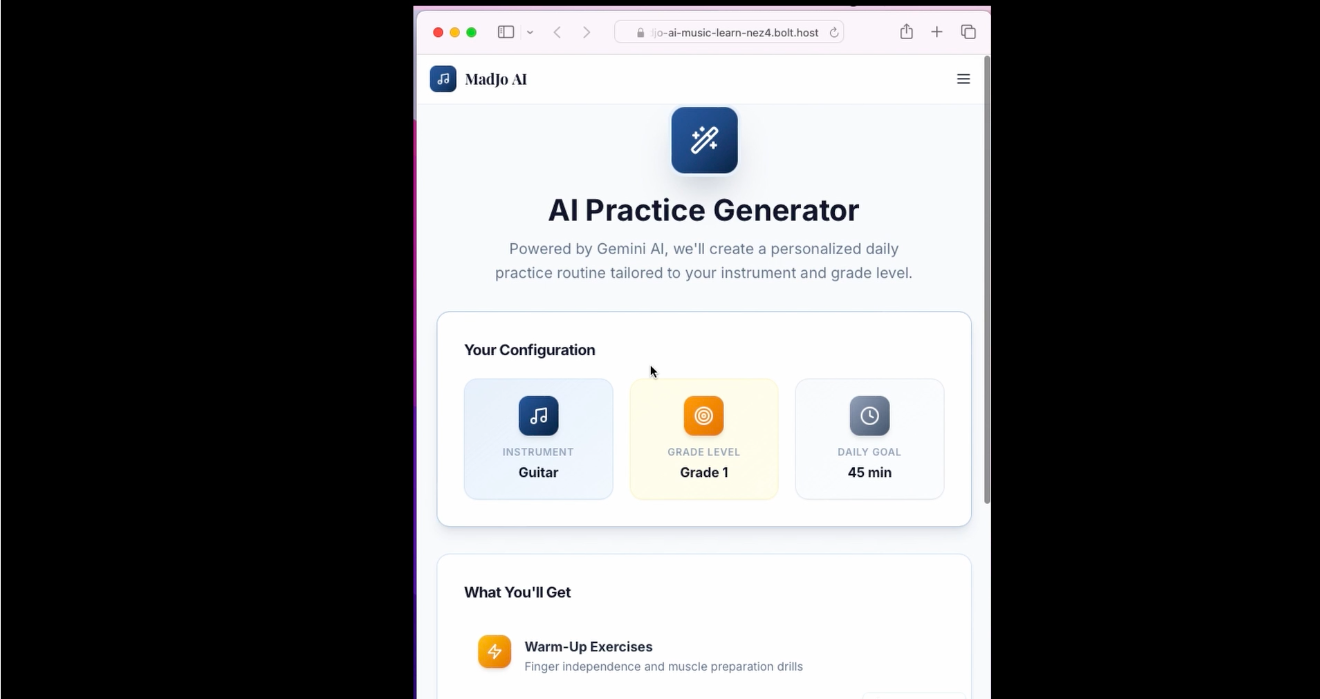
Generate Todays Routine
-
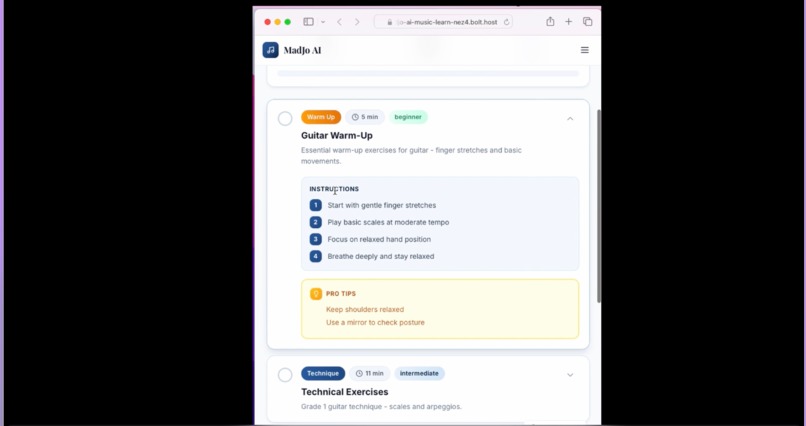
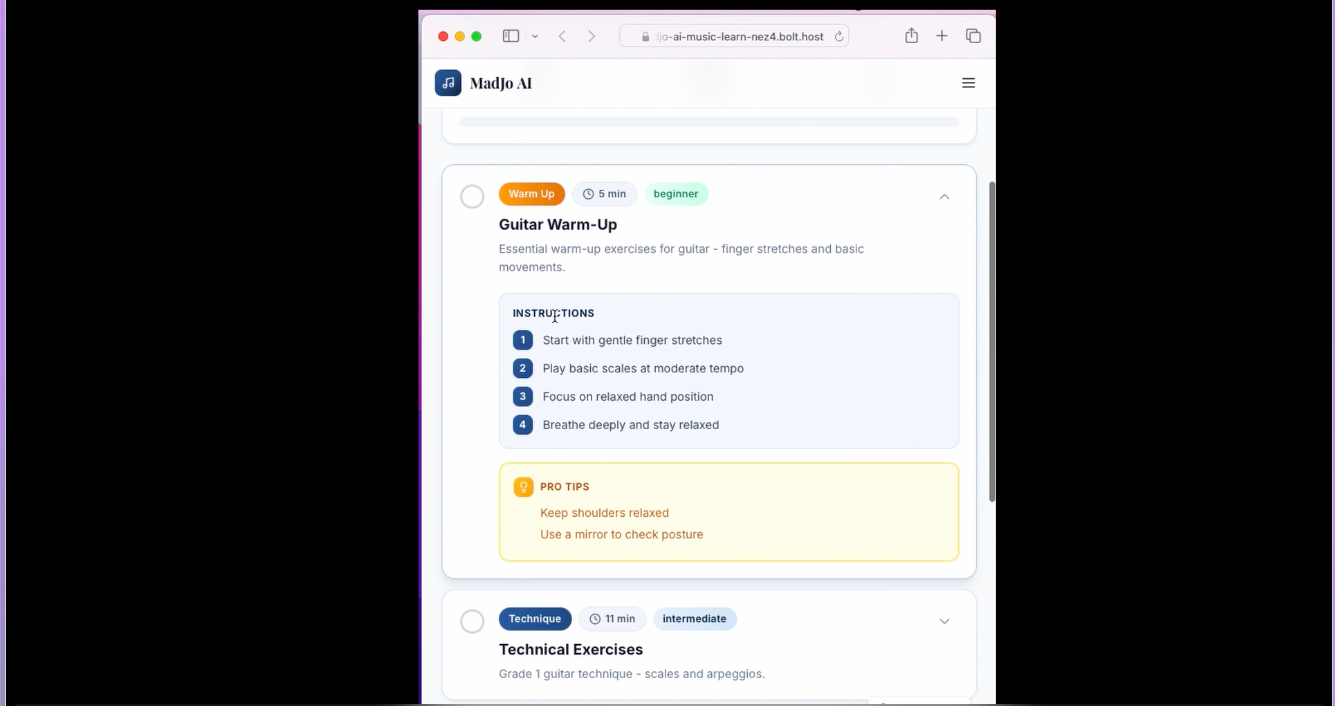
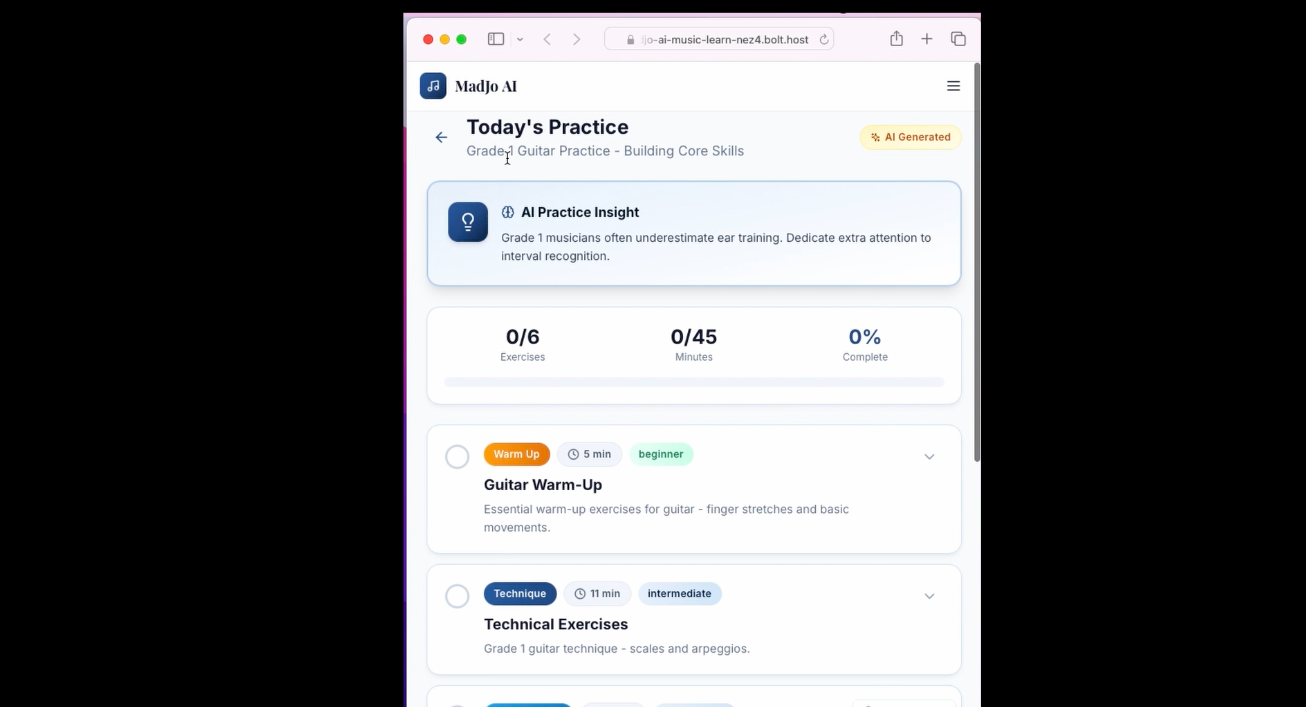
Todays Practice - EXE 1
-
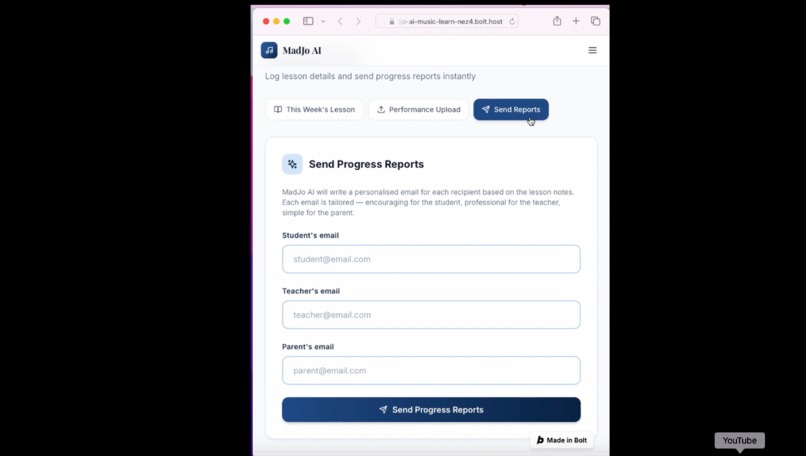
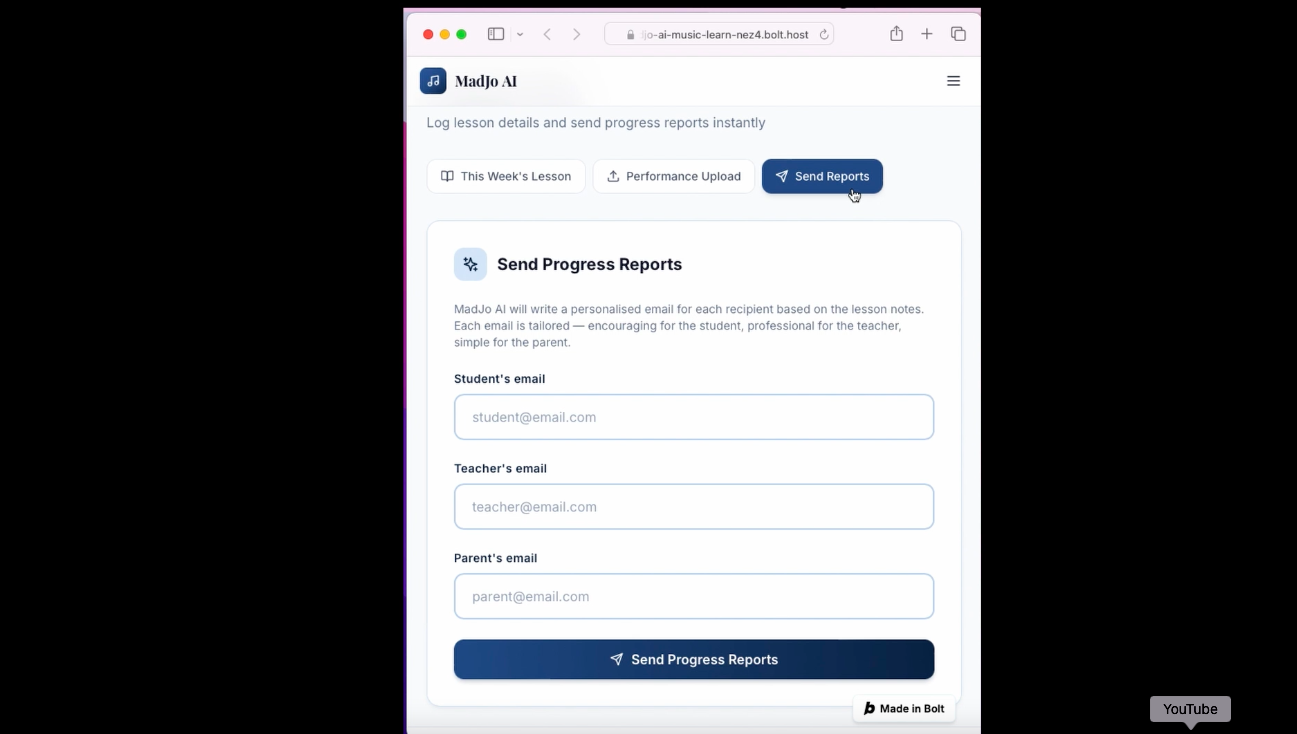
Teachers Tab - Send Progress Report
-
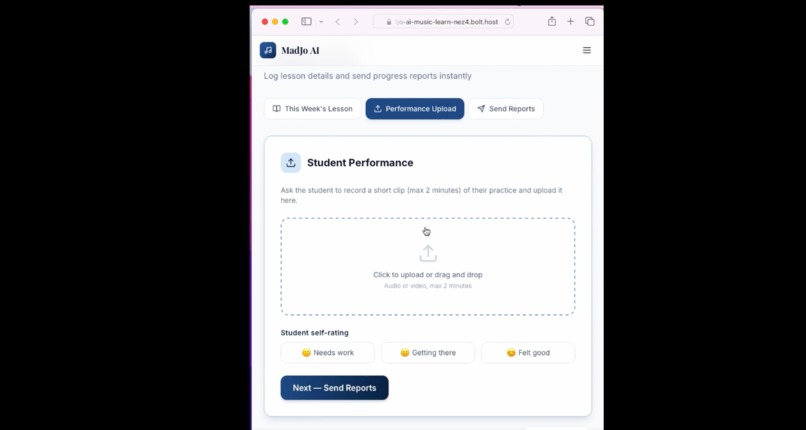
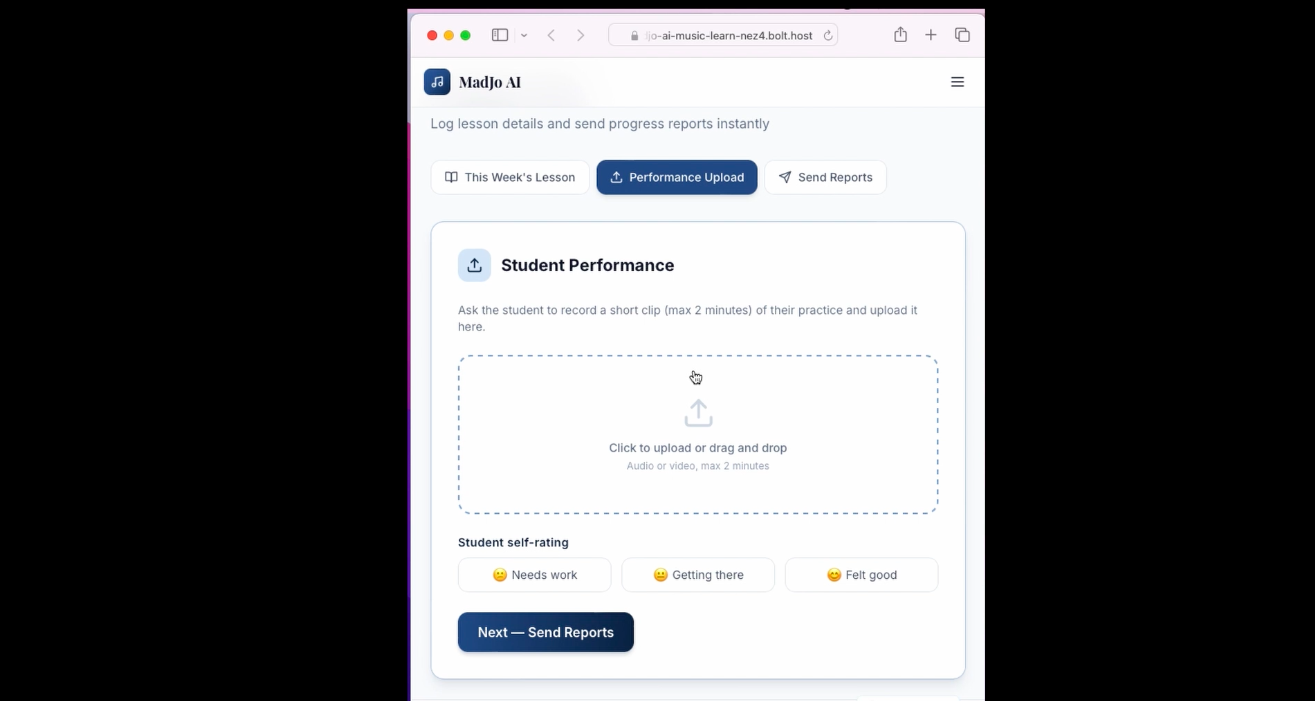
Teachers Tab - Performance Upload
-
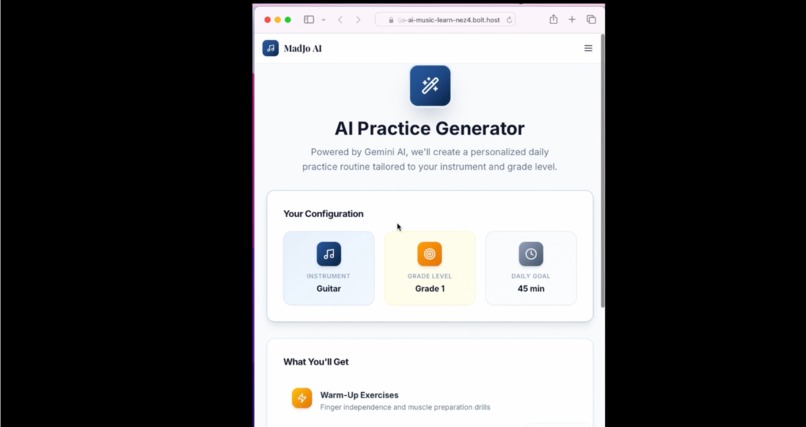
AI Practice Generator
-
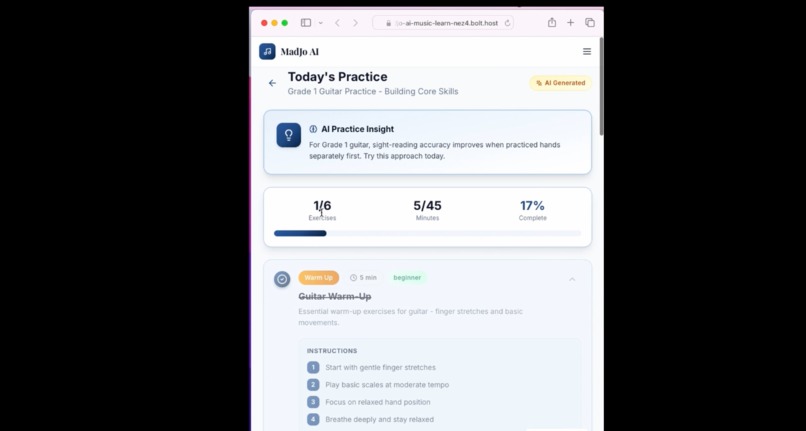
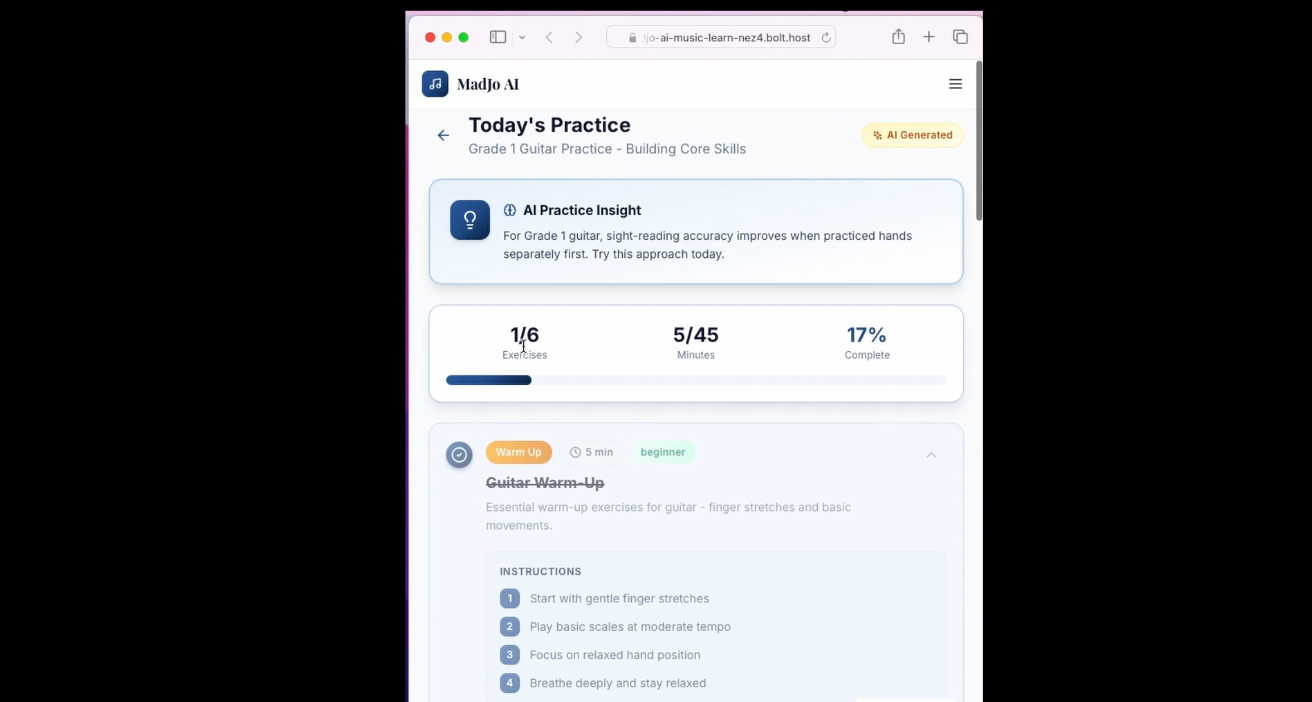
Todays Practice - Practice Update
-
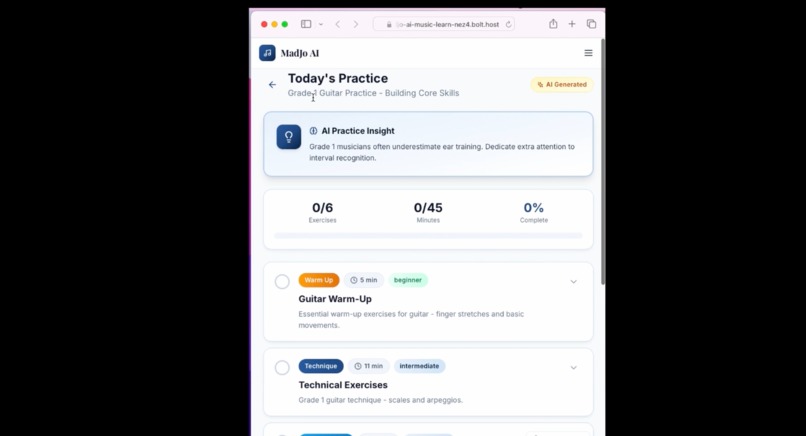
Todays Practice
-
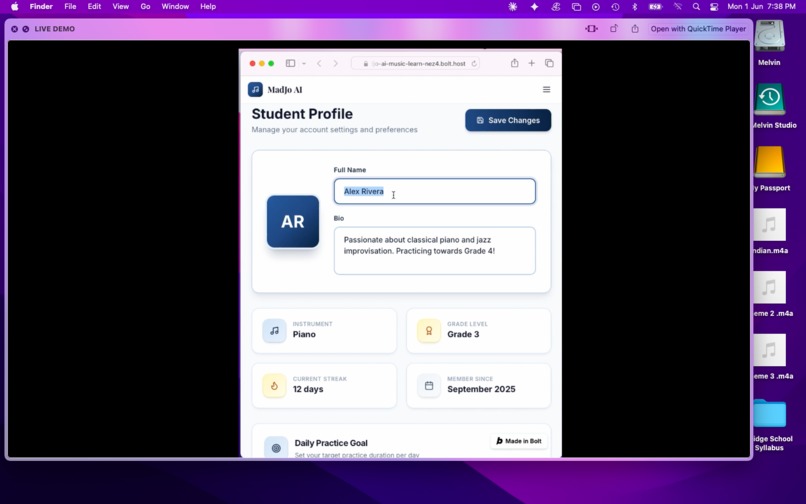
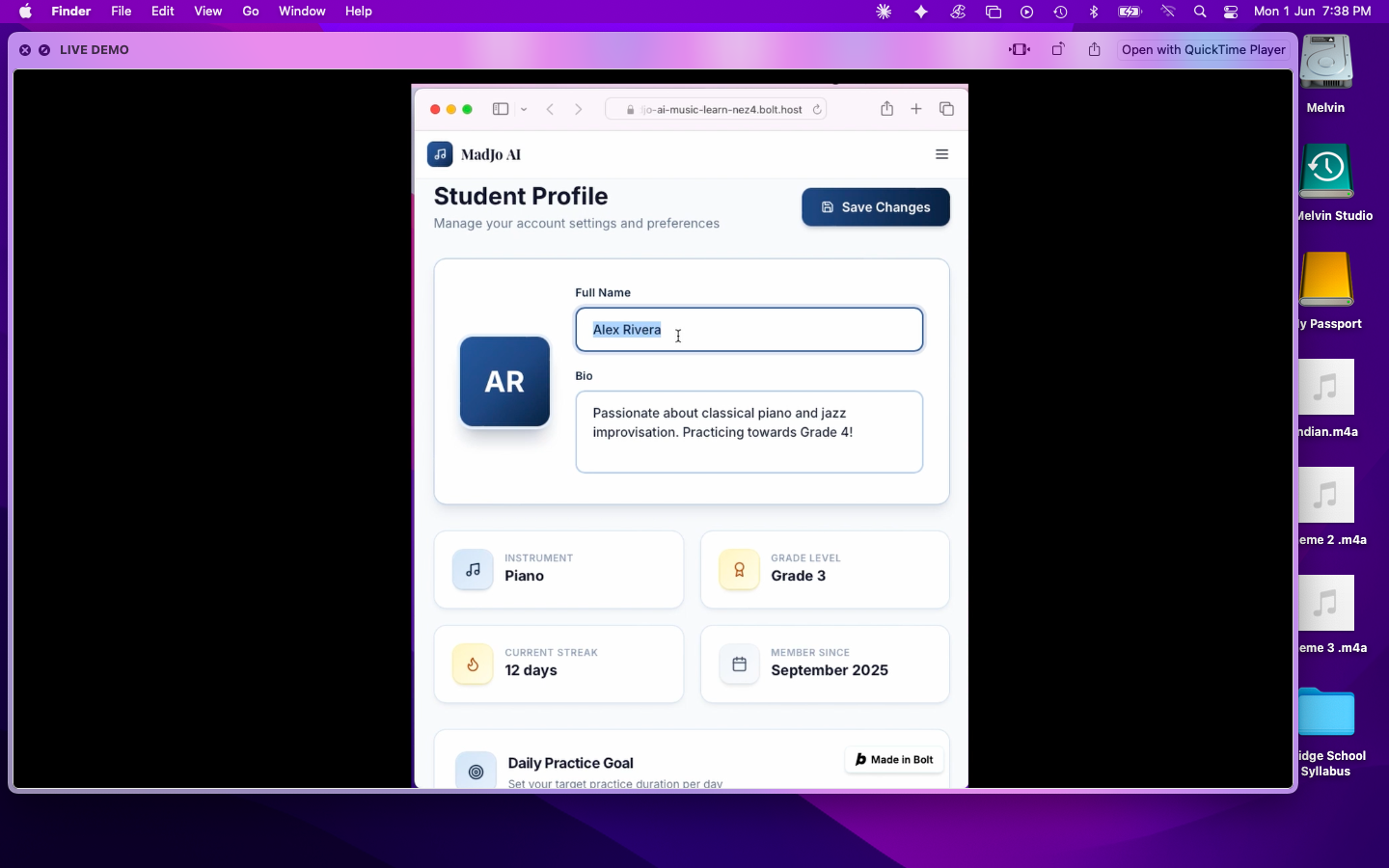
Student Profile
Inspiration
MadJo AI was born from a very real problem every music teacher knows: students forget what their teacher told them the moment they get home. Between weekly lessons, practice time is unguided, unfocused, and often abandoned completely. The founder of MadJo AI is not a developer. He is a music educator with 20+ years of teaching experience and the creator of the MADJO Music Method™. The vision was simple: what if every student could have a practice routine that sounded like their own teacher — personalised, culturally aware, and pedagogically sound — generated instantly by AI? That vision became MadJo AI. And the story of how it was built — a non-developer learning to code directly when AI tools ran out of credits — is just as important as what was built.
What it does.
MadJo AI is an intelligent music practice companion and learning agent that: For Students: • Generates personalised daily practice routines based on instrument, grade level, and practice duration • Every routine follows the MADJO Learning Cycle: Listen → Copy → Control → Create → Perform → Reflect • Students track completed exercises and build practice streaks For Teachers: • Log weekly lesson notes using the MADJO assessment rubric (Emerging / Developing / Secure) • AI reads the lesson notes and generates next week’s home practice based on what was actually taught • AI writes 3 personalised emails — one each for student, teacher, and parent — tailored to each audience • Emails sent instantly via Gmail — zero storage costs What makes it unique: No other music practice app is built on a proprietary pedagogical framework. The MADJO Music Method™ — Every routine the AI generates follows my own teaching sequence, uses my assessment language, and respects my principles.
How we built it
Google Cloud Agent Builder Integration: MadJo AI uses Google Cloud Agent Builder as the orchestration layer for its AI agent workflow. The agent is powered by Gemini and structured as follows: 1. Input collection — Student profile (instrument, grade, duration) and teacher lesson notes are collected 2. Agent reasoning — Google Cloud Agent Builder orchestrates the Gemini model with the MADJO pedagogical system prompt as the agent’s knowledge base 3. Routine generation — Gemini generates a structured JSON practice routine following the MADJO Learning Cycle 4. Email composition — The agent generates 3 tailored emails (student, teacher, parent) from the lesson notes 5. Delivery — Emails sent via Gmail through Supabase Edge Functions 6. Fallback layer — If Gemini is unavailable, the agent automatically falls back to Groq → Claude → OpenAI MongoDB Atlas Integration: MongoDB Atlas serves as the persistent memory layer for the AI agent — storing student learning history, past routines, and teacher lesson notes so the agent can build on previous sessions rather than generating in isolation. Development journey: • Phase 1: ChatGPT used to generate initial architecture and prompts. Bolt used to scaffold React + TypeScript + Supabase prototype. • Phase 2: Gemini API credits ran out. Bolt credits ran out. The founder — a music educator with no coding background — learned to manually edit TypeScript files directly. This produced better, more precise code than the AI-generated version. • Phase 3: All 8 MADJO curriculum documents analysed and distilled into the AI system prompt. The AI became the founder’s own pedagogical voice. • Phase 4: Teacher tab, email system, and login added as manual code changes.
Challenges we ran into
The Gemini dependency collapse — When Gemini API credits ran out mid-development, the entire app stopped working. The original architecture had a single-provider dependency with no fallback. We redesigned the AI layer into a multi-provider router that tries Gemini → Groq → Claude → OpenAI automatically. Bolt credit limits — Running out of Bolt AI credits mid-session forced every subsequent change to be made manually — reading actual TypeScript, understanding React context, and editing with precision. This produced better code than the AI-generated version. GitHub secret scanning — During the first GitHub upload, the dist/ folder accidentally contained a compiled build with an embedded API key. GitHub’s secret scanning blocked the push. The key was immediately revoked, regenerated, and the dist/ folder excluded. JSON reliability — AI responses occasionally returned malformed JSON with markdown code fences. A robust parsing layer was added to strip fences, validate structure, and normalize output. Supabase project claiming — The Bolt-managed Supabase project had to be claimed mid-development, changing credentials and requiring careful key management.
Accomplishments that we're proud of
A teaching philosophy became an AI — The MADJO Music Method — 20+ years of curriculum design is now the intelligence layer of a live AI product. No other music app is built on a proprietary pedagogical framework like this. A non-developer shipped a real AI product — The founder had no coding background. Between a broken prototype and a live, working application — the gap was closed through direct learning and manual code editing under pressure. This is exactly what democratised AI development should enable. 3-provider AI resilience — The custom AI router provides automatic fallback across Gemini → Groq → Claude → OpenAI. Students never see an error. The app always generates a routine. Zero storage cost email system — Progress reports go directly to student, teacher, and parent via Gmail — no database writes, no storage costs. Each recipient gets a different AI-written email tailored to their relationship with the student. Live, published, working — MadJo AI is not a mockup. It is a live, publicly accessible web application that generates real AI practice routines and sends real emails. Shipped in one day.
What we learned
Technical lessons • A system prompt is not just instructions — it is a teacher's voice. The difference between a generic AI routine and a MADJO routine is entirely in how you speak to the model. • Multi-provider fallback is not optional for production AI apps. Any single-provider dependency is a single point of failure. • Manual code edits are often faster and more precise than AI-generated rewrites — especially when you understand what you are changing and why. • Browser-direct API calls eliminate entire layers of backend complexity for early- stage products. • Supabase Edge Functions + Gmail App Passwords is a zero-cost email solution that requires no third-party email service. Product lessons • Your methodology is your moat. Generic AI tools can replicate features. They cannot replicate 20 years of a specific educator's teaching philosophy. • Two focused products beat one confused product. The student practice companion and the teacher delivery tool serve completely different audiences — keeping them separate makes both stronger. • Real users reveal what no prototype review can. Getting the app in front of actual students is the most valuable next step — more than any new feature. Human lessons You don't need to be a developer to build something real. You need a clear vision, the willingness to learn, and the right tools. AI makes that possible in a way that wasn't true five years ago.
What's next for MadJo AI Music Learning Agent
Full Google Cloud Agent Builder integration with persistent MongoDB memory • User registration and login — student, teacher, and parent roles • Teacher tab with lesson notes feeding directly into next AI routine • Practice timer per exercise • Student performance audio/video uploads
Foundation Pathway — Second Product A separate app for parents and teachers of children aged 4–7, built entirely on the MADJO early years curriculum. Where MadJo AI is a student practice companion, Foundation Pathway is a teacher and parent delivery guide — lesson plans, activity cards, observation checklists, and cultural adaptations for Indian classrooms. The 8 PDFs of MADJO methodology become the entire product content.
Long-Term Vision — The MADJO Suite
• AI-powered practice evaluation with audio pitch and rhythm detection • Adaptive learning paths that detect weaknesses and adjust routines automatically • School and music academy integrations — teacher networks, multi-student management • Gamified learning with the MADJO reward system • Multi-language support — Tamil, Hindi, and regional language interfaces • Voice and audio feedback — real-time correction using AI audio analysis
MadJo AI is not just a music app. It is proof that a domain expert with deep knowledge, the right AI tools, and the willingness to learn can build something genuinely meaningful — even without a technical background. The MADJO Music Method has helped hundreds of children fall in love with music. MadJo AI is how that reaches thousands.
Built With
- bolt-(stackblitz)
- claude-(anthropic)
- gemini-api
- gmail-api
- google-cloud
- google-cloud-agent-builder
- groq
- llama-3.1
- mongodb-atlas
- node.js
- openai
- react
- supabase
- tailwind-css
- typescript
- vite

Log in or sign up for Devpost to join the conversation.