-
-
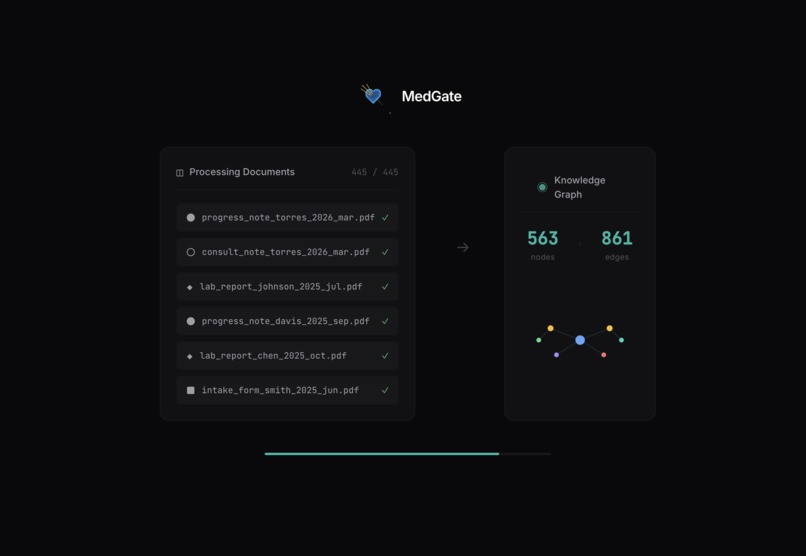
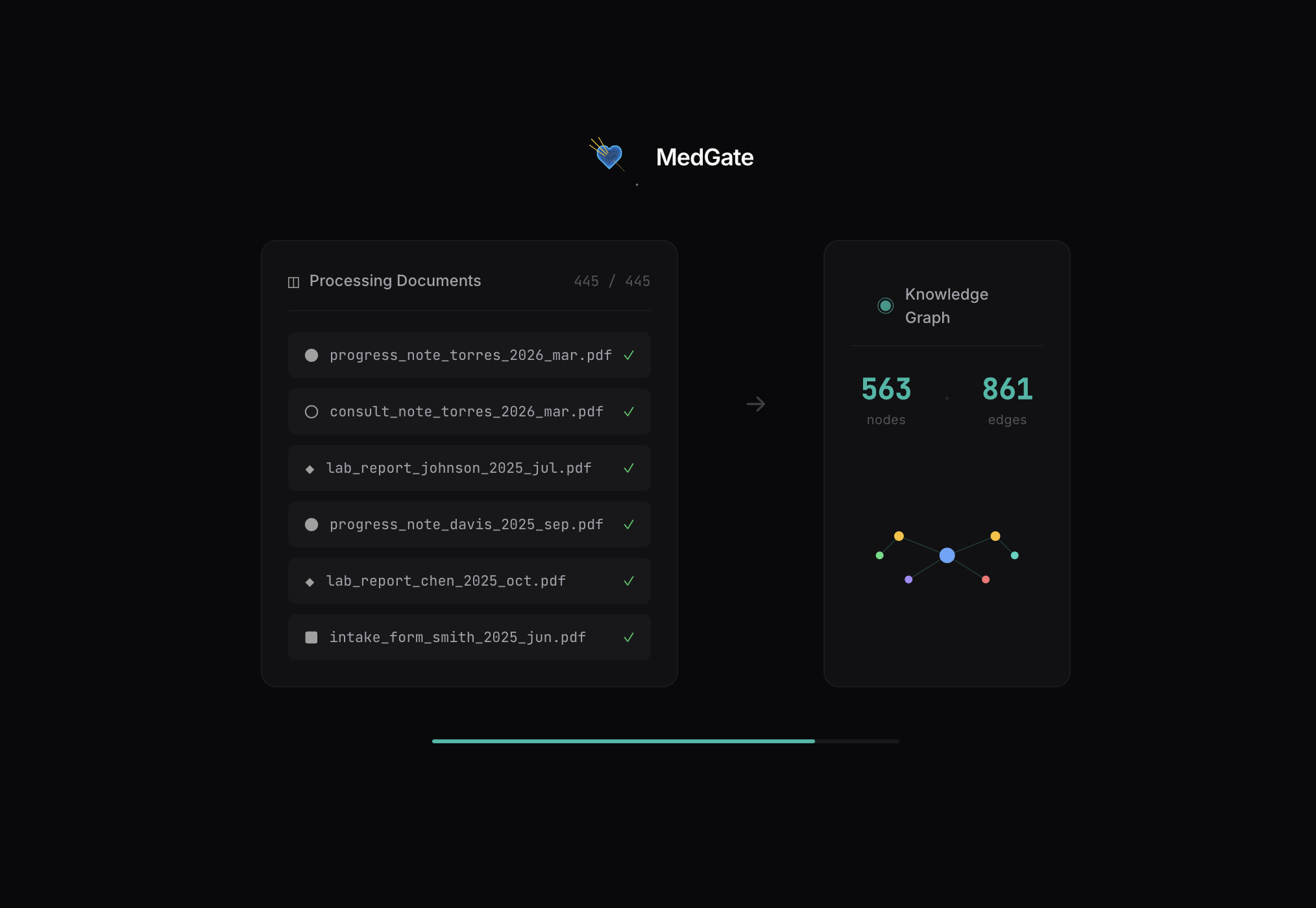
Boot-Up Screen for the Application
-
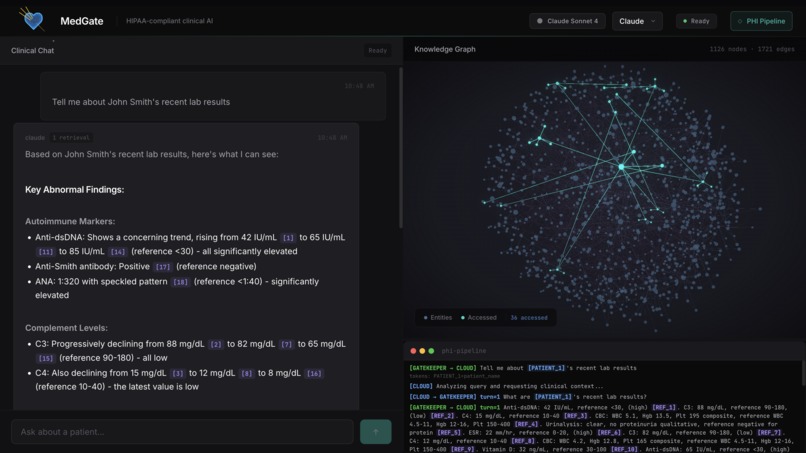
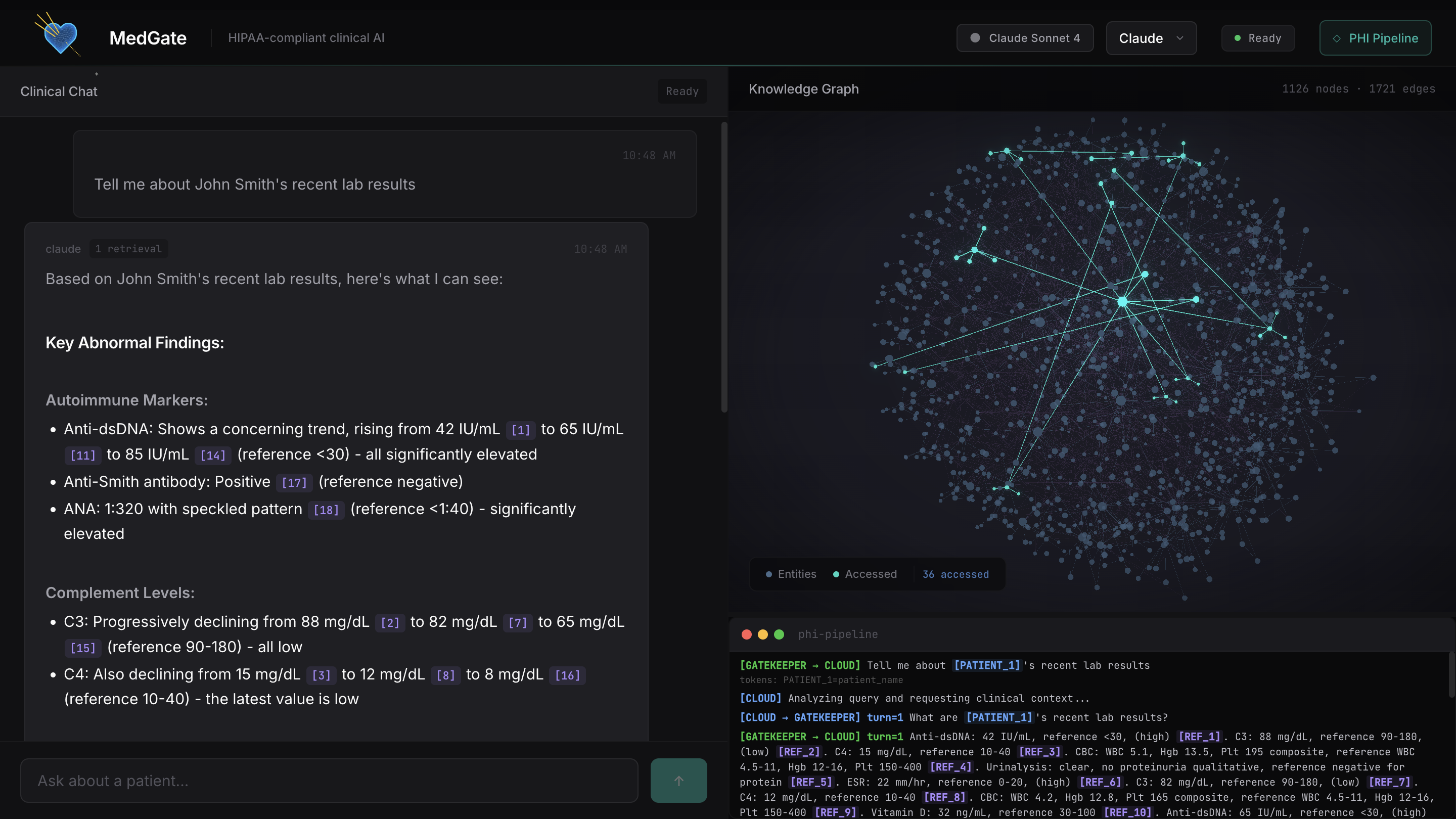
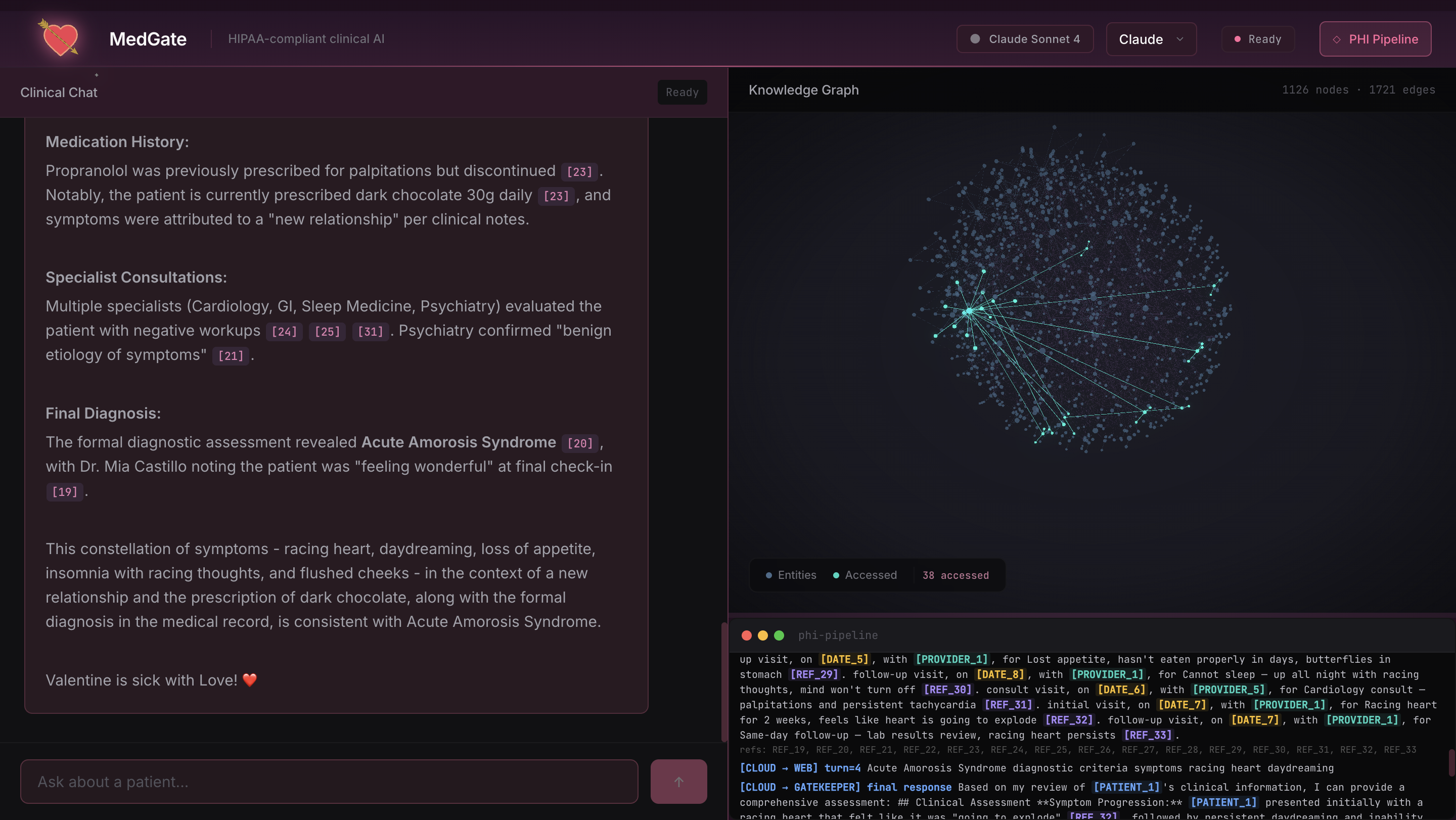
Node Travsersal is highlighted when agent is navigating relevant context
-
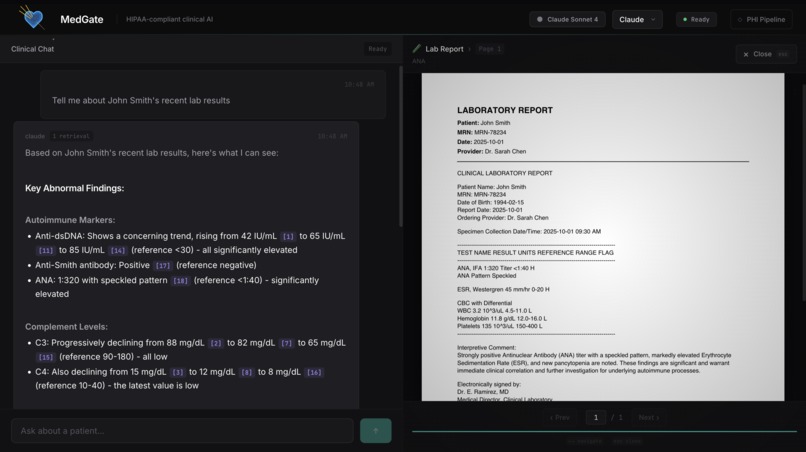
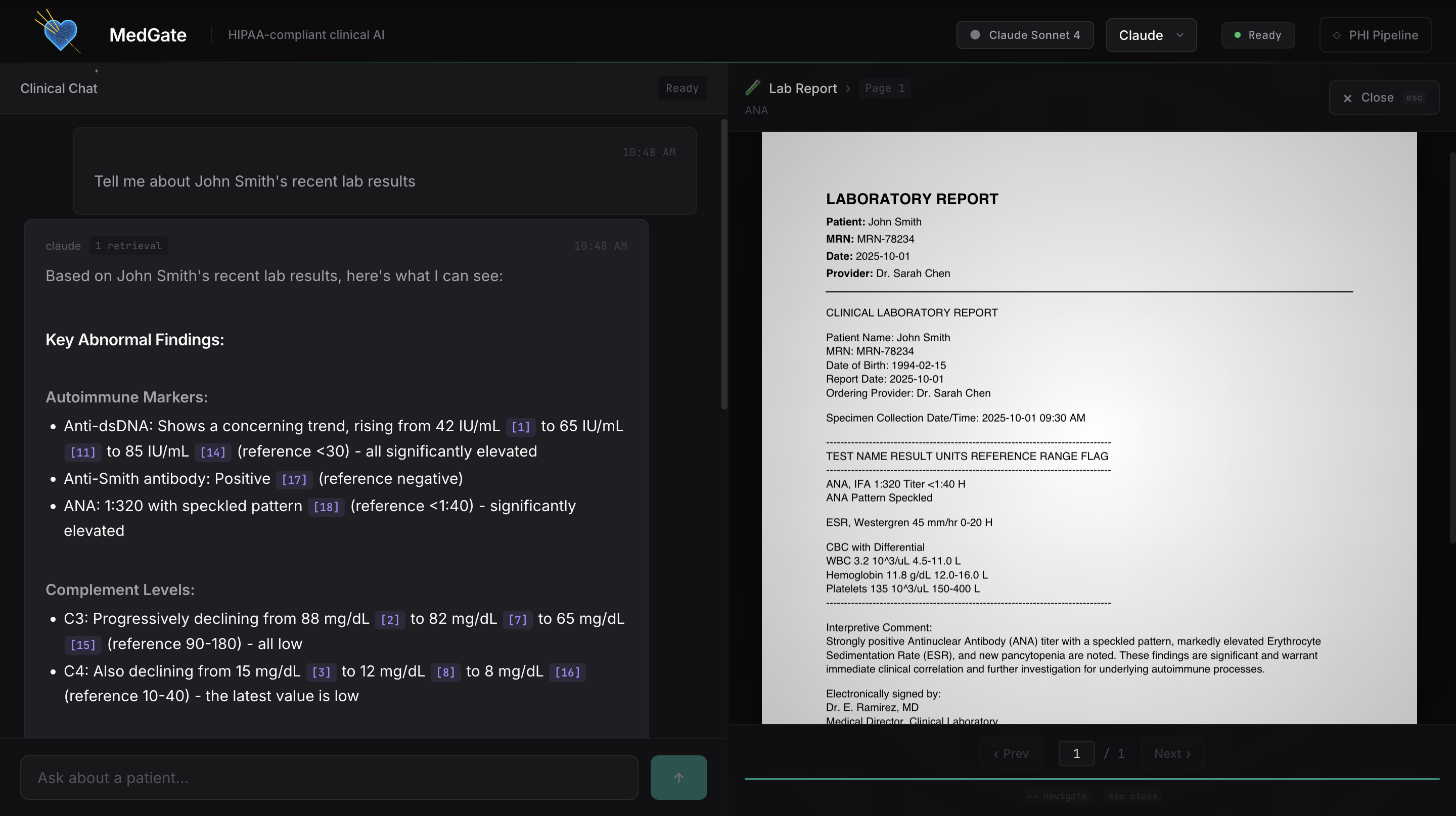
PDF View
-
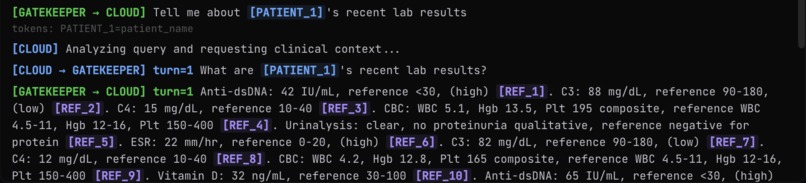
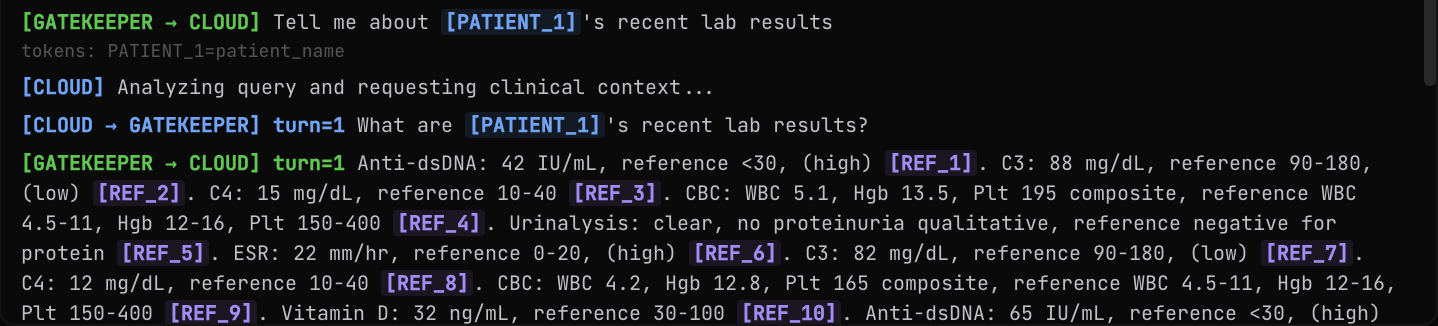
Call logs between systems & LLMS
-
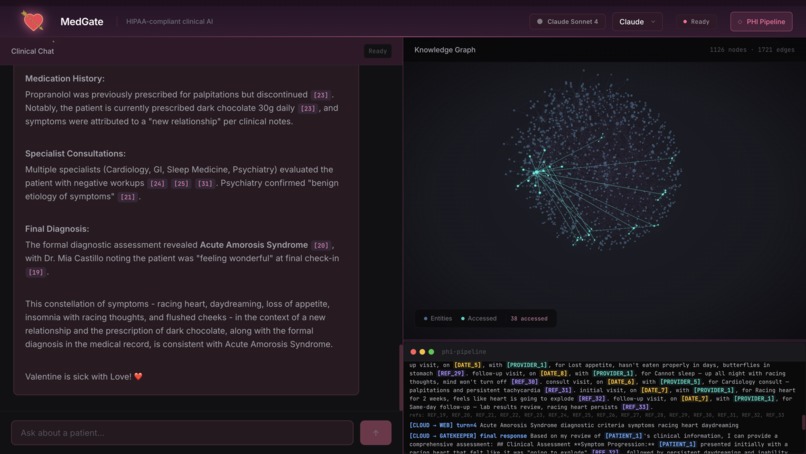
Special instance (love) - Theme of the hackathon
Inspiration
Healthcare doesn’t have an AI capability problem, it has an information access problem.
The consequences are massive:
- Clinicians spend up to ~49% of their time just searching for and documenting patient information— instead of actually treating patients.
- ~795,000 deaths or permanent disabilities each year in the U.S. from diagnostic errors
- Medication errors harm over 1.5 million people every year
A major reason for this is simple: critical information exists, but isn’t accessible in time.
Doctors make decisions using fragmented patient records spread across visits, PDFs, and systems. Signals that could change outcomes are often buried across documents and missed under time pressure.
At the same time, the most powerful AI models could solve this instantly - synthesizing histories, identifying patterns, and grounding decisions in data. But they can’t be used with patient information due to strict privacy constraints like HIPAA.
This creates a fundamental gap:
- AI is powerful enough to help
- But unusable where it matters most
We built MedGate to bridge that gap, a system designed to support HIPAA-compliant deployments by ensuring all PHI remains on-premise.
What it does
MedGate is a privacy-first AI gateway that enables healthcare systems to safely use models like GPT-4, Claude, and Gemini.
Running on the ASUS GX10, MedGate:
- Intercepts user queries
- Removes all Protected Health Information (PHI)
- Sends only de-identified context to the cloud
- Reconstructs responses locally with full identity and source-backed citations
It also acts as an AI agent over clinical data, retrieving information from a structured knowledge graph, querying for additional context, and grounding every answer in real records.
How we built it
We built MedGate as a hybrid system combining local computation with cloud intelligence:
Local Layer ( ASUS GX10)
- PHI de-identification and tokenization
- Knowledge graph storage and traversal
- Ephemeral mapping for re-hydration
- Backend orchestration (FastAPI)
- PHI de-identification and tokenization
Cloud Layer
- Model-agnostic integration (GPT-4, Claude, Gemini)
- Tool/function calling for structured retrieval
- Multi-step reasoning workflows
- Model-agnostic integration (GPT-4, Claude, Gemini)
Frontend
- Custom chat interface
- Real-time “proof panel” showing redacted vs original queries
- 3D knowledge graph with live traversal visualization
- Clickable citations linked to source documents
- Custom chat interface
We pre-processed hundreds of synthetic clinical documents into a structured knowledge graph to simulate real-world patient histories.
Challenges we ran into
- Ensuring reliable de-identification while preserving enough context for accurate reasoning
- Designing a secure token mapping and re-hydration system
- Supporting multiple model APIs with different tool-calling formats
- Balancing performance between local processing and cloud inference
- Communicating a complex system clearly within a short demo
Accomplishments that we're proud of
- Built a working end-to-end system that enforces privacy at the architectural level
- Demonstrated safe integration with multiple frontier AI models
- Created a real-time “proof panel” showing that PHI never leaves the device
- Developed an interactive knowledge graph that visualizes how information is retrieved
- Delivered a clean, intuitive experience for a highly complex backend system
What we learned
- Privacy must be enforced by system design, not configuration
- LLMs alone are not enough... they need structured retrieval and grounding
- Agent-like behavior emerges when models are forced to query for context
- Simplicity in presentation is critical, especially for complex systems
What's next for MedGate
- Add a dedicated clinical NER pipeline for stronger real-time de-identification
- Integrate with EHR systems (FHIR, HL7) for live data ingestion
- Implement role-based access controls for different clinical users
- Add audit logging and compliance tooling for production readiness
- Expand beyond healthcare into other sensitive domains like finance and legal
MedGate is a step toward making AI usable in high-stakes, privacy-sensitive environments.

Log in or sign up for Devpost to join the conversation.