Inspiration
As a homeowner frustrated by paper-heavy HOA processes – missed payment alerts, slow maintenance requests, and opaque voting – I saw a gap for a unified digital solution. HOA boards were drowning in spreadsheets, and residents lacked easy access to critical community info. I wanted to build something that centered transparency and convenience for both sides, rooted in the day-to-day needs of neighborhood associations across the US and Europe.
What it does
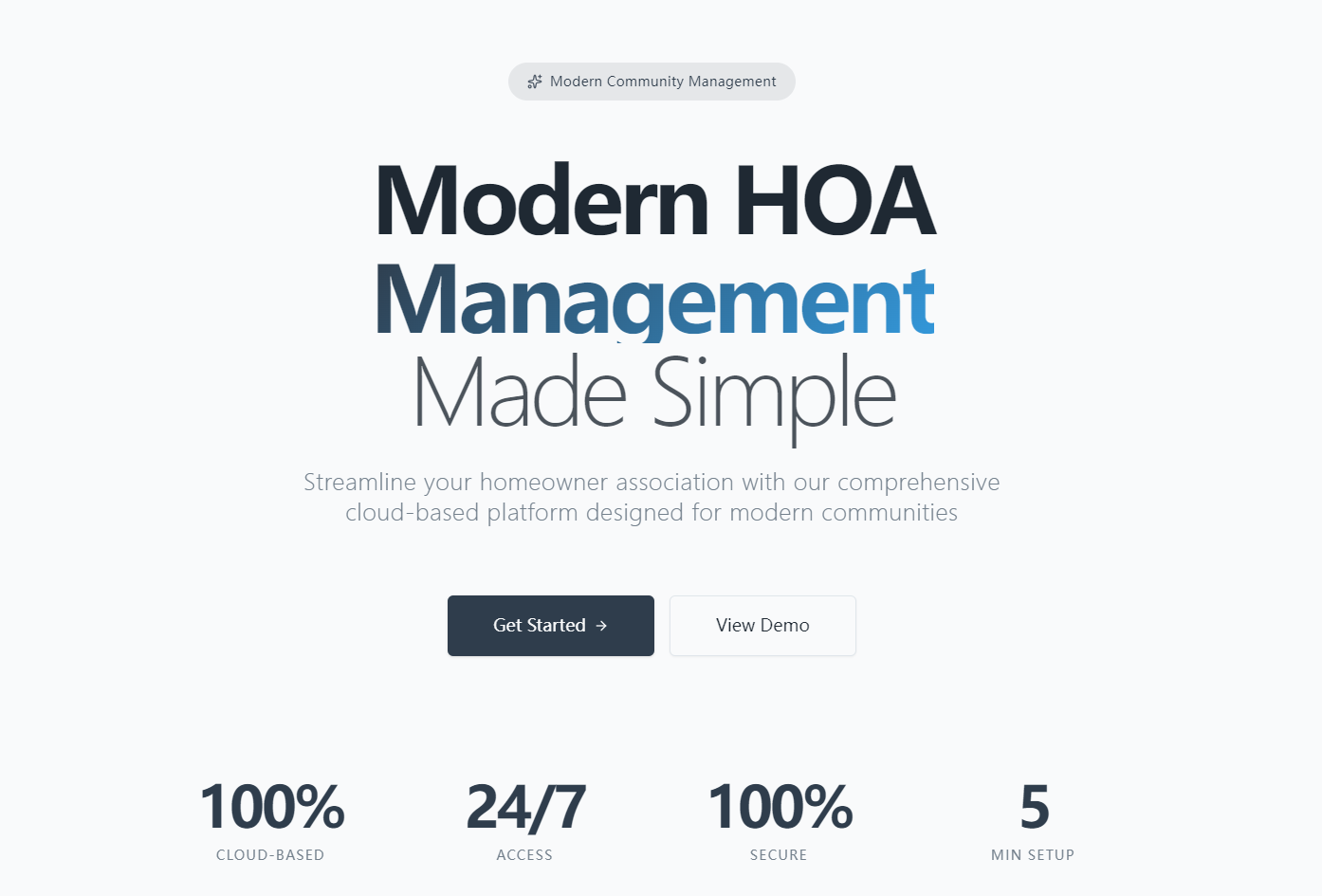
HOA Manager Pro centralizes HOA operations: board members track finances, approve expenses, manage vendors, and run votes; homeowners pay dues, submit maintenance requests with photos, access documents, and stay updated on community news – all in real time, no paper required.
How we built it
We started with mapping core user journeys (board vs. homeowner) to prioritize features. We built the frontend with React for responsive design, backend with Node.js, and hosted on AWS for cloud scalability. We integrated payment APIs (Stripe, PayPal) for secure transactions, PostgreSQL for data storage, and added Twilio for automated alerts. Every feature was tested with local HOA boards to align with real-world workflows.
Challenges we ran into
The biggest hurdle was balancing role-based permissions (board full access vs. homeowner limited access) while keeping the UI intuitive. Payment gateway failures required building robust retry logic and user-friendly error handling. We also struggled with document version control – ensuring homeowners only saw the latest docs while boards retained edit/archive capabilities.
Accomplishments that we're proud of
We built a platform where maintenance requests are submitted in <2 minutes (meeting our acceptance criteria) and financial reports export in 3 clicks. The two-factor auth for board members adds critical security, and users consistently praise the transparent voting system – anonymous, verifiable, and results-ready in 1 minute post-voting close.
What we learned
We deepened our understanding of HOA regulatory and operational nuances – every feature had to align with real community governance rules. We also learned the value of iterative testing: early feedback from board members reshaped our budget planning UI from complex to intuitive, and homeowner input simplified the maintenance request form.
What's next for this project
We plan to add AI-powered maintenance trend analysis to predict common issues, build native mobile apps (beyond responsive web), and expand API integrations to include more accounting tools. We also want to add multi-community dashboards for property management companies and refine the forum moderation tools for better community engagement.
Built With
- achapi
- paypalapi
- quickbooksapi
- stripeapi
- xeroapi

Log in or sign up for Devpost to join the conversation.