-
-
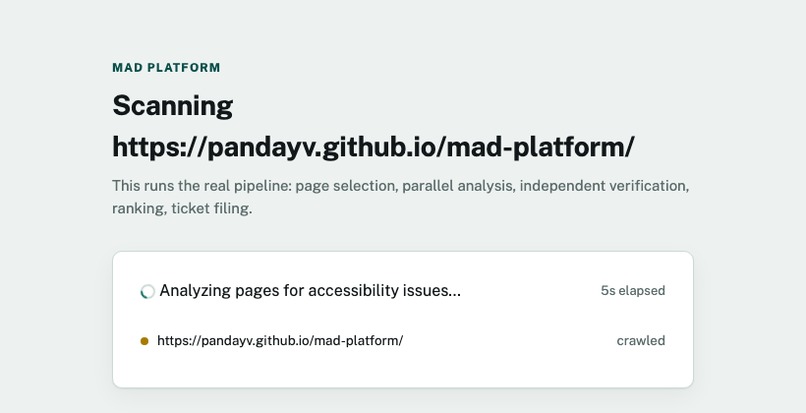
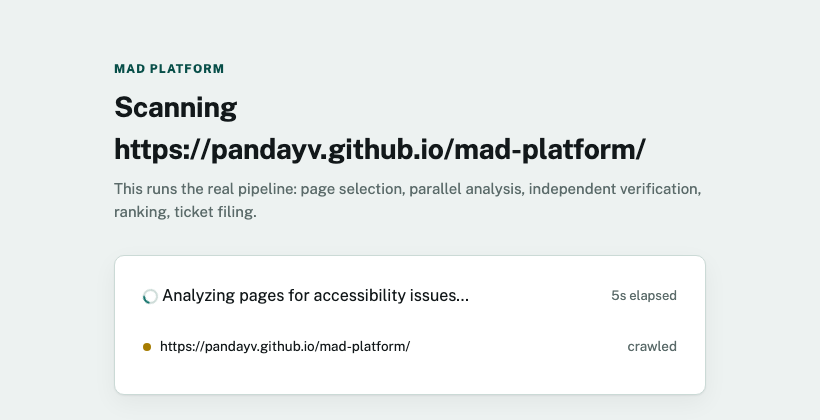
Live scanner screen.
-
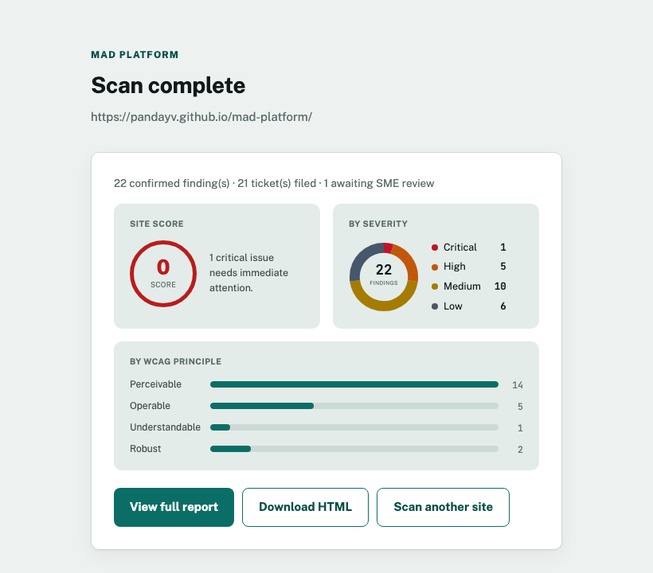
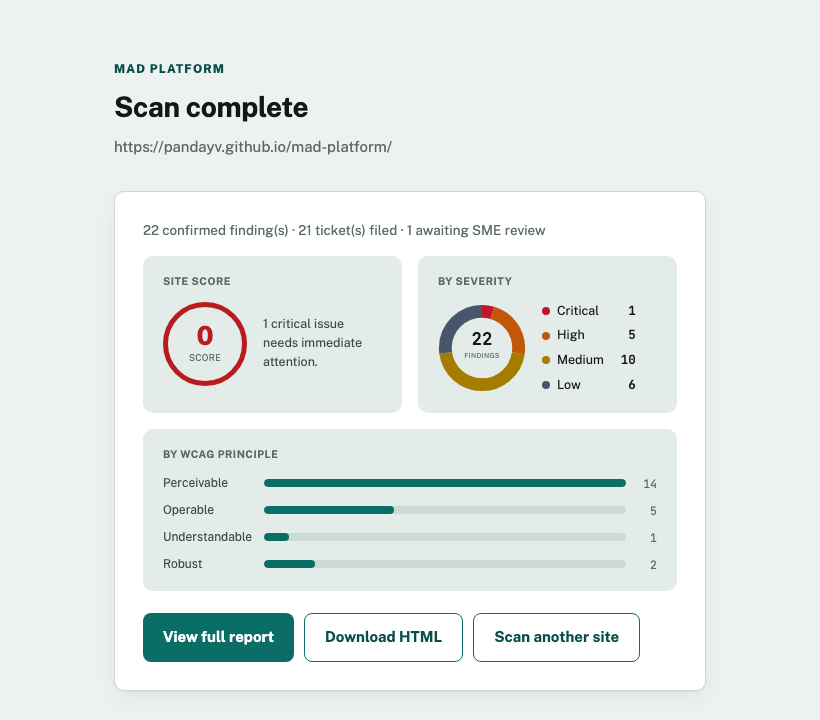
A quick dashboard view for result of digital accessibility issues. Detailed (Full) report available
-
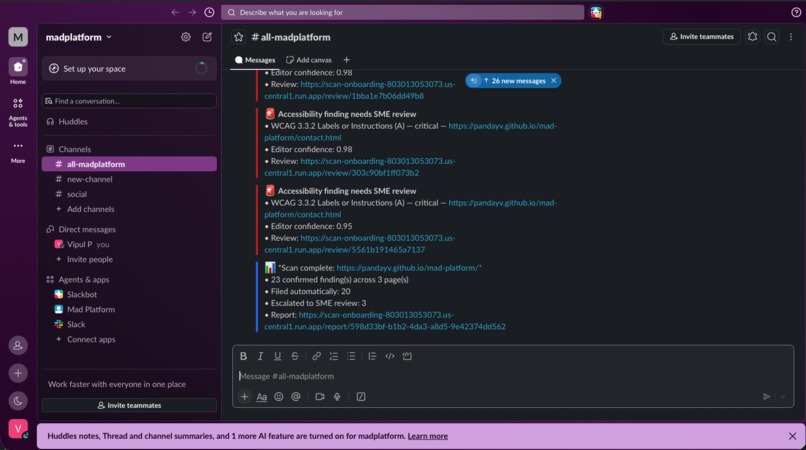
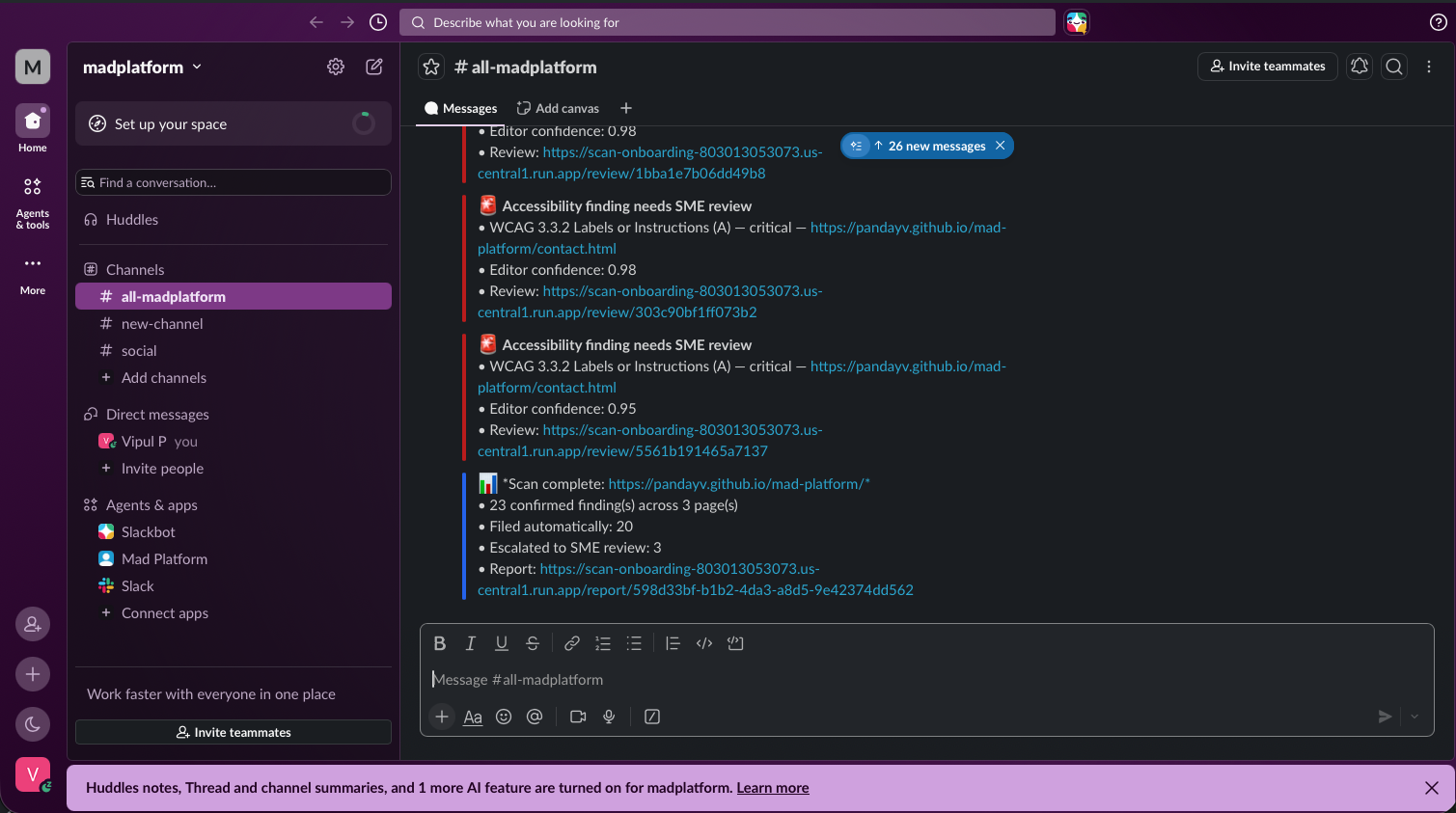
instant slack alert on completion of scanning, pattern mined or for wcag updates.
-
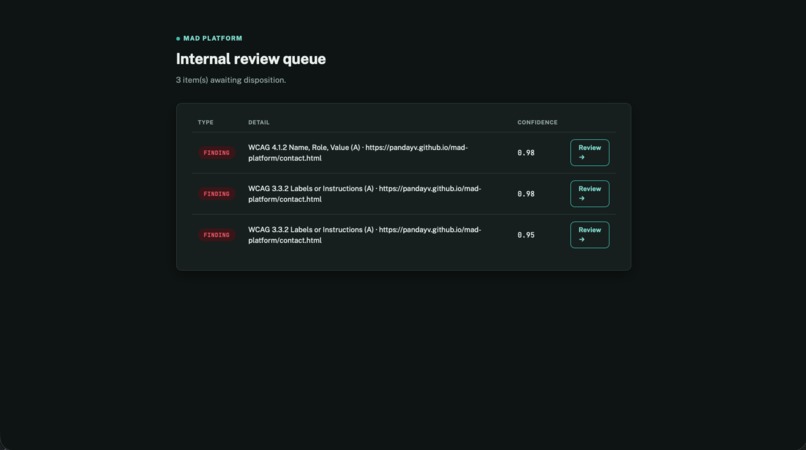
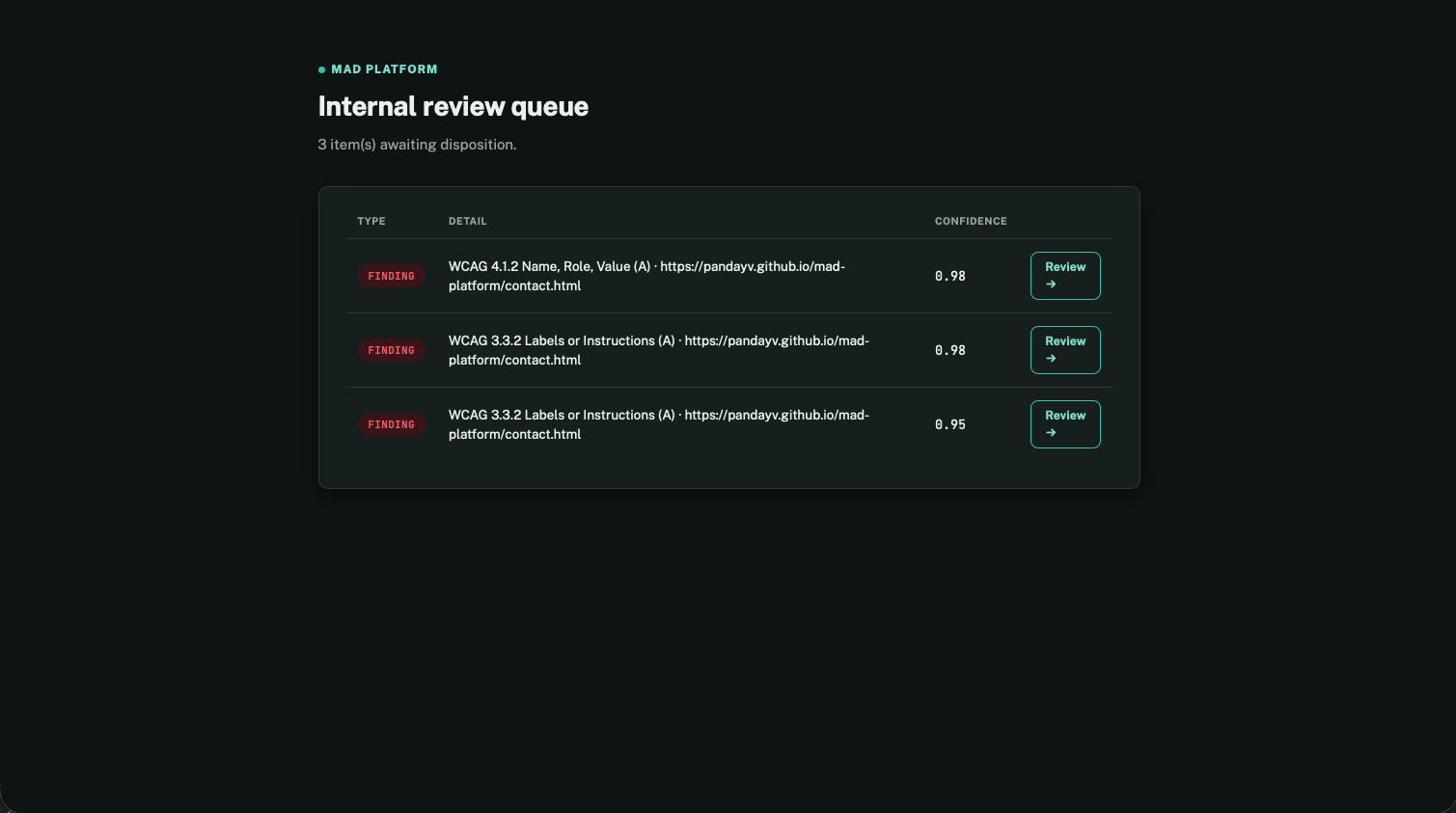
a central SME review hub with 3 separate pipelines landing in one central place
-
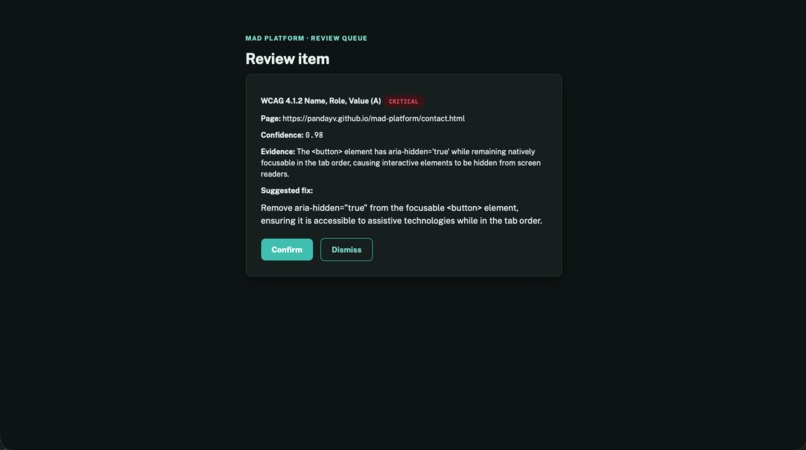
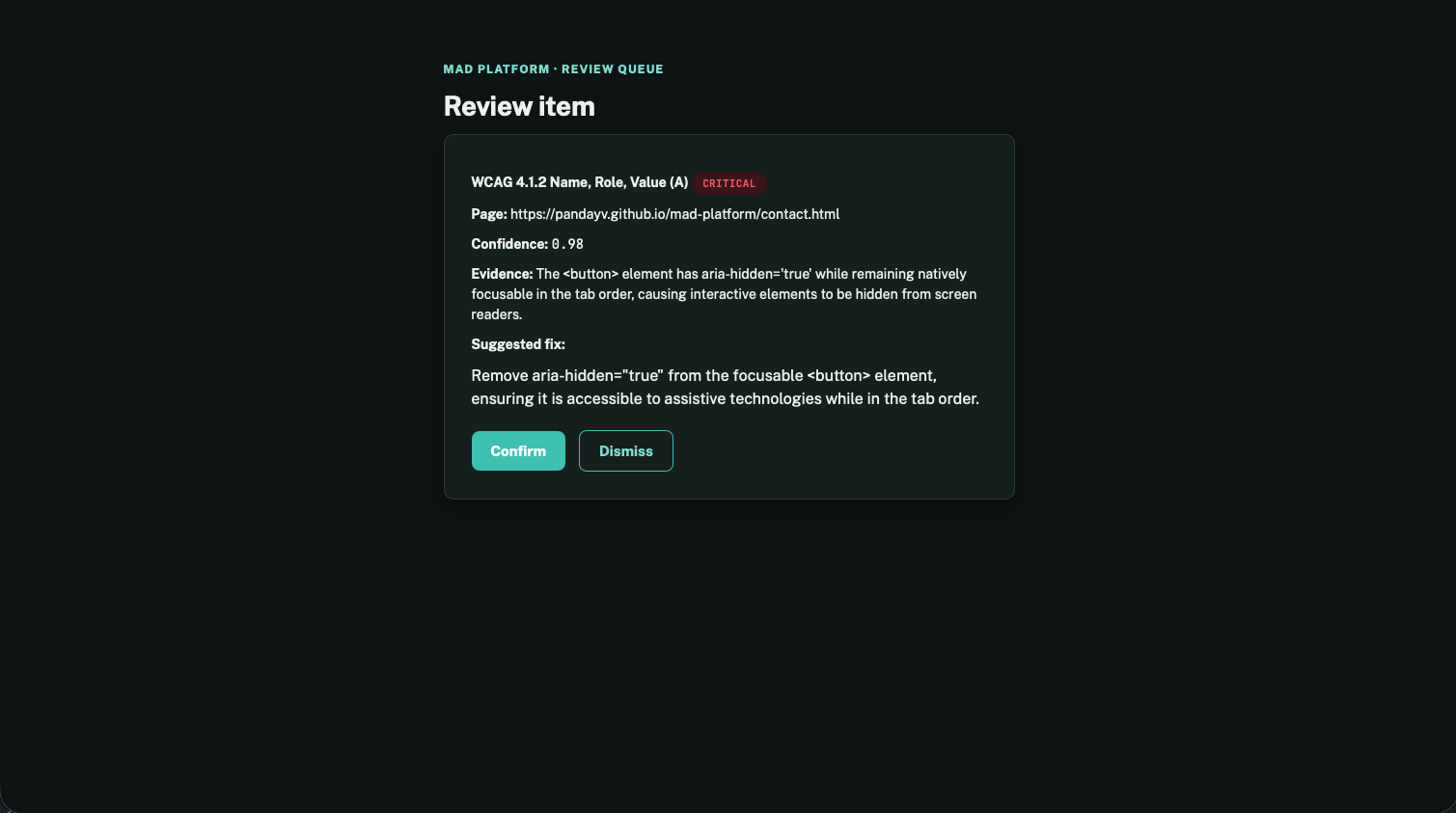
Detailed request for human review.
-
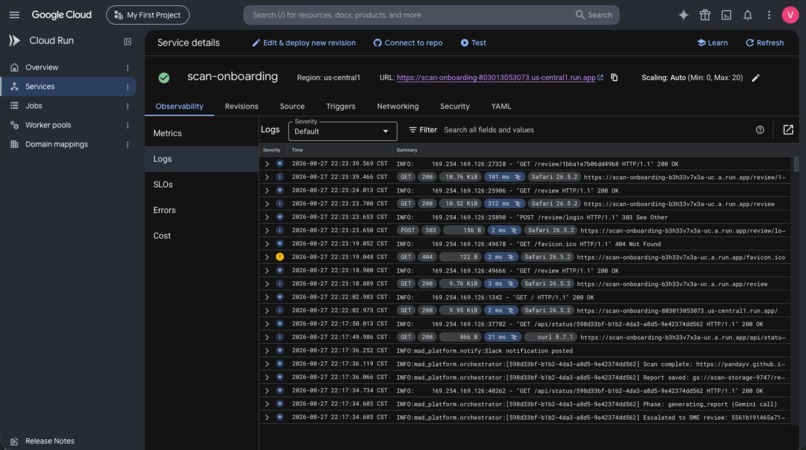
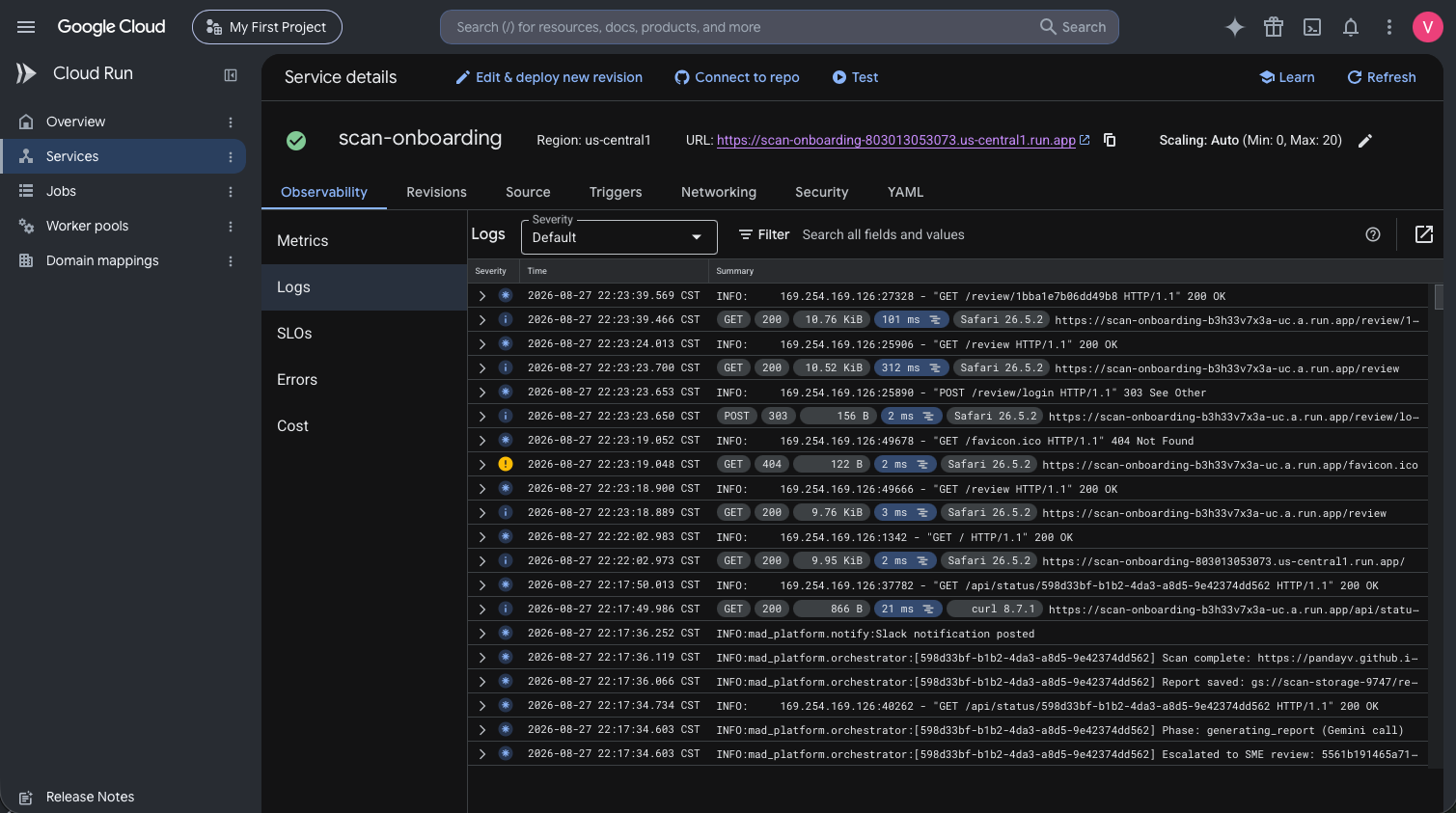
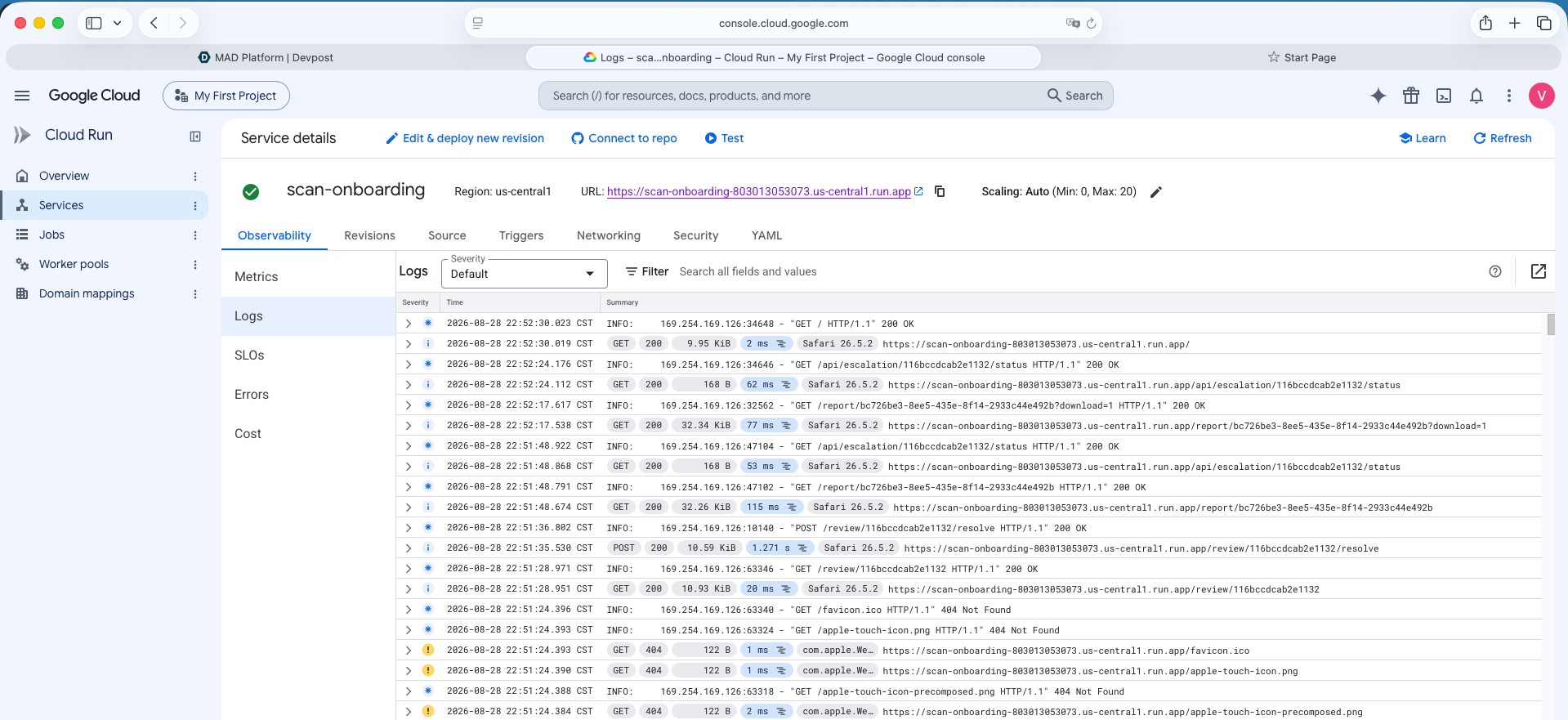
run time logs showing core review pipeline running on google cloud
-
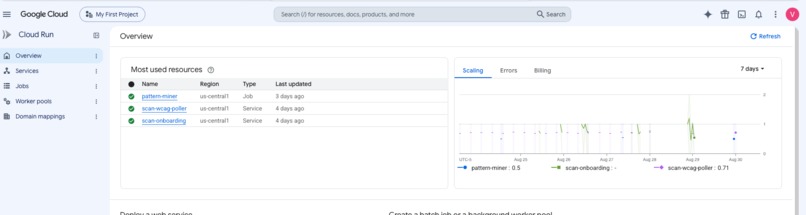
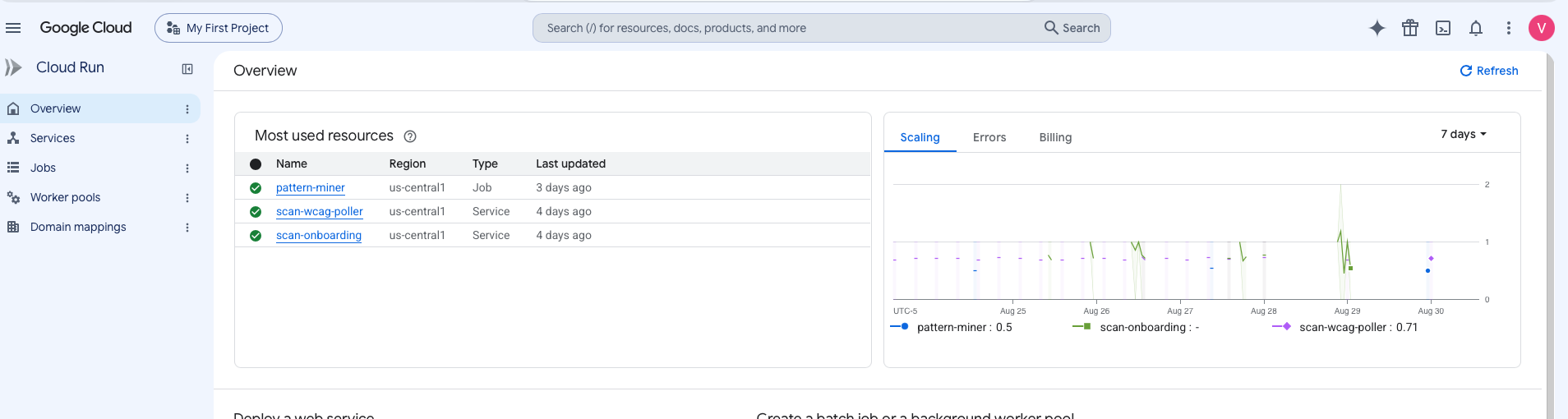
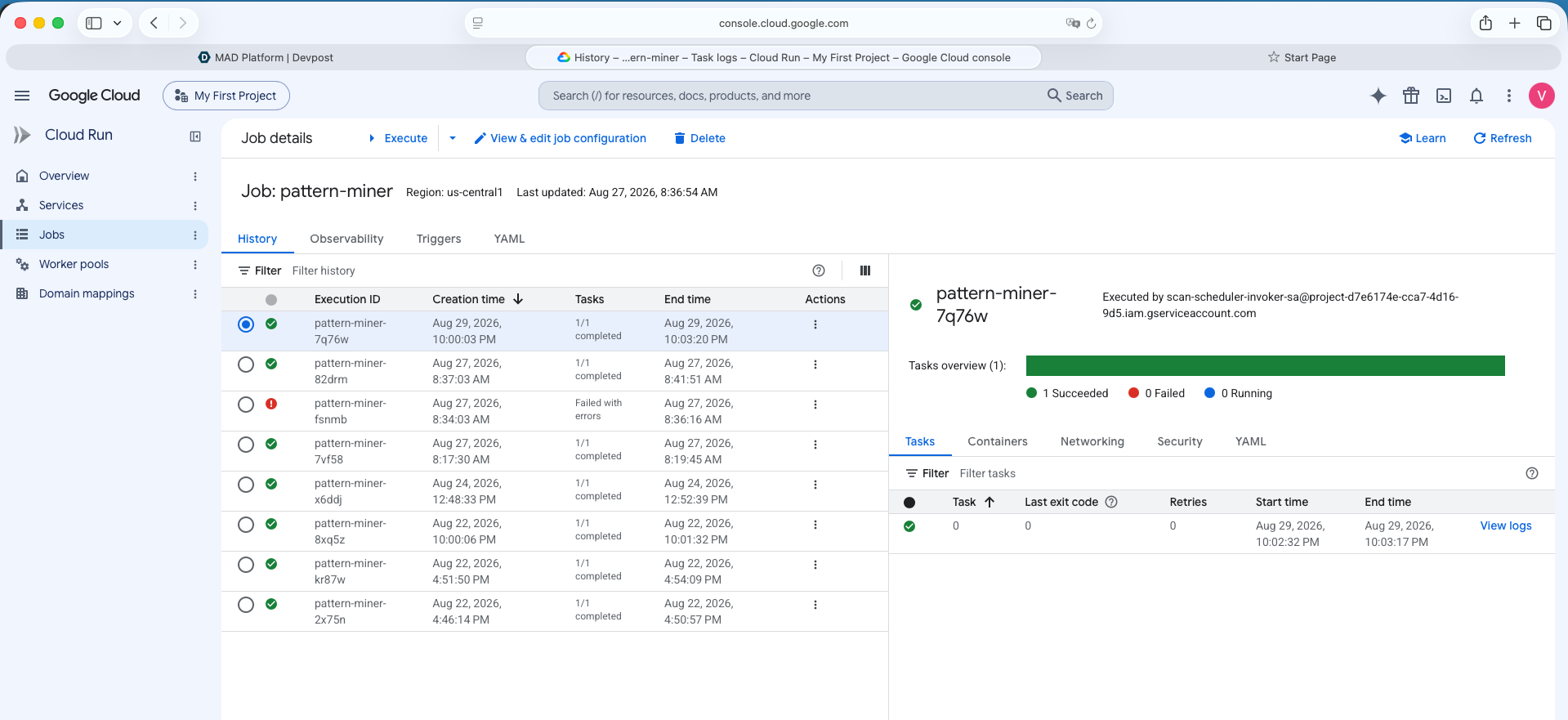
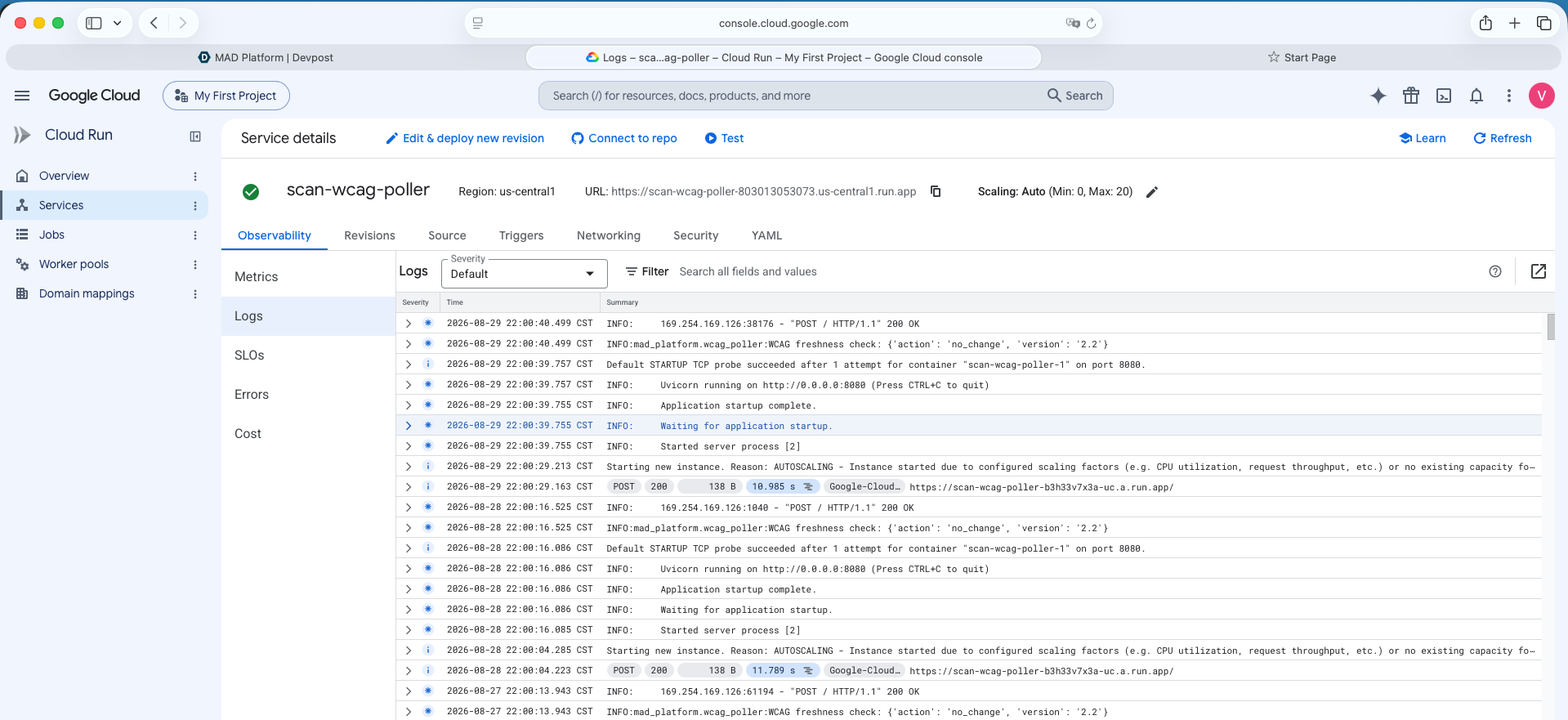
Agentic services used in the project - core review pipeline, pattern miner and wcag RAG update
-
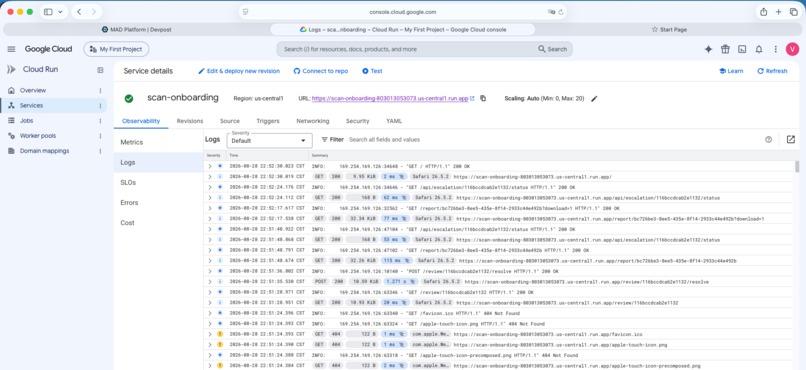
Core review pipeline
-
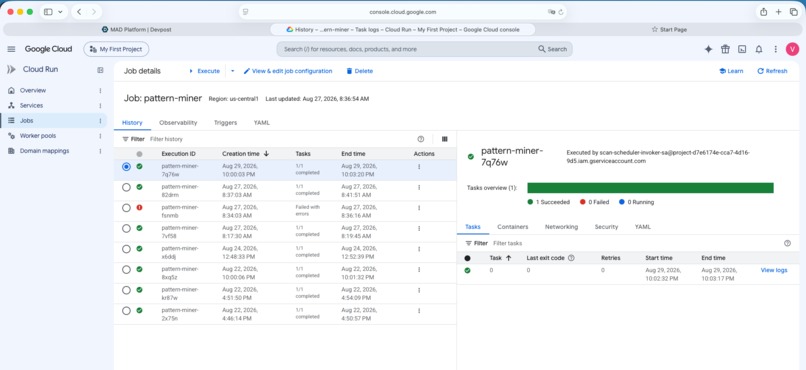
Pattern miner to find patterns from editor's dismissal history to continue improving analysis
-
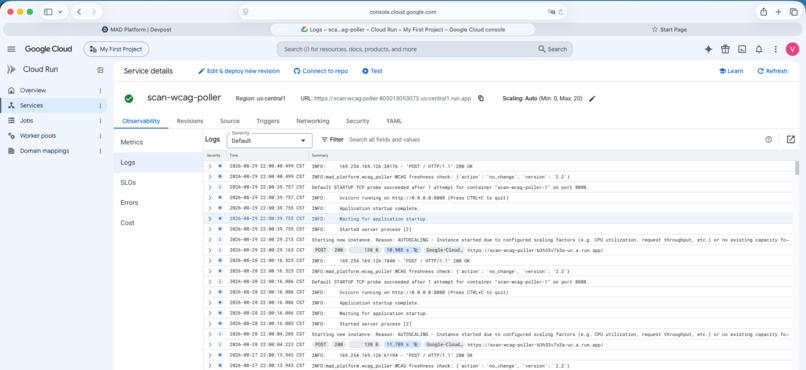
WCAG poller to automatically update WCAG knowledge base when there is a change
Inspiration
The internet is broken. 96% of the web's most visited sites fail basic accessibility tests, and for someone disabled, someone using a screen reader, that's not a statistic - it's most of the internet simply not working.
But besides an ethical issue, for small business owners, it's also a legal one: Website-accessibility lawsuits (ADA-related, in the US) are a real and growing risk for small businesses, most of whom have no practical way to know they're exposed. Over 5,000 digital accessibility lawsuits are filed in the US every year and ten times as many demand letters for every one that reaches court. A 5-figure settlement can be the difference between staying open and closing the shop, usually with no warning before the letter arrives.
That last part is what made it personal. In risk and compliance work, the pattern repeats everywhere: compliance is an afterthought, handled once the problem is already at the door, not built in from the start.
MAD Platform removes that blind spot. I wanted something that closes the entire loop, finds the real issues, checks its own work, acts on what's confirmed, stays current with the guideline changes and keeps getting better from its own history.
Protecting small businesses and fixing internet for everyone are the reasons why I built the Multi-Agent Defense Platform for Accessibility Compliance - the MAD Platform
What it does
A user provides a URL to start an accessibility check.
MAD Platform accepts the URL, scans the site structure, identifies key pages, and checks them for accessibility violations grounded in the WCAG knowledge base, not the model's memory. Findings are then independently verified by a separate agent before being accepted, and false positives get dismissed with a documented reason, not silently dropped.
After this review, an actionable report and real Jira tickets are created automatically, and an alert is sent through Slack. No export, no manual steps, no follow-up for most findings. Low-confidence or critical findings are routed instead to a human review queue for a decision, with the same instant Slack alert either way.
The platform is designed to get better on its own. A scheduled check keeps the WCAG knowledge base current, auto-refreshing for routine updates and asking a person first for anything structural. Separately, a second, self-hosted model mines the system's real dismissal history for patterns; once an SME confirms one, it grounds every future scan.
It's live on Google Cloud. A deployed product handling real scans right now, checkpointed so it resumes cleanly if anything interrupts it.
How we built it
The stack: Google ADK, Gemini via Vertex AI, a self-hosted Gemma on its own Cloud Run Job, and Google Cloud (Cloud Run, Firestore, Cloud Storage, Cloud Scheduler, Secret Manager).
Five single-purpose agents, Orchestrator, Analyst, Editor, Reporter, Action Agent, each doing exactly one job. They're composed through the orchestration pattern each step actually needs: sequential where order matters, parallel for independent per-page checks, and dynamic delegation reserved for the couple of points that are genuine judgment calls, not sprinkled throughout.
Every real-time model call runs through ADK's LlmAgent and Runner, not a raw SDK call, with the same bounded timeout and retry regardless of which integration path it goes through, Gemini direct, ADK, or self-hosted Gemma, so no call in the pipeline can hang or fail silently.
State is real, not simulated. Every stage checkpoints to Firestore as it finishes, a page's checkpoint only ever moves forward and never silently regresses on a resume, and a crash or redeploy picks up from the last completed stage instead of restarting from scratch.
WCAG citations are grounded in retrieved standard text, not a model's unaided recollection, with one embedding call grounding a whole page's findings rather than one call per finding. Every irreversible action (filing a ticket, refreshing the knowledge base, adopting a mined pattern) is idempotent, human-gated, or both.
Security is enforced at the tool level, not just documented: four least-privilege service accounts, one per component, with per-secret access instead of project-wide grants; two separate access codes for the public scan form and the internal review queue; and a guard on the crawler that refuses to fetch private, loopback, or cloud-metadata addresses, closing off the obvious way a public URL-scanning endpoint could be turned into an attack surface against its own infrastructure.
Challenges we ran into
- No Pro-tier Gemini model exists at the "3.5+" floor this hackathon requires, so the whole model-selection strategy was re-tiered around Flash-lite and Flash instead.
- A production scan hung indefinitely with zero error, traced to a single Vertex AI call with no client-side timeout configured at all. Fixed with a bounded timeout and retry, applied consistently to every model call in the pipeline, not just the one that broke.
- Deciding what not to build. Features and architecture were carefully scoped to ship a complete, working product without overshooting the timeline.
Accomplishments that we're proud of
MAD Platform is already a real, live, deployed product that can be used by a small business today. It runs the full pipeline end to end on a real Cloud Run URL: crawl, analyze, verify, rank, act, report, backed by real Firestore checkpointing, a real Jira board, real Slack alerts, and a WCAG knowledge base that keeps itself current.
Beyond that: a second model, running on local infrastructure, mines system's judgment history for patterns, closing a real feedback loop from raw usage data to a different, better outcome on the next scan.
Strong architectural and design choices for future-proofing, and for ensuring a responsible, trusted solution. That means, practically, this platform could be put to use today with almost no upkeep afterward. It keeps healing itself against WCAG and pattern changes for years, automatically for routine updates, with a person looped in only when something structural changes.
What we learned
- You don't orchestrate the whole system at once, you pick it step by step. Only let the AI decide what happens next when there's an actual decision to make, not because it feels more impressive.
- It's not enough to think about how the system will work. It's just as important to think about how it could fail.
- Models can make mistakes if you rely on them completely. Grounding them with a knowledge base helps produce more consistent results.
- Responsible AI isn't about adding caution everywhere. It's knowing which actions are actually costly or hard to undo, and slowing down for those. Grounding decisions in facts. Everything else can run on its own.
What's next for MAD Platform
MAD Platform is designed to protect small businesses from digital accessibility non-compliance. Therefore, the next logical evolution for the platform is ongoing protection. A business signs up once and stays covered for good, with the platform watching, fixing, and filing on its own as the standards (already done) or site itself keeps changing.
The bigger opportunity is what happens to the self-improvement loop as more businesses use it. At scale, it learns across every site it protects, so the second business benefits from what the first one already taught it.
Compliance shouldn't be something only big companies can afford to get right. That was the whole point from the start. Turning this from a hackathon build into something real small businesses actually use is what's next.

Log in or sign up for Devpost to join the conversation.