-
-
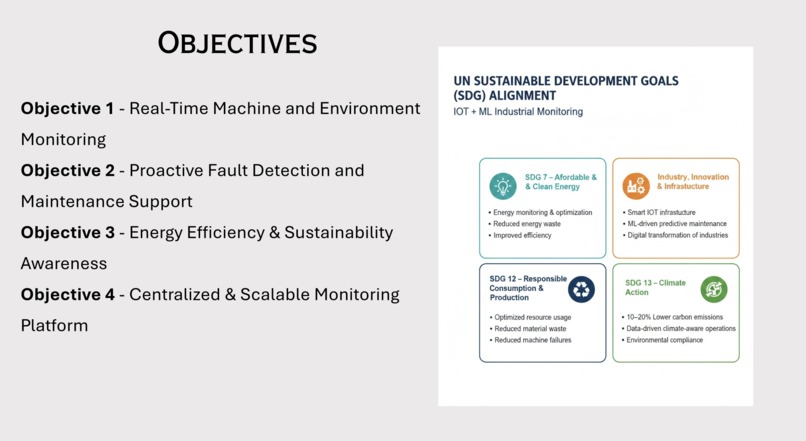
Objectives
-
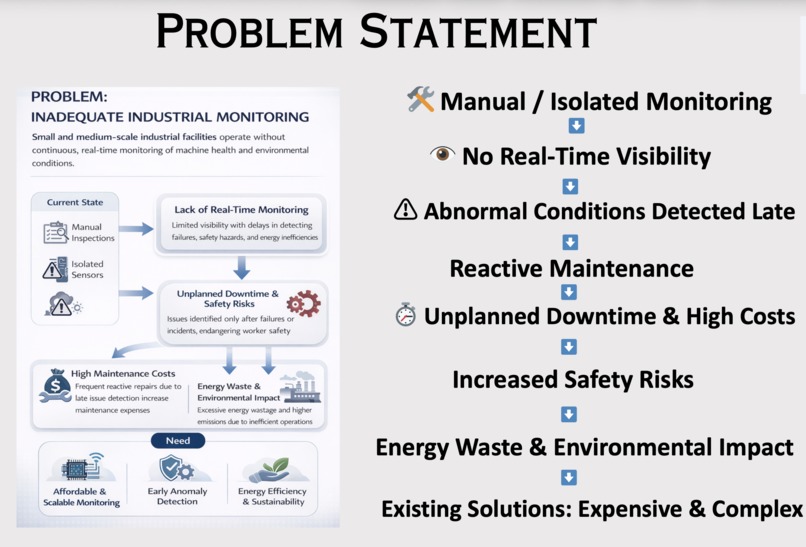
Problem Statement
-
Proposed Solution
-
Novelty
-
Architecture
-
Architecture
-
IoT
-
Tech Stacks used
-
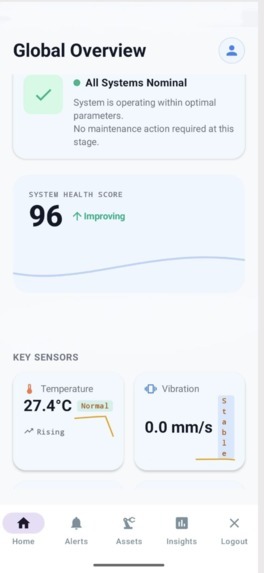
Live Dashboard
-
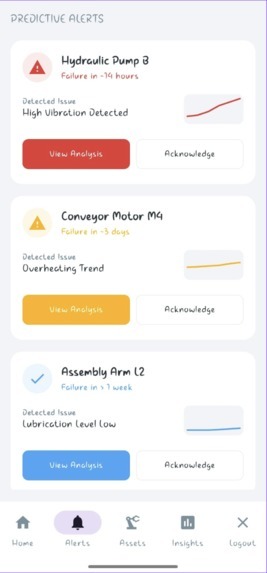
History
-


Inspiration
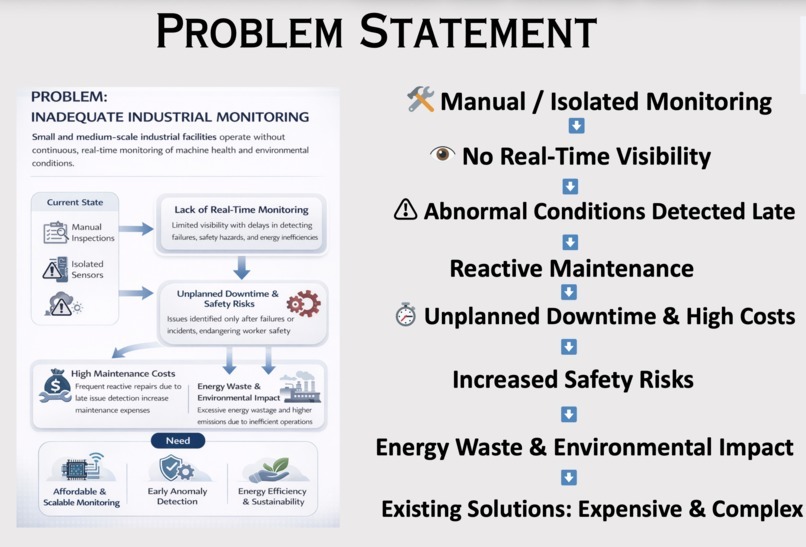
Modern industries operate in a reactive manner, where problems are addressed only after failures such as machine breakdowns, energy spikes, or safety hazards occur. This leads to excessive energy consumption, material waste, unexpected downtime, and environmental damage. With industries contributing nearly 30% of global energy consumption, there is a critical need for intelligent and proactive systems. As AIML students, we were inspired to shift industries from reactive to predictive and smart operations by leveraging IoT and Machine Learning. Machine-Guard AI creates a continuous improvement cycle:
Real-time Monitoring → Early Detection → Predictive Insight → Preventive Action → Reduced Waste → Sustainable Operations
What it does
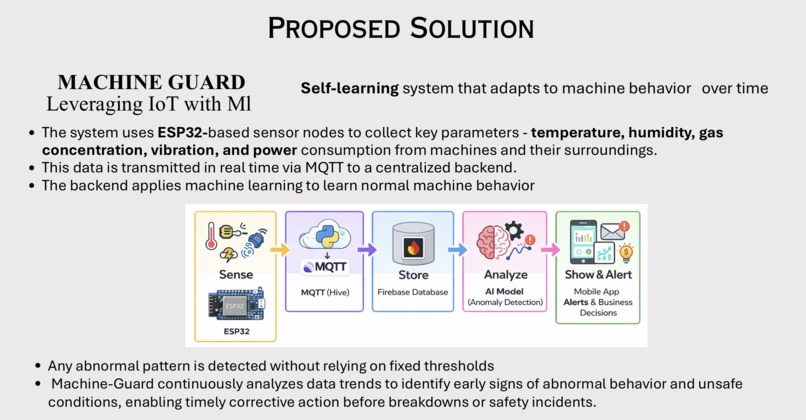
Machine-Guard AI is an intelligent Industrial IoT monitoring system that enhances machine safety, efficiency, and sustainability.
Key Features:
- Real-time monitoring of temperature, vibration, gas, humidity, and power consumption
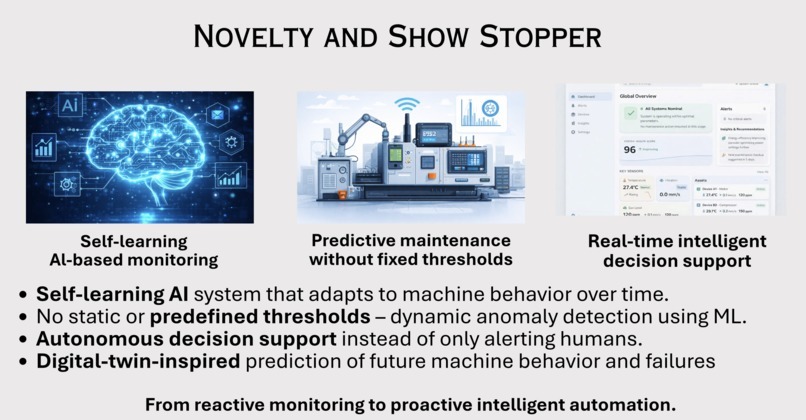
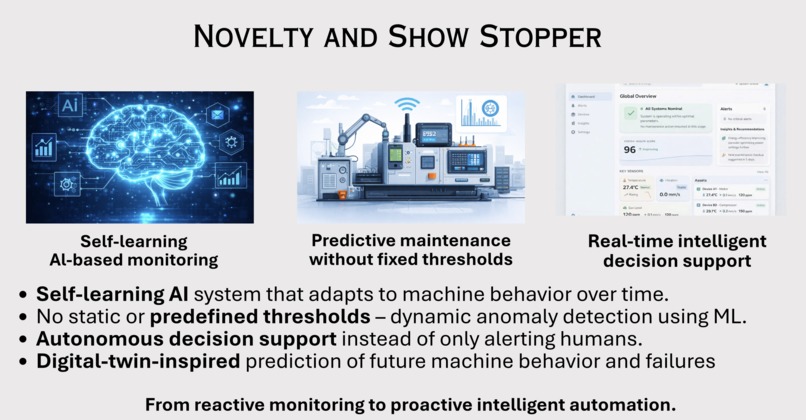
- Hybrid anomaly detection (rule-based + machine learning)
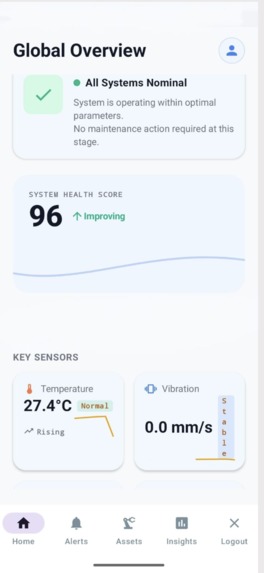
- Machine health score (0–100) for simplified decision-making
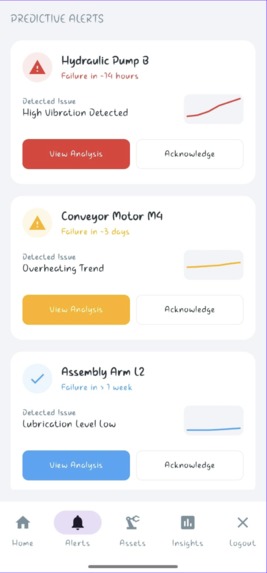
- Predictive trend analysis to detect gradual failures
- Smart dashboard UI with alerts and recommendations
- Energy optimization by identifying inefficient usage
The system not only detects issues but also predicts and suggests actions before failures occur.
How we built it
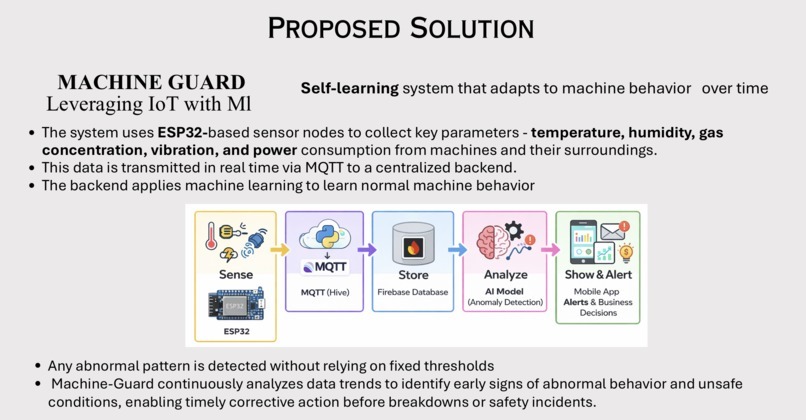
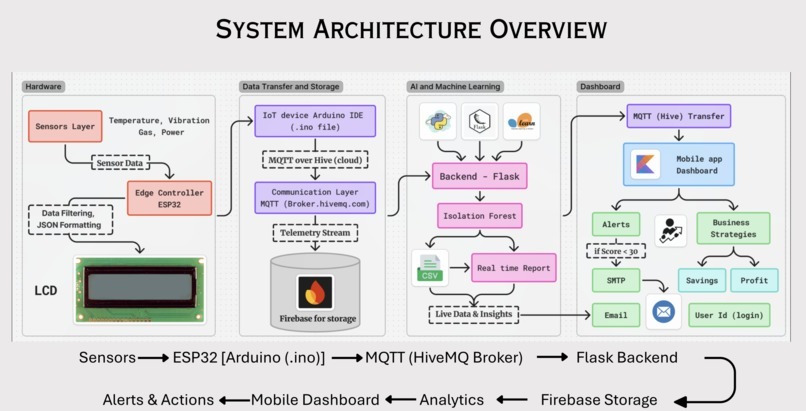
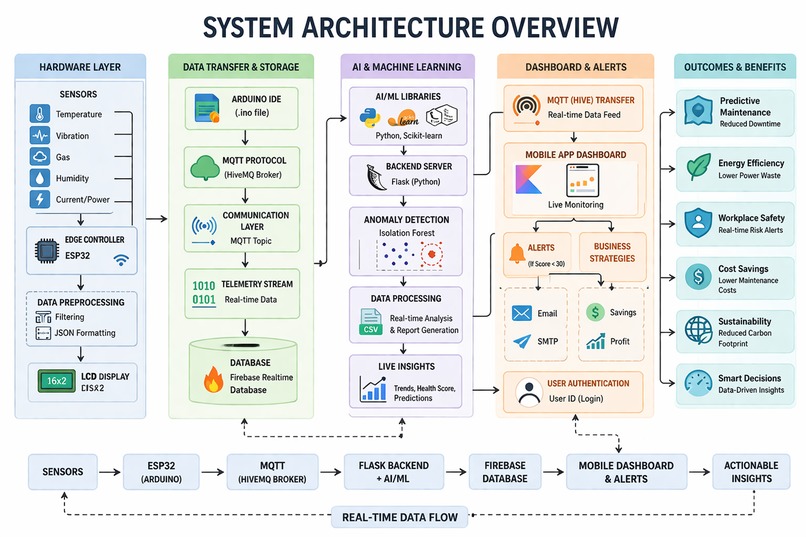
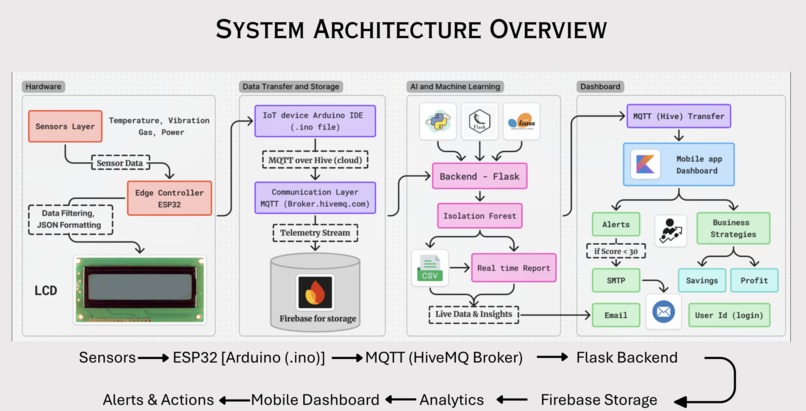
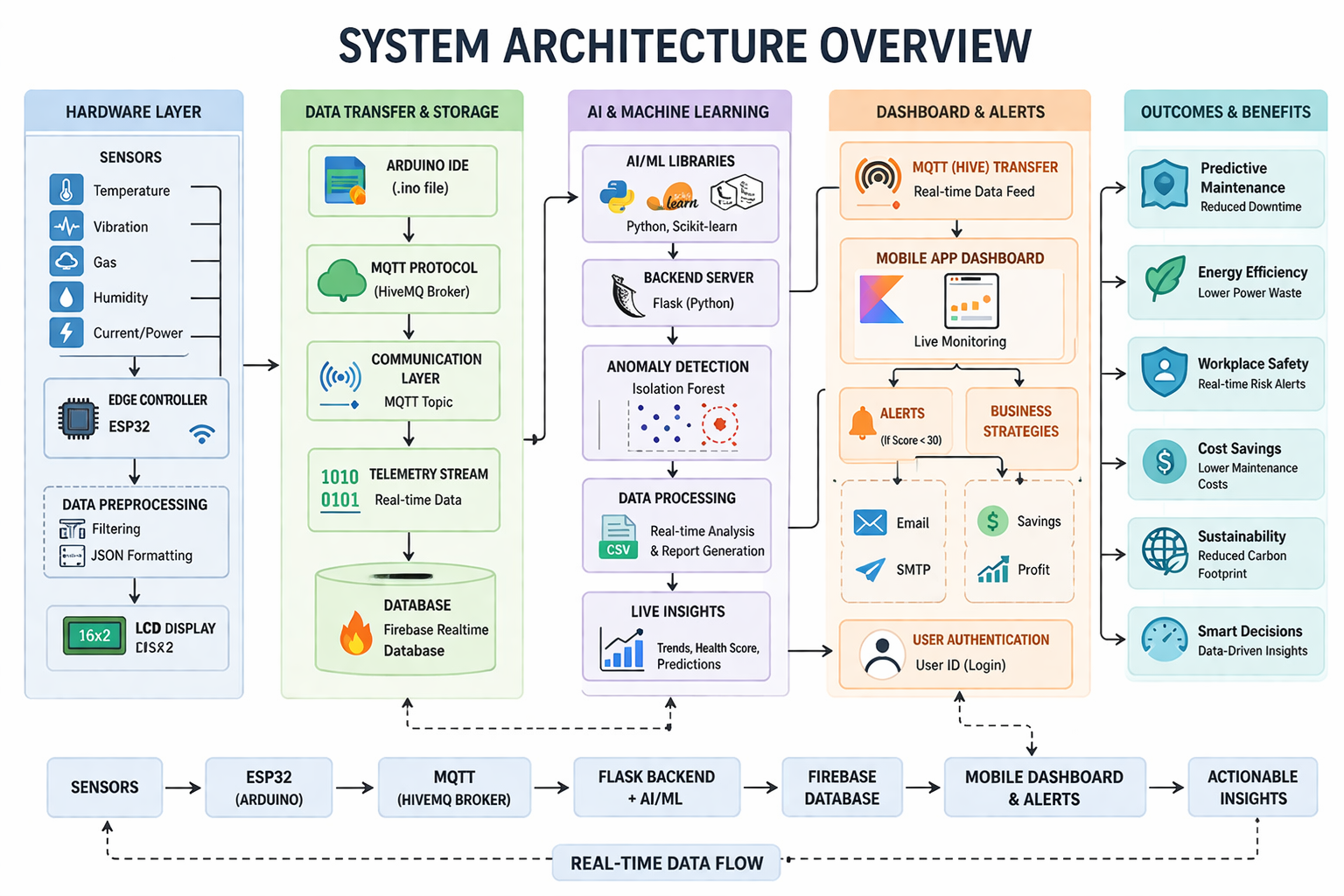
Machine-Guard AI is built as an end-to-end IoT ecosystem:
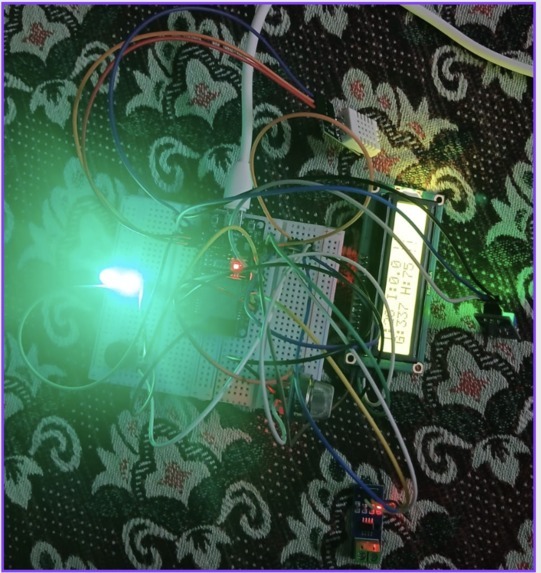
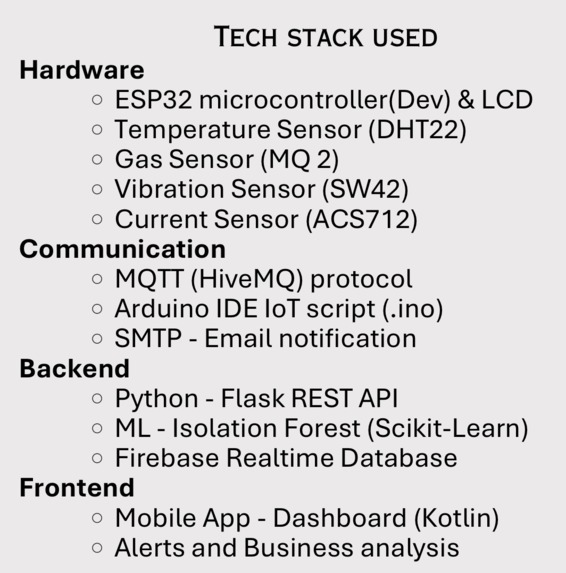
Hardware Layer:
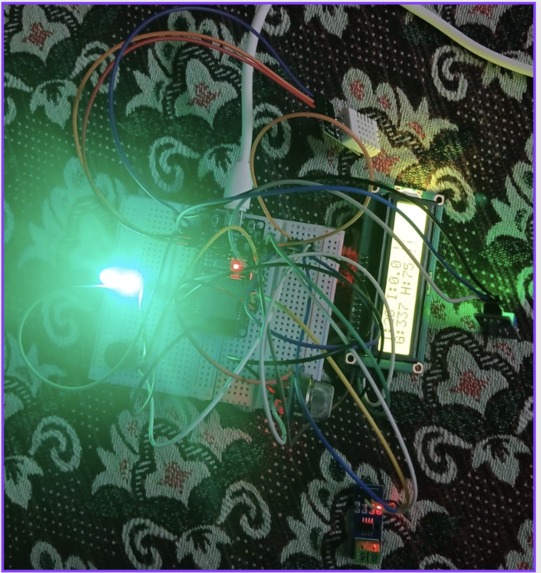
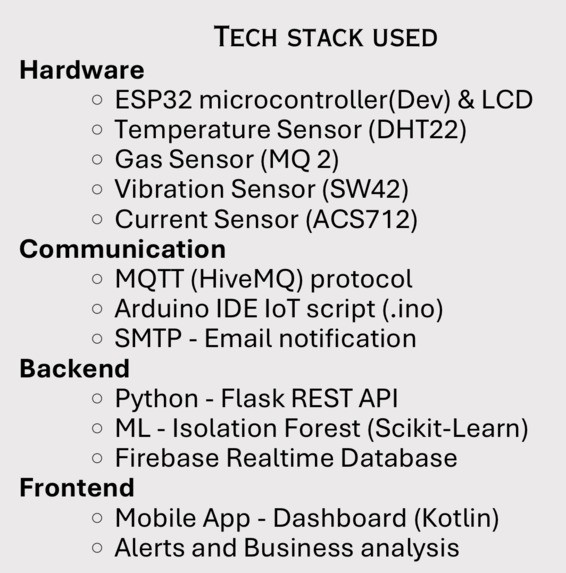
- ESP32 microcontroller
- Sensors: temperature, vibration, gas, humidity, current
Communication:
- Wi-Fi enabled ESP32
- MQTT protocol (HiveMQ)
- Data transmitted in JSON format
Backend:
- Python Flask server
- Paho-MQTT for data subscription
- Hybrid anomaly detection logic
- Health score computation
Storage:
- Firebase Realtime Database
- SQLite fallback
Frontend (UI):
- Mobile/Web dashboard
- Live data visualization
- Health score indicator
- Alerts and AI-based recommendations
Challenges we ran into
- Sensor calibration inconsistencies
- Managing multiple voltage requirements
- Network instability affecting MQTT transmission
- Dependency on public MQTT broker availability
- Integration of hardware, backend, and UI
- Designing a reliable health scoring system
Accomplishments that we're proud of
- Transitioned from manual to autonomous monitoring
- Reduced downtime by 20–40% using predictive insights
- Improved worker safety by 30–50%
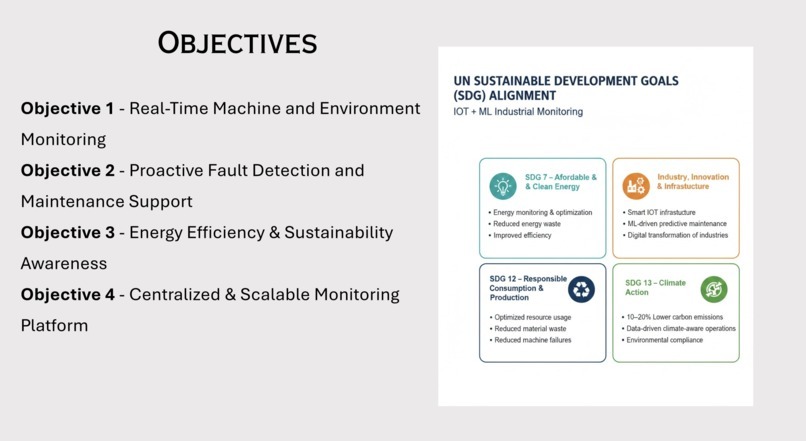
- Reduced energy waste by 10–20%
- Lowered maintenance costs by 15–30%
- Enabled 2–3× faster decision-making
- Developed a machine health score system for easy interpretation
- Implemented hybrid AI detection for improved accuracy
What we learned
- Hands-on experience with IoT hardware (ESP32 and sensors)
- Real-time communication using MQTT protocol
- Backend development using Flask and Firebase
- Designing hybrid AI systems (rule-based and machine learning)
- Implementing predictive analytics using time-series trends
- Debugging using tools like Wireshark
- Solving real-world challenges like voltage mismatches and calibration issues
What's next for MACHINE GUARD AI
- Fall and accident detection using AI
- Unsafe behavior recognition near machines
- Fire and smoke detection system
- Machine guard compliance monitoring
- Edge AI deployment for offline intelligence
- Digital twin integration for advanced simulation
- Carbon footprint and sustainability tracking


Log in or sign up for Devpost to join the conversation.