Inspiration
The battery industry is growing rapidly, but discovering better battery materials is still slow, expensive, and heavily dependent on laboratory trial and error. We saw an opportunity to use AI to move part of this process upstream: helping researchers decide which materials are worth testing before spending time and resources in the laboratory.
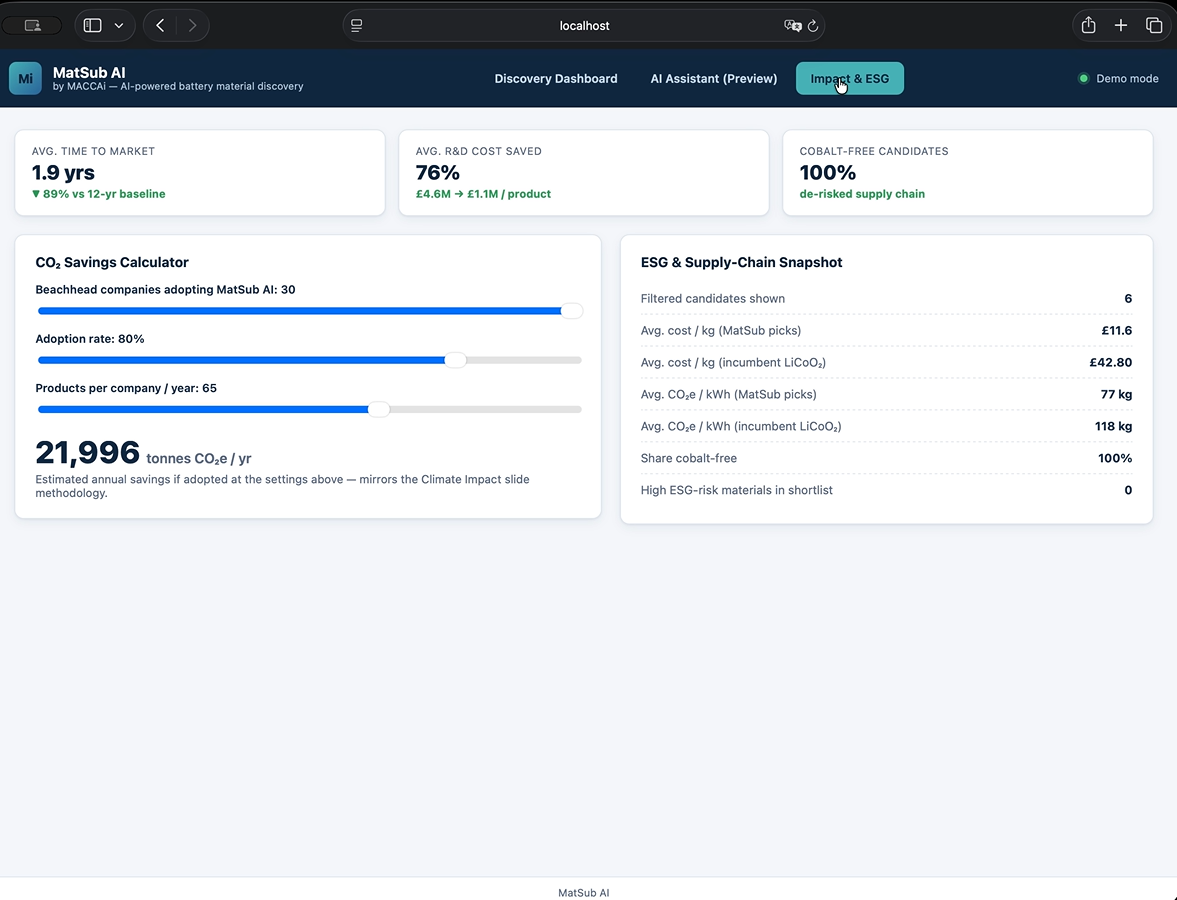
MACCAi was built around a simple idea: battery materials should be evaluated not only by technical performance, but also by sustainability, availability, and supply-chain risk.
What We Built
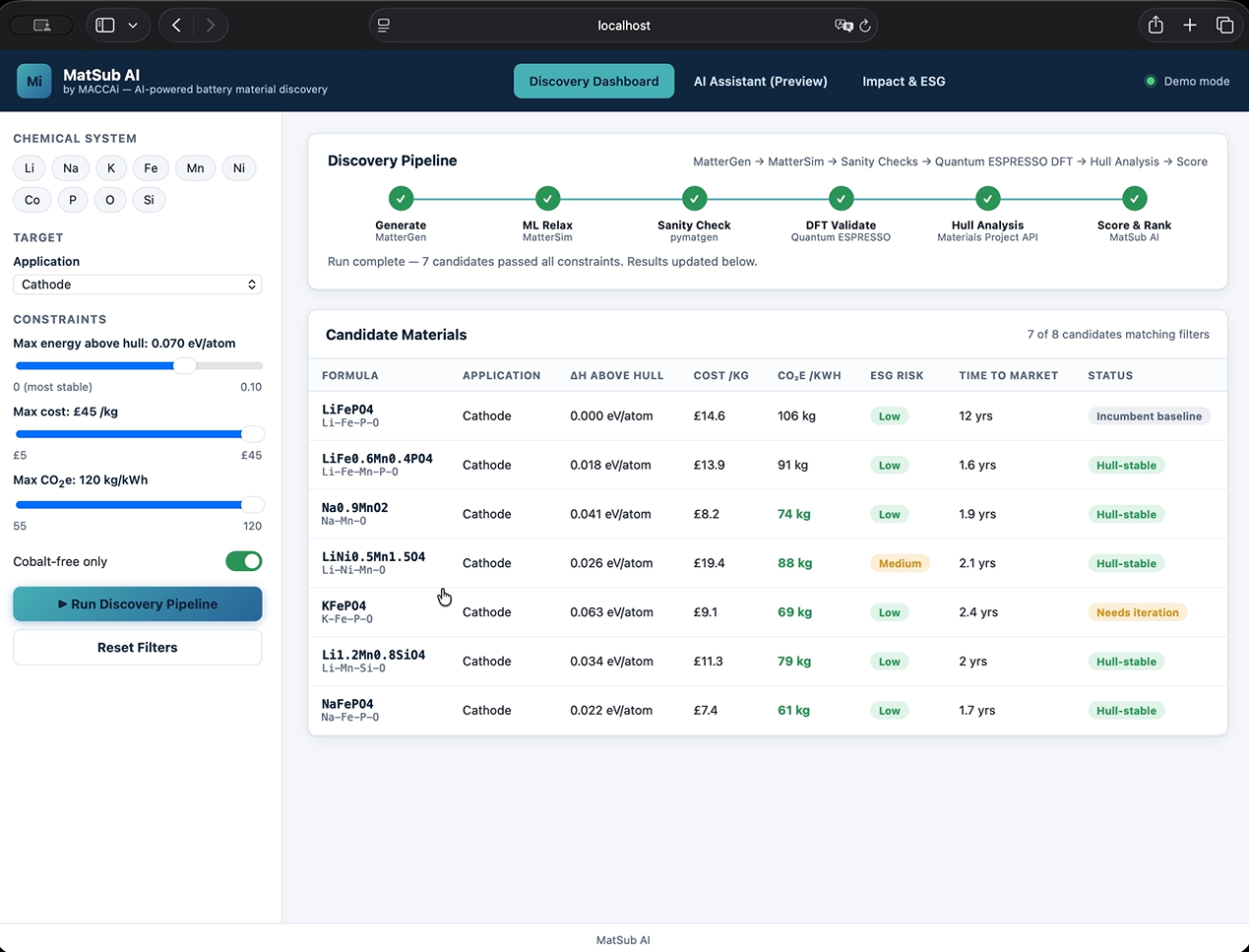
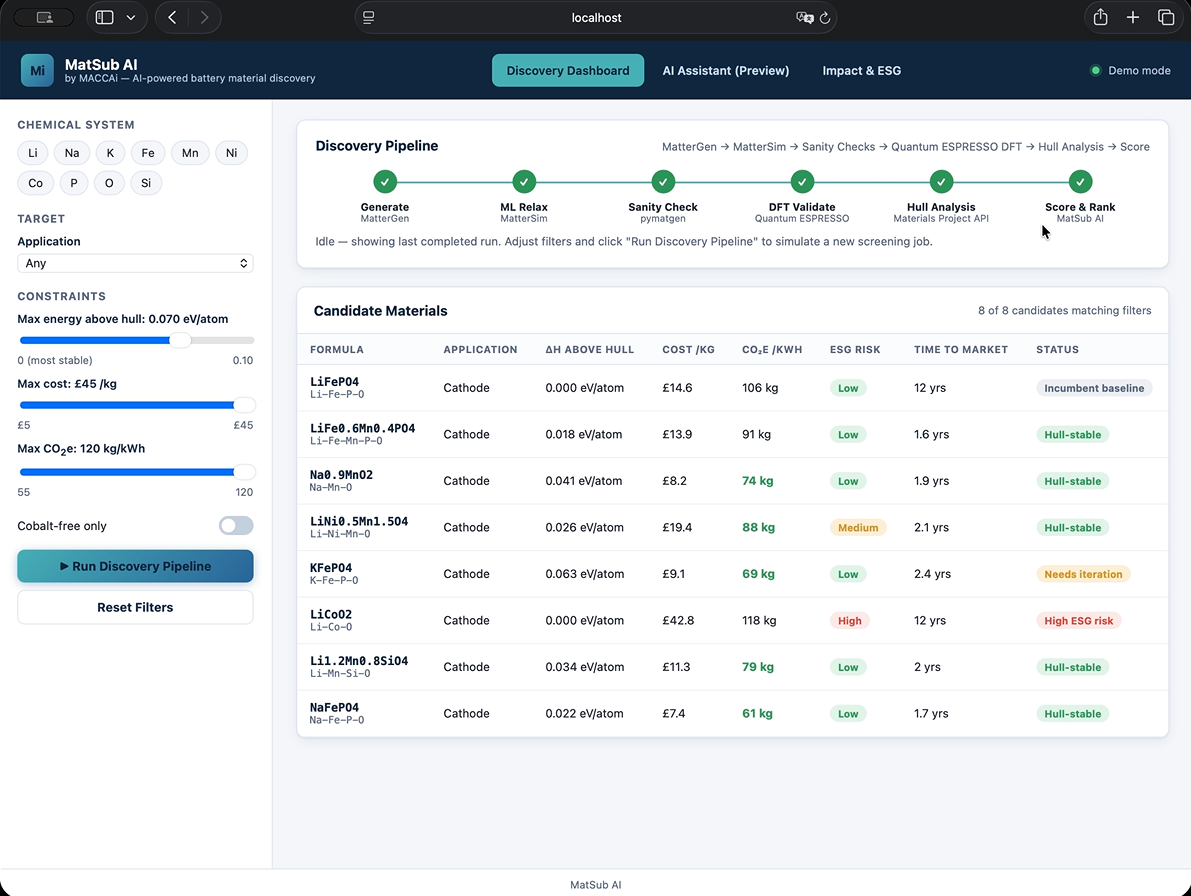
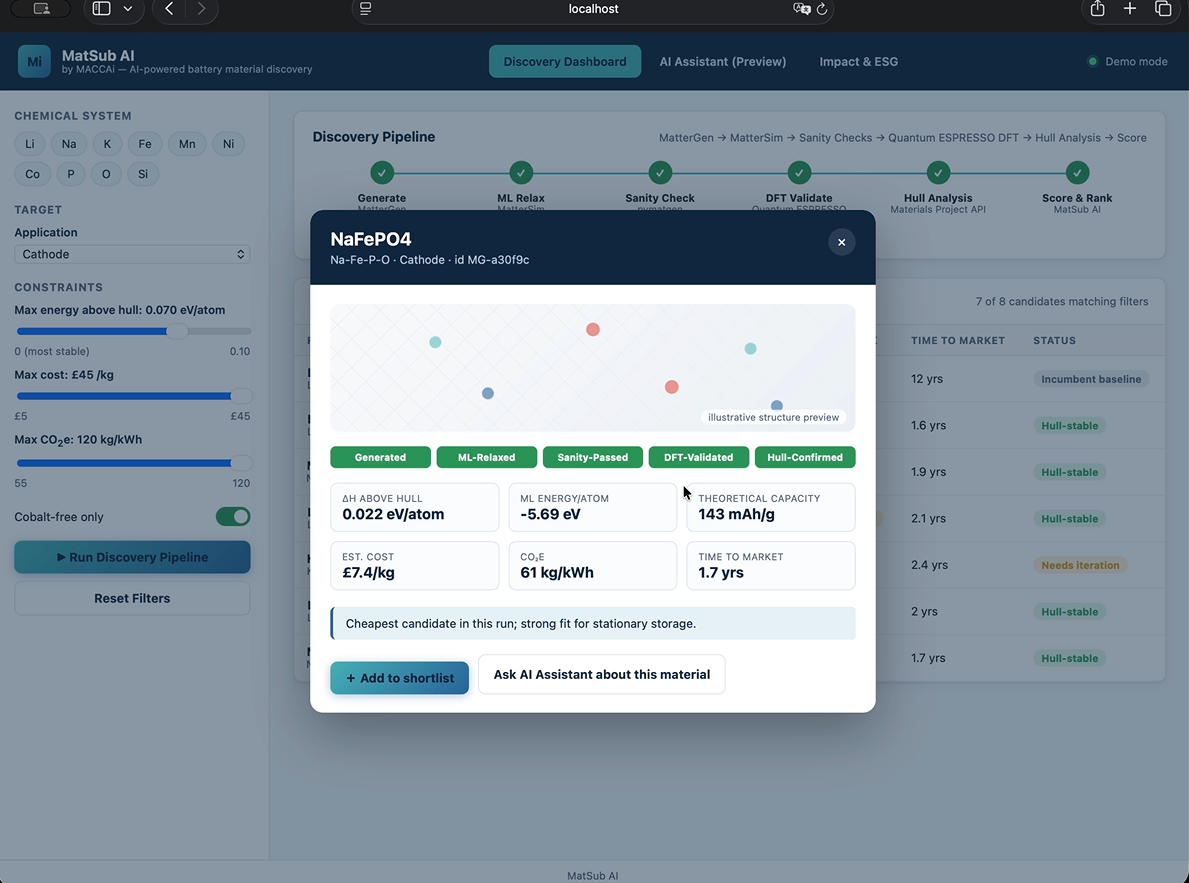
We are developing MACCAi Materials Intelligence, an AI-powered platform that helps battery researchers and companies identify promising material candidates and compare them across technical, environmental, and supply-chain criteria.
The system combines materials data, machine-learning models, sustainability information, and supply-chain intelligence. Users can describe their target battery application and receive AI-assisted recommendations and explanations of which material candidates deserve further investigation.
During the hackathon, we are developing a new AI-native workflow around this capability, using Gemini to make the system easier to interact with and Google Cloud infrastructure to deploy and scale it.
What We Learned
One of our biggest lessons is that material discovery cannot be treated as a simple prediction problem. A material may have strong technical properties but still be difficult to commercialize because of its environmental footprint, limited availability, or dependence on a concentrated supply chain.
This led us to build MACCAi around a broader decision-making process rather than a single performance score.
Challenges
Our main challenges are data quality, integrating different scientific datasets, validating AI predictions against reliable materials data, and making complex scientific outputs understandable to non-specialist decision makers.
We are addressing these challenges through structured data pipelines, model validation, human review, and explainable outputs.

Log in or sign up for Devpost to join the conversation.