-
-
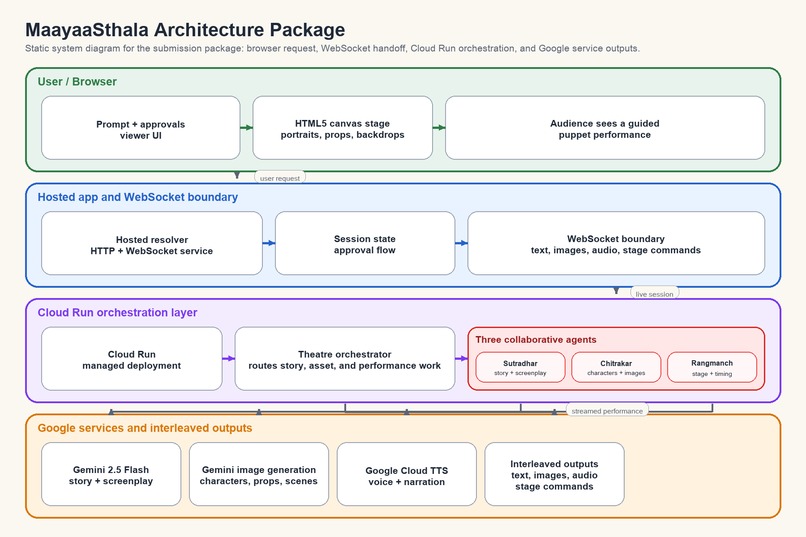
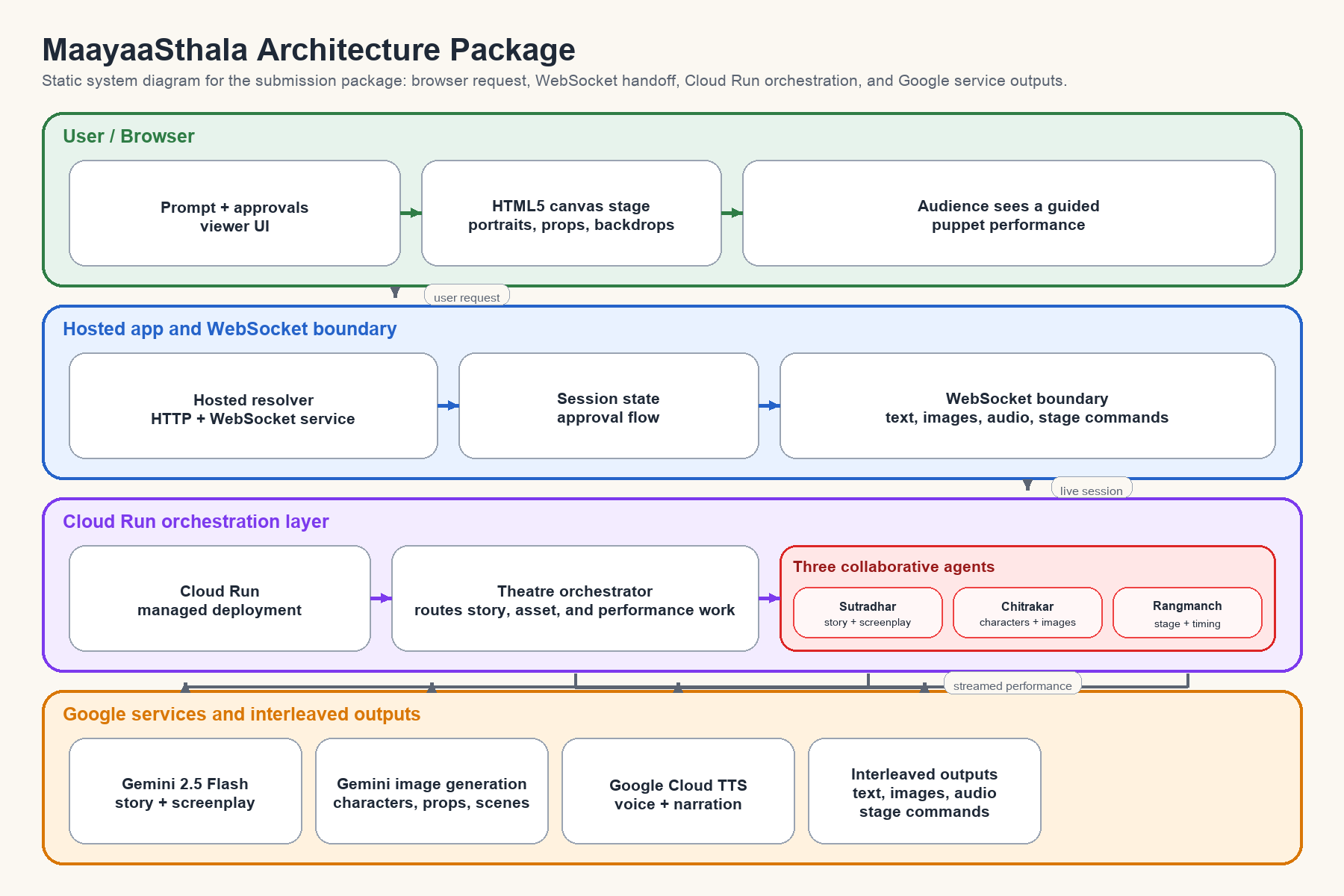
Architecture-Diagram
-
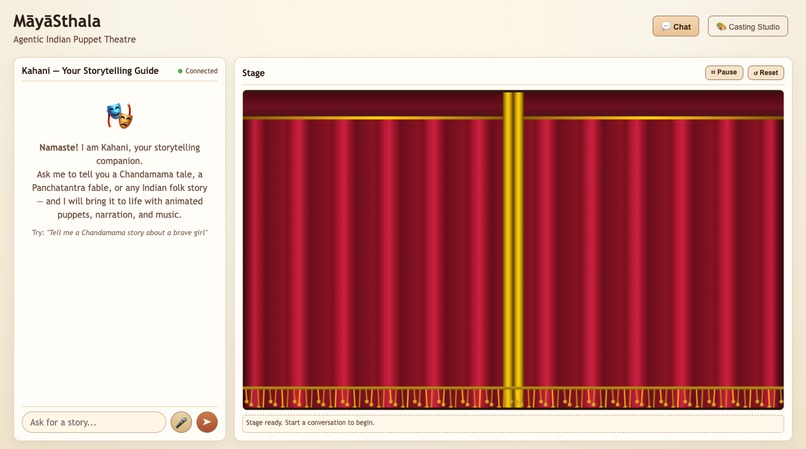
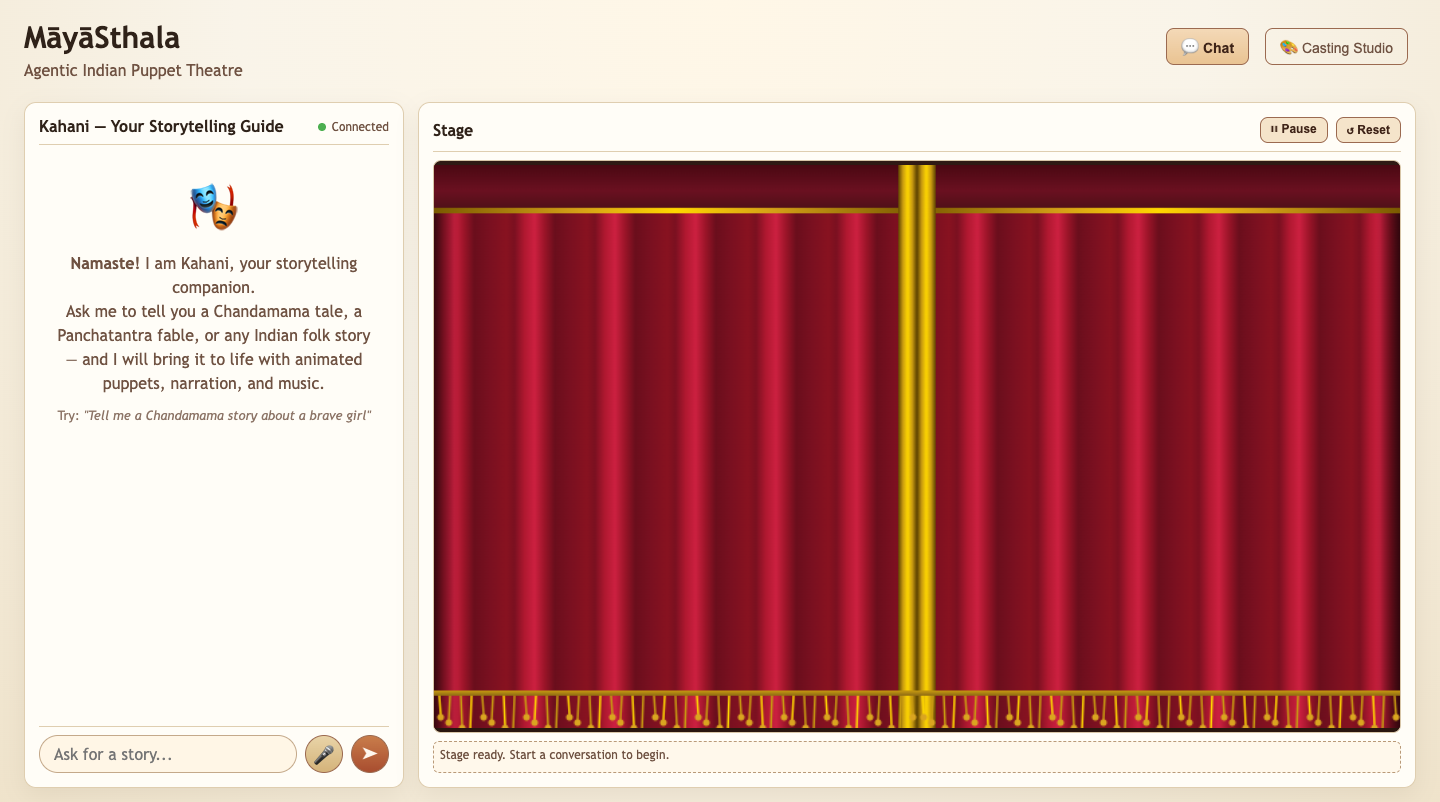
Chat interface: requesting a new story
-
Story concept generated, waiting for approval
-
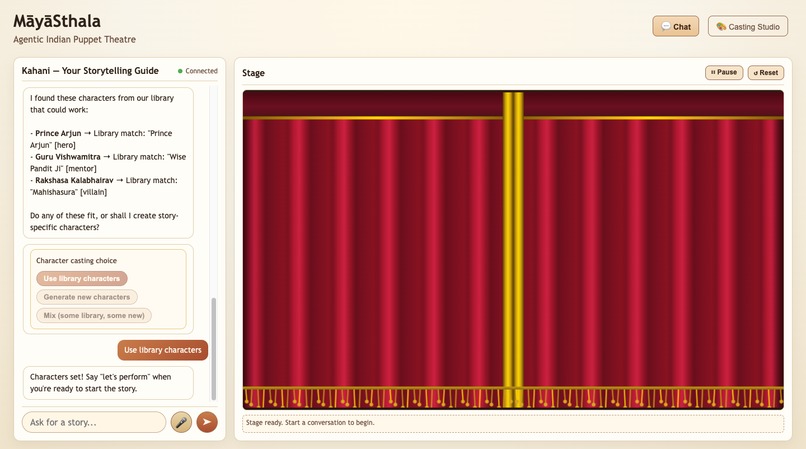
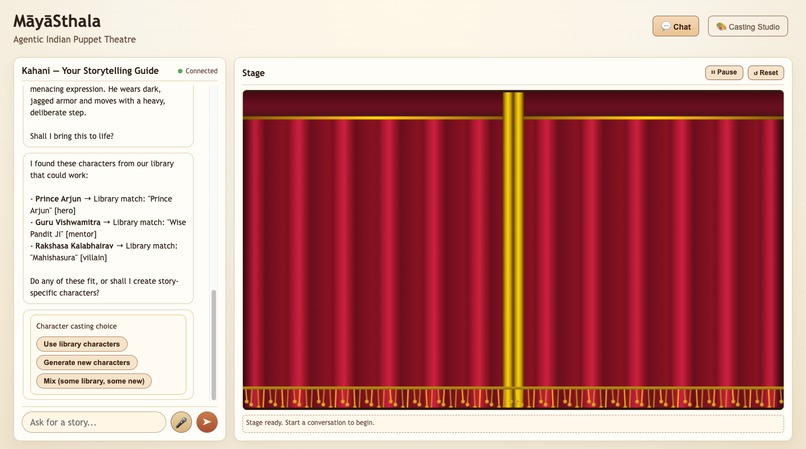
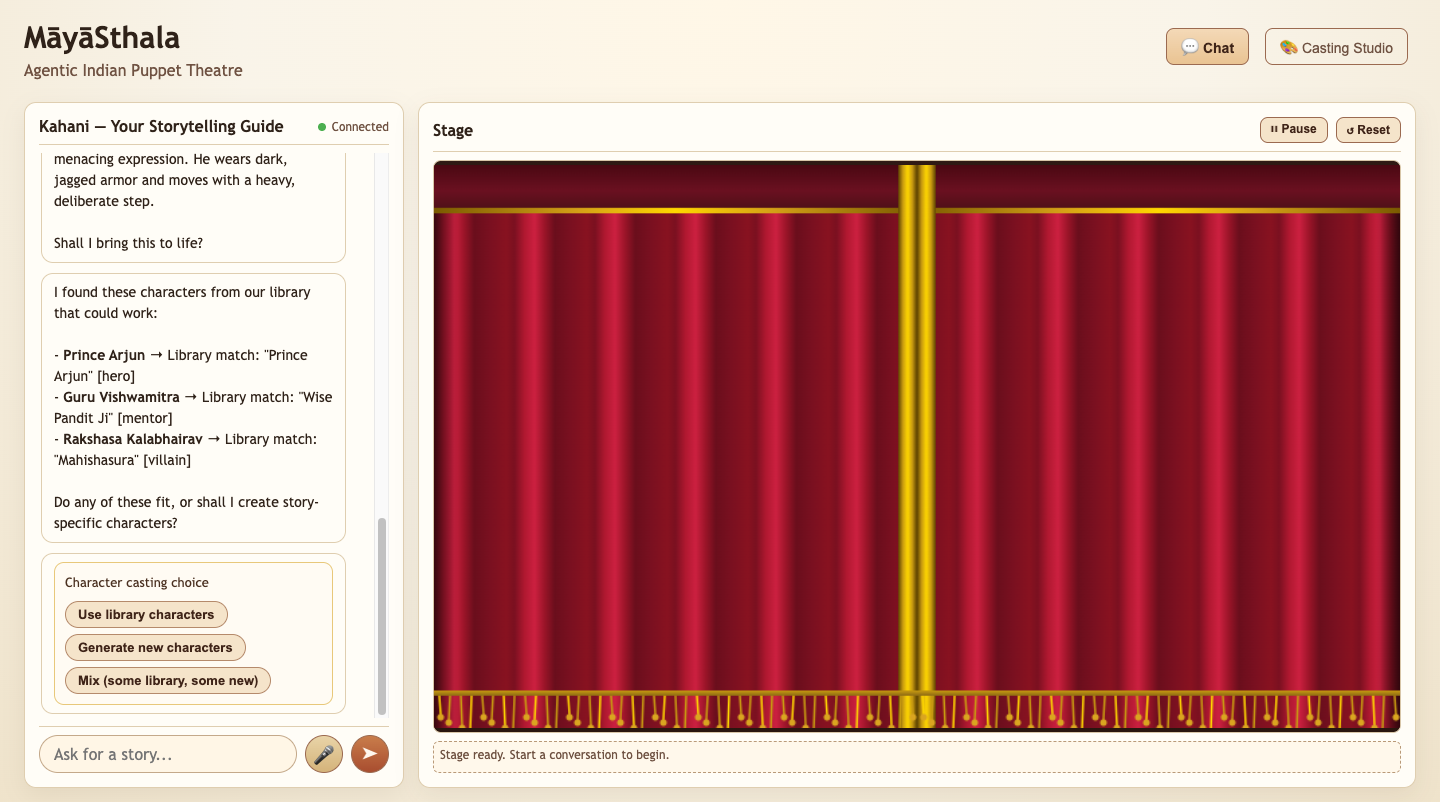
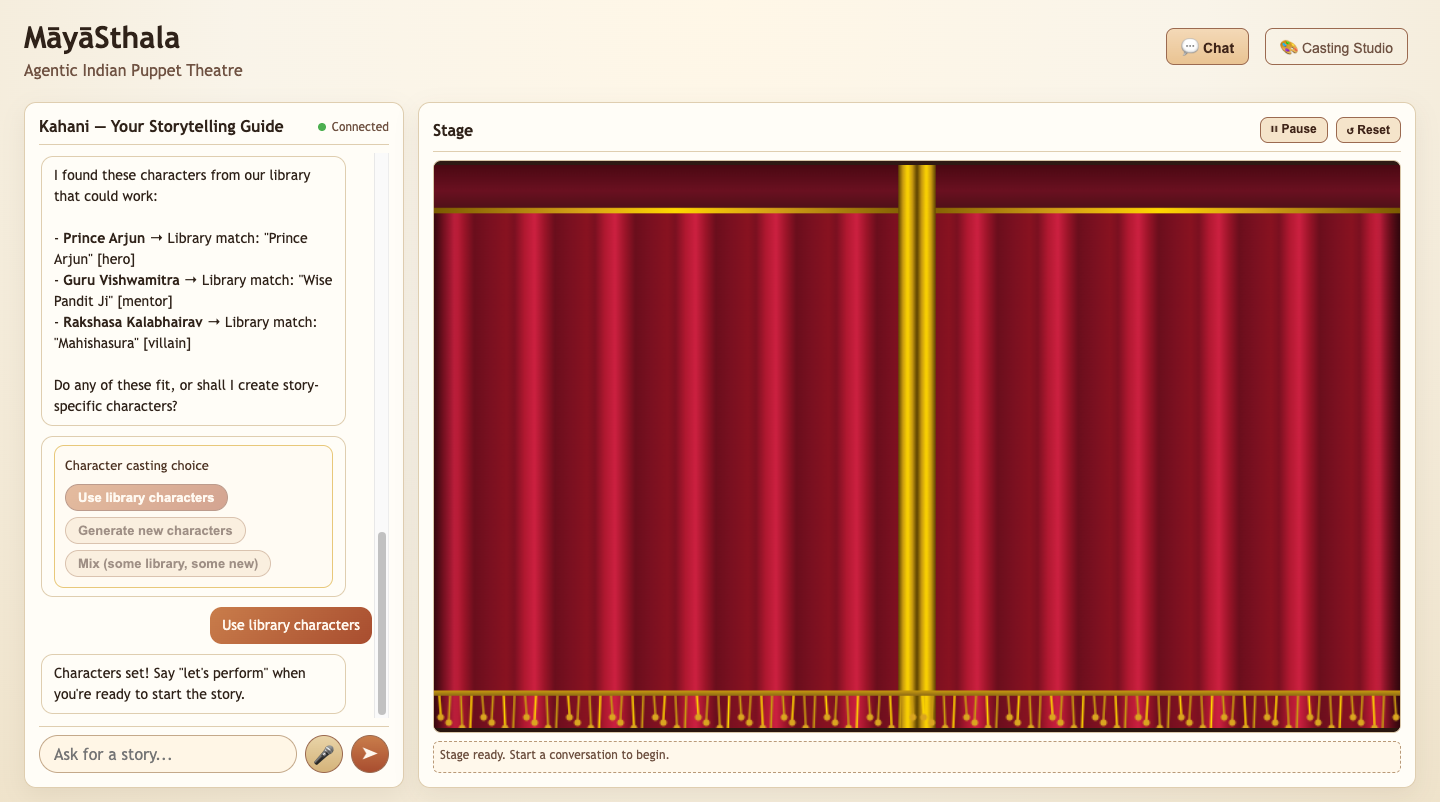
Cast approval with AI-generated character portraits
-
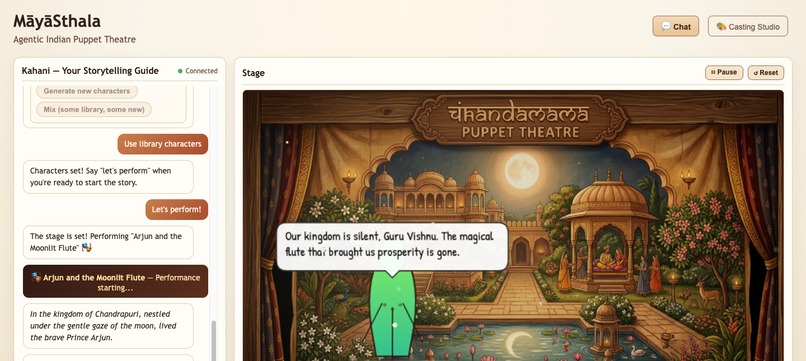
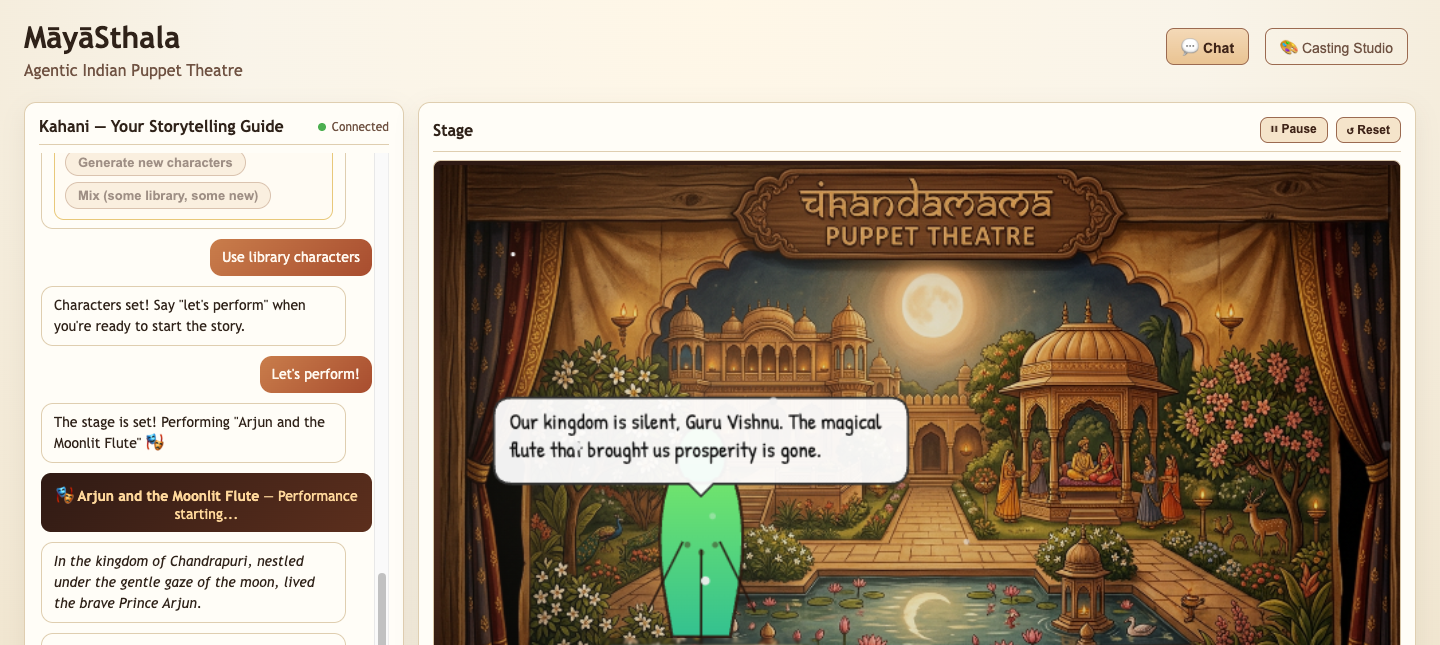
Live puppet performance in progress
-
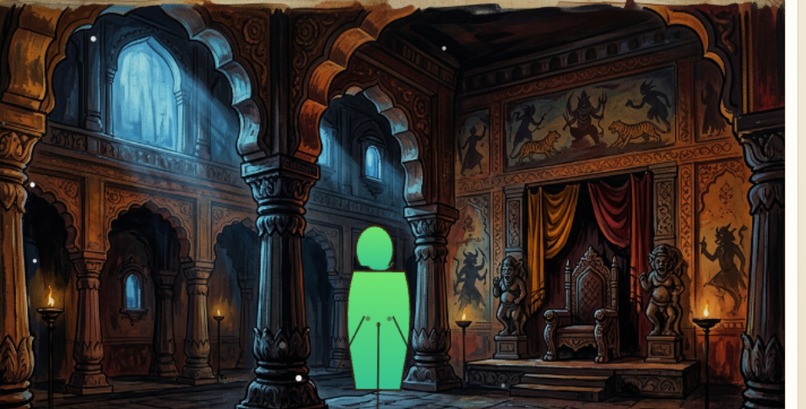
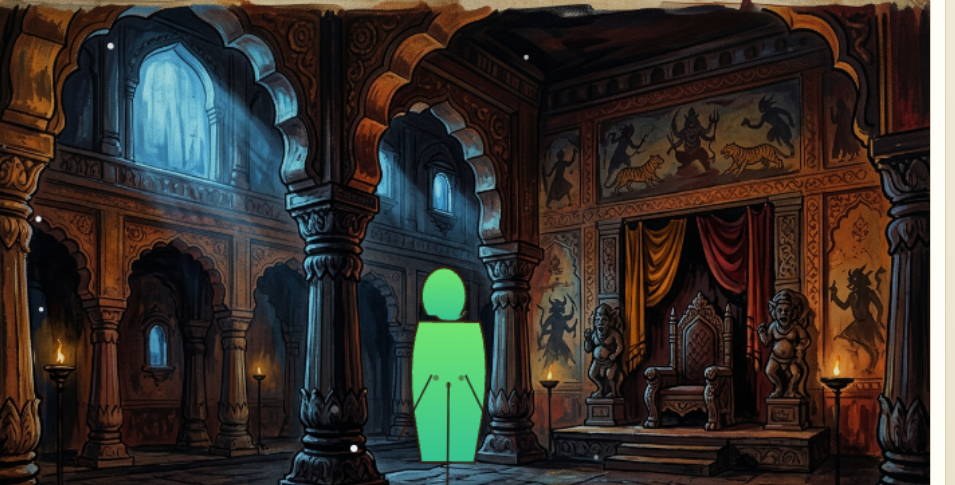
Stage closeup during a scene
Inspiration
I grew up with Panchatantra fables and Chandamama stories, the kind of storytelling that felt bigger than the room it happened in. A voice, a pause, a change in tone, and suddenly you could see the whole scene playing out in your head.
That feeling stuck with me. When I saw the Gemini Live Agent Challenge, I didn't want to build another experience that started and ended with a text box. I wanted something that felt staged, a system that could take a story request, cast the characters, ask for your approval, and then actually perform the thing as a live puppet show.
That's how MaayaaSthala came about: an AI-directed Indian puppet theatre where the interaction is conversational, but the result is a full performance.
What it does
MaayaaSthala turns a natural-language story prompt into a live animated puppet performance.
You type something like "Tell me a Panchatantra story about a clever crow and a greedy snake," and the system will:
- Generate a story concept grounded in Indian folklore patterns
- Turn that story into NatyaScript, a custom screenplay format I made for stage direction
- Browse or generate the cast, with AI-created portraits and expression variants
- Pause for your approval before locking the cast
- Perform the story with streamed text, images, narration audio, scene changes, props, and stage cues
The key idea is that you're not just prompting a model. You're directing a show — with approval gates, visible state changes, and a final multimodal performance that goes well beyond the text box.
How I built it
I built MaayaaSthala as a three-agent system using Google's Agent Development Kit (ADK) and the Google GenAI SDK.
- Sutradhar is the storyteller. It handles story generation and produces NatyaScript using Gemini 2.5 Flash.
- Chitrakar is the visual lead. It browses a character library first, then uses image generation when the right character doesn't already exist.
- Rangmanch is the stage manager. It compiles NatyaScript into runtime stage actions and drives the performance.
Those agents are coordinated by a theatre orchestrator with explicit state transitions for story generation, casting, approval, and performance.
NatyaScript is honestly the piece I'm most proud of. Instead of asking the frontend to improvise from prose, the model generates a structured screenplay with commands for entrances, dialogue, narration, props, camera movement, and mood changes. That script gets compiled into runtime messages and streamed over WebSocket so the viewer can interleave chat updates, visual assets, and performance events in real time.
For the actual tech stack:
- Google ADK for the multi-agent flow and session handling
- Google GenAI SDK for generation and asset workflows
- Google Cloud Run to host the deployed app
- Google Cloud Text-to-Speech for character and narration audio
- WebSocket streaming for interleaved output across chat, stage events, images, and audio state
- HTML5 Canvas for the puppet-stage renderer
The approval flow matters as much as the generation flow. The app doesn't silently generate a full show behind the scenes. It asks you to confirm the story direction and the cast before the final performance begins.
Challenges I ran into
The hardest part was making NatyaScript reliable enough to feel theatrical instead of merely structured. A script could be syntactically valid and still be wrong for performance, if characters spoke before entering, or if stage cues arrived in the wrong order.
I also had to solve consistency problems in character generation. Expression variants only work if the happy, sad, angry, and neutral versions still look like the same puppet. I ended up using the neutral portrait as the reference point for the rest of the expression set.
Another tricky one was approval gating inside a streaming conversation. The system needed to pause, wait for the user's decision, and then continue without dropping state or overlapping turns.
Finally, I had to make the output feel genuinely interleaved. The challenge framing pushed me to go beyond text, so I treated streaming as a product requirement, not just an implementation detail.
What I learned
I learned that ADK is a strong fit for creative orchestration when the experience has real stages and handoffs instead of one giant prompt. Splitting responsibilities across agents made it much easier to reason about story logic, visuals, and performance control.
I also learned that the best multimodal experiences need clear contracts. NatyaScript, approval checkpoints, and structured streamed events gave me a much better result than asking the frontend to infer everything from free-form model output.
On the product side, I came away convinced that the most interesting AI interfaces are directed experiences. The chat box can start the interaction, but it shouldn't be the whole thing.
What's next
I want to add Hindi-first performances, audience participation during the show (like voting on plot decisions), and exportable recordings so a finished performance can be shared outside the app.
I also want to go deeper on the theatrical side: stronger continuity for recurring characters across stories, smoother scene transitions, and richer voice direction per role.
Built With
- gemini-2.5-flash
- google-adk
- google-cloud-run
- google-cloud-text-to-speech
- google-genai-sdk
- html5
- node.js
- typescript
- vitest
- websocket

Log in or sign up for Devpost to join the conversation.