-
-
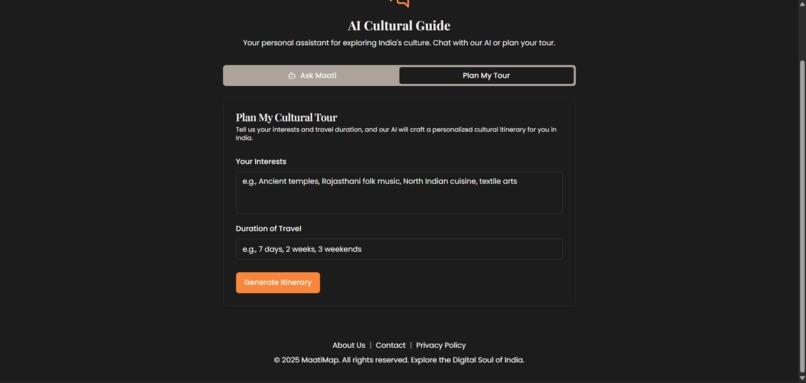
Plan My Tour Section
-
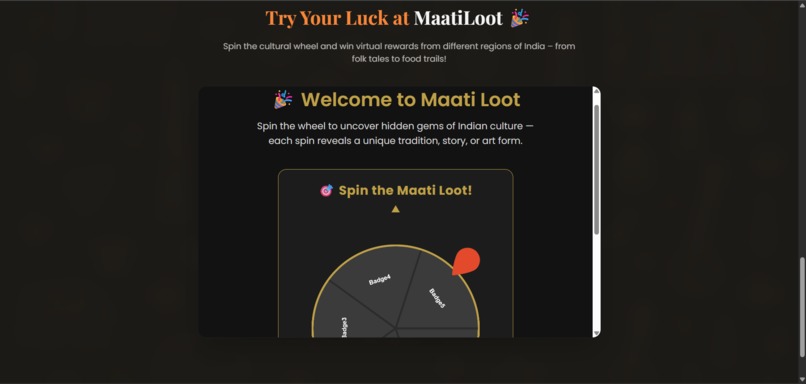
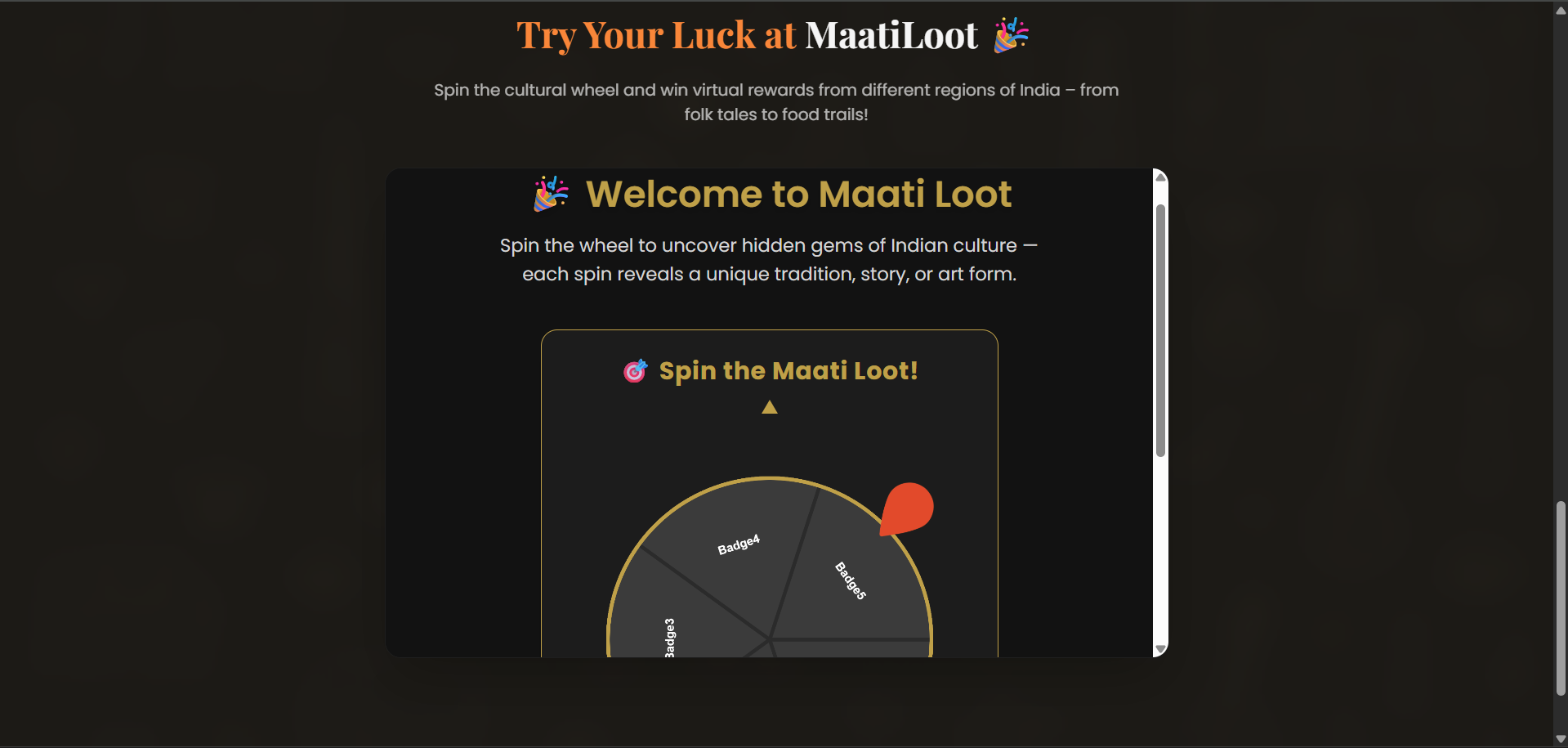
MaatiLoot
-
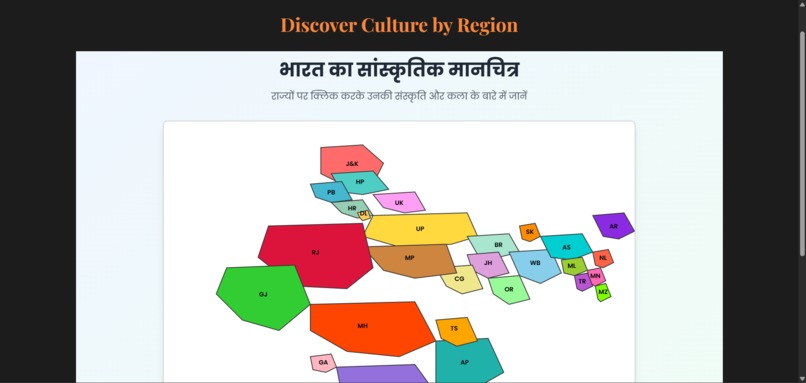
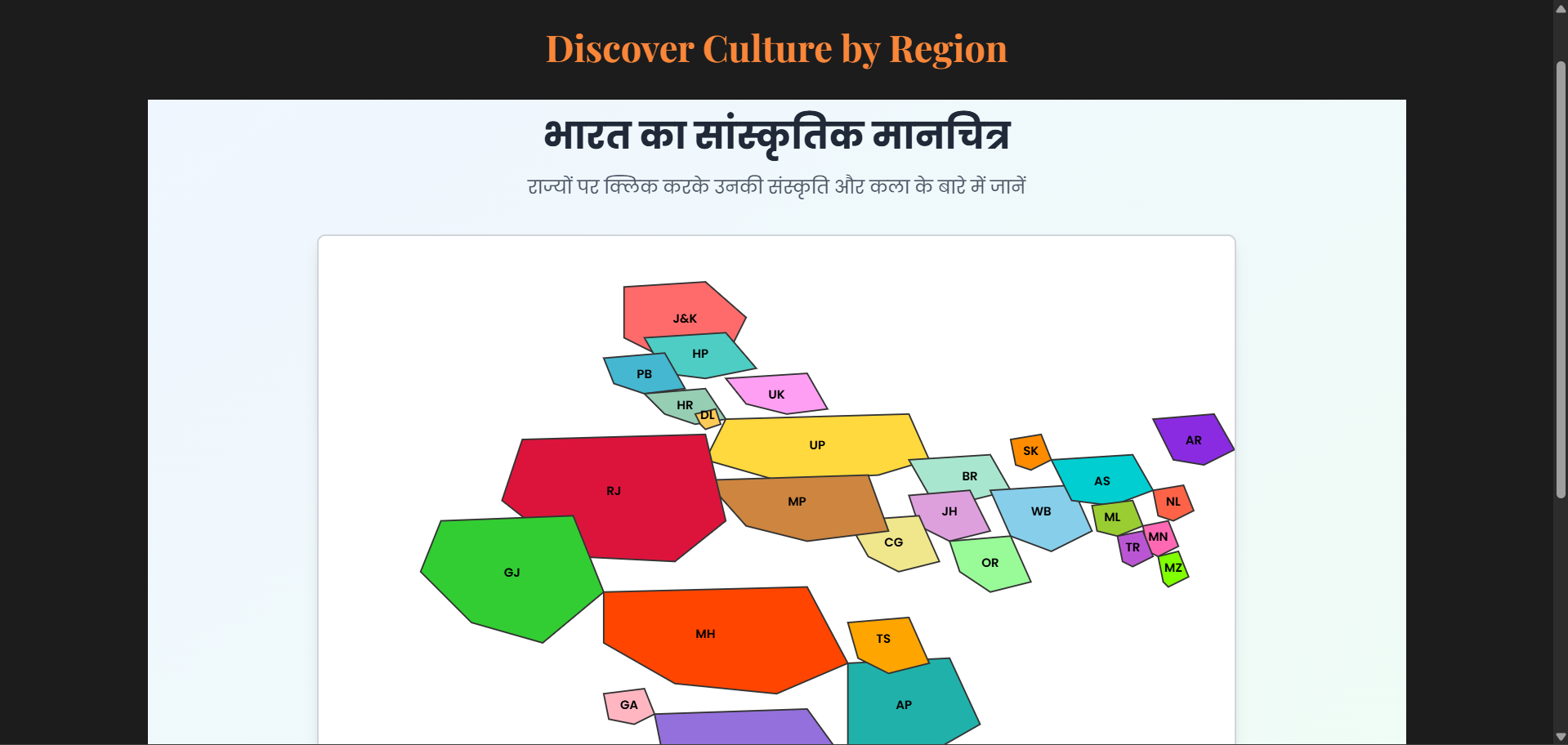
Interactive Map
-
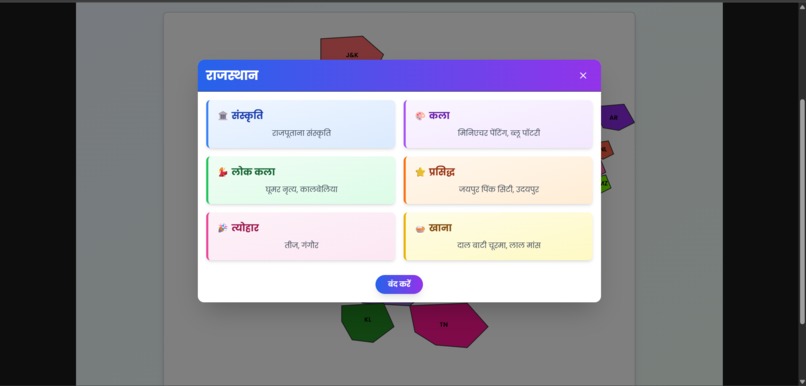
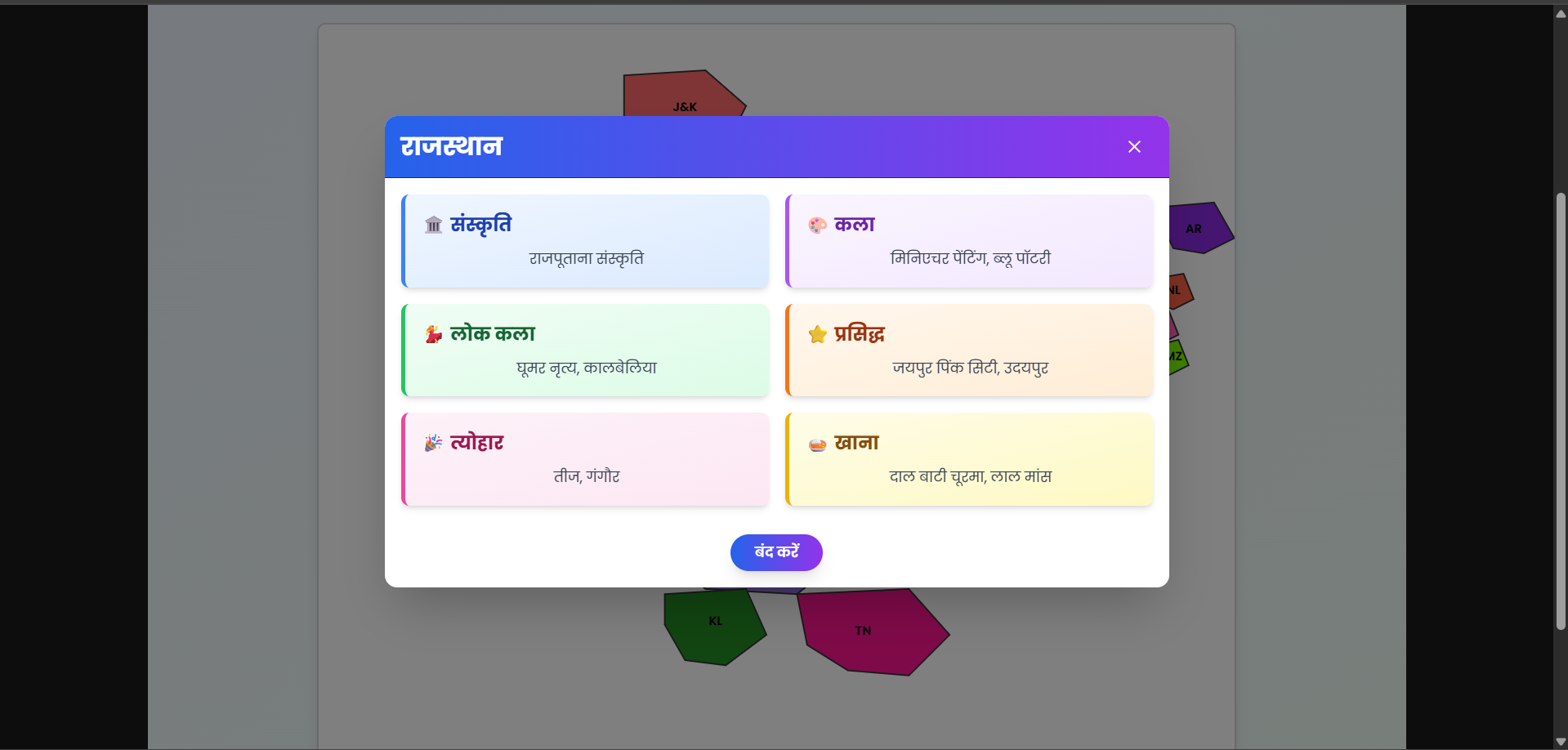
Interactive Map
-
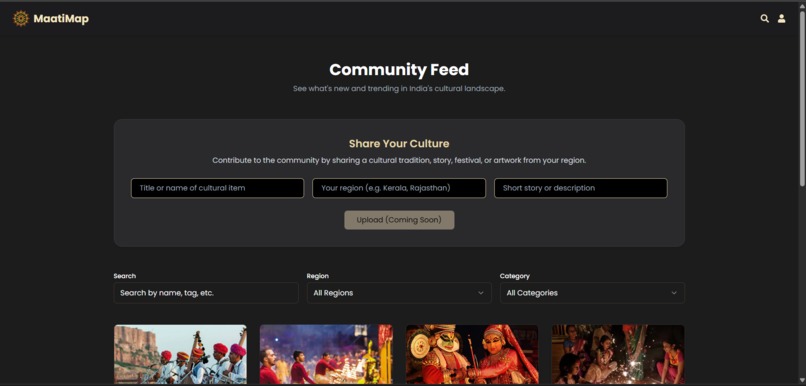
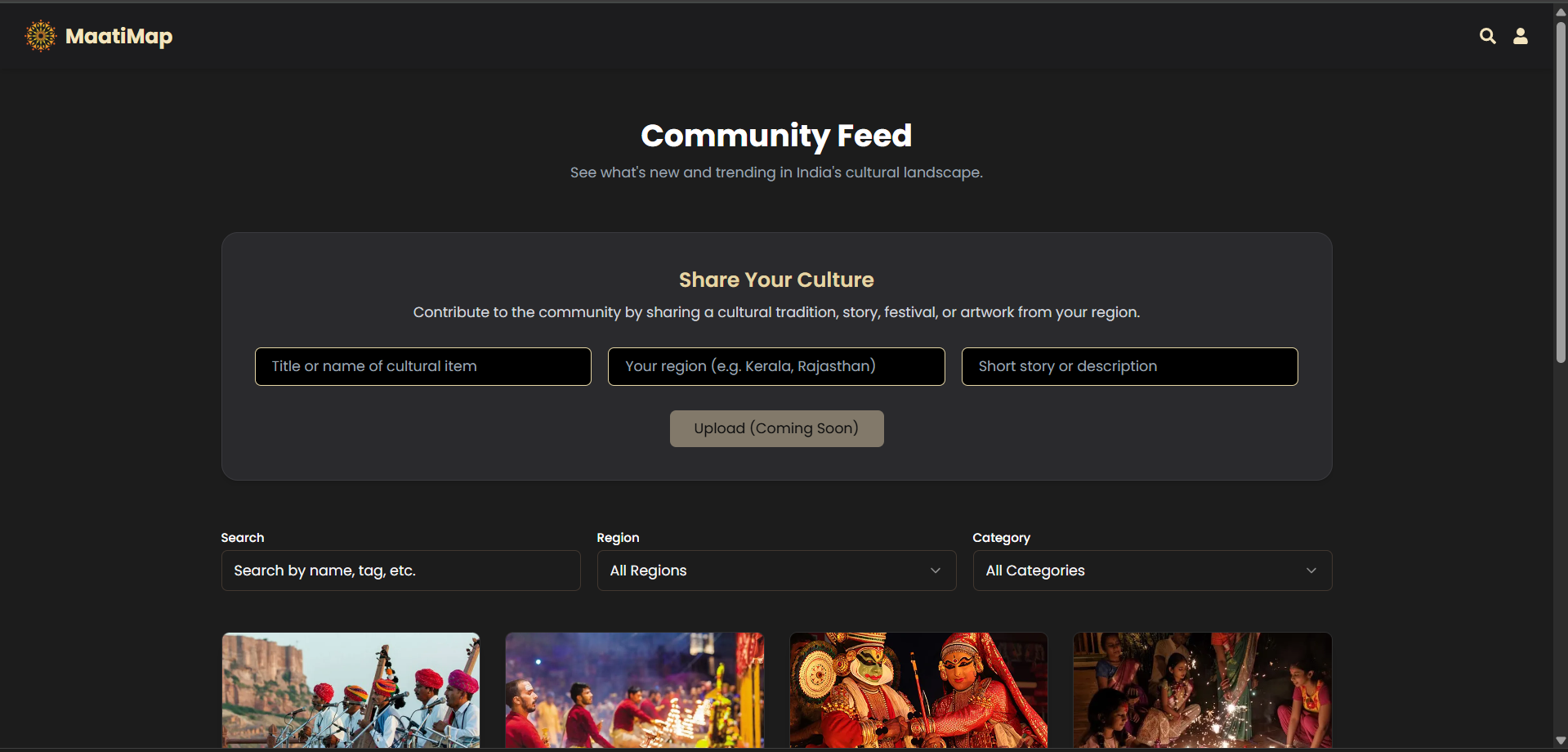
Community feed
-
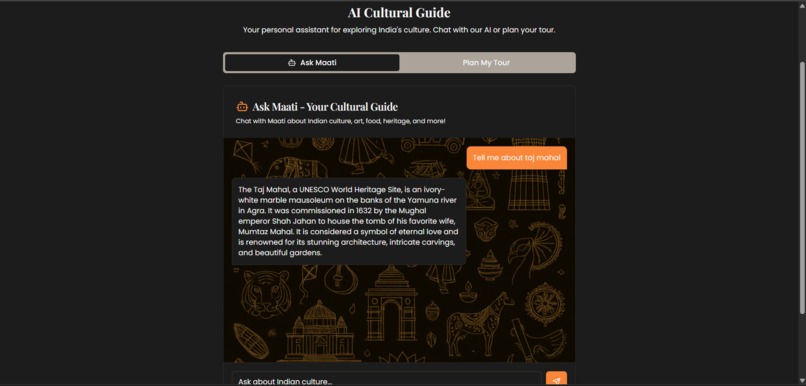
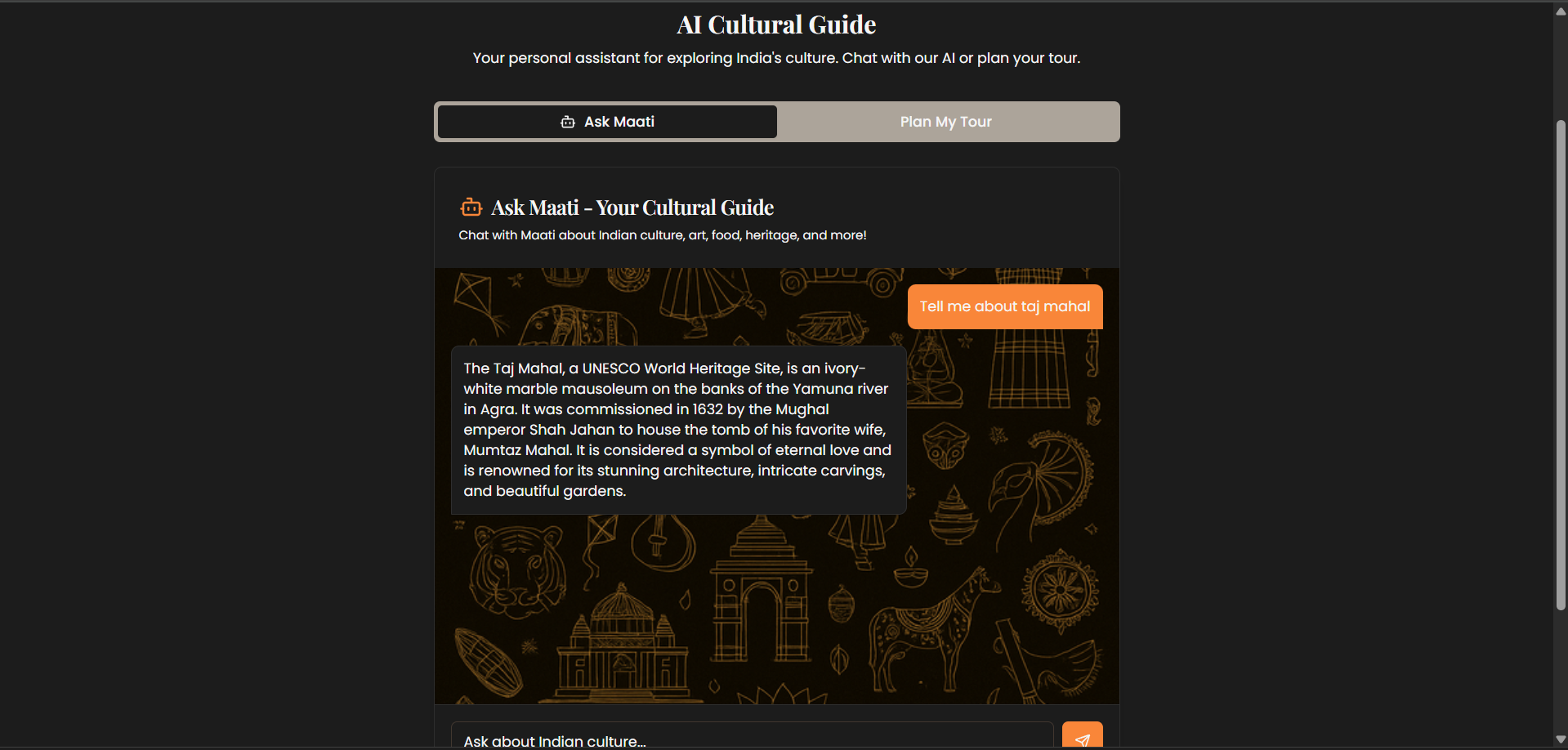
AI Cultural Assistant
-
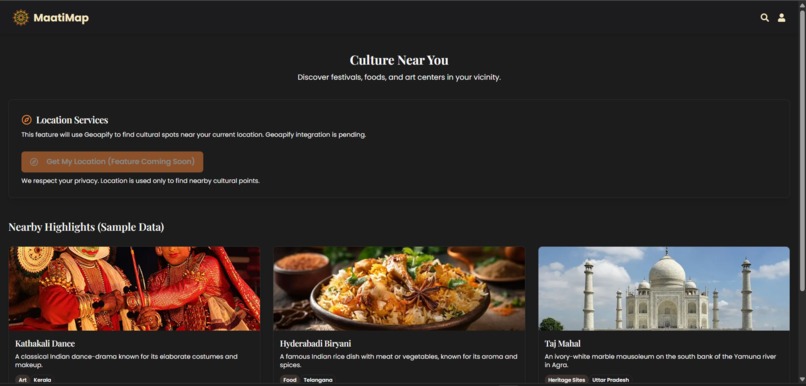
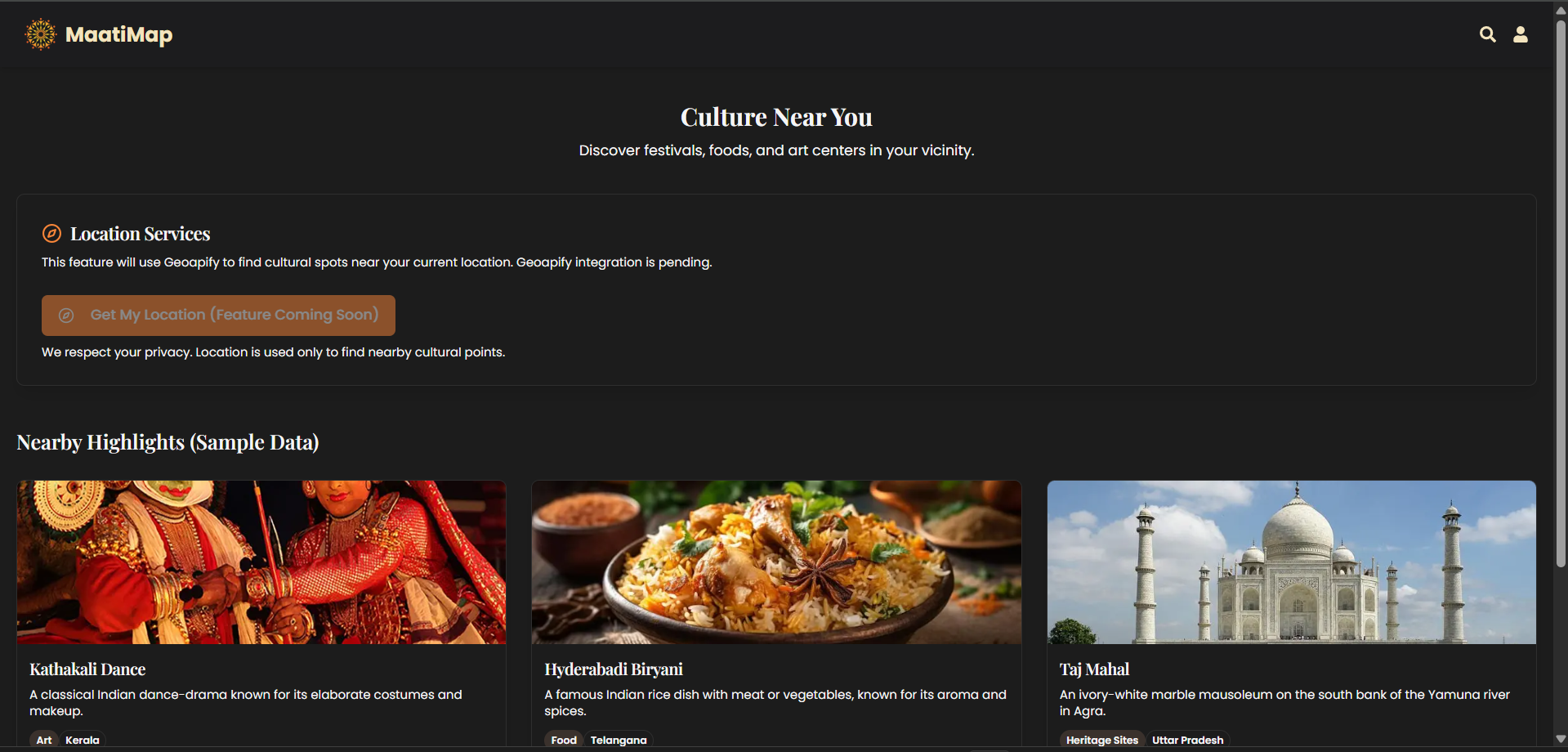
Finding Culture Near You
-
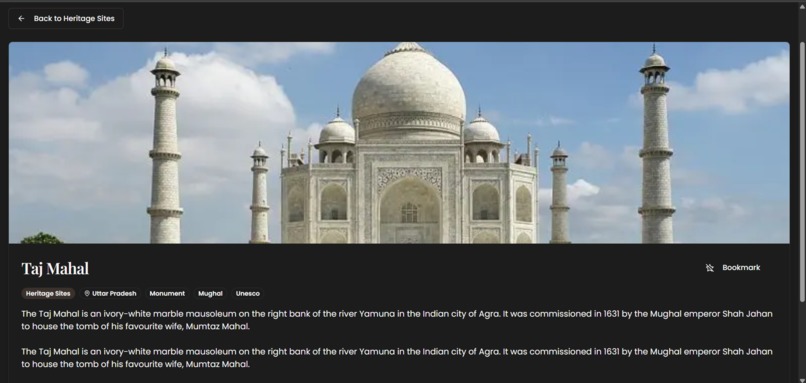
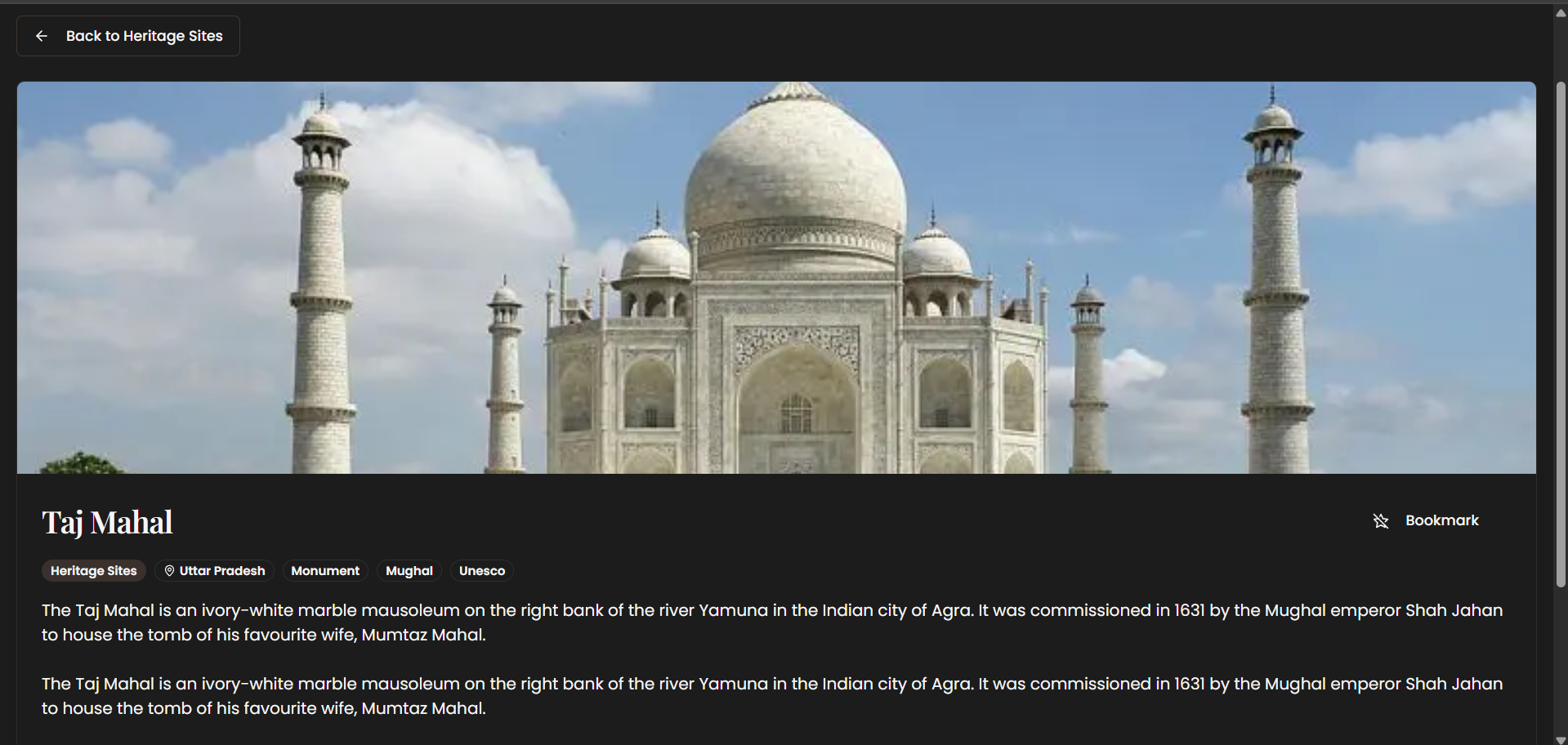
Showcasing of Heritage Site
-
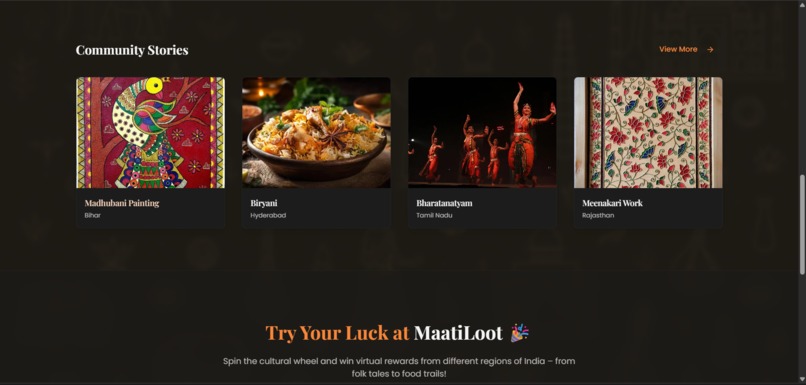
Front View
-
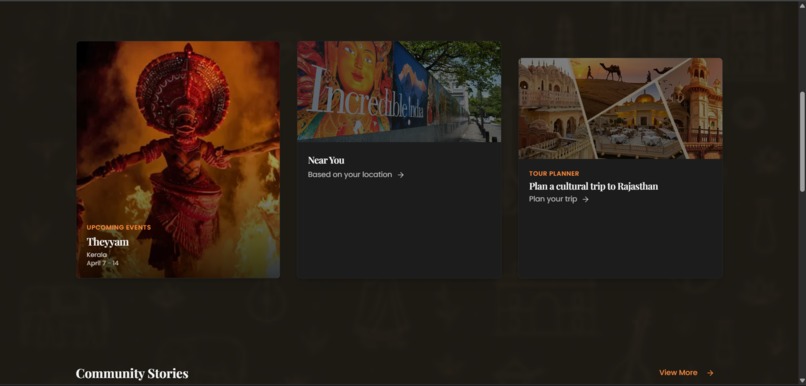
Front View
-
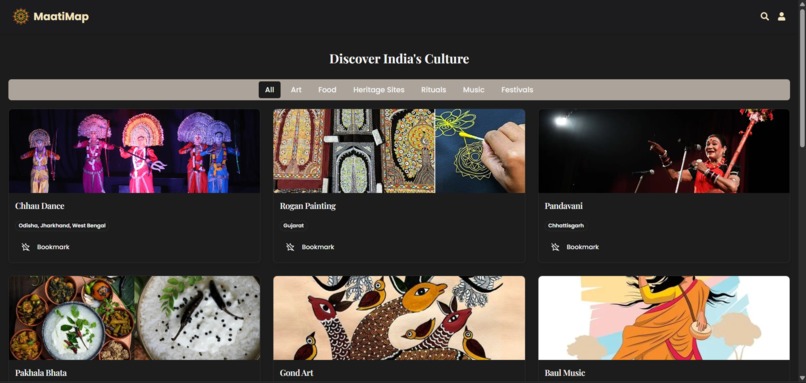
Discover Page
-
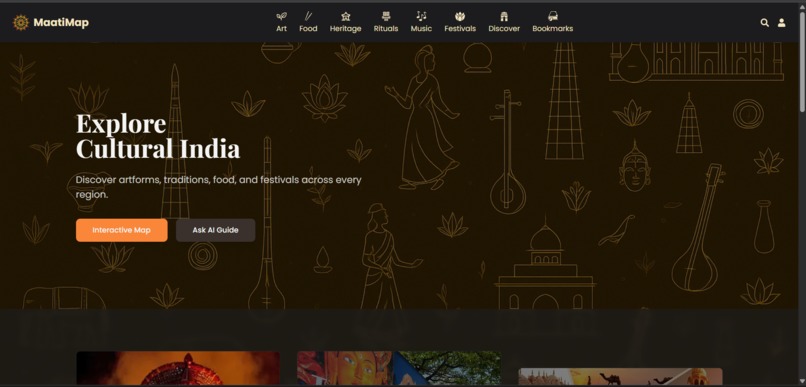
Front View
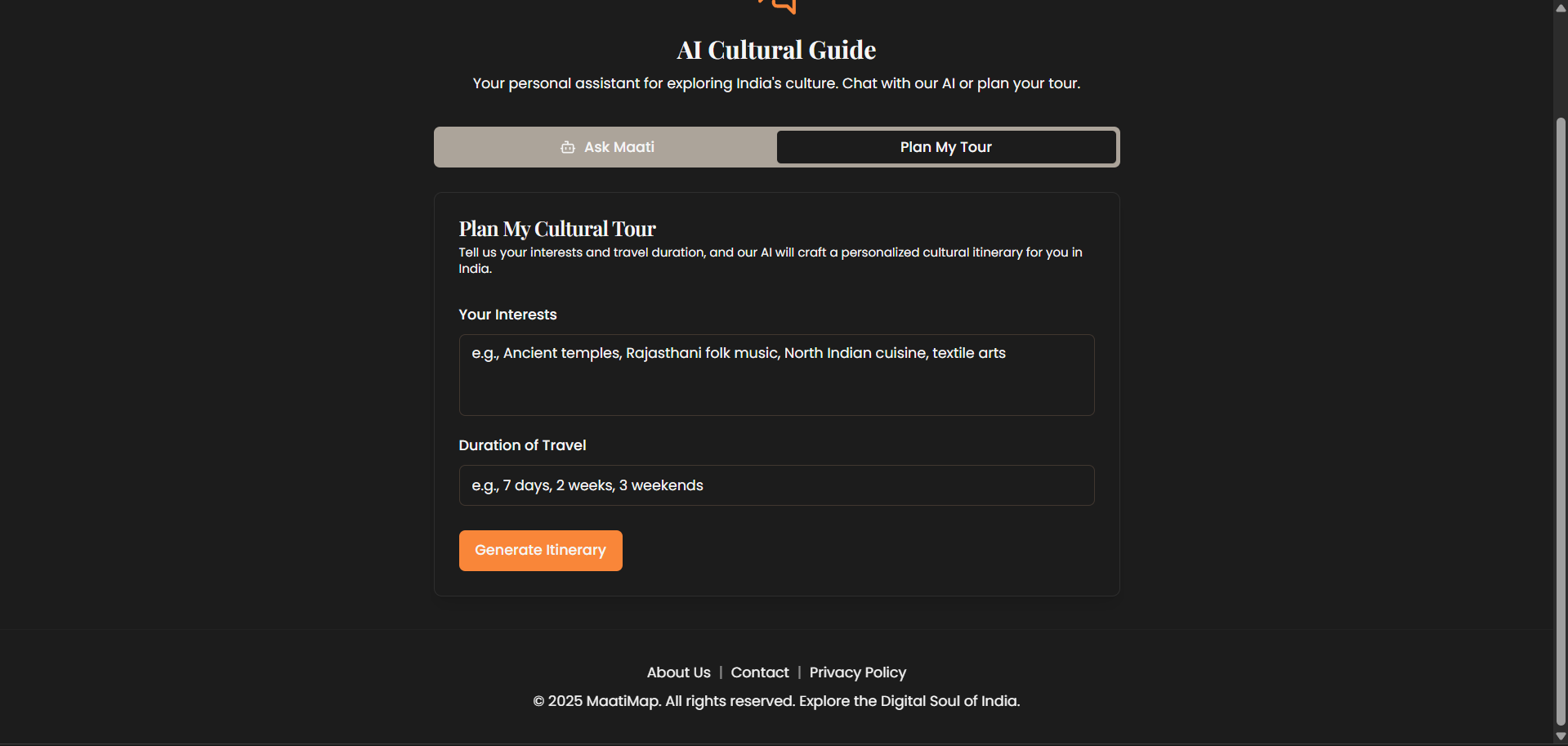
🌱 Inspiration
India is home to thousands of indigenous traditions, languages, art forms, and festivals — many passed down orally or confined to remote regions. As AI and digitization reshape how we document history, we risk losing these intangible cultural treasures forever.
We created MaatiMap to bridge this gap — a culturally intelligent platform that uses Gemini AI and MongoDB to map, preserve, and celebrate India’s rich cultural fabric. From folk rituals in Nagaland to tribal art in Madhya Pradesh, MaatiMap ensures every story finds its place on the digital map.
🌍 What It Does
MaatiMap empowers users to:
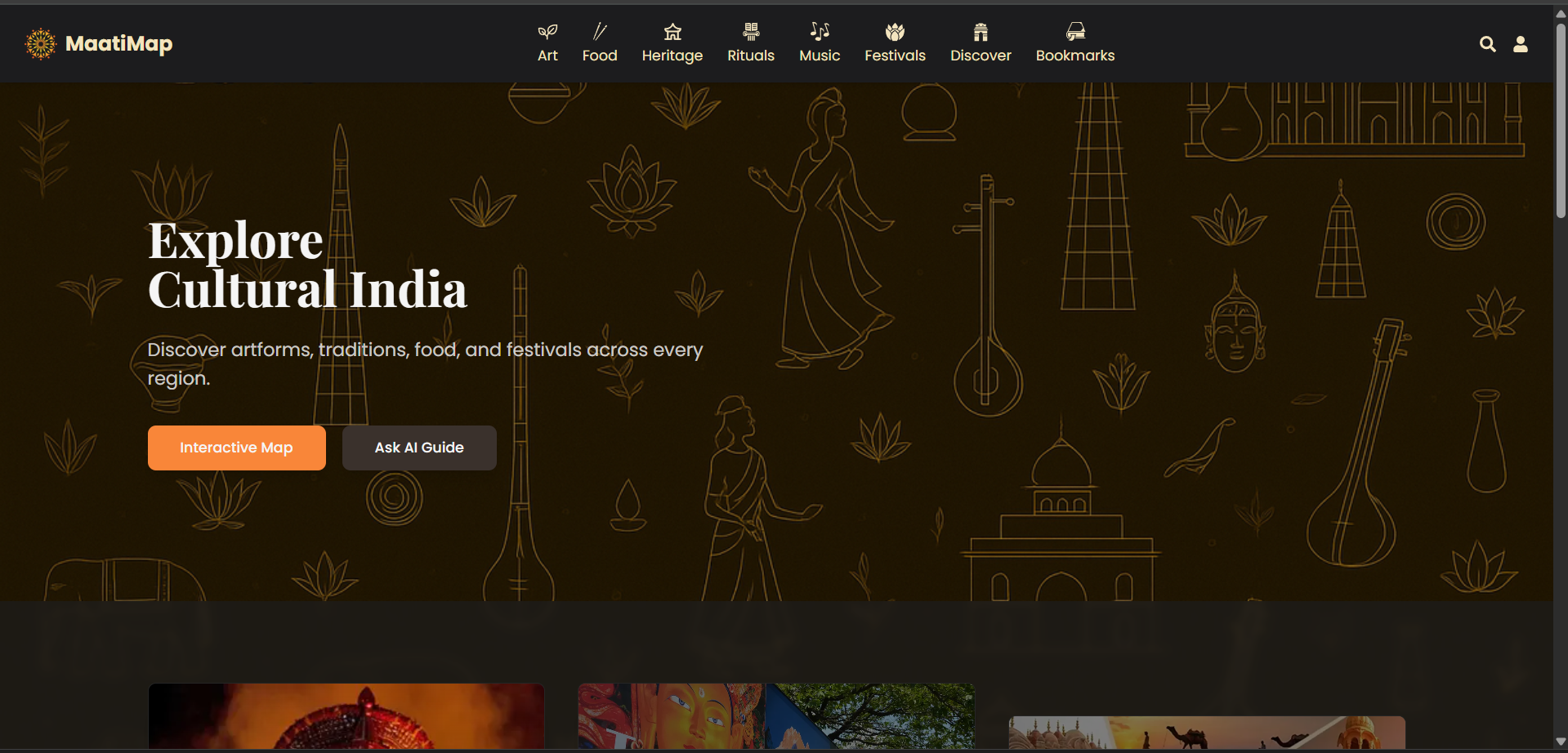
- 🌐 Explore India’s living culture via dynamic, interactive maps
- 🧠 Generate AI-powered insights using Gemini for folk stories, summaries & translations
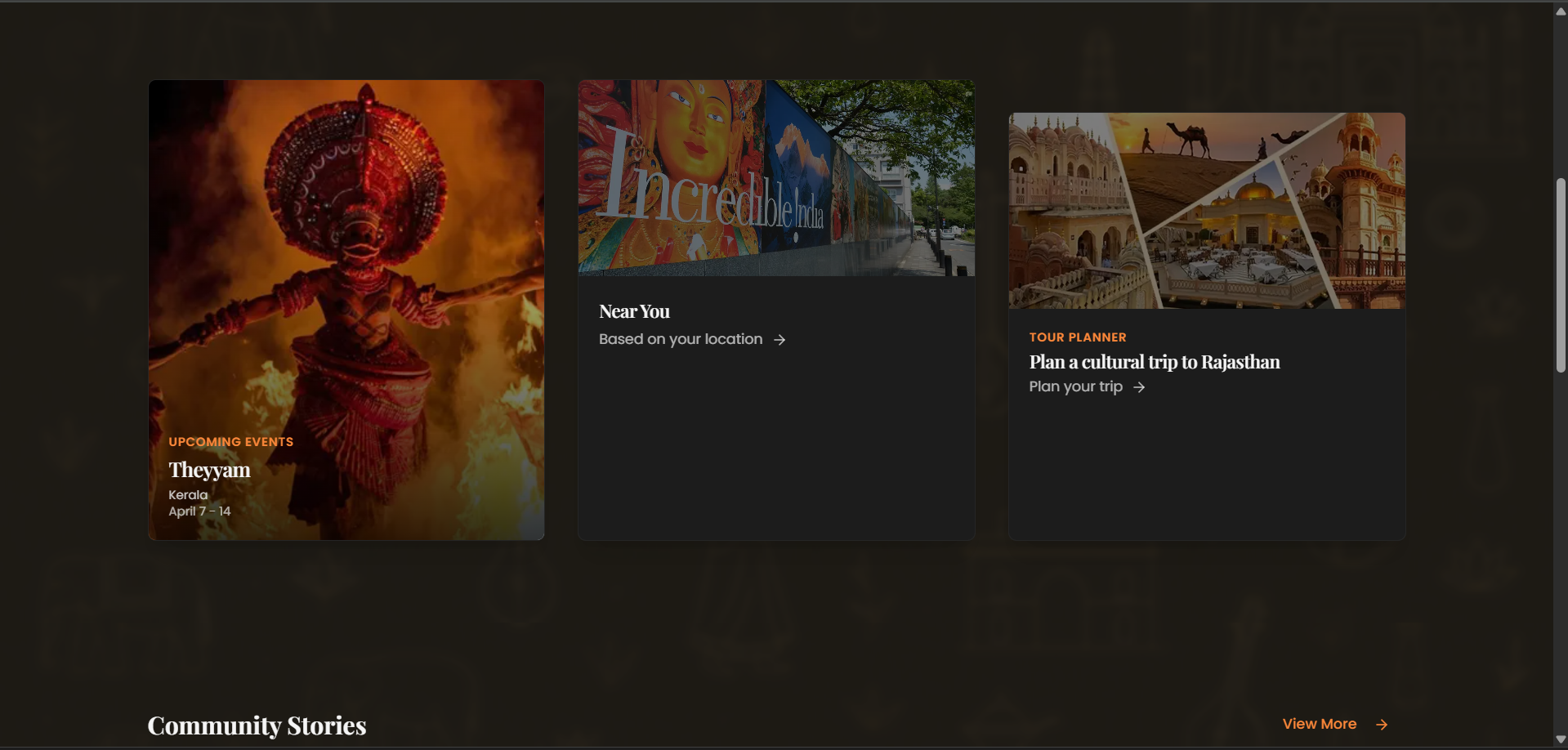
- 📍 Discover nearby traditions and events using geolocation
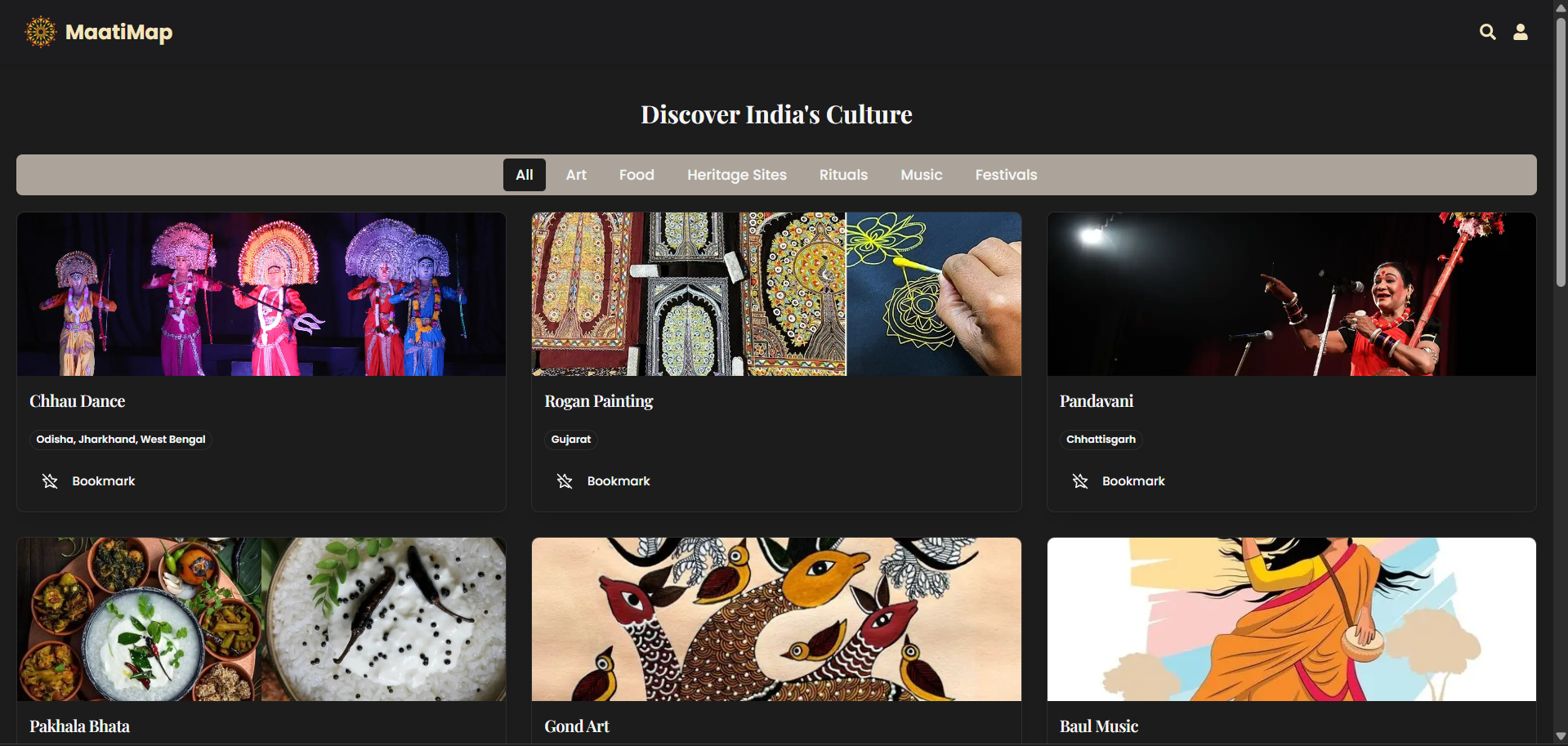
- 🗺️ Search by state, category, or tags for heritage-based content
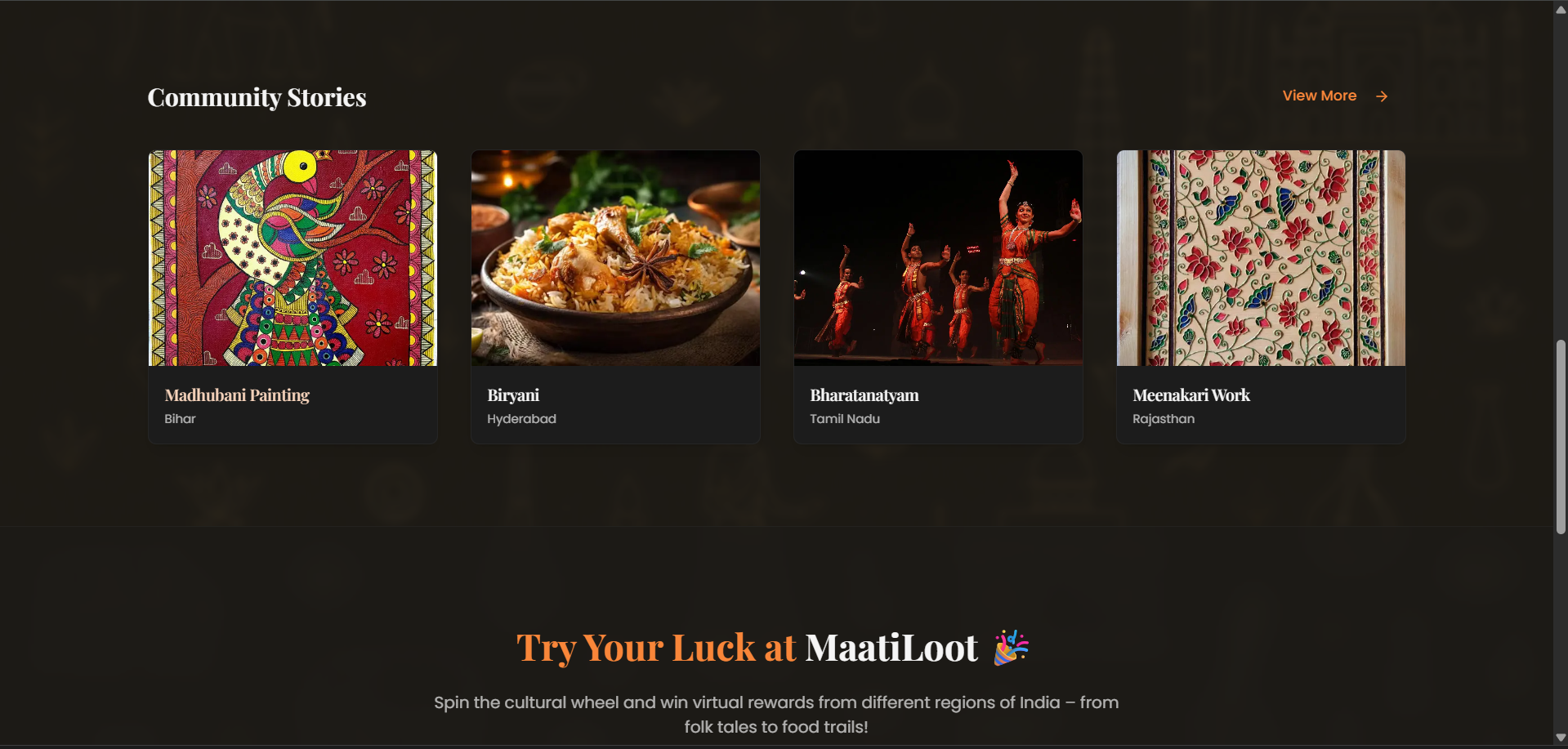
- 🎮 Play 'MaatiLoot', a gamified wheel to unlock hidden cultural gems
- 🧵 View upcoming cultural events with regional filters
- 🧑🤝🧑 Contribute personal stories to the community feed
- 🧭 Preserve endangered practices through a collaborative storytelling model
“Culture isn’t just history — it’s living, evolving, and waiting to be rediscovered.”
🛠️ How We Built It
We used a composable, scalable full-stack architecture with:
- Frontend: Next.js + React + TypeScript
- Backend API: Custom Node.js + Next.js API routes
- Styling: Tailwind CSS + ShadCN UI
- AI: Gemini Pro via Genkit
- Database: MongoDB Atlas (manual seed data + vector support)
- Auth & Hosting: Firebase Authentication (email + Google OAuth) + Vercel
- Mapping: Custom interactive India SVG Map
- APIs: RESTful endpoints for culture discovery and event fetch
We leveraged MongoDB for structured storage, vector querying, and cultural search; Gemini models for summarization and interaction; and Firebase Auth for user identity — creating a deeply engaging, AI-powered discovery experience.
🧩 Challenges We Ran Into
- Handling SVG map interactivity without third-party geospatial APIs
- Structuring and syncing manual cultural datasets in scalable, searchable formats
- Designing a gamified UX that remained educational, not superficial
- Creating a non-linear map-based discovery interface that feels intuitive
- Building an AI experience that is nuanced, sensitive, and region-aware
🏆 Accomplishments We're Proud Of
- Built a fully interactive India map showcasing real-time cultural pins
- Populated MongoDB with curated, authentic cultural data samples
- Integrated Gemini Pro to summarize and tag content with minimal manual input
- Created MaatiLoot, a gamified discovery tool tied to state-wise culture
- Delivered a mobile-optimized UI that balances information with storytelling
- Developed a modular, scalable architecture for 1000+ future entries
- Enabled region-wise event filtering, cultural search, and user uploads
📚 What We Learned
- How to use Gemini APIs effectively for cultural NLP tasks
- Leveraging MongoDB Atlas for fast, flexible querying and vector-ready data
- Architecting a platform that balances storytelling, search, and personalization
- Building for real-world impact with AI — not just engagement
- Managing full-stack deployment on Vercel using secure environment configs
🚀 What's Next for MaatiMap – Digital Soul of India
- 🌍 Add multilingual support for Hindi, Odia, Tamil & more
- 📥 Enable real-time community uploads with AI moderation
- 🎫 Ticket discovery for local events with artist bios and stories
- 🤝 Collaborate with cultural ministries and field documenters
- 🧭 Launch cultural trails using map pins with geospatial clustering
- 🧠 Train region-specific AI models for nuanced storytelling
- 📱 Release a mobile-first version for rural and semi-urban users
- 🔍 “Find culture near you” — map festivals, rituals, and folk art nearby
“MaatiMap isn’t just a platform — it’s a movement to preserve India’s soul in the digital age.”
One scroll at a time. One story at a time.
Built With
- firebase-authentication
- gemini
- mongodb
- next.js
- react
- shadcn/ui
- tailwind-css
- typescript
- vercel

Log in or sign up for Devpost to join the conversation.