Inspiration
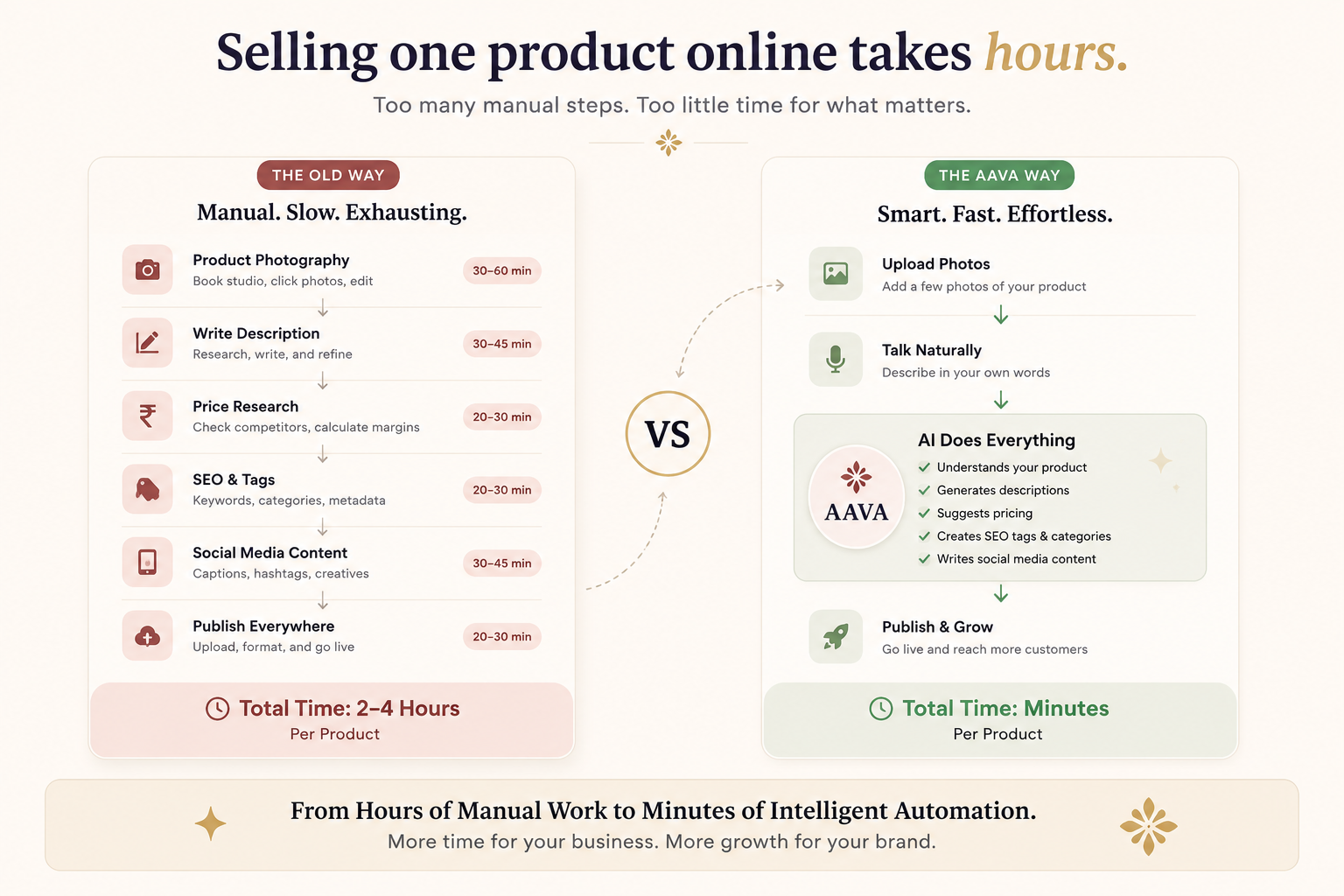
Growing up around my family's saree business, I saw how much work goes into selling just one product online. Before a customer ever sees a listing, someone has to photograph the product, edit images, write descriptions, research competitors, decide on pricing, create social media content, and publish across multiple platforms. For a small business owner, that can easily take hours for every single product.
We wanted to change that.
Aava is our attempt to give small businesses the same merchandising and marketing capabilities that large brands have—using AI. While we built it around fashion, the same idea works for jewelry, handmade products, furniture, home décor, food products, or any business trying to build an online presence.
What it does
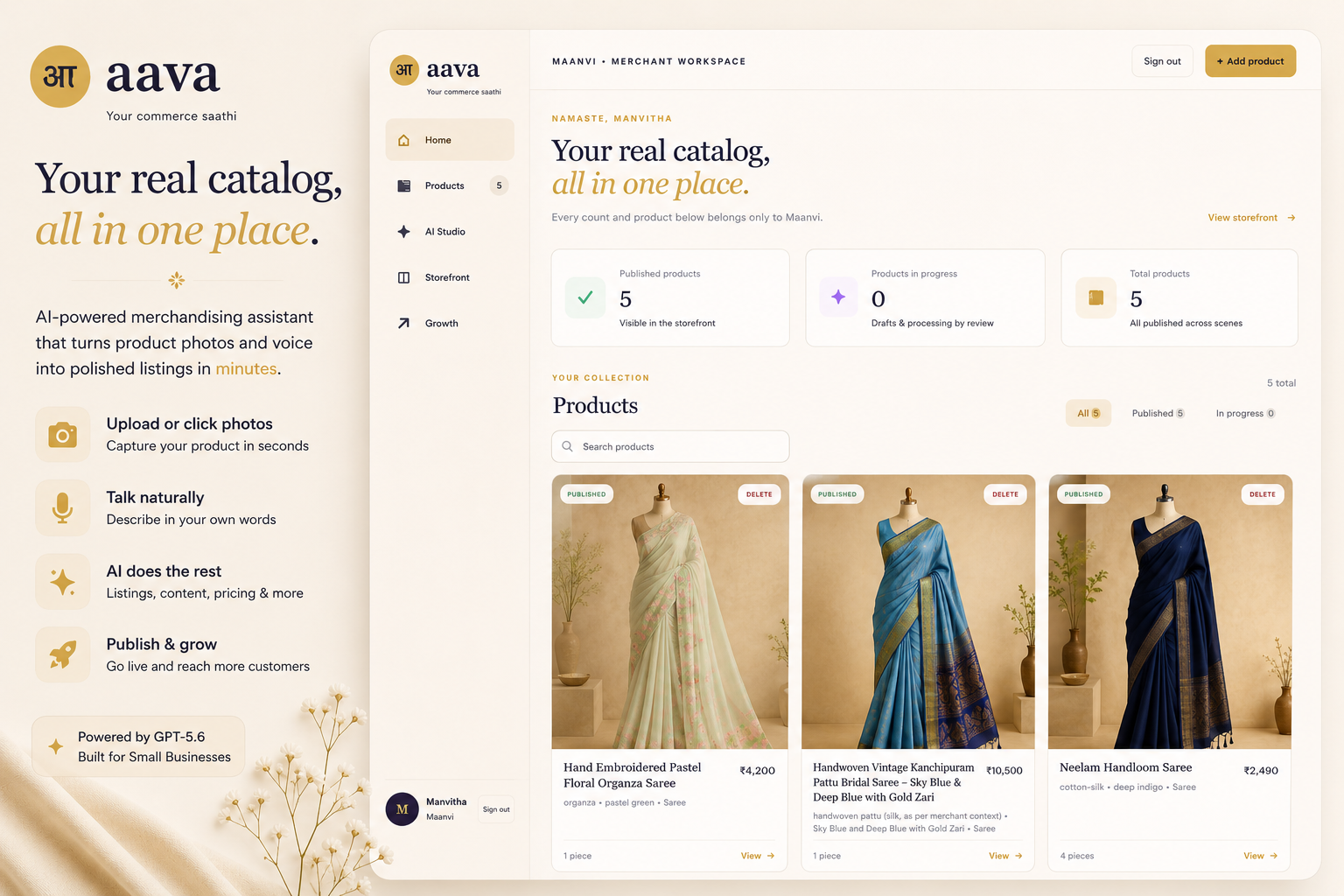
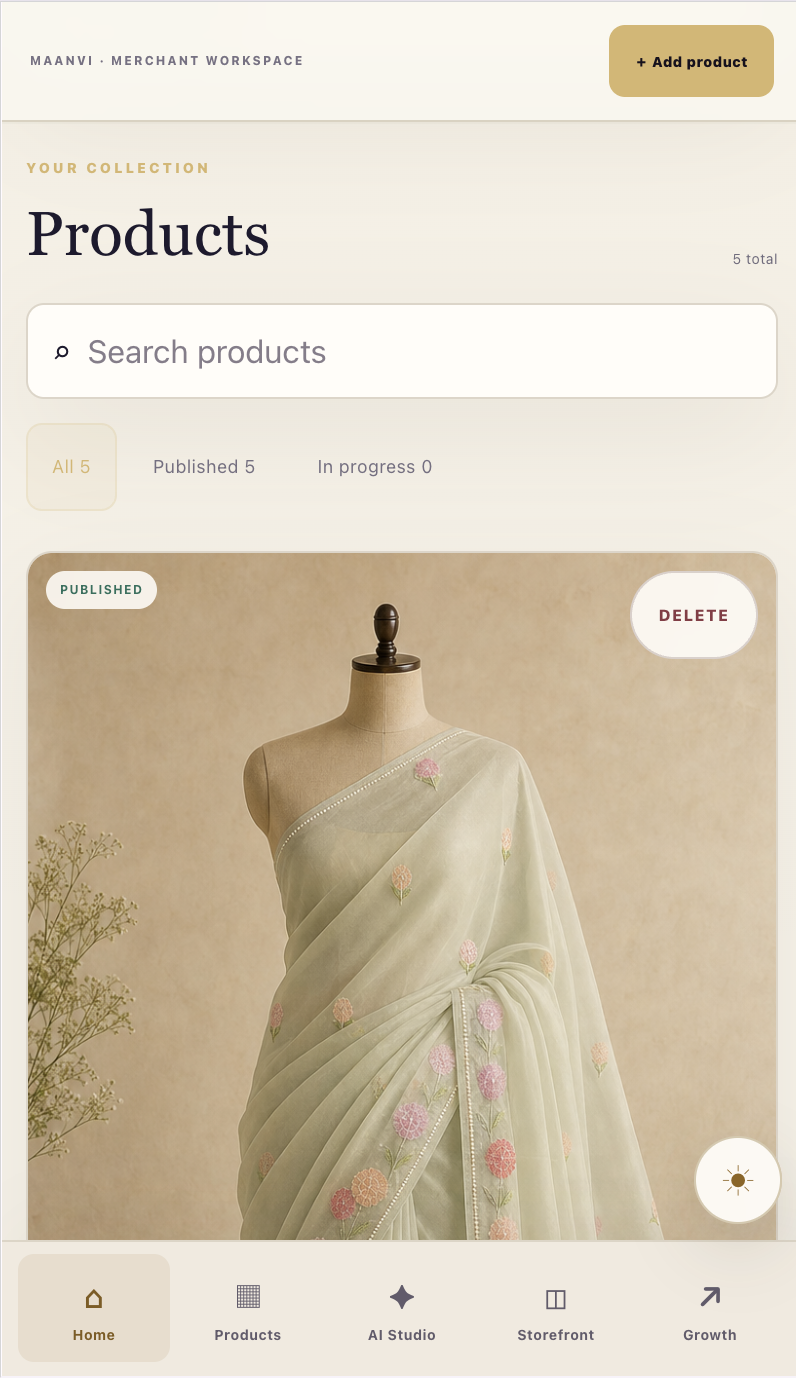
Aava is an AI merchandising assistant that helps businesses create complete product listings from just a few photos and a natural conversation.
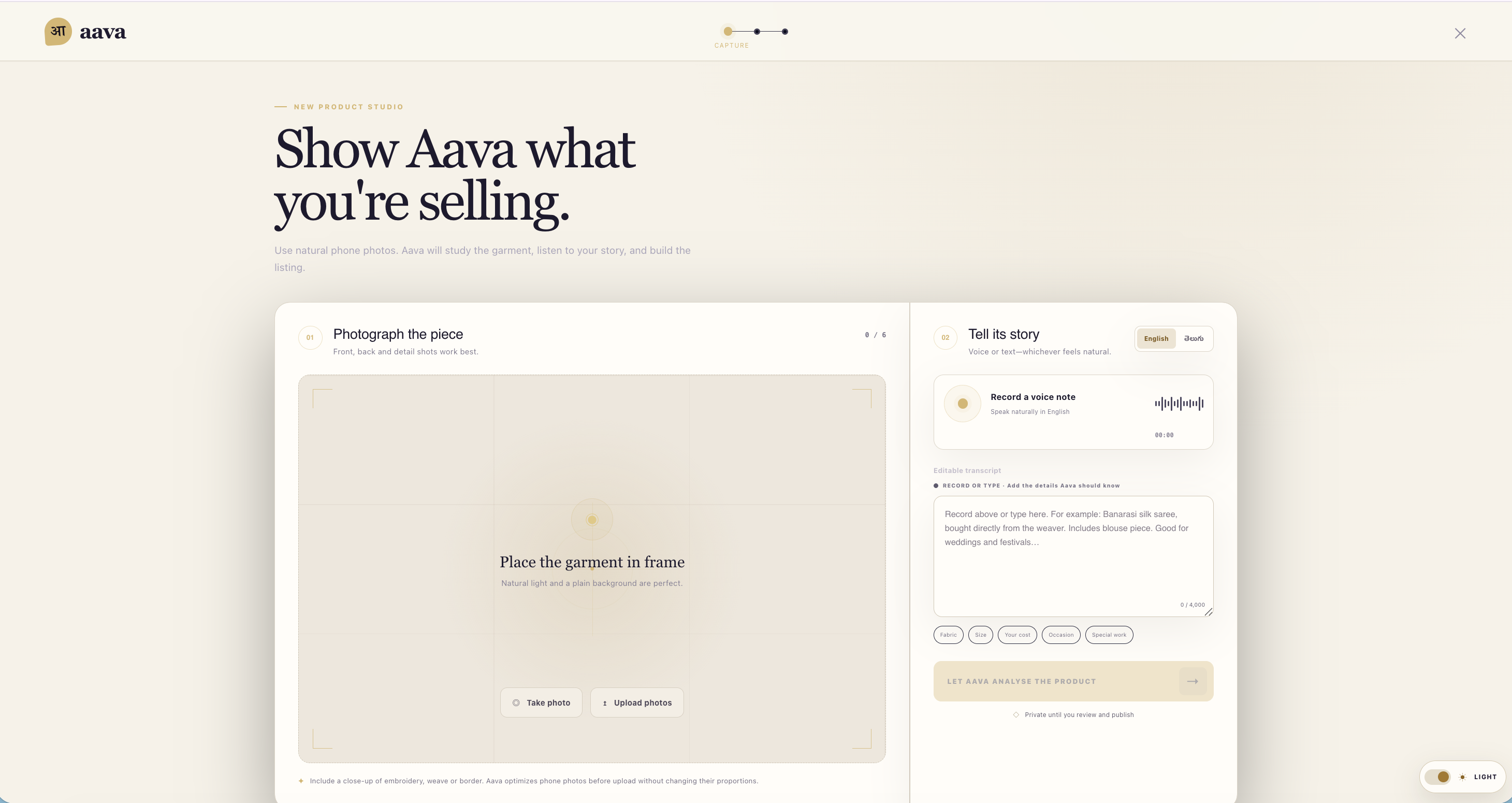
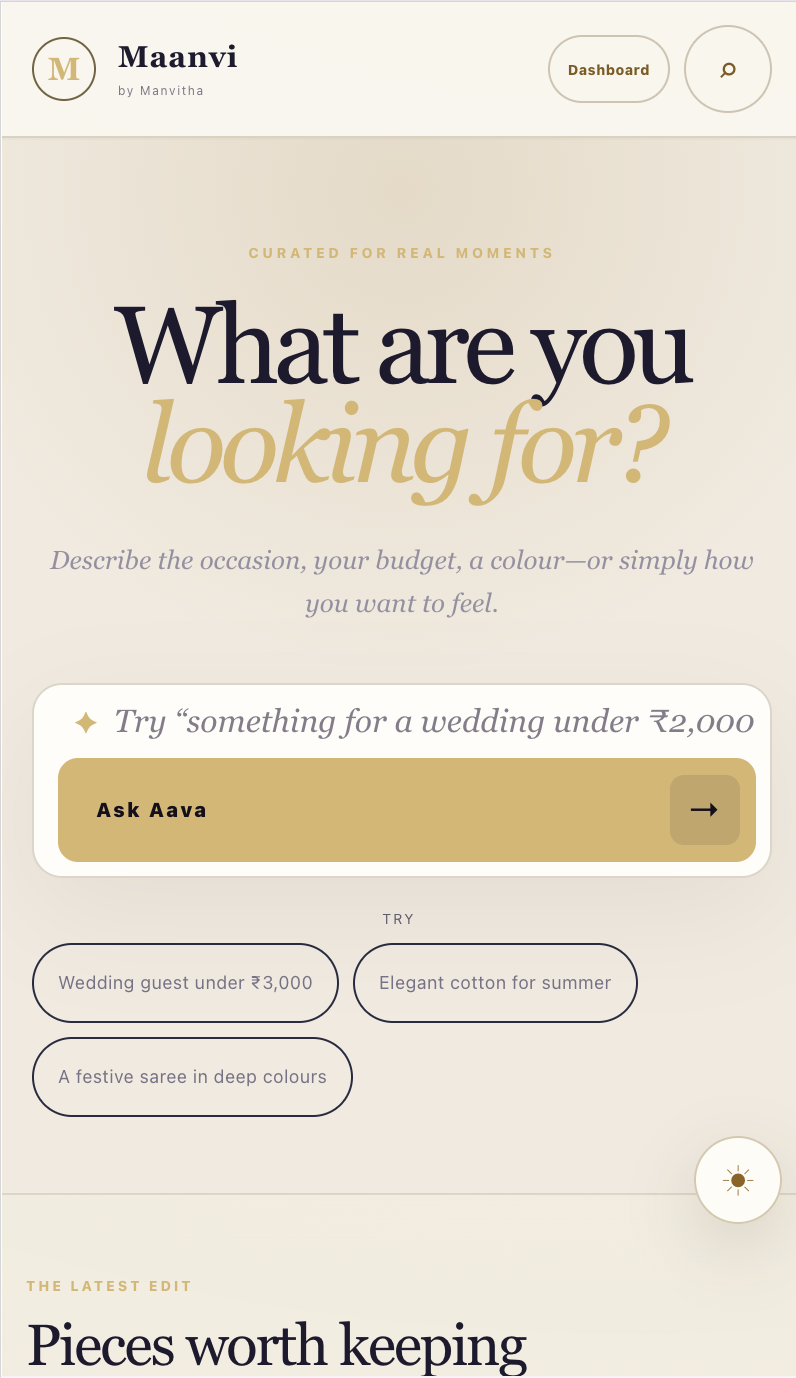
Users upload images, describe their product using voice or text, and Aava understands the product using multimodal reasoning. It asks follow-up questions whenever something is unclear instead of making assumptions.
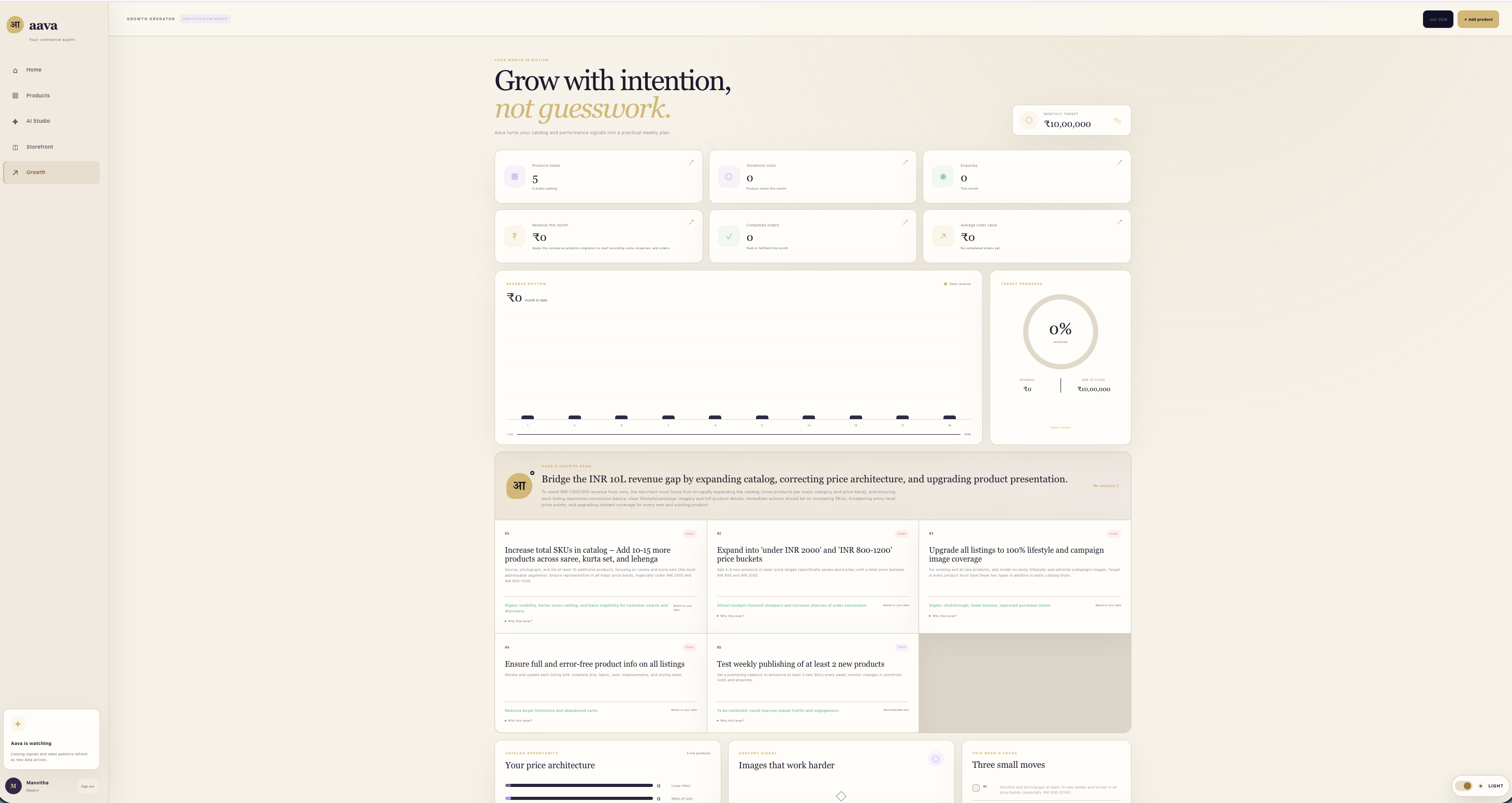
It then generates product attributes, descriptions, pricing suggestions, SEO tags, hashtags, and marketing content. After publishing, it continues helping with merchandising insights and recommendations to improve future listings.
Tasks that typically take hours can now be completed in minutes, allowing business owners to spend more time creating products and serving customers.
How we built it
OpenAI's models were at the center of everything we built.
We used GPT-5.5/5.6 because the project required much more than image recognition or text generation. The model combines vision, reasoning, and conversation to understand products, ask intelligent follow-up questions, generate structured product information, and create natural marketing content—all within a single workflow.
ChatGPT also became an important part of our development process. It helped us rapidly prototype ideas, refine prompts, debug issues, improve UX, and iterate much faster than we could have otherwise. Features that would normally take days to explore were often built and refined within hours.
For demonstrations and creative assets, we also used OpenAI tools including Sora, allowing us to quickly visualize ideas and improve the overall user experience.
Challenges we ran into
One of our biggest challenges was building an end-to-end AI product within the limited time and budget of a hackathon.
We invested in OpenAI API credits and used ChatGPT Pro so we could build a working product instead of relying on mockups. Every API call mattered, so we spent a lot of time optimizing prompts and workflows to get the most value from each request.
Another challenge was making the AI trustworthy. Fashion products often contain details that aren't obvious from images alone. Rather than hallucinating, we designed Aava to ask follow-up questions whenever confidence was low.
If we continue developing Aava, we'd love to expand it with larger datasets, richer market intelligence, and even stronger multimodal capabilities.
Accomplishments that we're proud of
We're proud that Aava feels like a real business assistant rather than just another AI chatbot.
Instead of generating a caption, it understands products, reasons through missing information, creates complete listings, and continues helping after products are published.
We're also proud that although our demo focuses on clothing, the same workflow can support almost any product-based business.
What we learned
The biggest lesson from this hackathon was that great AI products aren't built by simply calling a model—they're built by designing thoughtful workflows around the model.
We learned that GPT-5.5/5.6 is most powerful when it can combine vision, reasoning, and conversation into a single experience. We also learned how much faster we could build by using ChatGPT as a development partner throughout the entire process.
What's next for Aava
This is just the beginning.
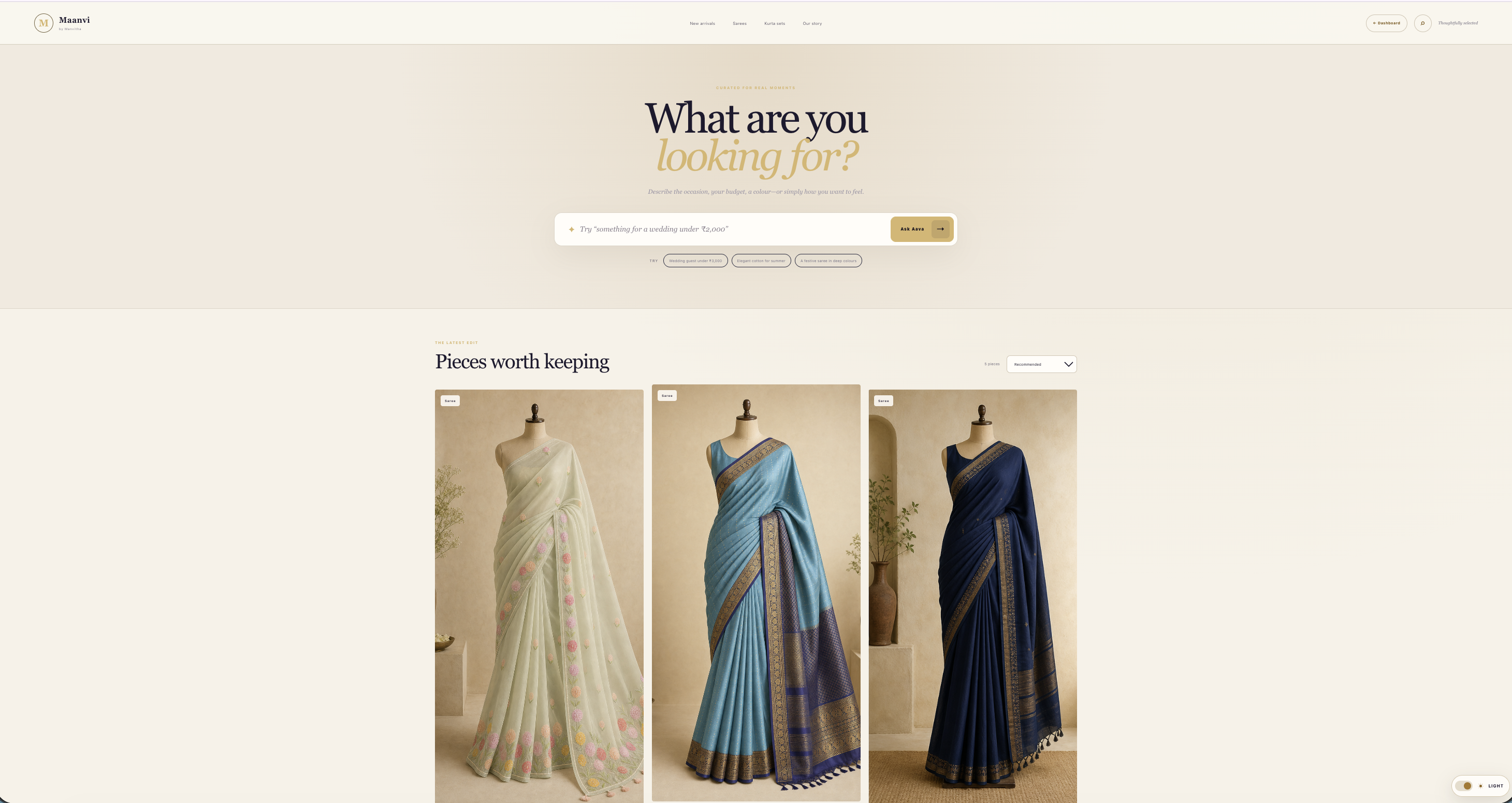
We want Aava to become a complete AI commerce assistant that can publish directly to platforms like Shopify, Etsy, Instagram, and WhatsApp Business, generate professional product photography, understand market trends in real time, and provide analytics that help businesses grow.
There are hundreds of millions of small and medium-sized businesses worldwide, many of which don't have access to dedicated marketing or merchandising teams. Our goal is to give them those capabilities through AI, helping them build a stronger online presence while saving time, reducing costs, and making it easier to compete in the digital marketplace.
Built With
- chatgpt
- codex
- gpt-5.6
- sora
- whisper


Log in or sign up for Devpost to join the conversation.