-
-
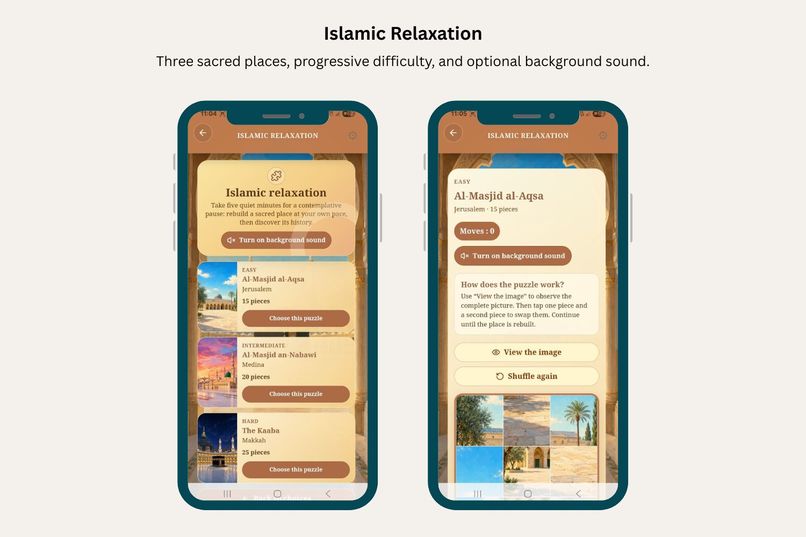
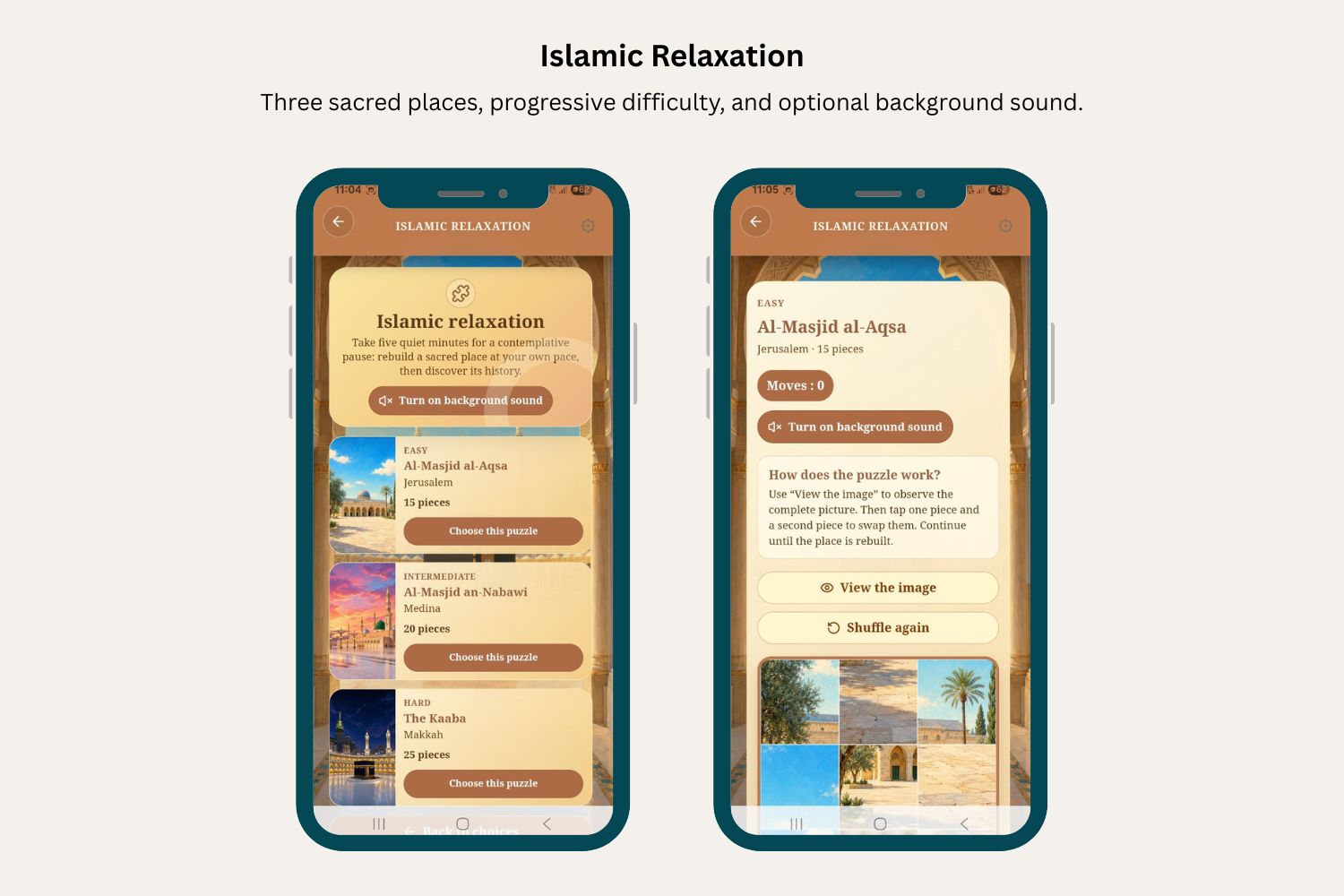
Islamic Relaxation offers three progressive puzzles with clear instructions and optional background sound.
-
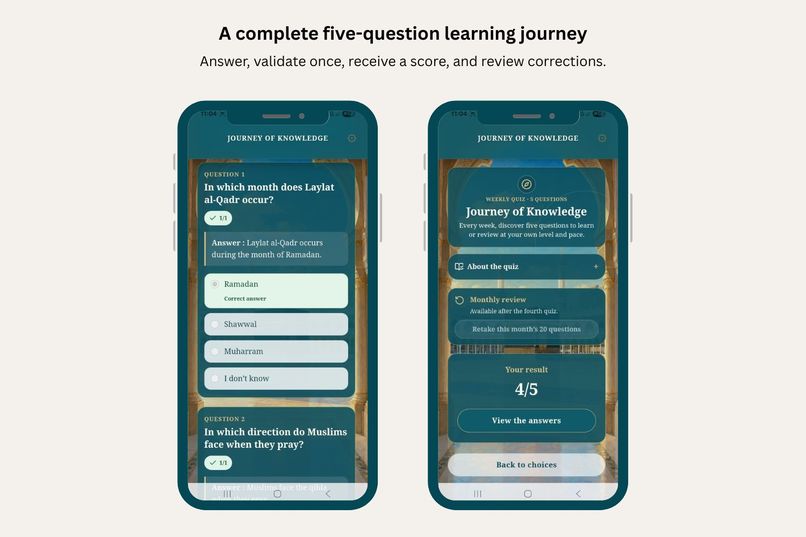
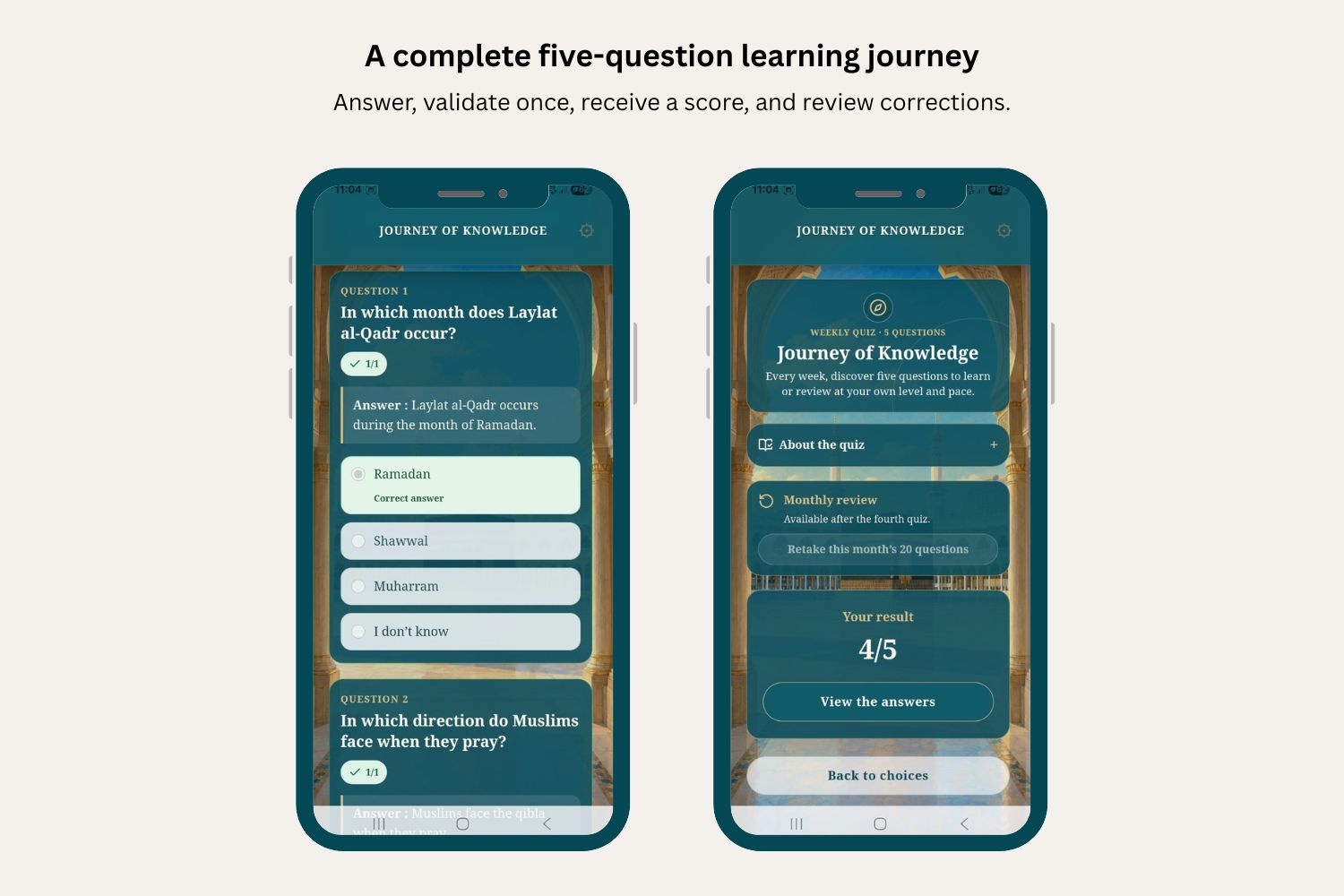
A five-question weekly quiz with final validation, a score, corrections, and a 20-question monthly review.
-
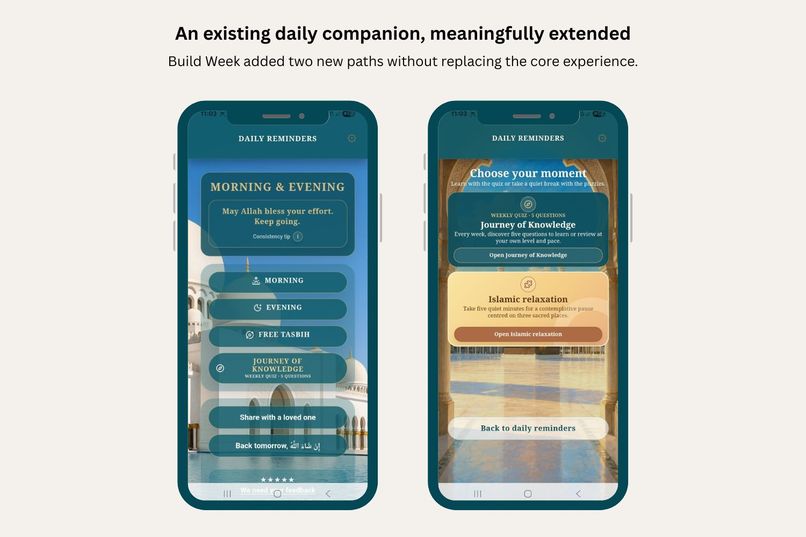
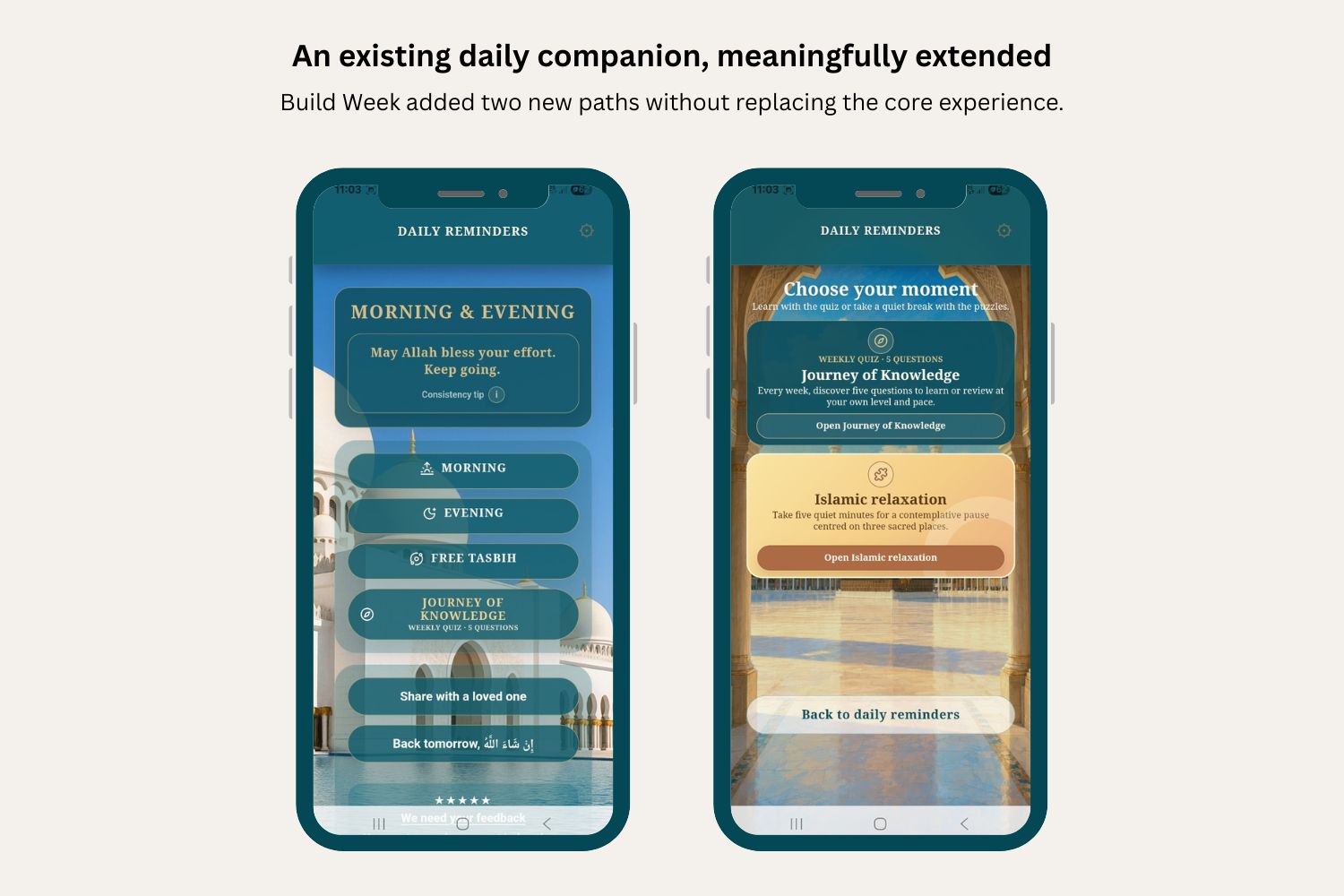
The existing daily companion, extended during Build Week with two complementary learning and contemplation paths.
-
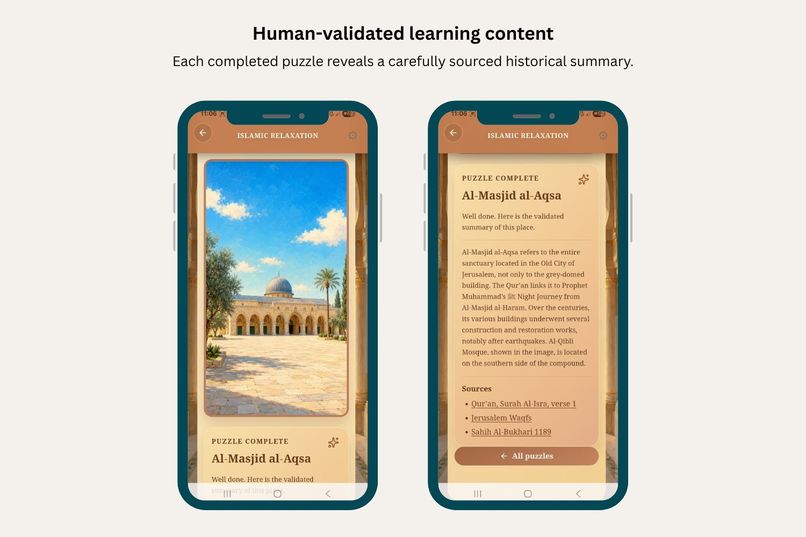
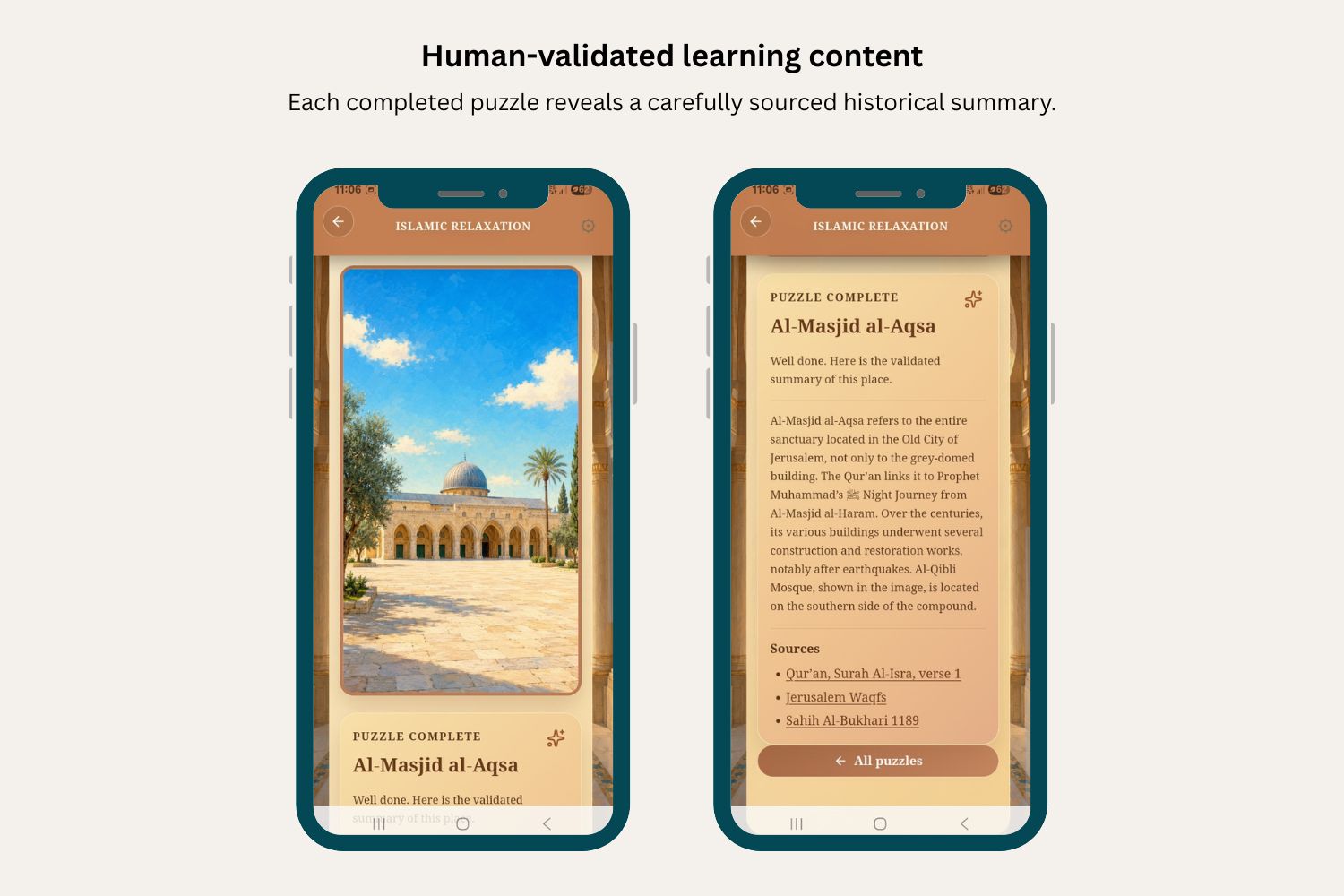
Each completed puzzle reveals a carefully sourced historical summary that remains subject to human validation.
Inspiration
Ma Foi Islamique grew from a personal need. I wanted a calm place where I could pause, remember Allah, and reflect honestly on my faith without pressure, guilt, or distraction.
Some days, I need a structured moment of self-reflection. On other days, I simply want to read my adhkar, learn something small, or enjoy a peaceful activity without leaving the application’s calm environment. I built the kind of application I genuinely wanted to use every day.
What it does
Ma Foi Islamique is a bilingual French and English Islamic companion centered on muhasabah: a short daily moment of sincere self-reflection.
Users follow a 30-day journey and answer three gentle questions each day. Their progress appears on a visual color-coded grid, helping them notice patterns and build consistency without competition or guilt.
The application also includes:
- Morning and evening adhkar
- Bedtime invocations
- A free tasbih counter
- Guided audio
- Gentle reminders
- Local progress tracking
The core application existed before OpenAI Build Week. During the submission period, I meaningfully extended it with two new experiences.
Voyage du savoir
A weekly five-question Islamic quiz designed to make learning light and sustainable. Users answer all five questions, validate the complete quiz, receive a score, and can then review the corrections.
After four weekly quizzes, a 20-question monthly review becomes available. It reuses the four previously validated question sets, provides its own score and corrections, and does not alter the weekly results.
Islamic Relaxation
A peaceful puzzle experience based on three sacred Islamic places, with progressive difficulty: 15, 20, and 25 pieces. Users can preview the image, reconstruct it at their own pace, track their moves, and optionally activate a calm background sound.
After completing a puzzle, the user discovers a short, carefully sourced history of the place.
Together, these additions create several complementary rhythms: daily reflection and remembrance, weekly learning, monthly review, and occasional peaceful contemplation.
The application contains no advertising, requires no personal account, and keeps personal progress locally on the device.
How I built it
The core application existed before OpenAI Build Week. During the submission period, I used Codex and GPT-5.6 to accelerate targeted technical implementation, verification, and documentation without replacing my product or editorial responsibility.
Codex helped me implement, strengthen, and verify:
- The weekly quiz journey
- Global answer validation, scoring, and corrections
- The 20-question monthly review
- The puzzle system
- Bilingual content integration
- Local state and progress management
- Responsive mobile layouts and safe areas
- Android hardware-back navigation
- Web and Android test builds
- Preventive code hardening and privacy checks
My role remained central throughout the process. I defined the product vision, user journeys, Islamic content, sources, tone, accessibility requirements, privacy boundaries, scheduling, and visual direction.
I tested every iteration on a physical Samsung device and provided precise feedback using screenshots and real usage scenarios.
The workflow became a continuous collaboration:
Product decision → targeted Codex implementation → Android build → real-device testing → visual and technical feedback → targeted correction
GPT-5.6 helped me translate product decisions into clearer technical specifications, assess risk-sensitive choices, and accelerate targeted improvements to the supplied website ZIP, including landing-page optimization and a bilingual blog page. I reviewed and directed each of these changes.
The mobile application uses React, Capacitor, Capacitor Preferences, Local Notifications, RevenueCat, Jest, React Testing Library, and Android Gradle tooling.
Challenges I faced
The main challenge was adding meaningful new experiences without disrupting an already complex daily application.
The new sections had to remain bilingual, readable on different screen sizes, respectful in tone, and visually consistent with the rest of the application.
Real-device testing revealed issues that were difficult to identify on desktop, including typography scale, card proportions, mobile safe areas, visual hierarchy, and Android hardware-back navigation.
The educational content required additional care because Islamic questions, explanations, and historical summaries needed credible sources and cautious wording.
No religious question, answer, explanation, or historical summary is published without human review and founder approval. AI accelerated implementation and documentation, but it did not replace religious-content validation.
Another challenge was deciding what not to release. A manual backup and import system was considered, but I chose to defer it because a safe version requires stronger validation, careful exclusion of subscription data, and dedicated real-device restoration tests.
Accomplishments that I am proud of
I am proud that the application now provides several useful experiences without becoming a pressure-based productivity tool.
A user can reflect, remember Allah, learn something new, revise previous knowledge, or simply take a peaceful break—all within the same private and calm environment.
The complete five-question journey now demonstrates opening the quiz, answering every question, global validation, scoring, corrections, and local restoration of the completed state.
The application also includes a reusable monthly review and three mobile-friendly puzzles with distinct difficulty levels, optional sound, and sourced completion summaries.
The verified submission build passed 9 test suites and 29 tests, completed an optimized Web build, synchronized Capacitor, compiled successfully for Android, and was validated on a physical Samsung device.
I am also proud that this independent, founder-led product advanced through a genuine collaboration with Codex and GPT-5.6, while I retained responsibility for the product, content, ethics, testing, and final decisions.
What I learned
I learned that Codex is most valuable when treated as an implementation collaborator rather than an automatic decision-maker. Clear product direction, careful testing, and human judgment remain essential.
I also learned how important real-device feedback is. A feature can work technically while still needing substantial refinement before it feels calm, clear, and natural to use.
Finally, I learned that restraint is part of responsible development. Not inventing religious content, not forcing risky dependency changes, and not rushing a sensitive backup system were important product decisions.
What’s next
The next steps are:
- Extend stability and navigation testing to additional Android devices
- Complete final iOS testing and preparation on a Mac
- Continue validating all Islamic educational content
- Gradually add new sourced quiz questions only after human approval
- Expand the peaceful contemplation experiences
- Improve accessibility and responsiveness across devices
- Design and test a defensively validated manual backup system
- Prepare a quiet release followed by staged updates
The long-term goal is to make Ma Foi Islamique a calm, private, useful, and accessible daily faith companion in both French and English.
Build Week disclosure
Ma Foi Islamique is an independently conceived and directed product. Its targeted Build Week extensions, technical verification, and documentation were accelerated through collaboration with Codex and GPT-5.6. The underlying application was not created entirely by AI, and all religious content remains subject to human validation.
Built With
- android
- capacitor
- codex
- css3
- html5
- javascript
- jest
- openai
- react

Log in or sign up for Devpost to join the conversation.