Project Story
Inspiration
Creating great long-form content is only half the job. The second half is turning that content into useful, platform-specific content for different audiences.
A technical article may contain several valuable ideas, but adapting those ideas into a LinkedIn post, an X thread, an email newsletter, and an Instagram carousel can require hours of repetitive work.
We wanted to automate that entire distribution workflow rather than simply generate another AI-written caption.
RepurposeOS was built around a simple idea:
Give AI the source content and the campaign goal, then let specialized agents figure out how that content should travel across platforms.
What it does
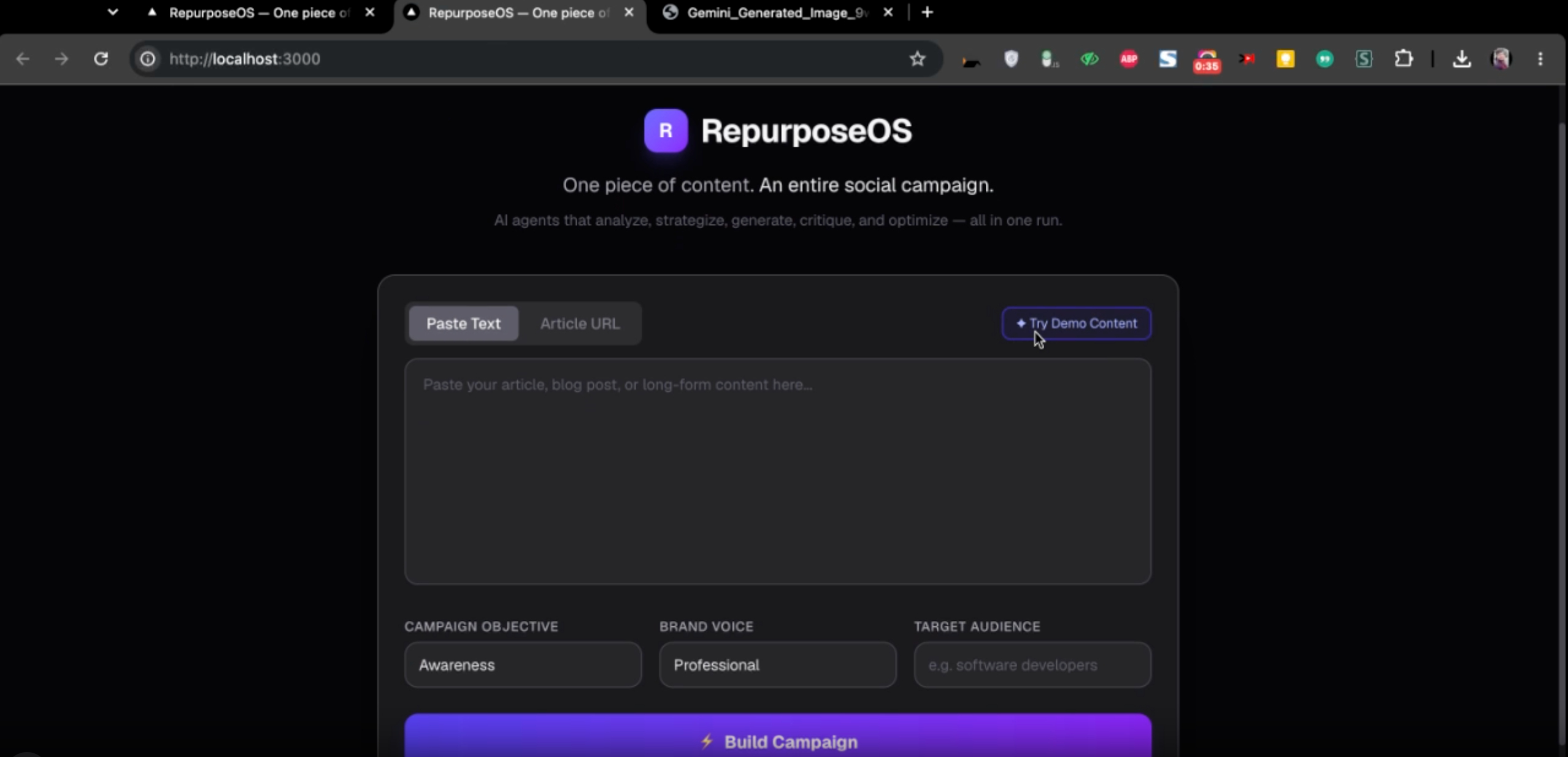
RepurposeOS turns one long-form article into a coordinated, multi-platform social media campaign.
Users can either paste content directly or provide an article URL. They then select a campaign objective, target audience, and preferred brand voice.
RepurposeOS then runs an AI workflow that:
- Analyzes the source and extracts key insights, claims, hooks, and content angles.
- Creates a campaign strategy based on the user's objective.
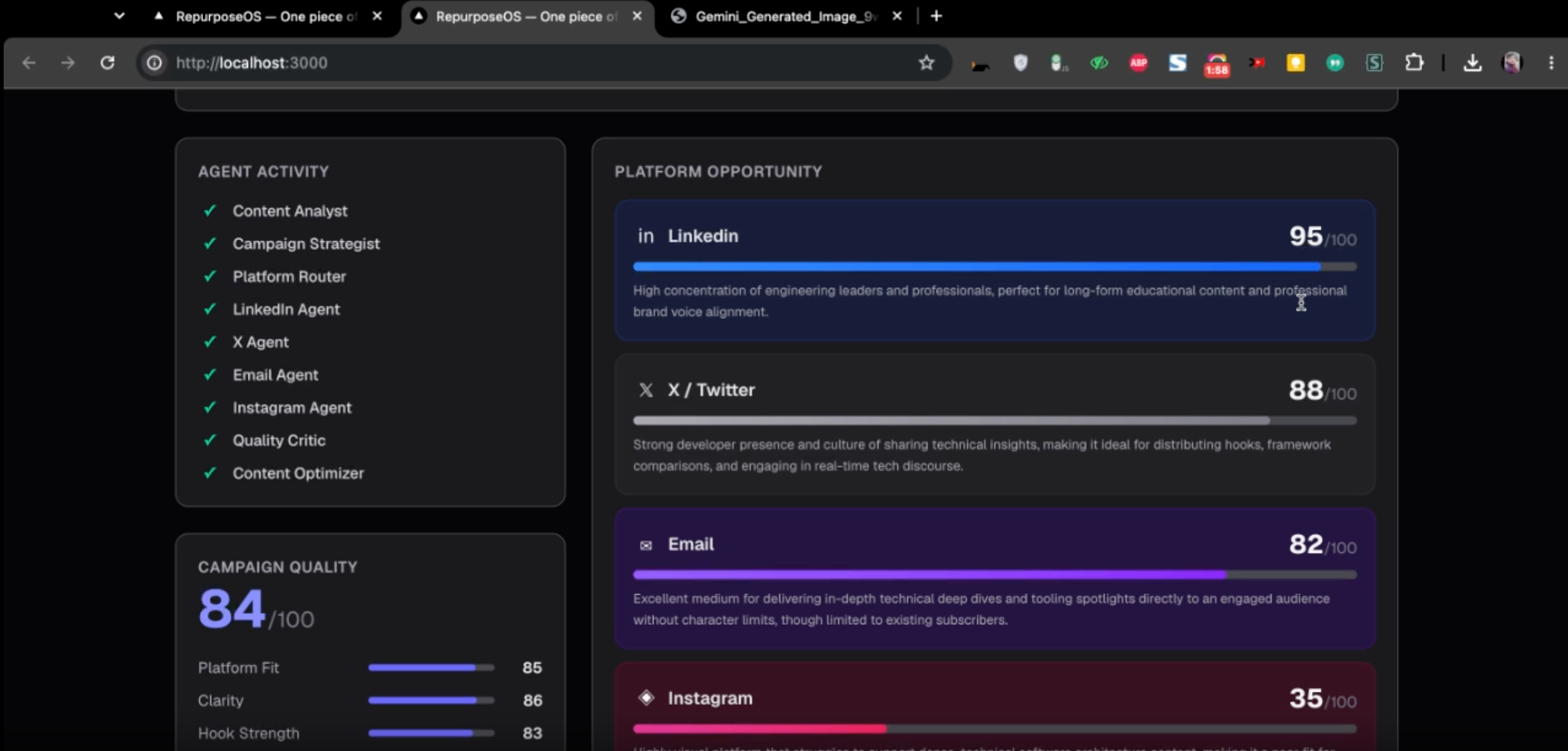
- Scores platforms based on how suitable the source content is for each one.
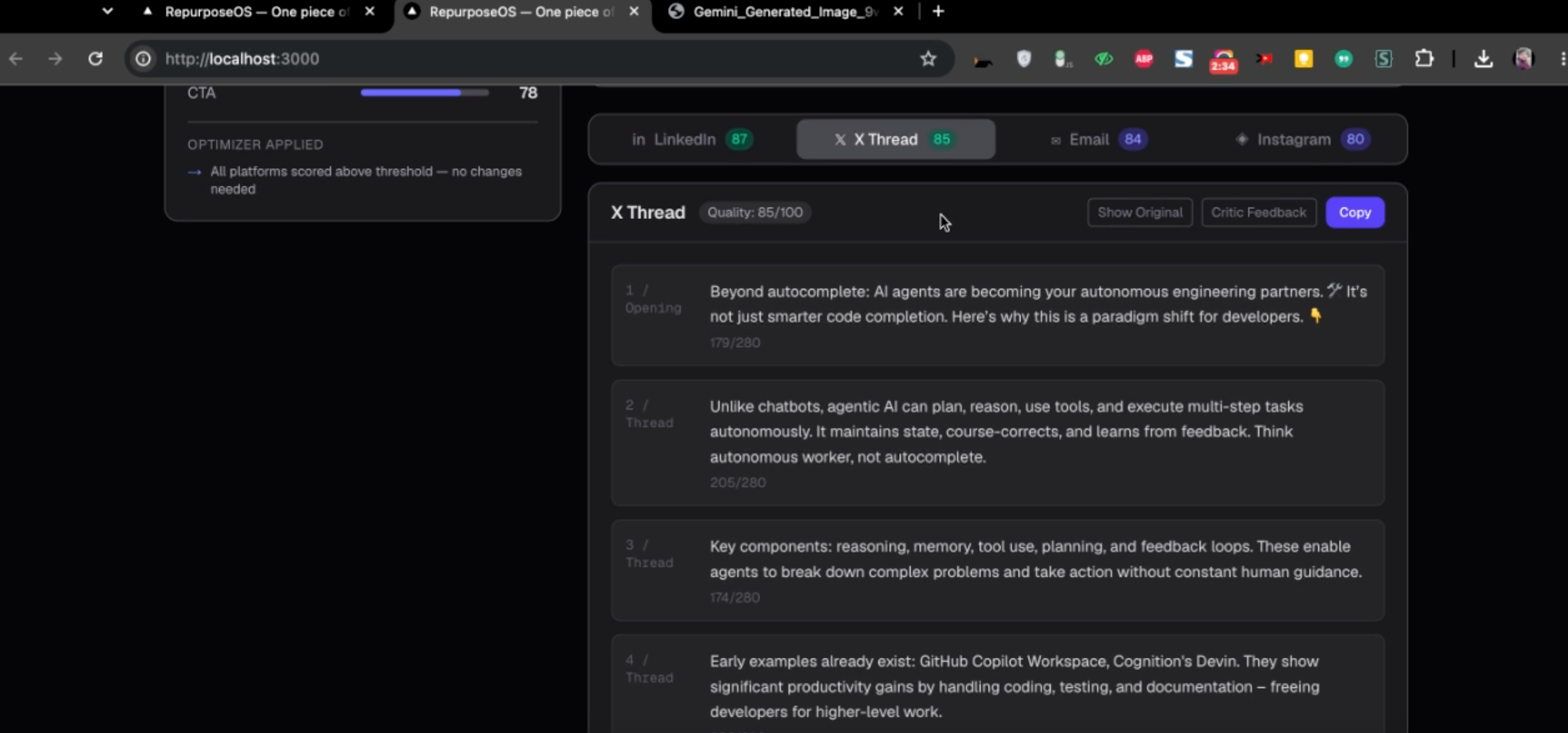
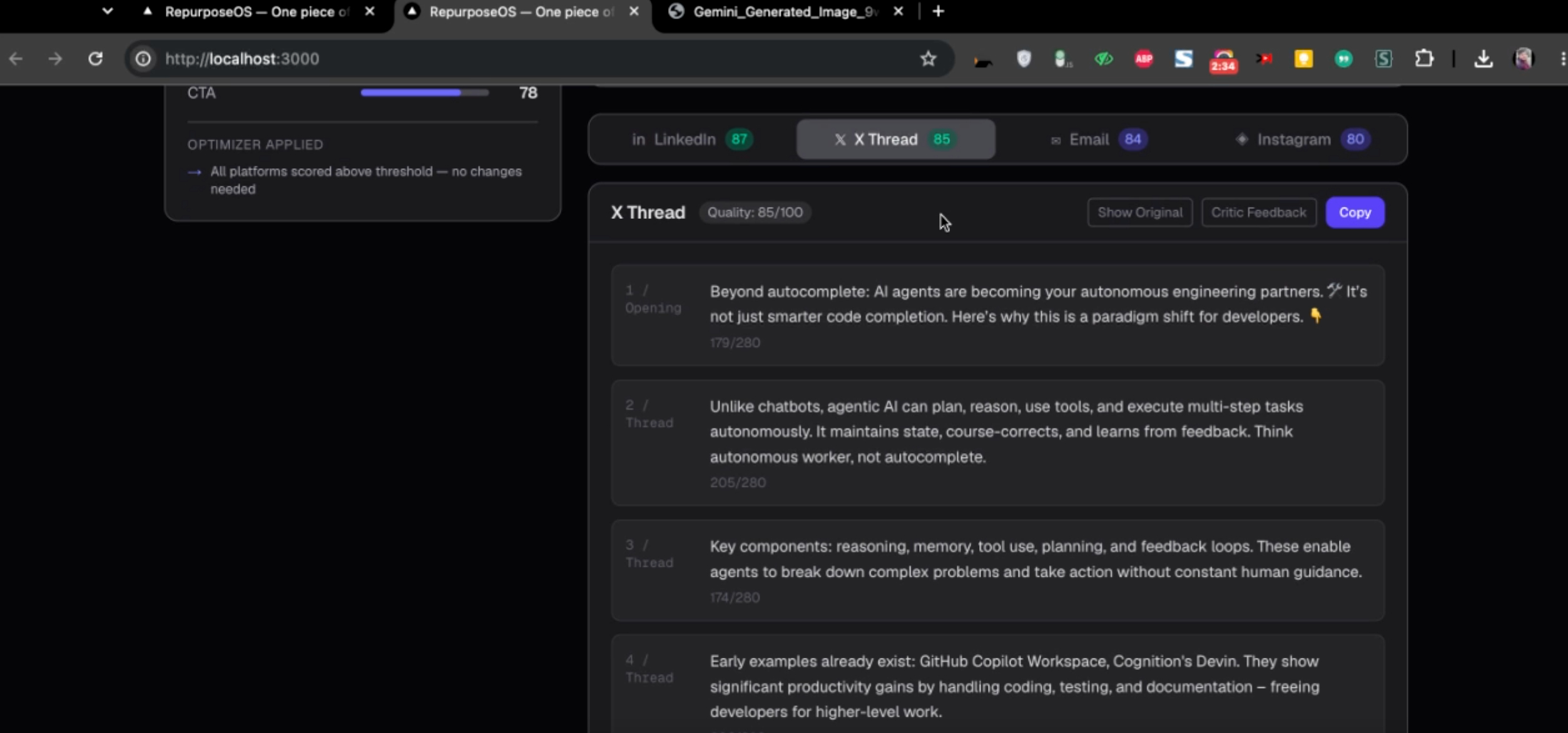
- Generates platform-native content for LinkedIn, X, email, and Instagram.
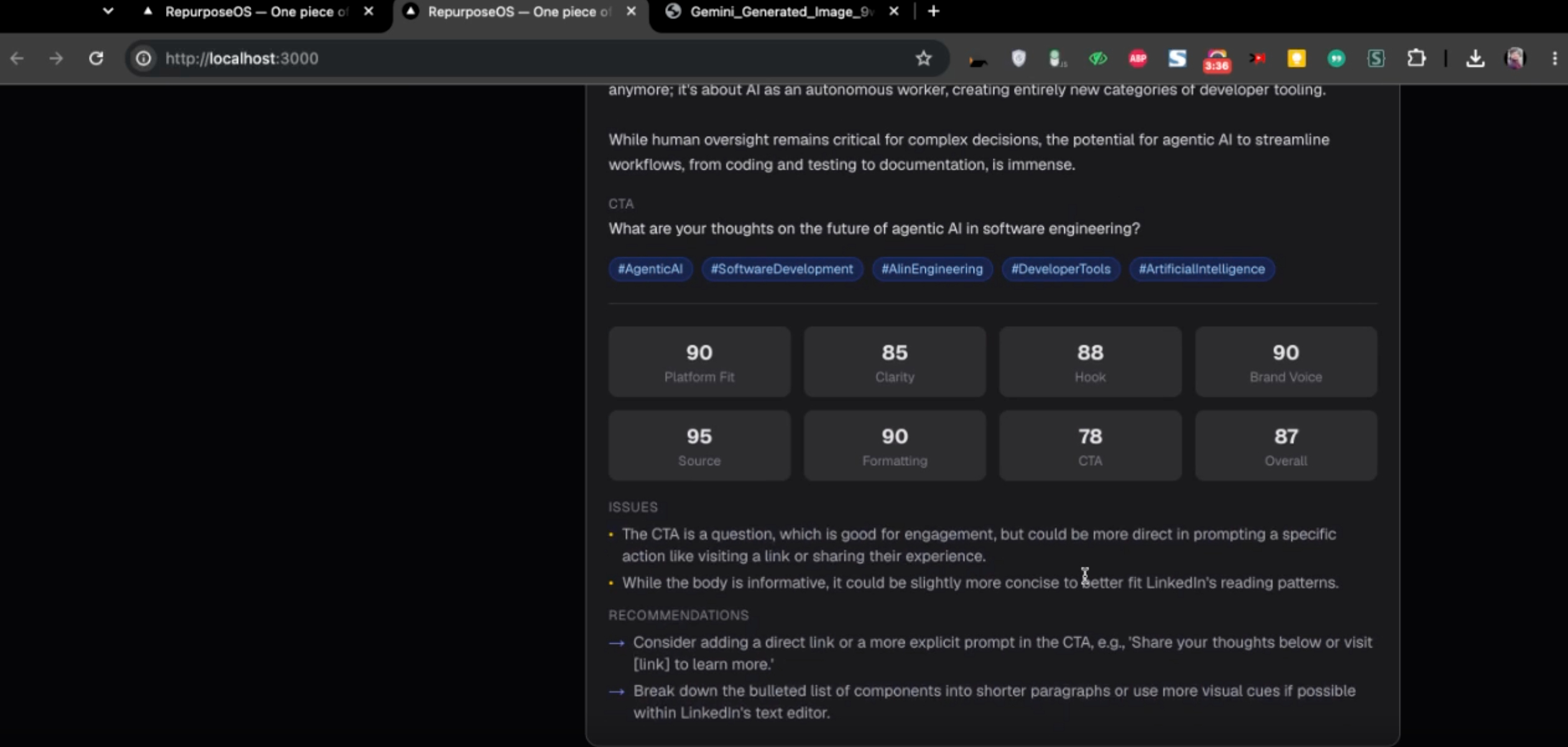
- Critiques the generated content across multiple quality dimensions.
- Automatically optimizes content based on the critic's feedback.
- Lets users compare original and optimized versions.
- Exports the complete campaign as a downloadable ZIP containing ready-to-use assets.
The result is not just a collection of generated posts, but a coordinated campaign produced through an end-to-end AI workflow.
How we built it
RepurposeOS is built with Next.js, TypeScript, Tailwind CSS, LangGraph, OpenAI-compatible LLM APIs, Zod, Mozilla Readability, and JSZip.
The core system is a multi-agent workflow built around a shared campaign state.
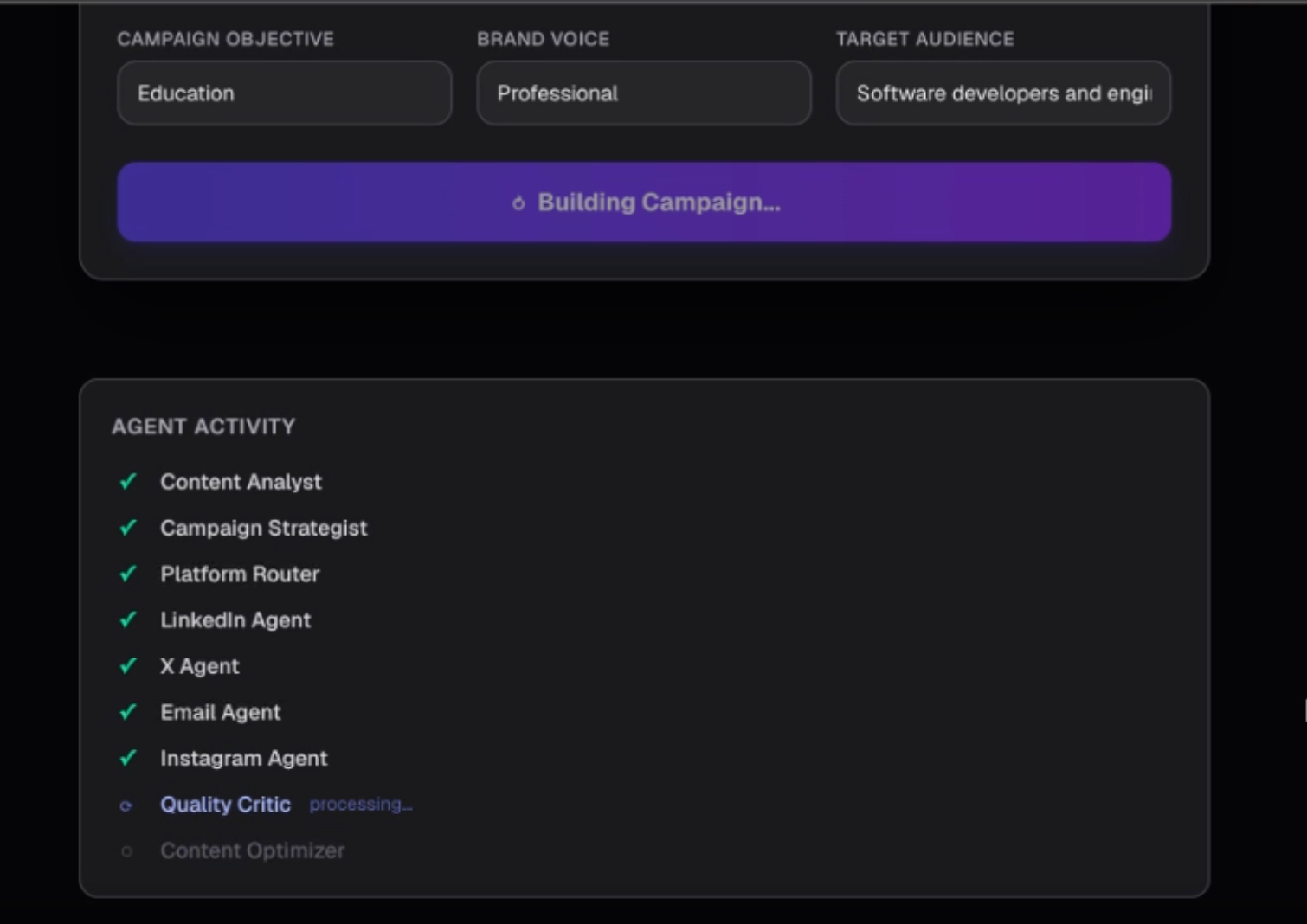
The workflow starts with a Content Analyst Agent, which extracts the important ideas and opportunities from the source.
A Campaign Strategist Agent then determines the campaign direction, target angles, and platform opportunity scores.
The workflow routes the campaign into specialized platform agents for:
- X / Twitter
These agents are designed around the conventions and formats of their specific platforms rather than simply copying and shortening the original article.
After generation, an independent Critic Agent evaluates the campaign for platform fit, clarity, hook strength, brand voice, source consistency, formatting, CTA quality, and overall quality.
An Optimizer Agent then uses those findings to improve the generated content.
The application streams the agent workflow to the UI so users can see the campaign being built in real time.
We also built article extraction, structured LLM output validation with Zod, retry handling, a built-in demo article, and a ZIP campaign exporter so the project works as a complete hackathon-ready application.
Challenges we ran into
Making every platform feel native
A direct rewrite of the same article produces content that feels repetitive and generic. Each platform therefore requires different structures, hooks, levels of detail, and calls to action.
We addressed this by giving each platform its own specialized generation logic and by evaluating the results independently.
Keeping AI outputs reliable
LLM responses are not always perfectly structured. We needed a reliable way to turn model responses into application data.
We solved this with structured outputs, Zod validation, retry handling, and graceful error states.
Building a meaningful quality loop
Generating content was not enough. We wanted the system to recognize weaknesses in its own output.
That led to the Critic → Optimizer workflow, where generated content is evaluated and then improved before the final campaign is presented.
Keeping the workflow fast
A campaign requires multiple AI operations. Running every step sequentially would create unnecessary latency.
The platform-specific generation agents therefore run concurrently where practical, while the UI streams progress so users can see what the system is doing.
Accomplishments that we're proud of
We are proud that RepurposeOS is a genuinely functional end-to-end application rather than a static AI generation demo.
The core workflow works from:
Article → Analysis → Strategy → Platform Generation → Critic → Optimization → Export
We also built a real-time agent activity experience that makes the underlying AI workflow visible to the user.
Another feature we're particularly proud of is the Platform Opportunity Score, which gives users an AI-generated explanation of why certain platforms are a better fit for their source content.
Finally, the campaign exporter turns the generated results into a practical deliverable instead of leaving them trapped inside the application.
What we learned
We learned that effective AI automation is not simply about generating better text.
The real opportunity comes from combining:
specialization + orchestration + validation + feedback
A single model can generate content, but specialized agents can reason about different parts of a workflow, while a critic/optimizer loop can improve the result before it reaches the user.
We also learned that making AI actions visible is important. Showing users what the agents are doing makes a complex AI workflow much easier to understand and trust.
What's next for RepurposeOS — AI Campaign Autopilot
The next version of RepurposeOS could move from campaign generation to campaign execution.
Future capabilities include:
- Direct publishing and scheduling to social platforms
- Performance analytics for generated campaigns
- Audience feedback and engagement analysis
- Automatic campaign iteration based on performance
- Persistent brand voice and creator memory
- Campaign calendars and recurring content workflows
- Additional platforms such as YouTube, Threads, Reddit, and TikTok
- A closed-loop system that learns which content strategies perform best for each creator
Built With
- agentic
- agents
- automation
- content
- creation
- css
- developer
- generative
- langgraph
- language
- marketing
- media
- natural
- next.js
- openai
- processing
- productivity
- react
- social
- tailwind
- typescript

Log in or sign up for Devpost to join the conversation.