-
-
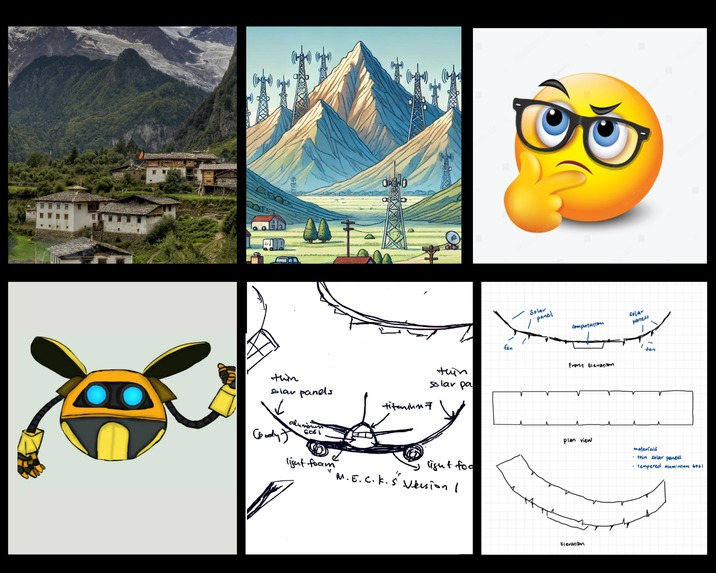
Storyboard

Inspiration
The inspiration behind M.E.C.K.S (Mobile Elevated Communication and Knowledge Satellite) was the need to address the significant digital divide between urban and rural areas. While urban populations benefit from advanced telecommunications infrastructure, many remote regions, such as Northern Australia, East Malaysia, and parts of Africa, remain disconnected from vital services. These areas face challenges like lack of infrastructure, electricity, and transportation, which complicates the deployment of traditional communications technology.
The idea for this project came from the desire to create an affordable, scalable, and accessible solution that could bring reliable internet and telecommunications services to underserved regions. High-altitude platforms and aerial technology offered an exciting opportunity to provide satellite-like coverage, but without the high costs associated with traditional satellite systems.
How we built it
We approached the M.E.C.K.S Satellite On Earth project by first conducting thorough research on existing telecommunications challenges in remote regions. We identified the limitations of traditional infrastructure, such as the limited range of cell towers and the prohibitive costs of satellite-based systems. With this foundation, we moved on to:
Designing the Aerial Platform: We focused on creating a lightweight, durable structure optimized for high-altitude endurance. This involved selecting materials such as aluminum 6061 for the main frame, carbon fiber for the wings, and titanium for additional structural integrity. Simulating Aerodynamics and Coverage: Using software simulations, we designed the curved wing structure for optimal lift and minimal energy consumption. This allowed the platform to cover wide areas while remaining efficient in high-altitude conditions. Telecommunications Integration: We researched and integrated low-cost wireless communication systems capable of long-range coverage to ensure the platform could effectively serve remote communities without needing physical infrastructure like cell towers. Cost and Feasibility Analysis: A significant part of the build process was performing a cost analysis on the materials and telecommunications technology to ensure that the solution would be both effective and affordable for large-scale deployment in underdeveloped regions.
Challenges we ran into
Weather Interference: Designing a system that could function reliably in diverse weather conditions was a major technical hurdle. High winds, storms, and temperature variations had to be accounted for in the aerodynamic design and communications equipment. Bandwidth Limitations: Ensuring sufficient bandwidth and connectivity for large user bases, especially in emergencies, required careful planning. We explored options for optimizing data transmission and dealing with the shared bandwidth problem inherent in wireless platforms. Regulatory Issues: Navigating airspace regulations and spectrum allocation was challenging. Ensuring compliance with international aviation and telecommunications standards like ICAO and ITU added complexity to the deployment plan. Sustainability: Achieving long-term energy efficiency while keeping costs low was crucial. We had to balance material choices and communication technologies to ensure the platform could operate continuously without excessive energy demands.
What we learned
Multidisciplinary Collaboration: We learned that combining elements of aerospace engineering, telecommunications, and socio-economic development is essential for creating solutions that go beyond technology and offer real-world impact. Importance of Adaptability: As we tackled weather and bandwidth limitations, we realized that adaptability—both in terms of technology and deployment strategy—was key to overcoming these challenges. Regulatory Considerations: Understanding the complex web of international and national regulations governing telecommunications and airspace was an eye-opener and taught us the importance of early stakeholder engagement.
What's next for M.E.C.K.S Satellite On Earth
Field Testing: The next step is to test the M.E.C.K.S platform in real-world conditions, focusing on challenging terrains and climates to optimize performance under various conditions. Improved Bandwidth Management: We plan to work on advanced bandwidth optimization techniques to handle higher user densities without affecting performance. Wider Deployment: After successful field testing, the goal is to collaborate with NGOs, governments, and telecommunications companies to deploy the M.E.C.K.S system in remote regions globally, ensuring access to education, healthcare, and emergency services. Disaster Relief Applications: Another key focus will be refining the model for rapid deployment during natural disasters, providing immediate communication support for emergency teams and affected populations.
Built With
- amazon-web-services
- c
- openweathermap
- python
- tensorflow


Log in or sign up for Devpost to join the conversation.