
Inspiration
During their tenure on the International Space Station (ISS), astronauts experience zero gravity or microgravity (minimal gravity compared to Earth) for extended periods. The forces, or lack thereof, cause significant changes in the astronauts’ bodies, some of which aren’t apparent until they return to Earth (Jones, 2021, 1). These changes include bone calcium loss and osteoporosis, muscle atrophy, cardiovascular deconditioning, body shift fluids, impaired vision, loss of red and white blood cells and plasma, damage to the immune system, and disturbance to the inner ear's sensing of orientation and movement (Jones, 2021, 1). The astronauts attempt to compensate for these losses by rigorously exercising for 2 hours a day (Jones, 2021, 3), as well as taking supplements, however, these measures only course correct so far, and the astronauts still suffer great bodily damage (Jones, 2021, 3). The use of A.V.A. seeks to assist astronauts in monitoring several markers of their health relating to the musculoskeletal system. This is to concisely keep a record of their inevitably declining health over the span of their tenure in space.
What it does
The virtual assistant will monitor certain ranges associated with the vitals and health tests it is given (such as blood work or nuclear imaging), and will alert the astronaut when their health declines beyond a certain point. The primary goal of M.A.V.A is to provide an ease-of-use system that will hold a constant record of changes over time so space agencies can maintain a better gauge of when to send astronauts home to avoid potential permanent damage and decay of the astronauts’ bodies. Although they will experience atrophy no matter what, this solution will help astronauts have a better understanding of when to prioritize their exercise over the mission and minimize loss in muscle and bone mass.
How we built it
Vitals Dataset
We generated male and female blood test data relevant to musculoskeletal decay. This included fields that are typically observed when trying to detect bone or muscle loss.
Complete Blood Count (CBC): Test used to measure red blood cell count, white blood cell count, hemoglobin, hematocrit, and platelet counts.
Plasma: Time for blood to form a clot.
Dynamometry Test: Test used to measure grip strength.
DEXA Test: Test used to measure bone density.
Knowing the healthy ranges for all of these fields, we created a dataset of healthy individuals and a dataset of unhealthy individuals to train a learning model such that when given new information, it can detect if an individual is within the healthy range.
Indivuduals Dataset
We created a dataset of our 'astronauts' with relevant fields.
Deep Forest classification Algorithm
We generated a set of 5000 'fake and healthy' data. We used pandas for data manipulation, and scikit learn and used relevant dictionaries for establishing a data processing pipeline, training, and evaluation. We ended up being able to successfully classify our data set using Google's Auto AI and used two training cycles of 3 hours each. However, this strategy is not viable in the long run as it is resource-intensive, cost-prohibitive, and provides us little control of the model.
This was the strategy for implementing the random forest algorithim
- Split generated data set into training and testing sets
- Transformers establised to extract the differnce in Male and Female acceptable thresholds. ColumnTransformer applies the combined feautures to the relevant columns in the dataset
- Data pipe line: Preprocess, and then a random forest classifier learns to map X_train and y_train and the feautures associated with them.
Evaluations: .65 precision, .70 accuracy, .59 recall, .63 F1-Score,
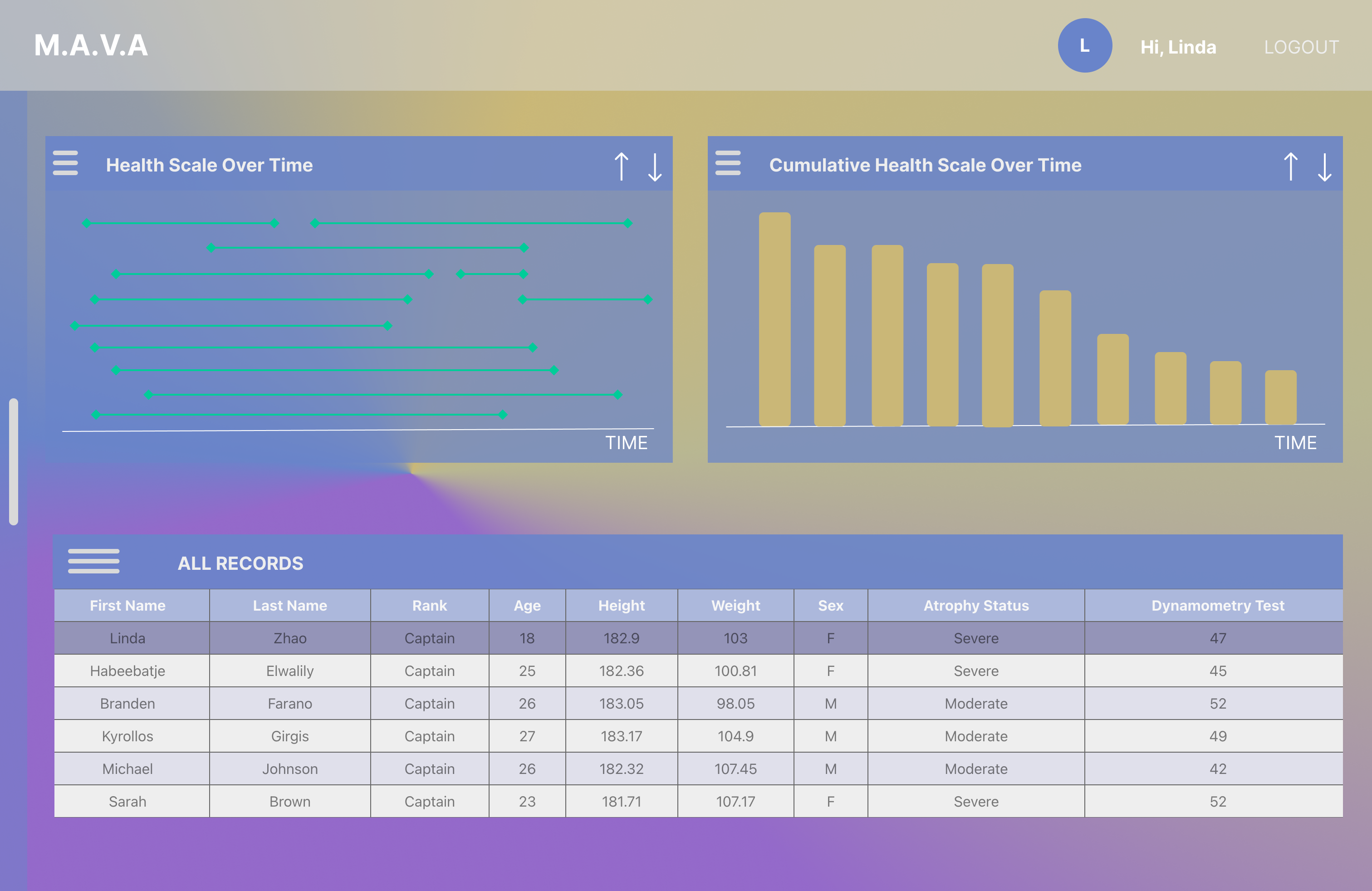
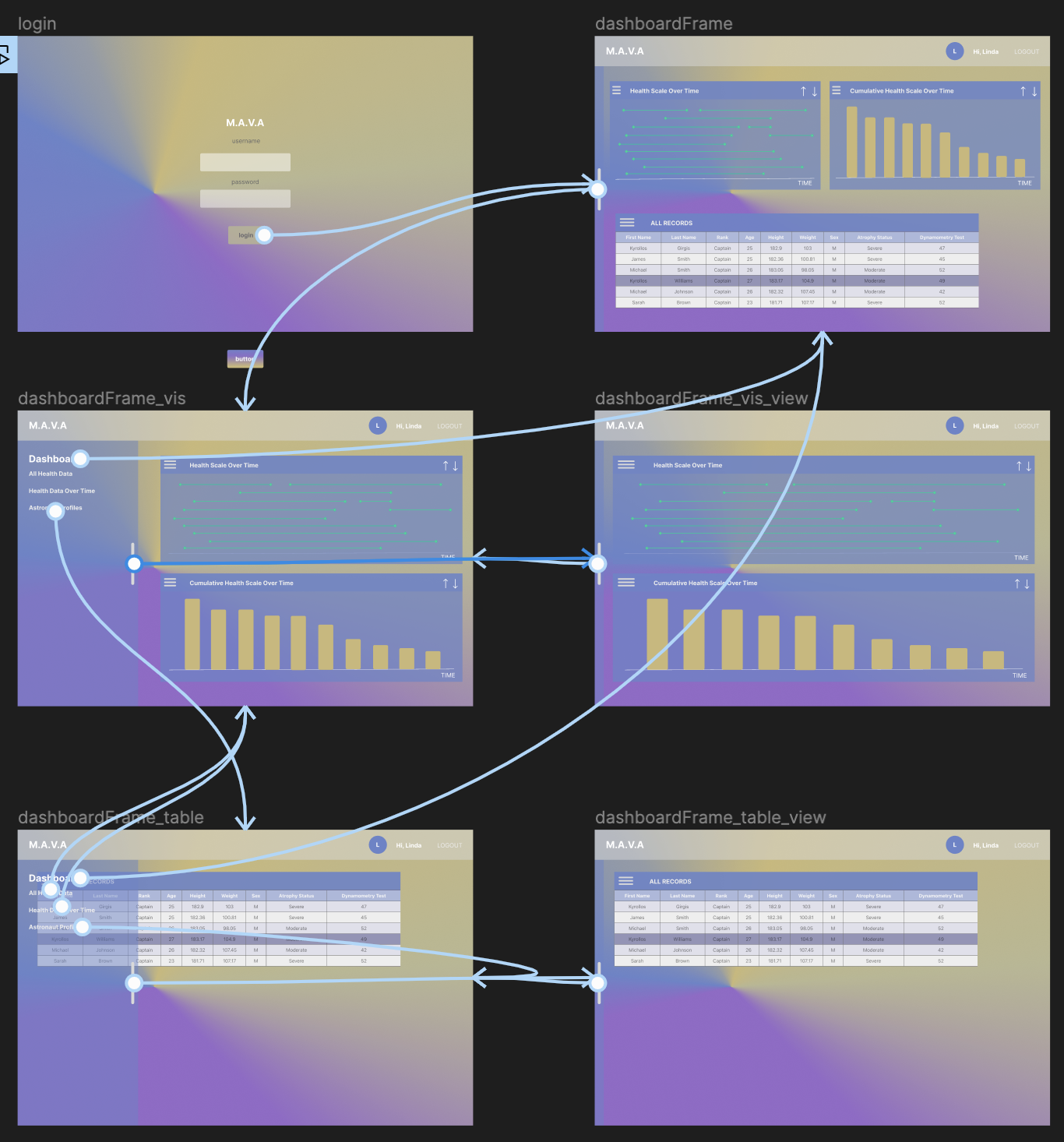
*UI/UX * We import ideas of Visual Analytics to the frontend dashboard. For better health management, astronauts should be cautious about the health level of everyone, as well as all possible influencing factors over time. Therefore, we designed panels, illustrating how the health status of each person, and a cumulative health scale counted as a metric over time. The data are free to order ascendingly or descendingly, for analyzers to pick those with best or worst healthy people for further exploration. There are also tables of all austronaut profiles, for a better overview of all information. We used Figma for designing and prototyping, and React.js for implementation.
Challenges we ran into
-Issues figuring out how to avoid bias using our generated datasets.
-Figuring out how we wanted to label each parameter.
-Finding out the markers that can be used to identify musculoskeletal decay
Accomplishments that we're proud of
-Learning a lot about how space affects the body
-Creating our own UI/UX resources from scratch
-Creating our own datasets and training them
-Averaging about 80% precision and accuracy
What we learned
What's next for M.A.V.A (Musculoskeletal Astronaut Vitals Assistant)
We hope to add more functionality to the information system, maybe add educational resource links for astronauts to read, deploy in the Google app engine, add a continuous integration/deployment pipeline, create a more robust UI, clean up code, optimize performance, implement a thorough security protocol, and ensure we are compliant with HIPAA regulations.
Opting in for the MongoDB Atlas Prize

Log in or sign up for Devpost to join the conversation.