Inspiration
We care about plants
What it does
Introducing our innovative project—an effortless and efficient solution for monitoring plant temperature across vast expanses of land, such as the extensive 243-acre farm. Say goodbye to the painstaking task of individually checking plants; with our drone technology, farmers can now assess entire sections of crops within seconds.
Our drone is designed to soar over fields, swiftly scanning temperatures to pinpoint areas that require immediate attention, whether it be for additional water or maintenance. This streamlined process is facilitated through a Bluetooth-connected system on your smartphone, allowing you to collectively control the drone's direction and manage the well-being of your crops with ease.
How we built it
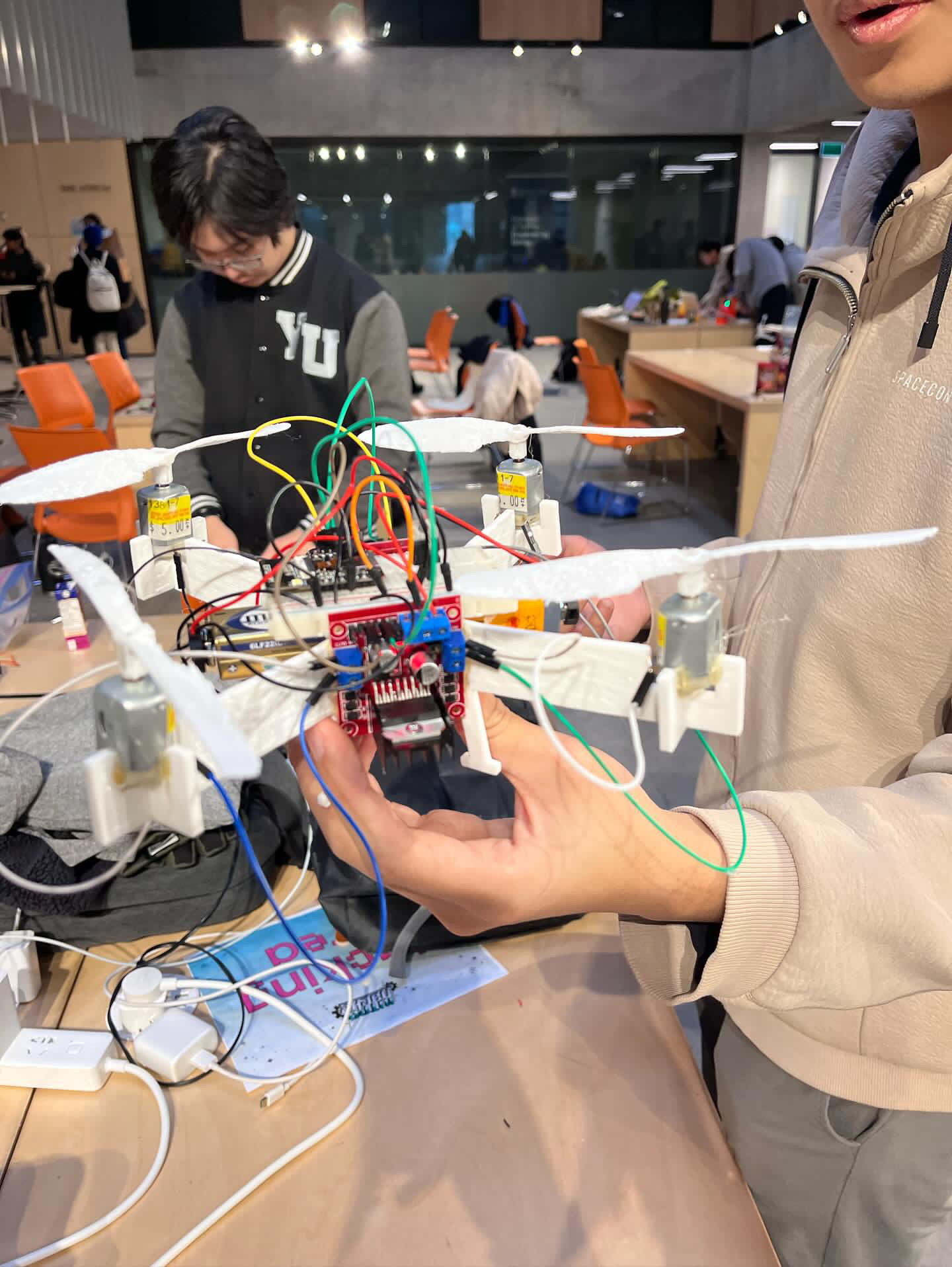
We utilized the Arduino IDE to program and upload specific commands to the ESP32 microcontroller. These commands dictated the desired functionalities of the drone. Once the commands were imported into the ESP32, we connected it to a breadboard. This step ensured a structured and organized setup, facilitating efficient communication and coordination between components.
The structural elements, including the frame and propellers, were crafted using 3D printing technology. Filament was used to build these components, creating a lightweight and durable framework.
The components were meticulously assembled, with the 3D-printed frame and propellers coming together. The assembly also incorporated the L298N motor driver, a crucial component that was wired to DC motors for controlled movement.
To enable external control, we implemented Bluetooth connectivity. Through a smartphone, users could seamlessly connect to the drone and control its movements, leveraging the uploaded commands.
Challenges we ran into
During the development process, we encountered several challenges that required innovative solutions. Initially, we faced difficulties establishing a connection between the ESP32 and the computer. This challenge was overcome through troubleshooting and ensuring proper configurations for seamless communication. Uploading the code to the ESP32 to enable Bluetooth-controlled commands presented challenges. We addressed this hurdle by refining the code, verifying dependencies, and ensuring compatibility for smooth execution. The 3D-printed frame initially posed a challenge due to its weight, impacting the drone's lift-off capability. To address this, we revisited the design, opting for lightweight materials and adjusting the frame structure to achieve an optimal balance between durability and weight.
Accomplishments that we're proud of
We made a drone
What's next for FarmScout
There are many upcoming enhancements to be made to FarmScout. We plan to incorporate an accelerometer, enabling our drone to achieve self-balancing capabilities, enhancing stability during flight. Additionally, we will also integrate autonomous navigation, leveraging GPS capabilities. This enhancement will empower the drone to navigate and cover vast areas seamlessly. Furthermore, we plan to equip the drone with irrigation capabilities. This enhancement will allow it to autonomously provide water to identified areas, optimizing crop health. Finally, to streamline user interaction, a user-friendly application will be developed to serve as a central hub, allowing users to connect with and control the drone effortlessly, ensuring a seamless experience.

Log in or sign up for Devpost to join the conversation.