-
-
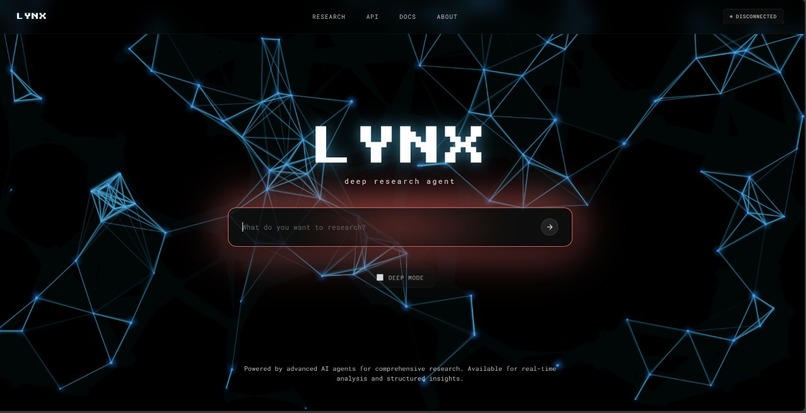
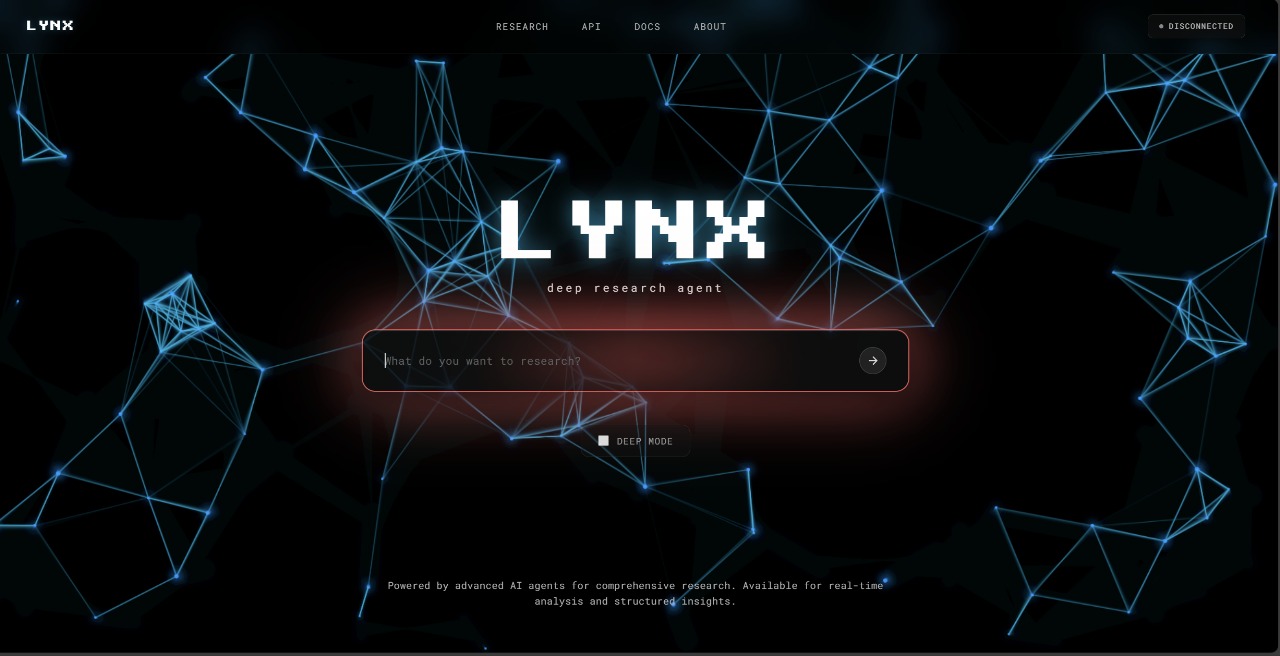
Landing page
-
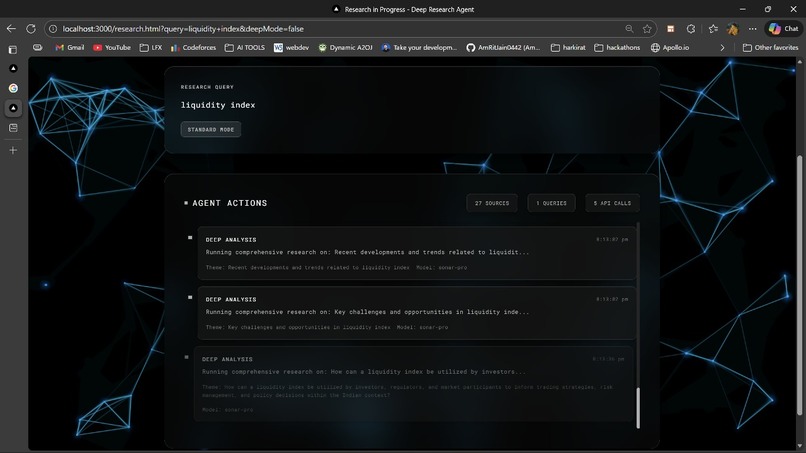
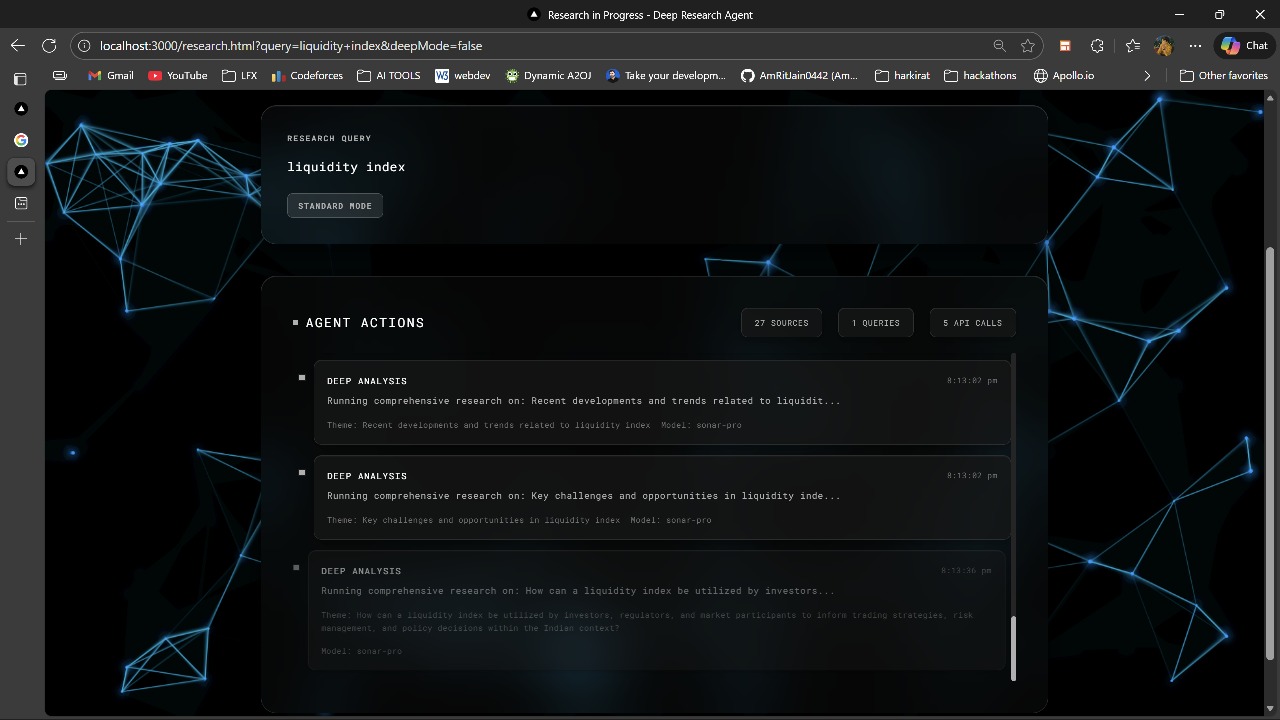
Deep Research Working
Inspiration
Traditional research workflows are fragmented—you gather information from multiple sources, manually synthesize findings, and then spend hours creating presentations. We wanted to build an AI system that could conduct deep, multi-source research with proper citations and automatically transform those findings into professional presentations, eliminating the manual work between research and presentation.
What it does
LYNX-AI is an intelligent research and presentation system that:
- Conducts Deep Research: Uses advanced AI models (Claude 3.5 Sonnet, Perplexity Sonar Pro, Tavily) to perform comprehensive research with evidence clustering, contrast analysis, and multi-source synthesis
- Generates Structured Reports: Creates detailed markdown reports with executive summaries, key findings, citations, and organized sections
- Auto-Creates Presentations: Instantly converts research reports into beautiful, interactive HTML/CSS presentations with modern designs, animations, and navigation
- Real-Time Progress Tracking: WebSocket-powered interface shows live updates as the agent searches, analyzes, and synthesizes information
- Multi-Source Citations: Verifies information across multiple sources and provides proper attribution
Users simply enter a research query, and LYNX-AI handles everything from initial research through final presentation—delivering publication-ready reports and presentation-ready slides automatically.
How we built it
Backend Architecture:
- Built a multi-agent system using LangChain and LangGraph for orchestration
- Integrated OpenRouter API for flexible access to multiple AI providers (Claude, GPT, Gemini)
- Implemented deep research engine with Perplexity Sonar Pro for advanced queries and Tavily for web search
- Created evidence clustering algorithms to group related findings and identify contradictions
- Developed presentation agent using Claude 3.5 Sonnet with higher temperature (0.7) for creative HTML/CSS generation
Research Pipeline:
- Query decomposition into sub-questions
- Parallel evidence gathering from multiple sources
- Evidence clustering by theme with strength scoring
- Contrast analysis to identify conflicting viewpoints
- Multi-model synthesis using cost-optimized approach (Sonar Pro + OpenRouter)
- Structured markdown report generation with citations
Presentation Generation:
- Specialized presentation agent that analyzes research content
- Generates complete, self-contained HTML files with embedded CSS and JavaScript
- Creates responsive designs with keyboard navigation, animations, and modern styling
- Saves presentations with timestamp-based naming for easy access
Frontend:
- Express.js server with WebSocket support for real-time updates
- Vanilla JavaScript frontend with dark theme UI
- Real-time action timeline showing agent progress
- Markdown rendering and presentation viewing interface
Tech Stack:
- TypeScript throughout for type safety
- Node.js with Express for backend
- WebSocket (ws) for real-time communication
- LangChain for agent framework
- OpenRouter for multi-provider AI access
Challenges we ran into
- Cost Optimization: Balancing research depth with API costs required careful orchestration of multiple AI models—using Perplexity for research and OpenRouter for synthesis to optimize expenses
- Evidence Clustering: Developing algorithms to group related findings from diverse sources while maintaining accuracy and avoiding false connections
- HTML Generation Quality: Ensuring the AI-generated presentations were production-ready required extensive prompt engineering and output validation
- Real-Time Updates: Implementing WebSocket event emission throughout the research pipeline without disrupting the core research logic
- Multi-Source Synthesis: Combining information from Perplexity, Tavily, and multiple AI models into coherent, well-structured reports without contradictions
- Self-Contained Presentations: Creating HTML files that work standalone with no external dependencies while maintaining modern design standards
Accomplishments that we're proud of
- Seamless Research-to-Presentation Pipeline: Successfully automated the entire workflow from query to presentation-ready slides
- Advanced Research Capabilities: Built a system that performs evidence clustering, contrast analysis, and multi-source verification—features typically found in academic research tools
- Zero-Configuration Presentations: Generated presentations are completely self-contained HTML files that work anywhere, with no dependencies or setup required
- Real-Time Transparency: Users can watch exactly what the agent is doing at each step, building trust in the AI-generated content
- Multi-Provider Flexibility: OpenRouter integration allows switching between AI providers based on task requirements and cost optimization
- Production-Ready Architecture: Modular agent system that's easily extensible—we added the presentation agent without disrupting existing functionality
What we learned
- Prompt Engineering is Critical: The quality of AI-generated presentations heavily depends on carefully crafted system prompts that guide structure, design, and technical requirements
- Cost vs. Quality Trade-offs: Using different AI models for different tasks (Perplexity for research, Claude for synthesis, Claude for presentations) optimizes both cost and output quality
- Evidence-Based AI: Implementing proper evidence clustering and source verification is essential for trustworthy research outputs
- Real-Time Feedback Matters: Showing users what the AI is doing in real-time significantly improves user experience and trust in the system
- Modular Agent Design: Building agents as independent, composable tools makes it easy to add new capabilities without refactoring existing code
- Self-Contained Outputs: Generating standalone HTML files is more valuable than requiring external dependencies—users can share presentations instantly
What's next for LYNX-AI
- Enhanced Presentation Features: Theme selection, template library, PDF export, and image/chart embedding capabilities
- Collaborative Research: Multi-user research sessions with shared findings and collaborative presentation editing
- Advanced Analytics: Research quality scoring, source reliability metrics, and presentation engagement analytics
- Custom Branding: Allow users to customize presentation colors, fonts, and branding elements
- Research Memory: Build a knowledge base from past research to improve future queries and avoid redundant work
- Export Options: Support for PowerPoint, PDF, and other presentation formats beyond HTML
- Research Validation: Automated fact-checking and source credibility scoring
- Multi-Language Support: Research and presentation generation in multiple languages
- API Access: Public API for developers to integrate LYNX-AI research capabilities into their applications
- Mobile App: Native mobile experience for on-the-go research and presentation viewing
Built With
- css
- html
- javascript
- langgraph
- sonar
- tavily
- typescript


Log in or sign up for Devpost to join the conversation.