Inspiration
Having lost my father with heart attack, I always wanted to offer better medical facilities for cardio patients and enough prognostic support for them to avoid cardio arrest. I have been working for a decade now with ECG signal processing. Last year we participated in OpenShift Code Healthy and won for our Hrydyalysis Project which provides a comprehensive heart analytic system. With time we demoed the project to several doctors and they supported us through their knowledge and enthusiasm. This lead to creation of Lyfas project which is the most affordable single lead ECG monotoring device built by us. We kept integrating one solution after the other into the Lyfas platform and finally published the app. We also opened up the platform for researchers and developers to build their own cardio solution on the top of it. One of the problems was still unsolved. That was to build an ambulatory monitoring system. Artificial intelligence is the power of our platform, but it can never replace the doctors. When a person has attack or mild cardio complains, he needs to be immidiately attended by a doctor. India having very low doctors and very high patient to doctor ration, needs remote monitoring system. One of the critical problem with such a real time system was to be able to transmit and receive signal with extremely high reliability. When we experiemented with Cisco Spark platform, turned out that it supported about 200HZ data rate, unmatched by any other systems/platforms/IoT gateway available now. So we told to ourselves, this is it and we have to work with this. This lead to our project.
What it does
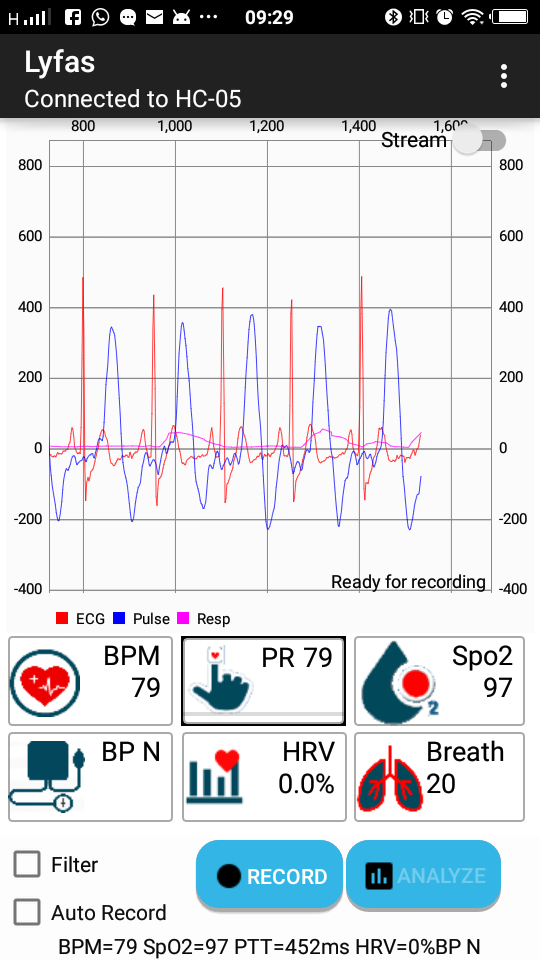
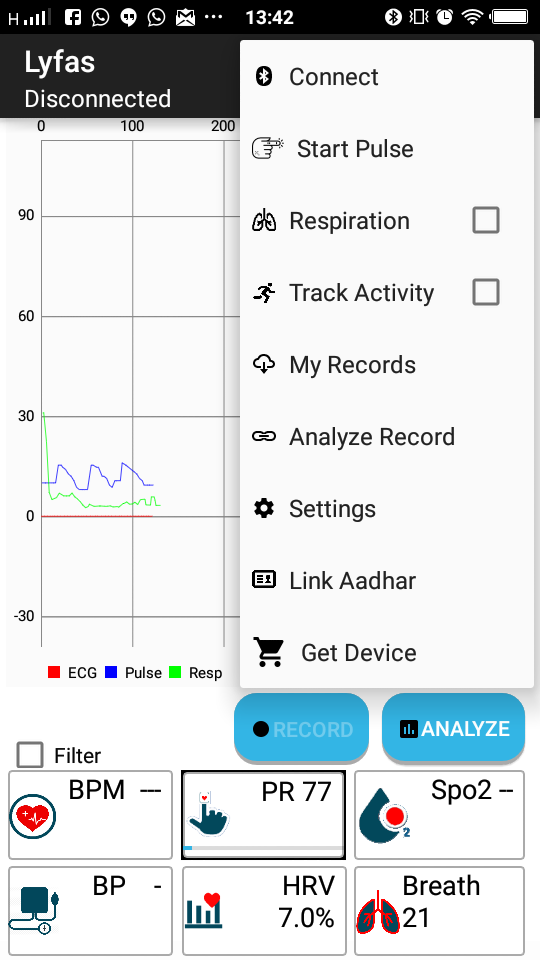
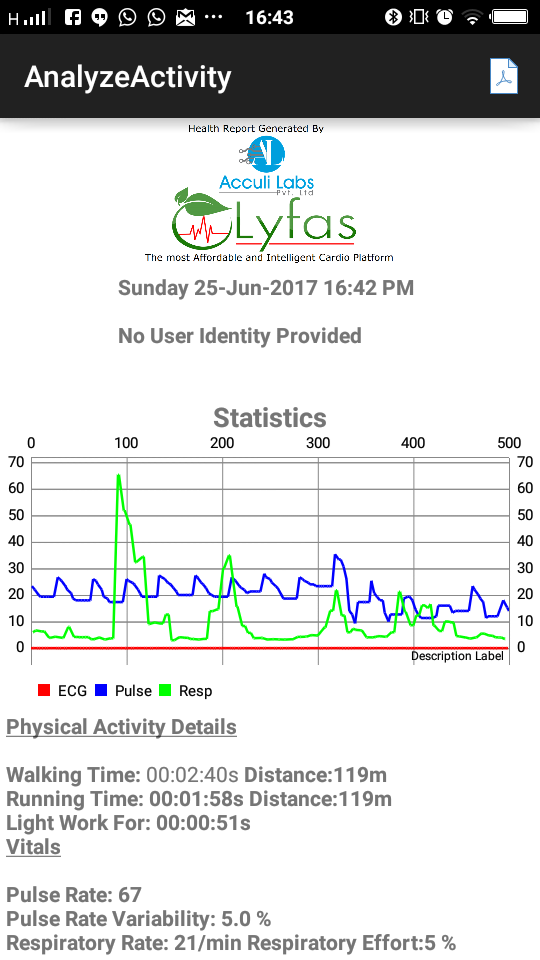
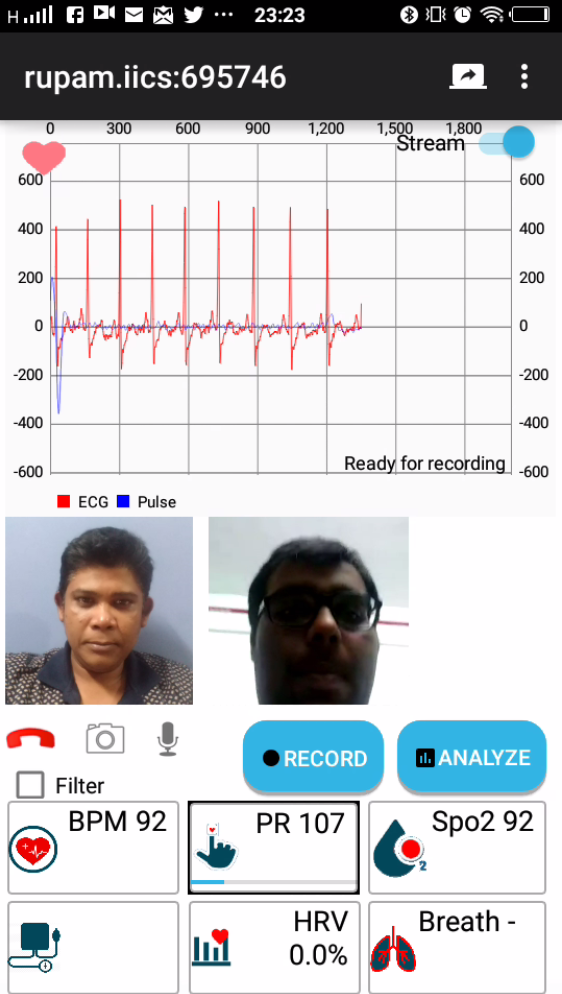
Lyfas allows a patient to be remotely monitored by doctor over a full duplex communication. The heart of the solution is a light weight, low cost Lyfas device built by us (www.lyfas.com). The device gets connected with Lyfas app through Bluetooth and allows capturing Cardio data. The App also comes with Mobile Camera based Pulse Monitoring, Microphone based respiratory monitoring, activity
1) Patient hooks up the Lyfas device. In the absence of the device he puts on Mobile based pulse and respiratory monitoring. 2) He selects data streaming 3) He makes a call. 4) An Id is generated which he shares with the doctor 5) The doctor joins his stream with this ID and they can have full duplex communication.
How we built it
We took our Lyfas device and Lyfas app(https://play.google.com/store/apps/details?id=com.acculilabs.lyfas&hl=en) As the starting point. Our several past experimentations with MQTT based real time transfer had failed due to sheer volume of data and the robustness required. Then we took java Sample of Cisco Spark and compiled it with Android Studio. We wrote a wrapper around the apis and create a data transfer logic. As Cisco Spark hasn't yet released it's Android API and it's javascript based Video chat doesn't work on Android WebView, we studied the mechanism and realized it is built with Web RTC. We wated to create a web rtc based module and then replace the server credentials with Cisco's . But very high layer of security made us failed to crack the way to replace our RTC credentials with that of theirs. So we kept our RTC model with a hope that we will not be penalized for Cisco's non release of Android SDK and our inability to break their authentication security.
We also built a Ruby based simple Web interface to enable the hospital terminals to monitor the patients.
Challenges we ran into
- Web integration
- High Speed data Transmission
- Buuilding our logic on top of a chat based APIs
Accomplishments that we're proud of
We could potentially build our own logic around the powerful APIs and develop something other than a chat application which the APIs are meant for was a great satisfaction.
What we learned
Never to assume that we can use set of end points developed by Cisco which they dont yet intend us to use :(
What's next for Lyfas Ambulatory Spark
We are doing a pilot with few local nursing homes and hoping that Cisco releases the Android apis soon so that we can completely replace our RTC based video communication part with theirs.

Log in or sign up for Devpost to join the conversation.