-
-
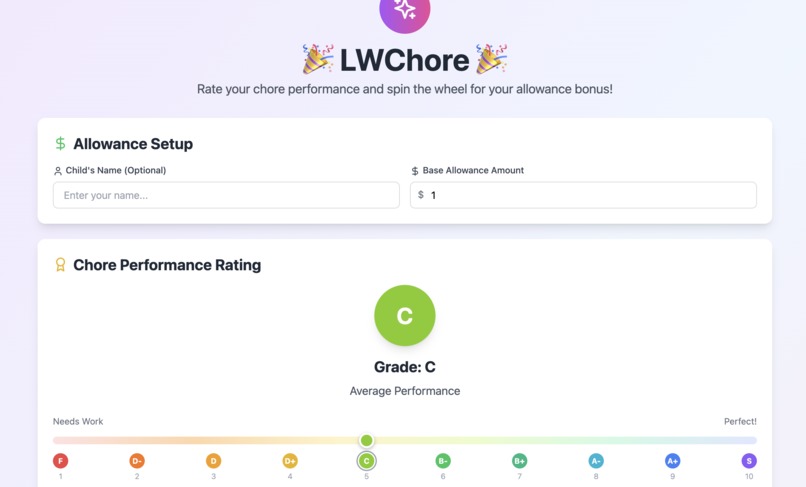
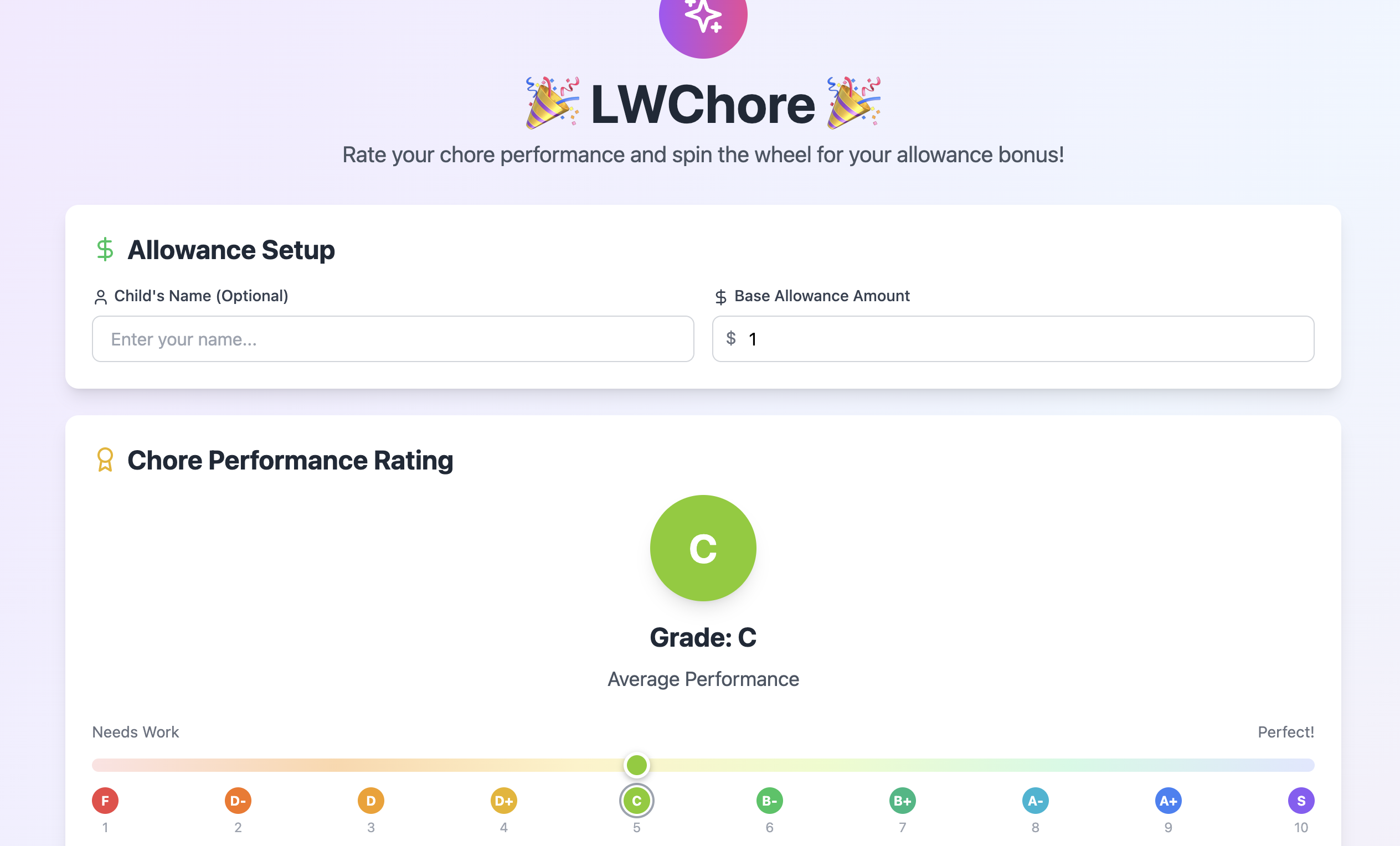
Setup and select a chore grade
-
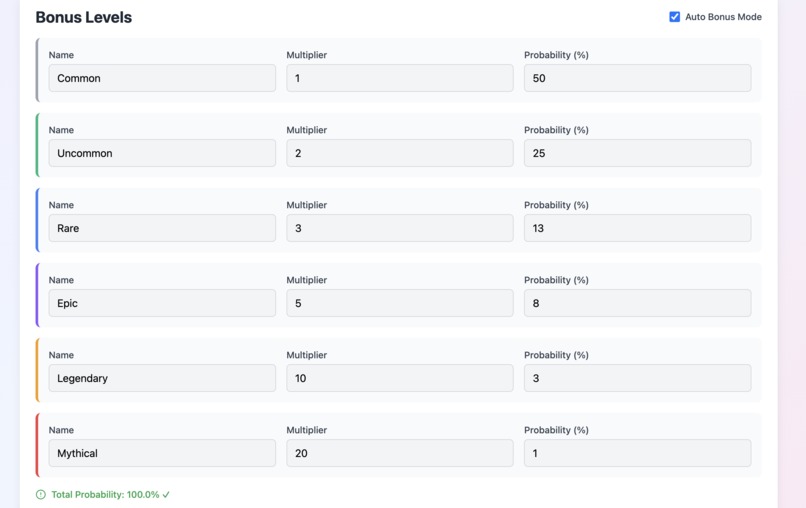
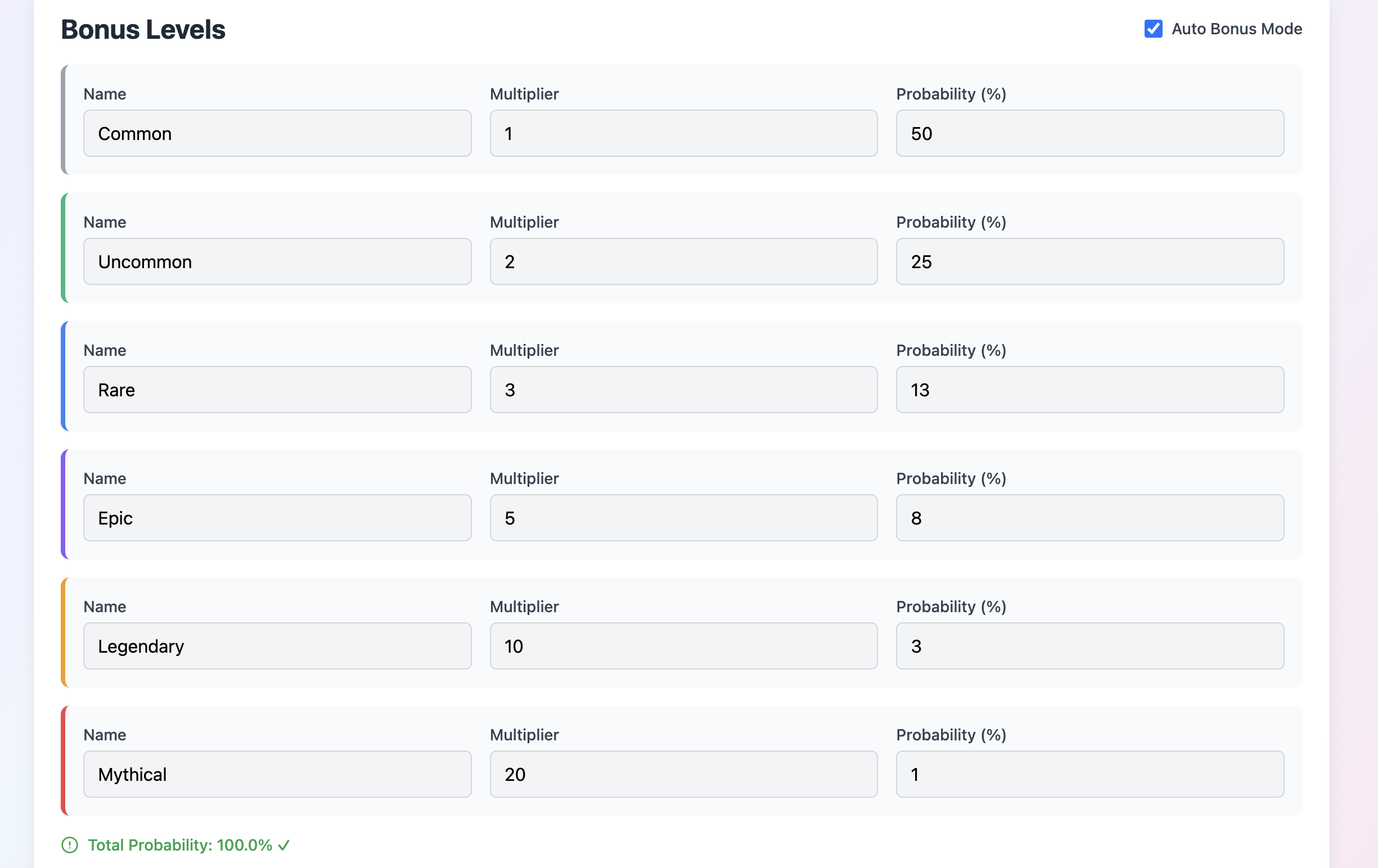
See the bonus levels and probabilities
-
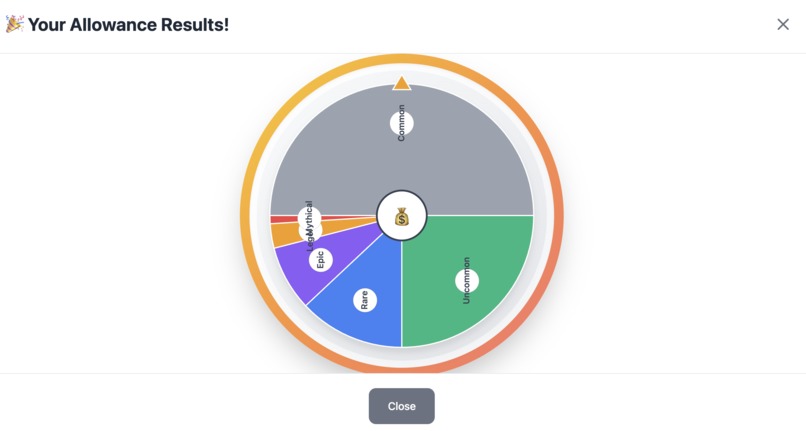
Spin the wheel! (best part, I'm told)
-
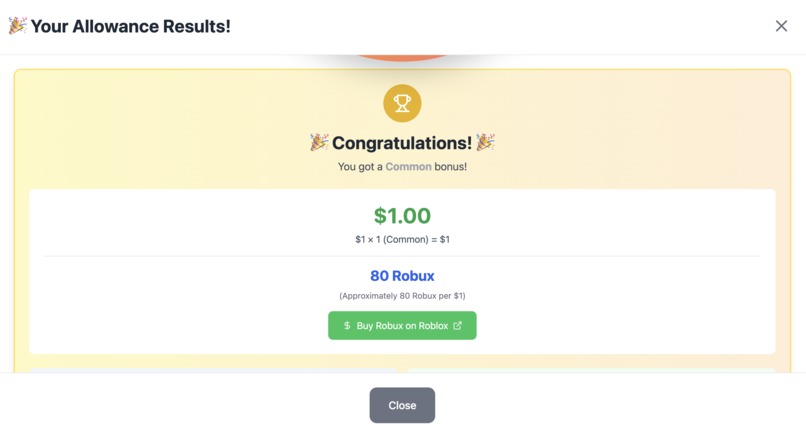
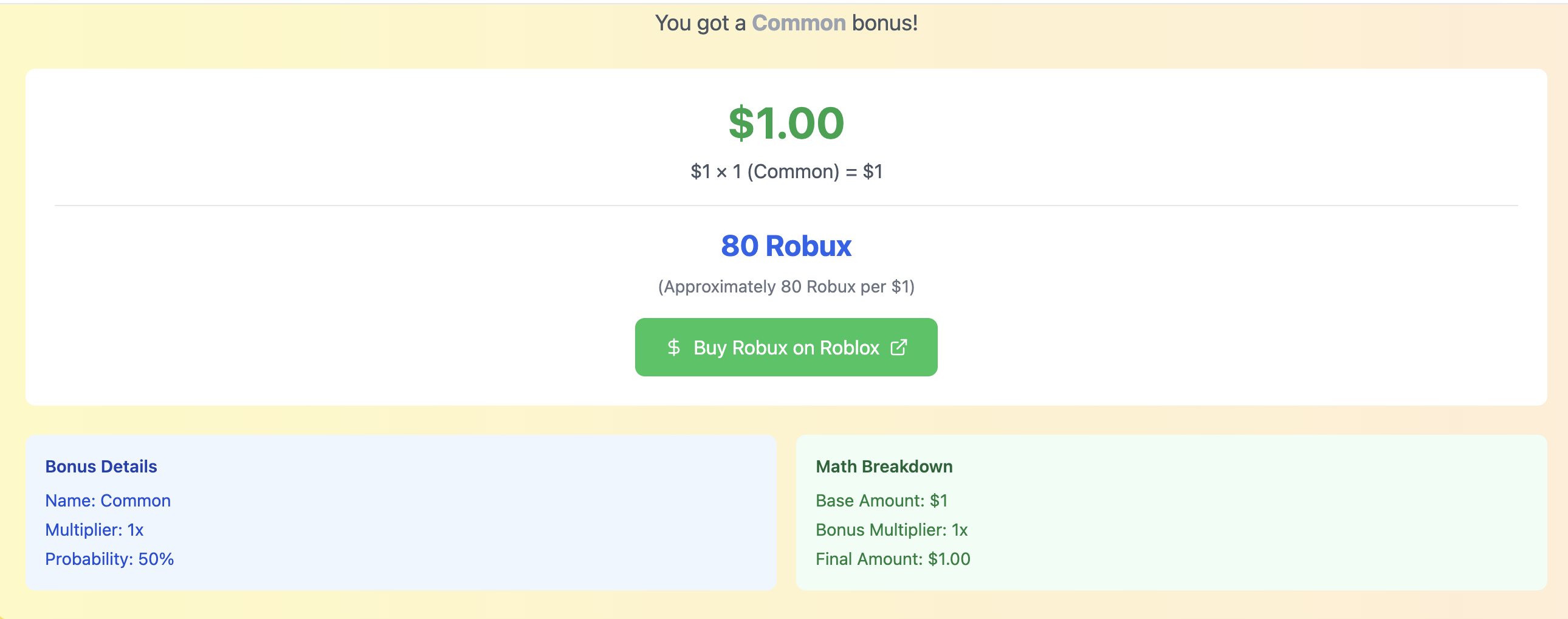
See results
-
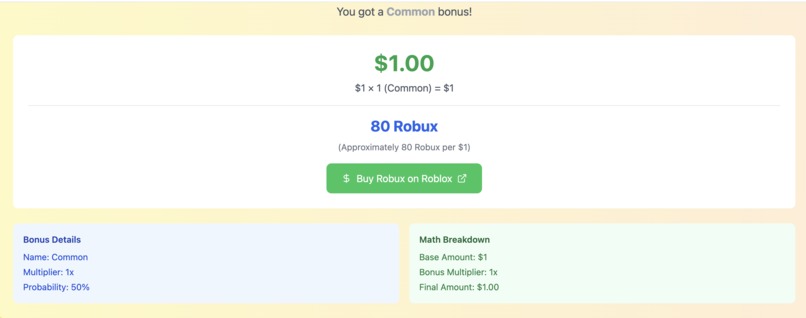
Review the math


Inspiration
My kids love math and Roblox. Especially my 7-year-old. So I introduced the theme of allowance to help them learn about responsibility and chores, and a reward for a job well done. We started with $1 a month. But $1 doesn't go very far these days, even (and especially) when converted to Robux.
So we introduced the bonus mode. If chores are done well, they would be eligible for a bonus. But the bonus wasn't fixed, it was randomly selected based on probabilities, which I figured was a fair trade to learn about in exchange for potential bonuses. And they loved it.
The bonuses quickly got out of control and were assigned to seemingly random words made up by my 7-year-old like "mythical" and "epic" and had various multipliers assigned. Every month, I'd ask my 7-year-old to recite these seemingly random words again and assigned probabilities and bonus levels to each and type them all into ChatGPT to see what I would get back. It was a process.
What it does
Enter the allowance calculator! Now we have a tool that remembers these probabilities and bonus levels and even lets us expand the game by assigning a letter grade to how well the chores are completed each month, which impacts the probabilities of getting a good bonus. And once you've assigned a base amount of allowance (we still use $1) and a letter grade, you get to spin the wheel to see what number the allowance lands on. (My kids love the wheel.)
There's also a basic conversion to Roblox with a link to purchase, because, let's be honest, that's what we're going to do next.
How we built it
My 7-year-old got really into this. We started together with a prompt in Bolt to try and make a basic tool. Within a few minutes we had something pretty functional as a starting point. But you had to setup the probability levels and adjust each time.
So we built a set of default probabilities to make it easy to get going and spin the wheel. And that was great, but then the idea came up to add letter grades and assign different probabilities based on 10 different letter grades, topping out with "S" (which I'm told means something to gen-alpha). But the thought of manually assigning 10 different levels or probabilities across six options with slightly increasing favorability levels each time seemed like it would be pretty terrible (even though the kids were more than down for it).
Enter the beauty of AI! We agreed on what the lowest, middle and highest levels would be for all six bonus probability layers and fed it into Bolt, and it figured out the rest for us with a nice slider that could help us move between one level and the next. Everyone was thrilled, probabilities were set, and wheels were spun.
Challenges we ran into
Math. LLMs could not do all the math we needed. While it figured out the probabilities fine, the idea that it was going to spin a wheel a pre-determined number of degrees to exactly land on the section that it pre-determined based on probabilities was the right bonus after an arbitrary number of extra spins was too much. The wheel would spin and land on the wrong section time after time, no matter how many times we told the Bolt chat to take a different approach to spin the wheel and land on the pre-determined, randomly selected bonus section.
Eventually, we got it to make an "emergency fix" at the end of the spins if it realized it landed in the wrong place, and we called that good enough for now (or I did, honestly -- the kids didn't notice or care and still think the spinning wheel is the best part).
Accomplishments that we're proud of
The kids loved this whole process. They loved it so much we made another project after this. For better or for worse, they now seem pretty convinced that "coding" means "chatting with a tool that makes code" like Bolt. And they think they can code. (I guess they kind of can.)
Built With
- bolt
- react

Log in or sign up for Devpost to join the conversation.