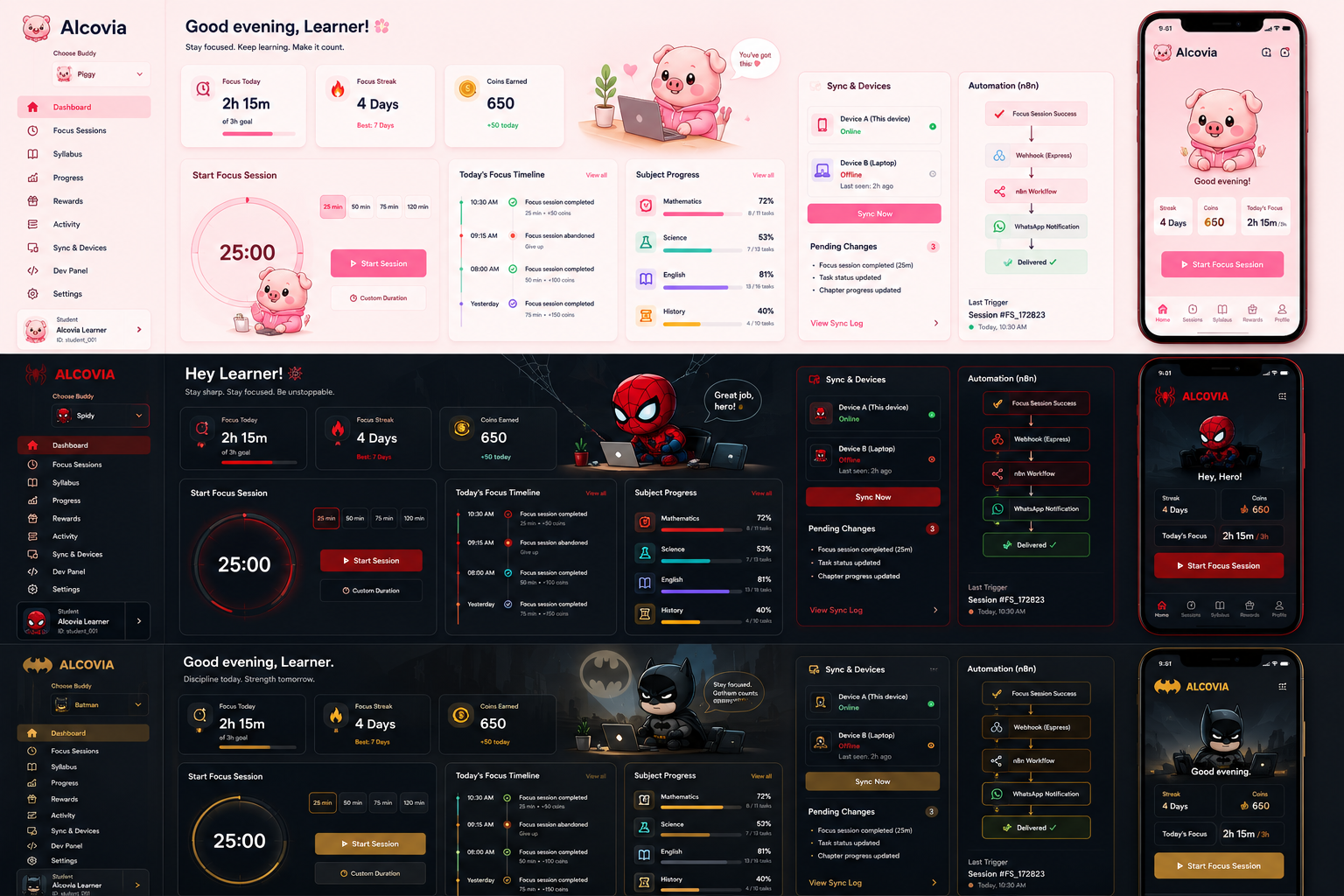
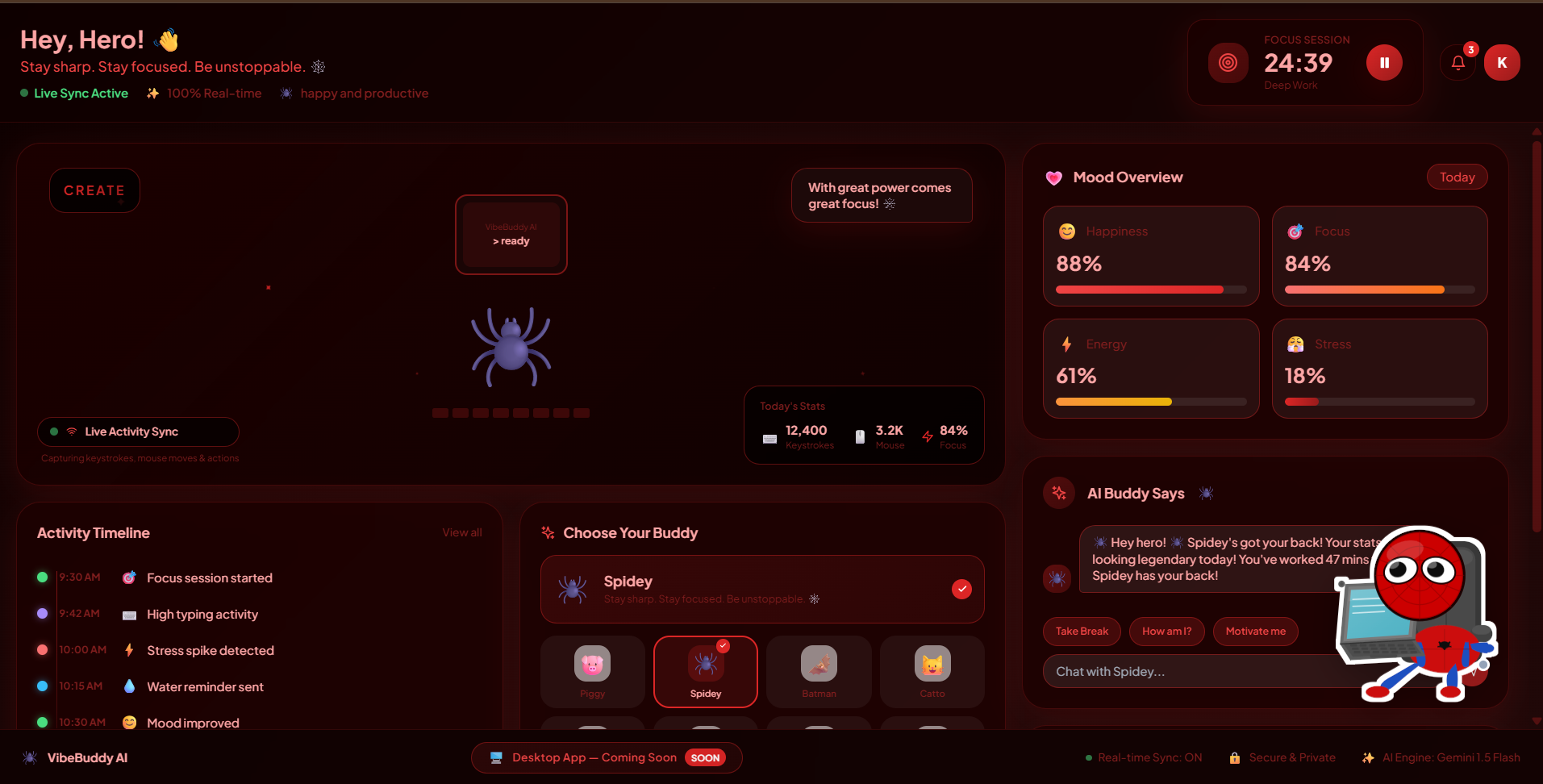
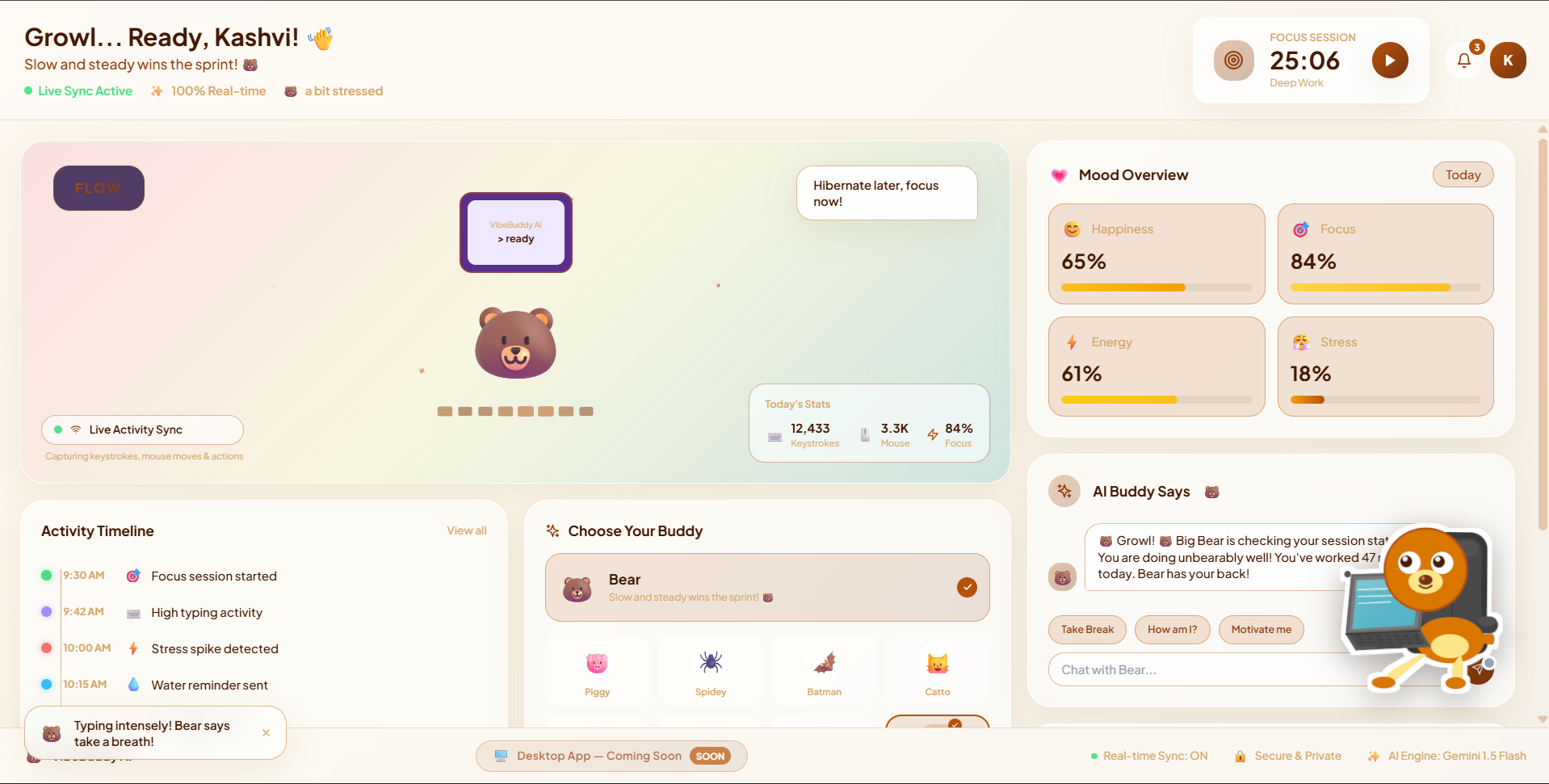
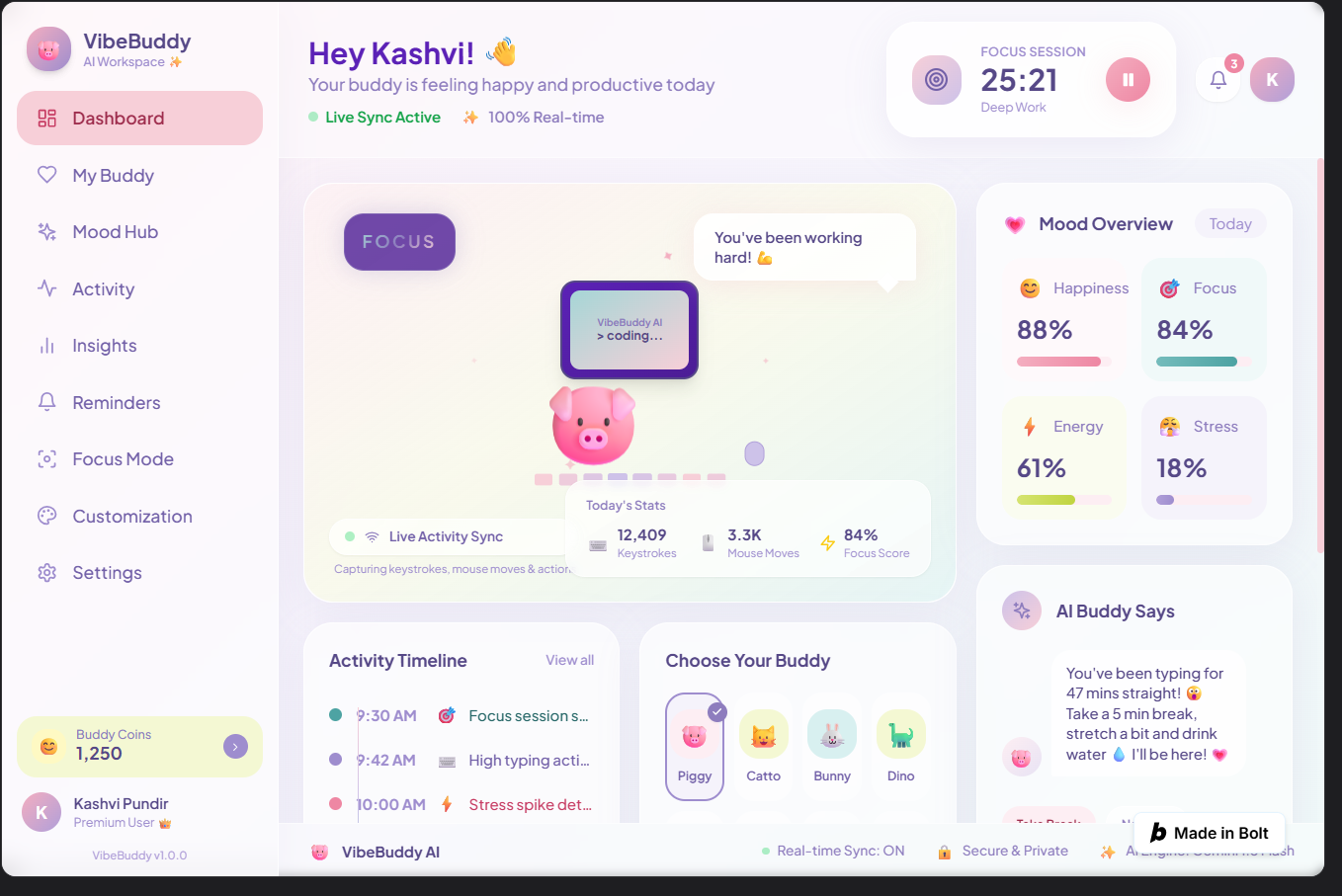
Pslyther – AI-Powered Focus & Emotional Wellness Companion
Inspiration
As students and developers, we often struggle with maintaining focus, staying productive, and understanding our emotional patterns while studying or working. Most productivity apps only track tasks and timers, but they fail to create an engaging and personalized experience.
Pslyther was inspired by the idea of combining productivity tracking, emotional awareness, and AI companionship into a single platform. Instead of feeling like a traditional productivity tool, Pslyther acts as a virtual companion that grows with the user, encourages healthy focus habits, and provides meaningful insights into productivity and mood trends.
What it does
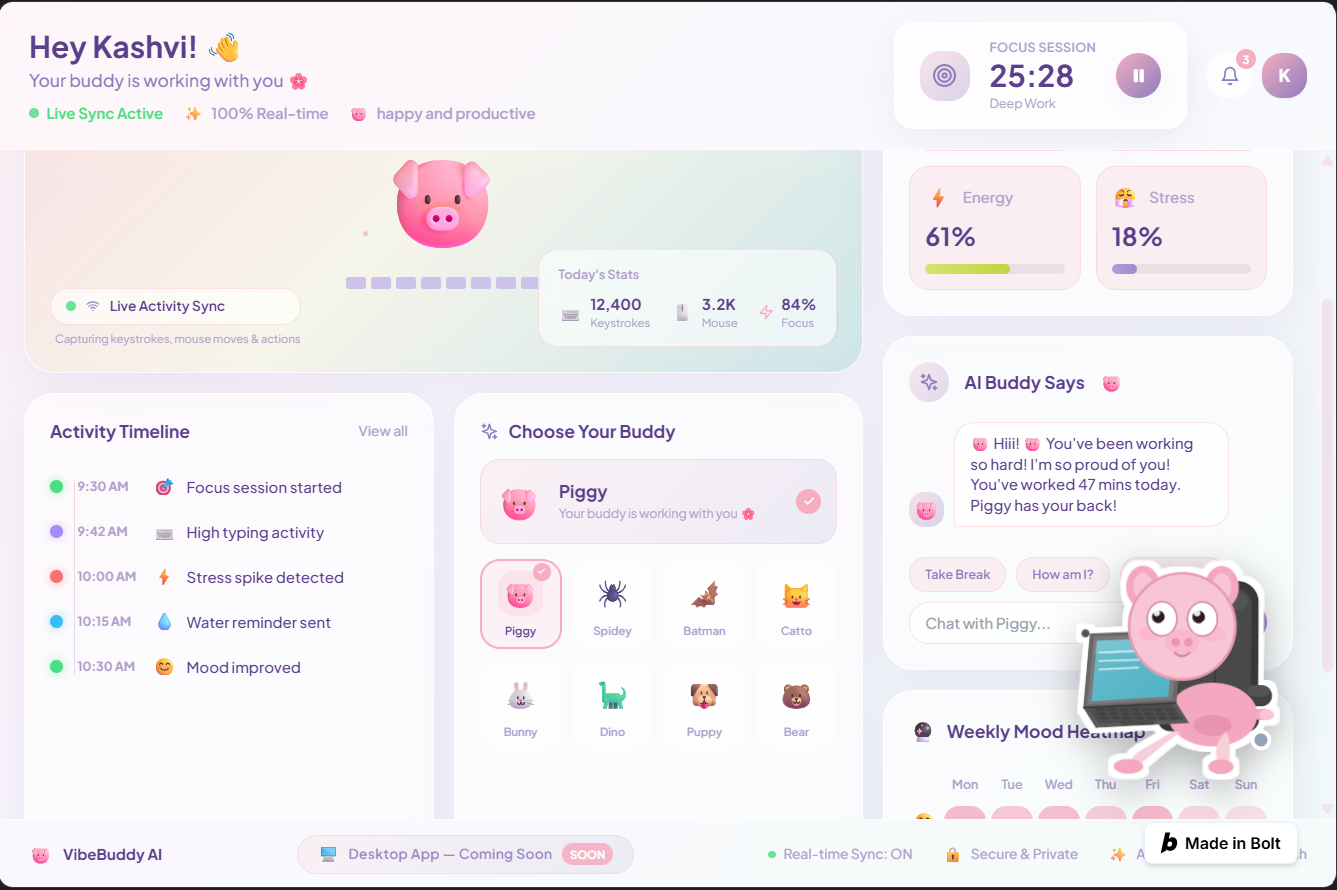
Pslyther is an AI-powered focus companion designed to help users improve productivity and maintain consistency.
Key features include:
- Real-time focus session tracking
- Productivity and focus score analysis
- Mood tracking and emotional analytics
- Daily streak system and achievement tracking
- Personalized AI companion interactions
- Activity timeline and behavioral insights
- Emotional heatmap visualization
- Persistent cloud synchronization across devices
- Google authentication and personalized profiles
- Responsive dashboard optimized for desktop and mobile
The platform transforms productivity tracking into a more engaging and emotionally aware experience.
How we built it
The application was built using a modern full-stack architecture.
Frontend:
- React
- TypeScript
- Tailwind CSS
- Framer Motion
Backend & Data:
- Supabase
- PostgreSQL
- Supabase Authentication
- Real-time cloud persistence
AI:
- Gemini AI integration for companion interactions
Features were implemented using reusable React components, custom hooks, context-based state management, and strongly typed TypeScript interfaces to ensure maintainability and scalability.
Challenges we ran into
Building Pslyther involved several technical challenges:
- Designing a companion system that feels engaging rather than repetitive
- Creating responsive dashboard layouts for multiple screen sizes
- Managing authentication and user persistence using Supabase
- Handling real-time updates across focus sessions and analytics
- Eliminating hardcoded and placeholder data while transitioning to production-ready persistence
- Building reusable component architecture without sacrificing performance
- Designing meaningful visualizations for emotional and productivity trends
Several iterations were required to improve the user experience and make the dashboard feel alive and personalized.
Accomplishments that we're proud of
- Successfully built a complete AI-powered productivity platform
- Integrated cloud-based user authentication and persistence
- Created a dynamic companion system with contextual interactions
- Implemented mood analytics and emotional visualization tools
- Developed a scalable React + TypeScript architecture
- Designed a polished and responsive user experience
- Replaced prototype data with real user-driven analytics
What we learned
Through this project we gained experience with:
- Full-stack application development
- React architecture and custom hooks
- Supabase authentication and database design
- TypeScript best practices
- State management using React Context
- AI-powered user experiences
- Production deployment workflows
- Debugging real-world authentication and persistence issues
- Building maintainable and scalable frontend systems
What's next for Pslyther
Future development plans include:
- Advanced AI memory and personalization
- Adaptive study recommendations
- AI-generated productivity reports
- Social accountability and study groups
- Cross-platform mobile applications
- Advanced analytics dashboard
- Intelligent habit prediction models
- Premium AI companion customization
- Long-term emotional wellness insights
Pslyther aims to evolve from a productivity tracker into a complete AI-powered personal growth companion.
Built With
- ai
- ai:
- authentication
- backend
- cloud
- css
- data:
- framer
- frontend:
- gemini
- motion
- persistence
- postgresql
- react
- real-time
- supabase
- tailwind
- typescript


Log in or sign up for Devpost to join the conversation.