Inspiration
Across U.S. cancers, the median time from diagnosis to treatment initiation is nearly 4 weeks, with much of that time spent on treatment planning, evidence review, and clinical trial matching. Yet in that narrow window, clinicians still need to synthesize prior patient outcomes, current literature, and relevant clinical trials to make evidence-grounded decisions.
The obvious 2026 instinct is to ask ChatGPT for a treatment plan, but oncology decisions need to be grounded in real evidence, real cases, and real trial availability.
What it does
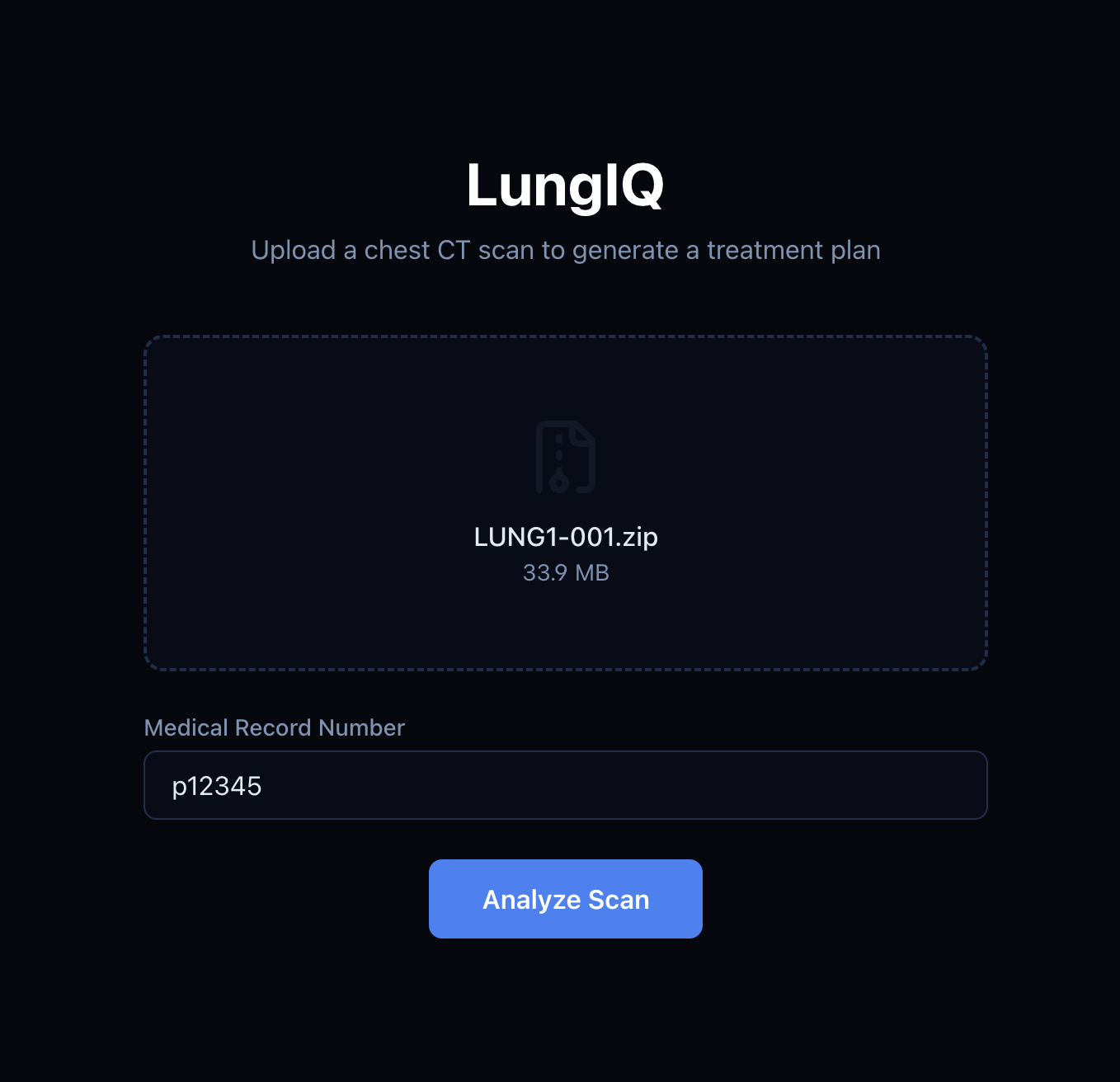
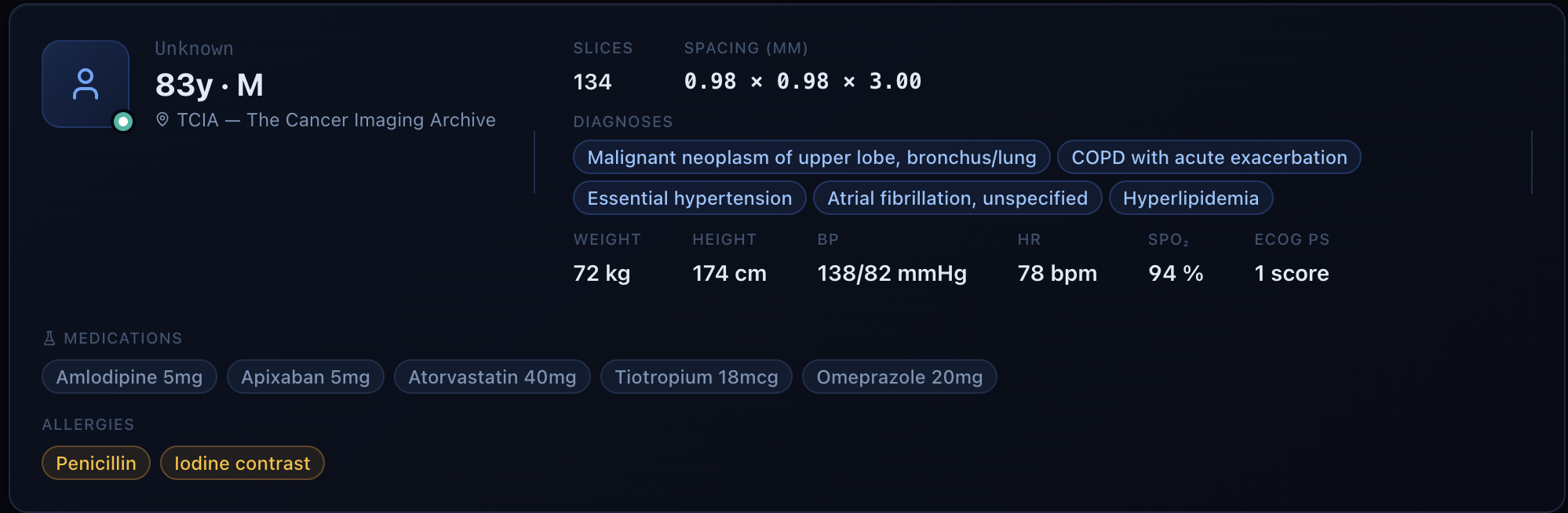
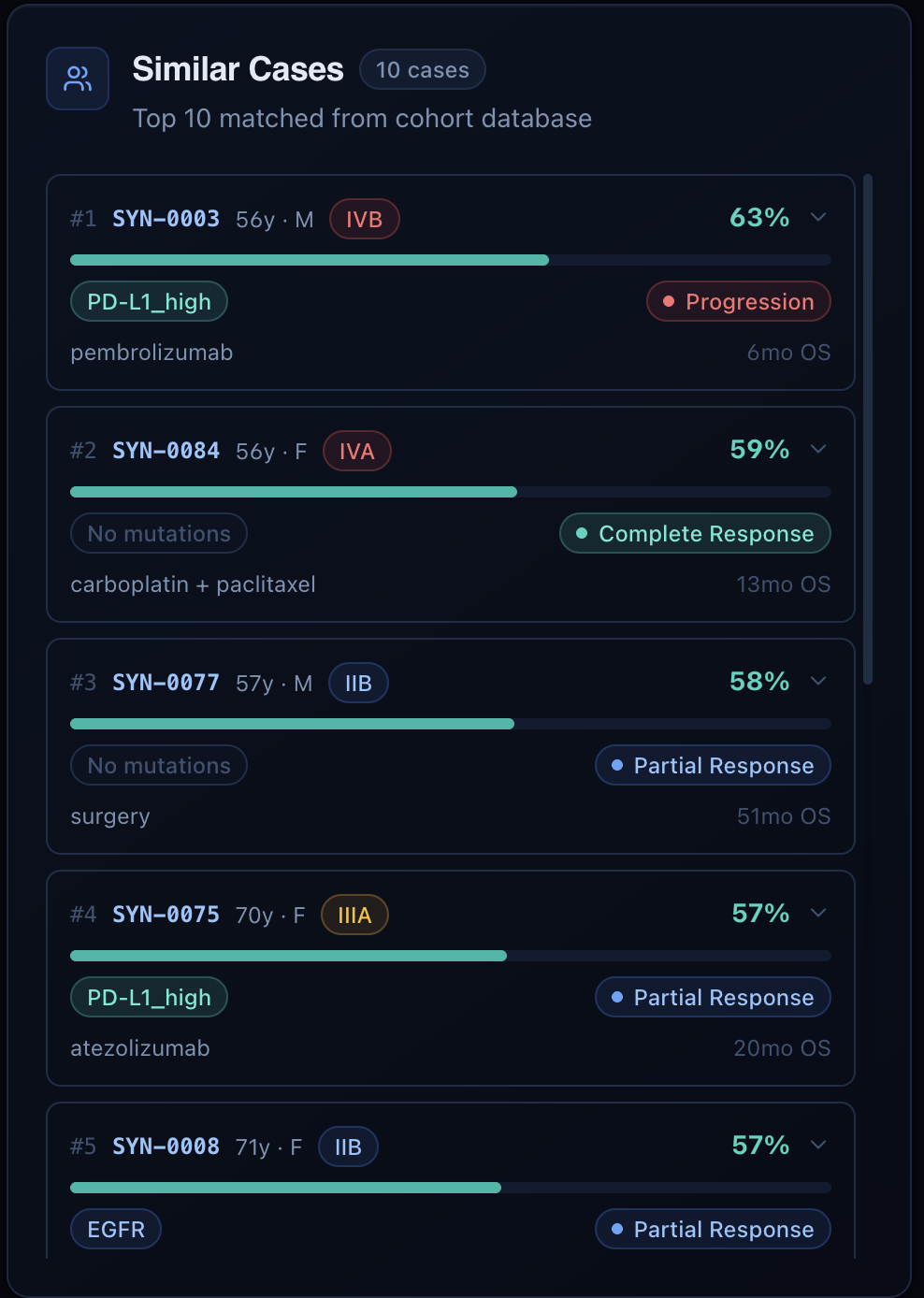
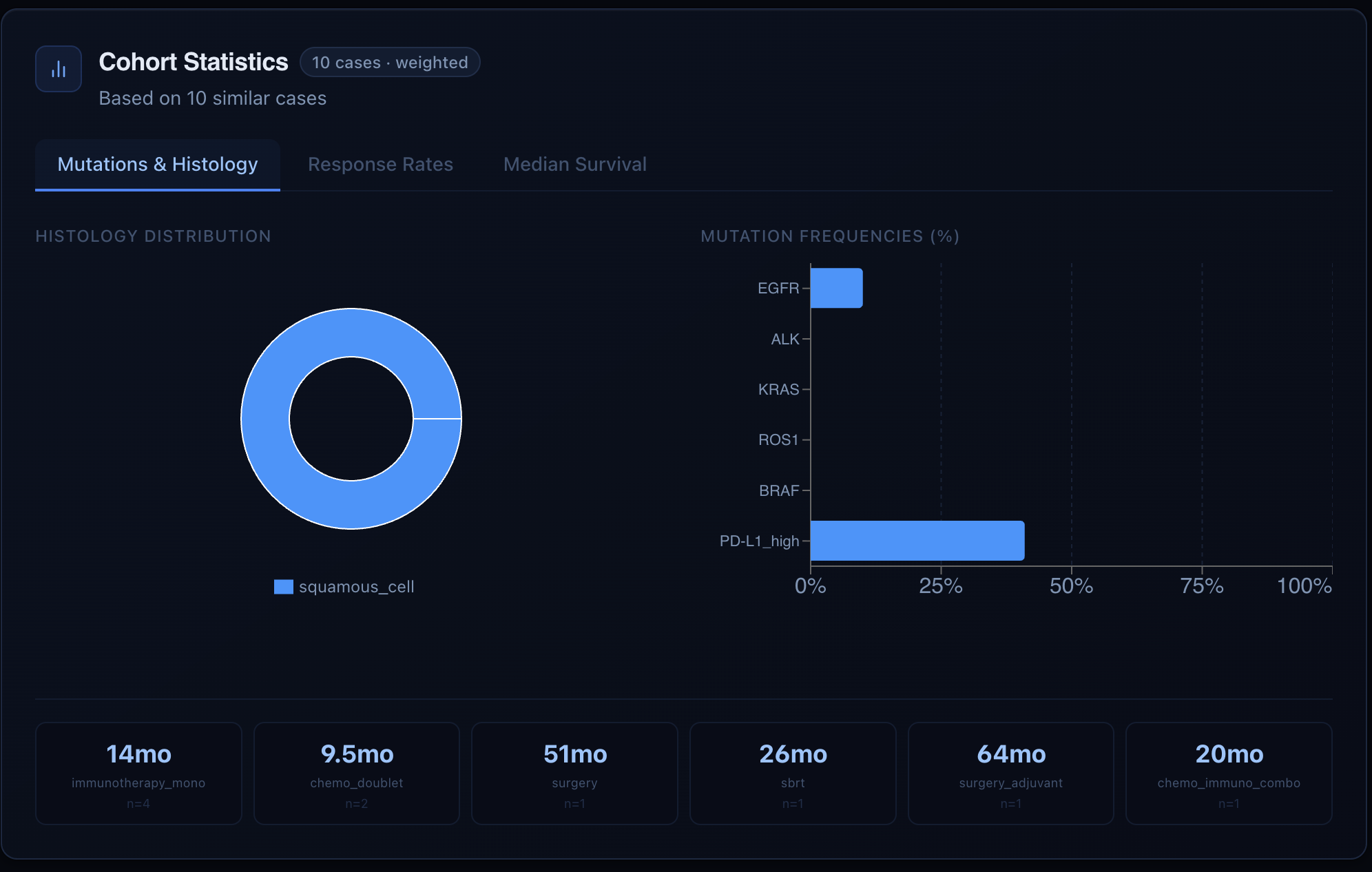
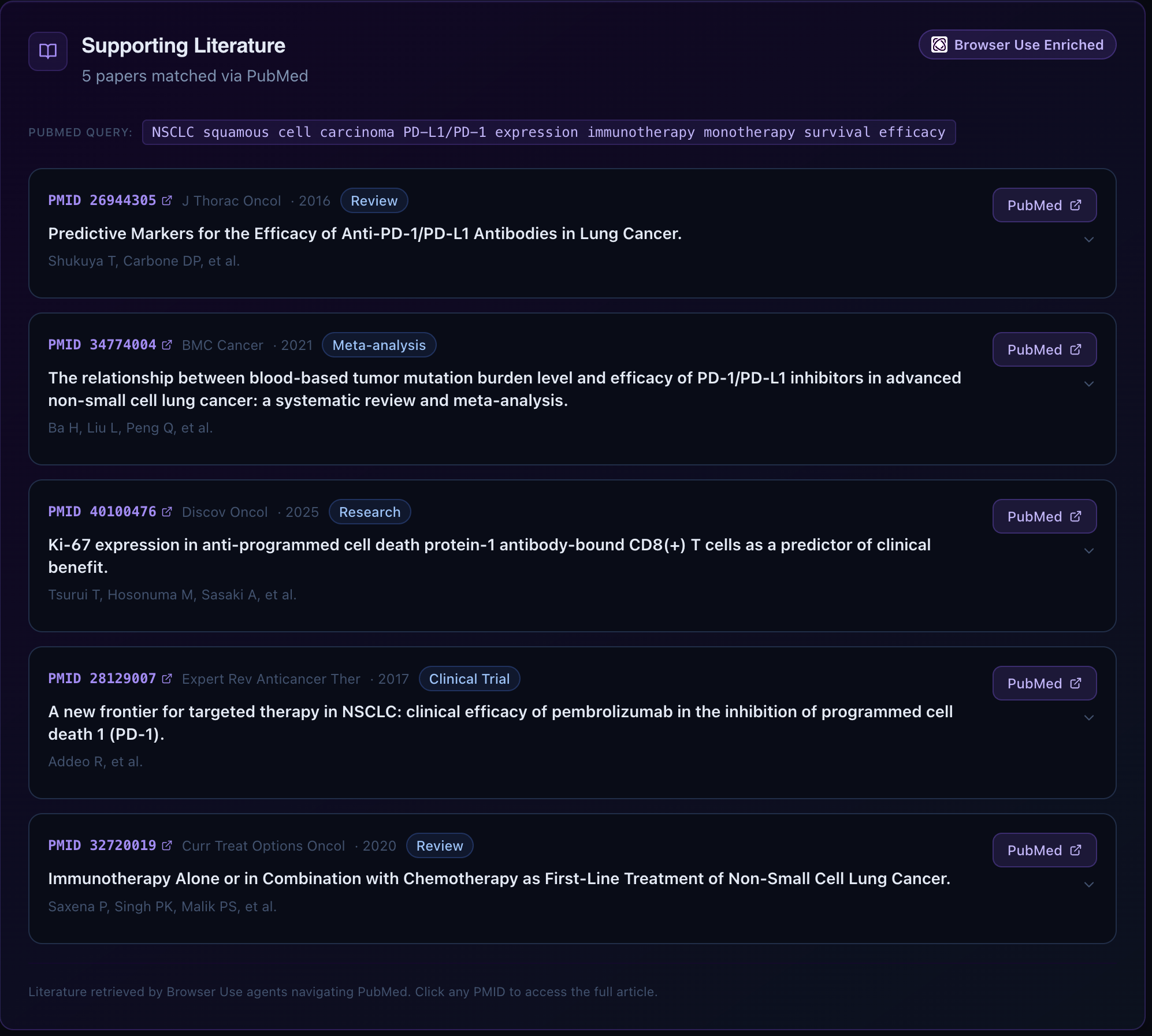
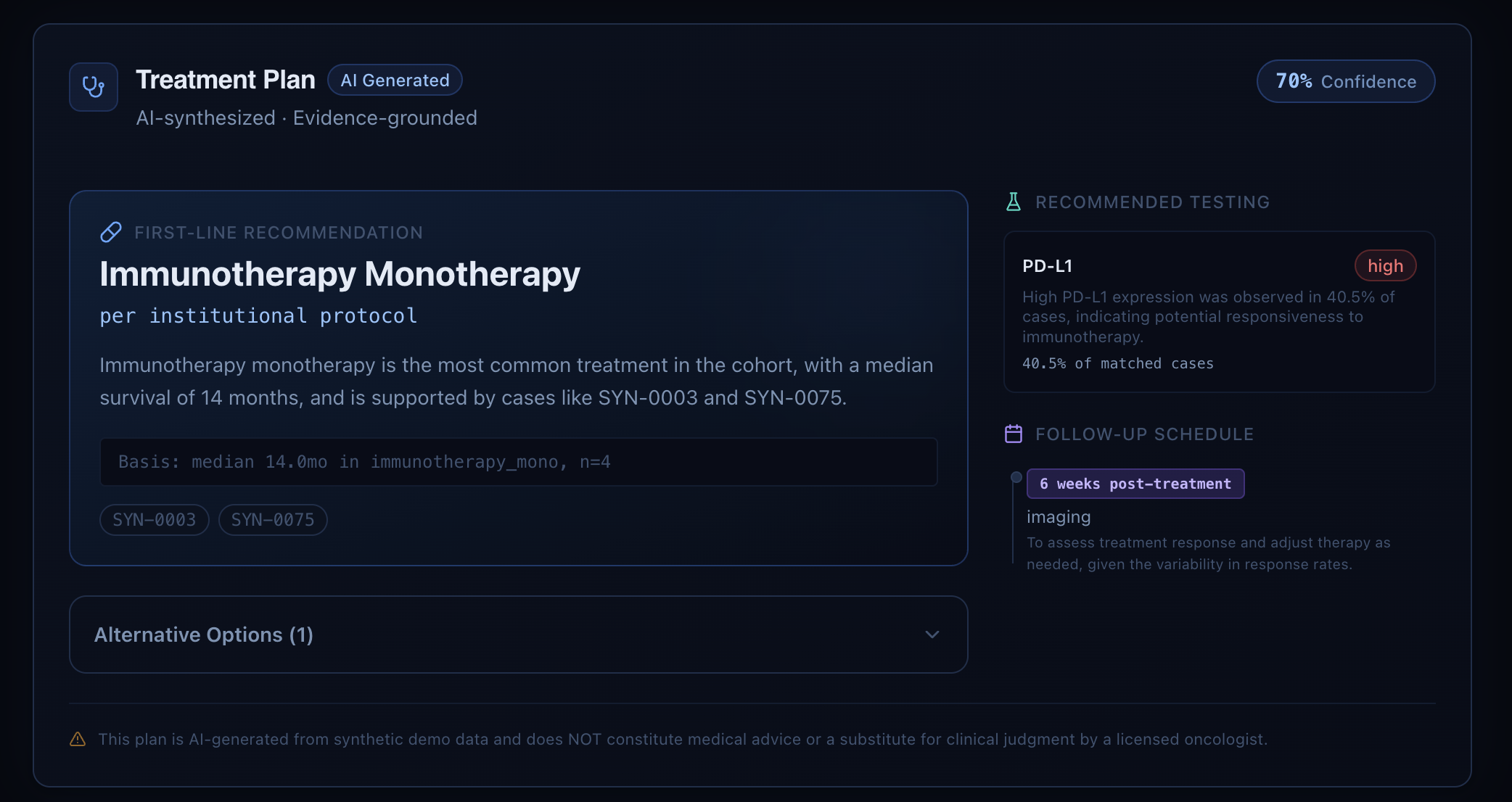
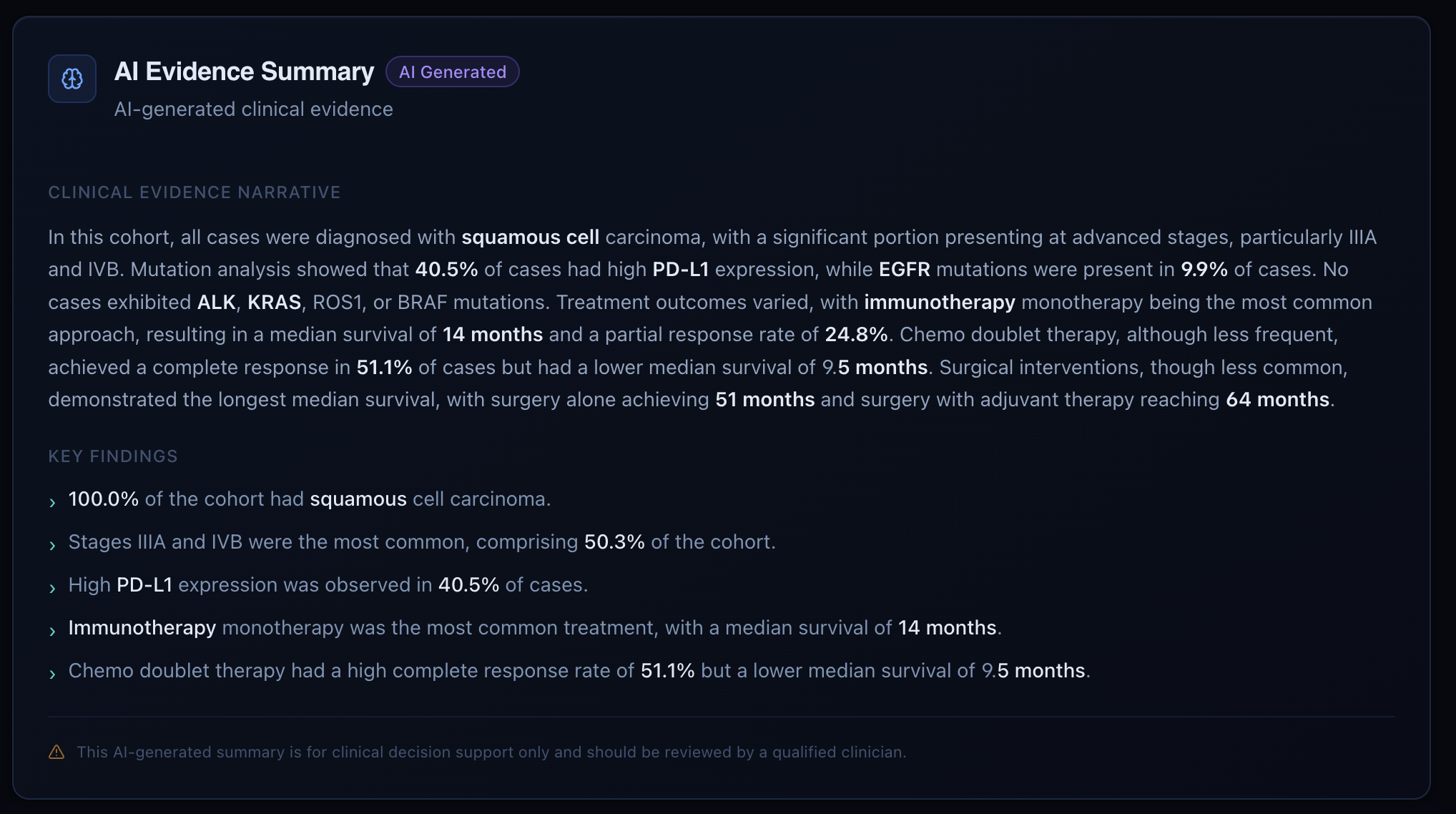
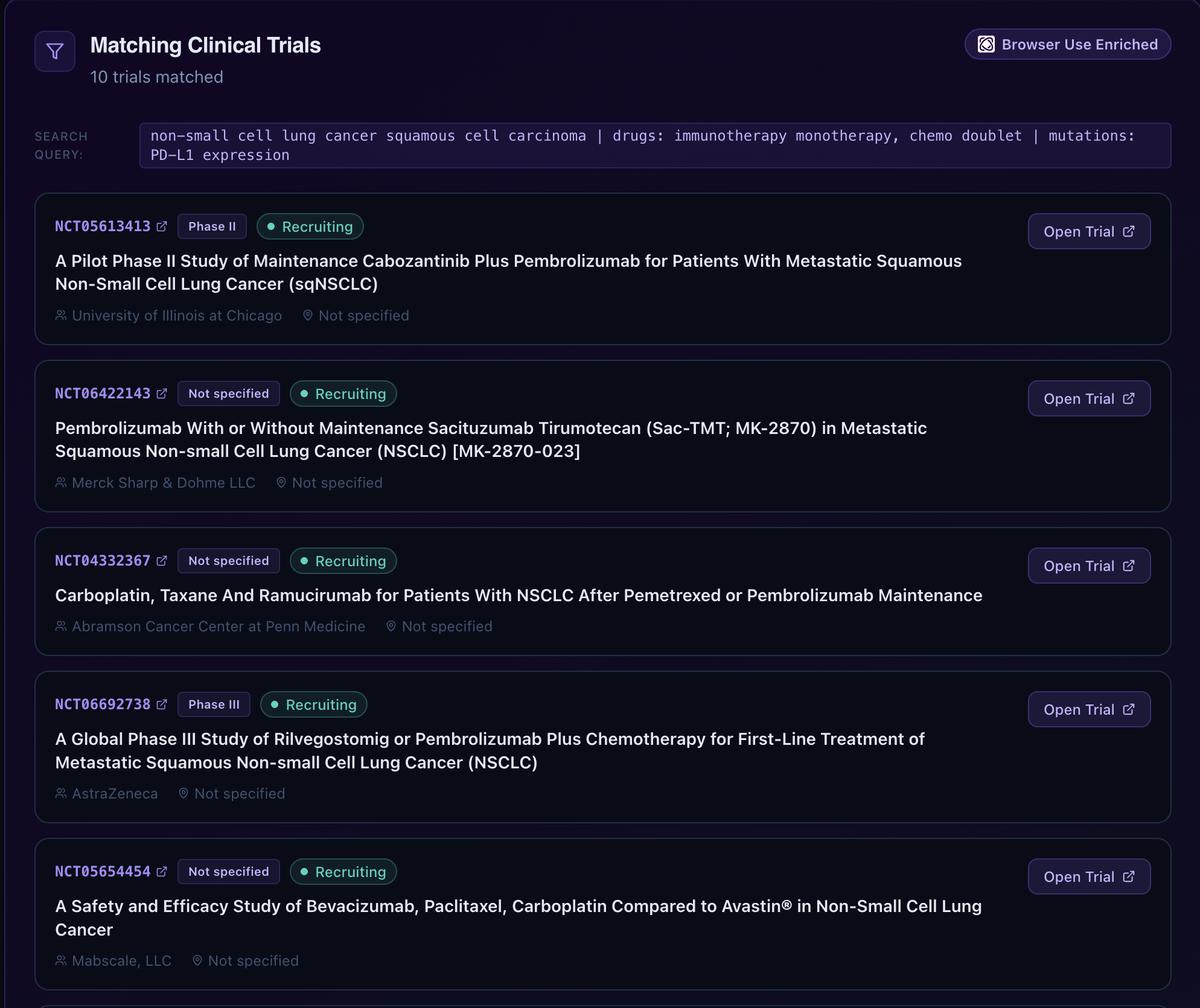
LungIQ turns a CT scan and patient records into an evidence-grounded starting point for lung cancer treatment planning. It matches similar historical cases, summarizes likely treatment patterns, and surfaces relevant clinical trials and literature instead of generating a plan from scratch.
How we built it
| Layer | Choice |
|---|---|
| Frontend | React + Vite + Tailwind CSS for a fast, responsive clinical dashboard with pipeline visibility and interactive case exploration. |
| Backend API | FastAPI + Python powering the end-to-end pipeline, session orchestration, and all REST endpoints used by the frontend. |
| Imaging pipeline | pydicom + SimpleITK for DICOM parsing, Hounsfield Unit normalization, resampling, and lung/tumor preprocessing. |
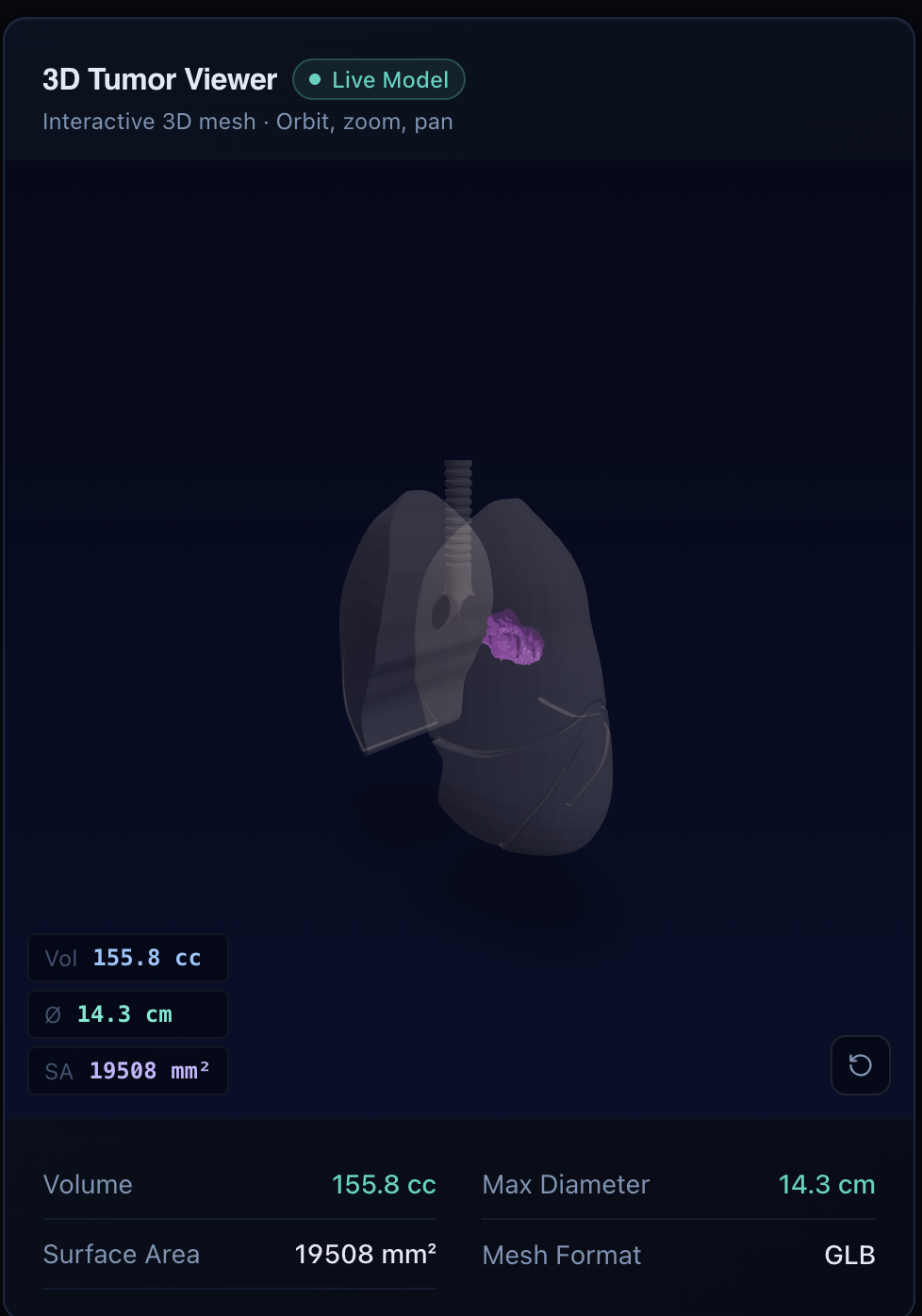
| Segmentation + 3D modeling | Tumor segmentation using a pretrained model / ROI fallback, with marching cubes + trimesh to generate a 3D tumor mesh for visualization. |
| Tumor representation | Radiomics / embedding-based encoding to transform tumor regions into structured vectors for downstream retrieval. |
| Retrieval engine | ChromaDB for vector similarity search over a database of historical lung cancer cases. |
| Reasoning layer | LLM-based evidence summarization and treatment planning, constrained on top of retrieved cohort statistics instead of freeform generation. |
| Live evidence retrieval | Browser Use agents to search ClinicalTrials.gov and PubMed in real time for relevant trials and supporting literature. |
| External AI / APIs | OpenAI + Browser Use integrations for structured generation, summarization, and web-based evidence collection. |
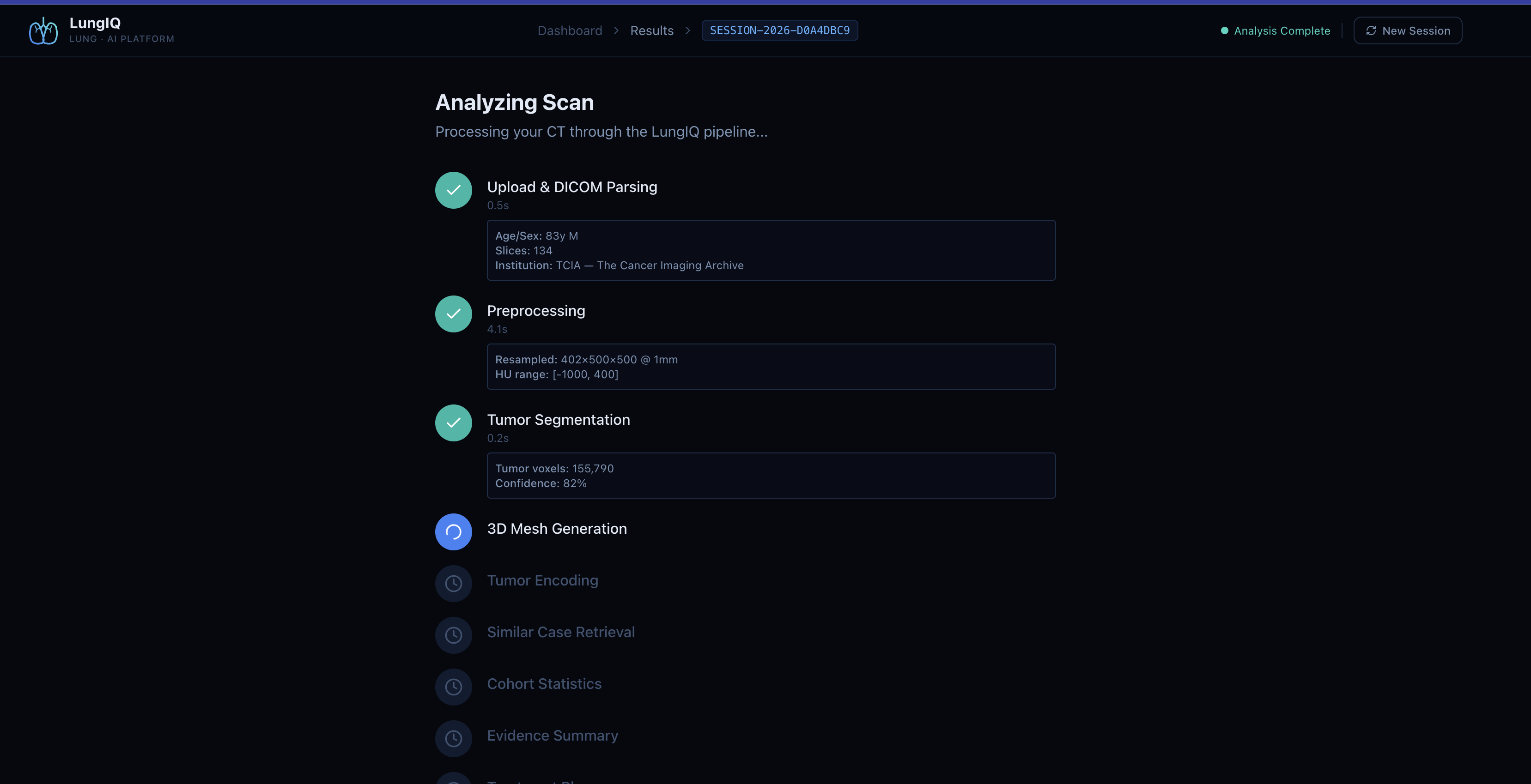
| State + orchestration | A stage-based backend pipeline with per-session state tracking so each step of the workflow can be surfaced live in the UI. |
The architecture was intentionally designed as a single inspectable pipeline rather than a black-box chatbot. Every major output in LungIQ, from similar case retrieval to treatment guidance to trial matching, is tied back to a specific stage in the system.
Challenges we ran into
The hardest part was building something trustworthy under hackathon constraints, especially with a small synthetic case base of about 150 patients rather than a real hospital-scale dataset. We also had to balance speed, reliability, and explainability across imaging, retrieval, and evidence-grounded generation.
Accomplishments that we're proud of
We built a working prototype that goes beyond “ask an LLM and hope” by grounding outputs in tumor data, similar cases, and supporting evidence. We are especially proud that the system connects imaging, retrieval, treatment guidance, and trial/literature search into one coherent workflow.
What we learned
We learned that in clinical AI, retrieval, provenance, and traceability matter just as much as generation quality. A useful treatment-planning system is not just about producing an answer — it is about showing why that answer is defensible.
What's next for LungIQ
Next, we want to integrate LungIQ with real FHIR/EHR hospital systems so it can learn from much larger and more representative patient data than the ~150-case demo database. That would improve the quality of our vector search, strengthen the statistical grounding of recommendations, and make the platform much more clinically useful.
Built With
- chromadb
- fastapi
- pydicom
- python
- scikit-image


Log in or sign up for Devpost to join the conversation.