-
-
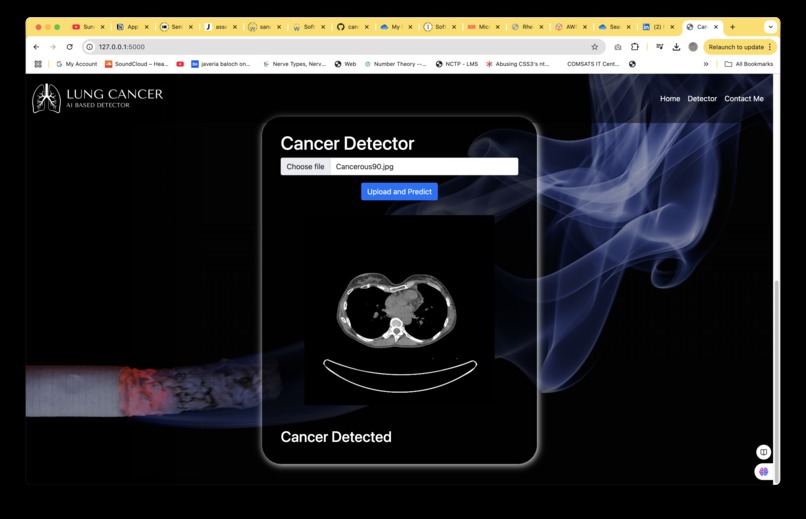
Cancer detected
-
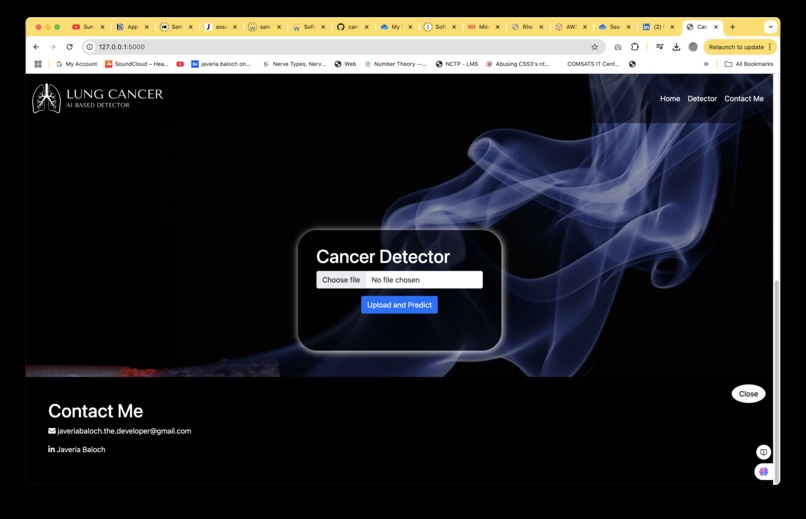
Cancer detection and Contact Me
-
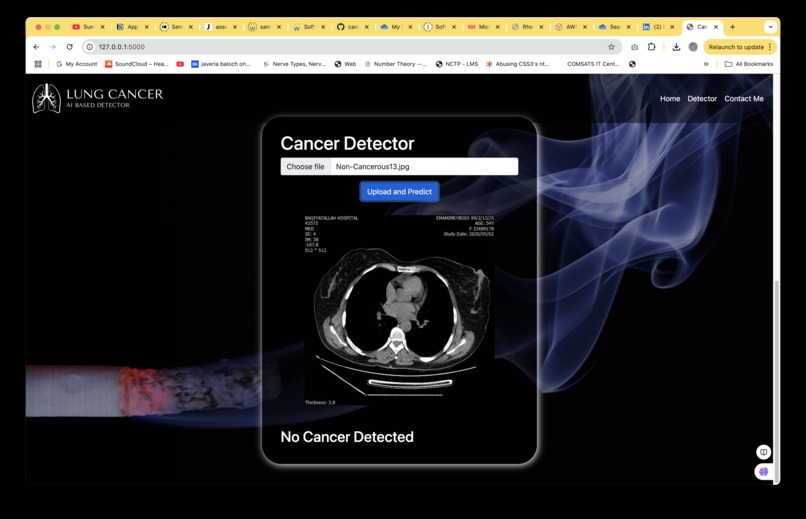
No Cancer Detections
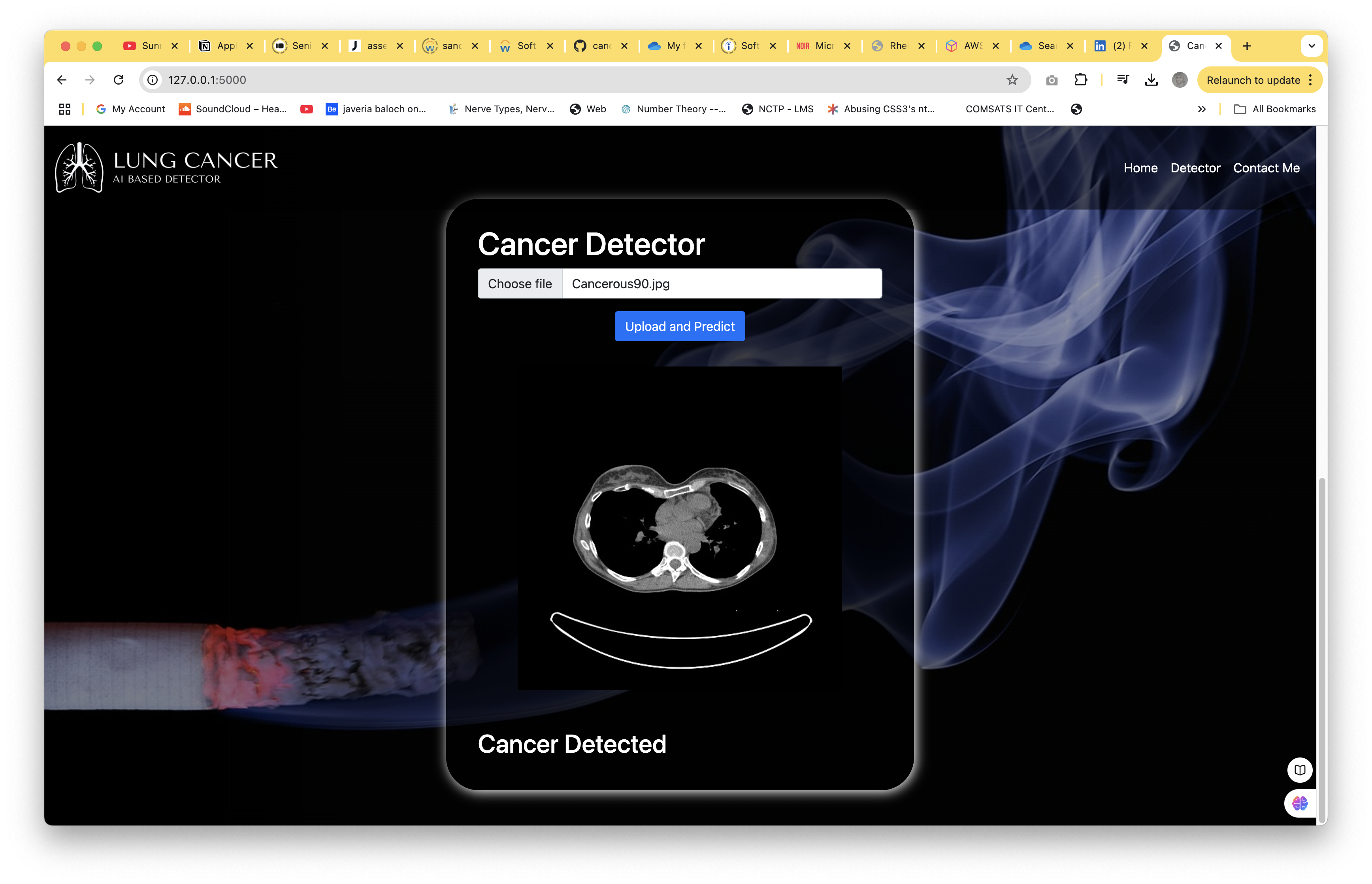
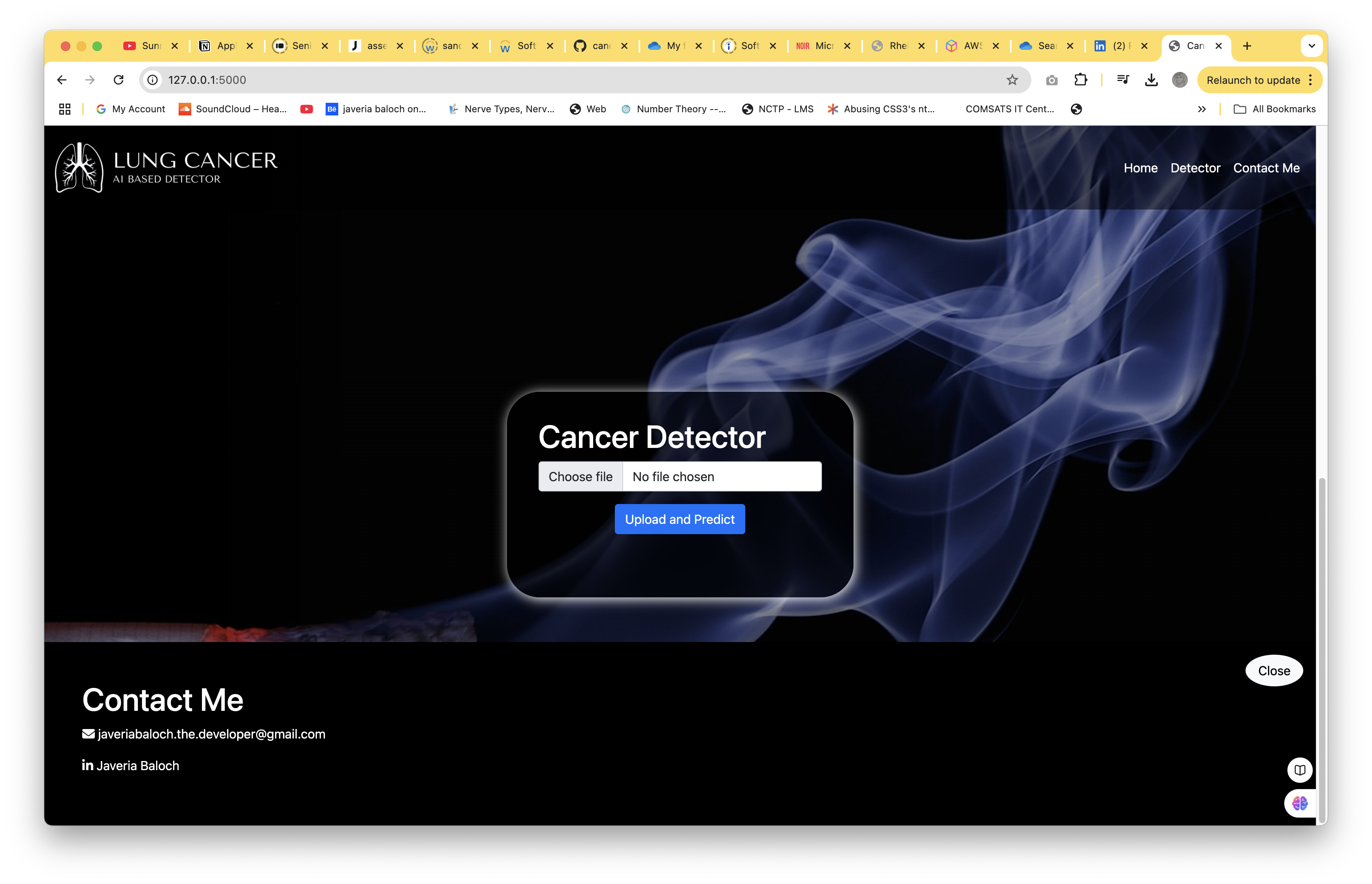
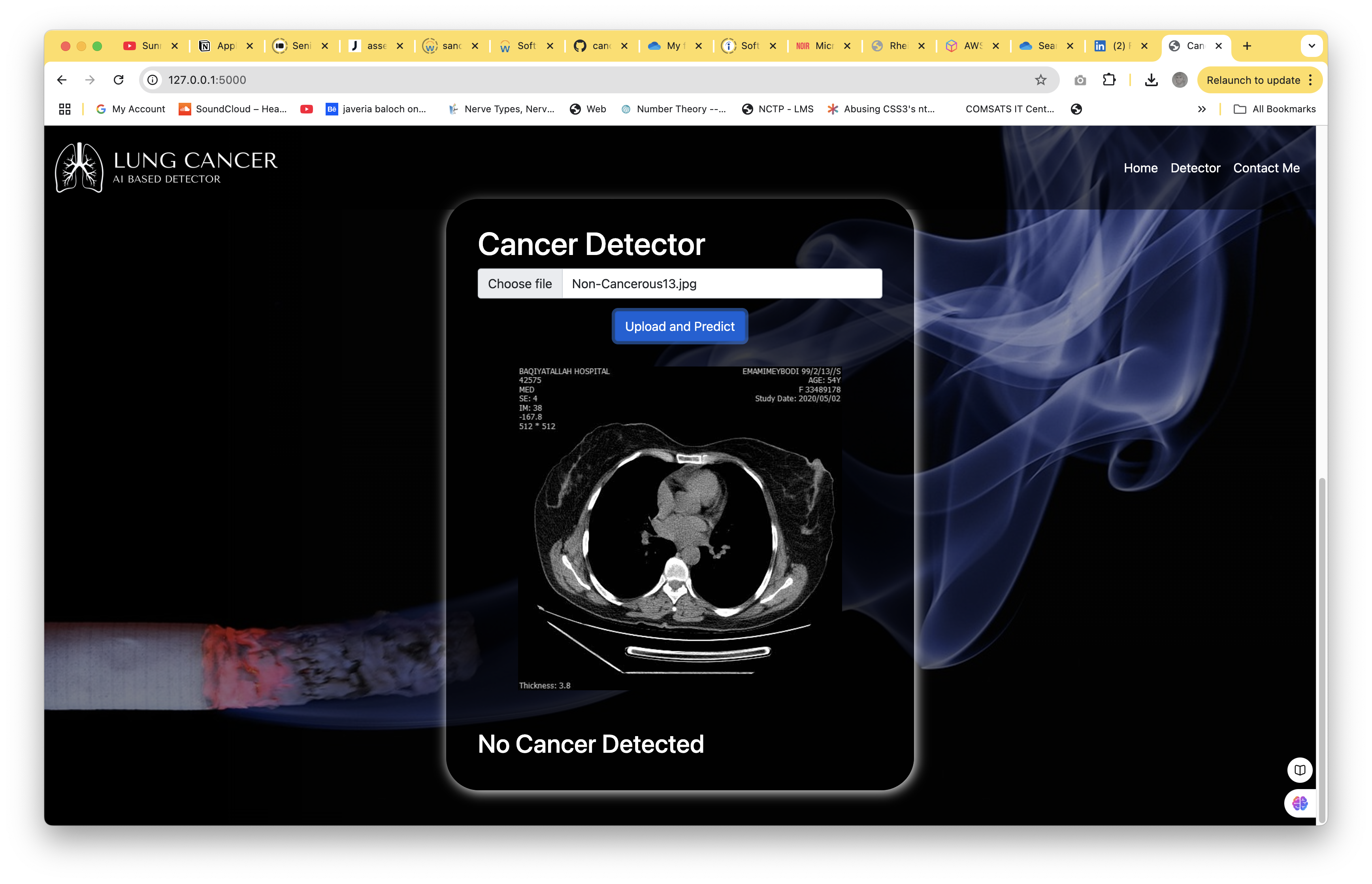
LUNG-AI: Revolutionizing Lung Cancer Detection with AI
Inspiration
The devastating impact of lung cancer inspired me to explore the transformative potential of AI in healthcare. My goal was to create an innovative tool for early detection, enabling improved outcomes for patients.
What it does
LUNG-AI is a web-based application leveraging a deep learning model to analyze CT scan images of lungs. By processing these images, it identifies whether they are normal or cancerous, offering crucial support for early diagnosis and intervention.
How I built it
LUNG-AI was developed using Python, Flask, and a cutting-edge Convolutional Neural Network (CNN) architecture. The model was trained on an extensive dataset of CT scans, while the web interface was designed to be intuitive and accessible to both healthcare professionals and the general public.
Challenges I ran into
One significant challenge was acquiring a diverse, high-quality dataset of CT scans. Additionally, achieving model accuracy and reliability required rigorous preprocessing and hyperparameter tuning. I tested various AI models, including KNN, Random Forest, Transformers, and RNNs, but CNN outperformed the rest in terms of both processing speed and computational efficiency.
Accomplishments I'm proud of
I’m proud to have created an accurate and robust AI model capable of detecting lung cancer with high precision. The user-friendly web application ensures the tool is accessible to its intended audience, potentially saving lives through early detection.
What's next for LUNG-AI: AI-Powered Lung Cancer Detection
Moving forward, I plan to enhance the model by integrating larger datasets and employing advanced techniques. I aim to incorporate LUNG-AI into clinical workflows, providing real-time support to radiologists. My ultimate aspiration is to make a tangible impact on lung cancer detection and patient care globally.
Built With
- css
- flask
- html
- javascript
- jupyter
- python

Log in or sign up for Devpost to join the conversation.