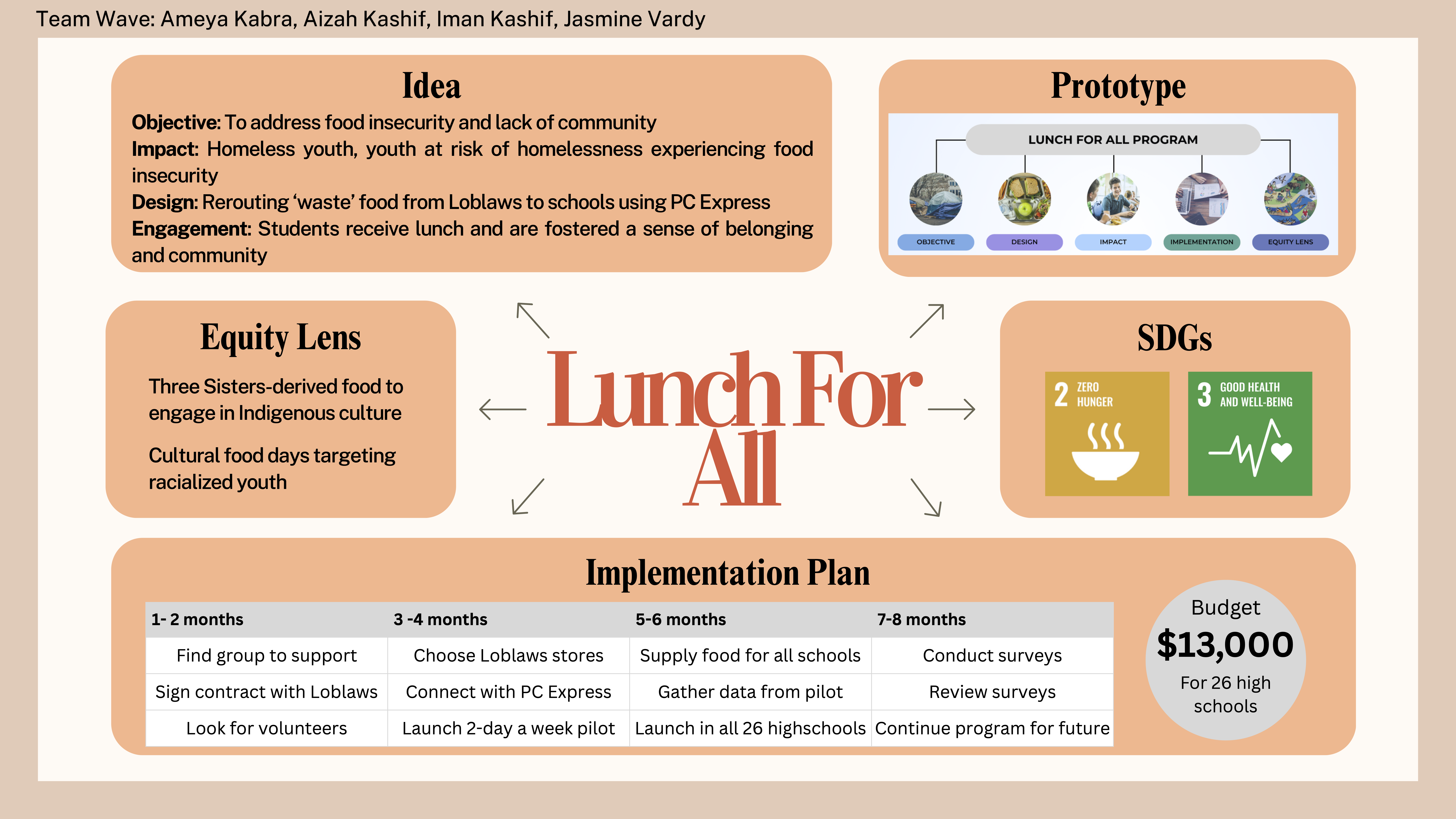
Our idea is to implement a lunch-provision plan for students using food sourced from grocery stores that would otherwise be wasted. Given their widespread presence in Ottawa, we would like to work with Loblaws. In 2019, 58% of all food produced in Canada went to waste (Janus, 2019). We believe that redirecting this to schools would ameliorate food insecurity and contribute to sustainable goals. We acknowledge that there are many schools that do not have a kitchen, cafeteria or other facility to cook food, and therefore suggest that ‘ready-to-eat’ meals be brought from grocery stores. Examples of this include sandwiches, salads, fruits and dry snacks. This plan aims to address both food insecurity and lack of community. Youth, especially from outside Ottawa, desire to belong to a community. By having a common lunch, we can promote peer-peer interaction and community building. Besides fostering these positive changes, we foresee our plan having other benefits. Firstly, given that the food would otherwise be wasted, it will not be an expense to schools. Given the large proportion of wasted food, it is unlikely that the quantity of food will be insufficient (Janus, 2019). The only costs, in theory, are that of packaging and delivering the food from the grocery to the school. However, we admit that this plan has potential pitfalls, for example, various dietary restrictions and allergies which may not be catered to by the food provided by the grocery store. Further, existing Canadian programs are in the pilot stage, so there is not much evidence as to the feasibility of such a program in Canada (Potdar, 2025). Therefore, planned and proper implementation is key to our success.
Built With
- canva

Log in or sign up for Devpost to join the conversation.