-
-
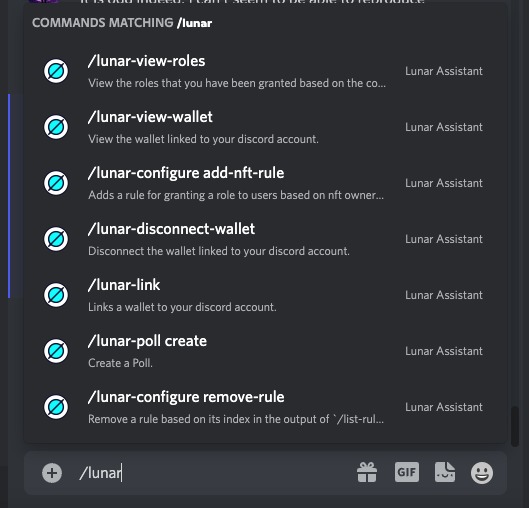
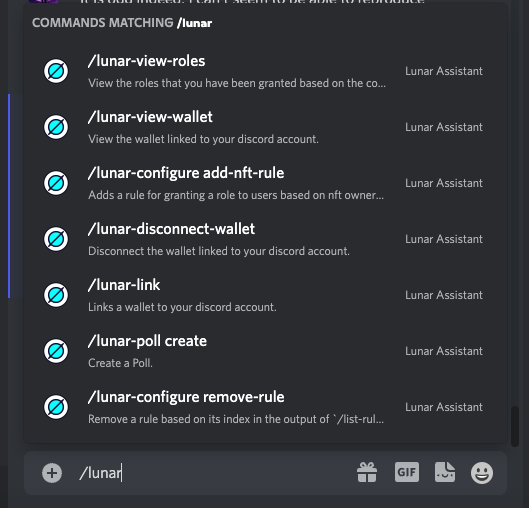
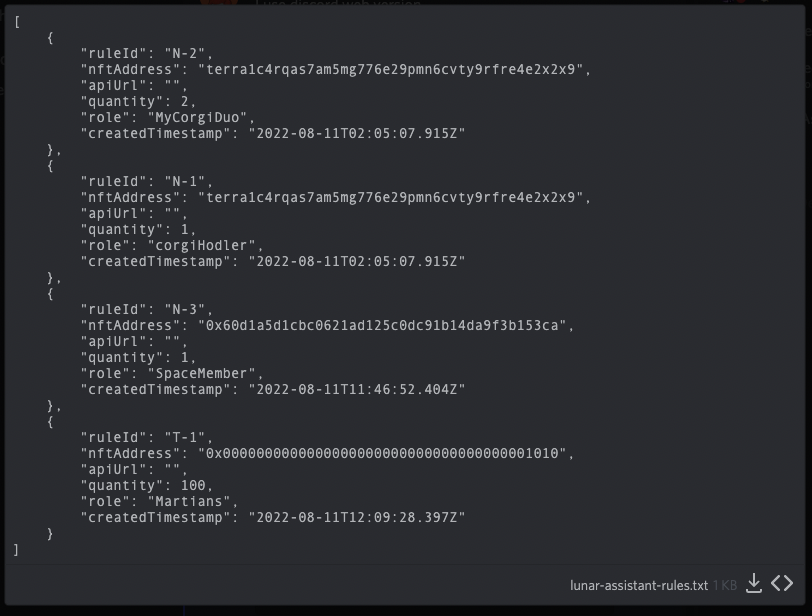
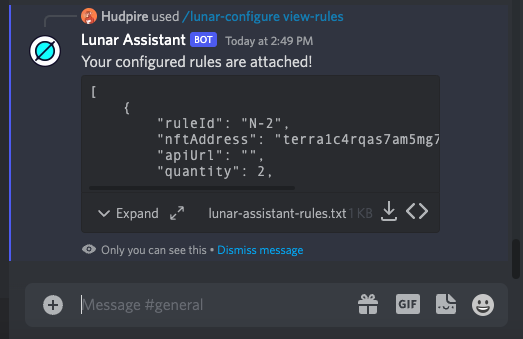
Lunar Assistant - Discord
-
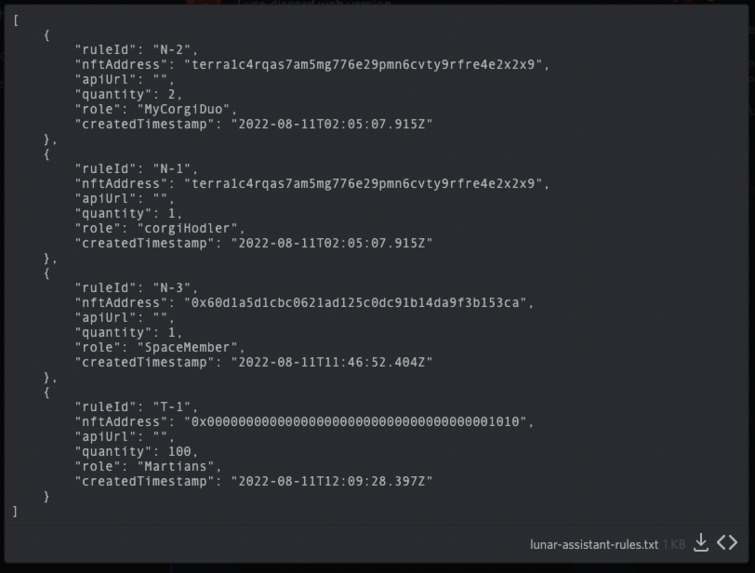
Lunar Assistant - Discord
-
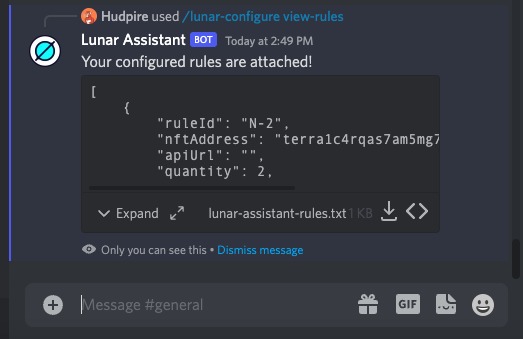
Lunar Assistant - Discord
-
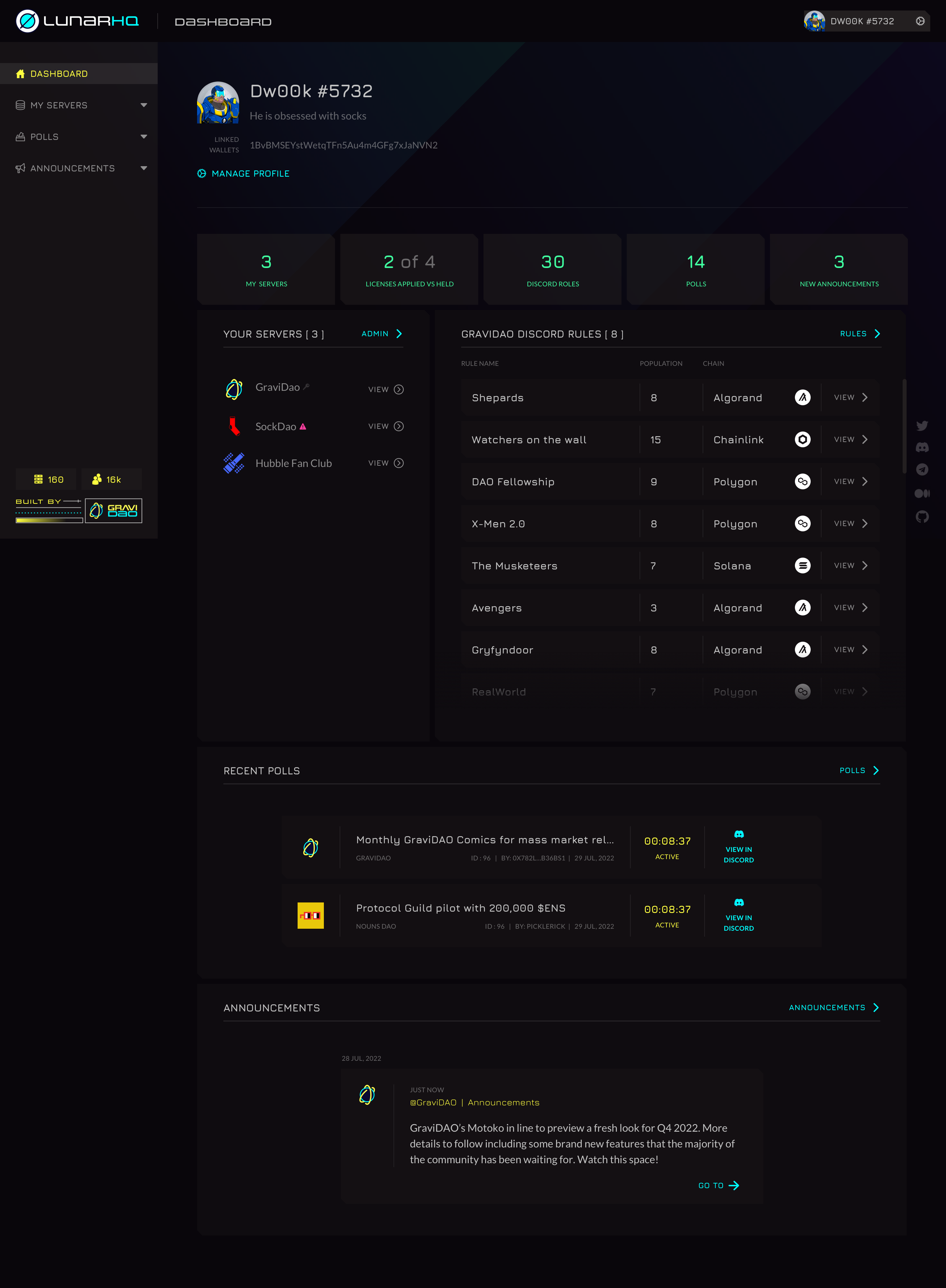
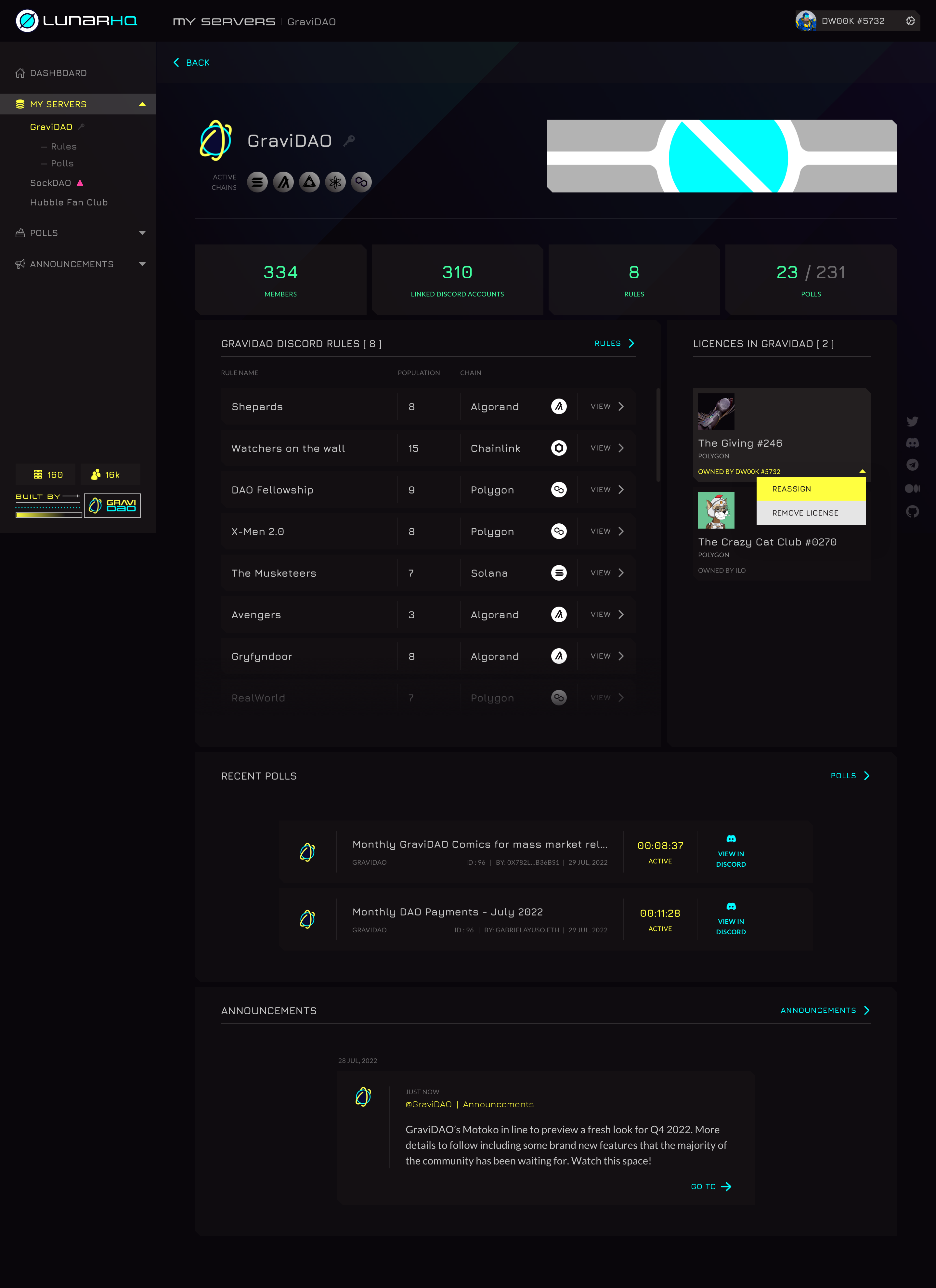
Lunar HQ - WebUI
-
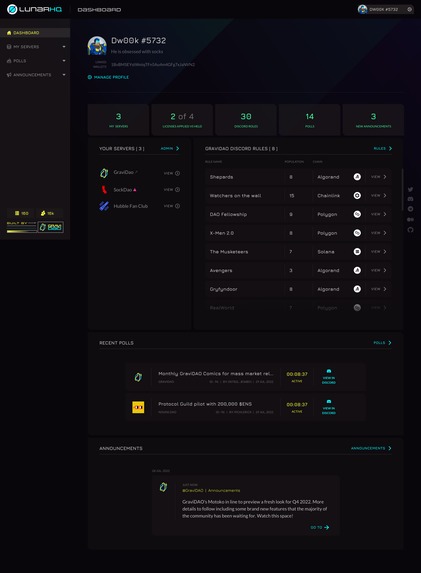
Lunar HQ - WebUI
-
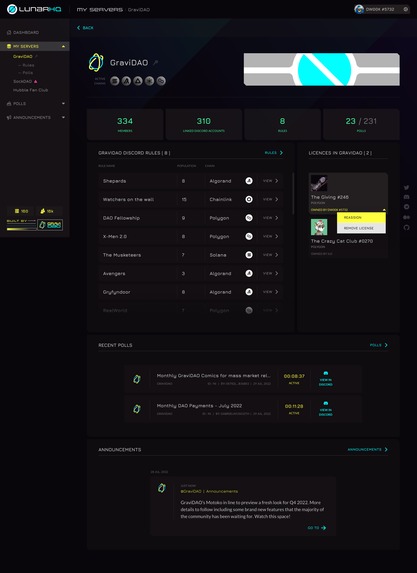
Lunar HQ - WebUI
-
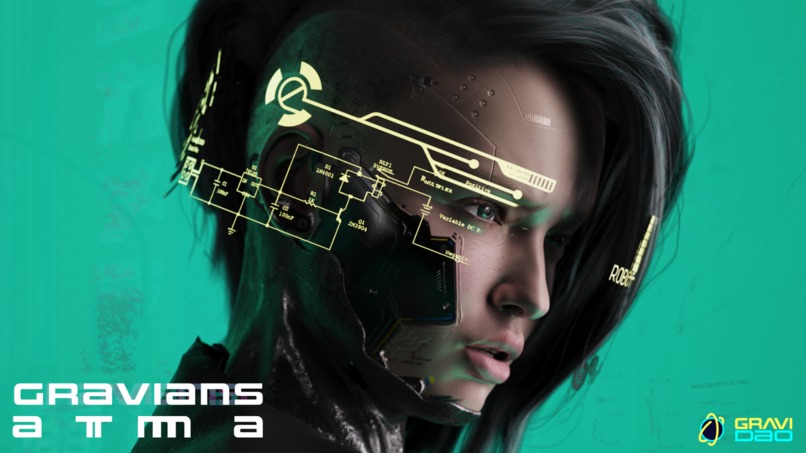
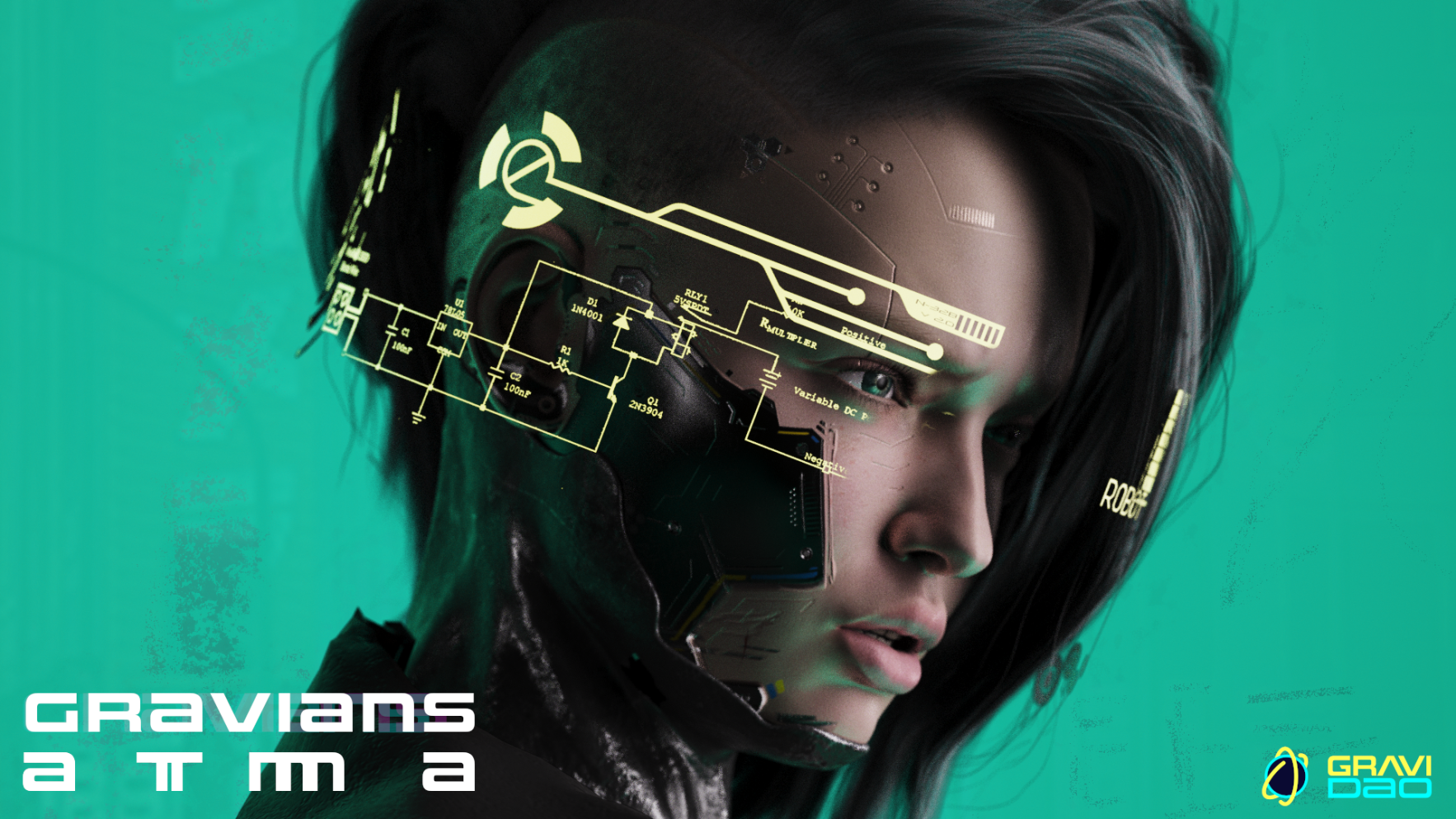
License Bearing NFT Example 1
-
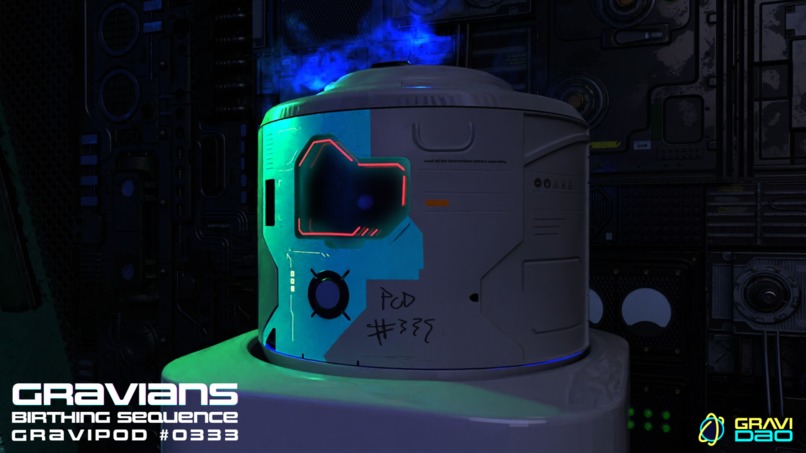
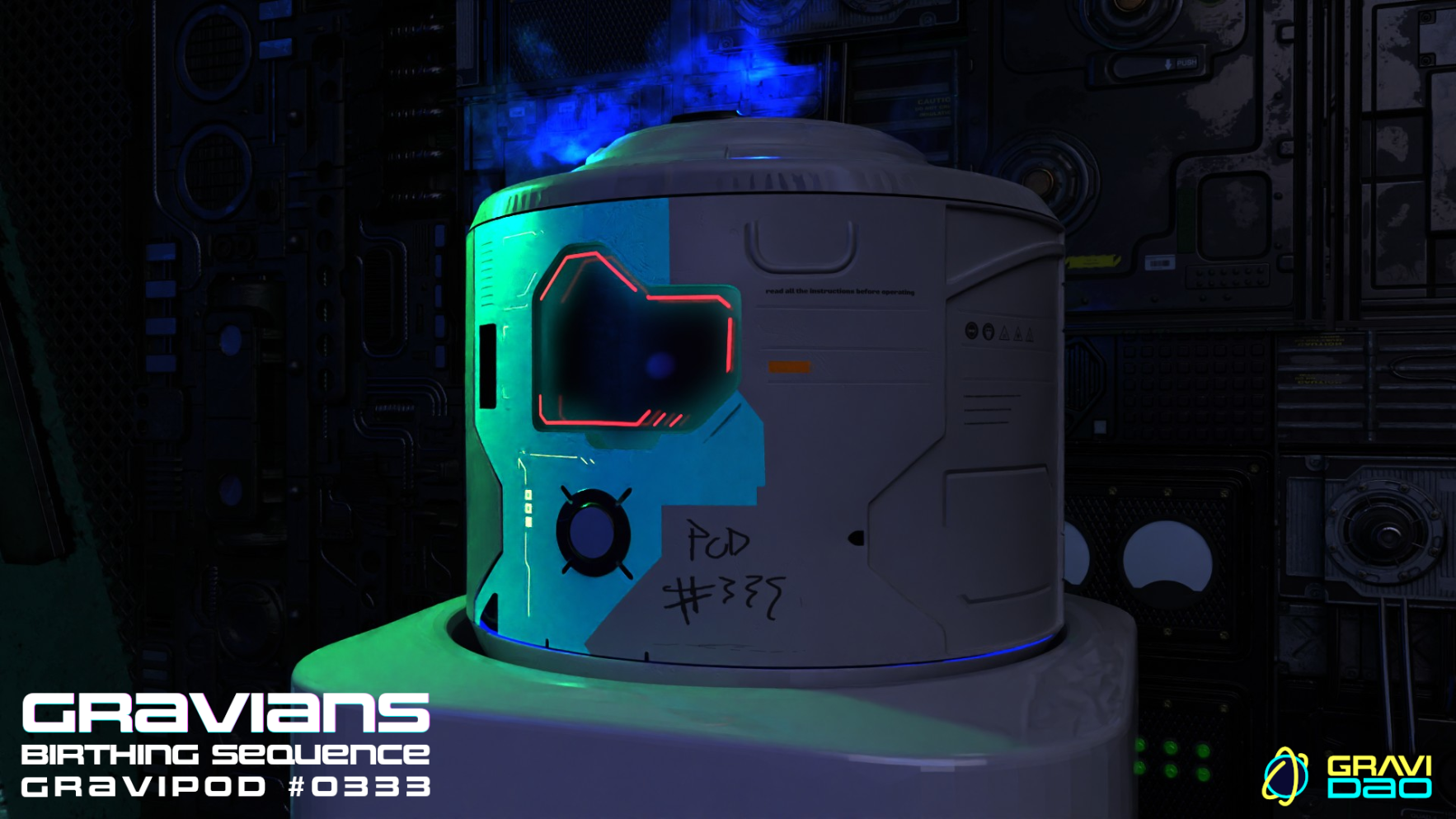
License Bearing NFT Example 2
Inspiration
In 2020 the founder of GraviDAO, Ilo, wanted to create a decentralized collective of local print shops. He wished to utilize web3 technologies such as DeFi, decentralized governance, and NFTs in order to make this vision a reality. Not long after setting out to form this collective, he realized that the rails did not exist in order to organize efficiently.
Months later, Ilo attended a hackathon with fellow web3 enthusiasts to build governance models. They wrote a litepaper on governance systems and were approached by a NFT collection after they published their piece. The NFT collection wanted an improved Discord experience with wallet-linked NFT verification and community gating. This is what spurred the initial inspiration for Lunar Assistant.
What it does
Lunar Assistant can be broken down into two different categories. The first being the Lunar Assistant Discord bot, which is free and open-source. The second is Lunar HQ (as presented in the demo) which is a web management tool designed for server organization. Users will be required to purchase NFT licenses to utilize aspects of Lunar HQ.
Lunar Assistant (Discord Bot) features:
- Verifiable Ownership
- Dynamic Role Distribution
- Token-gated Channels
Lunar HQ (Premium web UI) features:
- Multiple-wallet support for your users
- IBC and EVM compatibility
- Complex roles with nested rules
- Off-chain token-weighted voting on Discord
- Server KPIs for user insight
- Custom API support
- Discord announcement aggregator
How we built it
Our lead developer, David, joined GraviDAO after the legacy Lunar Assistant application already launched. From the start, he saw several problems that could be improved in order to create a more robust application. David set out to apply what he learned during his career as a data and systems integration consultant.
He started designing the architecture to be as flexible as possible to integrate multiple-blockchains and connectors (indexing clients). The first code he created was the data model as it helped him think through all the possible functionalities and how everything will fit into a coherent flow.
After that he made a basic proof of concept of all the major features required (API endpoint and calling it, security with JWT, sending events with websockets, managing databases with typeORM, etc). David had to prove that it could work because he had little previous web development experience.
We now had a rough skeleton of the applications and used it as a foundation for the present day product. Through all of this, David received help from the team primarily for the UX.
Challenges we ran into
From a business perspective we wanted to move away from traditional web2 subscription models and implement something that was inspired by web3. This is where we devised our license bearing NFT model. A user has greater ability of recapturing their original purchase value, NFT holders can advocate for new features, and users can guide the development of the platform. However, we had several debates over the best method of implementing these NFTs.
UX is another area where we discovered difficulties. We want to ensure that the experience is a simple process with few headaches. We tried to create a platform that can be understood by anyone regardless of web3 expertise. Luckily, we have a member on the team with over 20 years of working on UX. We are currently brainstorming through these issues with a plethora of insight.
A challenge from a technical viewpoint was learning that accurate indexing is needed for many projects. At first glance it did not look hard to do, but even the best platforms out there such as Alchemy have issues with data integrity. We had to implement data integrity rules to fix some of the inaccuracies. We also bulletproofed Alchemy with a retry mechanism because the API calls occasionally failed.
Accomplishments that we're proud of
We are incredibly proud of the success from our legacy application which had over 16,000 users on 200 Discord servers. We are excited to push forward with integrations and continue expanding Lunar Assistant. Additionally, we are proud of the quality of our license bearing NFT model. We encourage you to view the license bearing NFTs for our next collection. Two examples can be seen in the project media.
What we learned
Over the last few months our team has had to learn about becoming experts in organizational management. It is always difficult to prepare for the downturns in crypto and this cycle was no exception with all the mayhem this spring. This required us to shift priorities and discover new paths forward for Lunar Assistant.
The development team learned a plethora of insights on how to index various projects. As mentioned in an earlier section, web3 data can be incomplete and we wanted to ensure that Lunar Assistant is as accurate as possible in this regard.
Lastly, our design, UX, and UI specialists all learned new techniques in creating graphics, presenting efficient workflows, and researching ways to easily onboard new crypto enthusiasts.
What's next for Lunar Assistant
Our next steps include rolling out the Lunar Assistant Discord application on August 15th for Polygon. This is in collaboration with One Planet. We will then be releasing the Lunar HQ web app and extended features in September. We plan on minting the Gravians NFT collection in October which will expand access to Lunar HQ.
Built With
- alchemyapi
- angular.js
- discord.js
- node.js


Log in or sign up for Devpost to join the conversation.