-
-
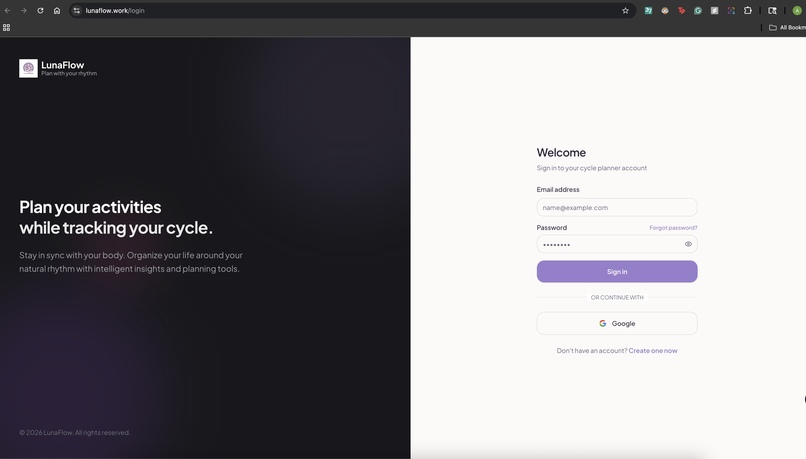
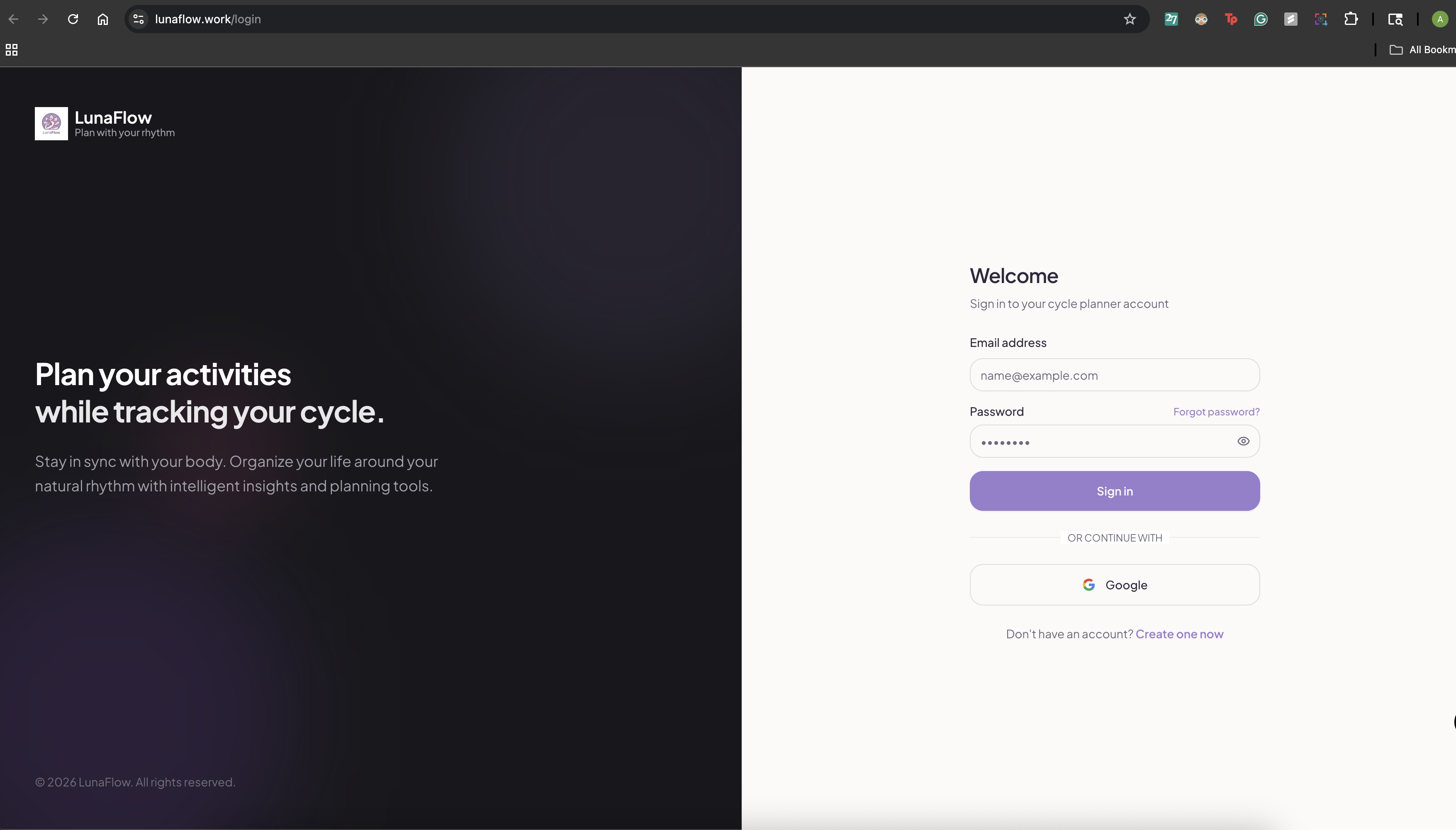
Login
-
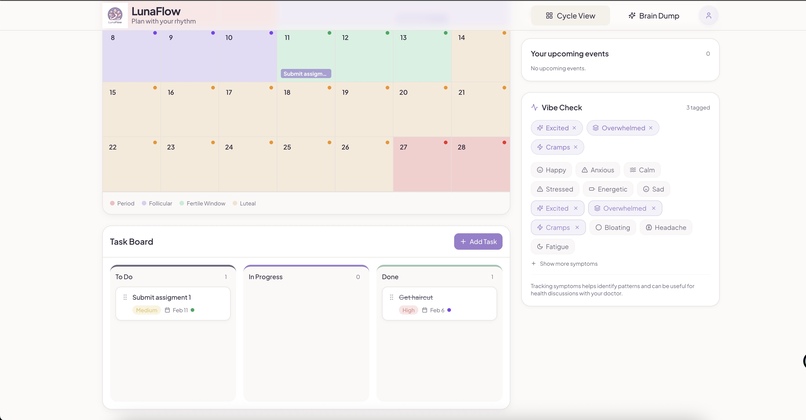
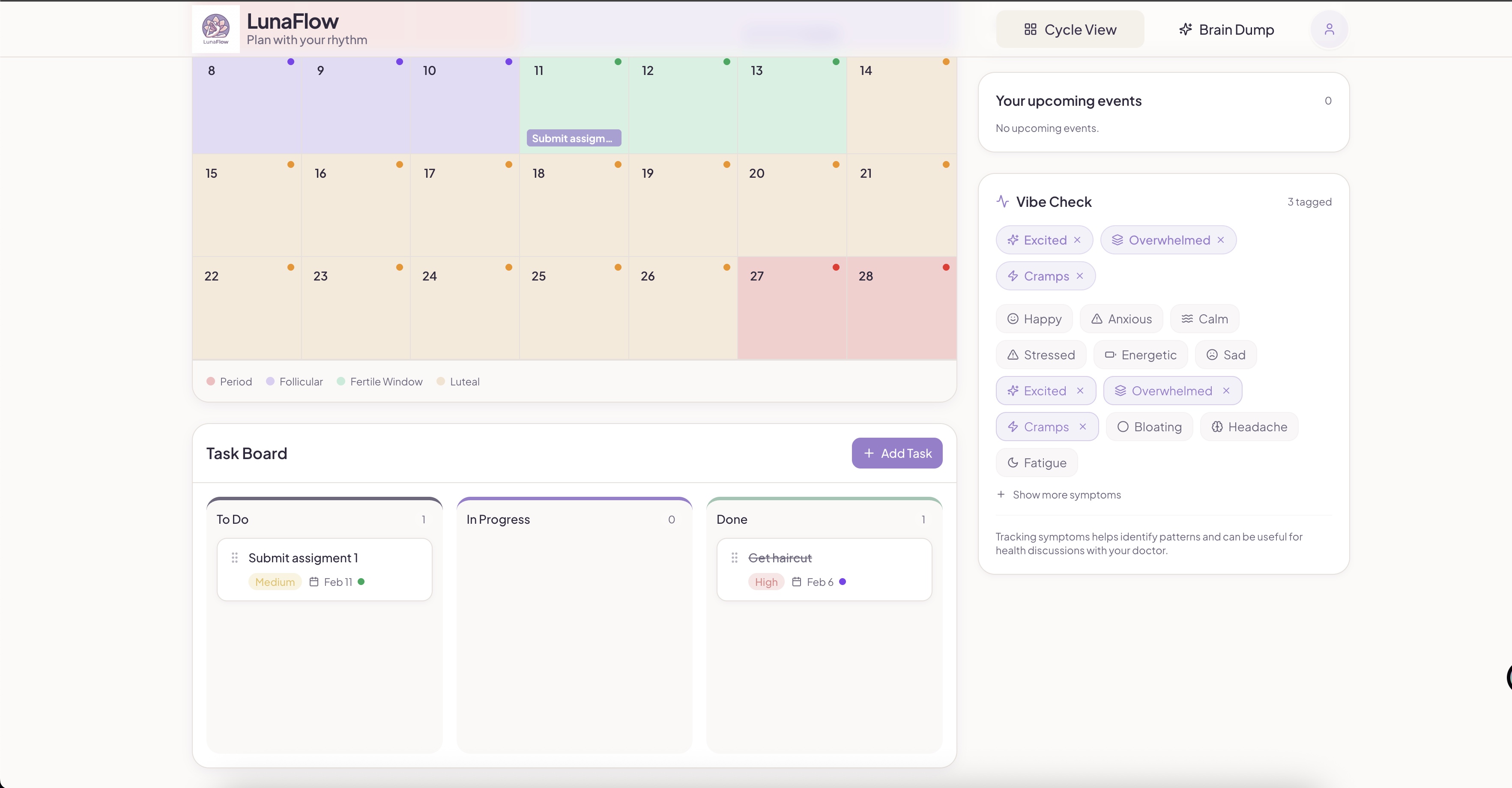
Task board
-
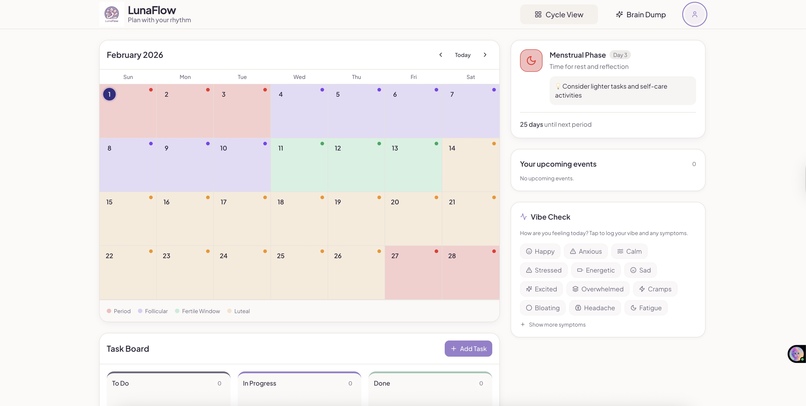
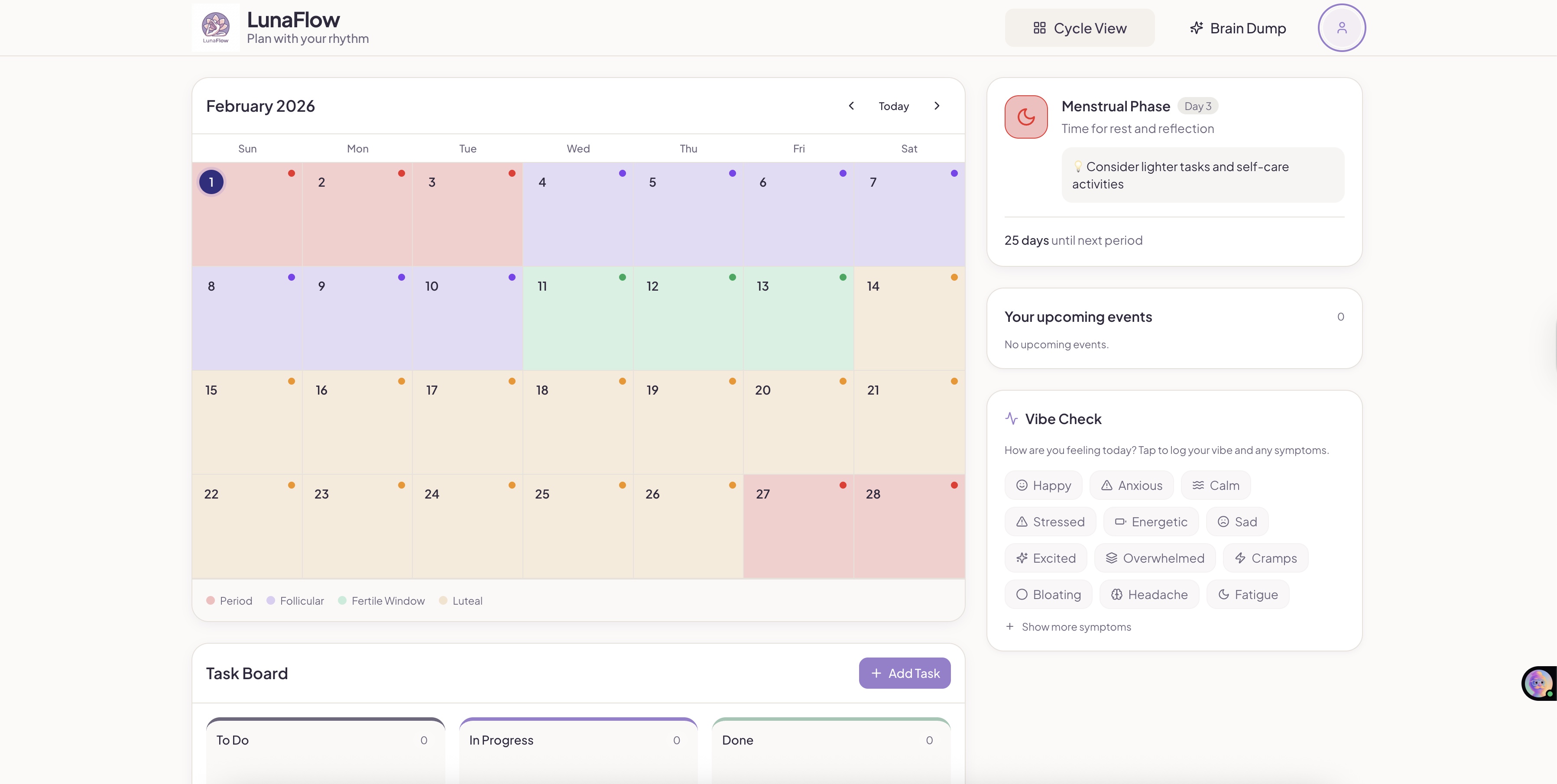
Home page
-
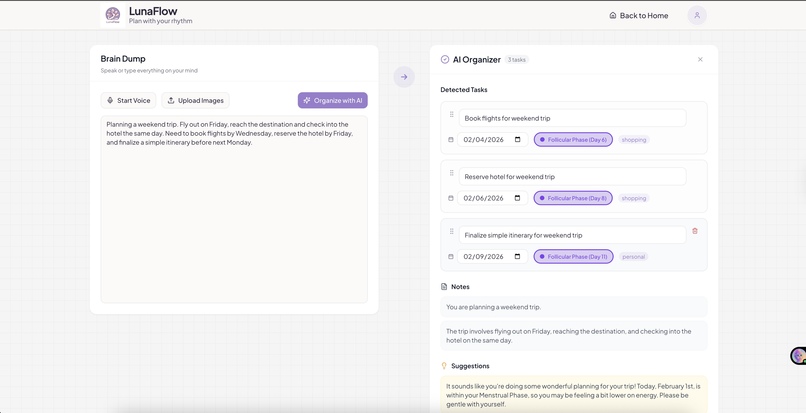
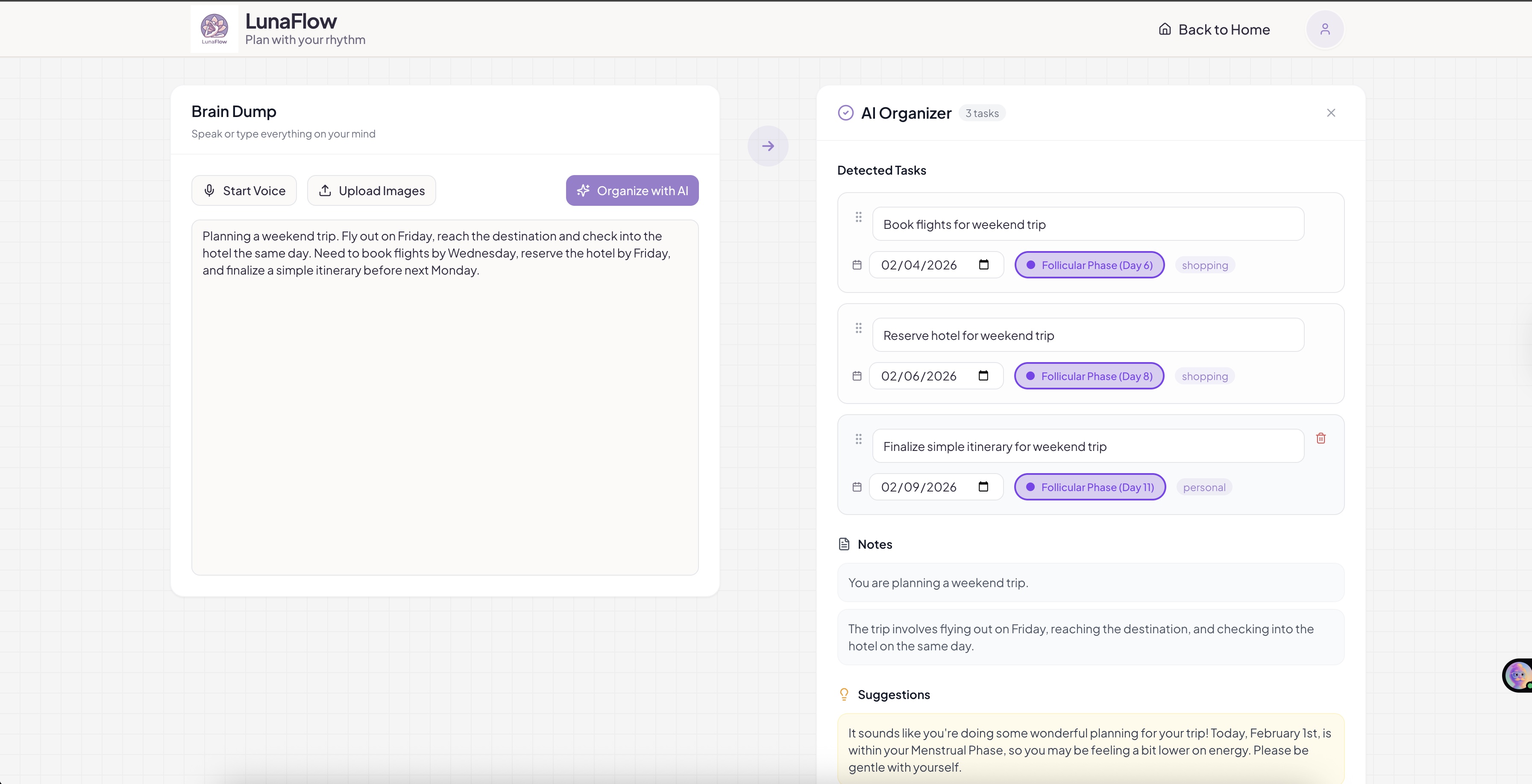
Brain dump page
-
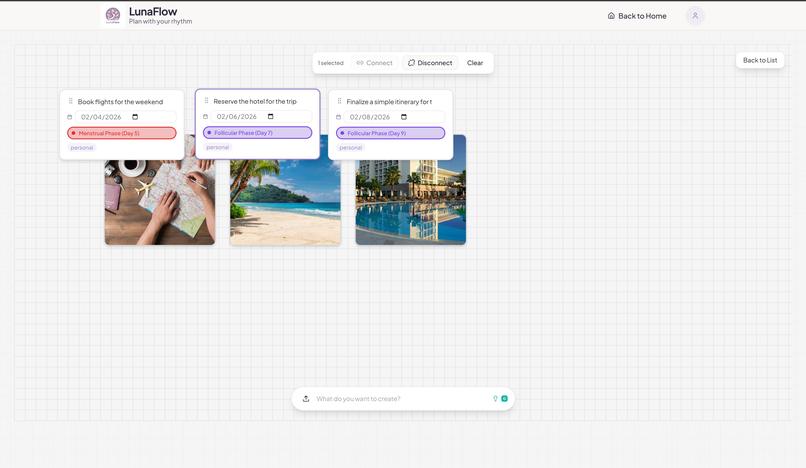
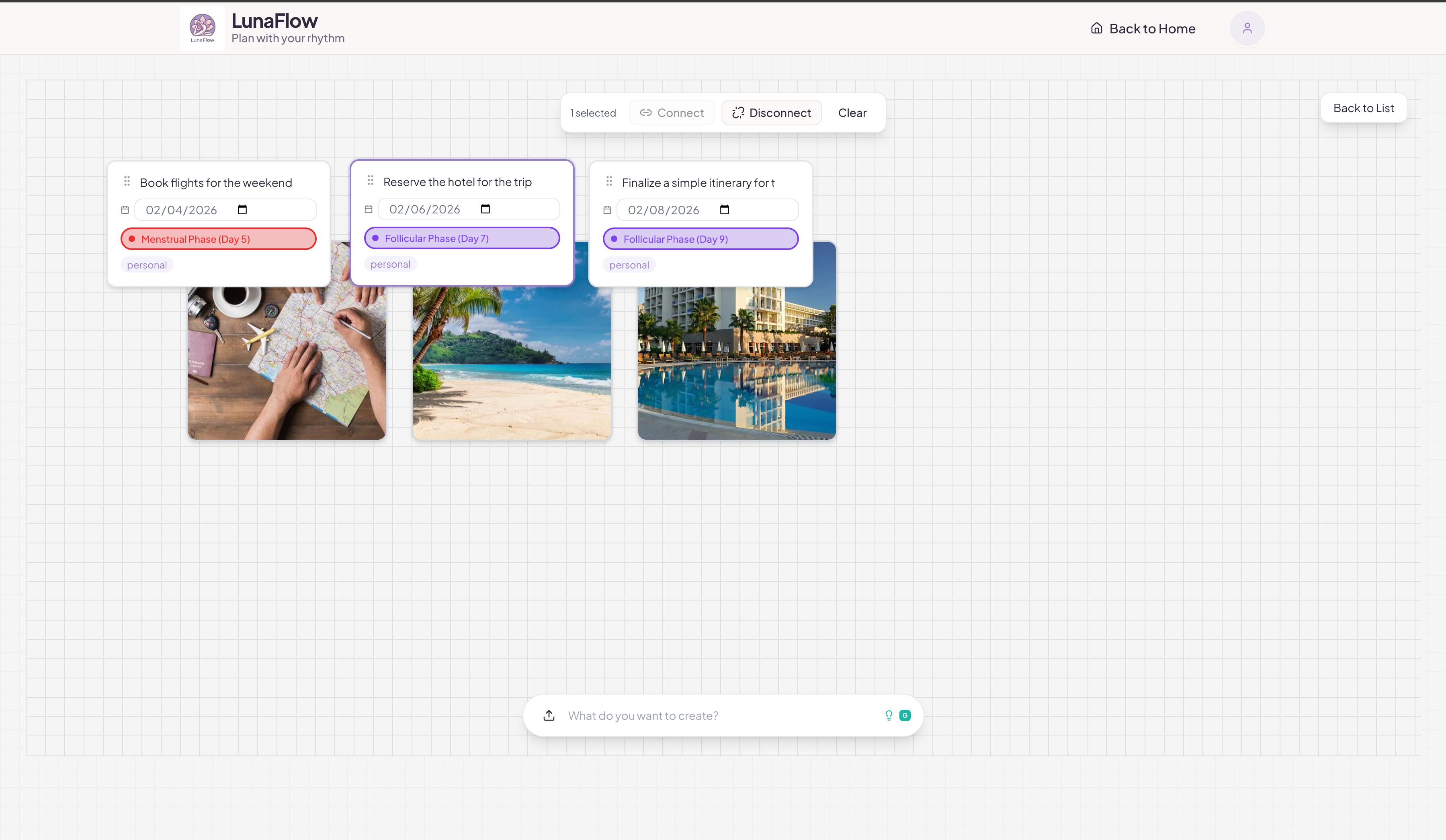
Mind Map
Inspiration
Most productivity tools assume that every day looks the same. But for many women, energy, focus, and emotional capacity fluctuate throughout the menstrual cycle. Despite this, women are expected to plan work, personal life, and health without any contextual support.
LunaFlow was inspired by this gap, the disconnect between how planning tools work and how women actually experience their days.
What it does
LunaFlow is a cycle-aware planning platform that combines:
- A menstrual cycle calendar
- A unified event calendar
- A visual task board
- A brainstorming and vision board space
All in one place.
Users can add their cycle details once and immediately see cycle phases visualized alongside their calendar. Tasks created on the board automatically sync to the calendar, and external events from Google Calendar appear directly inside LunaFlow and vice-versa. We also introduced a lightweight symptom tagging feature that lets users quickly log common physical or emotional symptoms.
How we built it
LunaFlow is a full-stack web application built with:
- A modern TypeScript frontend
- Express.js backend
- Python + FastAPI AI Microservice
- PostgreSQL for persistent data storage (Dockerized for easy setup)
- Google Calendar integration for external events
- Text-to-speech support using ElevenLabs
- Vultr to deploy the application (Live on: link)
Challenges we ran into
One of the biggest challenges was designing an experience that felt supportive without becoming overwhelming or clinical. We intentionally kept cycle insights subtle and non-prescriptive. Integrating multiple planning modes: calendar, task board, and brainstorming, while keeping everything in sync, was another key challenge, especially within a hackathon timeframe. On the technical side, deploying on Vultr was new territory for our team. While it offered simpler pricing and flexibility, we had to learn how to configure the server, expose the correct ports, and get multiple services running and communicating properly in a production environment. Balancing deployment setup with active feature development under time constraints was a meaningful challenge and learning experience.
What we learned
We learned that productivity isn’t just about efficiency. It’s about reducing cognitive load. When planning tools respect real human rhythms, they become empowering rather than demanding. We also learned how to thoughtfully use and integrate tools, APIs, and services to create a cohesive product. Bringing together others’ work, from AI models to voice and calendar integrations, and making it feel seamless taught us a lot about building meaningful, real-world applications rather than isolated features.
What’s next
Plans for LunaFlow include:
- Multi-calendar support (Outlook, iCal)
- AI-assisted cycle-aware planning suggestions
- Long-term symptom and energy trend insights
- Mobile support and notifications
- Privacy-first controls for sensitive health data
LunaFlow is about building planning tools that work with women, not against them.
Team Roles:
- Atharva Salunke: Implemented the Brain Dump and Mind Map features, integrating ElevenLabs and the Gemini API.
- Vishal Pednekar: Handled backend integration of Google Calendar and Google Tasks APIs.
- Rohan Chavan: Managed CI/CD pipeline implementation and deployment on Vultr cloud services.
- Rakan Abuwad: Implemented Google OAuth authentication and addressed UI enhancements and fixes.
- Hitanshi Dhaktode: Led product design, planning, and overall product management.
Built With
- docker
- elevenlabs
- elevenlabs-api
- express.js
- fastapi
- google-calendar-api
- google-gemini-ai-(gemini-2.5-flash)
- google-tasks-api
- javascript
- javascript-(node.js)
- postgresql
- prisma-orm
- python
- radix-ui
- react
- tailwind-css
- typescript
- vite
- vultr

Log in or sign up for Devpost to join the conversation.