-
-
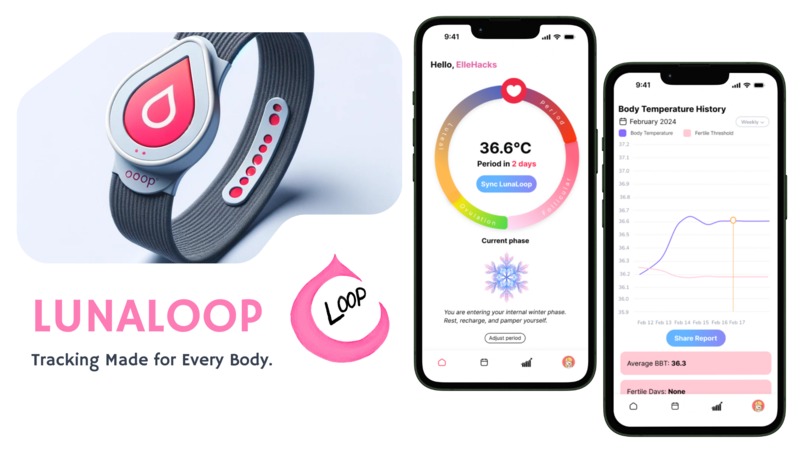
LunaLoop, Tracking Made for Every Body
-
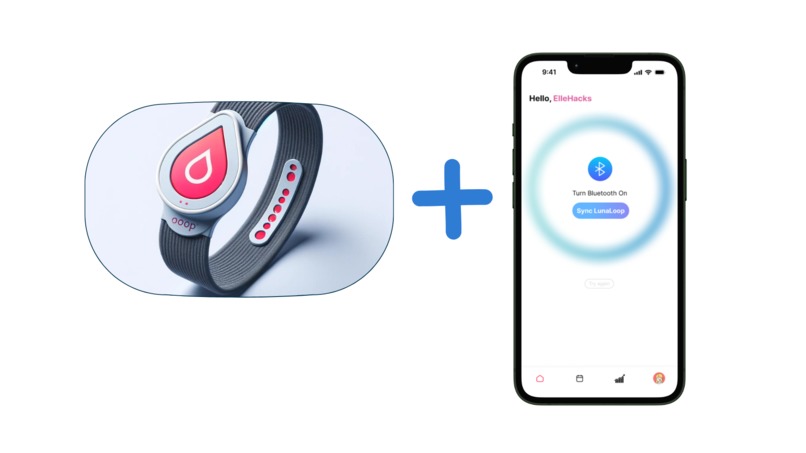
Our Solutions
-
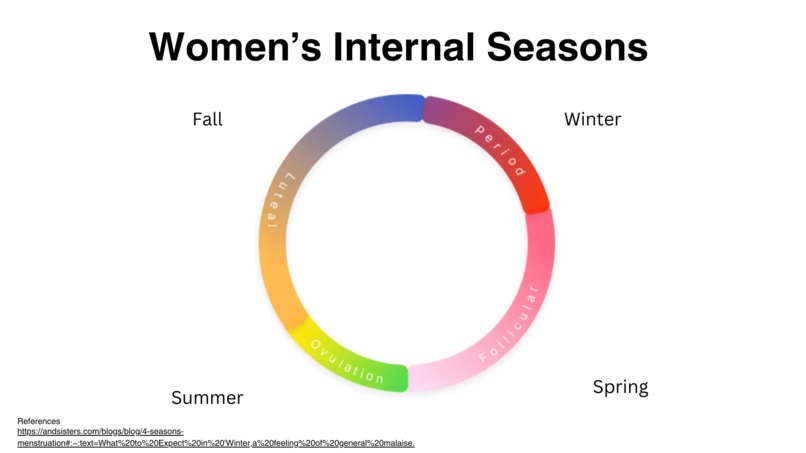
Women's Internal Seasons
-
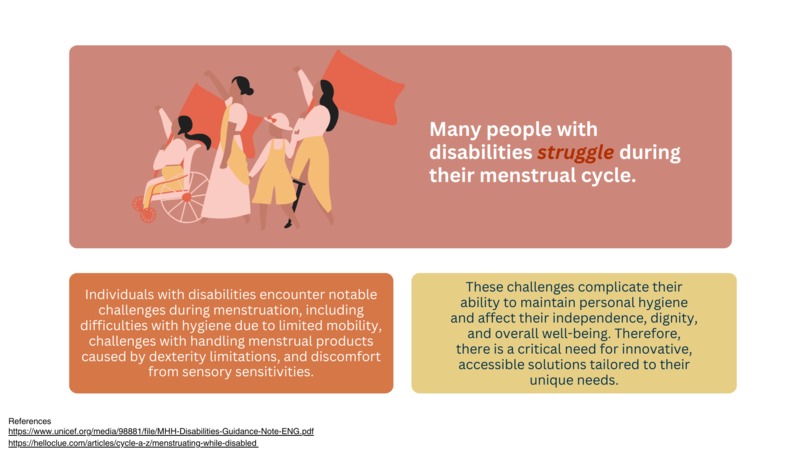
Target Users
-
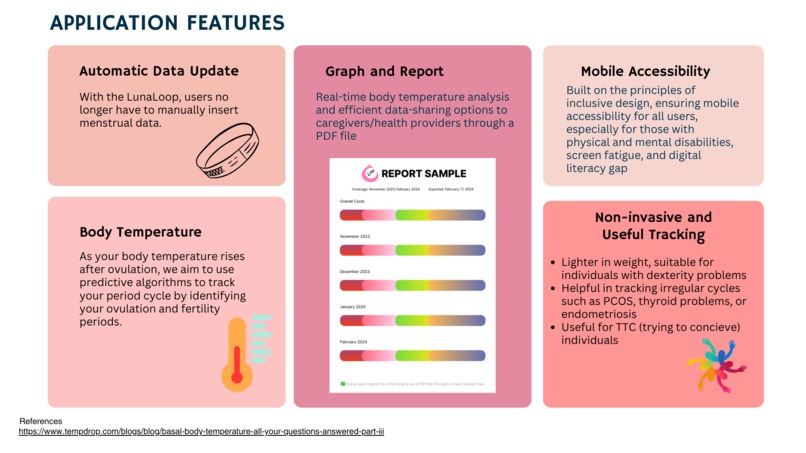
Application Features
-
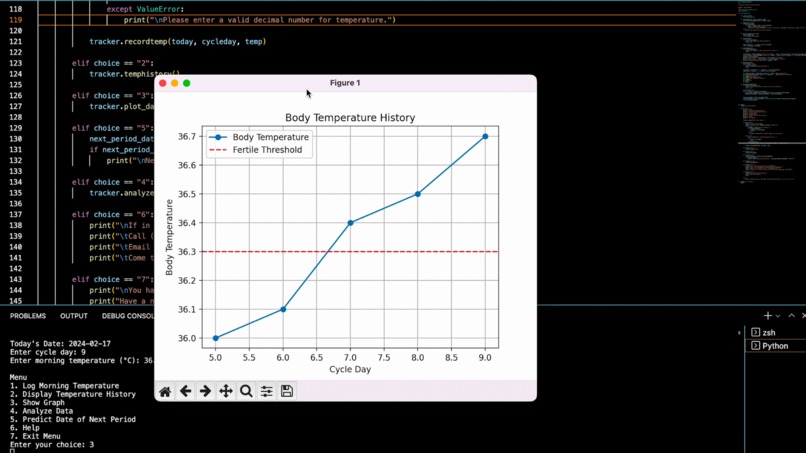
Coded Solution
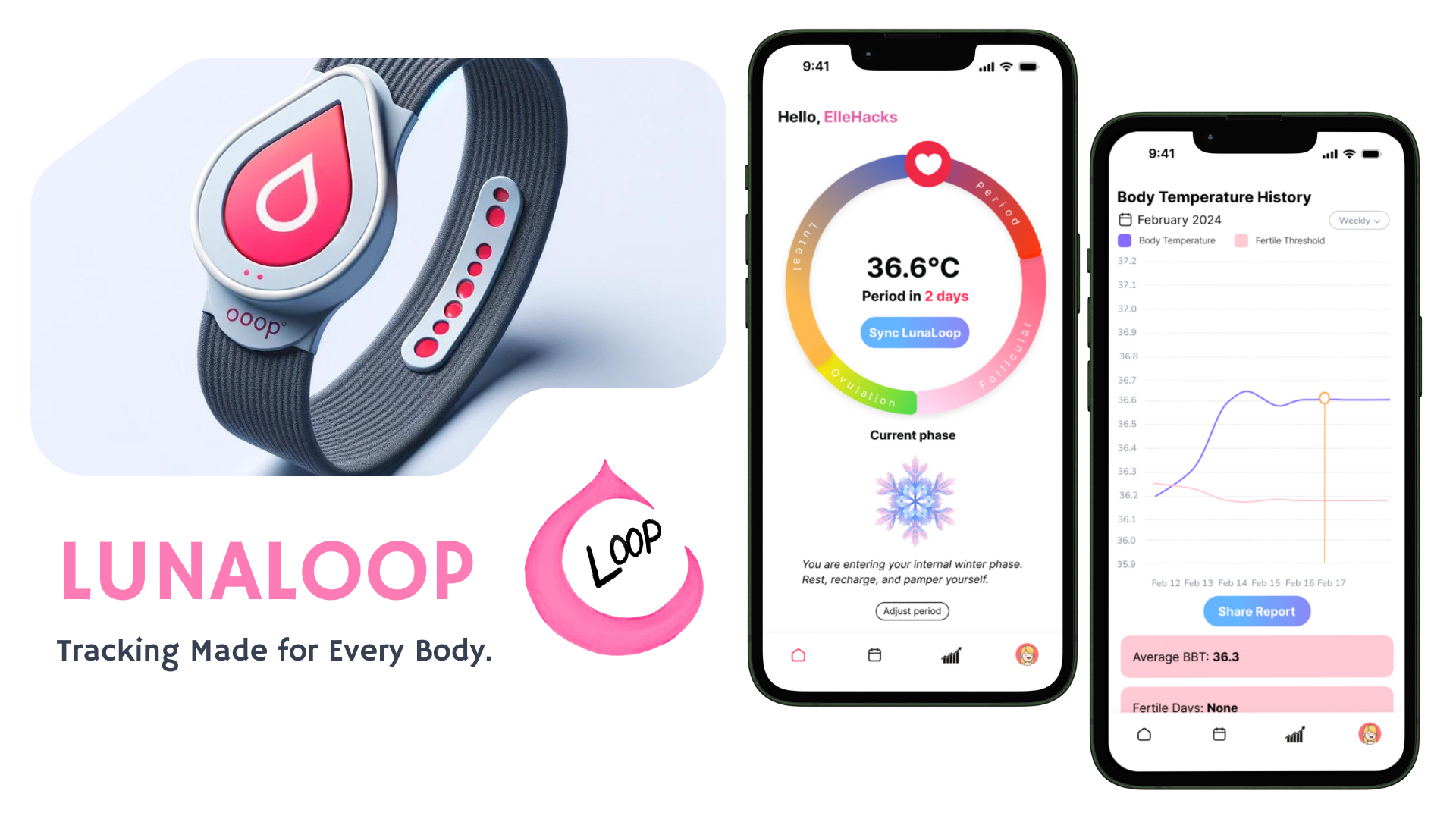
Inspiration
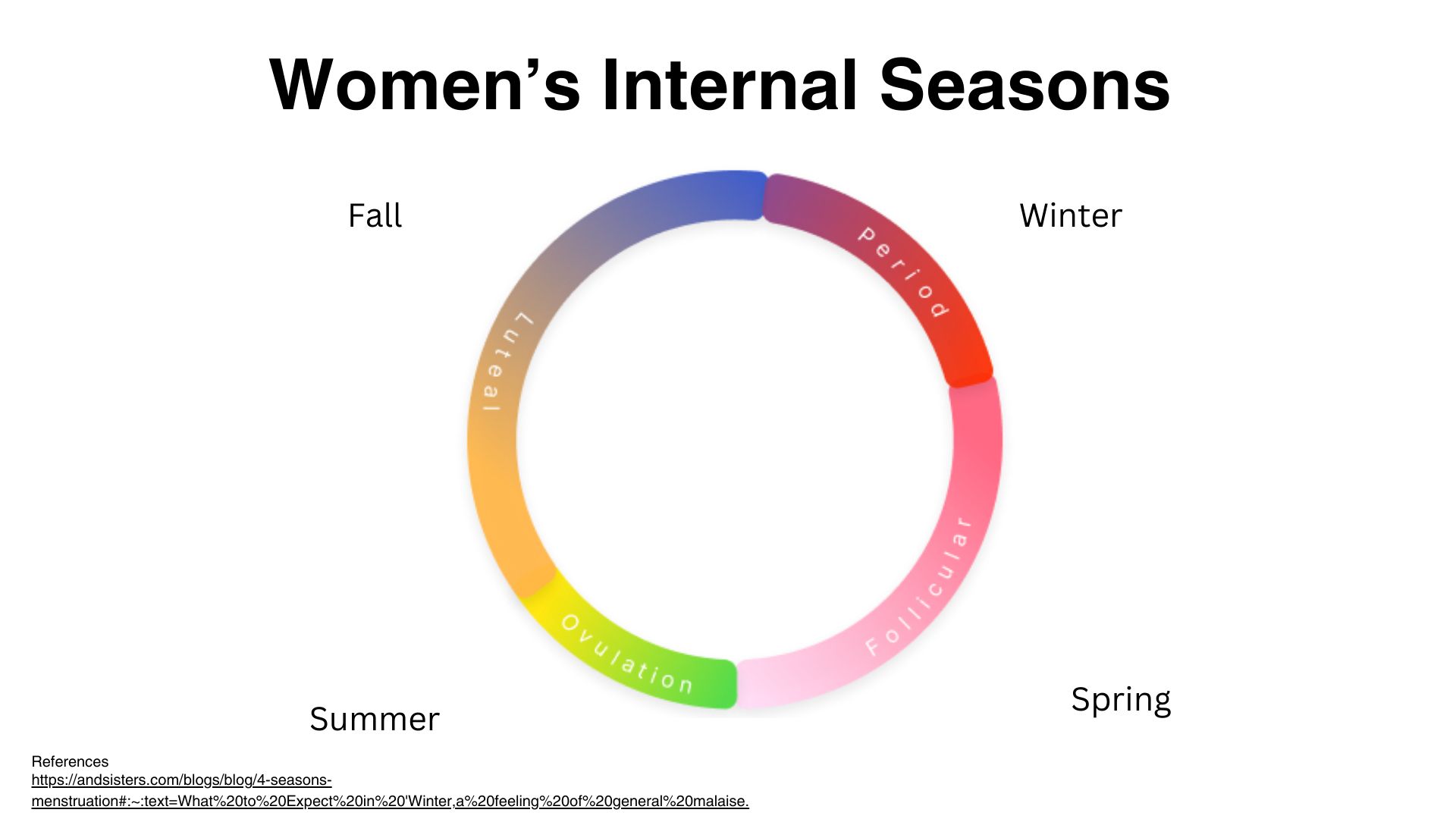
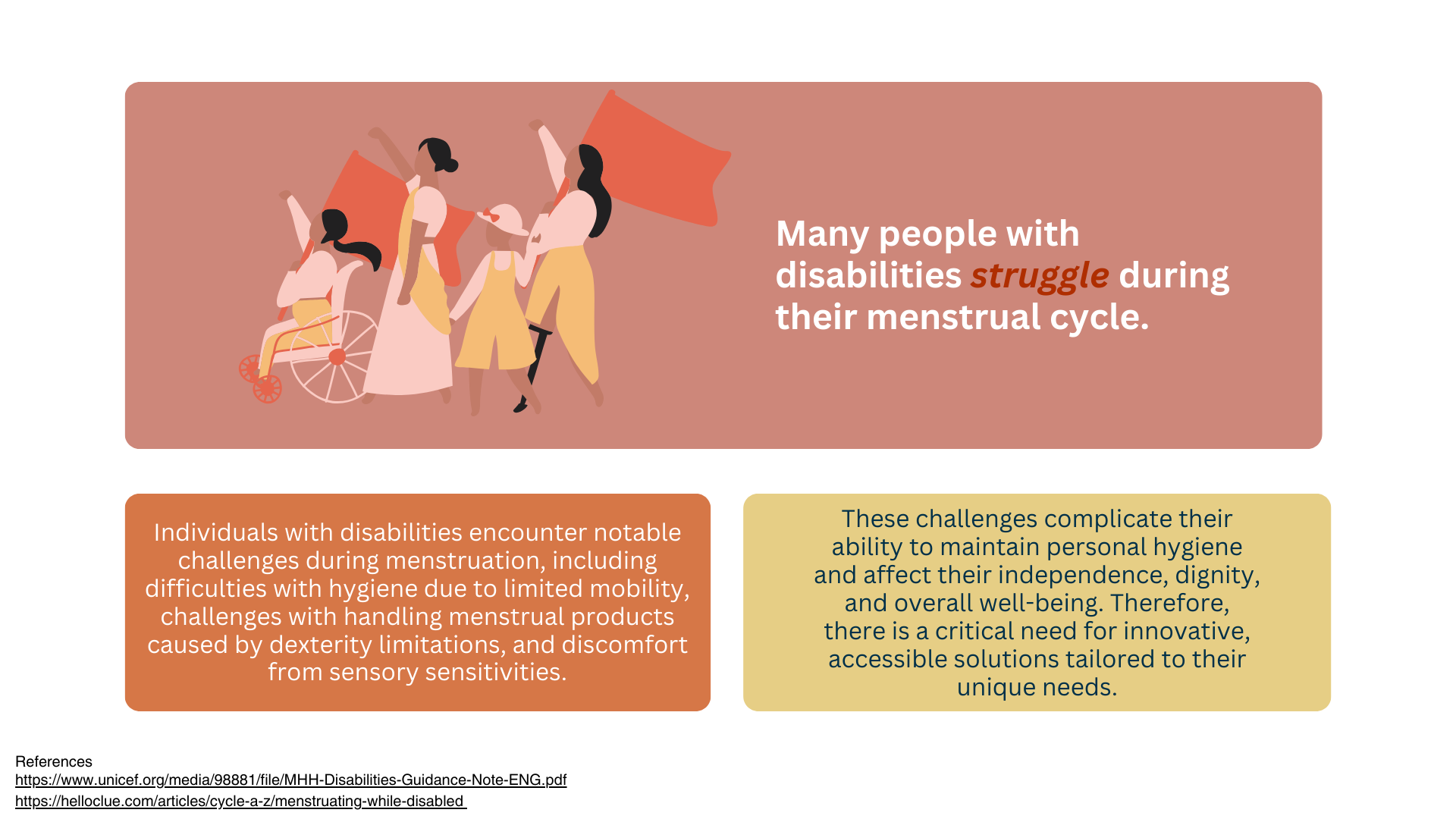
When we think about the four seasons, we immediately think about the external weather. But what about the seasonal fluctuations inside our bodies? At a time when vulnerability peaks and levels of estrogen and progesterone plummet, the first day of a menstruation cycle marks the start of the “winter” season of a woman’s body (“spring” being the follicular phase, “summer” being the ovulation, and “fall” being the luteal phase). As periods are something very near and dear to most hackers at Ellehacks, we wanted to create something that could alleviate anxieties around our internal winter season, especially for our most vulnerable communities. One of the biggest pain points we ourselves experience as menstruating individuals is forgetting to input our period dates into our period tracker apps. The onboarding experience and user interface for these period tracker apps are also tremendously time-consuming and confusing. This issue is further exemplified for people who struggle with technology and for people with disabilities.
What it does
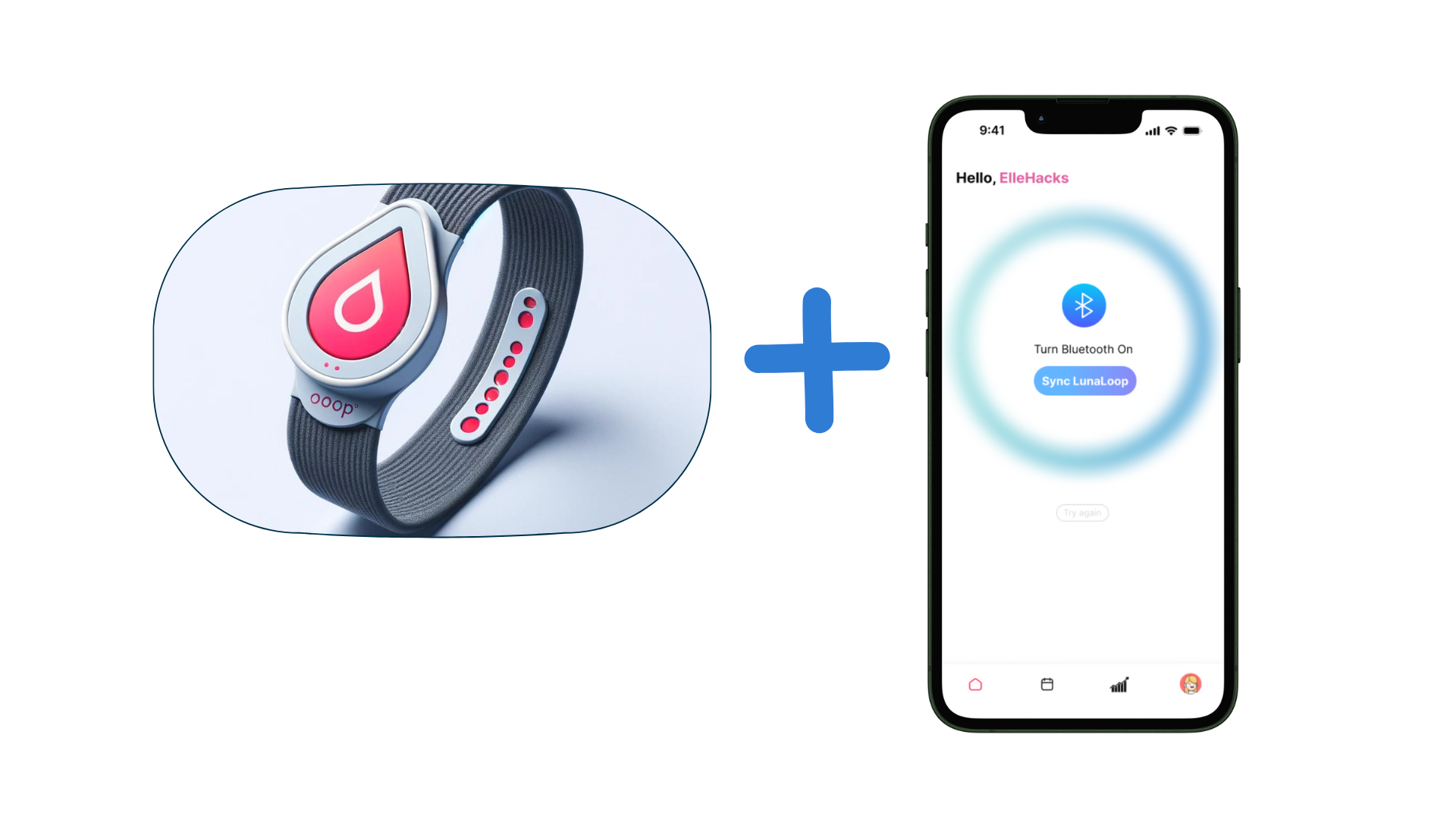
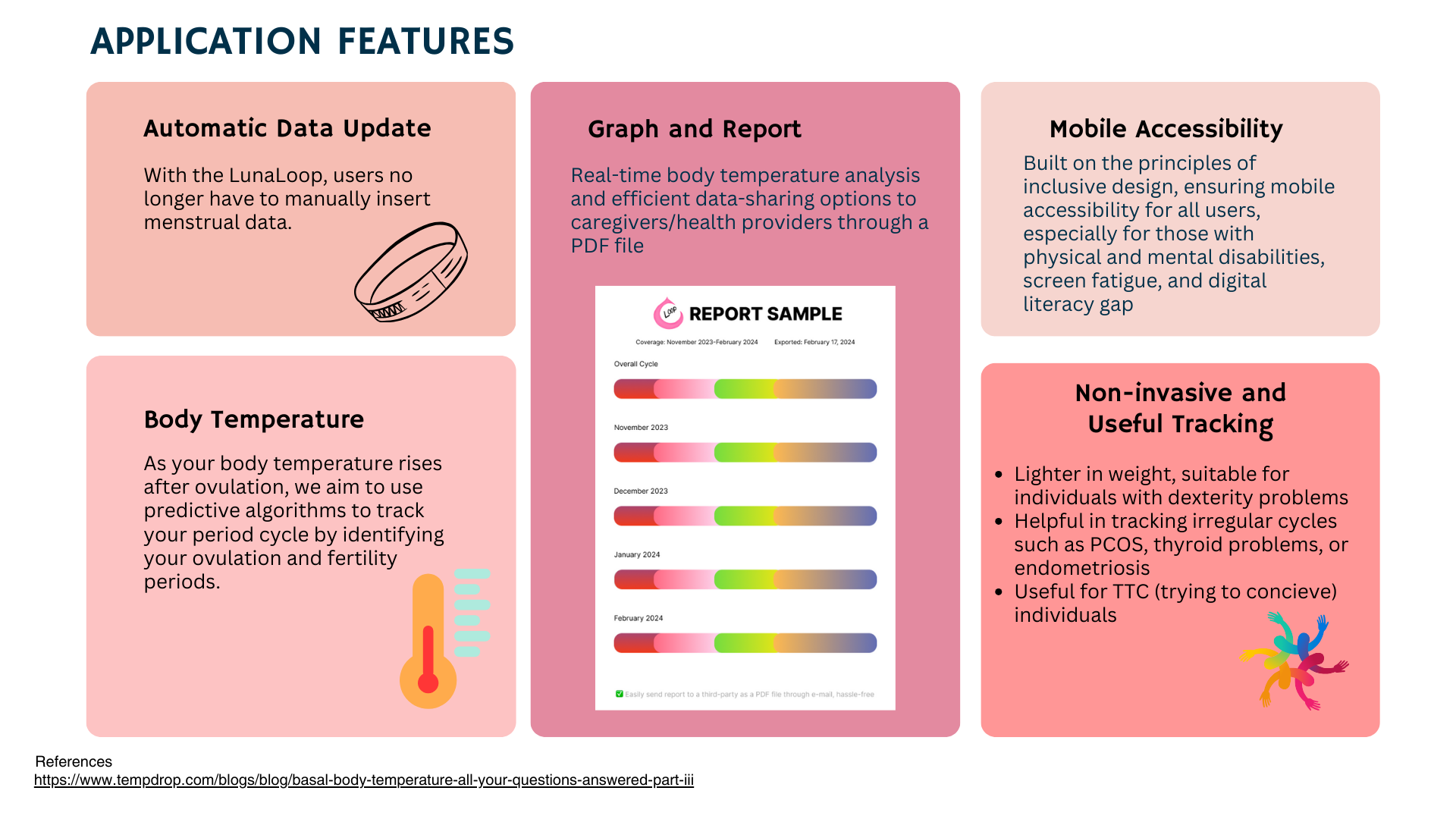
We designed “LunaLoop” to ensure app features meet the needs of every bodies through a band-type wearable device that can detect daily Basal Body Temperature (BBT) to accurately record and predict period cycles. LunaLoop uses this data to offer non-invasive, customized insights, making it a reliable tool for menstrual health management. It features a cycle-tracking calendar, body temperature history logging, and easy information-sharing capabilities, all aimed at providing an accessible and comprehensive menstrual health management tool. Instead of having the individuals manually enter their data monthly to figure out their period cycle, we want to make an app that tells you what cycle you are in. Instead of having to ask your partner/caregivers/health providers to download the app to access your data, we provide easy information access through a PDF emailing system. The loop weighs less and is more affordable than typical smartwatches on the market. Furthermore, BBT is proven to be able to track their fertility window, ovulation period, and is also usable for users experiencing PCOS, thyroid problems, endometriosis, or TTC (trying to conceive).
How we built it
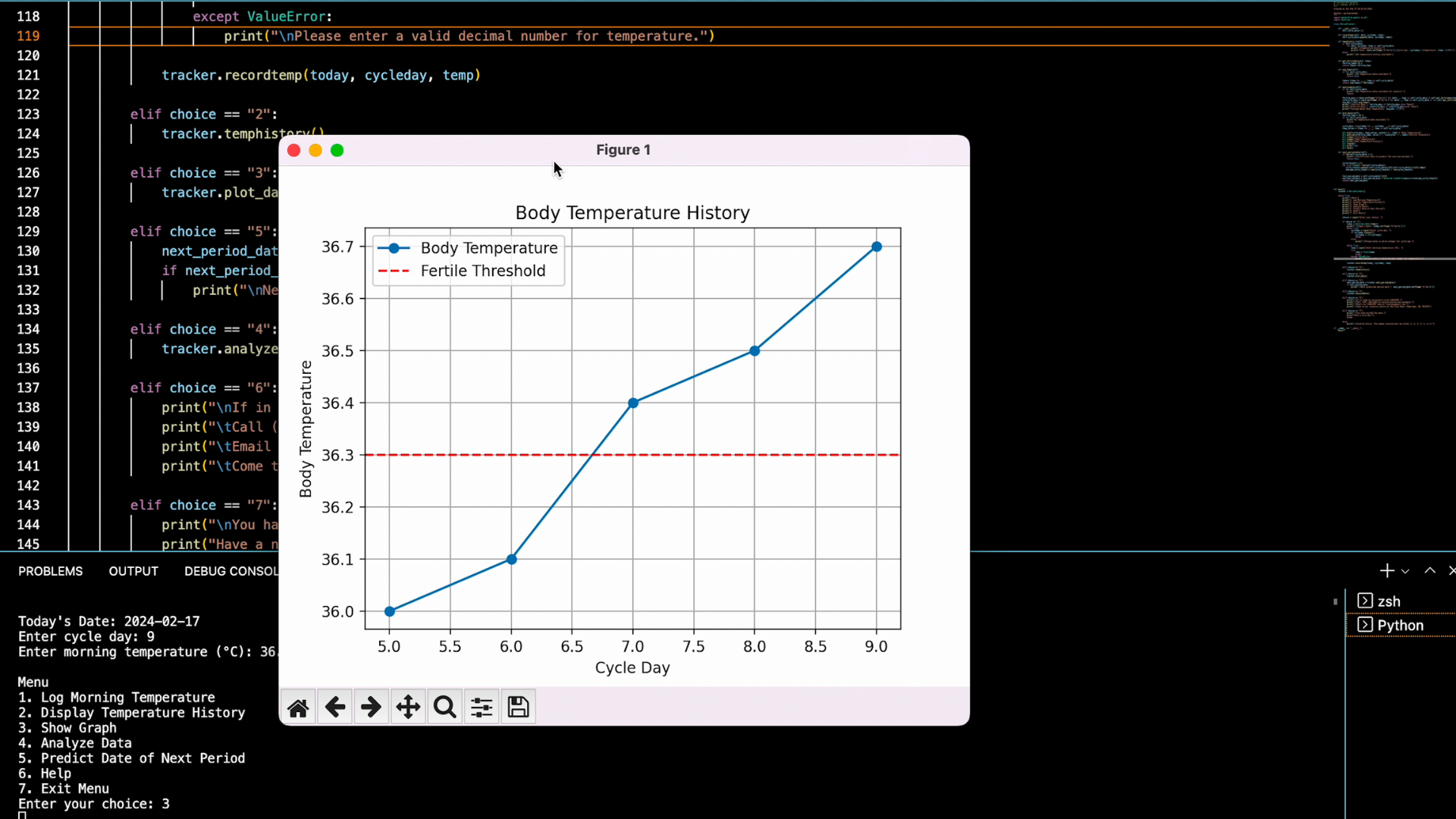
Figma was used to provide a high-fidelity visual representation of our project. Python was used to create a simple coded prototype of the app using Spyder and Visual Studio Code, with matplotlib plotting library. We used Procreate to create our logo (hand-drawn), and Canva for the pitch deck. The visualization of the LunaLoop device uses AI generated image.
Challenges we ran into
It was our first time using GitHub, so we had to learn how to use the repository for the first time. Furthermore, our coded solution involved numerous variables, which resulted in a significant number of hurdles and debugging. Ensuring the design is simple enough to be accessible while considering the complex factors associated with health also presented a unique challenge. Lastly, we chose to design our logo with Procreate, which, despite being time-intensive, enabled us to meticulously visualize our concept and fine-tune every detail.
Accomplishments that we're proud of
For most of us, this was our very first hackathon and our very first time working on a major project. We are proud that all of our members had a very fulfilling journey through LunaLoop. We are very fortunate, as we became on board with the concept of the solution pretty early on in our brainstorming sessions. Furthermore, our novice coders being able to implement a functioning deliverable as intended, our designer experiencing creating the entire high-fidelity prototype independently for the first time, and our business member navigating the entire collaboration and facilitation, are some of the things that are worth being noted.
What we learned
The most crucial thing we learned is that seeking guidance from mentors is valuable!!! With the amount of debugging we went through, we truly realize that asking for help is a strength, not a sign of weakness. Furthermore, there were a lot of features in the design, code, and pitch that we were not able to showcase to our fullest satisfaction, however, this time constraint made us understand the importance of prioritization and being adaptable.
What's next for LunaLoop
Currently, our project operates without a heat sensor or physical prototype, requiring manual input as a temporary workaround. Looking ahead, our future development efforts will focus on integrating a functional heat sensor to enhance automation and accuracy.

Log in or sign up for Devpost to join the conversation.