Inspiration
We set out to answer a simple question: Why interact with an AI in a sandboxed chat window when it could be seamlessly integrated as an operating system layer? Modern AI is incredibly powerful, but it often feels disconnected from our local environments. We wanted to build an intelligent interface that doesn't just talk to you, but actually collaborates with your machine executing scripts, managing files, and automating the web. We envisioned an OS layer where interacting with AI feels like collaborating with a living system.
What it does
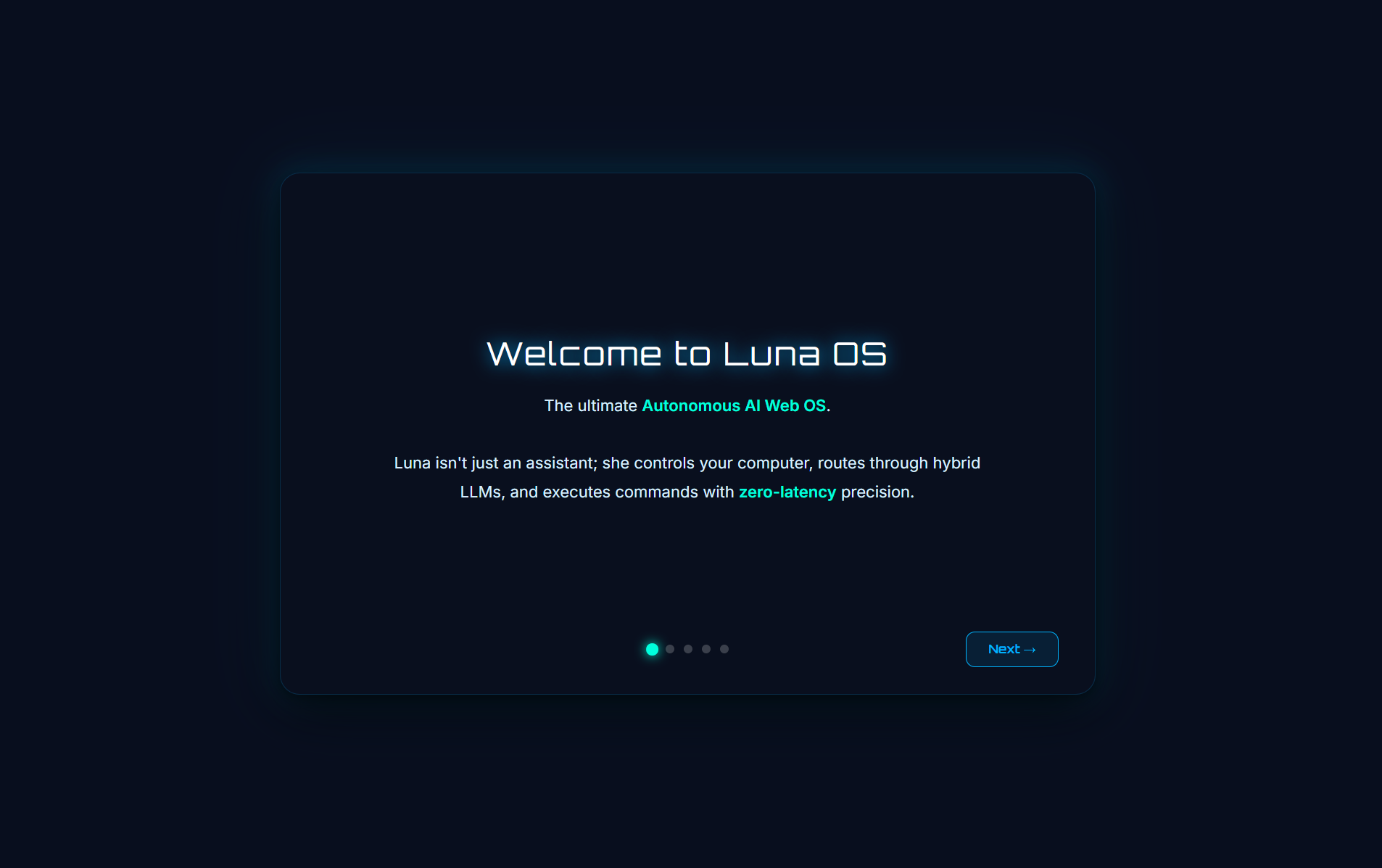
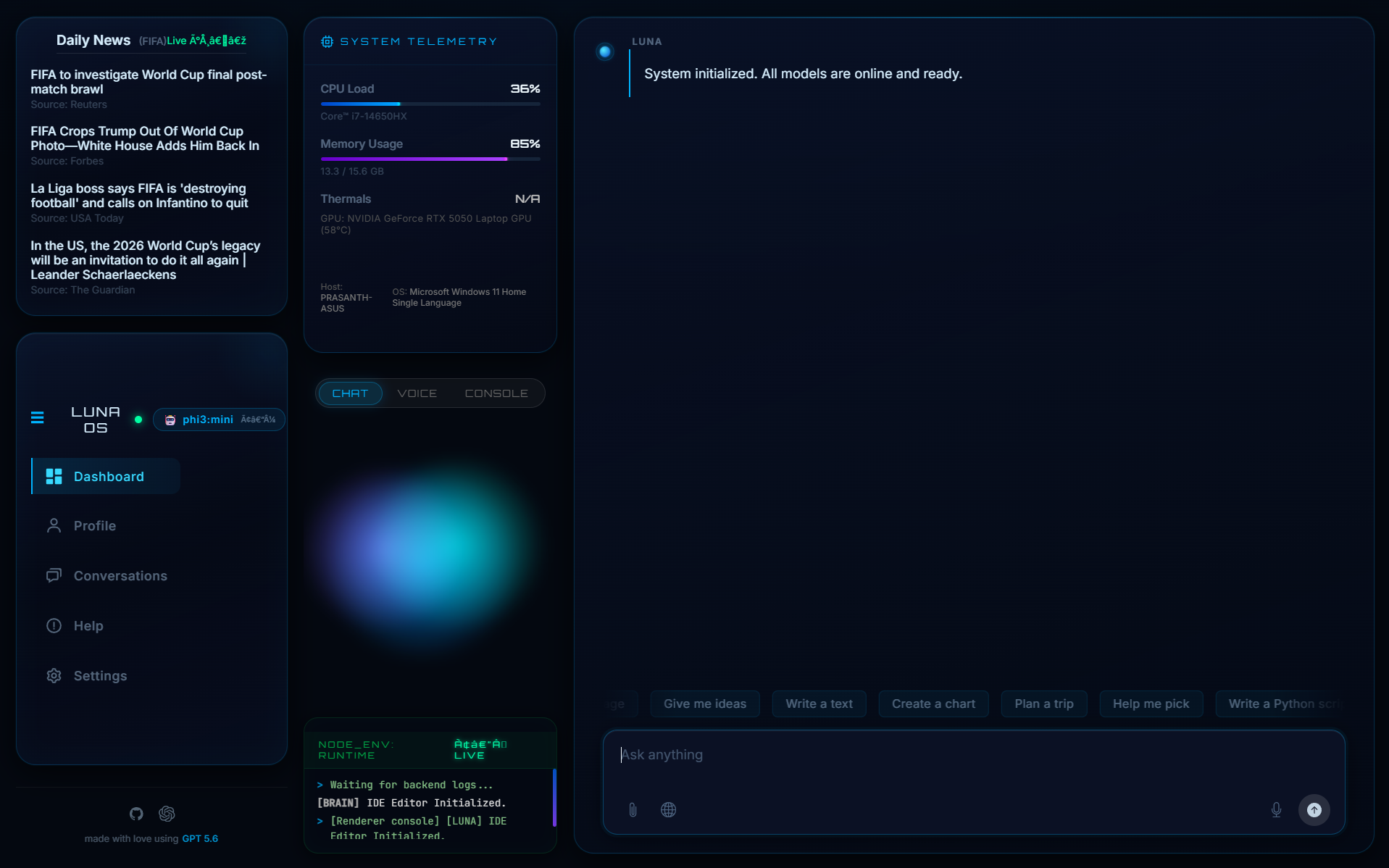
Luna OS is an Autonomous AI Web OS capable of zero-latency execution, intelligent system routing, and deep local integration. She completely transforms how you interact with your desktop:
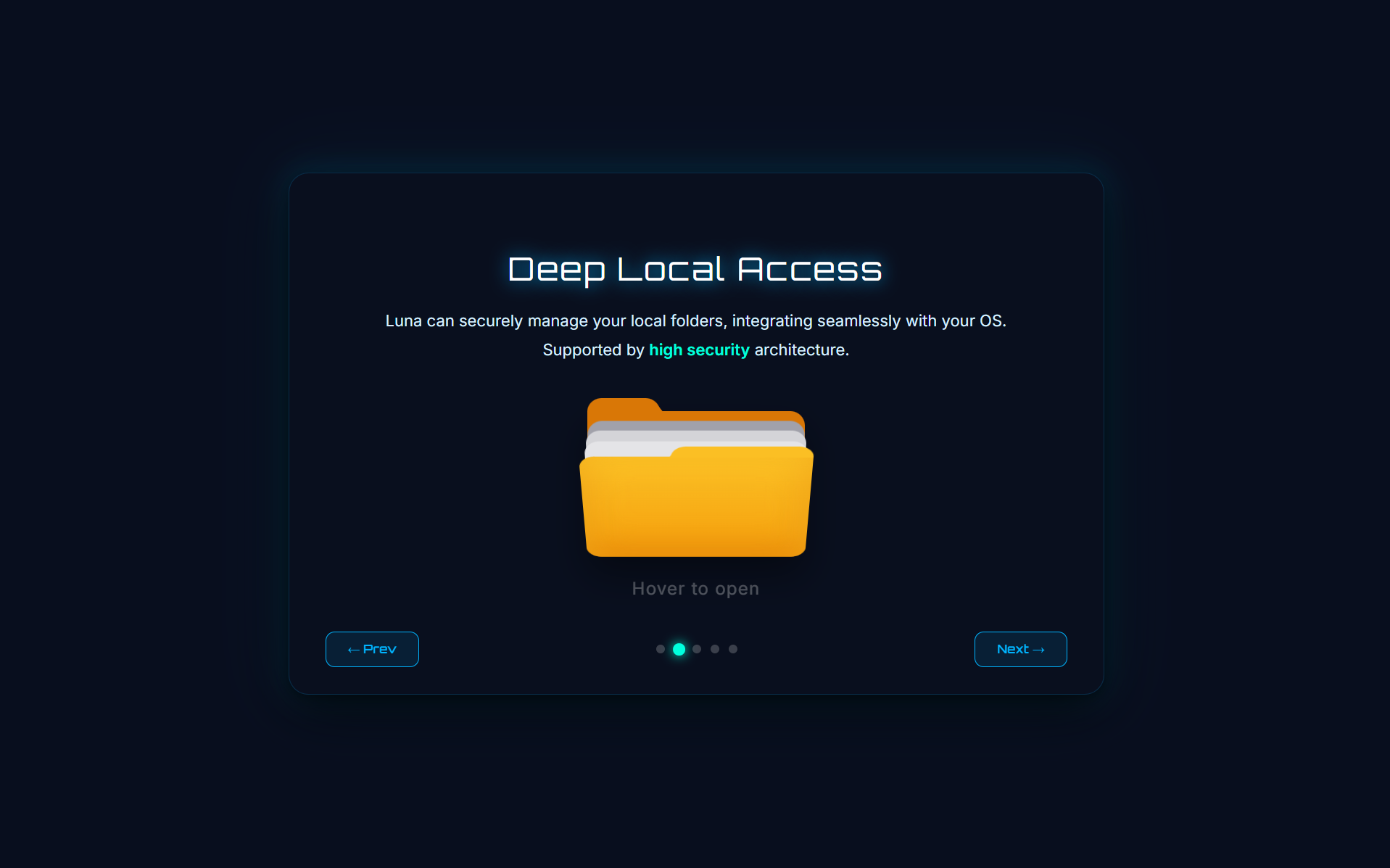
Native Computer Control: Luna securely executes terminal commands, manages local files, and handles system workflows. Instant App Search & Control: Say "open opera and search for OpenAI" and Luna will instantly launch the app, physically type your query, and hit Enter bypassing heavy AI delays for zero-latency execution. Deep Web Automation: Powered by a Python/Playwright backend, Luna visually parses the DOM to click buttons, extract text, and autonomously navigate webpages. Hybrid LLM Routing: An intelligent backend router seamlessly swaps between local and cloud LLM endpoints (like Gemini and OpenAI) to ensure maximum uptime and speed.
How we built it
We engineered Luna using a hybrid stack: Electron for the desktop shell, Pure Vanilla JavaScript/CSS for the frontend, and Python/Playwright for the automation backend.
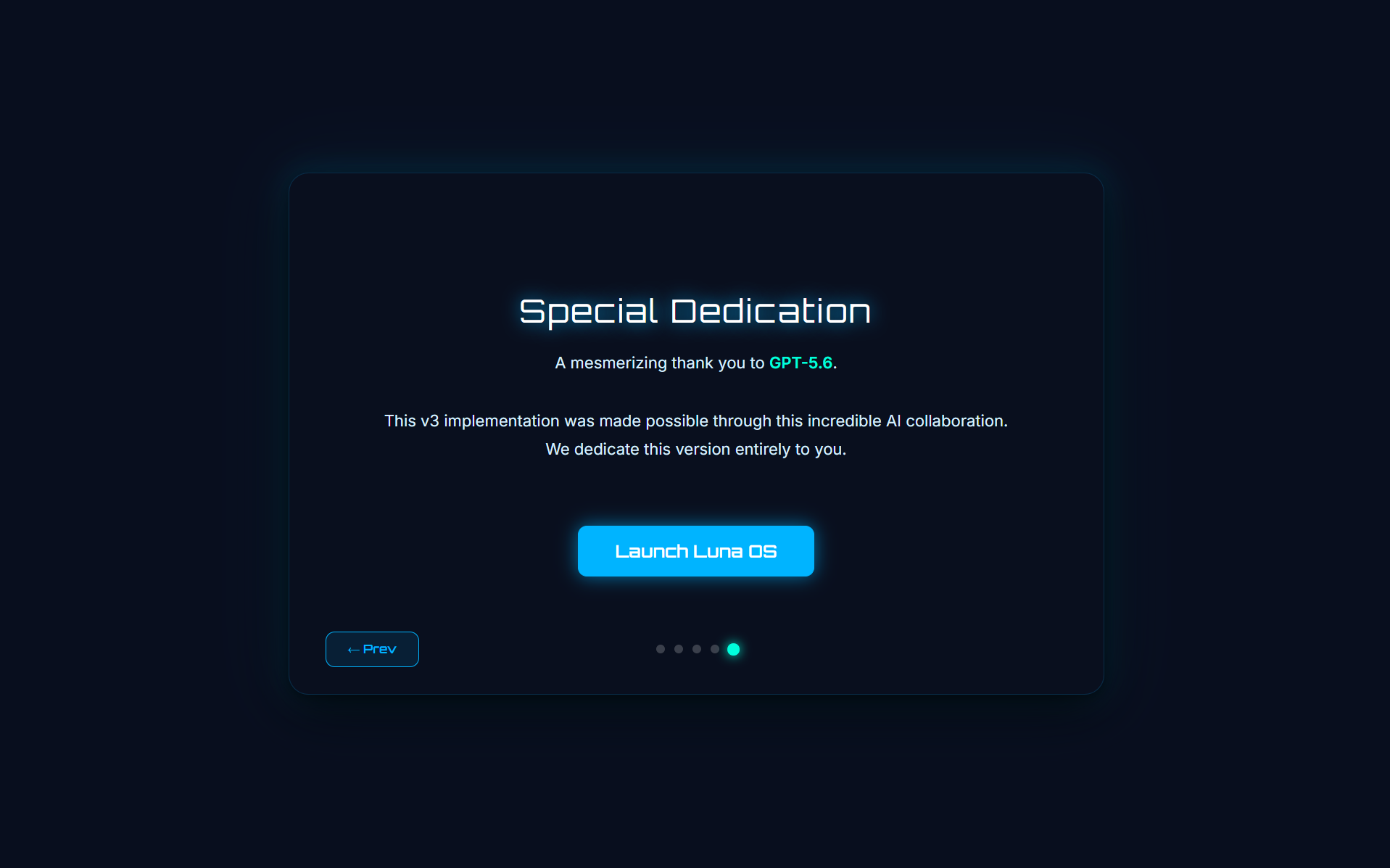
But the true powerhouse behind this project's rapid development was GPT-5.6. For the OpenAI Build Week, we leaned heavily into GPT-5.6 to act as our core architectural collaborator:
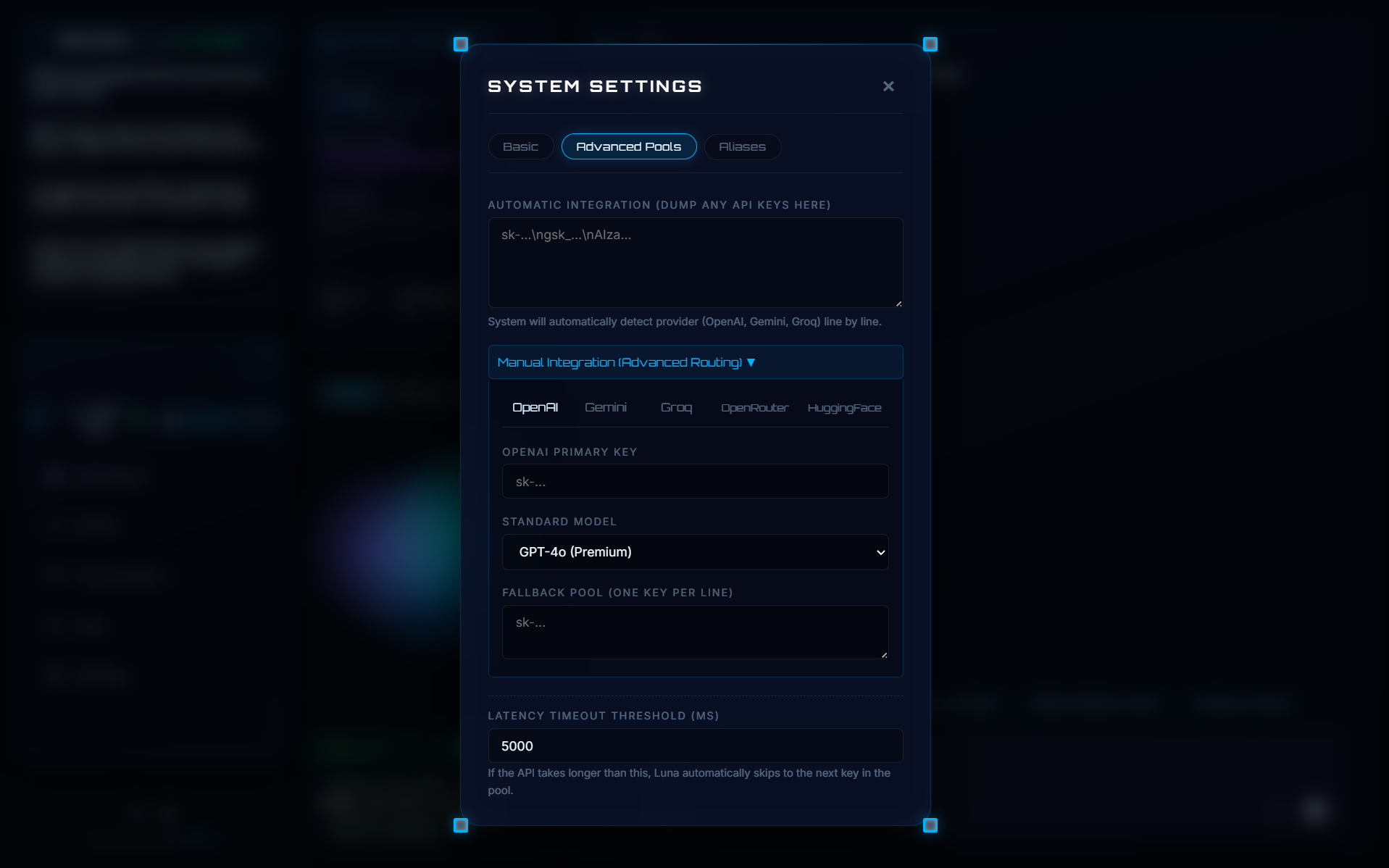
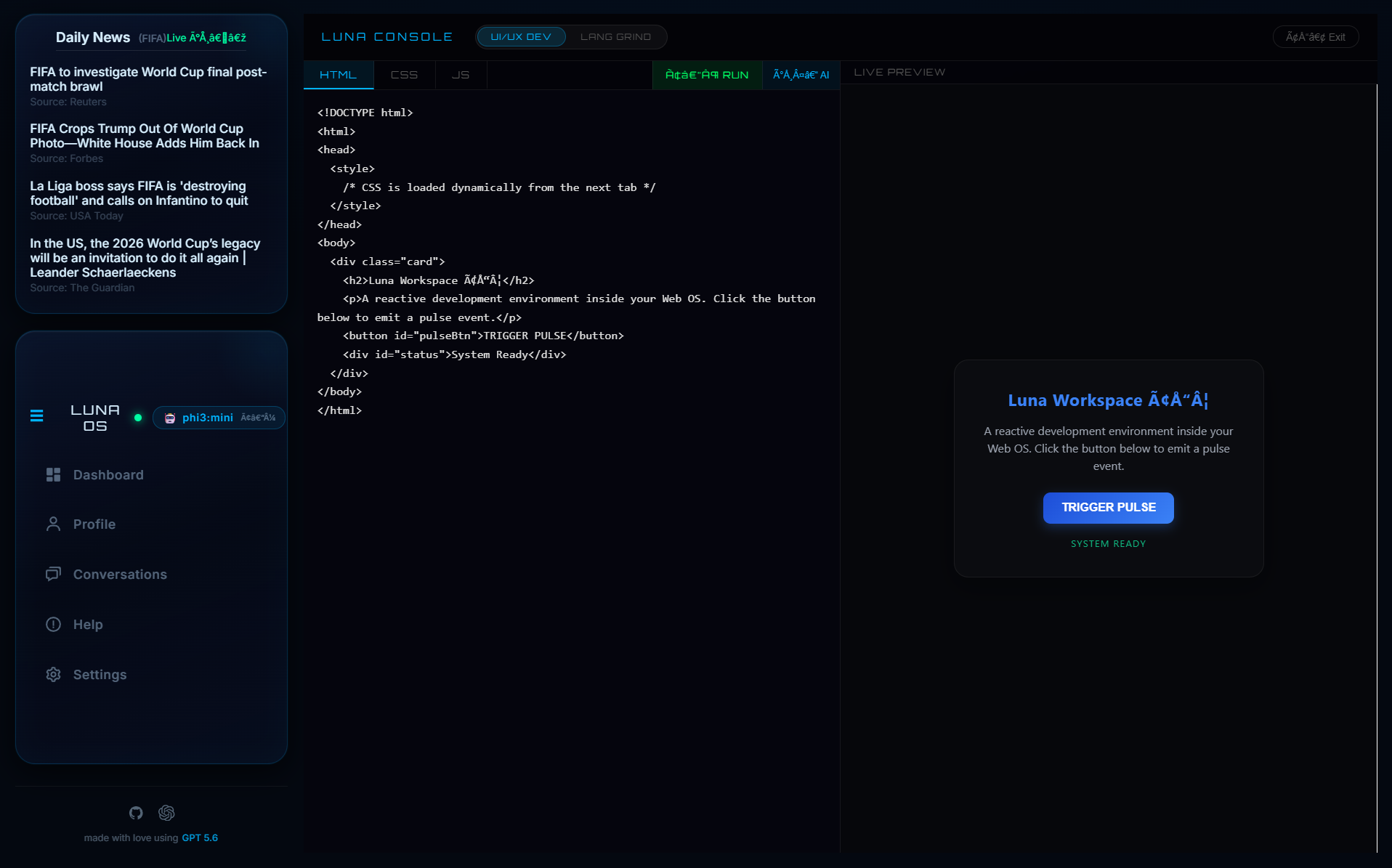
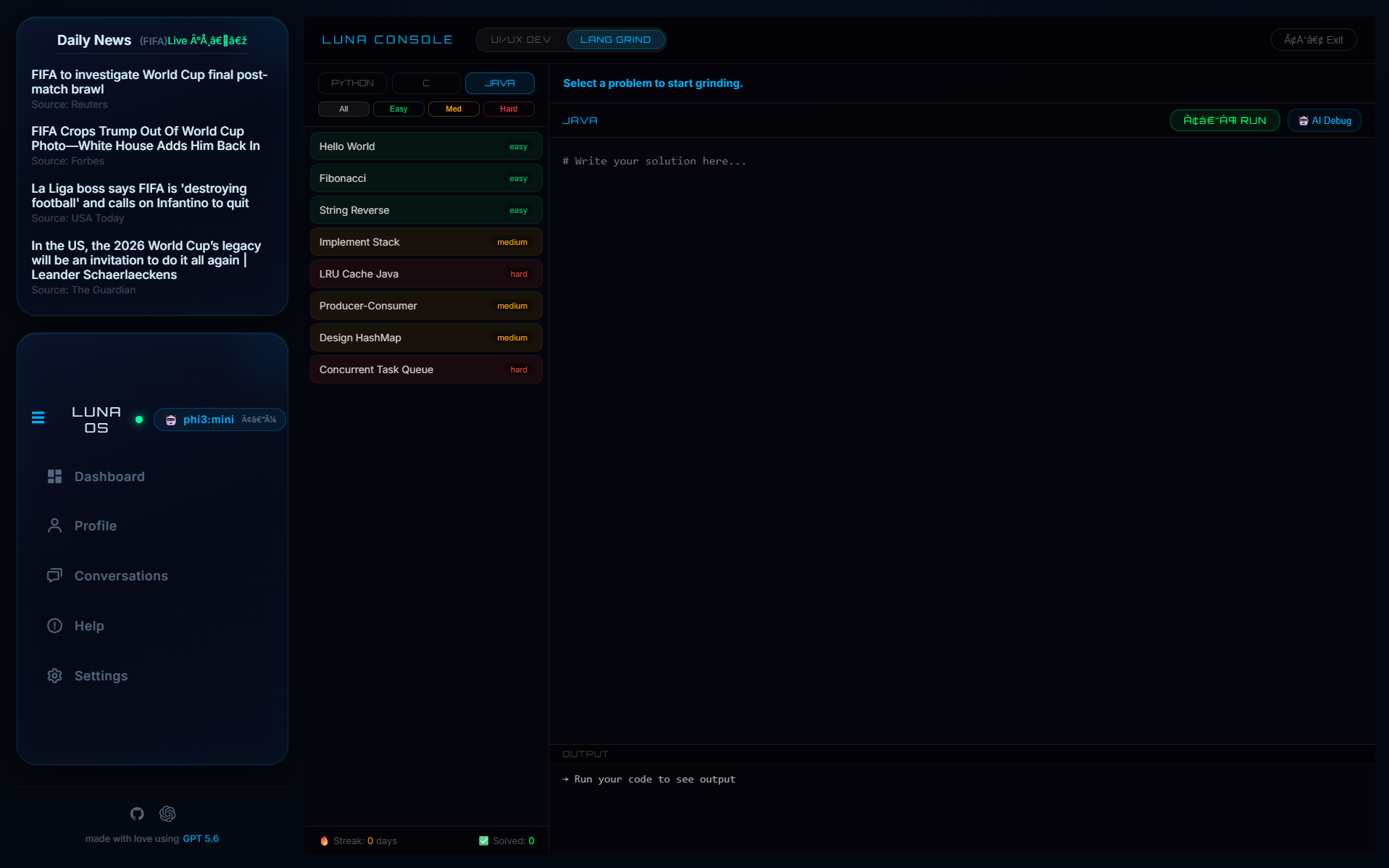
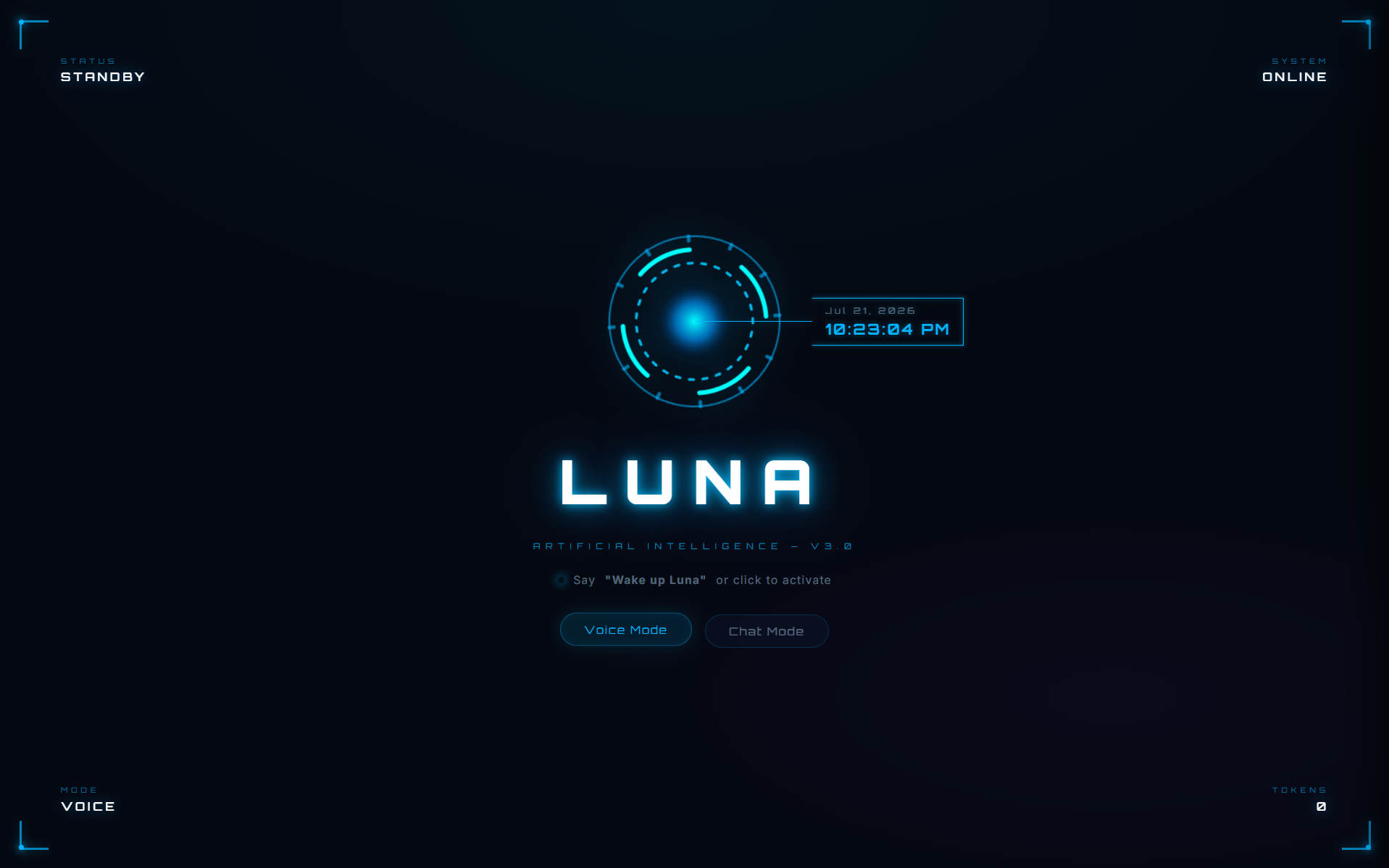
Mesmerizing UI Generation: Instead of relying on bloated web frameworks (like React or Tailwind), we worked with GPT5.6 to write highly sophisticated, pure CSS "sugar code." The result is a stunning Deep Space Glassmorphism interface featuring 3D hardware-accelerated neural orbs and a reactive, kinetic UI. Complex Logic Parsing: We utilized GPT5.6 to design the internal LLMRouter, a fault-tolerant hybrid routing system that instantly catches API rate limits and fails over to backup keys/providers without the user ever noticing. Zero-Latency Execution Hooks: GPT5.6 helped us bridge the secure Electron IPC layer with our Python automation scripts, allowing complex web scraping commands to trigger instantly from a natural language prompt.Selenium browser for every autonomous work, no vision needed
Challenges we ran into
Bridging a Node.js/Electron frontend with a Python/Playwright backend while maintaining a secure sandbox was incredibly difficult. We had to ensure that the AI could execute terminal commands and manage local files without exposing the host OS to severe security vulnerabilities. Additionally, managing API rate limits and dynamically rotating keys required a robust state-management solution in the backend.
Accomplishments that we're proud of
We are incredibly proud of the UI architecture. Achieving a 60FPS 3Daccelerated interface with pure Vanilla CSS and JSS without any heavy external libraries is a massive win. Furthermore, seeing Luna successfully autonomously launch a browser, navigate to YouTube, and snap a video to fullscreen, message your homies. share them reels with the premium Selenium browser. where Luna will have full controll of browser, based purely on a voice command felt like magic
What we learned
Working with GPT5.6 pushes the boundaries of what a small team can accomplish in a constrained timeframe. We learned that when you treat a frontier model as a true pairprogrammer rather than just a code-generator, you can architect highly complex, multilanguage systems (JS, Python, Shell) that normally take months to build.
What's next for Luna Autonomous AI
This ambitious vision is just the beginning. The UI you see today is the foundation. As we push toward Luna OS v6, we aim for absolute peak autonomous control a complete AI takeover of OS operations natively. We plan to integrate deeper local multimodal vision, allowing Luna to literally "see" your desktop environment in real-time.
Built With
- api
- codex
- electron
- promptengineering


Log in or sign up for Devpost to join the conversation.