-
-
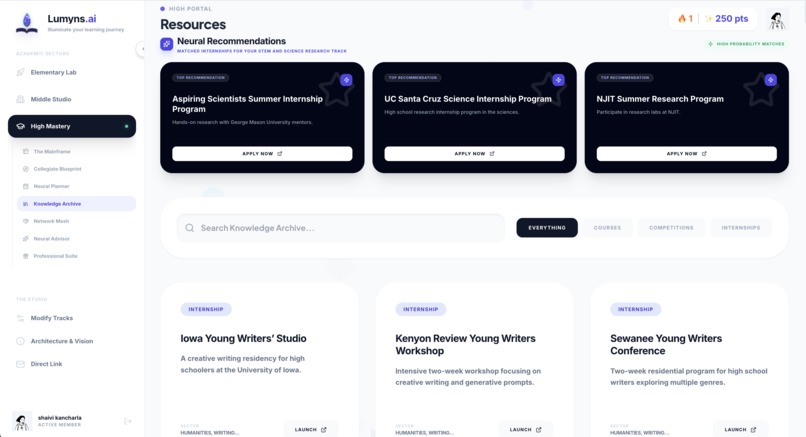
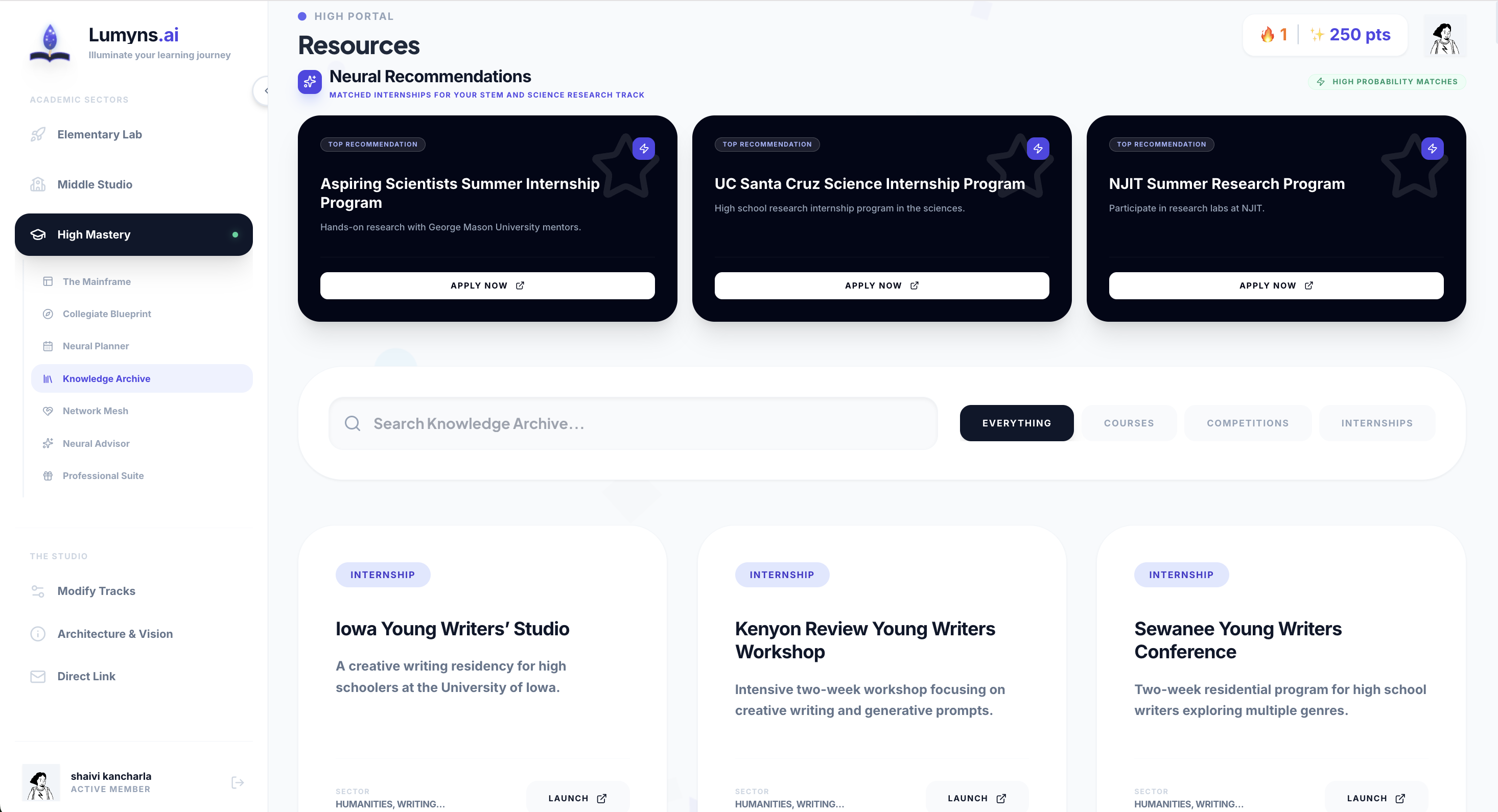
Knowledge archive with information about all internships and courses
-
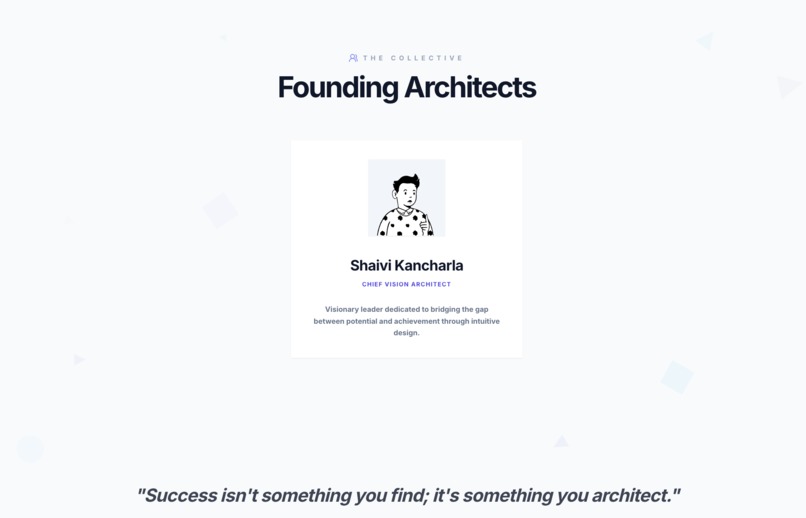
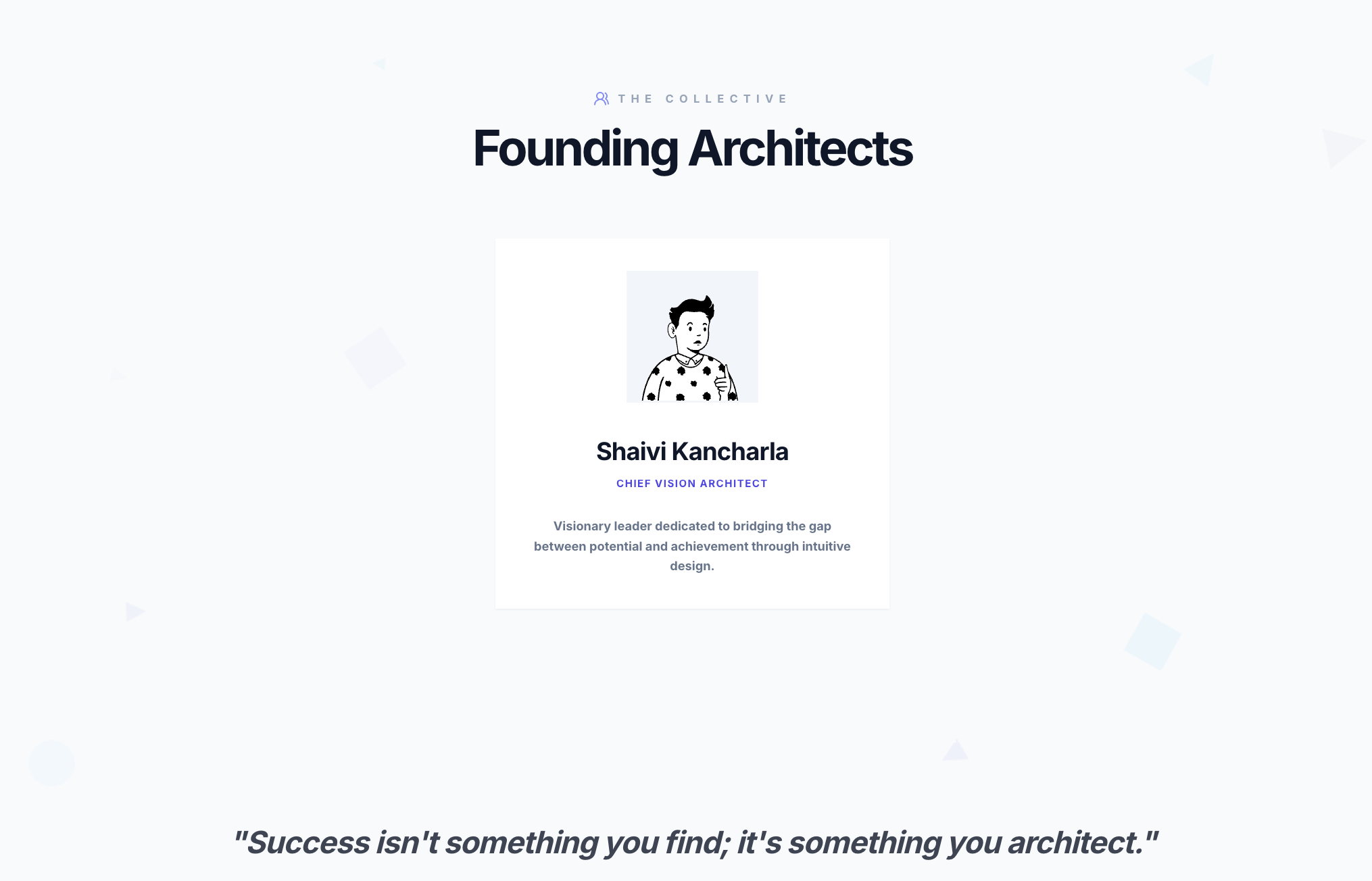
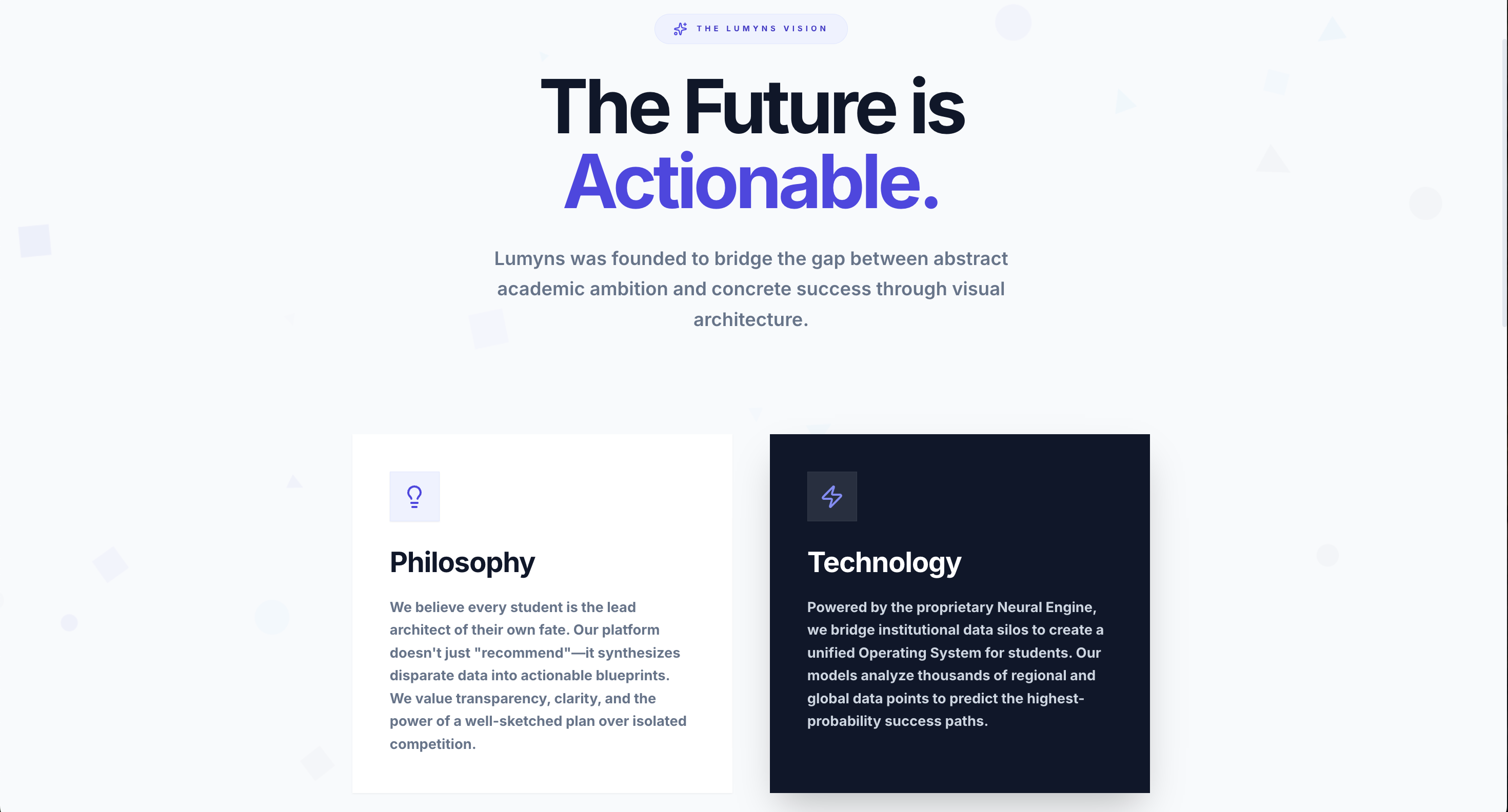
Who are we?
-
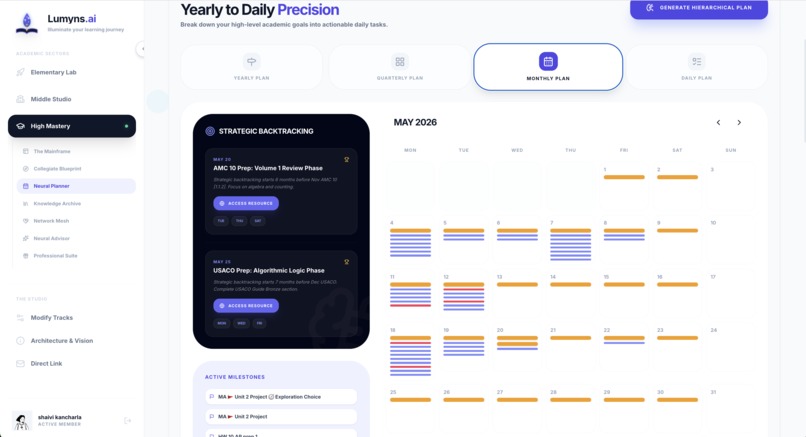
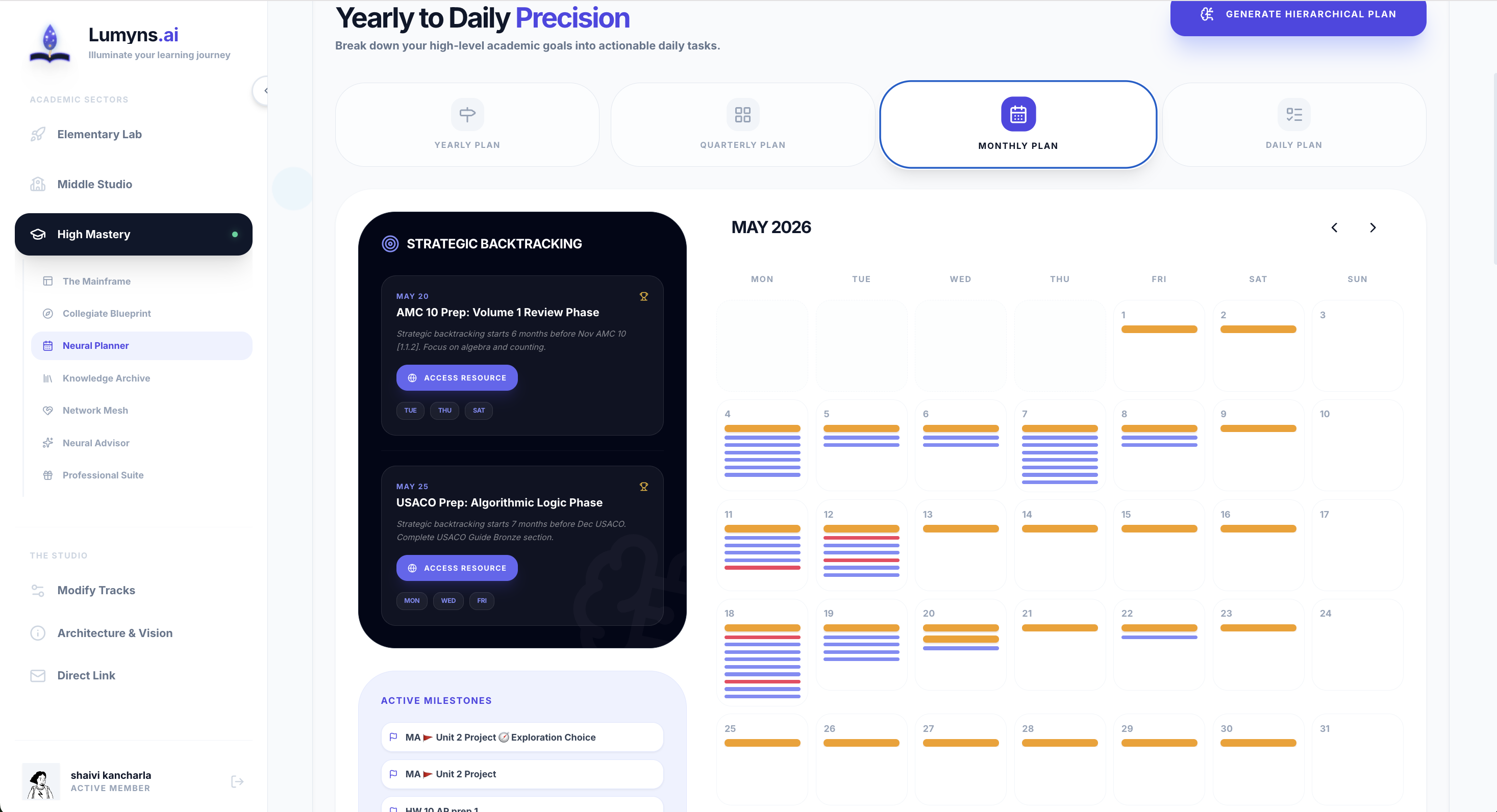
Neural Planner - Plans out yearly, quarterly, monthly, and daily schedules. Works backward from important deadlines.
-
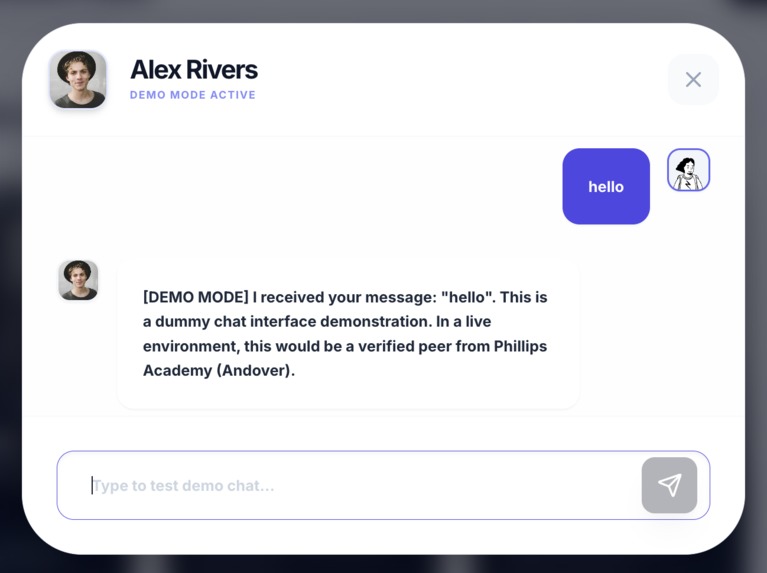
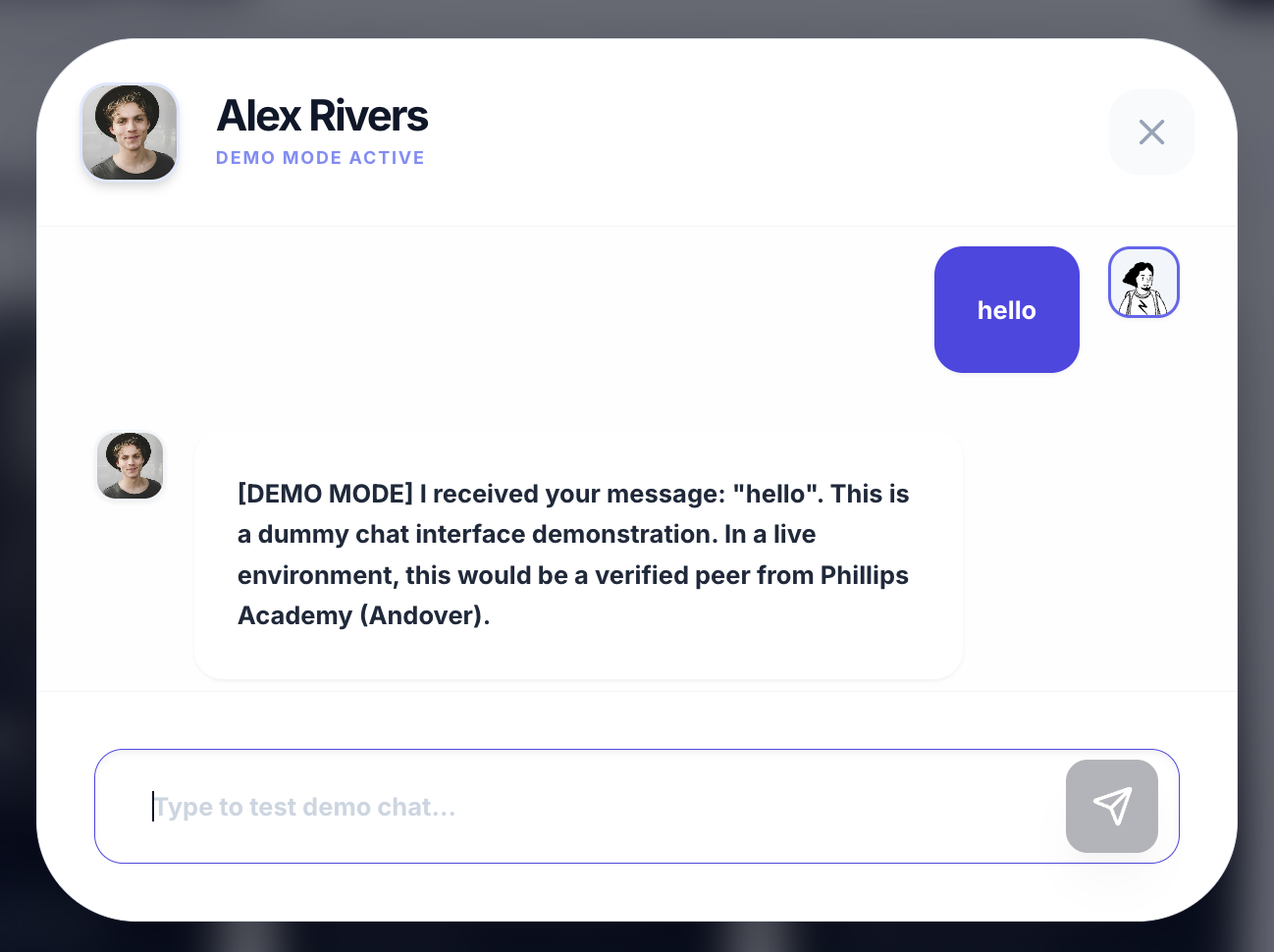
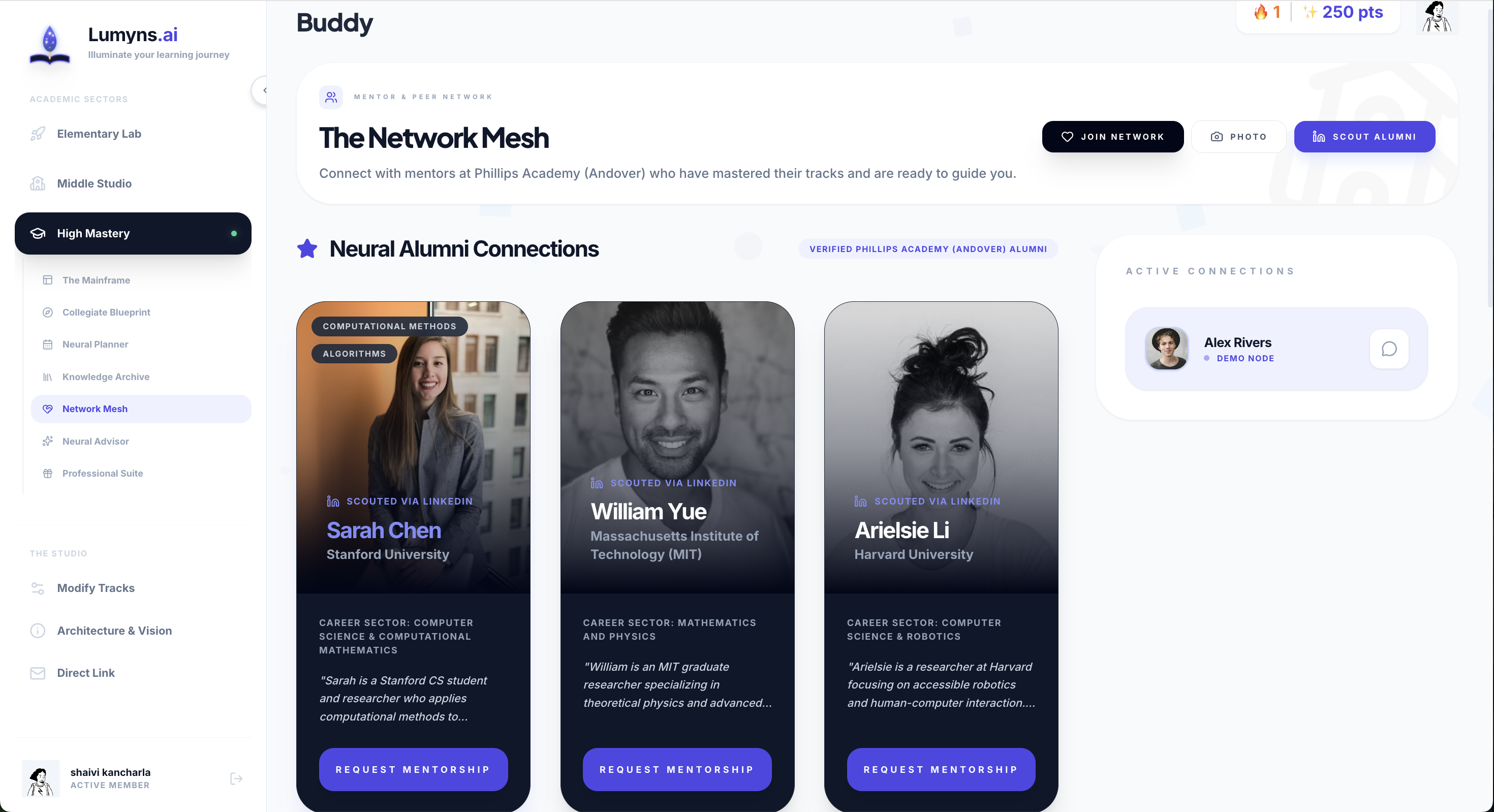
Network Mesh - Chat Interface
-
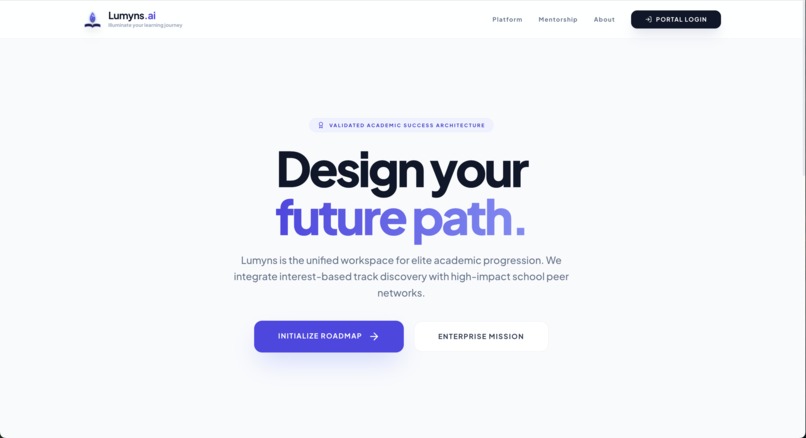
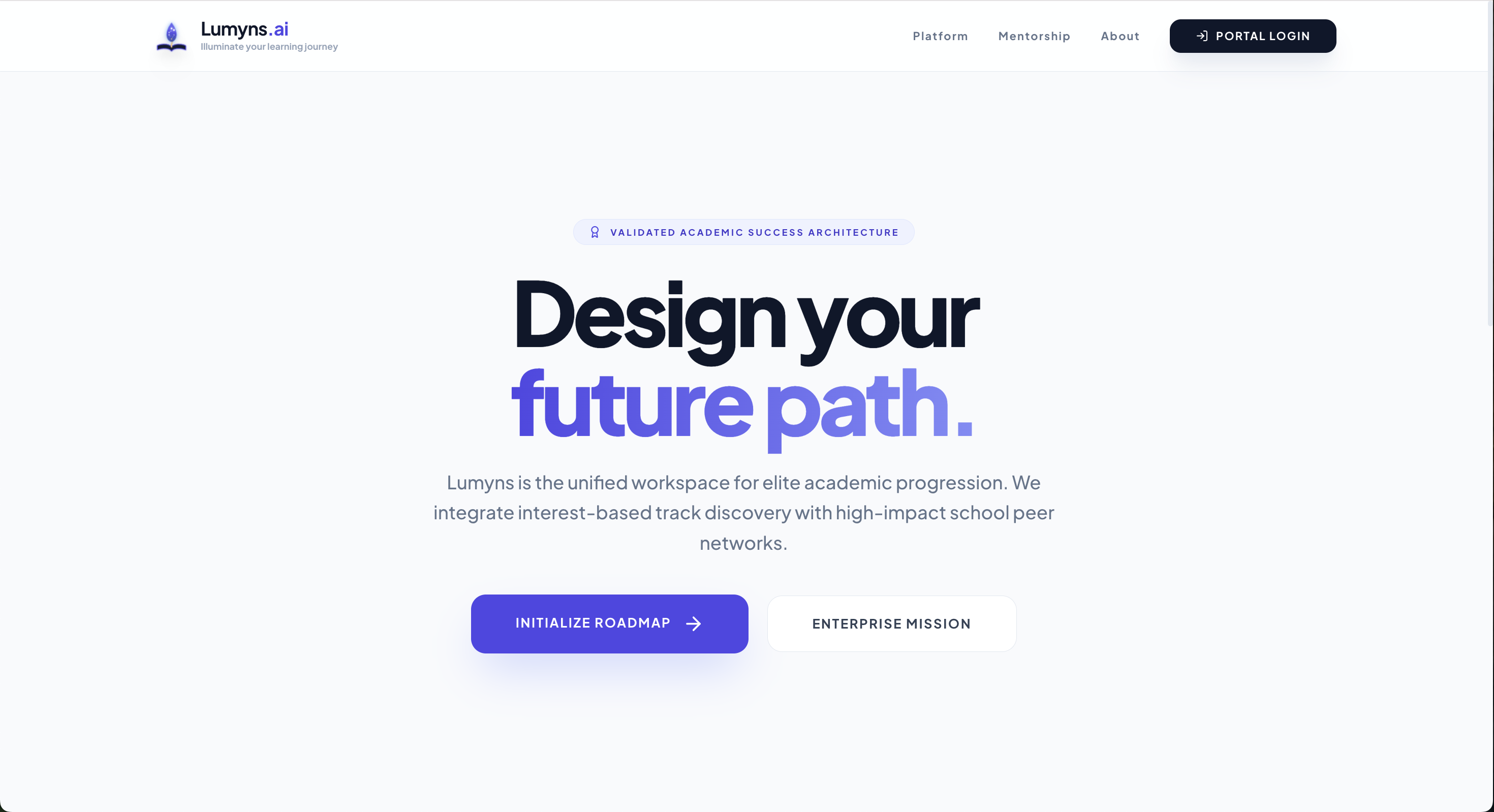
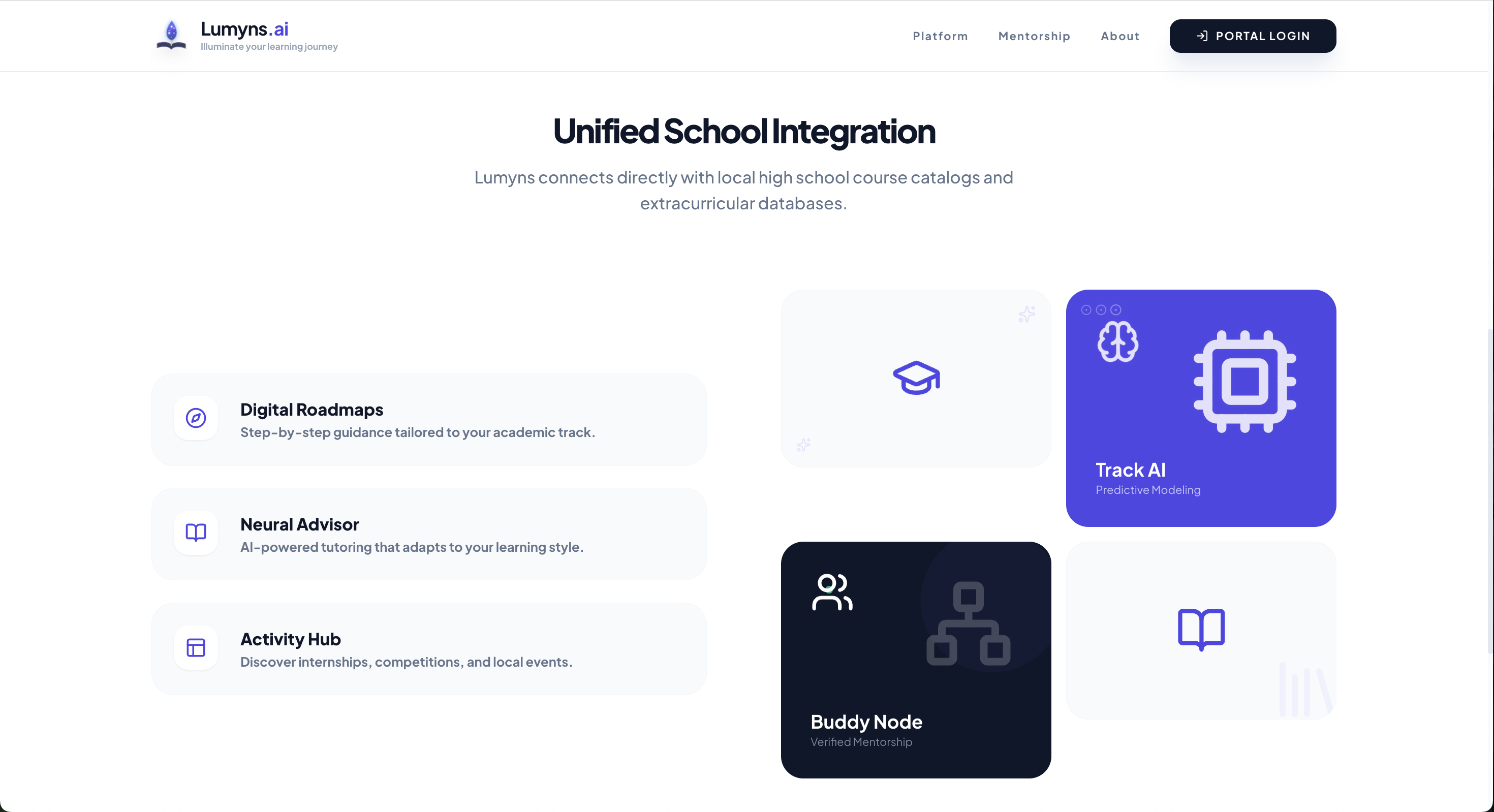
Front page
-
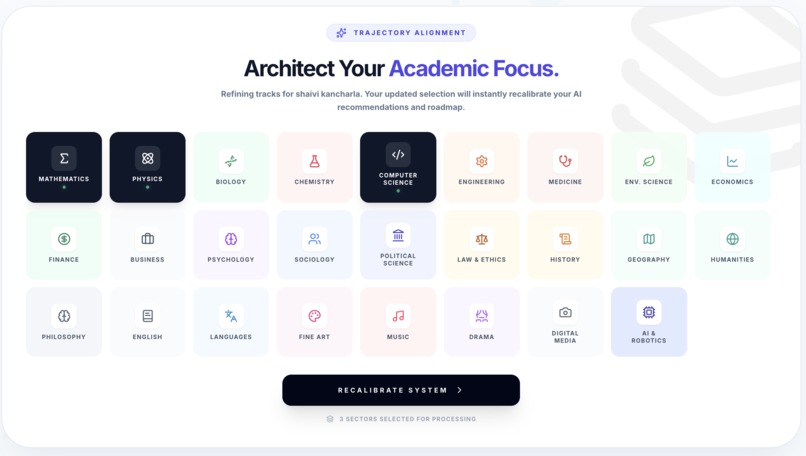
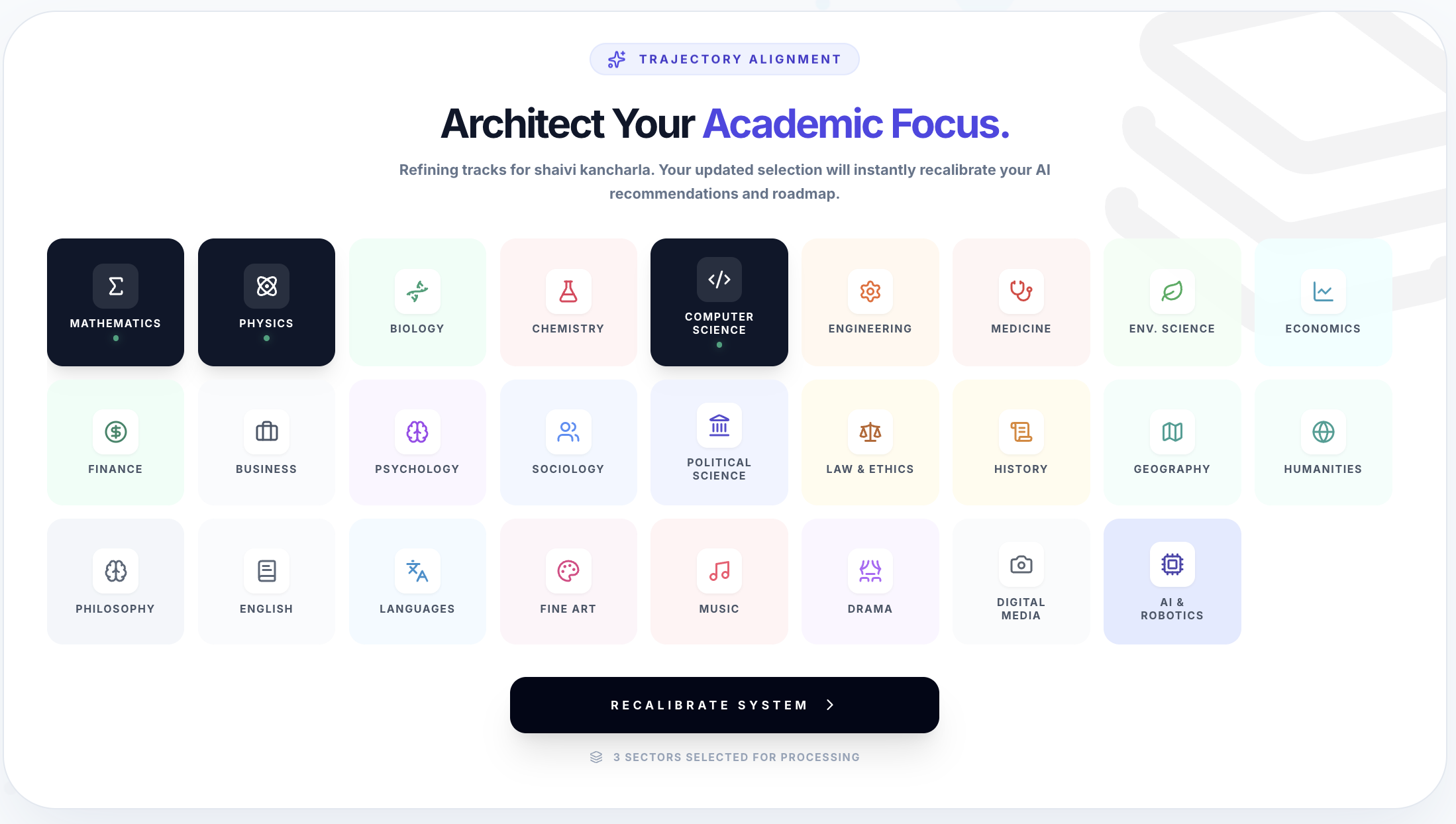
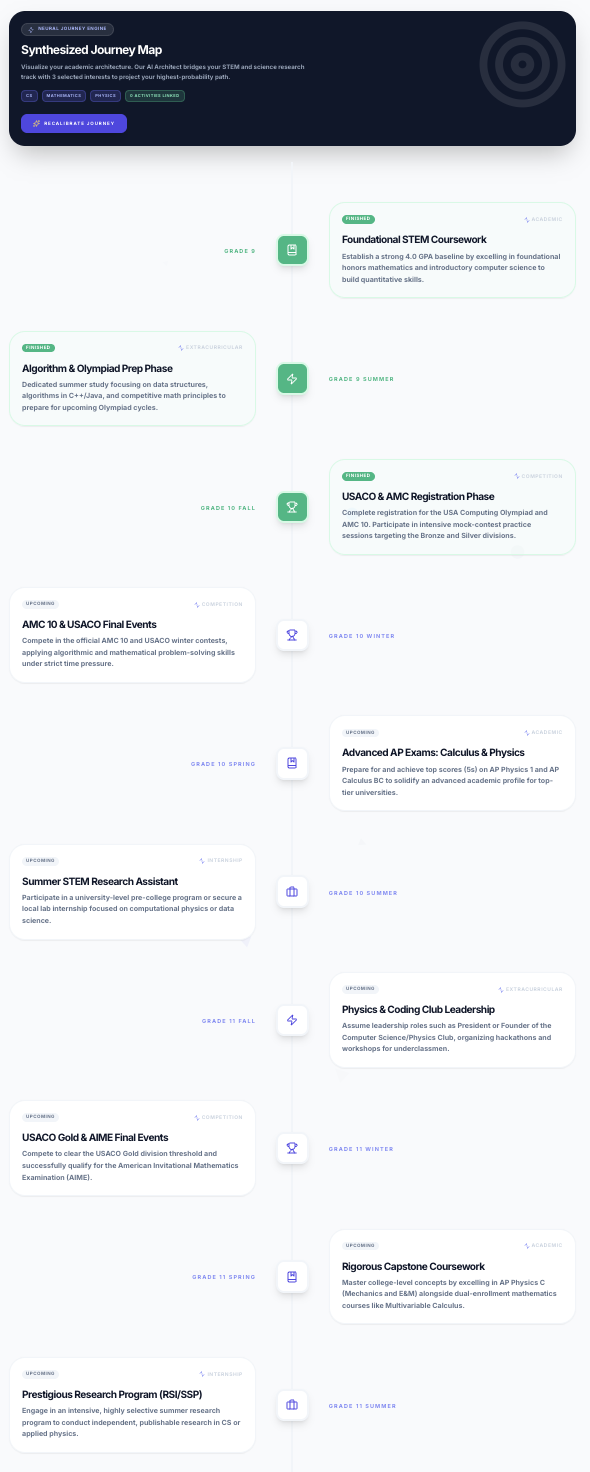
Choosing the tracks of interests. Allows AI to synthesize your path
-
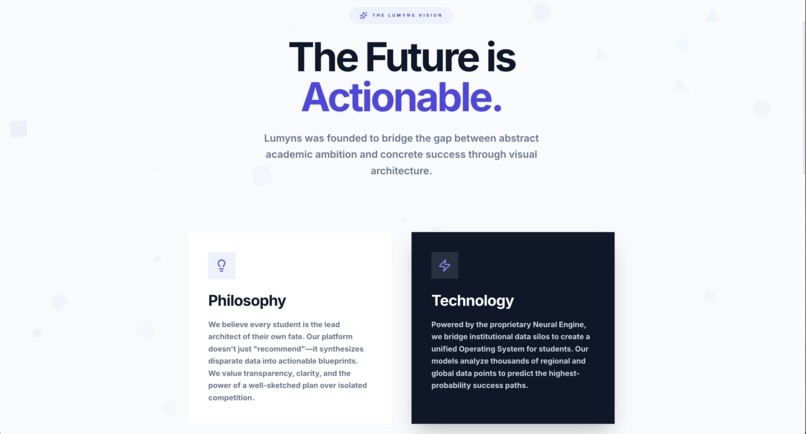
Our vision
-
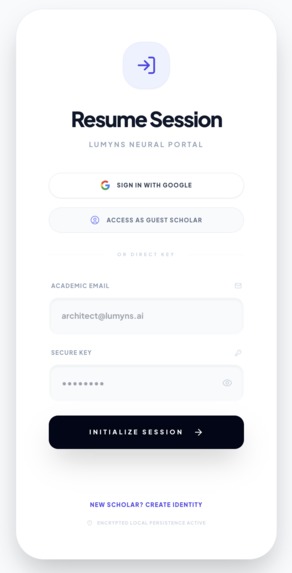
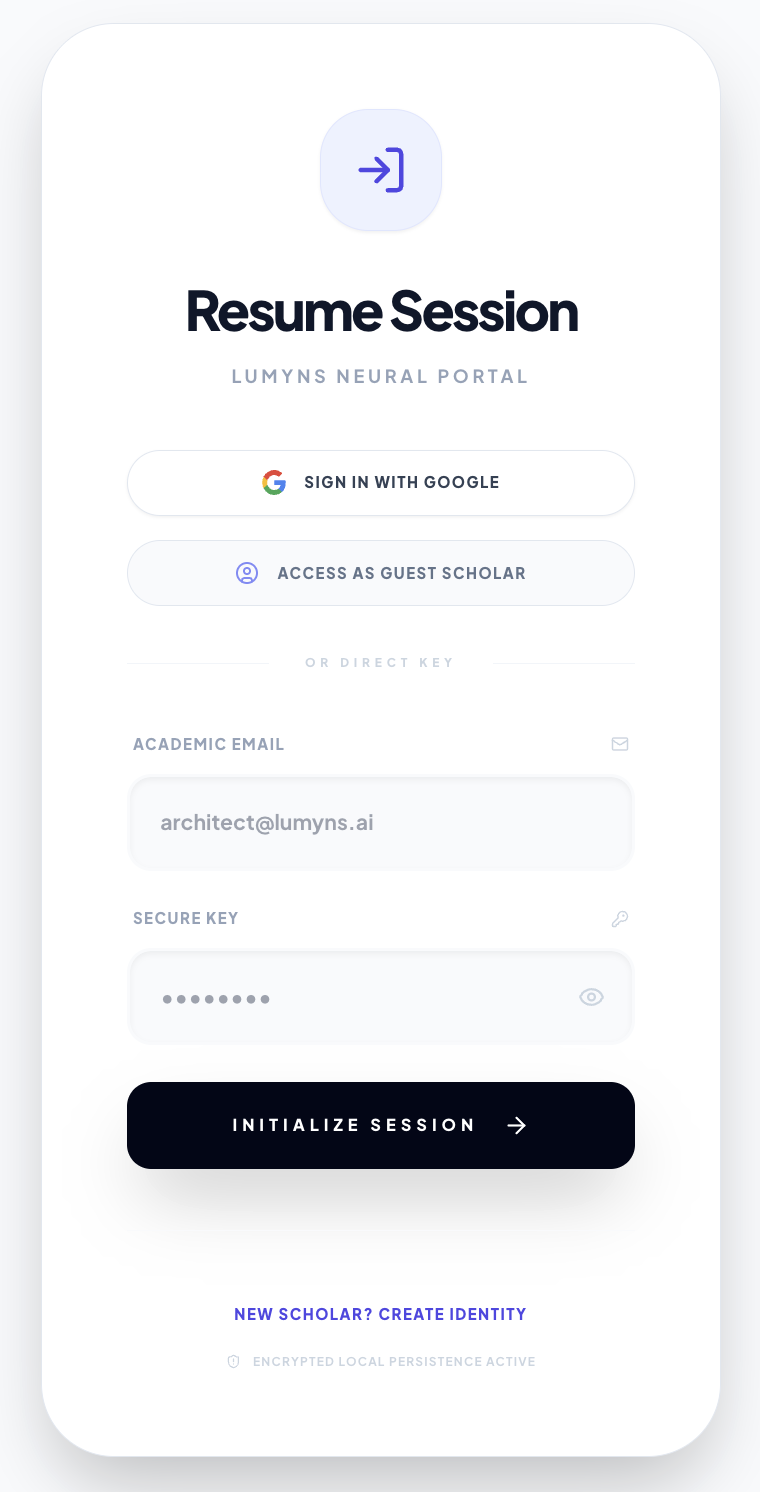
Login to the application
-
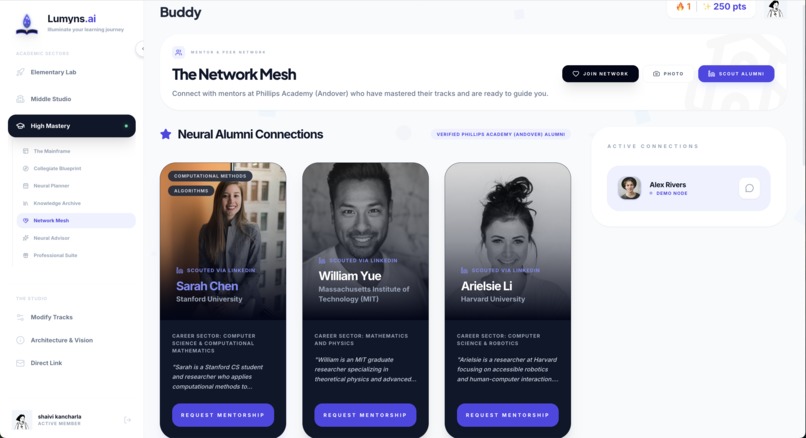
Network Mesh - Allows College students to earn while mentoring highschool students
-
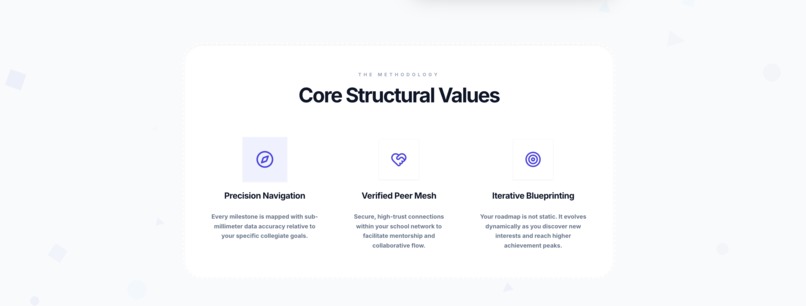
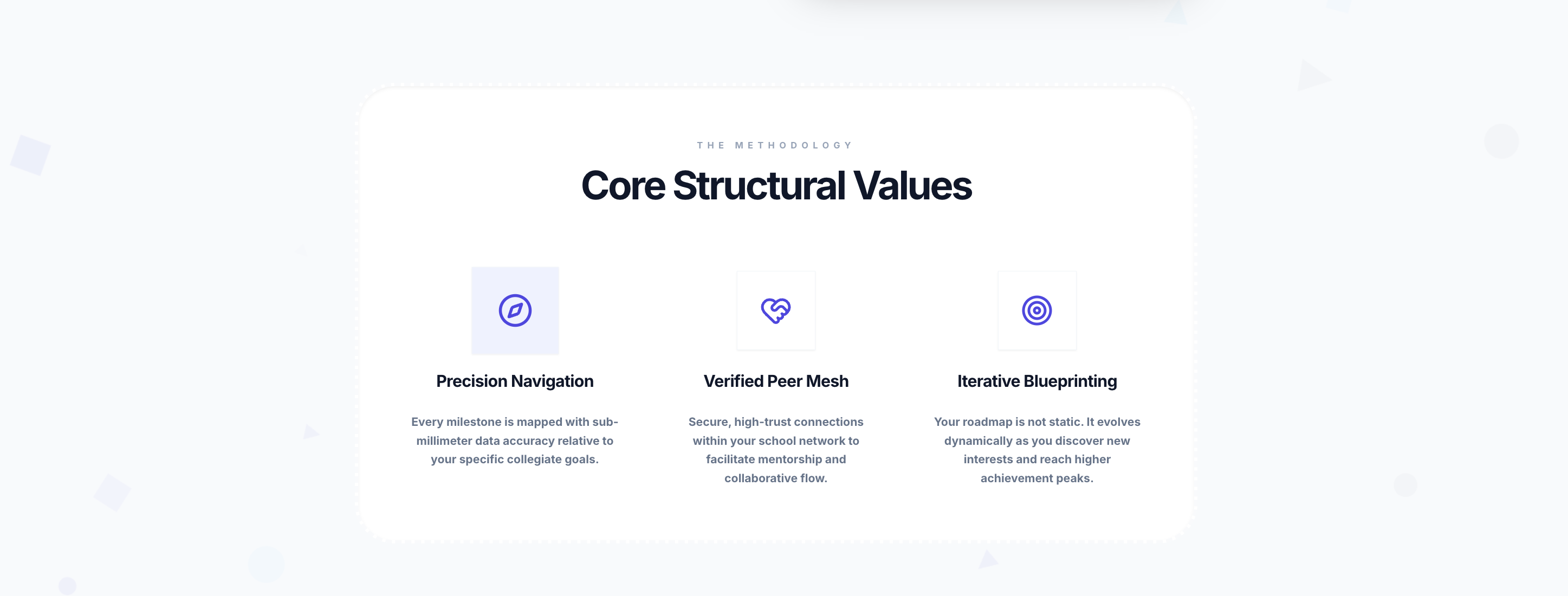
Our values
-
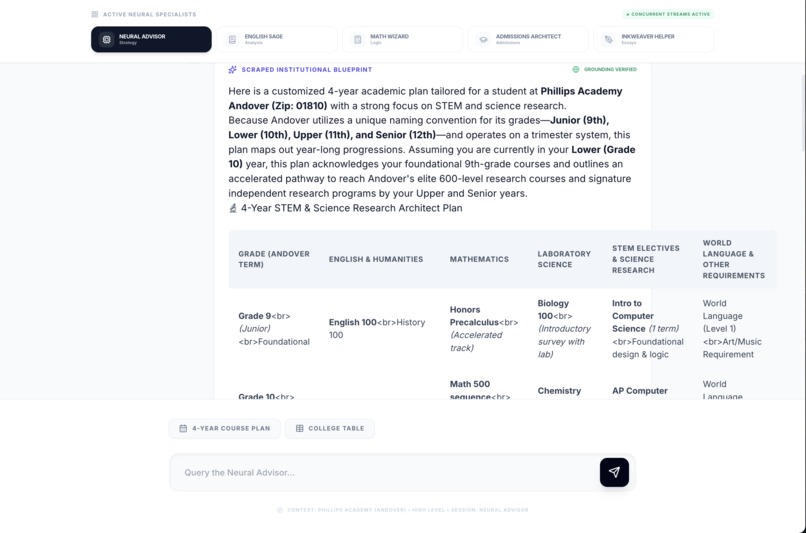
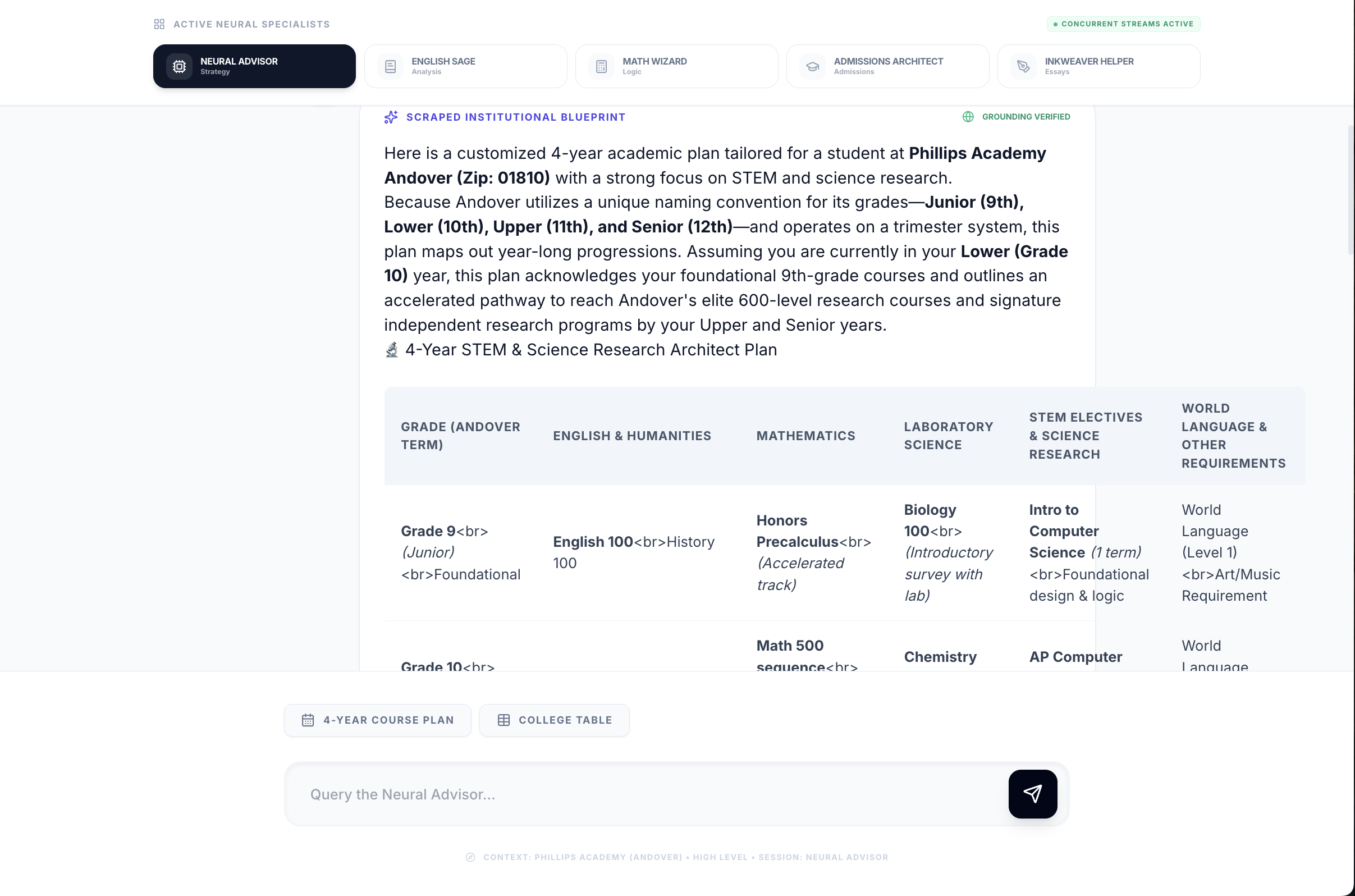
Neural advisors - Course suggestion + Tutoring
-
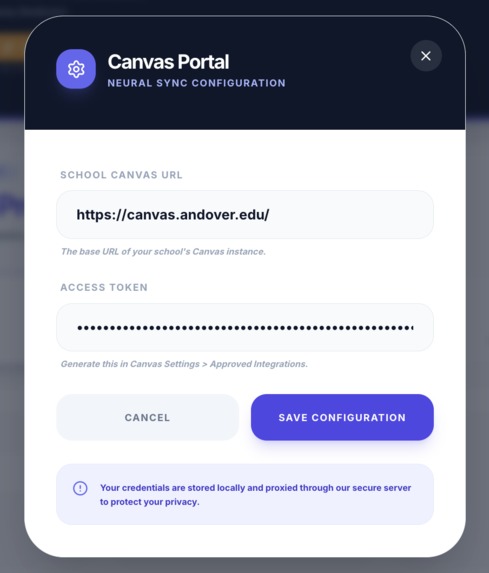
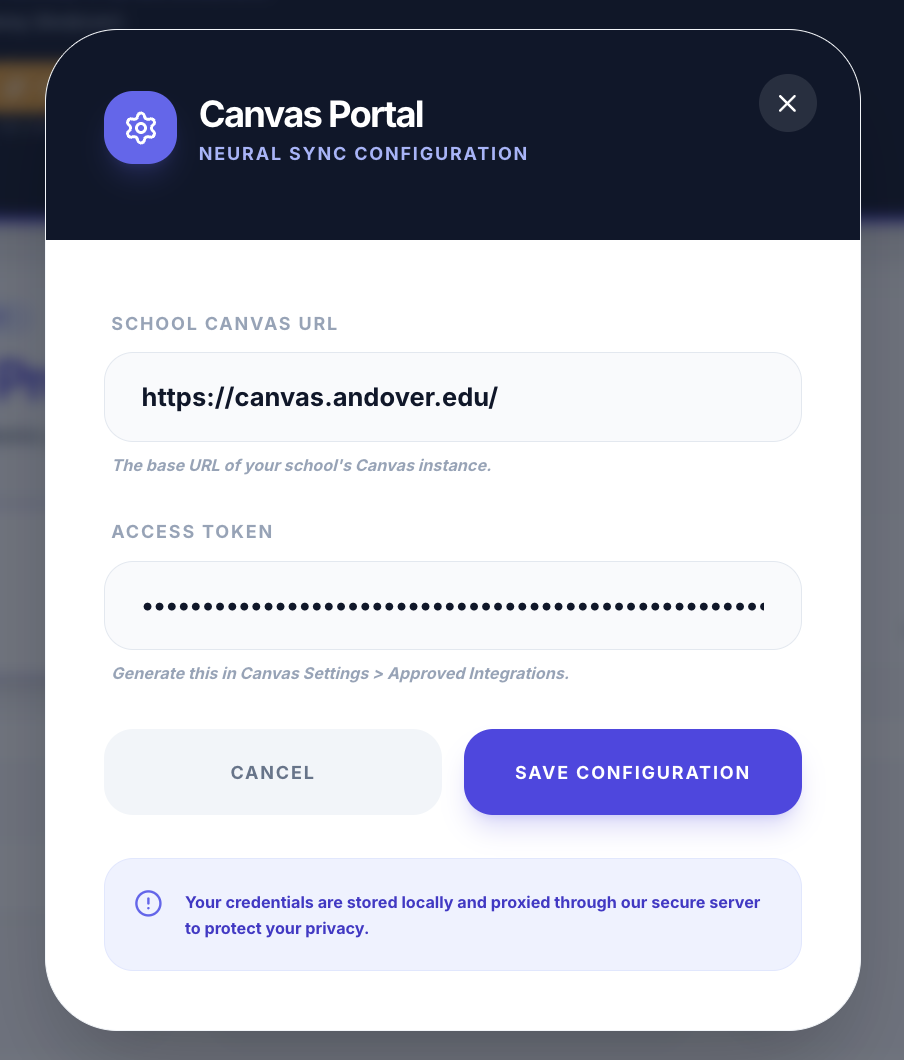
Sync Portal to canvas to access HW assignments and tests
-
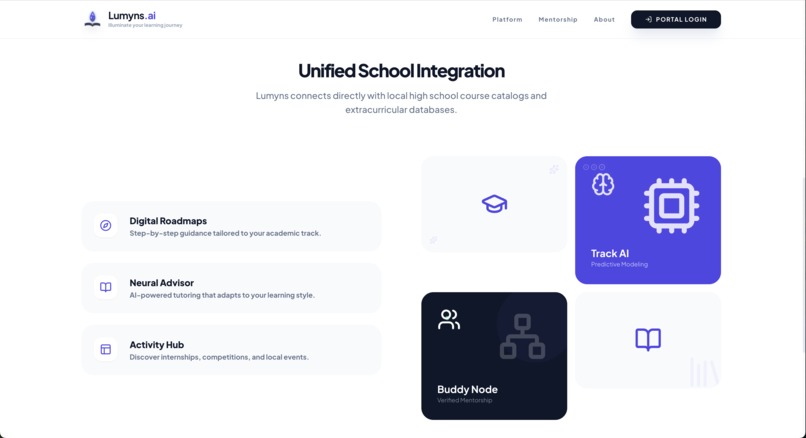
Basic Information
-
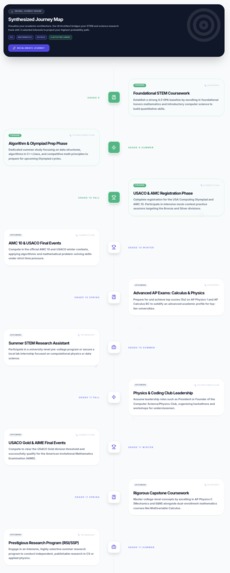
Synthesized Journey Map - Broadly plans out every year of highschool using AI
-
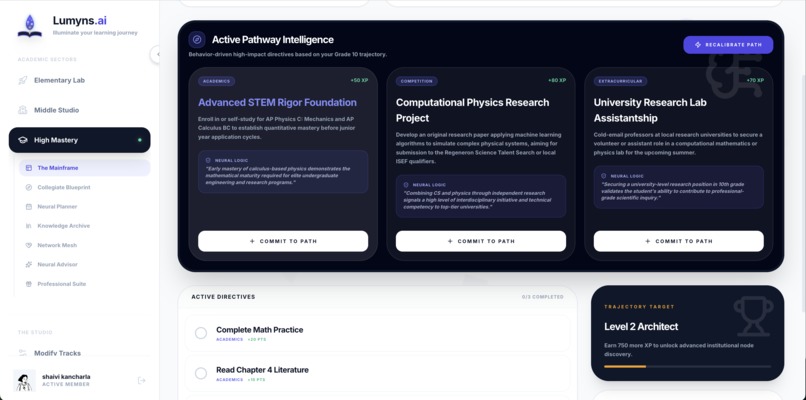
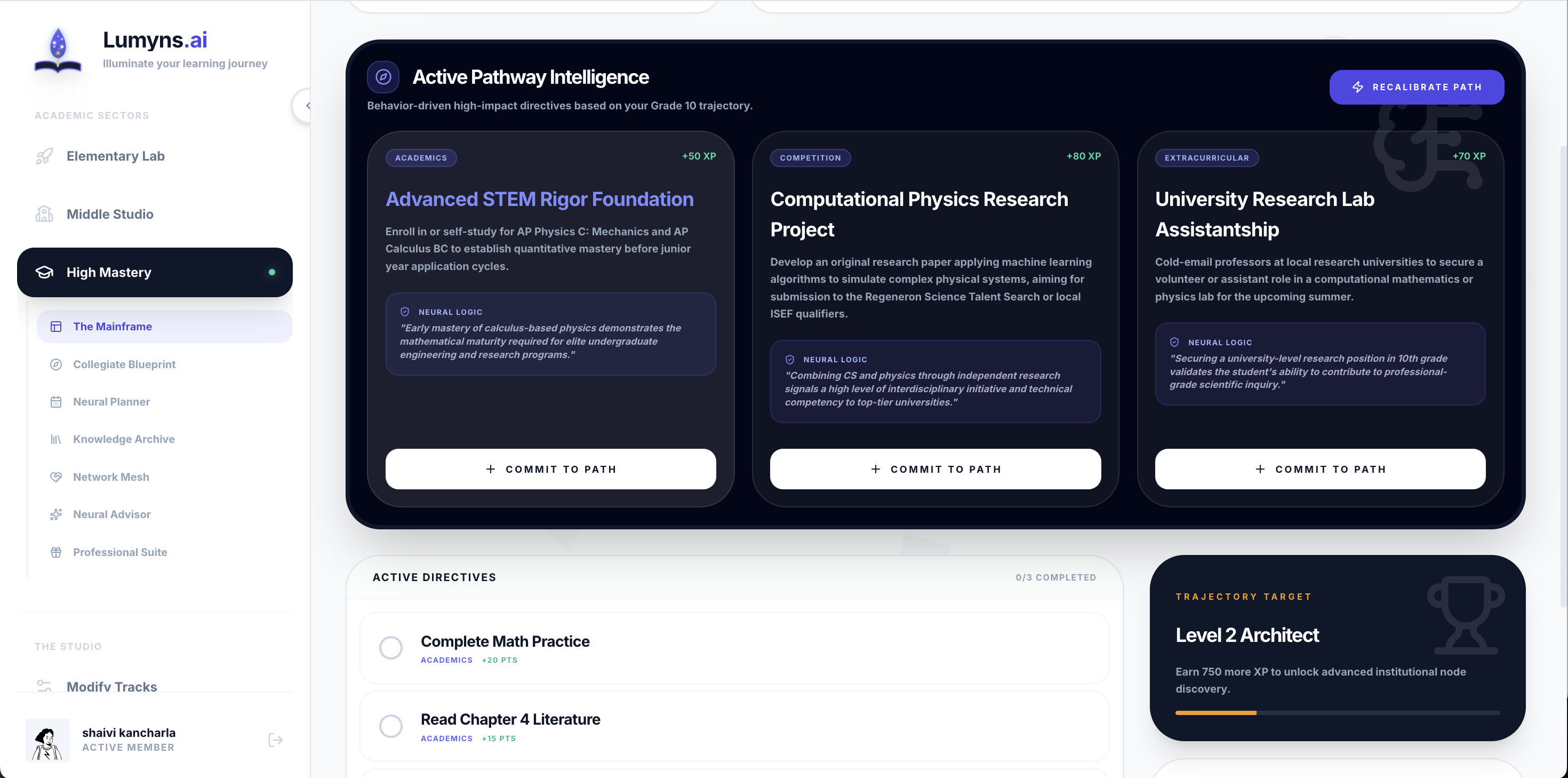
Active Pathway Intelligence
-

Logo + slogan

Inspiration:
I joined a nonprofit organization in Oakland, CA called Kids Teach Tech where I mentored underprivileged kids and taught them how to code. This was one of the most fun experiences because I got to see how curious, creative, and capable these students were when they had access to information and tools. Later, when I was applying to Phillips Academy Andover and other schools, I experienced firsthand how complex and overwhelming the admissions process can be, from the SSAT entrance exam and interviews to the essays. I was lucky enough to get guidance from my parents but many students, especially underprivileged and first generation, don't have this luxury. They don't have access to information (internships, competitions) and tools (planning, tutors, counseling) that are required to make them successful. Seeing this gap made me build Lumyns.ai as a platform that makes educational planning more accessible, personalized, and supportive for students who may not otherwise get that guidance.
What it does:
Lumyns.ai is an AI-powered guidance platform for all K–12 students that turns educational planning from a late-stage pressure into a proactive and fun journey. It creates dynamic, personalized roadmaps based on each student’s interests, strengths, goals, and opportunities.
In elementary school, Lumyns.ai focuses on exploration. Students try different hobbies, subjects, sports, arts, and gamified tasks while building confidence and curiosity. In middle school, Lumyns.ai helps students identify tracks such as STEM, the arts, the humanities, or sports. It supports competition prep, skill-building, and deeper exploration through personalized milestones. In high school, Lumyns becomes highly focused. It helps students plan Honors and AP courses, prepare for SAT and ACT testing, find internships and research opportunities, explore extracurriculars, and build a strong student portfolio.
Behind the scenes, Lumyns uses AI to combine information with several tools into one all-in-one guidance engine. The Neural Planner optimizes schedules using student data, course catalogs, and competitions like AMC, F=ma, and more. The Network Mesh connects students with college students as mentors( a platform for connections/chat). The Collegiate Blueprint creates an admissions roadmap for dream colleges, AP tracks, and major exploration. Finally, the Knowledge Archive holds recommended internships and summer programs, including around 150 opportunities from computer science to linguistics. Lumyns also includes
- Gamified Learning: Need to implement it.
- The MainFrame: Click Re-Calibrate Path
- College Blueprint: Click Re-calibrate journey and Refine Blueprint for college selection
- AI tutoring: Course suggestions, English help, Math wiz, College AI counselor, Inkweaver
- Local opportunity nodes for local educational bodies for specialization.
How we built it:
I built Lumyns.ai by using AI as a coding partner. I used prompt engineering and vibe coding to clearly explain the features, layout, and user experience I wanted. Using Google AI Studio, I generated and refined the code for the platform. I prompted the AI to help build the structure, design the interface, create student guidance workflows, and improve the way the platform responds to users. After each version, I tested the platform, identified what needed to change, and gave the AI more specific instructions to improve it.
Challenges we ran into:
Some challenges I ran into while creating this application were mostly with creating detailed enough prompts for the AI to execute my vision. Few examples are:
Creating and connecting the API key, because it was necessary for the AI features to work properly and for the application to be published as a real website.
I also noticed that Lumyns.ai kept recalibrating information each time instead of remembering past inputs, so I had to build a backend database to store and retrieve that information consistently. I used MongoDB and Firebase to store the data(unstructured and structured data)
Refining the neural planner and creating the backward scheduling feature was very hard as the AI was not able to understand my vision.
Overall, building Lumyns required a lot of trial and error, especially with making sure the AI worked smoothly and the website could function as a complete platform.
Accomplishments that we're proud of
I am proud of are being able to make the Neural Planner actually work, especially with the backward scheduling feature. It was challenging because the planner had to think through steps in reverse order and still create a schedule that made sense, but after trying multiple approaches, I was finally able to get it to work correctly.
I am also proud of learning how to import and use API keys for the website. This was important because it helped connect my project to outside tools and made the app more functional.
I am also proud of designing my logo. It represents illuminating the learning journey.
Another accomplishment I am proud of is creating a Google login section for the app. I connected it to Google Cloud using an OAuth Client ID, which made the login system more realistic and professional.
Overall, I am proud that I was able to build a working app that students can use and give feedback..!! You can try it out...!!
What we learned
I learned how to vibe code and use AI as a coding partner to help build a real application. I learned that prompts have to be very specific so the AI can create the correct code and understand the exact features I want. I also learned how to break a big idea into smaller steps, such as designing the layout, building the guidance flows, adding login features, and connecting the AI tools. Through this project, I learned more about how APIs work and how they help an app connect to outside services. I learned about how backend database systems are needed when an app has to save user information instead of resetting every time. I also learned that building a complete platform takes a lot of testing, because the first version does not always work the way I expect.
Overall, I was able to figure out how to register a domain and connect the application to hosting platforms such as squarespace.
What's next for Lumyns.ai
After I finish making the final tweaks to Lumyns.ai, I want to publish it as a real website and start getting Phillips Academy students to use it. Once users try the platform, I want to collect feedback on what works well and what needs to be improved. I will use that feedback to make the guidance system more accurate, helpful, and easy to use. In the future, I hope to expand Lumyns.ai so it can support more students from different backgrounds and communities. I also want to build stronger mentor connections and add more local opportunities for users. My long-term goal is to turn Lumyns.ai into a real startup.

Log in or sign up for Devpost to join the conversation.