-
-
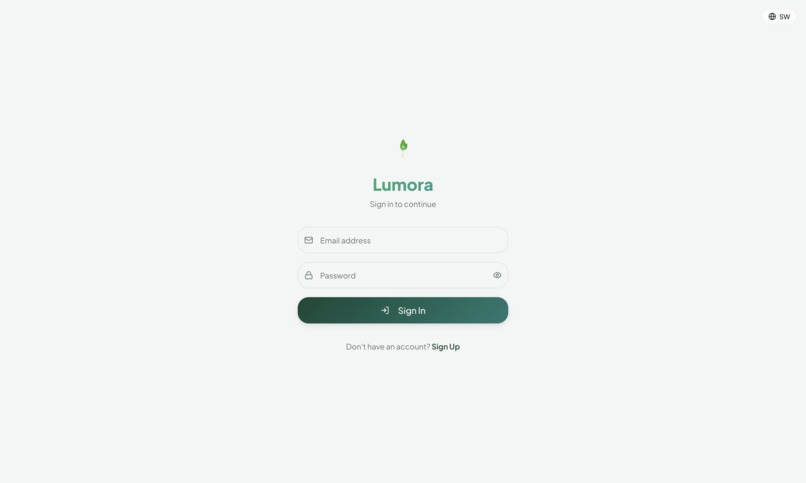
Sign up page
-

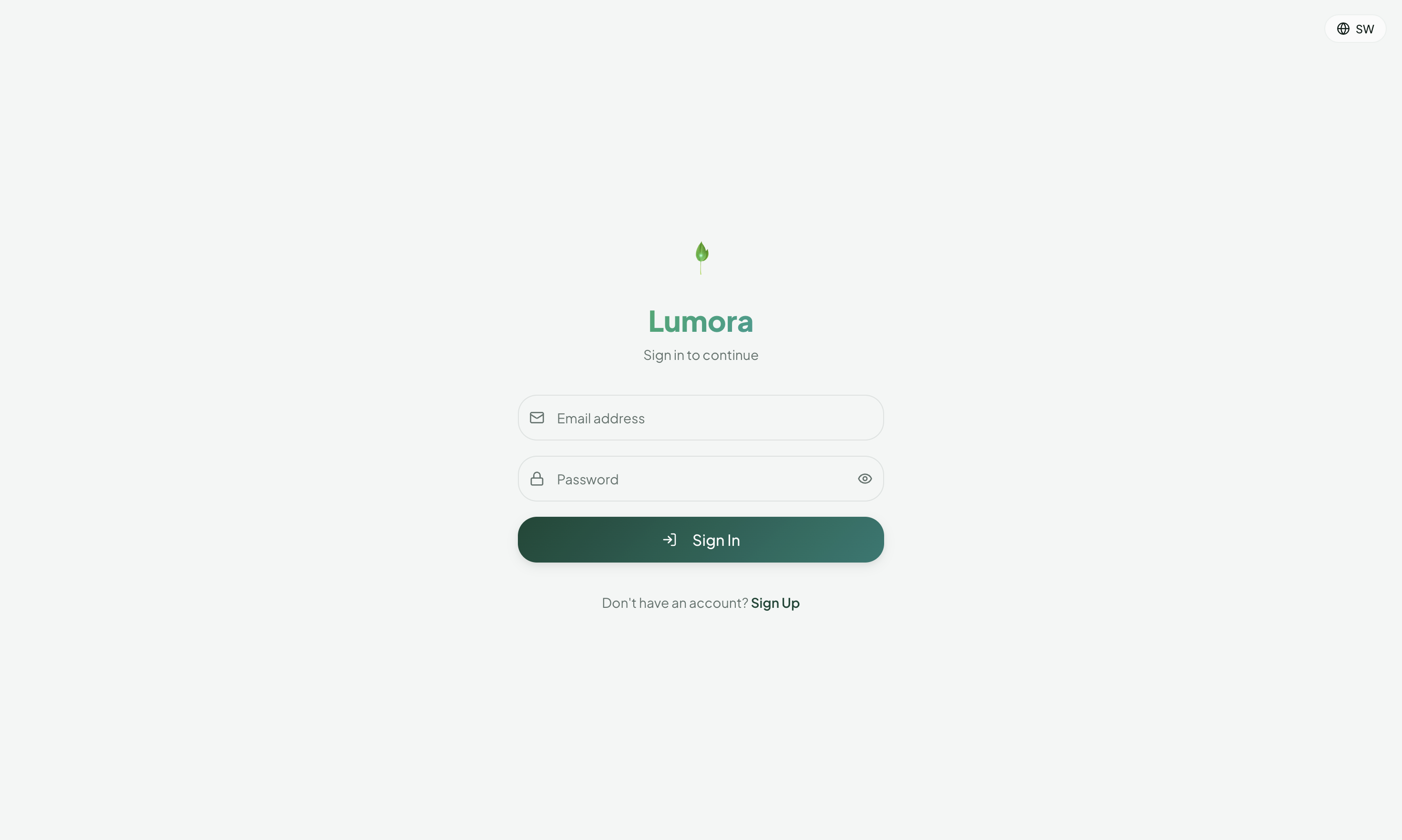
Sign in page
-
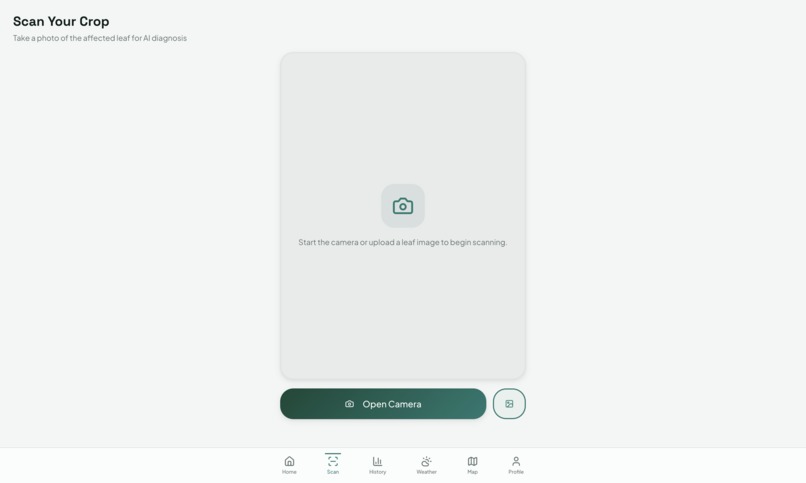
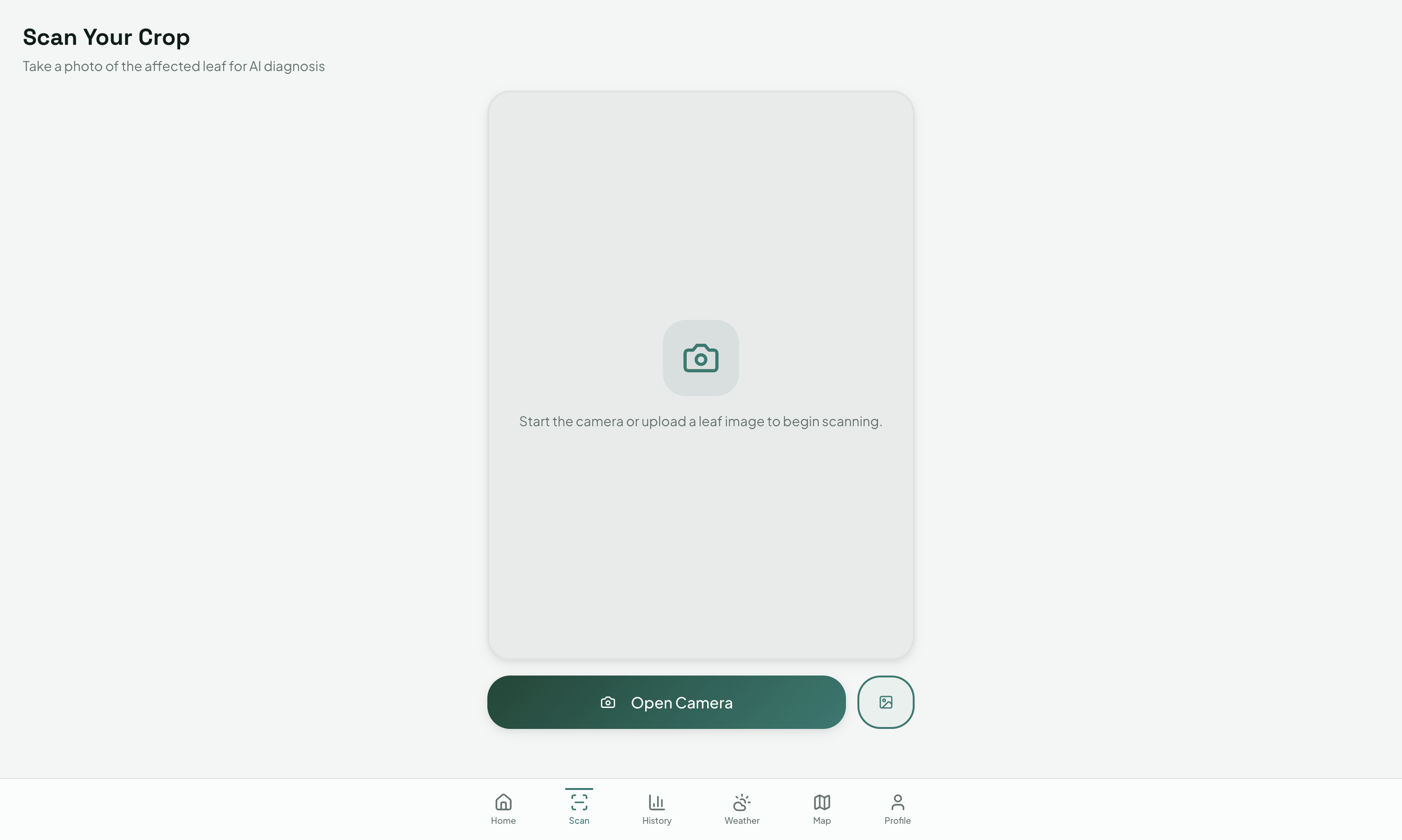
Scan page
-
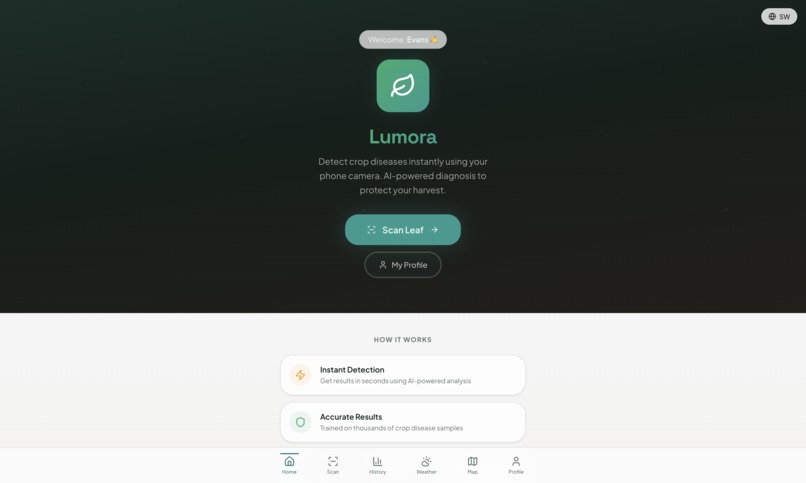
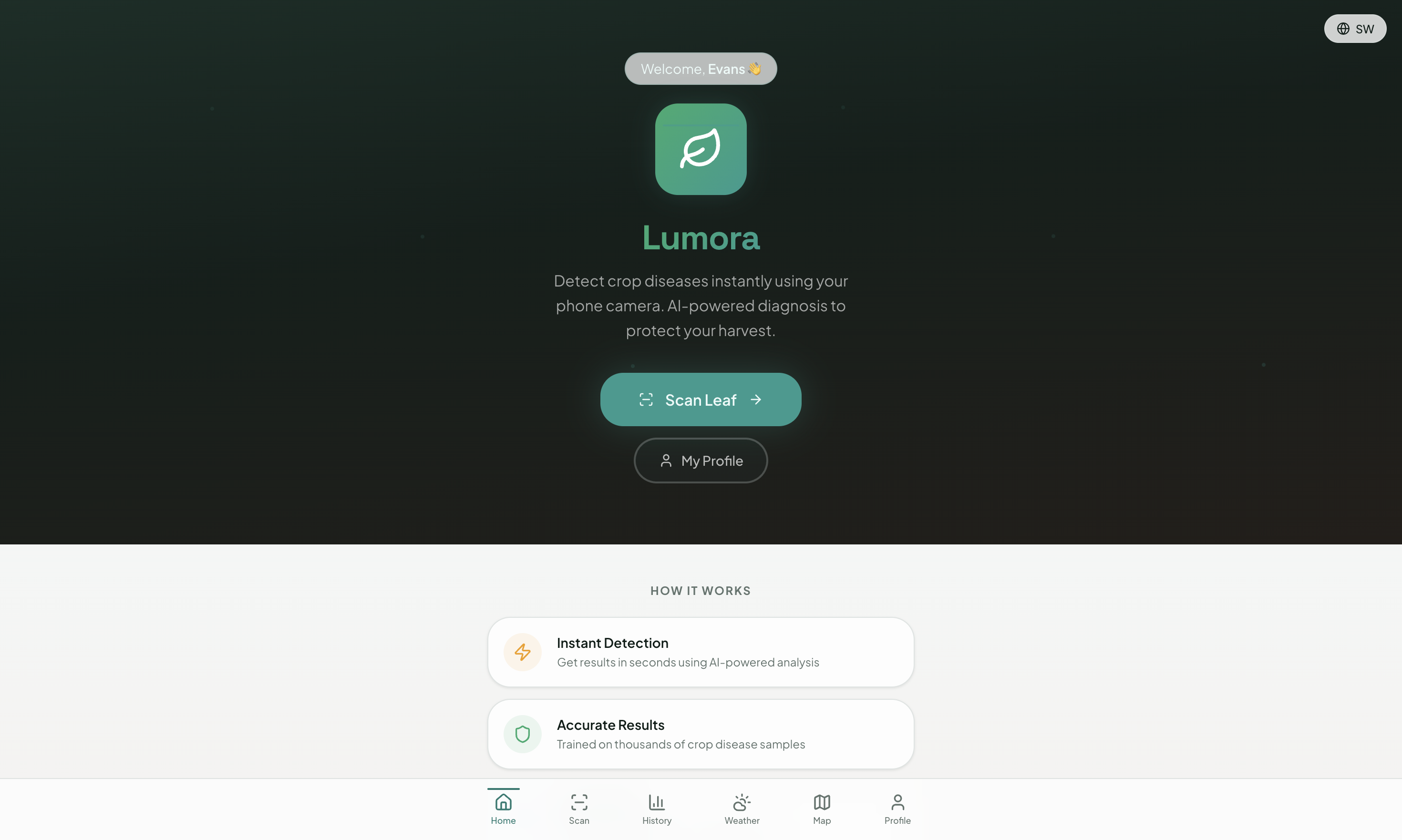
Home page
-
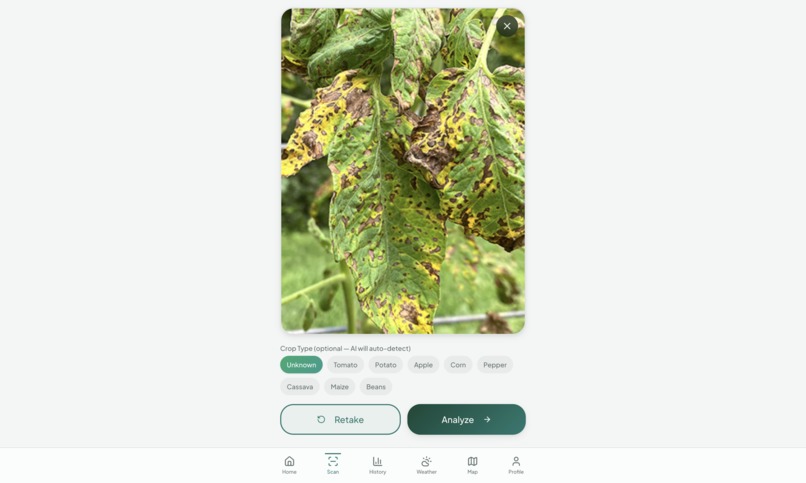
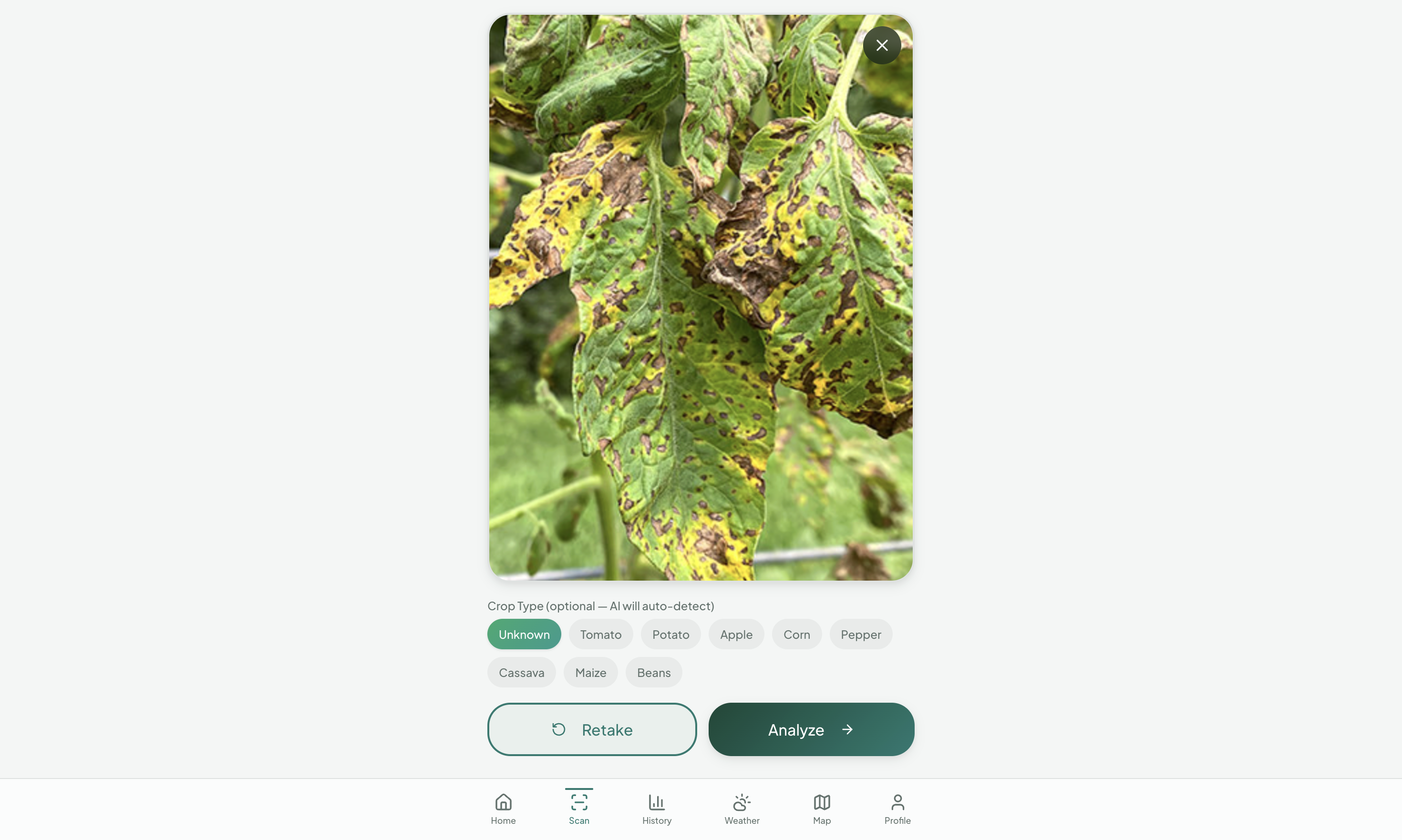
Testing using a leaf image
-
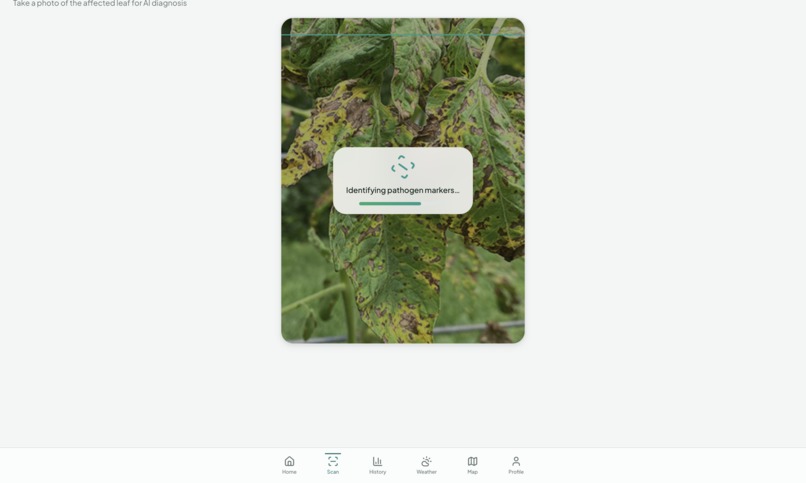
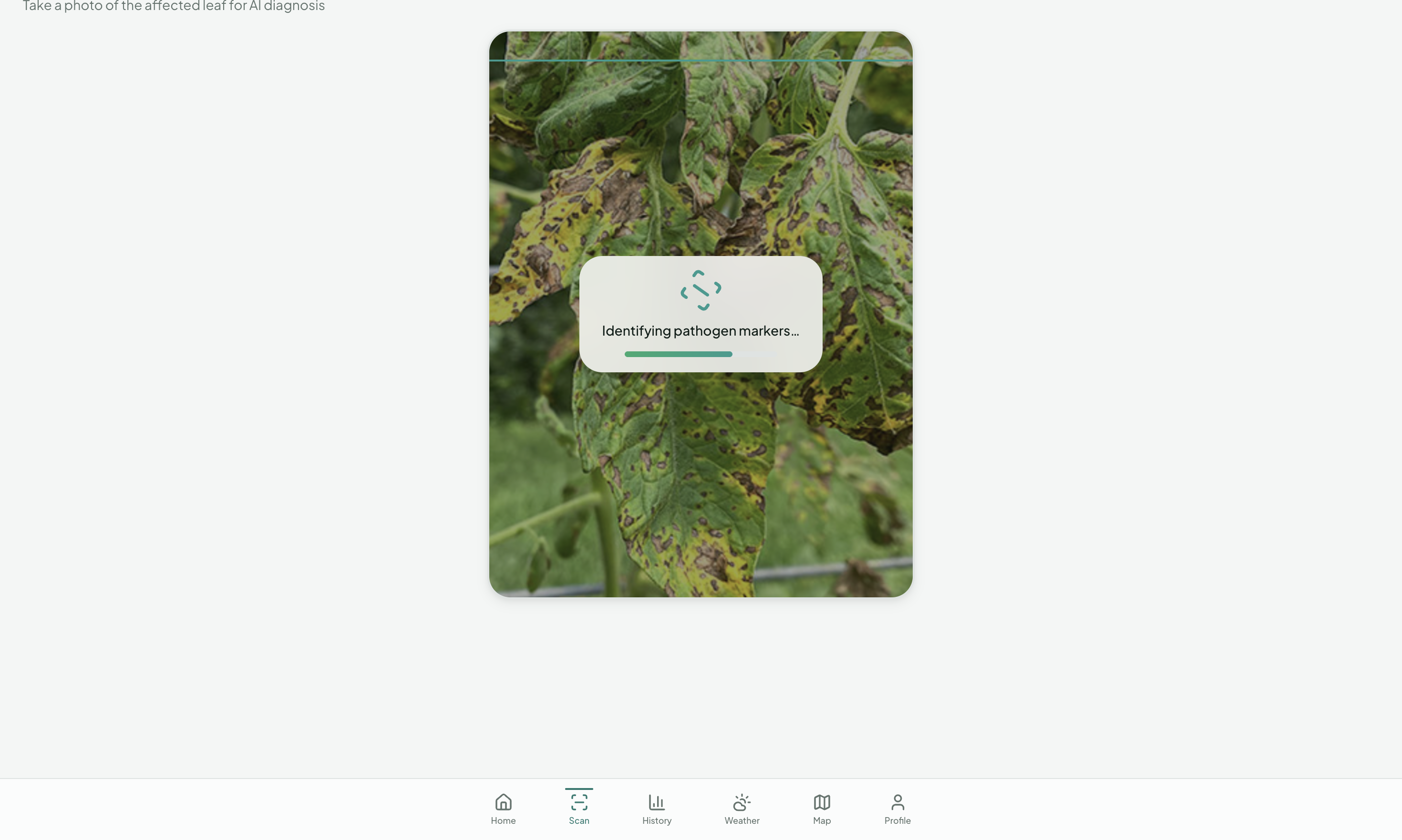
Scanning
-
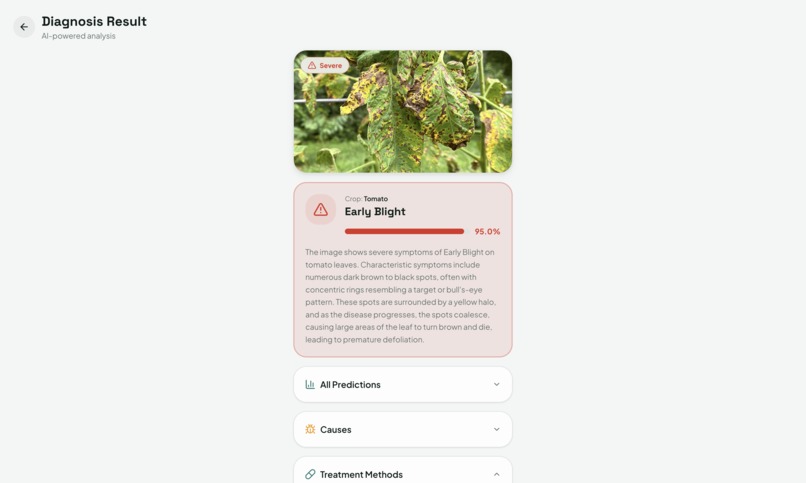
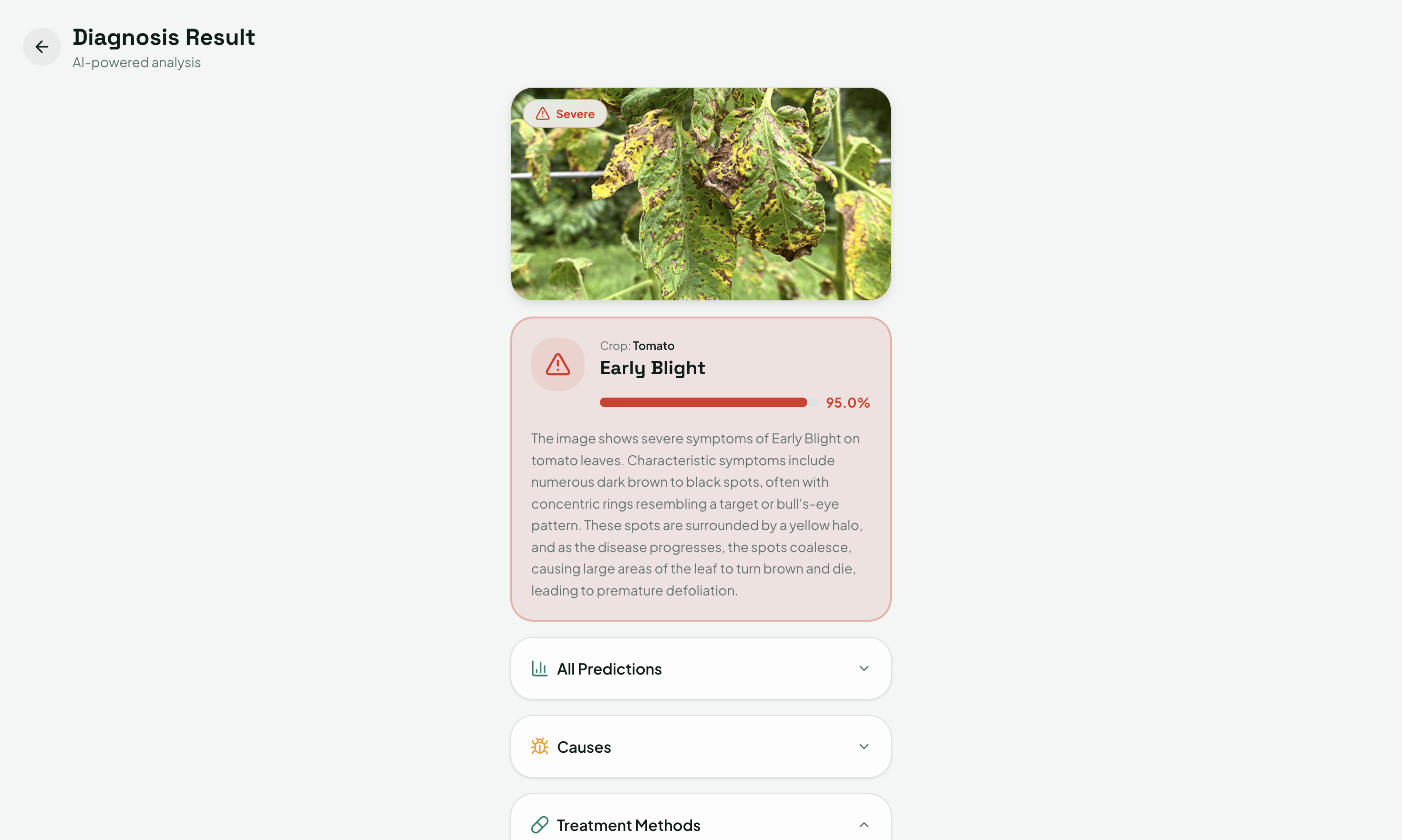
scanning results
-
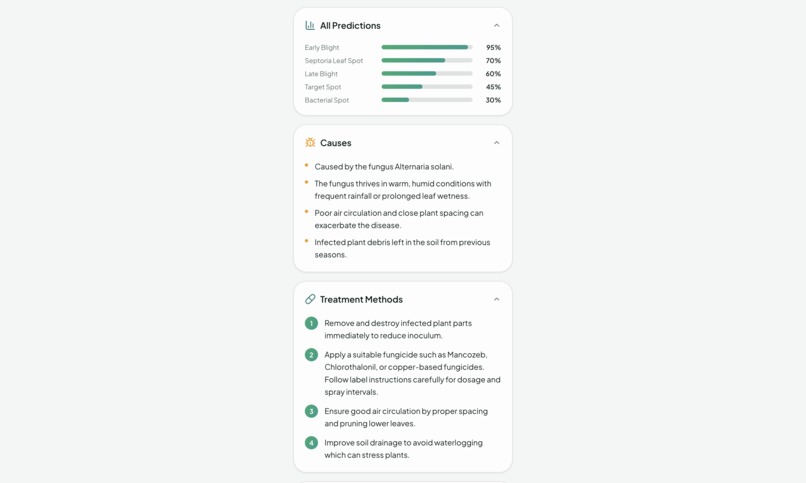
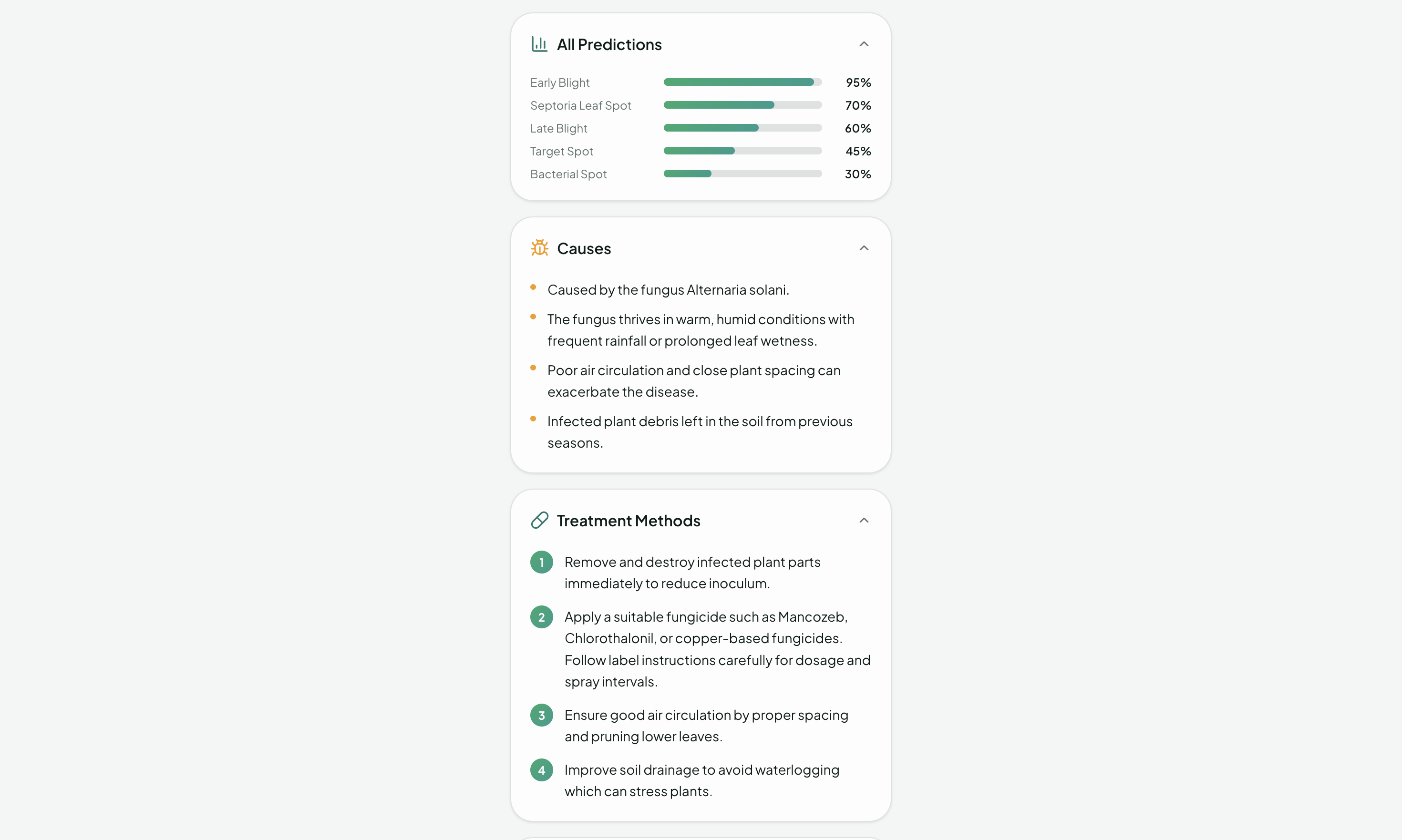
Prediction causes and treatment results options
-
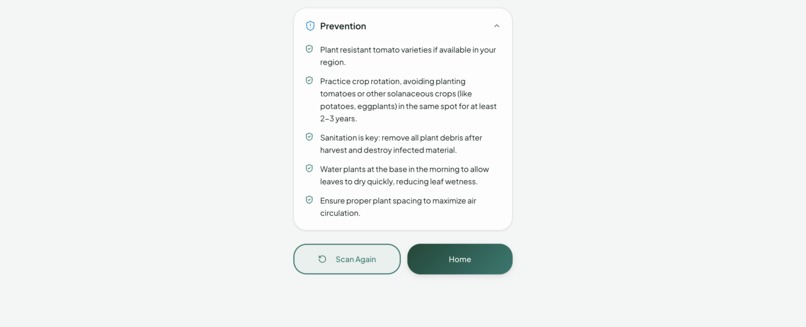
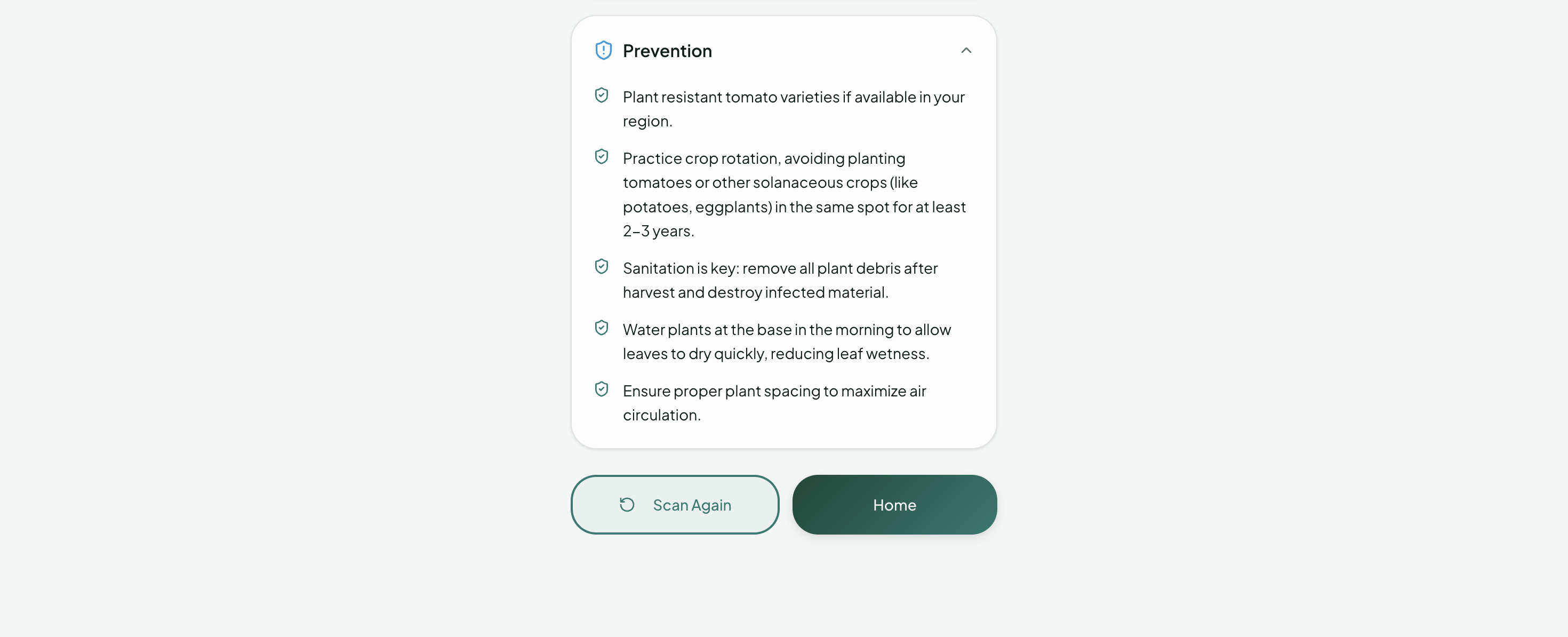
Prevention methods of the disease
-
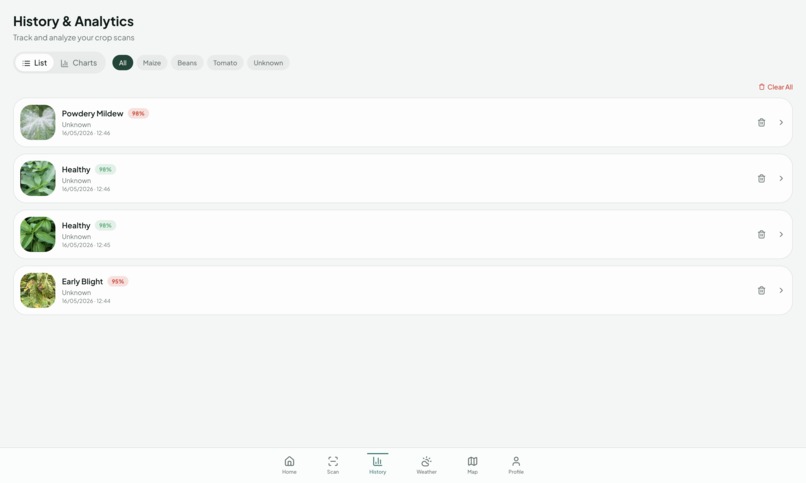
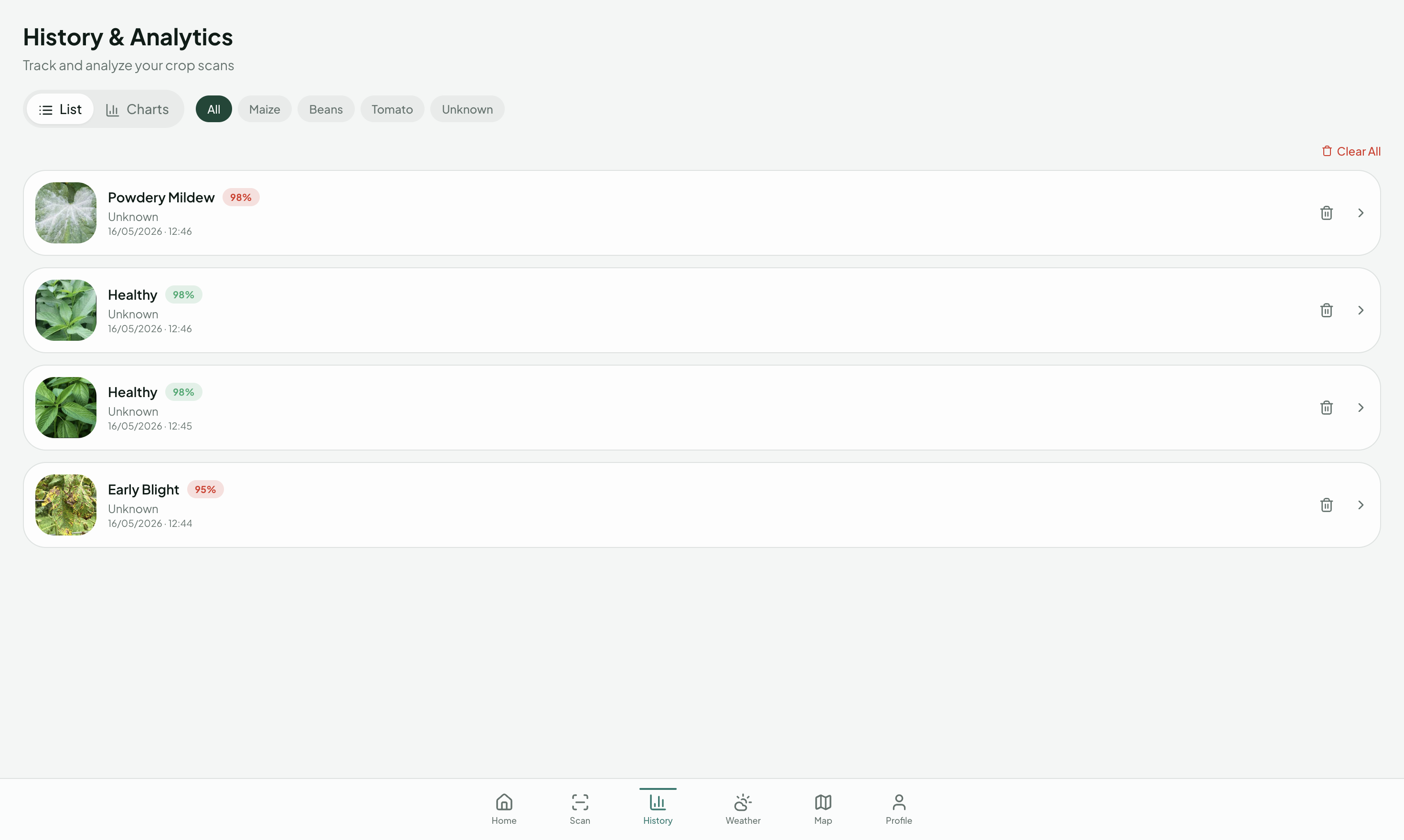
History page(List)
-
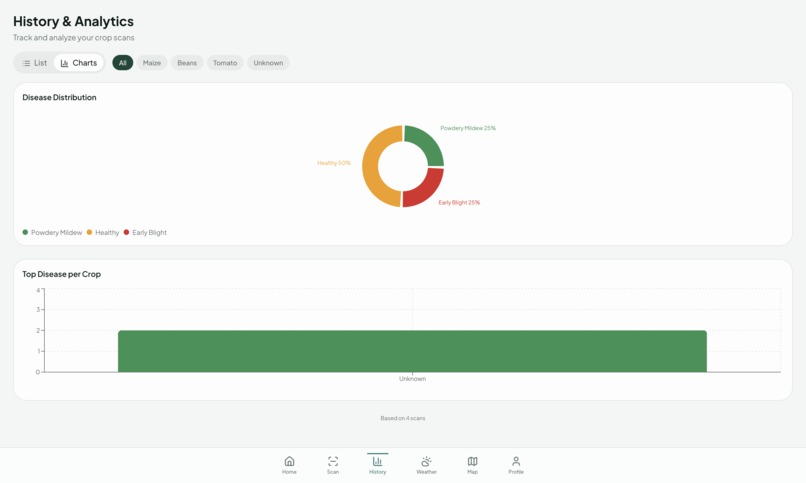
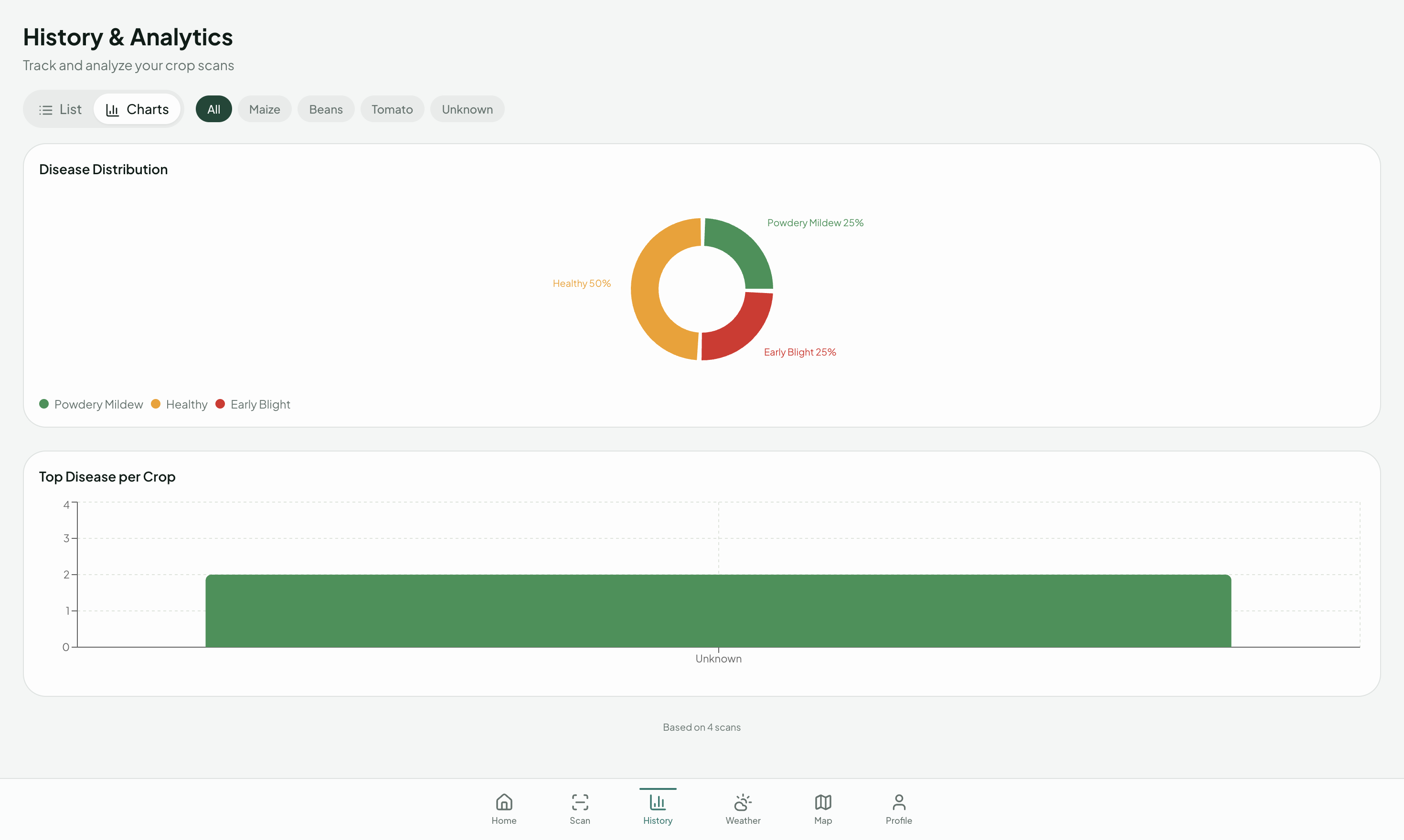
History page( charts)
-
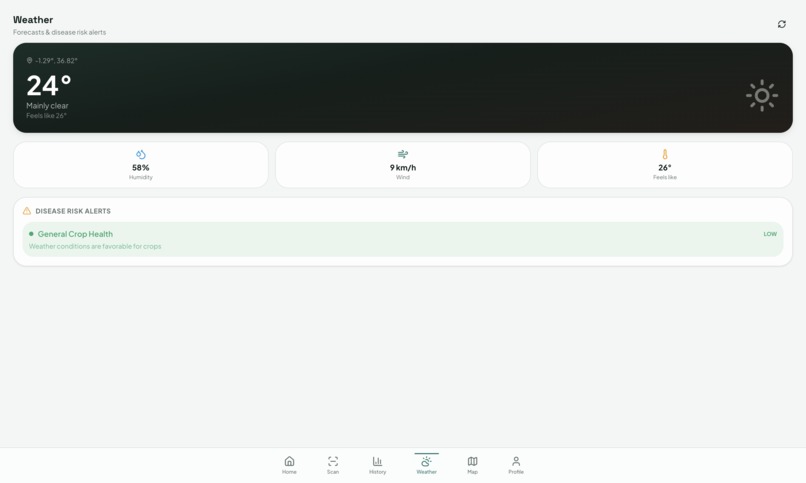
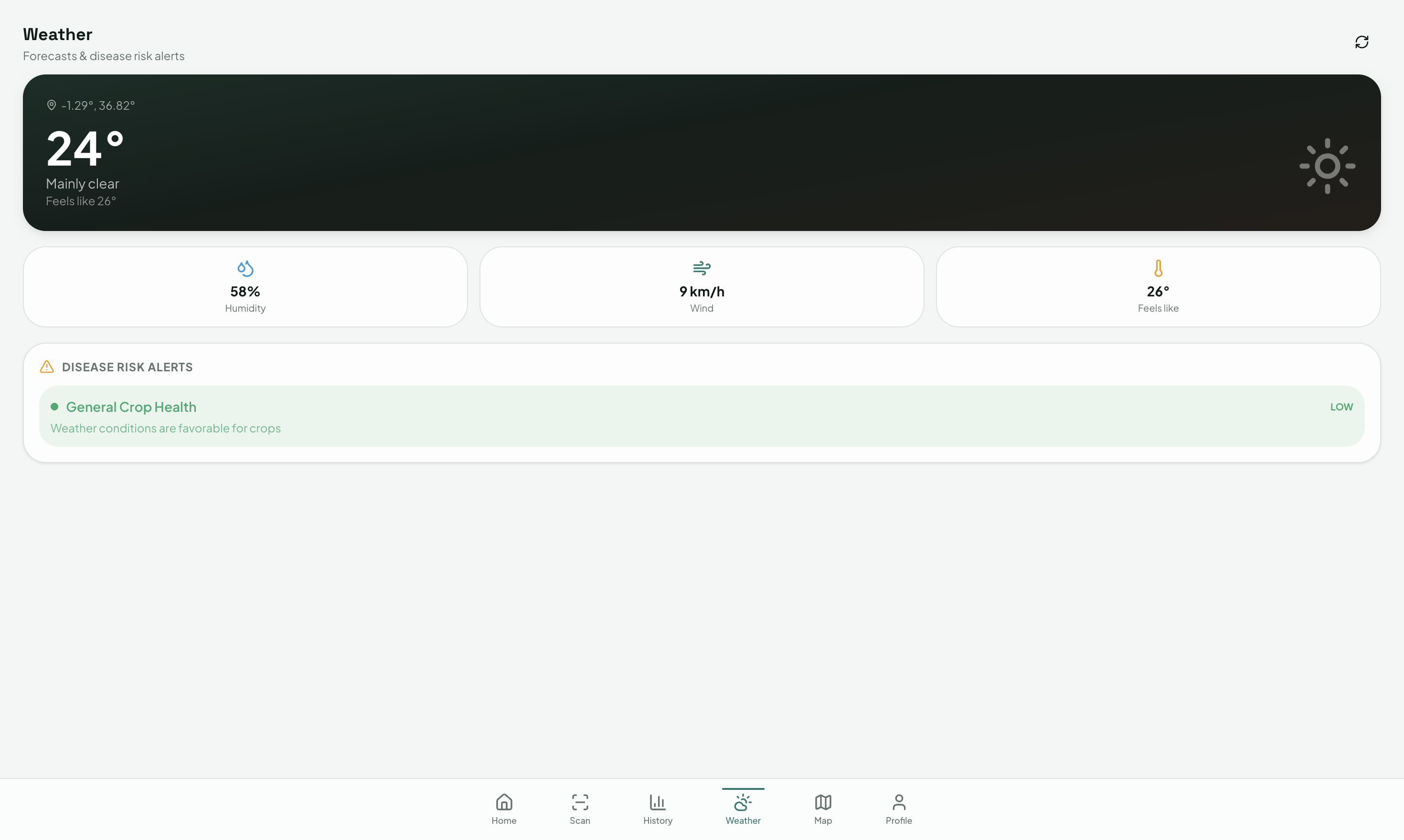
Weather page
-
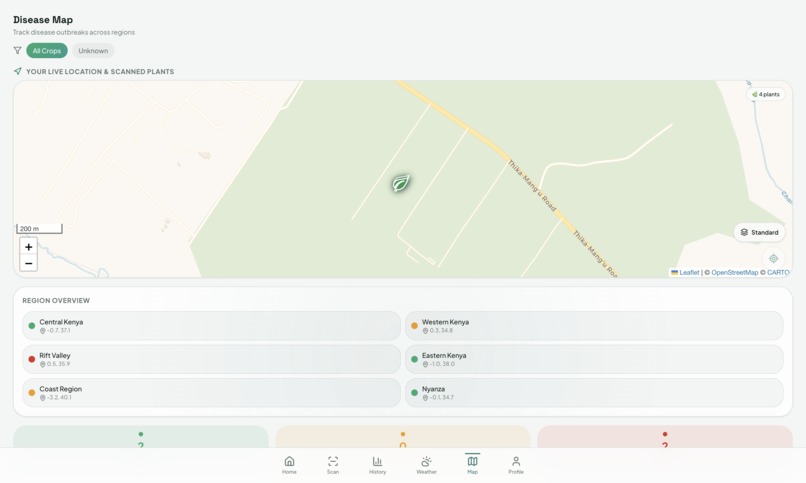
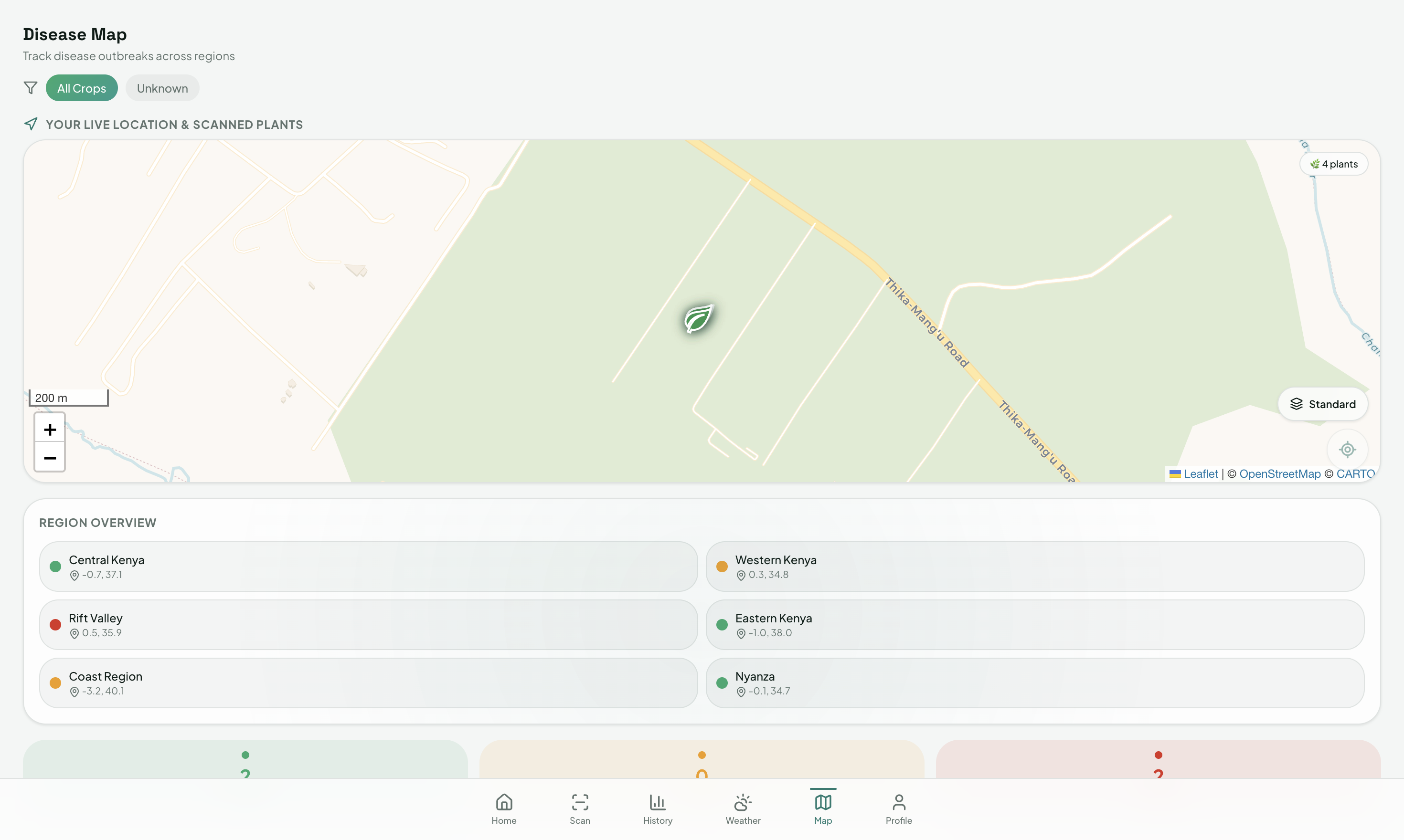
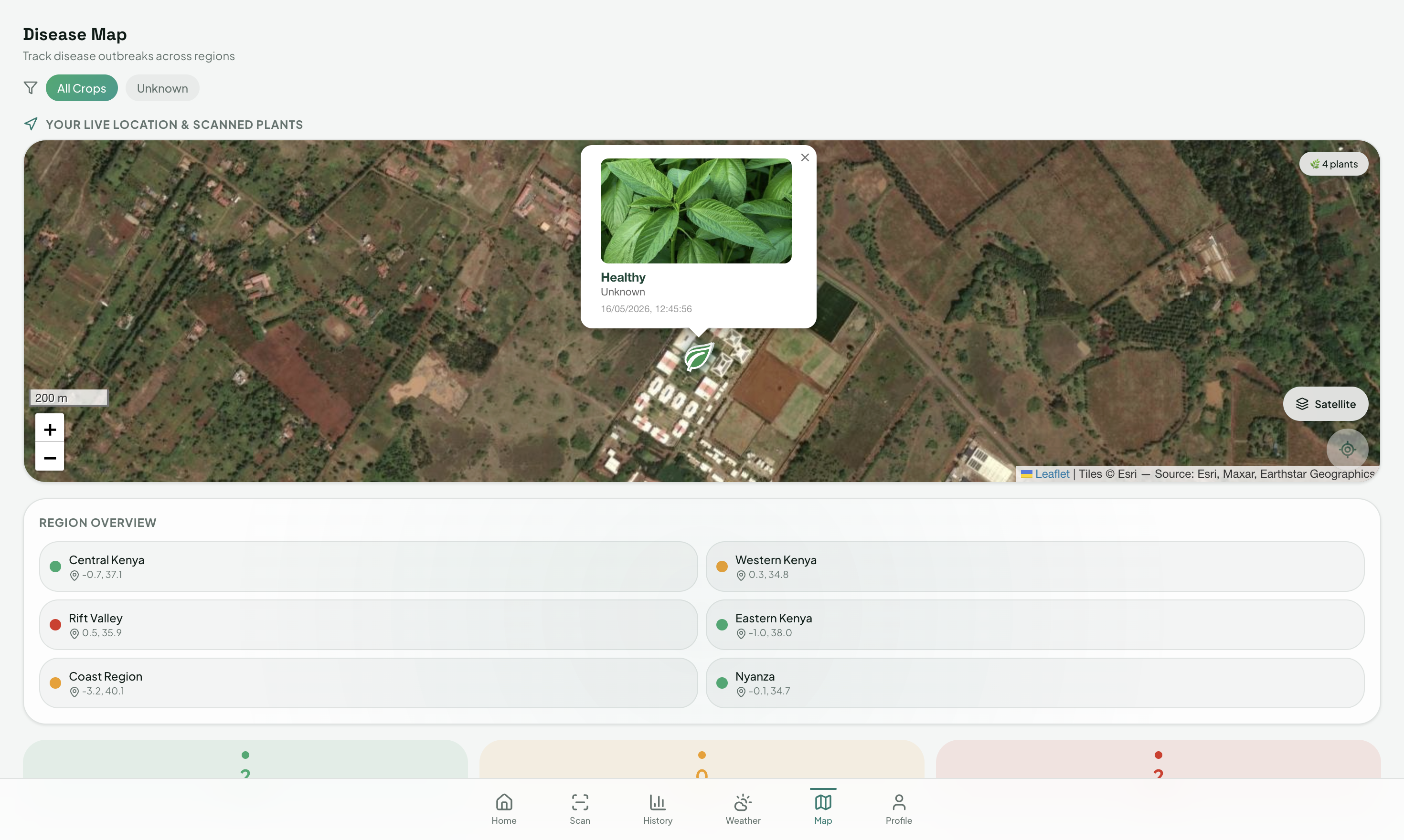
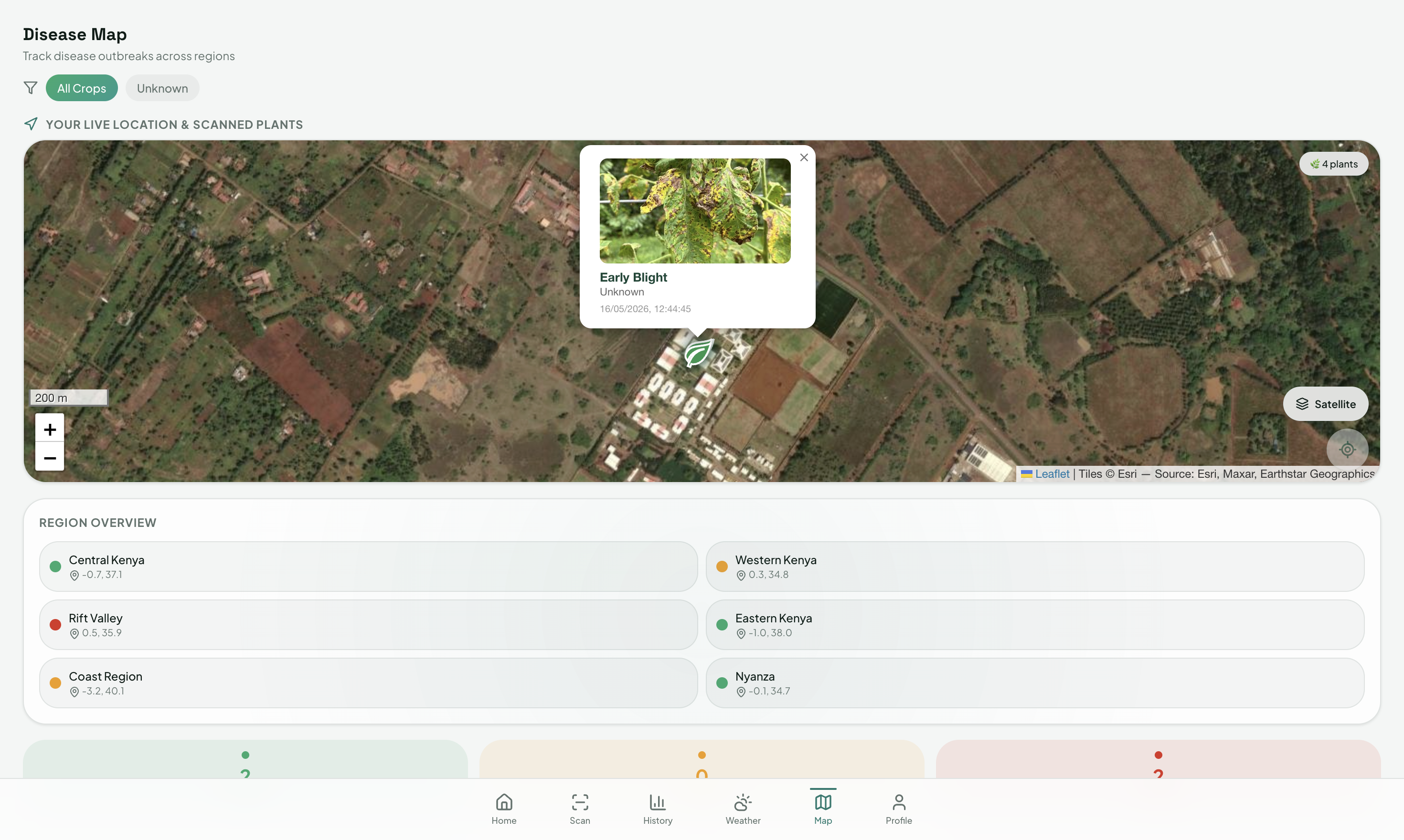
Disease map page (standard)
-
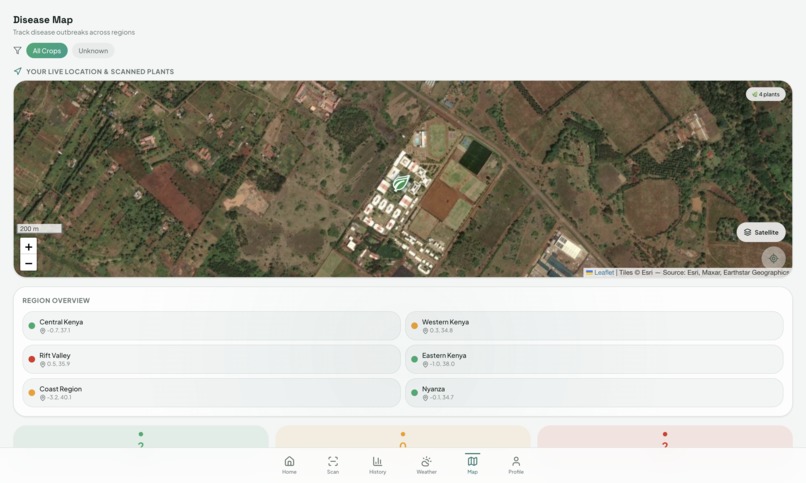
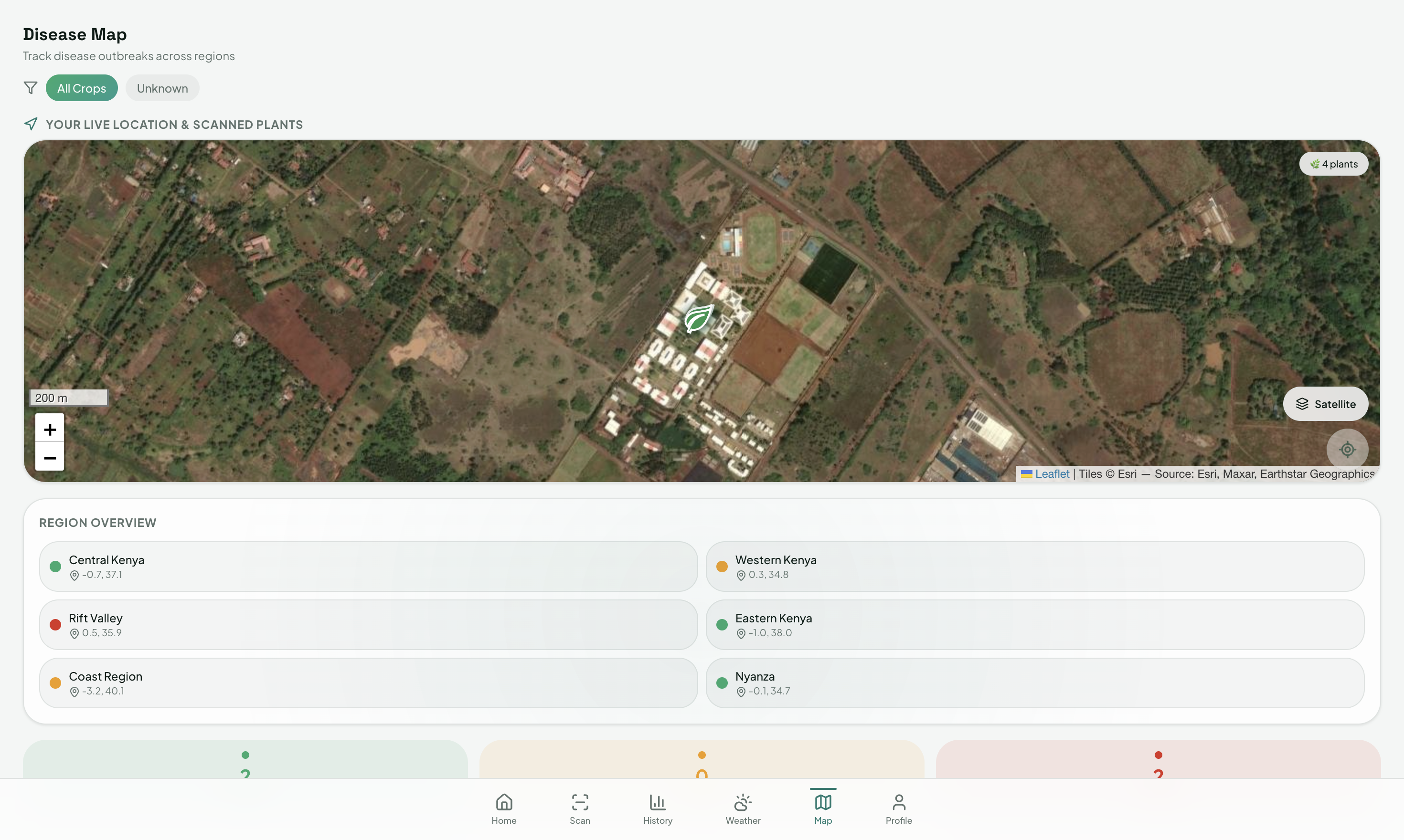
Disease map page( satellite)
-
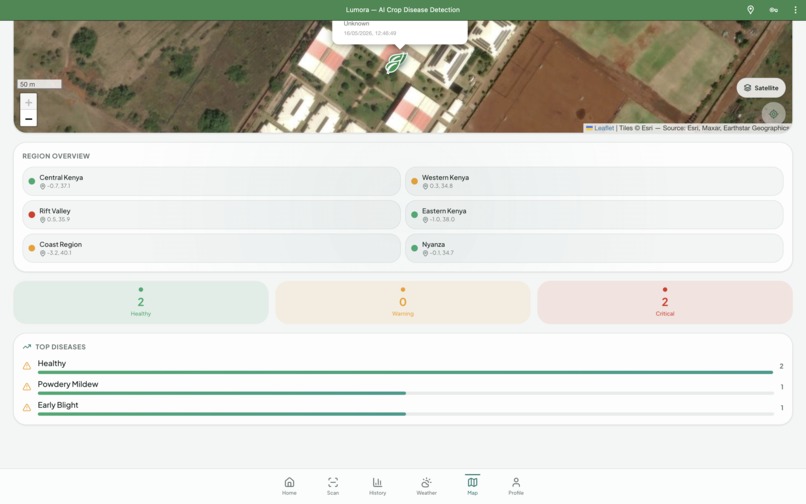
-
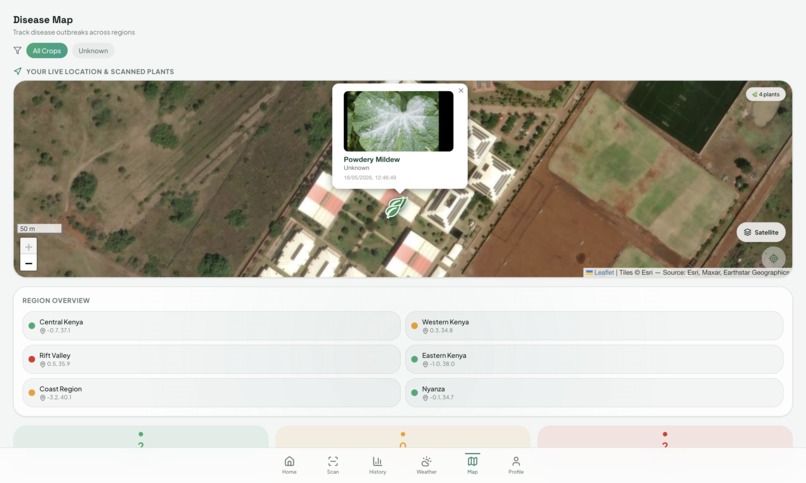
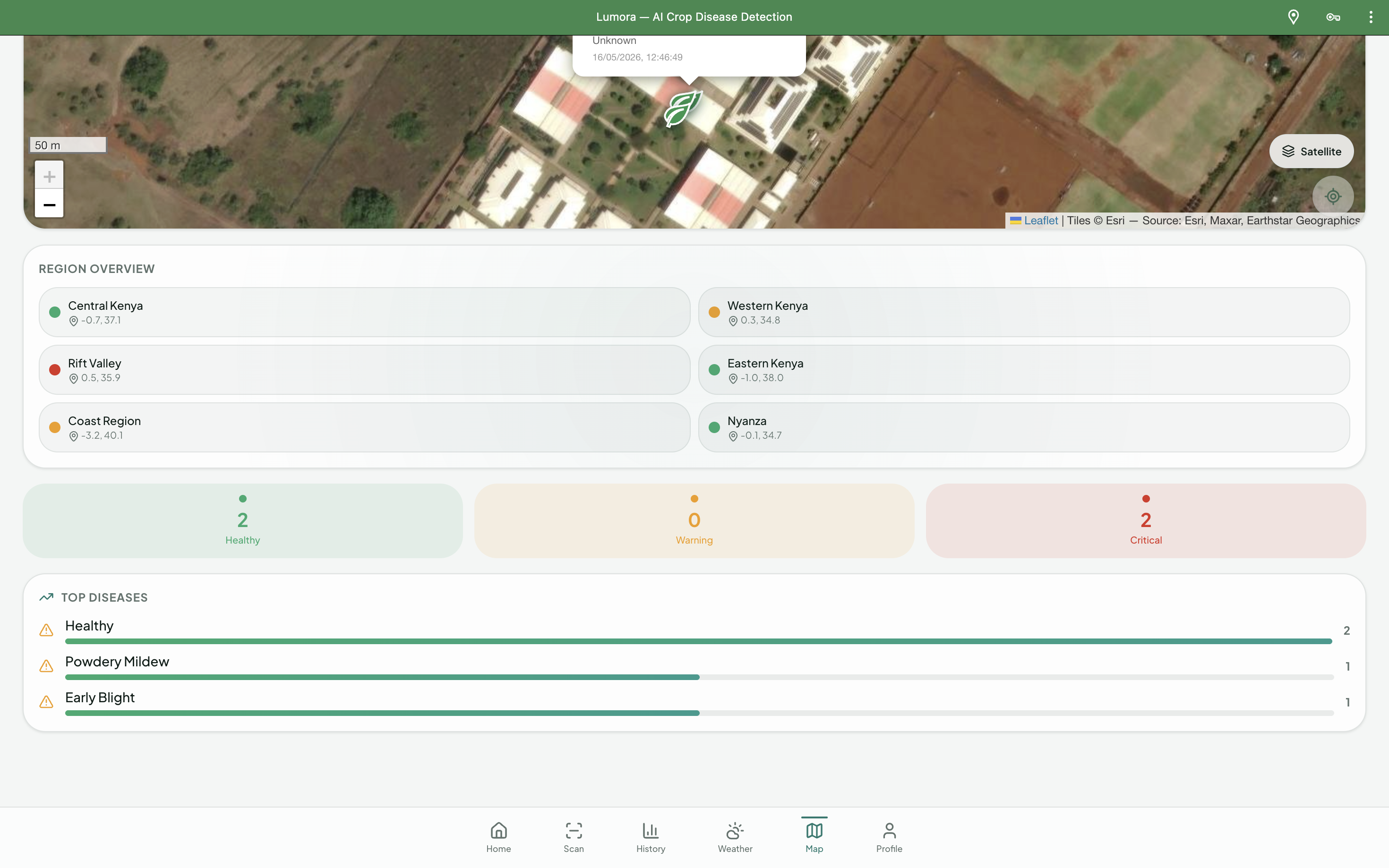
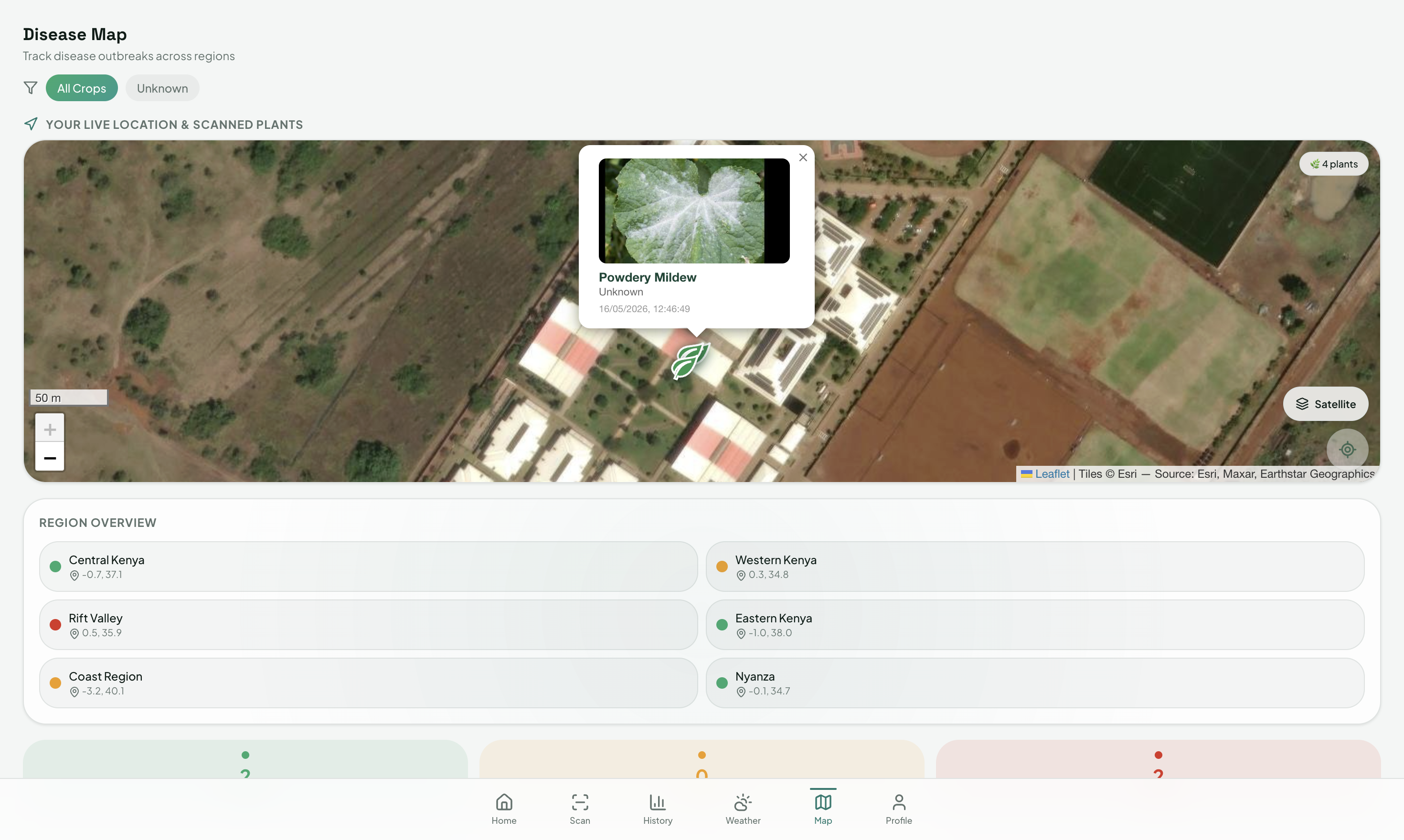
Shows the exact place the disease was detected and saves
-
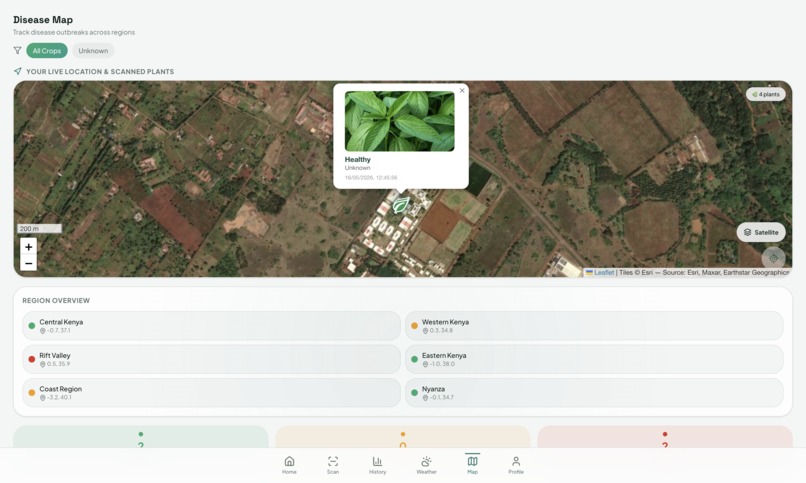
Shows the exact place the disease was detected and saves
-
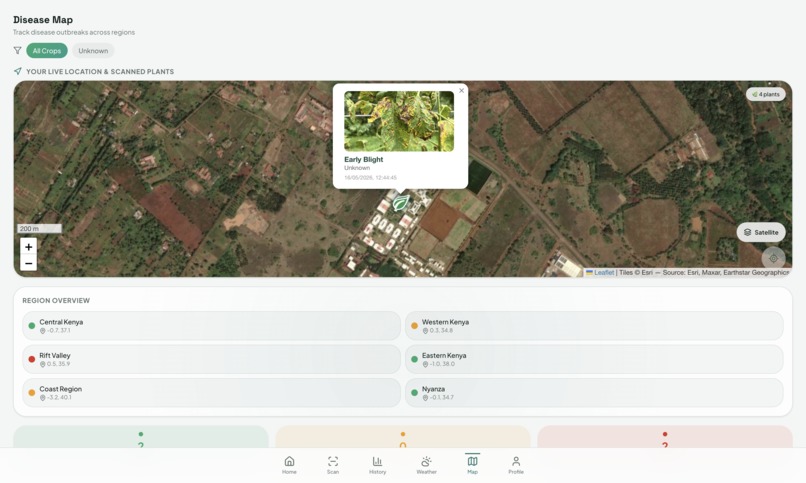
Shows the exact place the disease was detected and saves

Inspiration
Lumora was built specifically for Kenyan farmers who face major challenges in identifying crop diseases early and understanding environmental factors affecting their yields. In many rural areas, access to agricultural experts is limited, and farmers often rely on visual guesswork, leading to delayed intervention and crop loss.
We wanted to build a unified intelligent system that not only detects plant disease from images but also connects diagnosis with location-based patterns, weather conditions, and historical data, making it a more complete agricultural decision-support tool.
What it does
Lumora is a comprehensive AI-powered agricultural intelligence system designed for Kenyan farmers.
At its core, it allows users to upload images of crops, where the system analyzes visible symptoms such as spots, discoloration, and damage to identify possible diseases.
However, Lumora goes far beyond basic detection. It includes:
Authentication system (Login & history tracking): Users can log in and access their past scans and diagnosis history Scanning module: Upload crop images for disease detection and analysis Map-based disease intelligence: Displays dominant crop diseases in specific regions based on aggregated scan data Weather dashboard: Shows how weather conditions directly influence crop health and disease spread patterns Language accessibility toggle: Switch between English and Swahili depending on literacy level and preference
Together, these components form a multi-layered system that connects image intelligence, geography, weather, and user history into one platform.
How we built it
Lumora was built as a full-stack web application using a modern TypeScript-based ecosystem.
The frontend provides a clean, mobile-friendly interface with separate modules for login, scanning, history tracking, map visualization, and weather insights. The system is designed to be intuitive for farmers in real-world conditions.
The backend handles user authentication, image processing workflows, scan history storage, and aggregation of disease data for geographic visualization. Weather data integration enables environmental correlation with crop health trends.
A key part of the development process involved a hybrid approach combining human-written code with iterative refinement using Lovable AI, which helped us rapidly prototype features, debug issues, and ensure the application remained functional and stable across all modules.
We structured the system modularly so each core component — AI scanning, maps, weather intelligence, and user management — can scale independently.
Tech Stack
Lumora is built using a modern full-stack TypeScript ecosystem designed for performance, scalability, and real-world deployment.
Languages
TypeScript – Primary language powering both frontend logic and system integration JavaScript – Used in configuration and tooling files HTML – Base structure for the application
Frontend & UI
React – Core frontend framework for building the user interface Tailwind CSS – Utility-first styling for rapid, consistent UI development shadcn/ui – Modern component library used for accessible and polished UI components Framer Motion – Used for smooth animations and interactive transitions Tooling & Development Vite – Fast build tool and development server ESLint – Code quality and consistency enforcement Vitest – Testing framework for ensuring reliability Bun – High-performance runtime and package manager
Backend & Database
Supabase – Backend-as-a-Service handling authentication, database storage, and persistent user data Manages login and user sessions Stores scan history and user activity Supports secure data persistence across devices
System Overview
Lumora is a TypeScript-based full-stack AI platform built on React and Vite, with Supabase powering backend infrastructure. The crop disease detection logic is integrated into the application workflow, enabling real-time image-based analysis combined with weather and geographic intelligence.
Challenges we ran into
One of the biggest challenges was designing a system that combines multiple complex subsystems — AI image analysis, geospatial mapping, weather interpretation, and user authentication — into a single cohesive platform.
Another challenge was ensuring usability for Kenyan farmers with different literacy levels and device capabilities, which led to the development of the Swahili/English toggle system.
We also had to balance system complexity with performance, especially when handling image uploads and rendering map-based disease distributions.
Accomplishments that we're proud of
We are proud that Lumora evolved into a multi-system agricultural intelligence platform, not just a single-feature application.
Key achievements include:
AI-powered crop disease detection from images Fully functional login and scan history system Regional disease mapping system for agricultural insights Weather dashboard linked to crop health patterns Bilingual interface (English + Swahili) for accessibility in Kenya A modular, scalable full-stack architecture combining multiple intelligent systems
Most importantly, we built a system designed specifically for real-world agricultural conditions in Kenya.
What we learned
We learned how to design and integrate complex full-stack systems that go beyond single-feature applications. Building Lumora taught us how AI, data visualization, geospatial logic, and user experience design must work together to create meaningful impact.
We also learned the importance of localization, accessibility, and designing for users in low-resource environments.
What's next for Lumora
Next, we plan to:
Improve the AI model with a larger dataset of Kenyan crop diseases Enhance the map intelligence using real-time aggregated data Add predictive analytics for disease outbreak forecasting using weather trends Introduce offline-first support for low-connectivity areas Expand language and accessibility features, including potential voice-based interaction
In the long term, Lumora aims to become a nationwide agricultural intelligence system helping farmers reduce crop loss and improve food security across Kenya.
Built With
- bun
- eslint
- framermotion
- html
- javascript
- leaflet.js
- leafletmaps
- lovableai
- react
- shadcnui
- supabase
- supabaseapi
- tailwindcss
- typescript
- vercel
- vite
- vitest
- weatherapi

Log in or sign up for Devpost to join the conversation.