-
Technology
-
Workflow
-
Street Lights Waste Energy
What Inspired Us
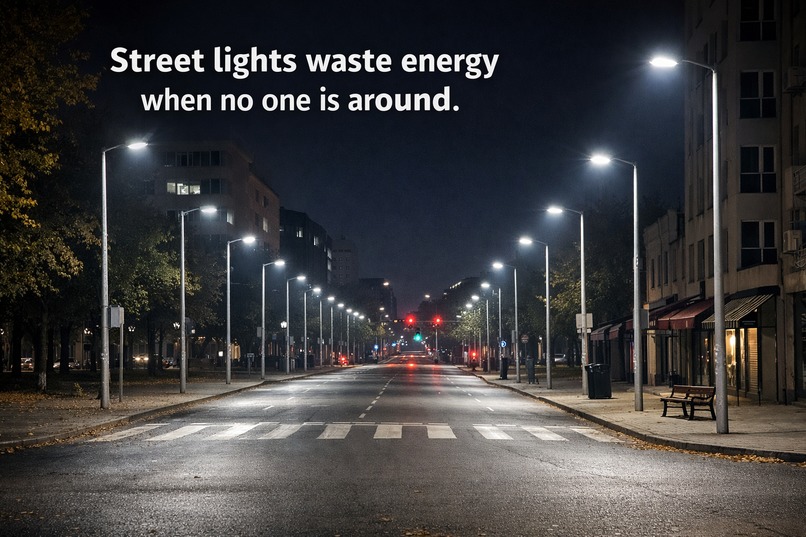
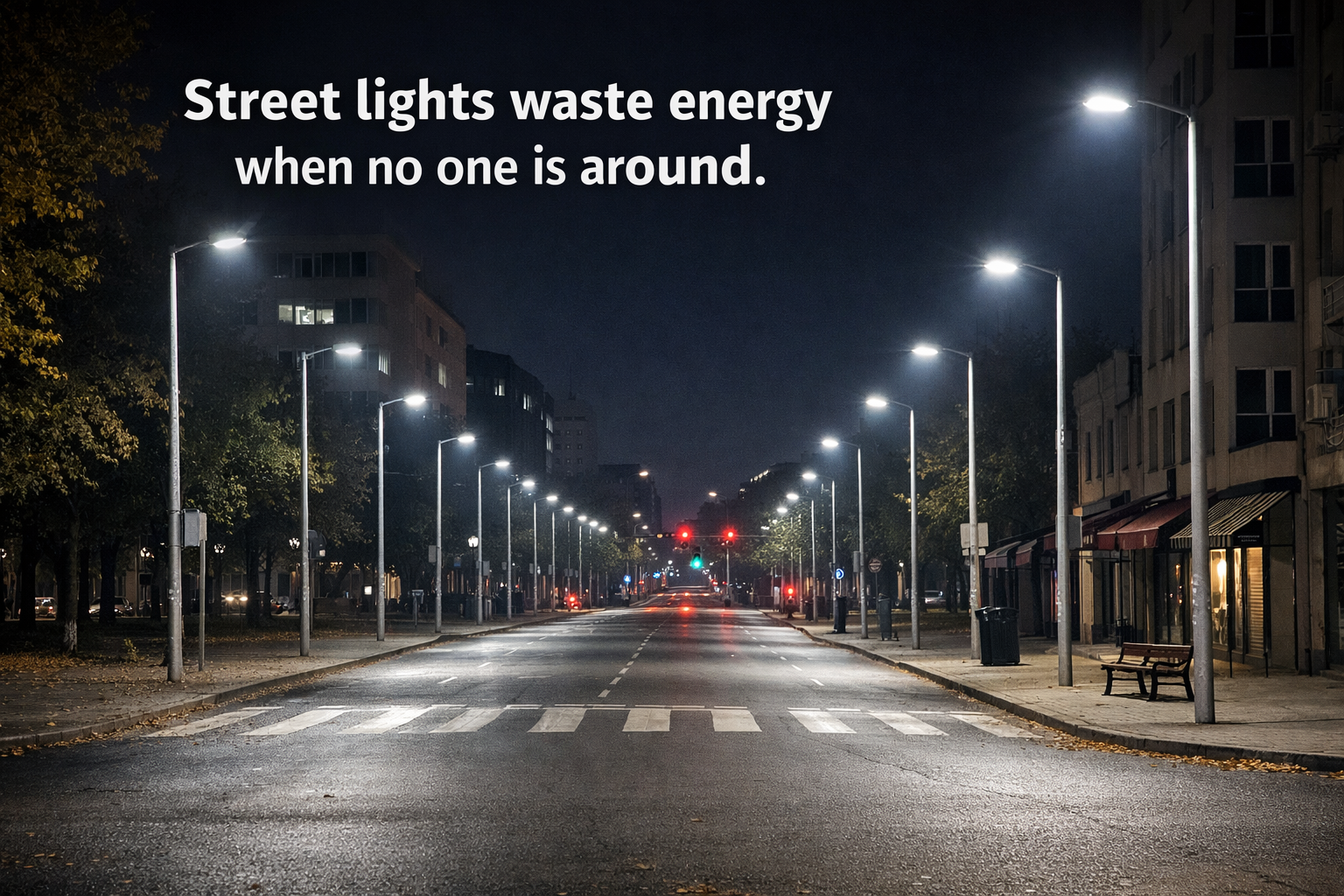
We were inspired by the clear inefficiency and environmental cost of conventional street lighting systems. According to the International Energy Agency (IEA), street lighting alone accounts for 15–40% of a city’s total electricity consumption, rising above 30% in many developing and middle-income countries due to outdated infrastructure. Despite this high energy demand, traditional systems typically operate at full brightness for 10–12 hours every night, regardless of actual pedestrian or vehicle activity, as reported by the European Commission.
This mismatch between energy use and real demand becomes more evident after midnight, when traffic volumes drop by 60–90% in residential areas, parks, and gardens, yet lighting levels remain unchanged. Beyond economic inefficiency, the environmental impact is significant: the International Dark-Sky Association estimates that public lighting contributes 1–2% of global electricity-related CO₂ emissions, amounting to tens of millions of tons annually. At the same time, municipalities worldwide spend USD 10–15 billion each year on street lighting electricity and maintenance, according to the World Bank.
These statistics highlighted a pressing opportunity to rethink how urban lighting is designed and operated. We were motivated to develop an adaptive, data-driven lighting solution that aligns illumination with real-world needs—improving safety while reducing energy waste, operational costs, and environmental impact.
What it does
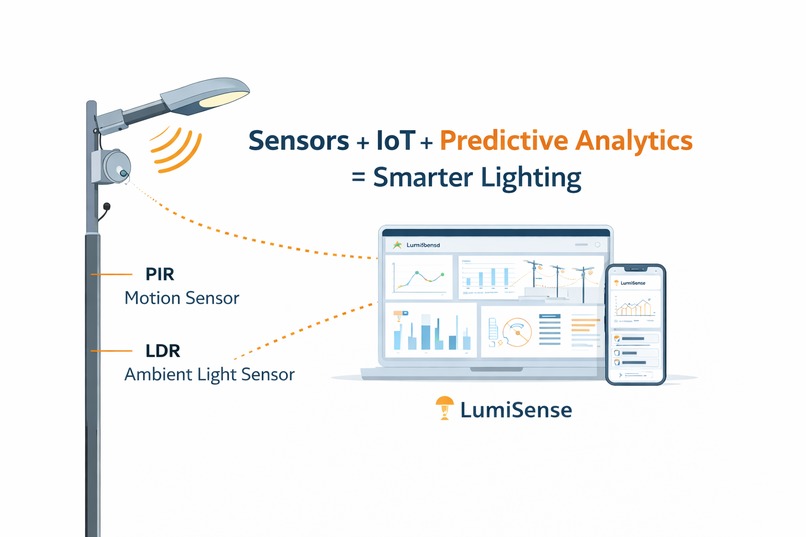
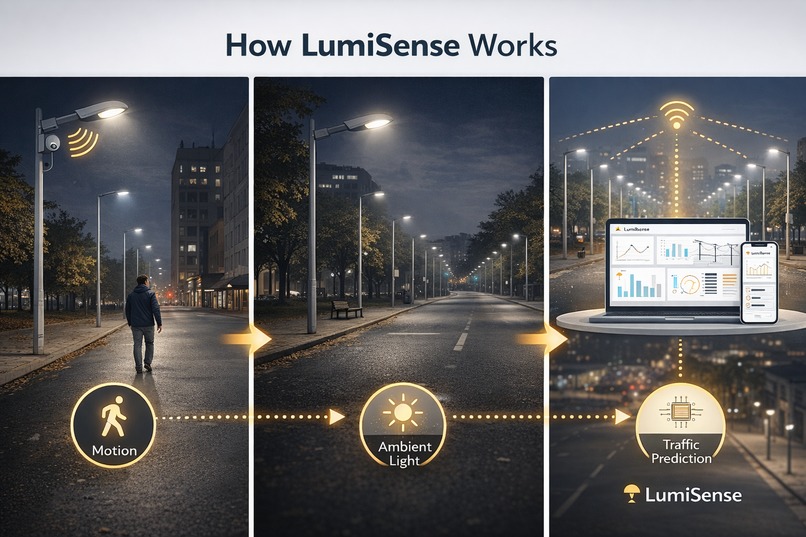
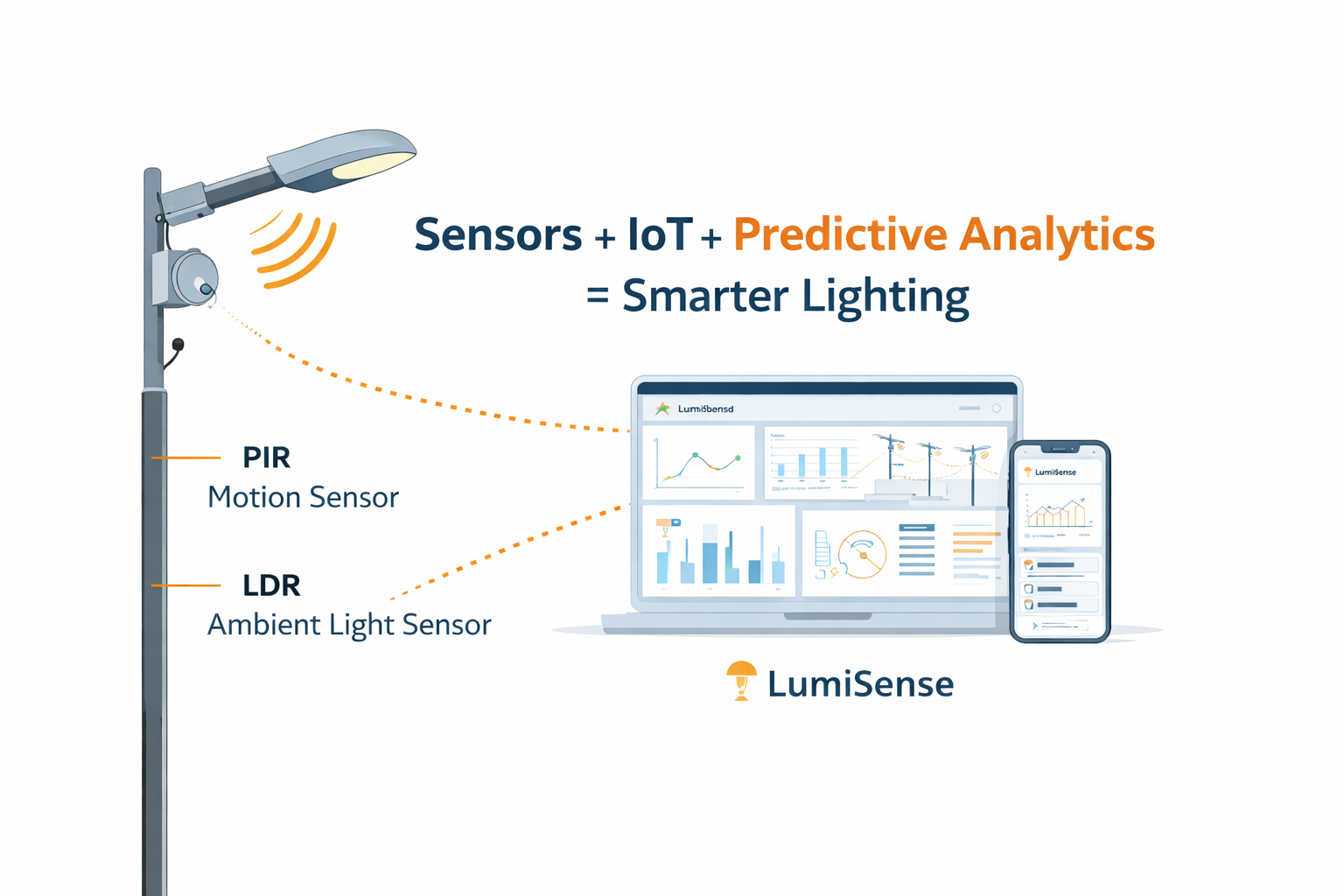
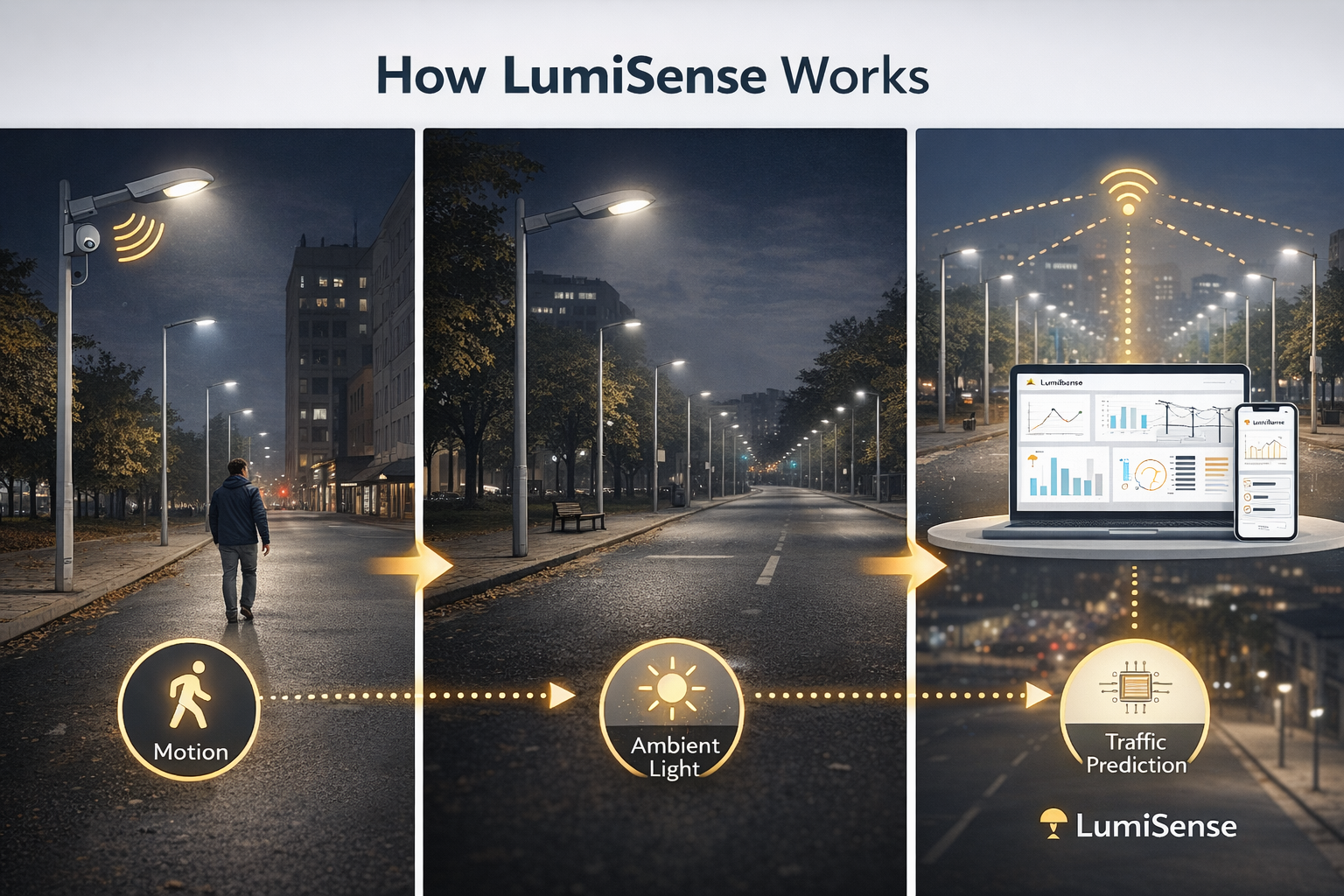
LumiSense is an adaptive IoT street lighting system. Each light is equipped with PIR motion sensors to detect movement and LDR ambient light sensors to measure surrounding light levels. Lights automatically dim or switch off when streets are empty and natural light is sufficient. A central web platform collects sensor data and uses predictive models to adjust lighting dynamically based on traffic patterns, saving energy and lowering operational costs.
How we will build it
We plan to integrate PIR and LDR sensors into street light units and connect them to a central web-based dashboard via a secure network. The dashboard will monitor activity and environmental conditions in real time. Using lightweight machine learning algorithms, the system will predict pedestrian and vehicle traffic and dynamically adjust light intensity.
Challenges we may run into
- Calibrating sensors to avoid false triggers from pets or environmental movement
- Ensuring hardware durability under weather conditions and potential tampering
- Establishing low-latency, secure communication between lights and the central platform
- Managing installation costs and integrating new devices into existing infrastructure
Accomplishments that we're proud of
- Successfully built plan for a working prototype that adjusts light intensity based on activity
- Ways to reduce simulated energy consumption significantly compared to conventional lighting
- Planning for creation of a user-friendly dashboard to monitor and control the lighting network
- Plan to develop a predictive model capable of adjusting lighting levels based on traffic patterns
What we learned
- Practical experience with IoT integration, sensor calibration, and data handling
- How predictive analytics can optimize infrastructure operations
- Importance of robust communication and system security in real-time IoT systems
- Challenges of balancing efficiency with safety in urban lighting
What's next for LumiSense
- Making a minimum viable product and deploying the system at a small-scale pilot site in a real urban environment
- Adding adaptive learning algorithms for more accurate traffic prediction
- Integrating solar power and other sustainable energy sources
- Expanding to smart city applications beyond street lighting, like parking and traffic management
Built With
- arduino
- iot
- mqtt
- postgresql
- python
- sensor


Log in or sign up for Devpost to join the conversation.