-
-
loginpage
-
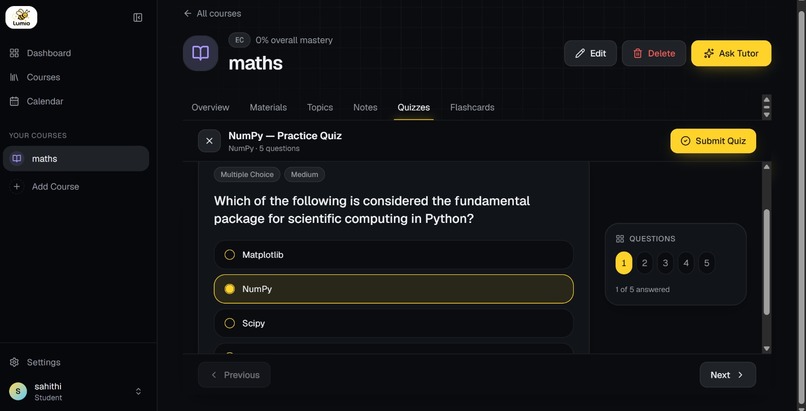
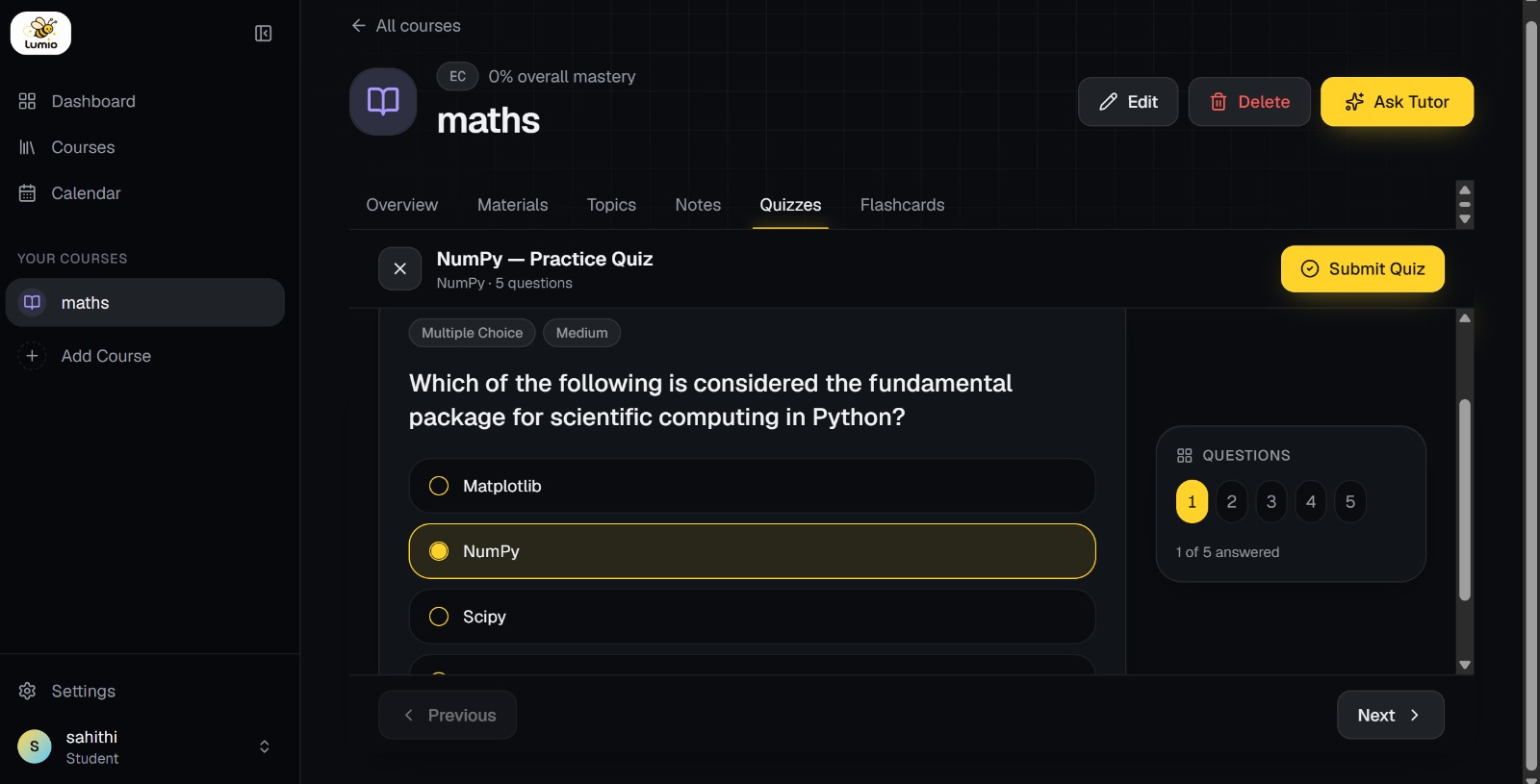
quiz
-
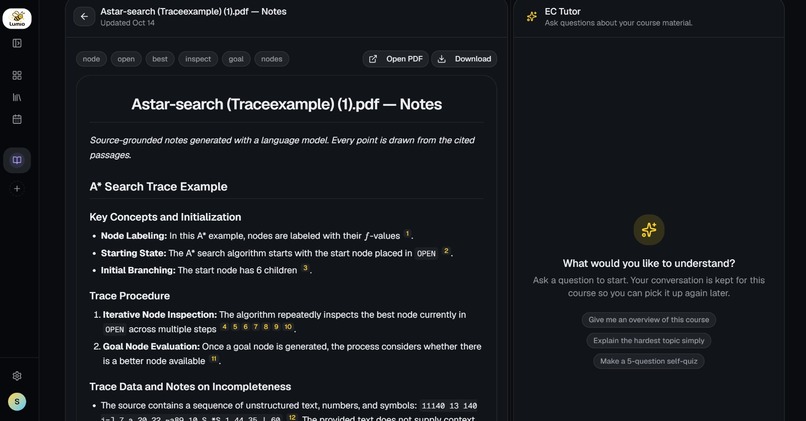
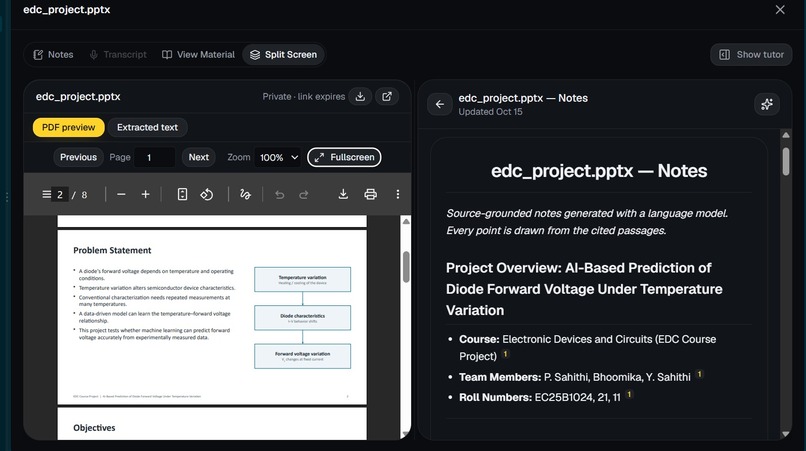
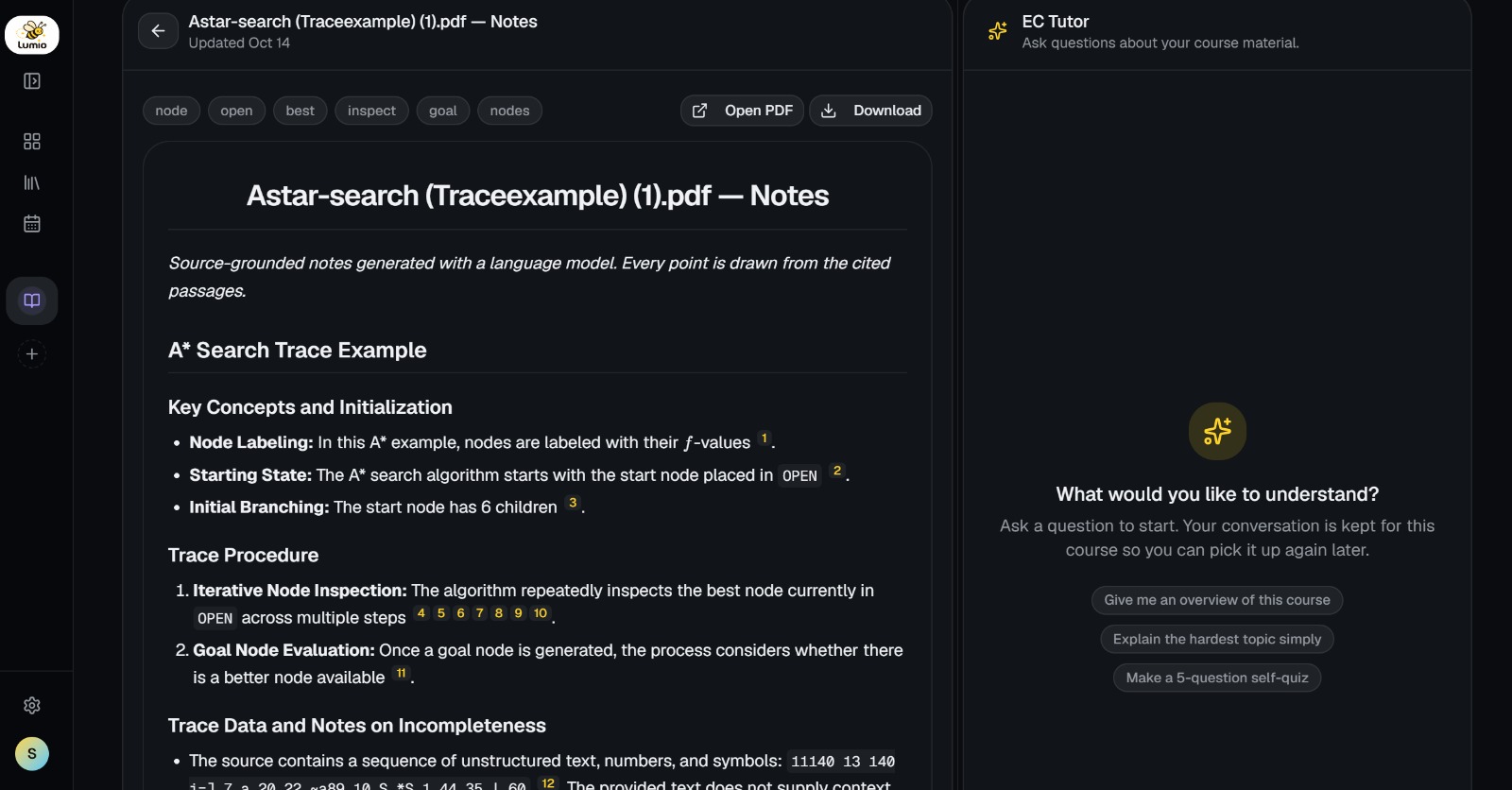
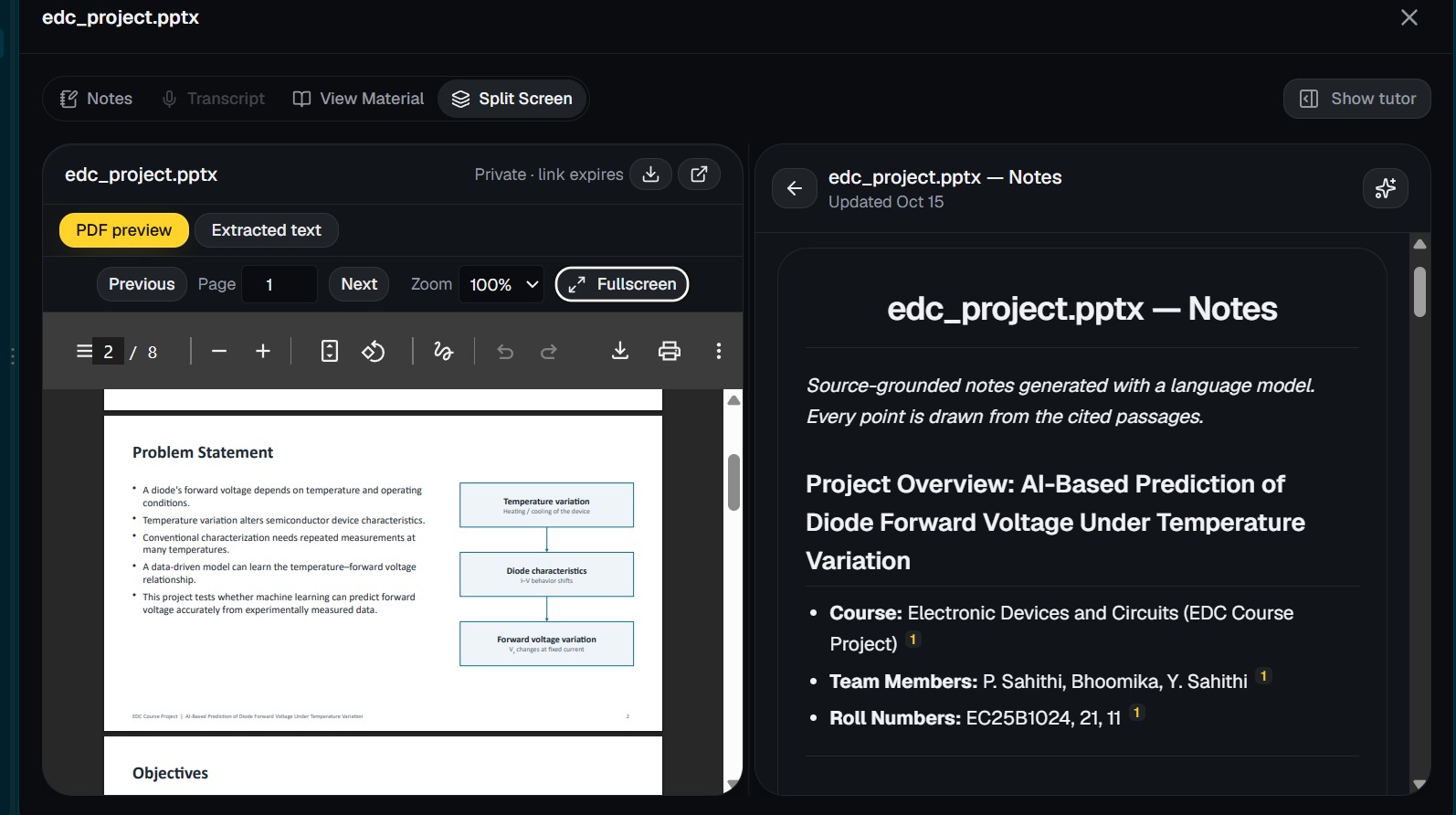
notesgenerated
-
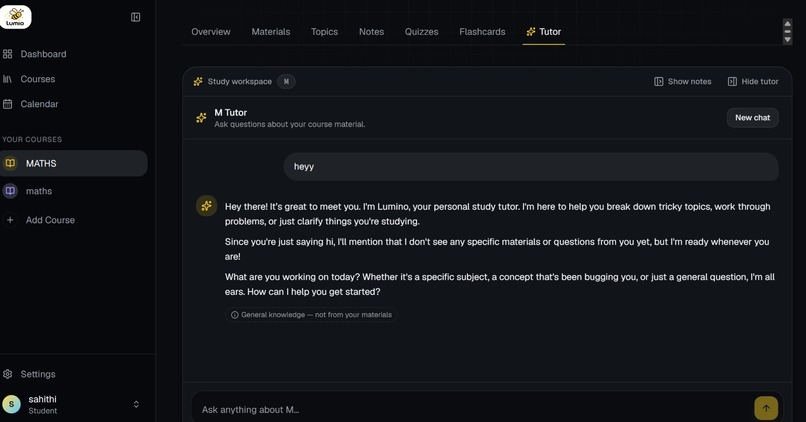
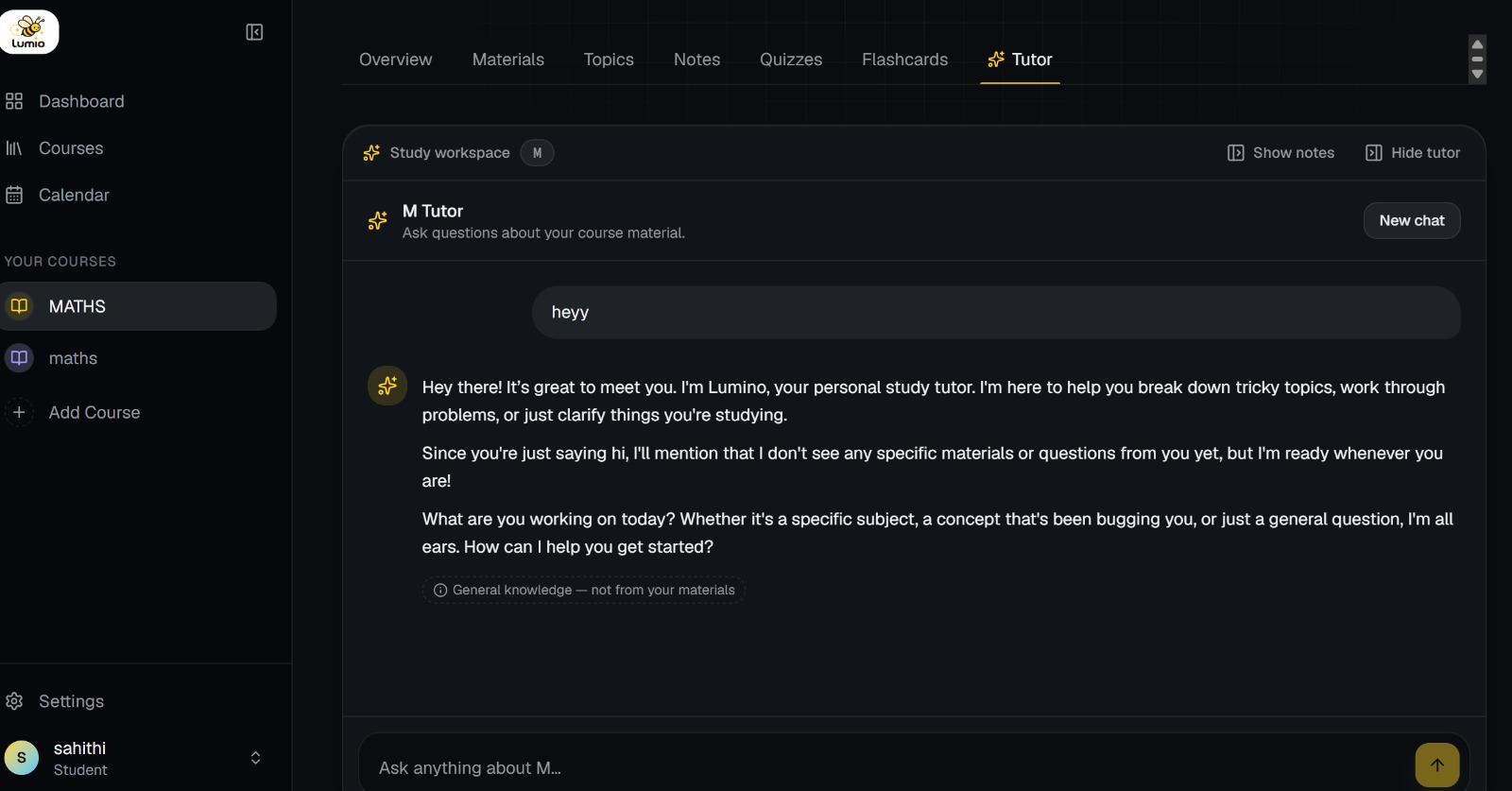
aitutor
-
-
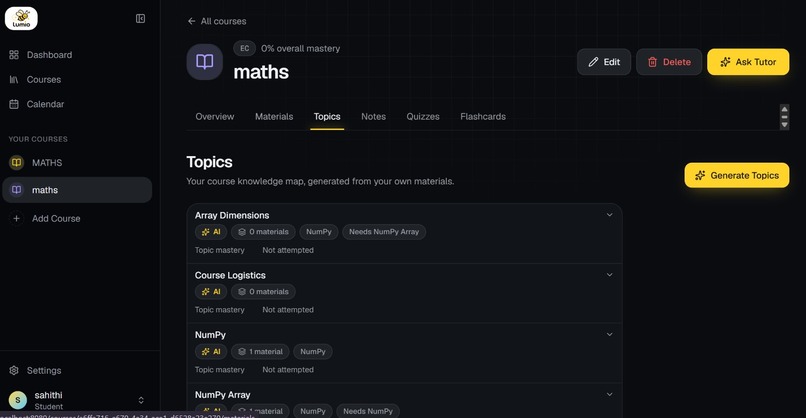
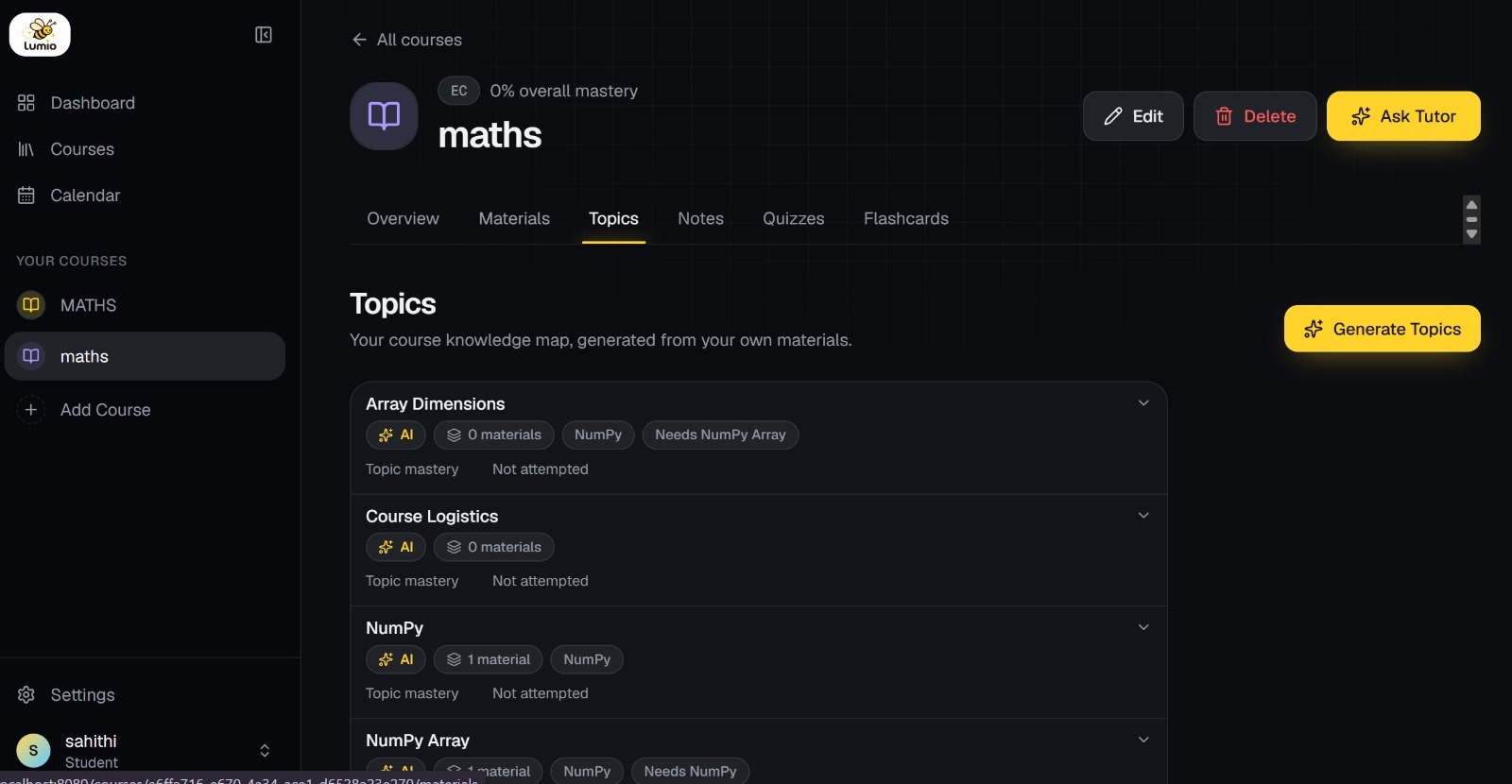
topicsgenerated
-
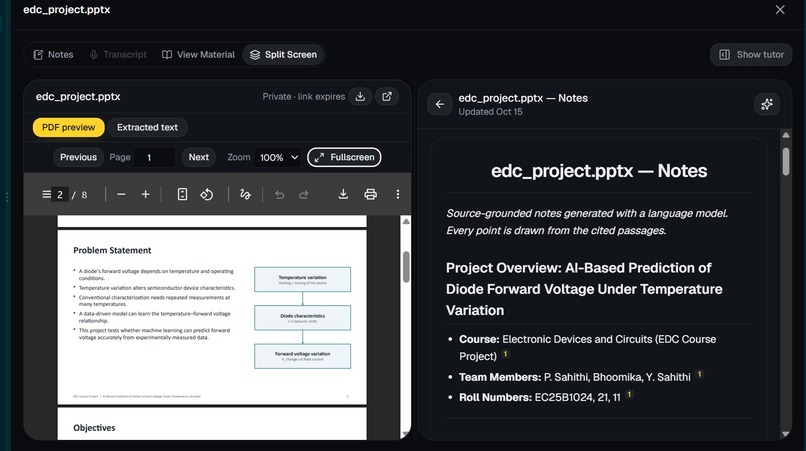
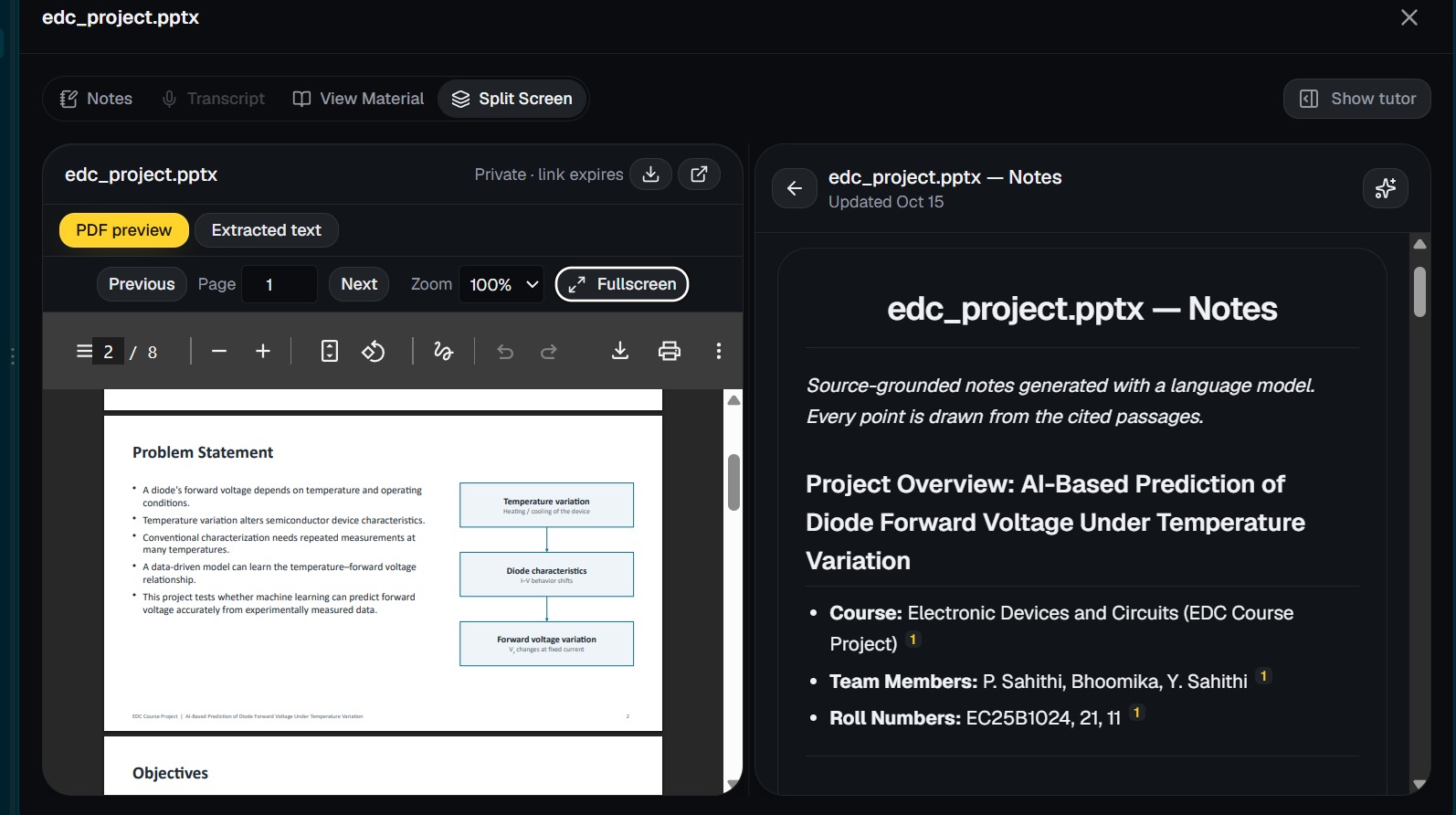
PPT and video actions are implemented;;in the video it is missing
Lumio — From Study Materials to Mastery, Powered by AI
Inspiration
Every student learns differently, yet most traditional learning methods follow the same approach for everyone. Students often spend hours going through lecture slides, textbooks, and notes, struggling to identify important concepts, understand difficult topics, and figure out what they have truly learned. Keeping track of progress across different subjects and resources can make studying even more overwhelming.
We wanted to build a platform that makes learning more personalized, organized, and effective. This inspired us to create Lumio, an AI-powered personalized learning platform that transforms existing study materials into interactive learning experiences. Our goal is to help students move beyond passive reading and develop a deeper understanding of concepts through guided learning, active recall, practice, and progress tracking.
What it does
Lumio acts as a personal AI tutor, bringing essential study tools together in one platform. Students can organize their learning by course and use their own study materials as the foundation for their learning experience.
Key features include:
- Course Management: Create and organize courses in one place, keeping learning resources and study activities structured by subject.
- Study Material Integration: Upload learning materials, such as PDFs, to build a learning experience around the content students need to study.
- AI-Generated Notes: Transform uploaded materials into structured notes that make important concepts easier to review and understand.
- Interactive Quizzes: Practice concepts through quizzes, review attempted quizzes, and evaluate performance using correct and incorrect answers.
- Flashcards: Reinforce concepts through question-and-answer flashcards designed to support active recall and revision.
- AI-Powered Tutoring: Get assistance understanding concepts and resolving doubts through an AI tutor.
- Topic-Wise Mastery Tracking: Monitor understanding at the topic level using performance across attempted quizzes, helping students identify areas that need more practice.
- Course Progress Overview: View an overall picture of learning progress for each course through a centralized dashboard.
By connecting study materials, practice, tutoring, and performance insights, Lumio aims to make learning a continuous cycle of understanding, testing, revising, and improving.
How we built it
We built Lumio as a full-stack web application, combining a modern frontend with a Python backend and a managed database and authentication service.
- Frontend: React, TypeScript, Vite, TanStack Start/Router, Tailwind CSS, and reusable UI components provide the interface for course management, study resources, quizzes, flashcards, and the dashboard.
- Backend: Python and FastAPI handle application APIs, authentication-related workflows, course operations, and learning-related functionality.
- Database and Authentication: Supabase provides database storage and authentication infrastructure, with access controls used to protect user-specific data.
- AI Integration: Google's Gemini models power AI-assisted learning workflows, such as generating learning content from study materials and helping students understand concepts.
- Document Processing: PDF-processing tools extract text from uploaded documents so it can be used in learning workflows.
- Learning Analytics: Quiz attempt and answer data provide the foundation for calculating performance and topic-wise mastery.
We focused on integrating these components into a unified experience rather than building isolated study tools. The application is designed to connect a student's materials with their learning activities and progress.
Challenges we ran into
Building Lumio involved challenges across frontend development, backend integration, AI services, and data management.
- Connecting the frontend and backend: Making sure UI components communicated correctly with FastAPI endpoints required careful API integration, error handling, and debugging.
- Authentication and authorization: Implementing reliable sign-up, login, session handling, and protected access to user-specific resources required attention to authentication flows and database access policies.
- Processing uploaded documents: Extracting usable text from PDFs and ensuring that document-processing dependencies were available in both local development and the deployed environment took additional debugging.
- AI API limitations: Integrating Gemini introduced challenges involving API configuration, usage quotas, rate limits, and temporary service availability. We had to distinguish issues in our implementation from errors originating from the AI provider.
- Reliable learning data: Connecting courses, topics, quiz questions, and individual answer records requires consistent relationships so that scores and mastery indicators accurately reflect student performance.
- Deployment and environment configuration: Managing environment variables, dependencies, and differences between local and hosted environments required careful testing.
These challenges taught us that building a useful AI application involves much more than connecting a model to a user interface. Reliability, data integrity, error handling, and deployment are equally important.
Accomplishments that we're proud of
We are proud of bringing multiple stages of the learning process into a single platform. Instead of requiring students to switch between separate applications for notes, practice questions, revision, and progress tracking, Lumio aims to connect these activities within a course-centered workflow.
Our key accomplishments include:
- Building a full-stack application with a dedicated frontend and backend.
- Integrating authentication and database infrastructure for user-specific learning experiences.
- Developing a workflow for processing uploaded study materials and using their content in AI-assisted learning features.
- Bringing notes, quizzes, flashcards, and tutoring together in one learning environment.
- Designing quiz performance as a useful source of feedback rather than just a final score.
- Developing the foundation for topic-wise mastery and course-level progress tracking.
- Deploying the application and working through real-world integration and infrastructure issues.
Most importantly, we are proud of the idea behind Lumio: making AI useful throughout the learning journey, from the first time a student encounters a concept to the moment they can confidently apply it.
What we learned
Building Lumio helped us understand how AI, software engineering, and learning design come together in a practical application.
We learned that AI-generated content is only useful when it is relevant to the student's actual learning material. Document processing, context selection, and output validation are important for making AI-assisted learning dependable.
We also learned the importance of designing a clear full-stack architecture. Frontend components, backend APIs, database relationships, authentication, and deployment configuration must work together consistently for a feature to function end to end.
Another important lesson was that assessment data can support more meaningful feedback than a single quiz score. By considering correct and incorrect answers across attempts, a learning platform can help students identify topics that need additional attention.
Finally, we learned to debug systematically, manage environment variables carefully, handle external API failures, and test features in both local and deployed environments. These experiences strengthened our understanding of building and maintaining real-world AI-powered applications.
What's next for Lumio
We envision Lumio evolving into a more adaptive learning companion that understands not only what students are studying, but also where they struggle and what they should practice next.
Our next steps include:
- More Adaptive Learning: Recommend what to study next based on quiz performance and topic-wise mastery.
- Source-Grounded Tutoring: Provide explanations linked to the relevant pages, slides, or sections of uploaded learning materials.
- Improved Mastery Estimation: Refine mastery tracking as students attempt more questions, revisit topics, and demonstrate improvement over time.
- Personalized Quiz Generation: Generate practice questions tailored to individual topics and areas of difficulty.
- Smarter Revision: Recommend flashcards and revision sessions based on previous performance and concepts that need reinforcement.
- Multimodal Learning: Explore processing lecture videos, presentation slides, diagrams, and other learning resources alongside PDFs.
- Learning Analytics: Provide clearer insights into progress, strengths, recurring mistakes, and concepts that need more attention.
- Expanded Accessibility: Explore multilingual explanations and different ways of presenting concepts to support a wider range of learners.
Our long-term vision is for Lumio to become more than a collection of AI study tools: a personalized learning companion that helps every student learn with clarity, practice with purpose, and build lasting mastery.
Built With
- ai
- ai-tutoring
- automated-note-generation
- embeddings
- fastapi
- generative-ai
- git
- large-language-models-(llms)
- personalized-learning
- postgresql
- python
- quiz-generation
- react
- rest-api
- retrieval-augmented-generation-(rag)
- semantic-search
- supabase
- tailwind-css
- typescript
- vector-search
- vite

Log in or sign up for Devpost to join the conversation.