-
-
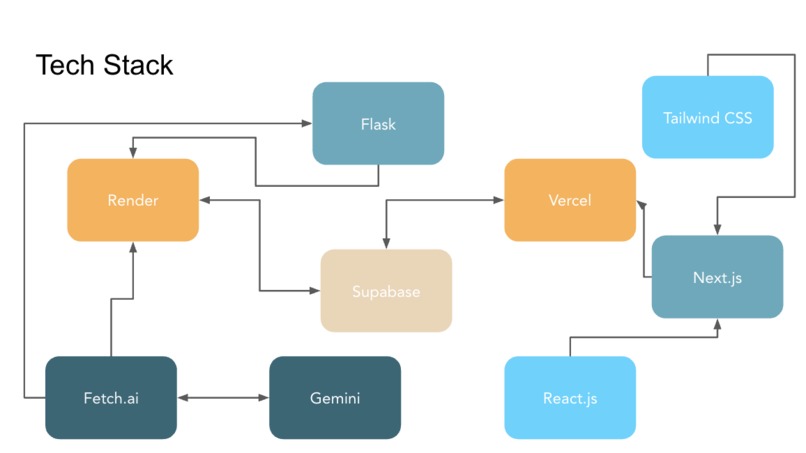
Tech Stack
-
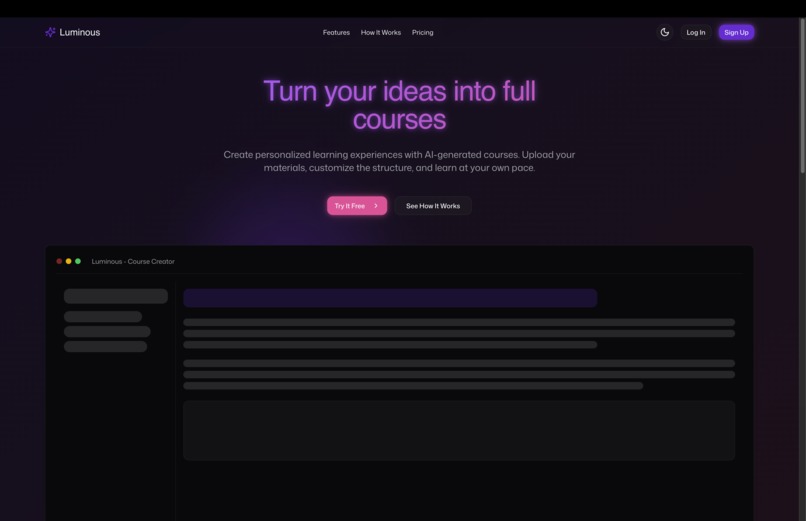
Landing Page
-
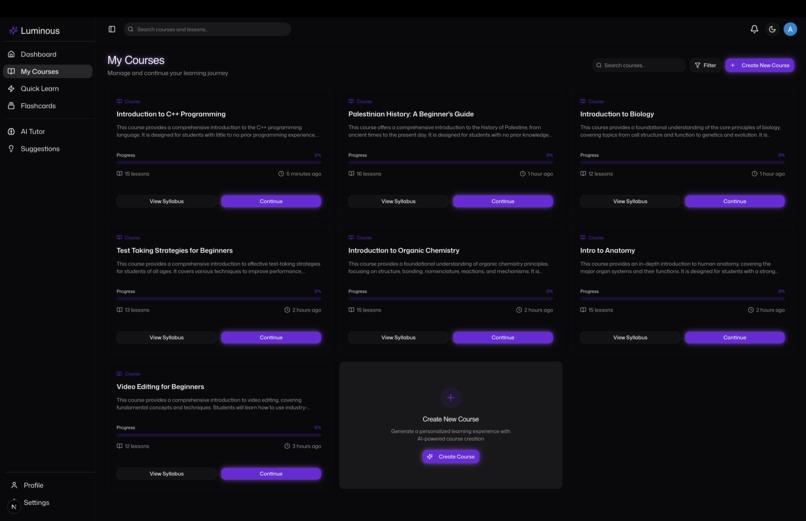
Course Dashboard Page
-
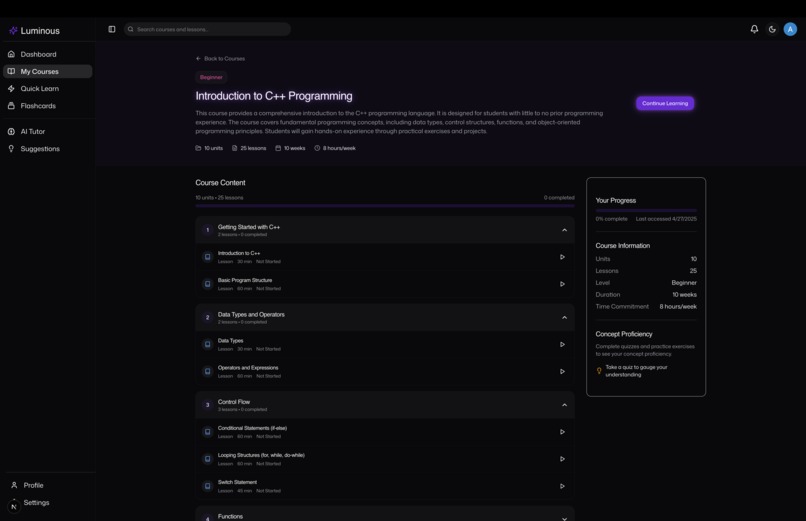
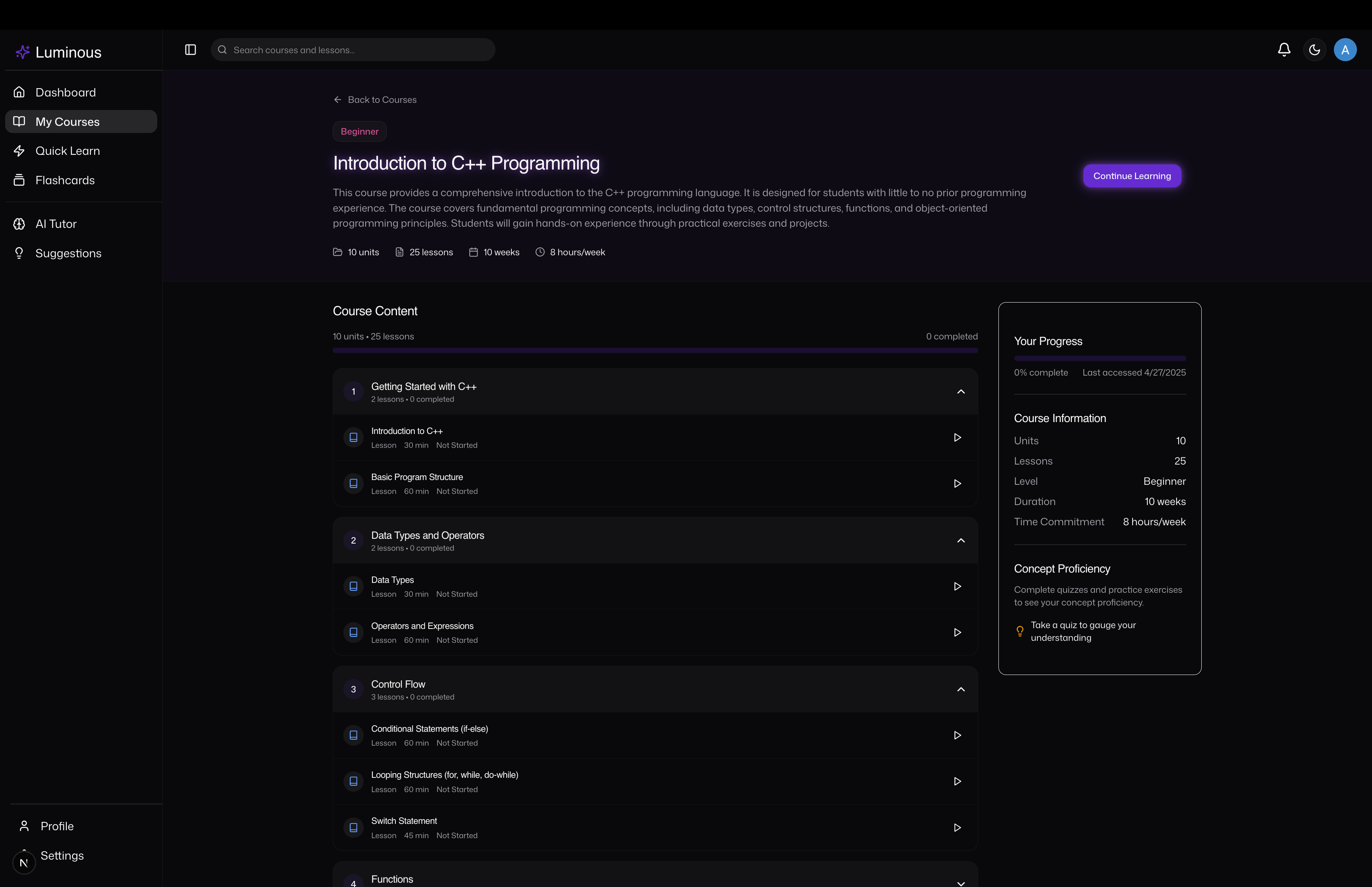
Course Syllabus Page
-
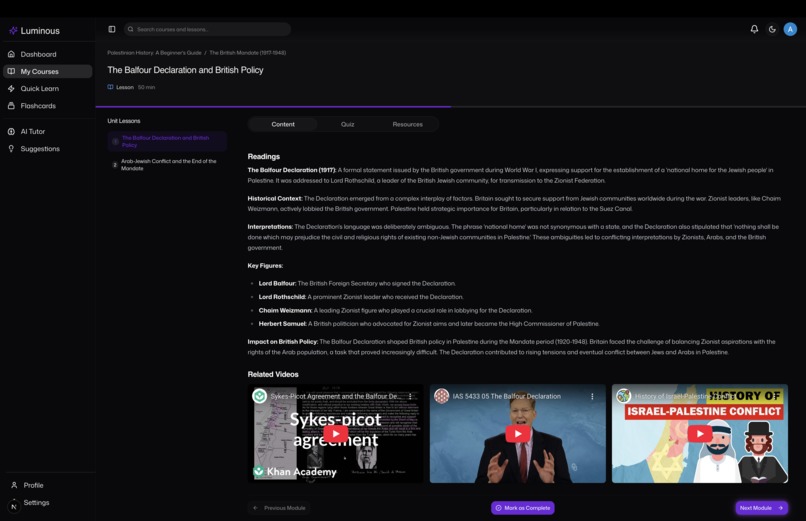
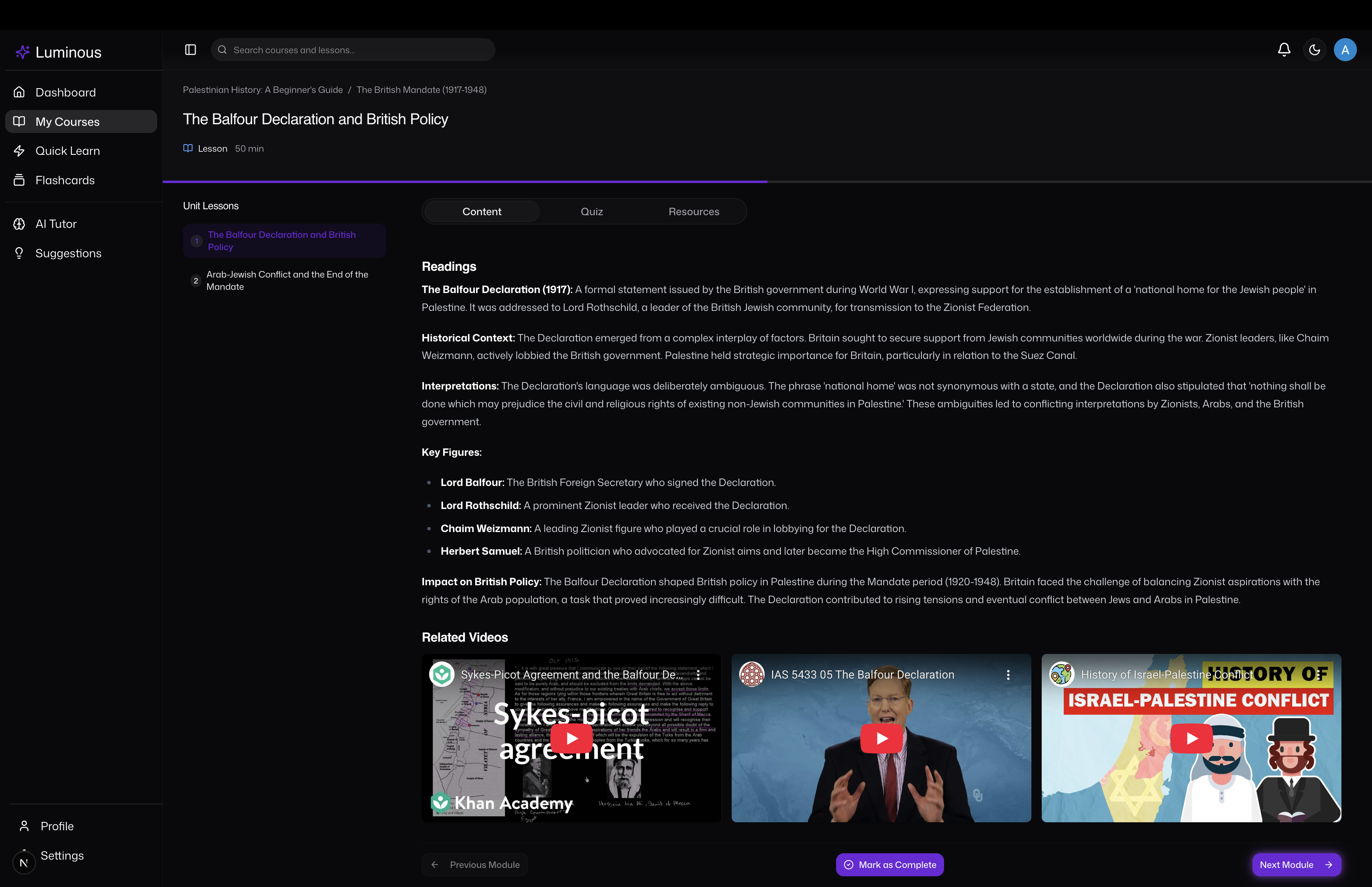
Course Lesson Page
-
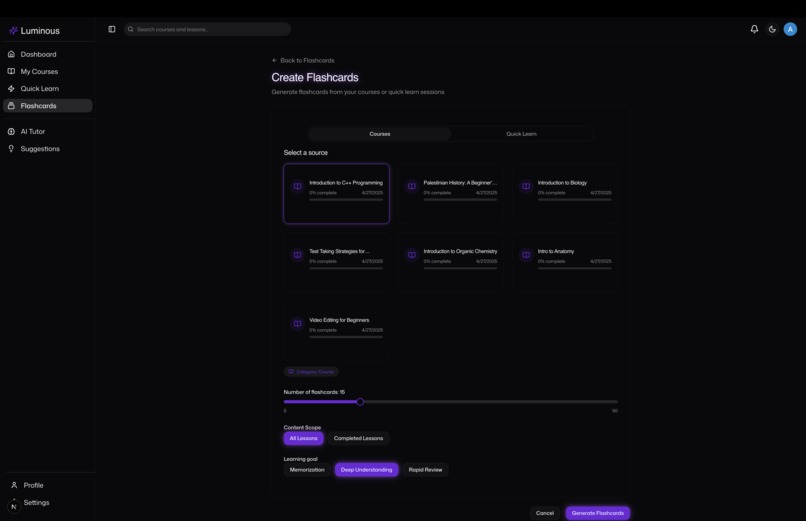
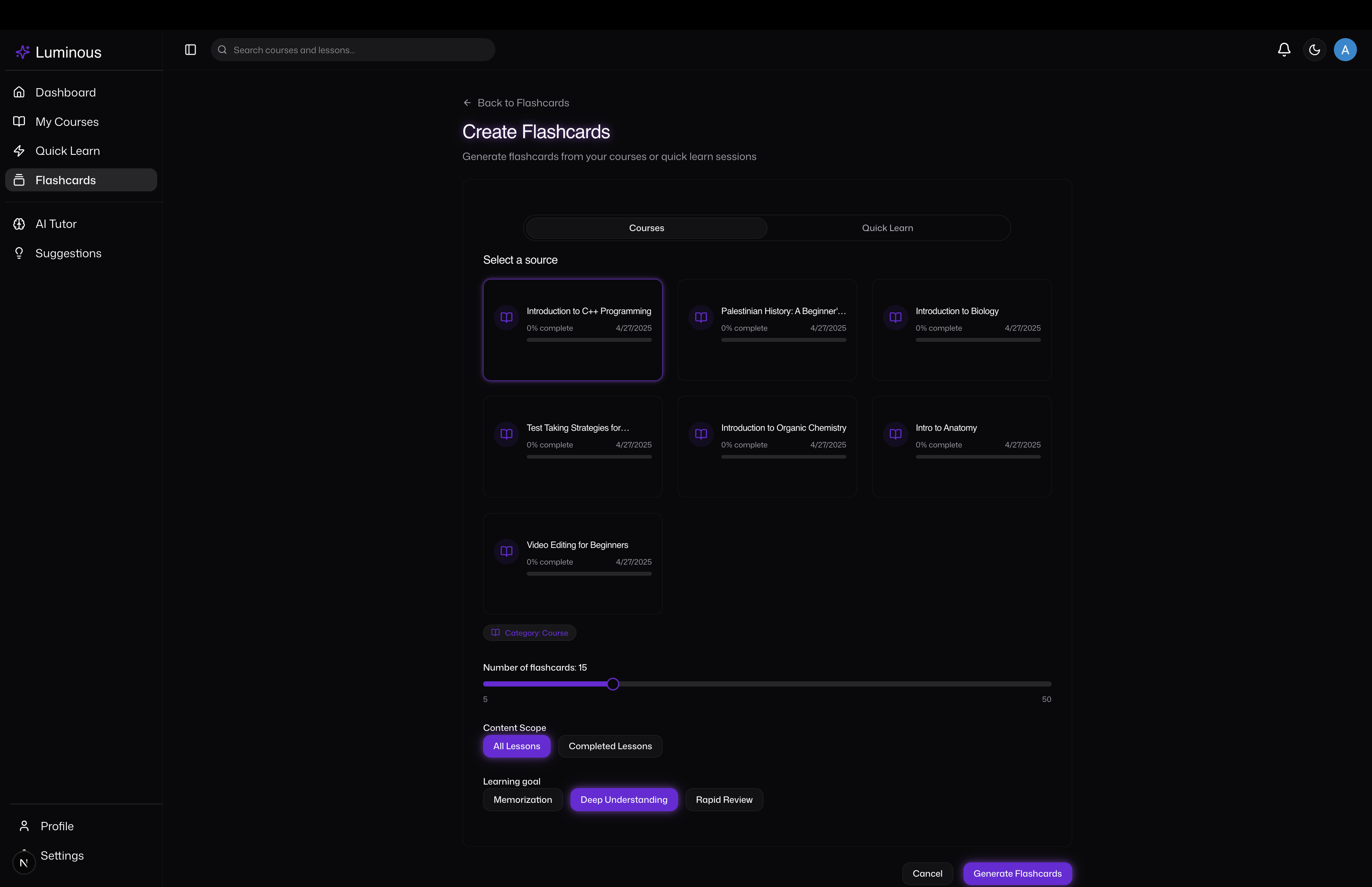
Create Flashcard Set Based on Course Page
-
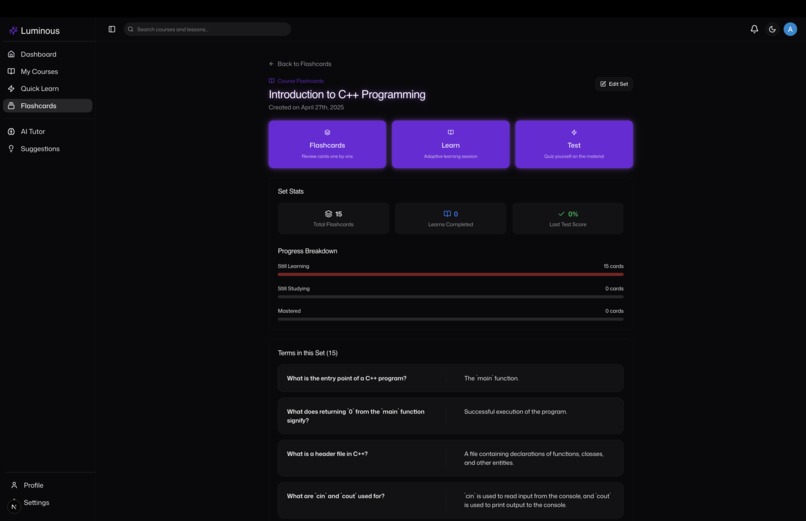
Flashcard Set Page
-
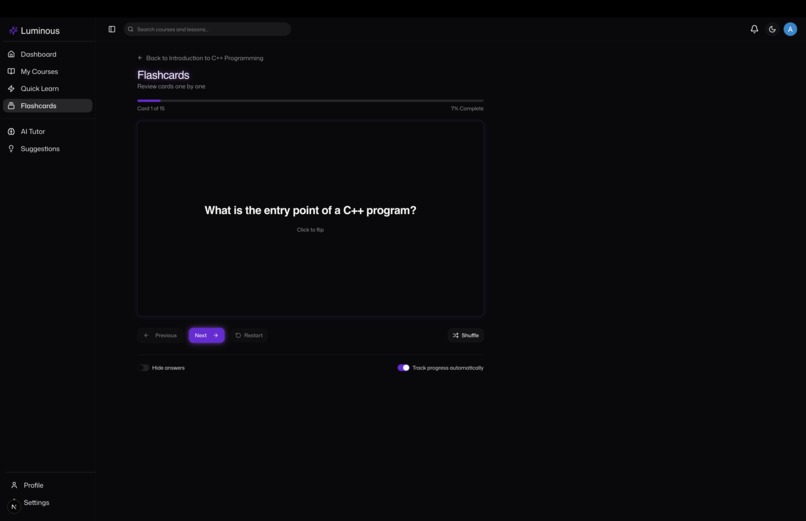
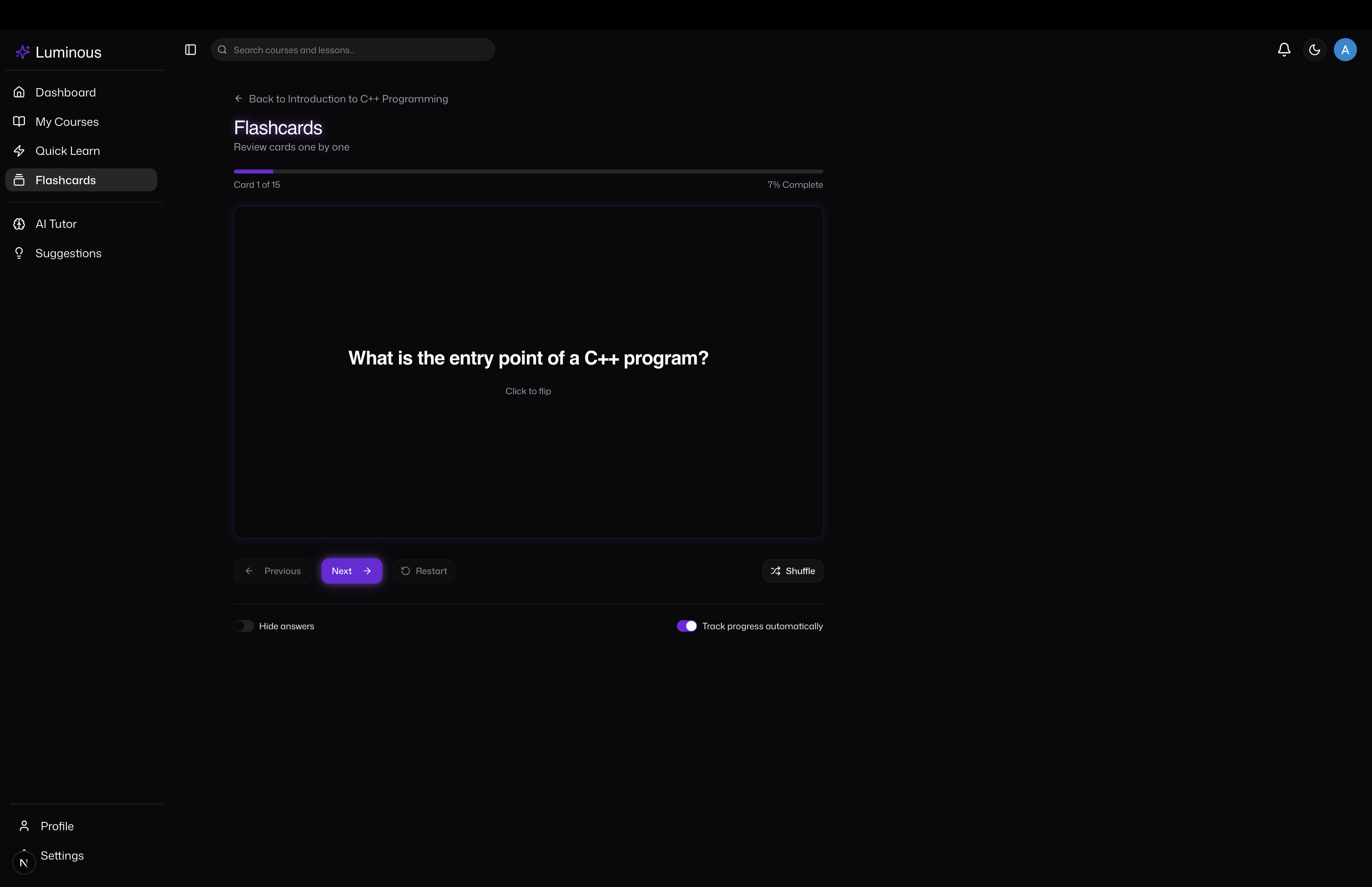
Flashcard Page
-
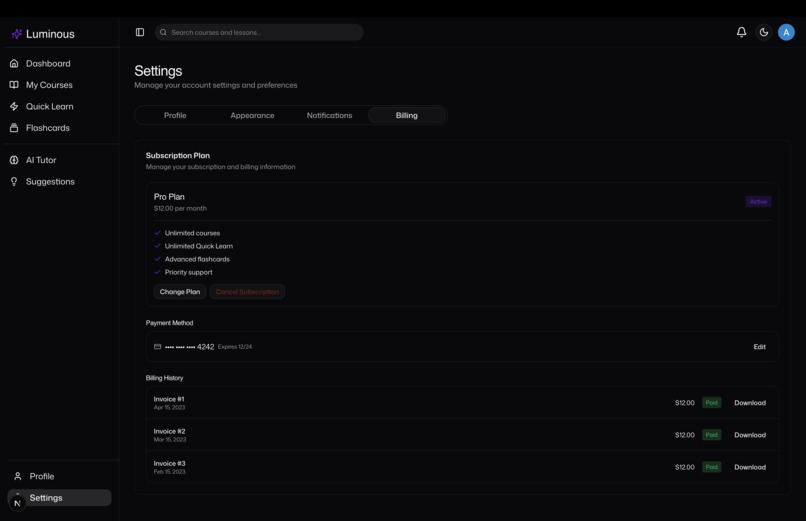
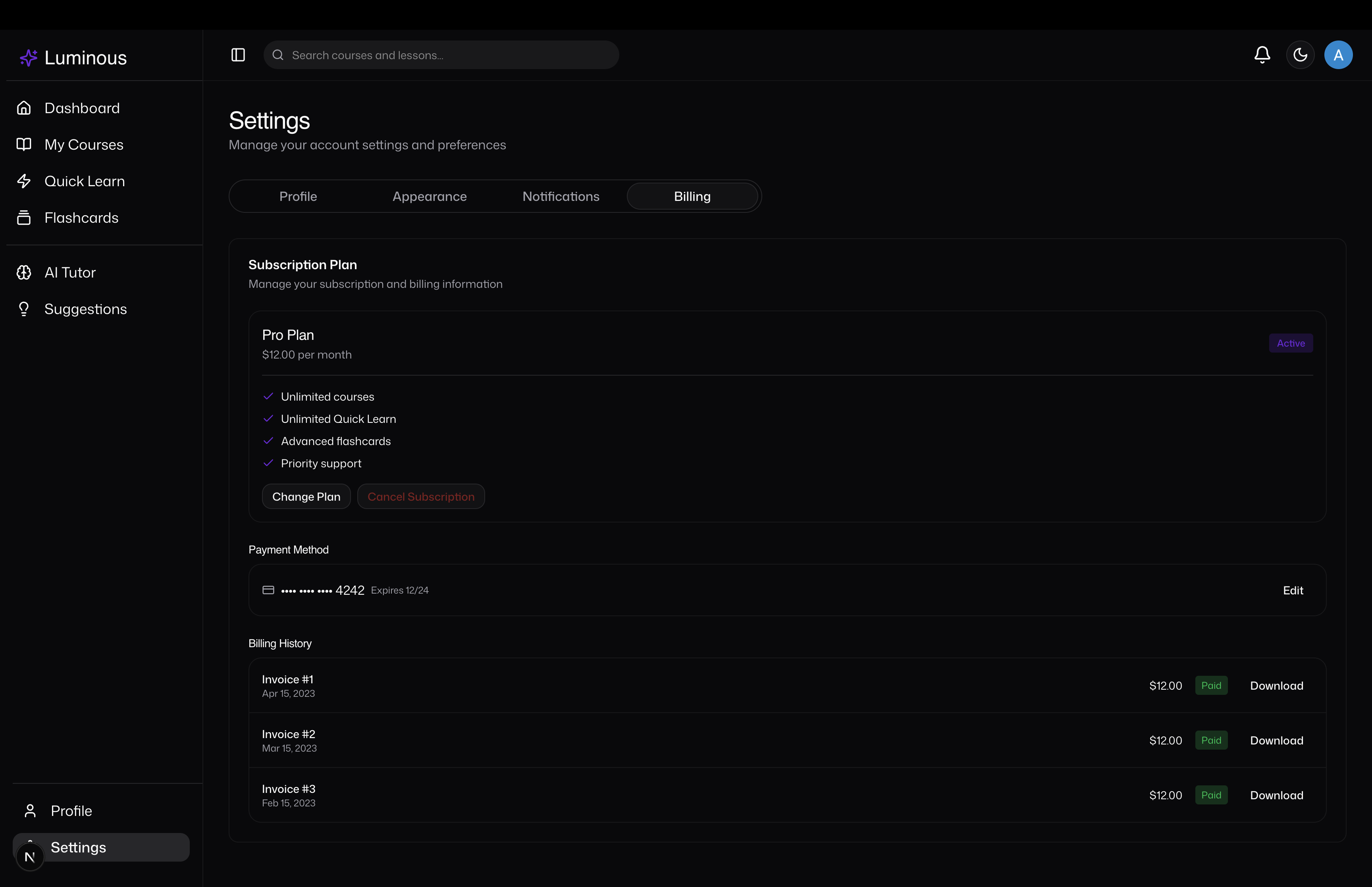
Static Payment Page (WIP)
-
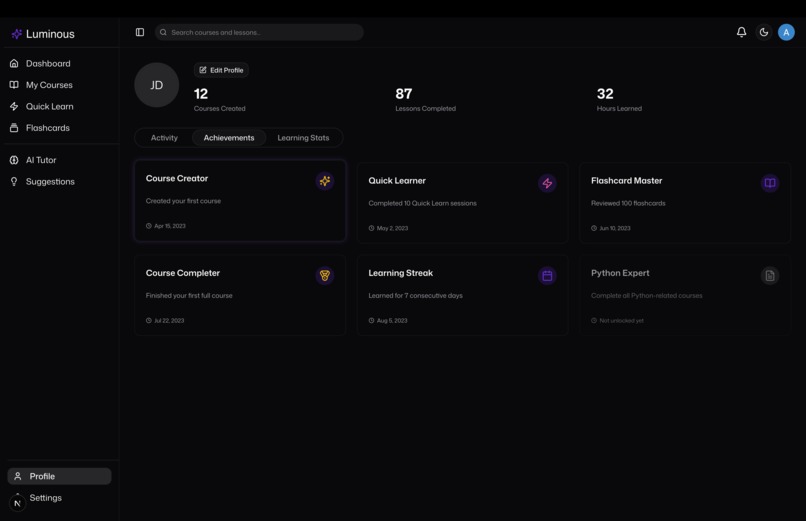
Static Achievements Page (WIP)
-
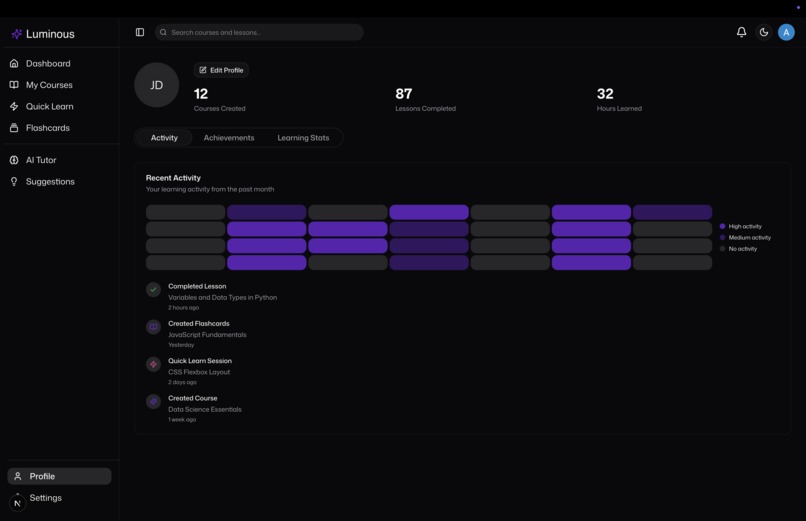
Static Profile Page (WIP)
-
Informal Logo :)





Inspiration
When curiosity strikes, students are greeted by an ocean of links, PDFs, and half-finished playlists, without a map. Luminous was born to turn that chaos into clarity. We imagined a tool that hands learners the steering wheel, lights up a direct path through any subject, and makes exploration feel effortless instead of intimidating. Built by students for students, Luminous is the flashlight that carves a personal trail through the information jungle, one luminous step at a time.
We envisioned a platform that puts students in control of their learning, empowering them to delve into their niche interests in ways traditional education often overlooks. Luminous is designed to be the guiding light that cuts through the noise, offering a clear and personalized pathway to understanding. It's built by students, for students, with the goal of making exploration and mastery accessible and less overwhelming, one luminous step at a time
What Luminous Does
- Generate a course on anything, instantly. Type “Rust for embedded devices” or “History of Afrofuturism” and receive a full syllabus, readings, examples, projects, and assessments.
- Quick Learn. Need the elevator-pitch version? One click creates a bite-size lesson that covers the essentials in minutes.
- Full editing control. Add, remove, or reorder lessons, resources, and assessments—your course, your rules.
- AI flashcards & adaptive quizzes. A built-in generator turns any lesson into Quizlet-style practice that adapts to your weak spots.
- 24/7 AI tutor. Stuck? Ask follow-up questions and get tailored explanations on demand.
Technology & Architecture
| Layer | Stack | Role |
|---|---|---|
| Frontend | Next.js + React (deployed on Vercel) | Responsive UI, live editing, flashcard player |
| Backend gateway | Flask on Render | Auth, rate-limiting, metering |
| Agent layer | Fetch.ai uAgents | Modular micro-agents for syllabus, quick-learn, and full-course generation |
| LLM engine | Google Gemini 2.0-Flash | High-speed, cost-efficient content generation |
| Database | Supabase | User profiles, saved courses, progress tracking |
Fetch.ai: Our Agentic Backbone
We built three independent uAgents: syllabus_agent, quick_learn_agent, and course_content_agent, that talk to one another over Fetch.ai’s lightweight messaging layer. Each agent:
- Listens for structured Pydantic messages (
GenerateSyllabus,GenerateQuickLearn, etc.). - Delegates heavy LLM calls to Gemini.
- Returns clean, validate-once-use-everywhere JSON back to Flask.
The agent framework keeps our codebase functionally decoupled: swapping models, rate-limiting, or scaling to thousands of parallel course builds is as easy as spinning up more uAgent replicas.
Google Gemini: The Content Engine
Gemini 2.0-Flash powers every learning artifact:
- Syllabus drafts (10-15 units with summaries and learning objectives) via
syllabus_agent - Quick Learn digests with JSON-validated lessons, examples, and graded quizzes in <60 s.
- Deep-dive lessons: parallel Gemini calls populate readings, code, exercises, LaTeX math, and resource links for each lesson thread.
Its structured-output mode ensures we never parse brittle raw text; we request JSON and feed it straight into React.
Pricing
| Plan | What you get | Cost |
|---|---|---|
| Starter | Up to 3 full courses + 12 Quick Learns / month | Free |
| Pro | Unlimited courses, unlimited Quick Learns, advanced analytics | $12/mo |
Our mission is access first—students can accomplish a full semester’s worth of curiosity before they ever pay a dime.
Wins We’re Proud Of
- Delivered an end-to-end product, from idea to live demo, in one weekend.
- Orchestrated three autonomous agents, dozens of parallel Gemini calls, and a real-time React UI without a single blocking request.
- Achieved sub-60-second generation times for a 10-unit course, light-years faster than manually curating resources.
Challenges we ran into
- Rendering markdown and LaTeX was challenging, as the React library lacked robust support.
- Getting video aggregation to work: the agent wasn’t sending information properly to the frontend due to multithreading issues.
- Organizing the copious amount of data, with numerous schemas, to reliably generate and store courses.
- Designing general UI/UX workflows that are truly user-friendly.
What’s next for Luminous
- Finalize and polish remaining features and components.
- Improve loading states and responsiveness across all pages.
- Revise and enhance the pricing and settings pages.
- With the MVP mostly complete, shift focus to marketing efforts and public launch.


Log in or sign up for Devpost to join the conversation.