-
-
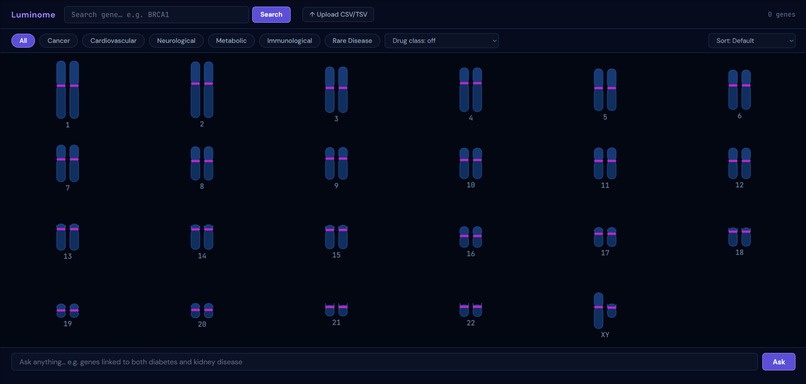
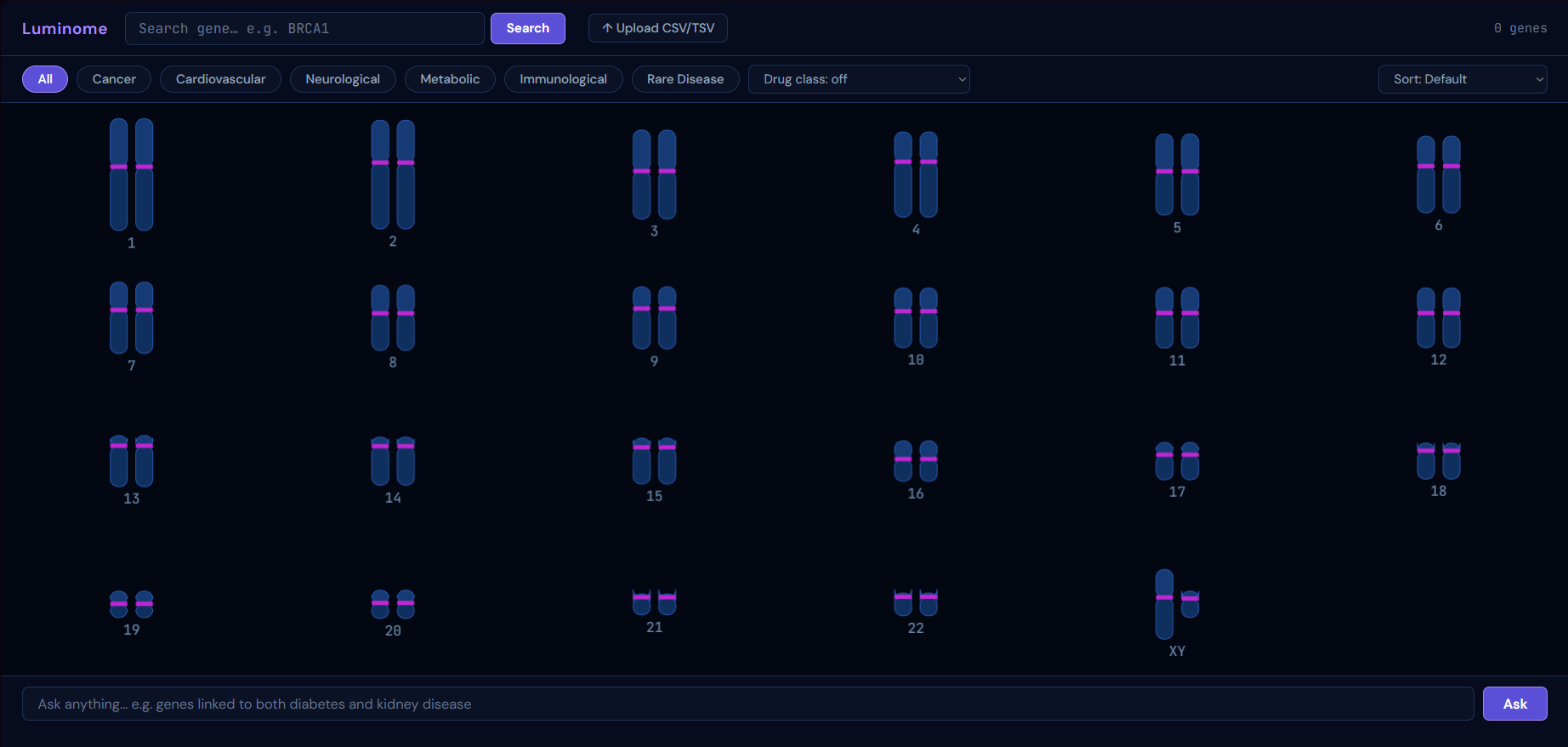
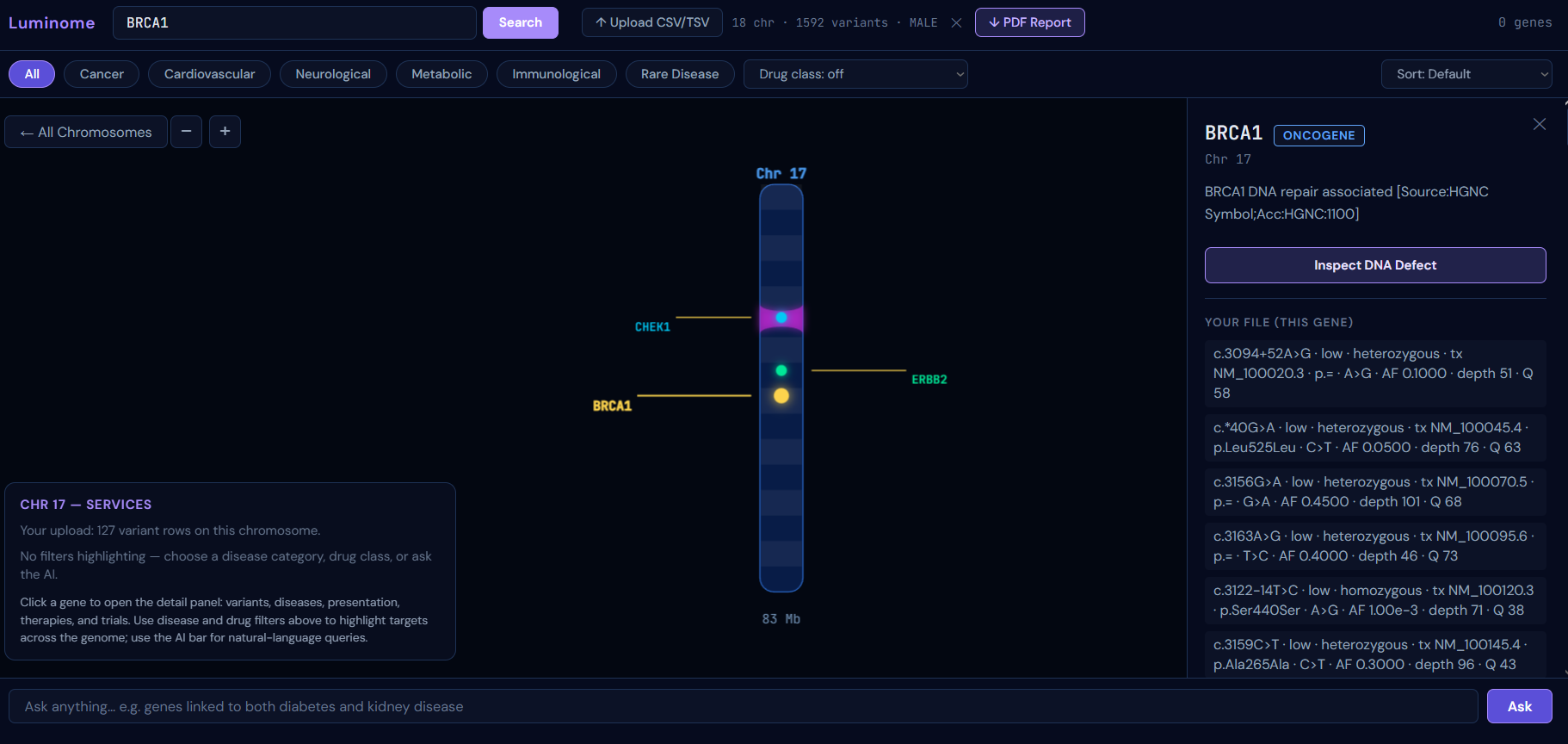
Home page for Luminome
-
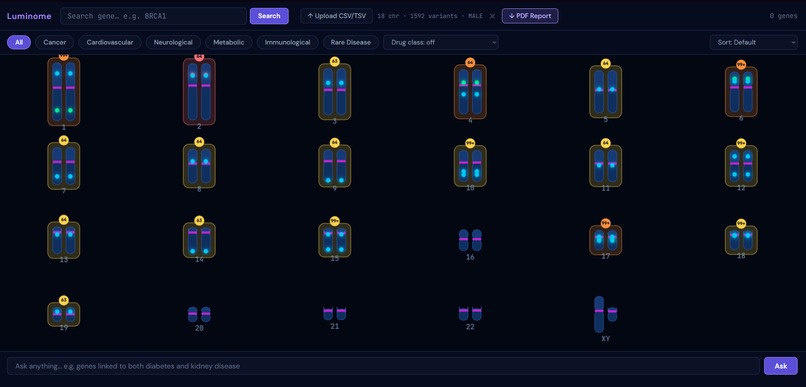
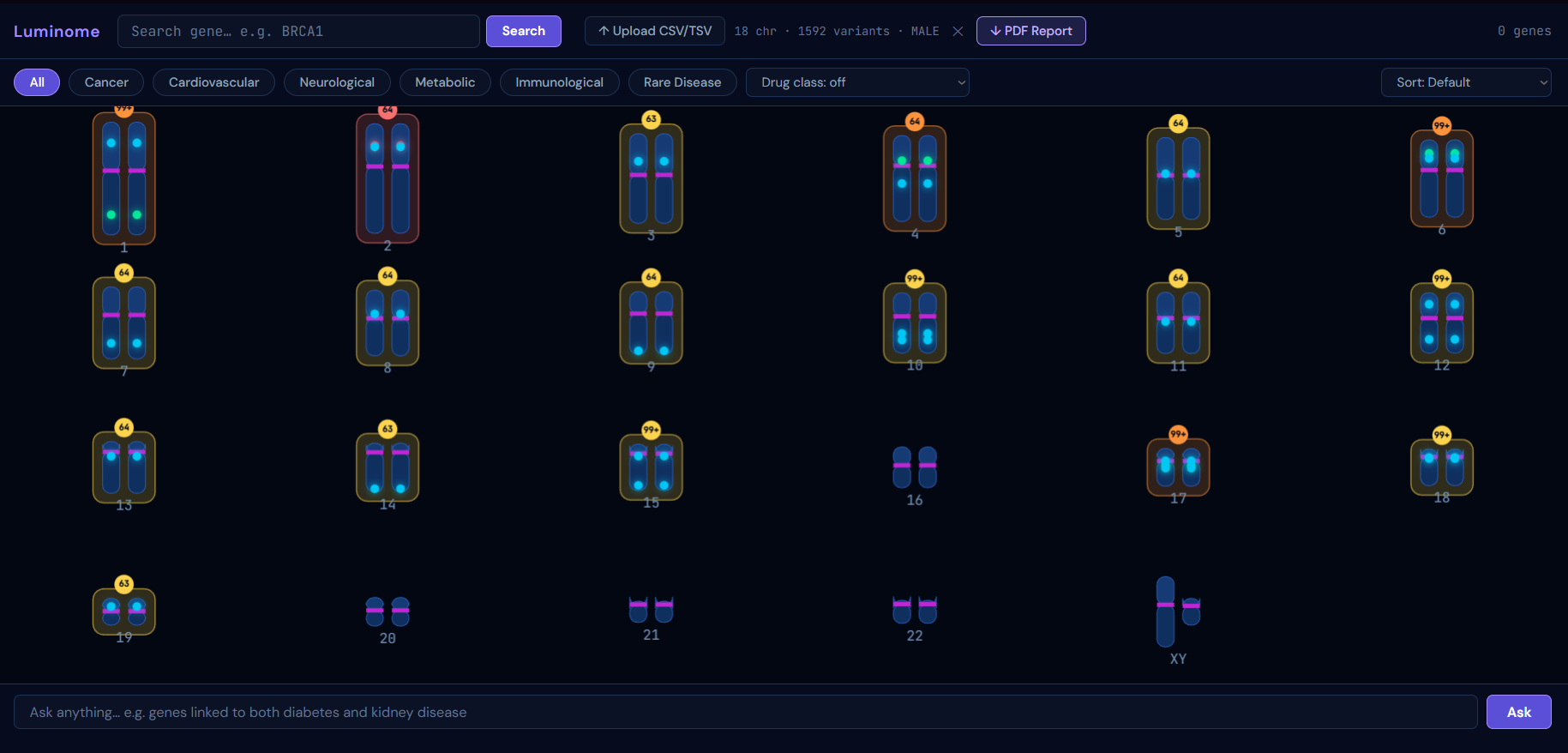
Highlighted mutated genes based on input CSV/TSV genome data
-
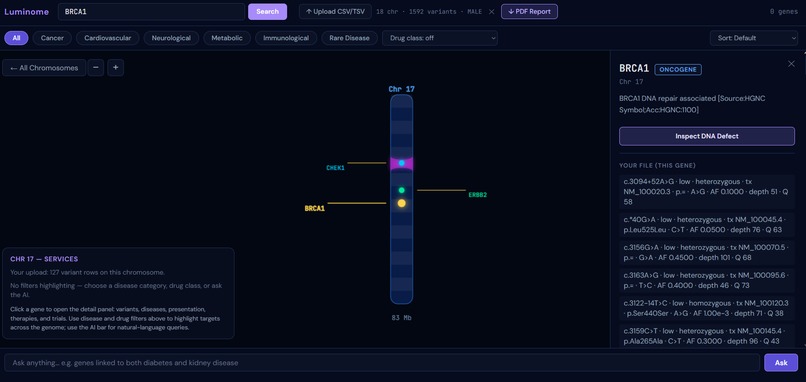
Highlighted mutated genes based on input CSV/TSV genome data
-
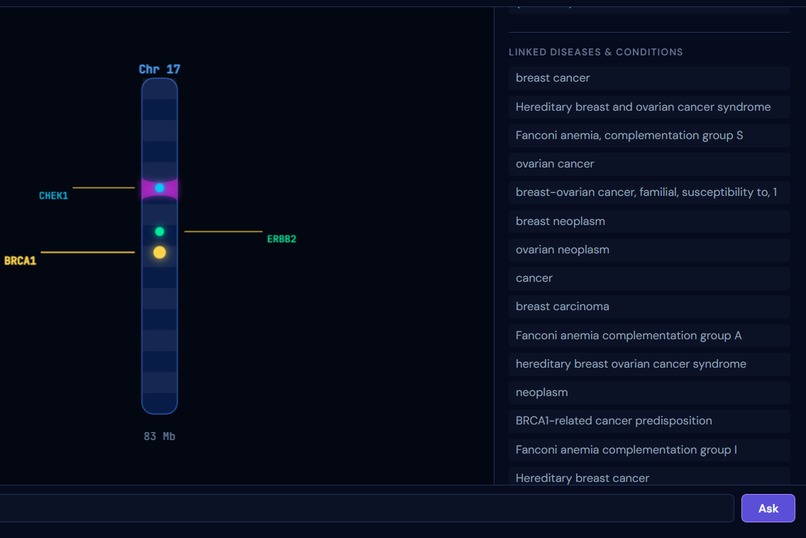
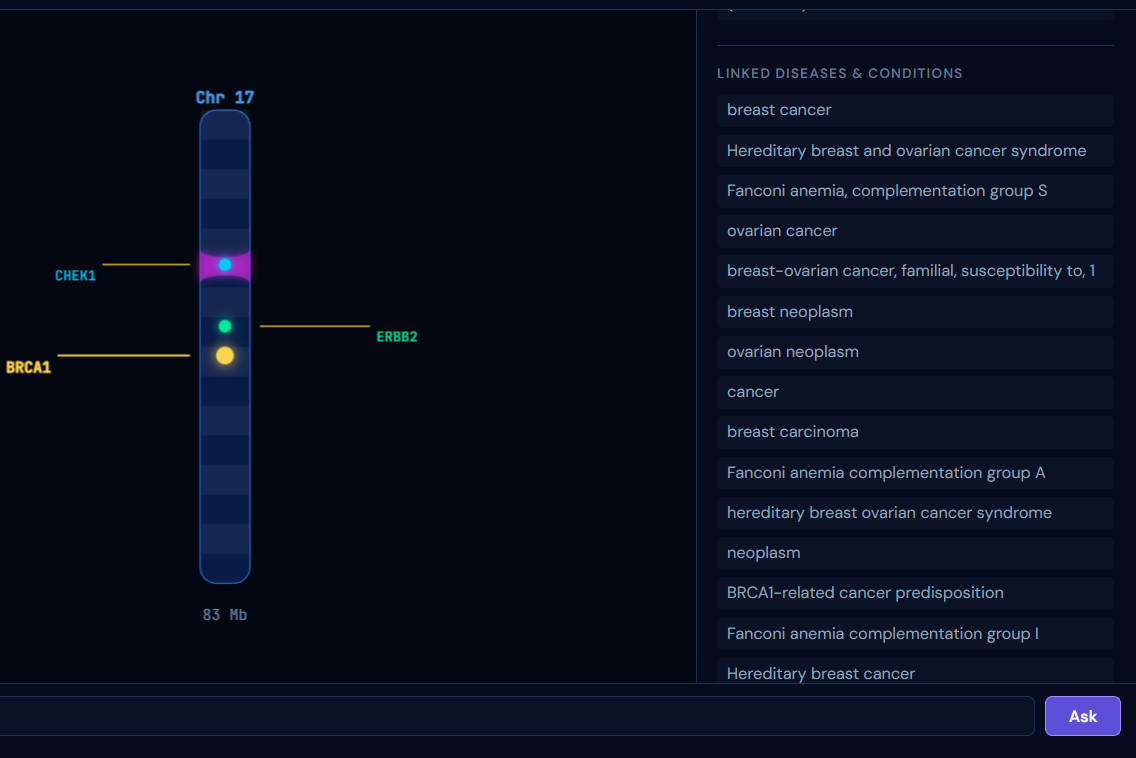
Diseases and Conditions related to BRCA1 gene
-
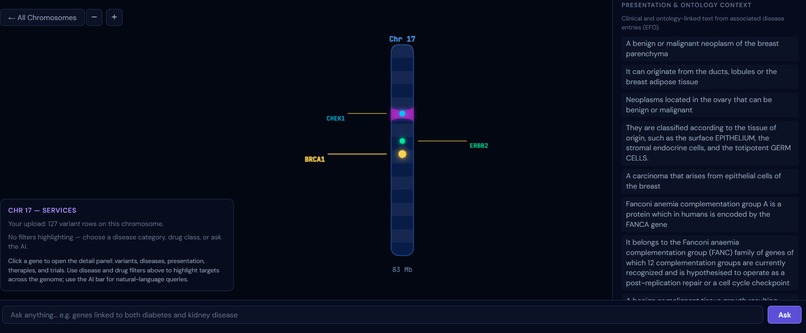
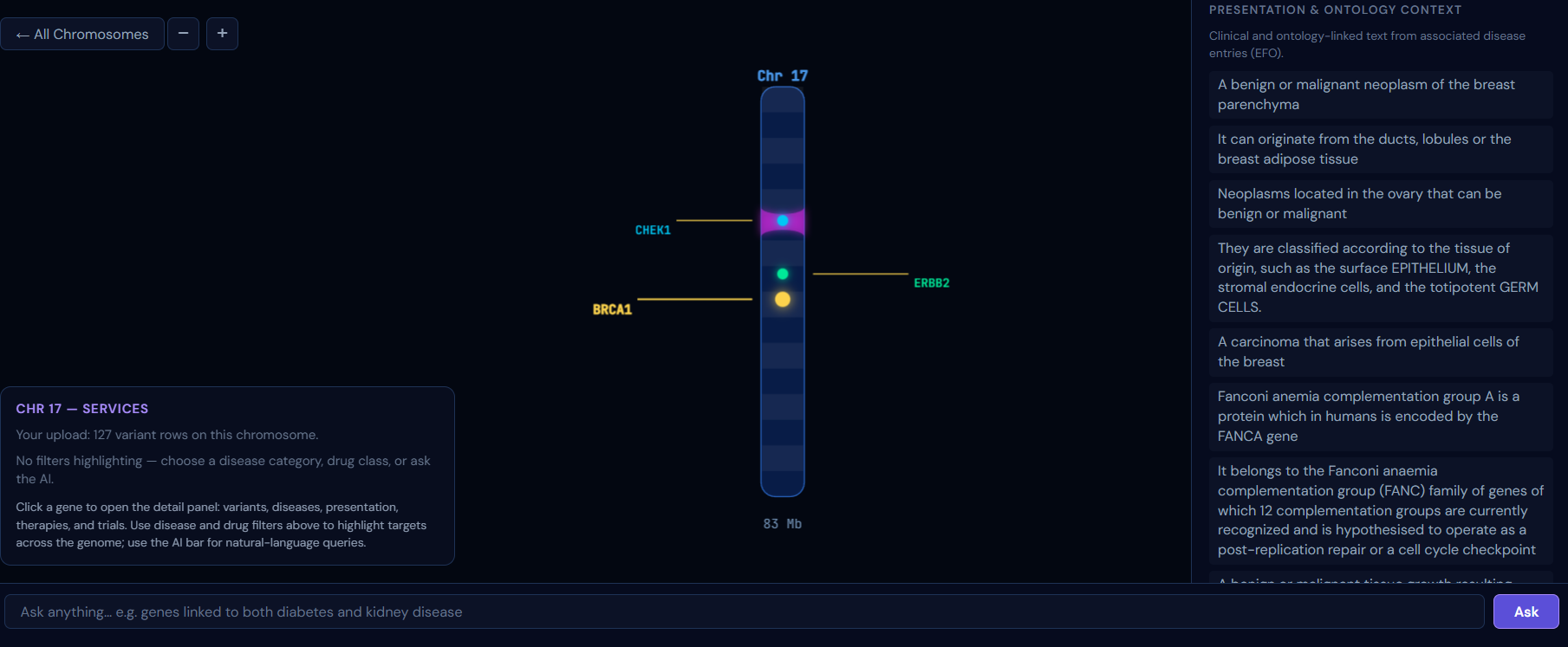
Ontology context for the BRCA1 gene
-
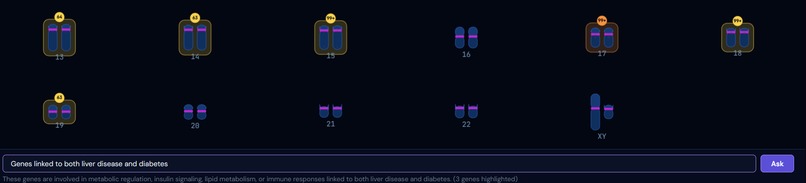
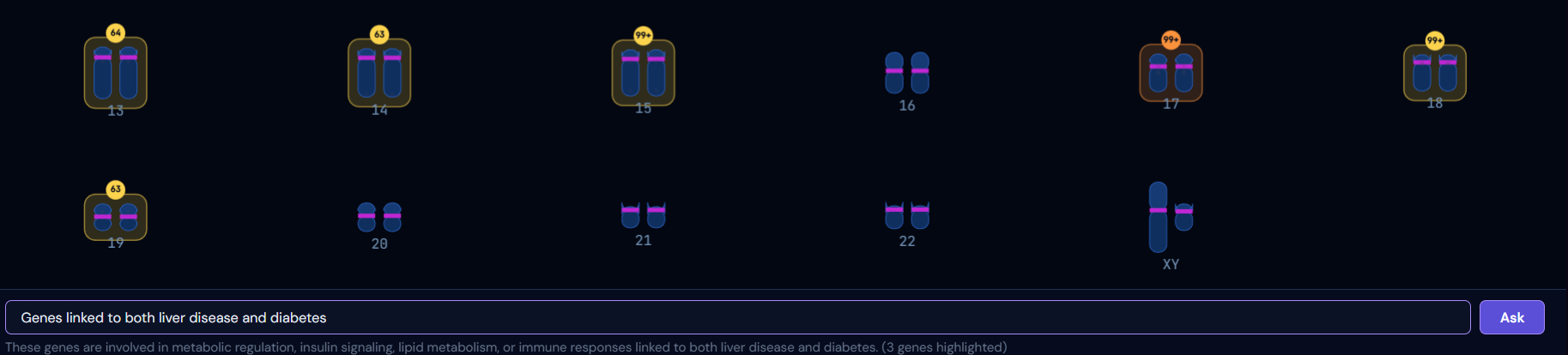
Real time chat-bot to help researchers link diseases to each other based on common mutated genes
-
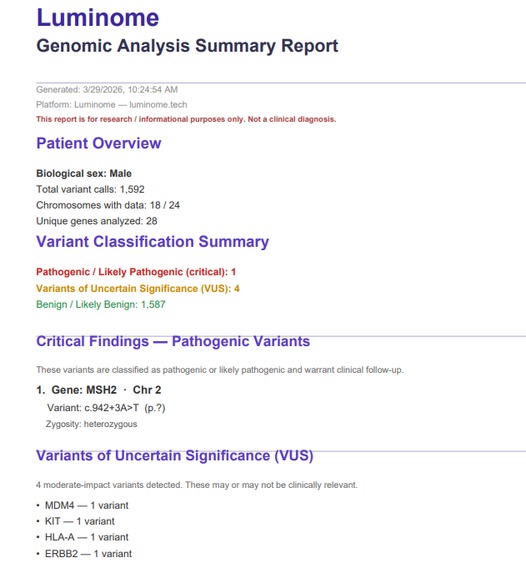
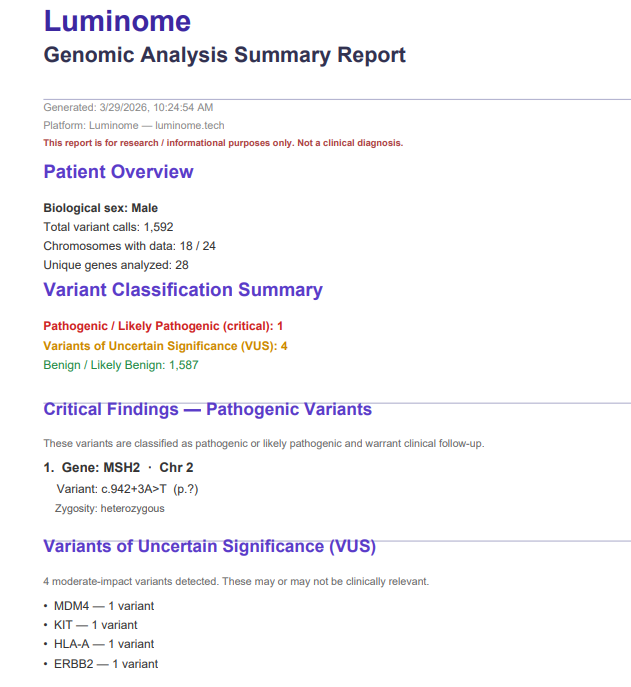
Summary report generated by Luminome with information from the input genome data
-
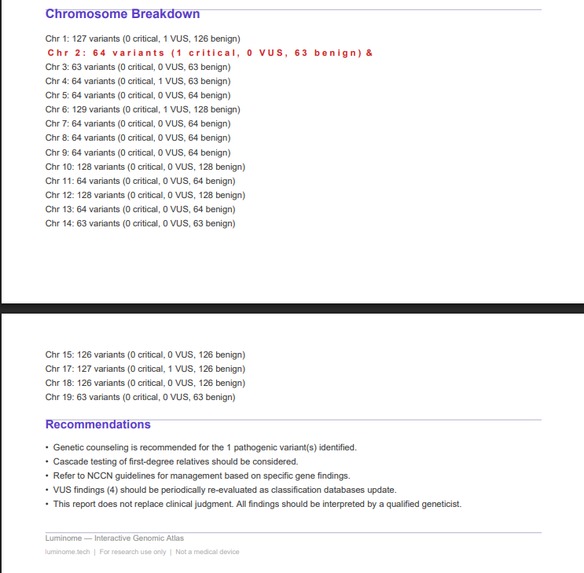
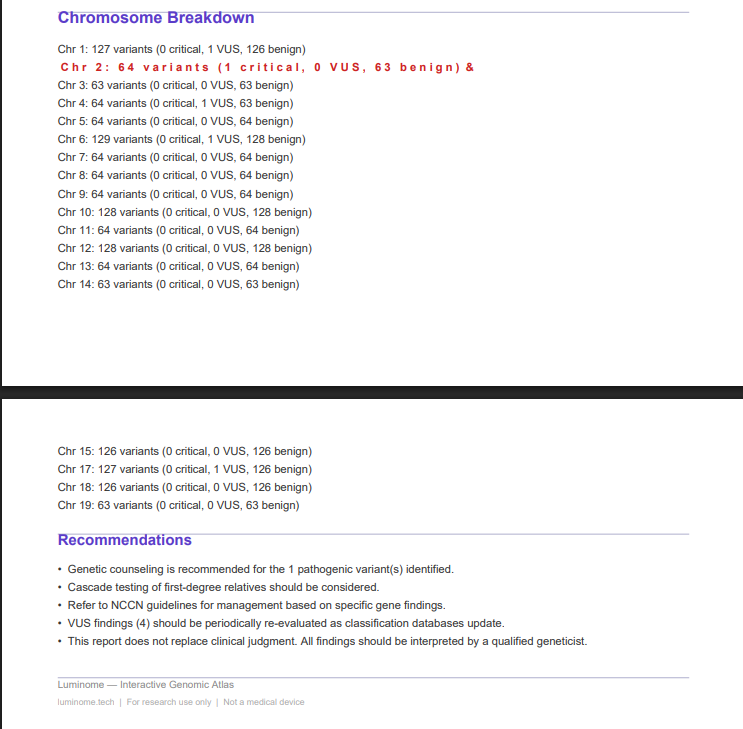
Summary report with recommendations and chromosome breakdown of the input genome data
-
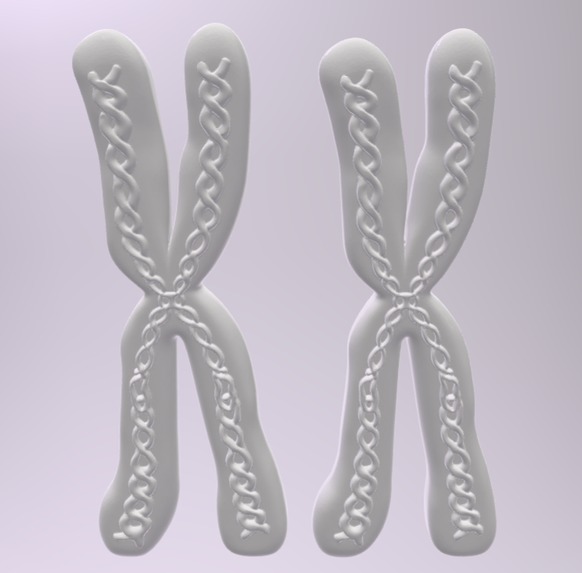
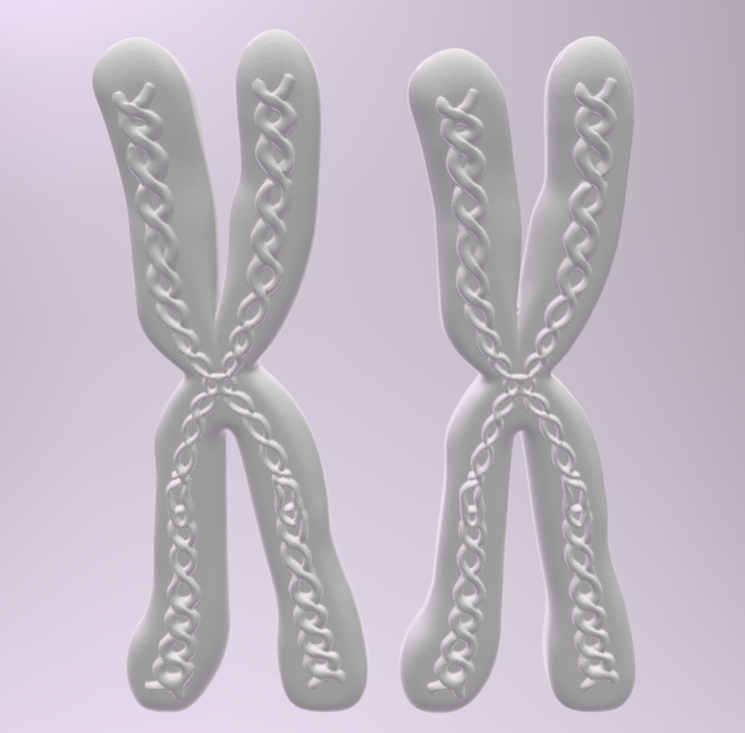
3D model of a pair of chromosomes we tried to use STL files to present them
-
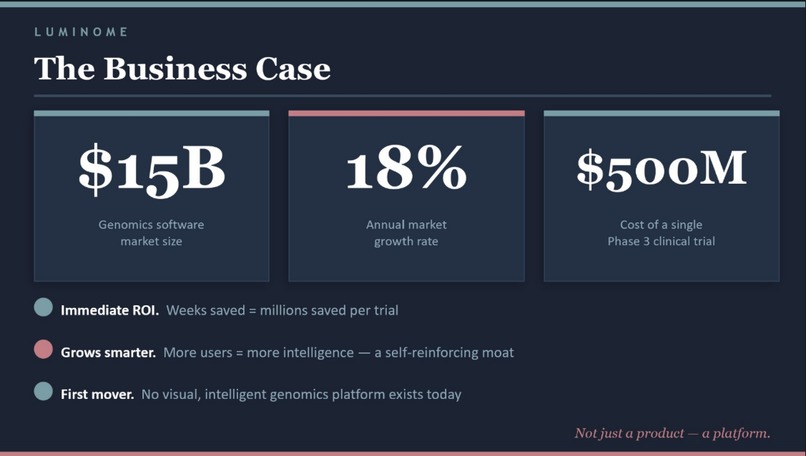
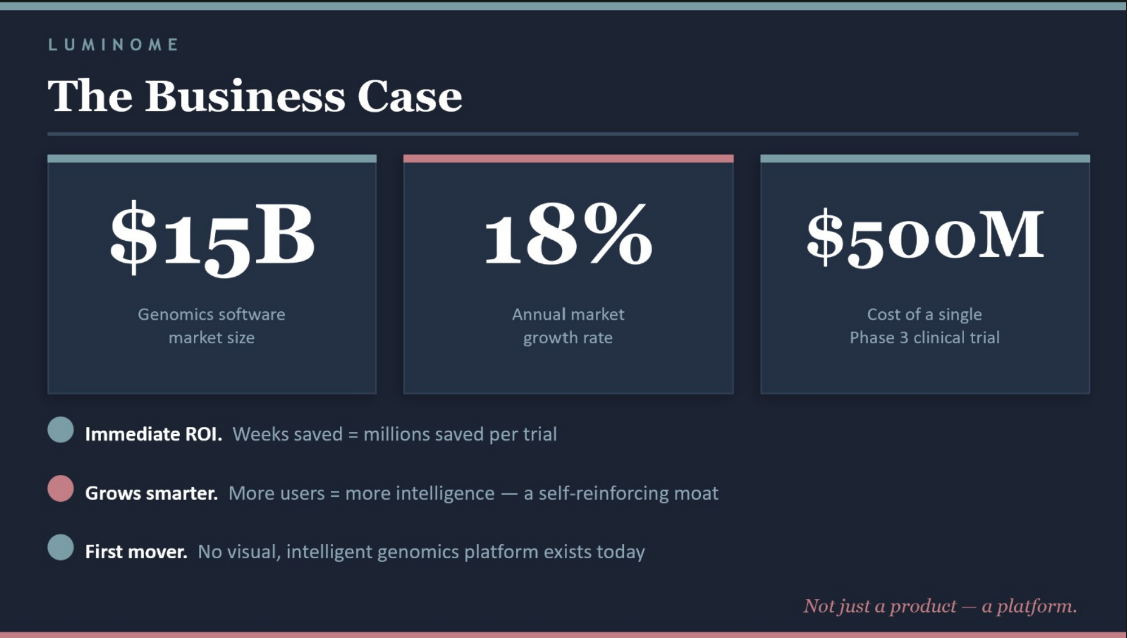
Scalability of our project
Luminome: Genomic Intelligence Platform
Inspiration
Every two minutes, someone in the United States is diagnosed with cancer. Yet, doctors and researchers are losing time and effort every single day jumping between databases, cross-referencing thousands of mutations, and sifting through 400,000 clinical trials just to find the right match for one patient. Luminome solves this by bringing the capability to process these huge datasets and help with detection—along with gaining knowledge about genomes in general—under one platform.
Genomic data is one of the most powerful assets in modern medicine, yet interacting with it still feels outdated. Platforms like NCBI, ClinVar, and OMIM contain vast amounts of critical information, but they present it in static, text-heavy, and fragmented formats.
Researchers often spend hours manually cross-referencing genes, mutations, diseases, and therapies across multiple databases. Clinical teams struggle to connect genetic insights to trial design, and patients find it nearly impossible to understand how their genetics relate to their care.
Our Question: Why is something as inherently spatial and complex as the human genome still explored through flat tables?
This inspired us to build Luminome—a platform that transforms genomic data into an interactive, visual, and explorable experience.
What it does
Luminome is a browser-based genomic intelligence platform that turns the human genome into comprehensive and well-defined reports to accelerate detection and clinical trial processes.
Core Capabilities:
- Interactive Exploration: Explore all 23 chromosome pairs in a dynamic environment.
- Granular Zoom: Dive into specific chromosomes to view gene loci.
- Deep Data Integration: Click on genes (e.g., BRCA1, TP53, SCN5A) to instantly access:
- Mutations and variants
- Associated diseases and symptoms
- Active clinical trials
- Real-time Filtering: Disease and drug filtering that highlights relevant genes across the entire genome.
- AI-powered Queries: Natural language processing allows users to ask questions like: “Which genes are linked to both diabetes and kidney disease?” and see results instantly visualized.
How we built it
We built Luminome as a full-stack, in-browser application combining data engineering, APIs, MLOps, and AI pipelines.
Frontend
- Interactive 2D chromosome rendering using modern web technologies.
- Smooth zoom, hover, and click interactions.
- Dynamic highlighting and filtering across the genome.
Backend
- Aggregated genomic data from public, peer-reviewed sources (NCBI, OMIM, Ensembl API, ChEMBL).
- Structured relationships between genes, diseases, and therapies.
- Fast query system for real-time data retrieval via the Gemini API.
AI Layer
- Natural Language Processing: Interprets user queries using a Gradient Boosting Algorithm (scikit-learn).
- Entity Mapping: Maps queries to relevant genomic entities.
- Visual Synchronization: Triggers real-time visual updates in the 2D model based on AI output.
What Went Wrong (And Why)
The 3D path turned out to be much harder to keep stable than expected.
Main Technical Hurdles:
- STL naming and folder structure mismatches.
- Pair handling differences (expected A/B files vs. actual uploaded files).
- XX/XY edge cases for sex chromosomes.
- Fragile click/visibility behavior even after numerous fixes.
Ultimately, we realized that constant patching was suboptimal, leading to our strategic shift.
The Big Pivot
We made a deliberate decision to stop depending on runtime 3D to ensure stability and performance.
- Transition to 2D: We moved to a 2D canvas-first experience that is easier to maintain and test, including a genome overview, vertical chromosome detail views, and a DNA defect focus view.
- Real-Time Performance: We optimized the rendering of the genome to support filters and AI queries without lag.
- Usability Balance: We focused on making the platform powerful enough for researchers while remaining while remaining not too complicated/text heavy.
- Hackathon Constraints: With limited time, we prioritized a strong, functional prototype that demonstrates the core vision.
Accomplishments that we're proud of
- Successfully transforming static genomic data into an interactive experience.
- Building a working prototype that supports real-time filtering and exploration.
- Integrating an AI query system that connects natural language to genomic visualization.
- Designing a platform that serves multiple stakeholders—researchers, CROs, and patients.
- Creating a concept that meaningfully reduces hours of research into seconds of insight.
What we learned
- How to turn complex scientific data into intuitive visual systems.
- Designing for diverse user groups with varying levels of expertise.
- Meaningfully integrating AI into user interfaces.
- Balancing ambitious vision with practical implementation under strict time constraints.
What's next for Luminome
Our vision goes far beyond this prototype:
- Biological Systems: Expanding into broader biological pathways.
- Workflow Integration: Directly integrating into clinical research and trial design workflows.
- Data Marketplace: Building a marketplace for third-party genomic datasets.
- Enhanced Visuals: Developing a production-ready STL/3D chromosome viewer and 3D helix dependencies.
Business Scaling:
- Subscriptions for pharma and biotech companies.
- Per-trial usage for CROs.
- API integrations for enterprise systems.
Built With
- css
- html
- javascript
- plpgsql
- python


Log in or sign up for Devpost to join the conversation.