-
Lumina
-
App Tracking Vitals
-
Lumi in Action
-
Inspiration Page
-
App Description
Inspiration
Starting college is exciting — but it can also be overwhelming. Many new students experience increased stress as they adjust to academic pressure, new environments, and changing routines. Without healthy coping tools, stress can build quietly and begin to impact focus, motivation, and overall well-being.
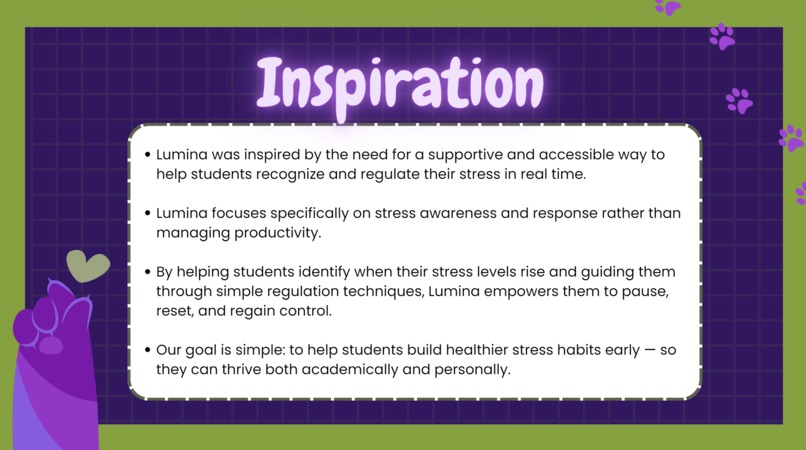
Lumina was inspired by the need for a supportive and accessible way to help students recognize and regulate their stress in real time. Rather than trying to manage every aspect of productivity, Lumina focuses specifically on stress awareness and response. By helping students identify when their stress levels rise and guiding them through simple regulation techniques, Lumina empowers them to pause, reset, and regain control.
Our goal is simple: to help students build healthier stress habits early — so they can thrive both academically and personally.
What it does
Lumina combines hardware, software, and data-driven insights to enhance the new student experience. The Arduino R4 WiFi device monitors study habits and sends data to the mobile app in real time. Through Presage integration, Lumina analyzes study patterns and provides predictive insights and personalized suggestions to help students optimize their routines. Designed specifically for first-year students, Lumina delivers visual feedback and actionable guidance, supporting focus, balance, and productive study habits from the start of their academic journey.
How we built it
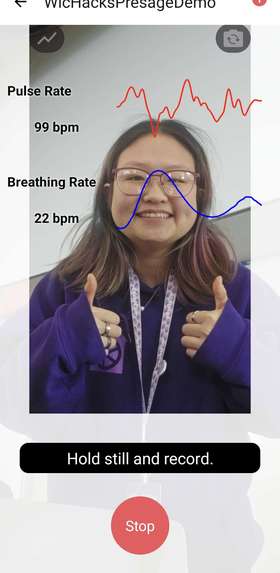
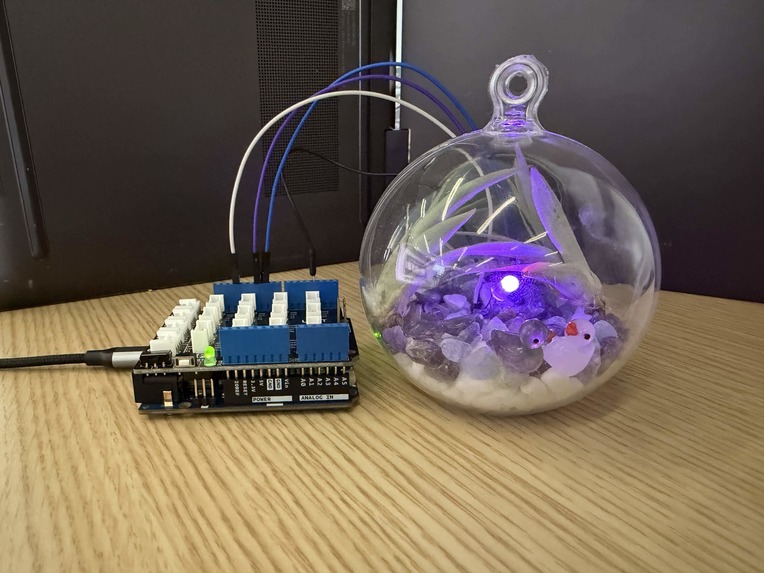
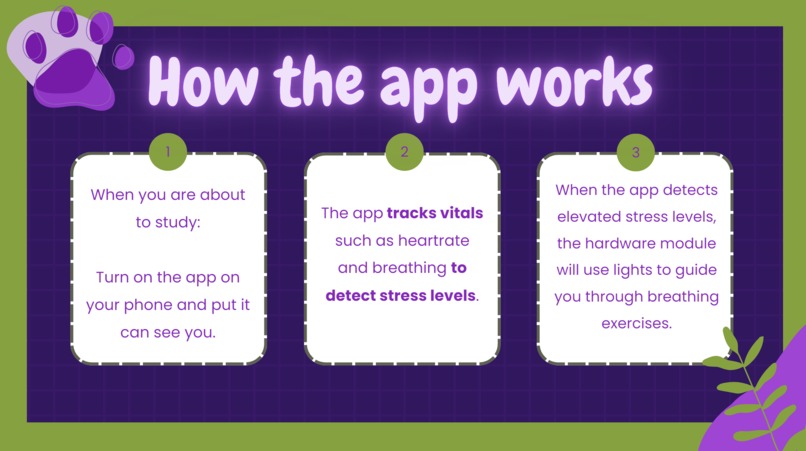
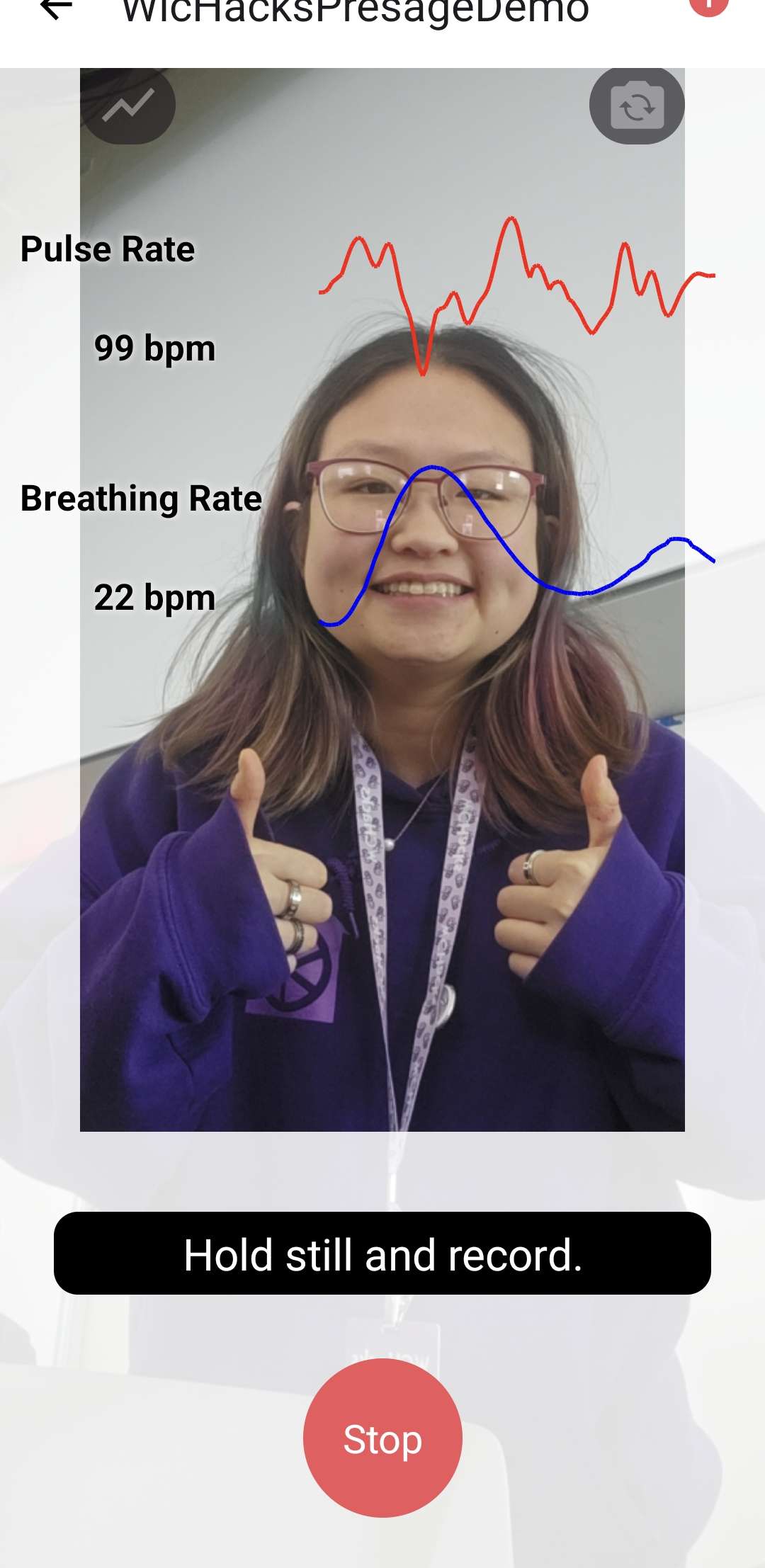
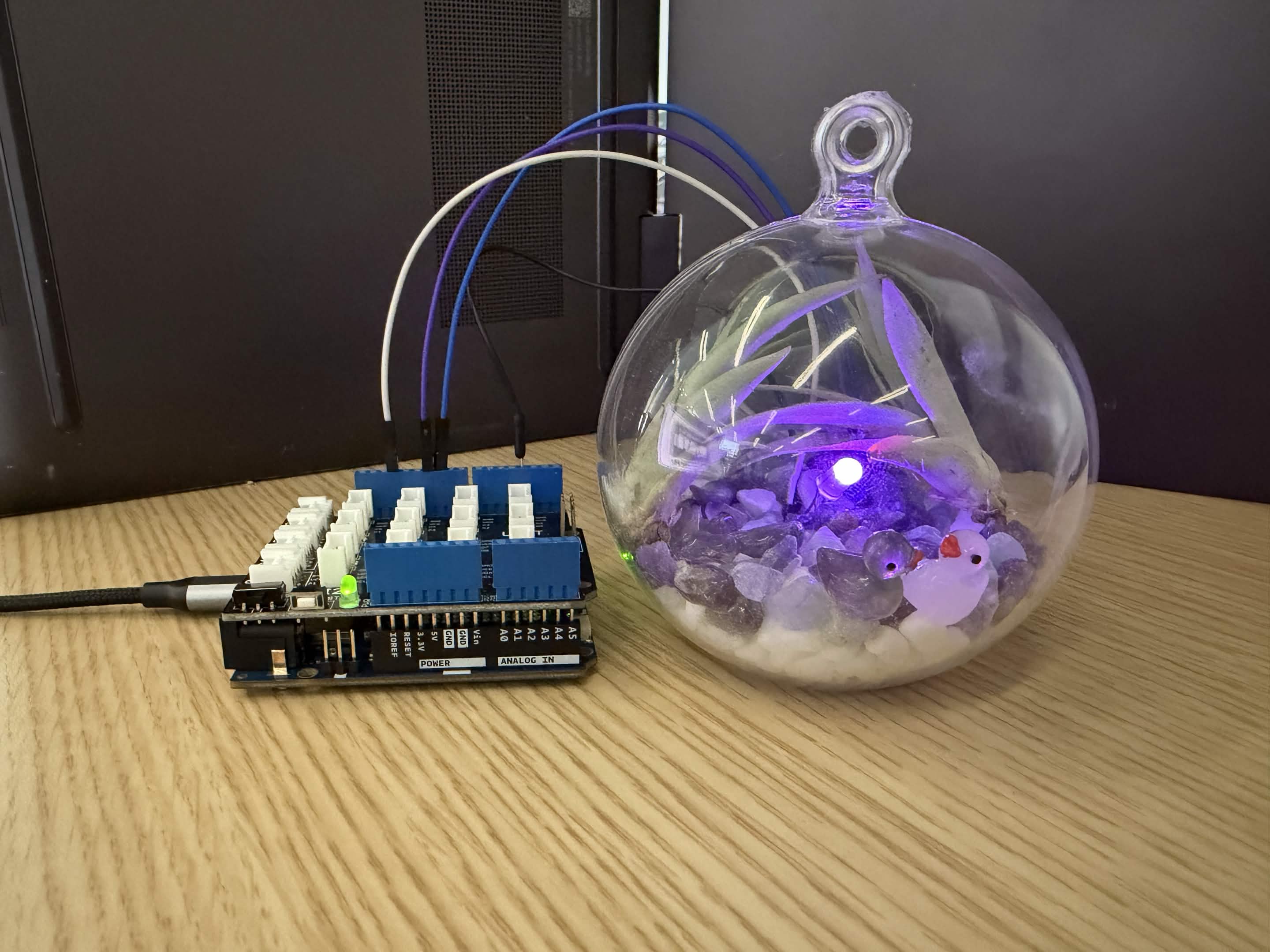
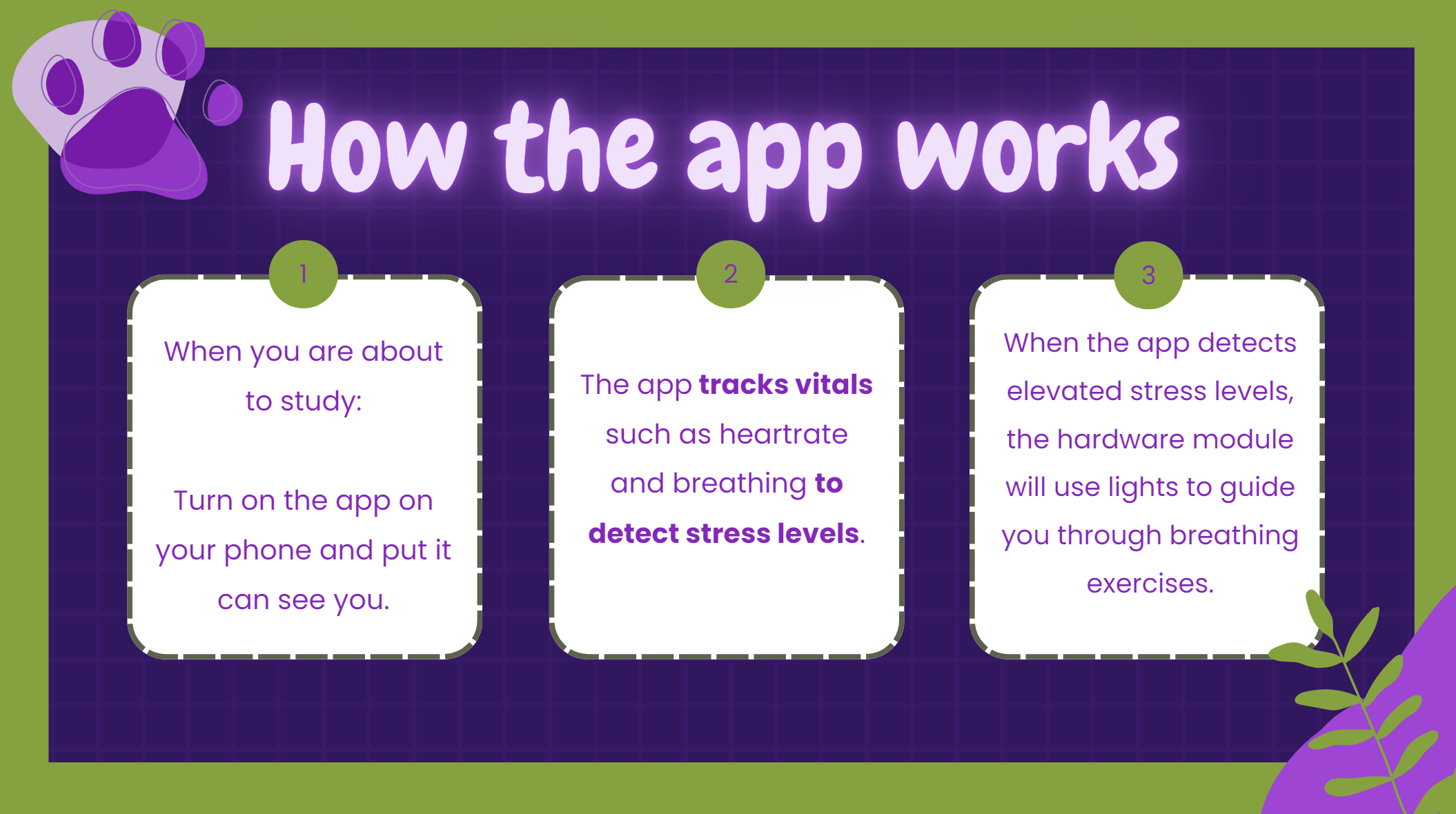
Lumina was built by combining mobile intelligence with responsive hardware feedback. The Android application, developed in Kotlin and XML and powered by the Presage SDK, collects and analyzes physiological data such as pulse rate and breathing rate. Based on these vital signs, the app determines the user’s stress level in real time. This processed data is then transmitted via WiFi to an Arduino UNO R4 WiFi programmed in C++. When elevated stress is detected, the Arduino activates a “breathing LED” that emits a soft, pulsating glow at approximately six breaths per minute — a rhythm scientifically associated with calming and stress regulation. By linking predictive mobile analytics with tangible physical feedback, an interactive system was made that not only detects stress but actively guides users toward relaxation, encouraging positive study behaviors.
Challenges we ran into
One of our biggest challenges was ensuring reliable and consistent WiFi communication between the Android device and the Arduino. Implementing HTTP-based data transfer required careful handling of network requests, latency, and connection stability to ensure that stress data was transmitted accurately and in real time.
Another significant challenge was integrating the Presage SDK into our Android application. Understanding its architecture, configuring it properly within our Kotlin project, and aligning its predictive capabilities with our stress-detection logic required experimentation and iterative debugging. Ensuring that the SDK’s outputs translated meaningfully into hardware-triggered responses added an additional layer of complexity.
Accomplishments that we're proud of
For the first time, we implemented a successful WiFi-based HTTP communication between the Android application and the Arduino. Reliable real-time data transfer between software and hardware was established, marking a significant technical milestone.
This project also marked our first time developing with Kotlin and building a fully functional Android application. Learning mobile development from the ground up and integrating the Presage SDK into our app pushed us to expand our technical skill set significantly.
Most importantly, a complete proof-of-concept system was developed in which intelligent mobile data processing, predictive analytics, and Arduino-powered hardware feedback were seamlessly connected into a cohesive and working solution.
What we learned
We learned that integrating hardware and software requires careful testing, debugging, and error handling to maintain reliable real-time communication. WiFi-based HTTP transmission can be sensitive to latency and packet loss, so data formatting and synchronization must be handled precisely.
We also learned how to interface an Arduino with an Android application over WiFi, including sending and parsing structured data to trigger hardware responses accurately. Timing and pulse-width modulation had to be fine-tuned to create a smooth, consistent LED breathing effect at the target rate.
Additionally, we gained experience working with the Presage SDK in a Kotlin app, including managing sensor inputs, handling asynchronous events, and updating the UI in real time based on stress-level thresholds.
What's next for Lumina
Future development of Lumina would focus on enhancing both form and function. The app’s design would be refined to create a more aesthetically pleasing and intuitive user experience, perhaps integrating the pulsating LED into a jewelry item, or another desk item.
Vital monitoring capabilities would be expanded to track additional physiological signals, allowing for a more comprehensive understanding of stress patterns. A wider variety of stress relief exercises would be incorporated to give users more personalized options for relaxation.
User feedback would be systematically collected through surveys to continuously improve the app and hardware experience.
Additionally, Presage’s capabilities would be further leveraged to provide tailored recommendations based on individual user data, creating a more responsive and personalized stress regulation system.
Through these improvements, Lumina aims to become an even more effective and engaging tool for supporting student well-being.


Log in or sign up for Devpost to join the conversation.